83 Jean St, Grange QLD 4051
Mon-Fri 07:30 AM - 04:00 PM - Sat - 8:00 - 12 - Sunday Closed
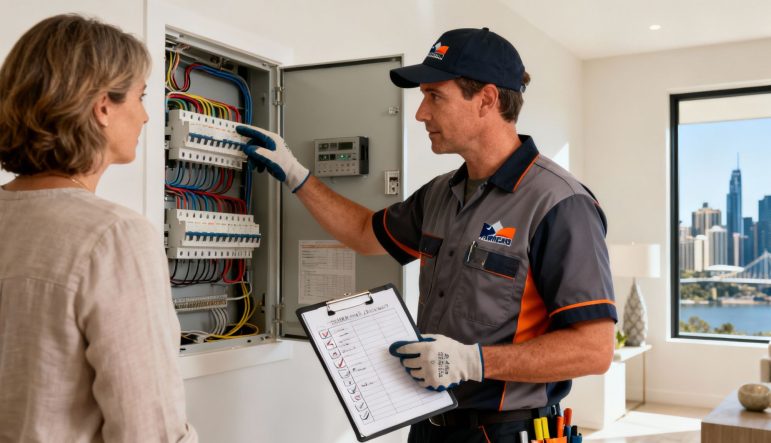
Picking a local electrician in Brisbane is about more than just getting the lights back on. It’s a critical decision that affects the safety and long-term value of your home or business. A properly qualified professional makes sure every job—from a simple switch replacement to a full rewire—is done according to strict Australian safety standards, protecting you from some pretty serious risks.
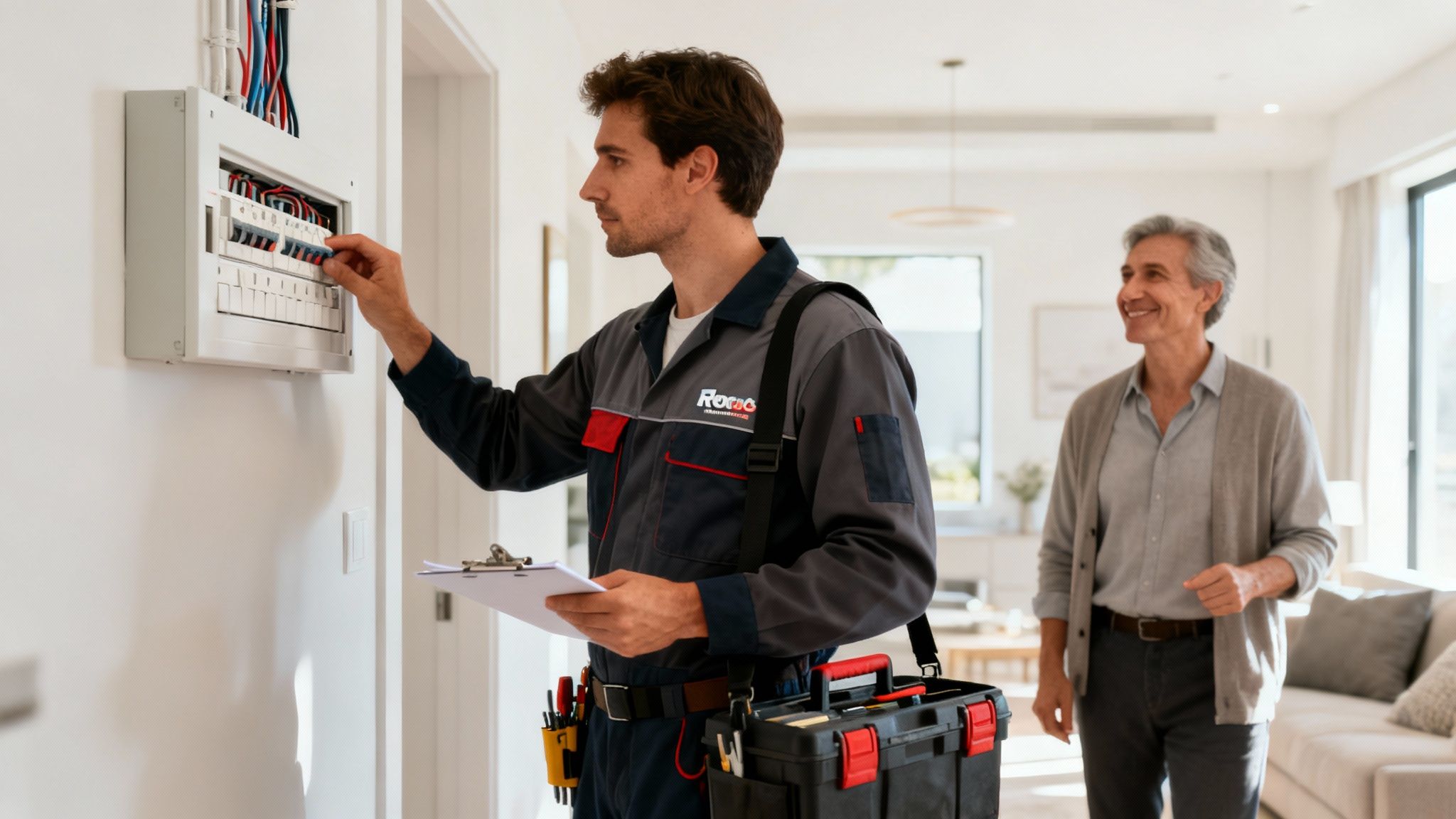
When it comes to home maintenance, electrical work is in a league of its own. Unlike a paint touch-up or a leaky tap, mistakes here are often invisible until something catastrophic happens. Trying to save a few dollars by hiring an unlicensed handyman might seem tempting, but it opens the door to unacceptable risks.
And those risks go beyond the immediate danger. Imagine a fire breaks out because of shoddy wiring done by someone uncertified. When you file a claim, your insurance provider will dig into the cause. If they find out the work wasn’t done by a licensed electrician and no Certificate of Compliance was issued, they have every right to deny your claim entirely. Suddenly, you’re left footing the bill for repairs or even a complete rebuild.
Here in Queensland, all electrical work has to follow the Wiring Rules, officially known as Australian Standard AS/NZS 3000. This isn’t just red tape; it’s a safety framework designed from the ground up to protect people and property from electrical hazards. A licensed local electrician doesn’t just know these rules—their entire business is built on following them to the letter.
This commitment to compliance gives you a few layers of protection:
Think of it this way: hiring a qualified professional isn’t just an expense, it’s an investment. You’re putting money directly into the safety, compliance, and overall value of your biggest asset.
The demand for good tradies is definitely on the rise. Australia’s electrical services industry is on track to hit a market size of AUD 36.2 billion by 2025, with around 45,850 businesses in the mix. This boom is partly fuelled by the shift to higher-density living, which requires more complex electrical systems and, you guessed it, a truly skilled local electrician. You can dive deeper into the industry stats over at IBISWorld.
Knowing where to look is the first real step in finding a reliable local electrician. Instead of just typing “electrician” into Google and hoping for the best, a more targeted approach will help you build a solid shortlist of professionals who are already trusted by your community.
Your search should always kick off with genuine, word-of-mouth referrals. Ask neighbours, family, or friends who they’ve used for electrical work and were genuinely happy with.
Even better, ask other tradies you trust, like your go-to plumber or builder. These guys work alongside electricians all the time and know exactly who does quality work and who tends to cut corners.
Beyond personal recommendations, industry associations provide a layer of vetting that a standard online directory just can’t match. These organisations have strict membership criteria, which means their members are properly licensed, insured, and committed to high standards.
A great place to start is Master Electricians Australia. This is the peak industry body, and its members are required to pass regular safety and quality audits. Using their contractor search tool gives you immediate access to professionals who have already met a high benchmark, taking a lot of the guesswork out of your search.
When an electrician is part of a respected association, it signals a commitment to their trade that goes beyond just holding a licence. It shows they’re invested in ongoing training and adhere to a code of conduct, which gives you extra peace of mind.
Hyper-local sources like Brisbane community Facebook groups can be goldmines for honest feedback. When you ask for a local electrician recommendation in one of these groups, you’re getting unfiltered opinions from people right in your suburb. Pay close attention to the names that get recommended multiple times by different people—that’s a very good sign.
When you’re looking at online reviews, be discerning. Look for platforms that verify their reviews and provide detailed feedback rather than just a star rating. Reading about a homeowner’s specific experience—like how the electrician communicated, handled an unexpected issue, or left the workspace—gives you far more insight than a simple thumbs-up. This active research is a key part of how to find a licensed electrician near you who genuinely fits your needs.
Finally, a professional, well-maintained website is another positive signal. It should clearly list their services, licence numbers, and contact details. It shows they take their business seriously and are transparent with potential clients from the very first click. A strong digital presence often reflects a well-organised and professional operation behind the scenes.
Once you’ve got a few names on a list, it’s time to switch gears from finding sparkies to screening them. Properly vetting a local electrician is more than just a quick phone call; it’s about digging a bit deeper to confirm their qualifications and asking sharp questions that show you what they’re really made of. This is the step that ensures the person you hire is not just available, but is genuinely the right fit for your job.
Your first move? Check their credentials, starting with the absolute non-negotiable: their Queensland Electrical Contractor Licence. Don’t just take their word for it—look it up yourself. This proves they are legally allowed to run an electrical business in the state.
Following a simple process like this helps you narrow down the field efficiently, leaving you with a solid shortlist ready for a proper grilling.
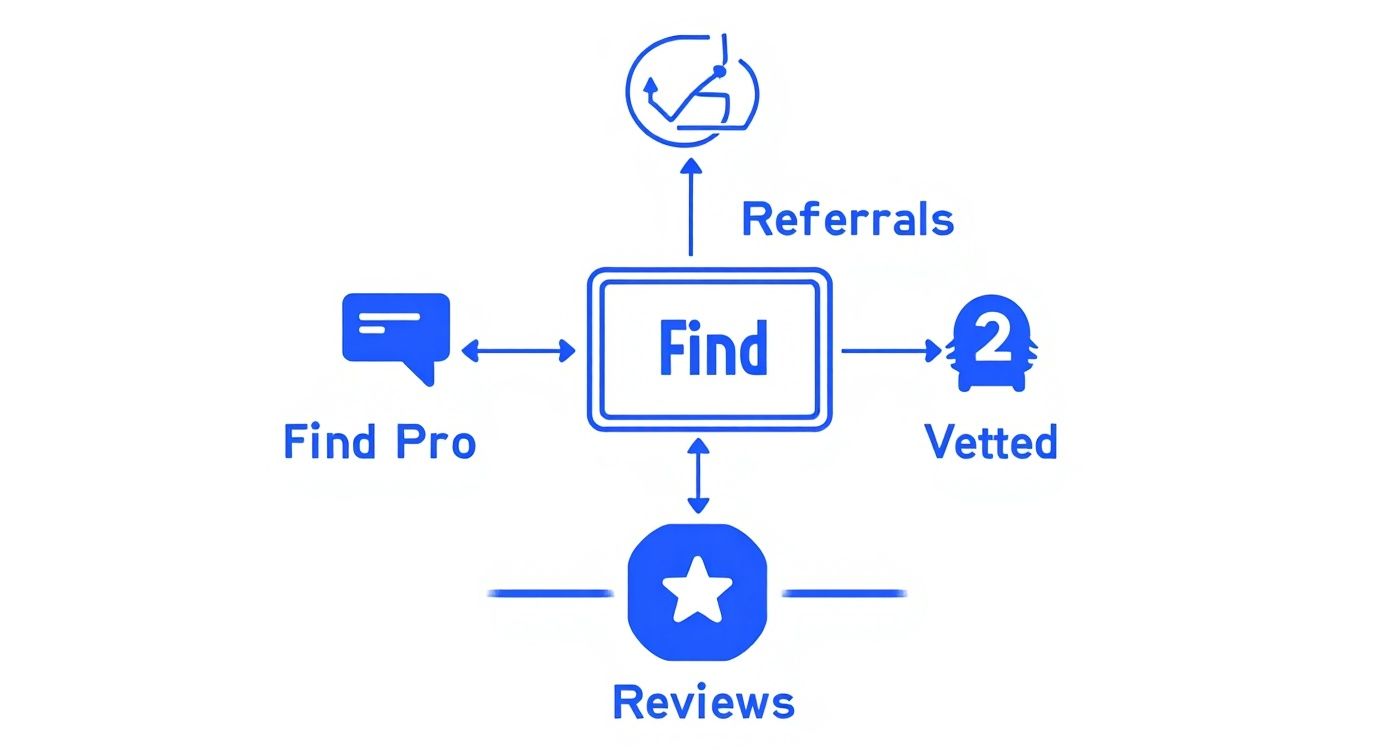
As you can see, starting with referrals, professional platforms, and real reviews gives you a strong foundation before you even pick up the phone.
It’s surprisingly easy to confirm an electrician’s licence is legit. The Electrical Safety Office (ESO) in Queensland runs a public register where you can search for a contractor by their name or licence number. In a few minutes, you can see if their licence is current and check for any disciplinary actions. That five-minute check buys you a huge amount of peace of mind.
Next up is insurance. You absolutely need to confirm they have current Public Liability Insurance. This is what protects you and your property if something goes wrong during the job, like accidental damage. Any legitimate professional will have their Certificate of Currency handy and won’t hesitate to email you a copy.
Here’s a quick rundown of the must-have credentials for any Brisbane electrician.
Before you let anyone touch your wiring, make sure they have these two critical pieces of documentation. They are the baseline for any professional operating in Brisbane.
| Credential | What It Is | Why It’s Important for You |
|---|---|---|
| Electrical Contractor Licence | This licence is issued by the state and allows a business to legally contract for and perform electrical work. | It’s your guarantee that the business is legitimate, meets Queensland’s strict safety standards, and is accountable for the work they do. |
| Public Liability Insurance | An insurance policy that covers the costs of property damage or personal injury to a third party. | This is your financial safety net. It protects you from liability if the electrician’s work accidentally damages your home or injures someone. |
These two credentials are your first line of defence against dodgy operators.
An electrical contractor licence and public liability insurance are the absolute bare minimum. If a sparky is cagey about providing proof of either, that’s a massive red flag. Cross them off your list and move on.
With the legal and insurance boxes ticked, you can now focus on their real-world experience. Your goal here is to figure out if their skills are a good match for your specific project.
Get the conversation rolling with a few targeted questions:
This line of questioning helps you quickly gauge whether they’re the right fit. Australia has a strong workforce of over 131,900 electricians, and with more than half of them under 35, there’s plenty of talent out there. The key is finding the local electrician with the specific, specialised experience your job demands. You can dig deeper into the data by checking out the latest electrician employment trends from Safe Work Australia.
When an electrician’s quote lands in your inbox, it’s tempting to skip straight to the final price. But hold on. A professional quote is much more than just a number; it’s a window into the quality of work you can expect. It’s your best tool for separating the true professionals from the cowboys.
A detailed, itemised quote is non-negotiable. Seriously. It should clearly break down the costs for materials—specifying brands and models where relevant—and the estimated labour hours. This level of detail protects you from vague “surprise” charges later and proves the electrician has actually thought the job through.
One of the biggest red flags we see is a suspiciously low price. While everyone loves a bargain, an unusually cheap quote in the electrical trade often signals trouble. It could mean they’re using cheap, non-compliant materials that could fail prematurely or, worse, pose a genuine fire risk.
Another warning sign? A quote that’s just a single figure scrawled on the back of a napkin with no breakdown. This vagueness leaves the door wide open for costs to blow out. Any professional local electrician worth their salt will provide a clear, structured document that leaves no room for misunderstanding.
The cheapest quote is rarely the best value. Prioritise quotes that are detailed, transparent, and reflect the use of quality, compliant materials. Your family’s safety is worth more than saving a few dollars on a cut-price job.
It’s also important to understand the value of a skilled tradesperson. The expertise and experience of a qualified electrician come at a price, which is reflected in their wages. With high demand for skilled electricians across Australia, average salaries can range from AUD 79,453 to AUD 110,000, with consistent year-on-year wage growth. This professional wage structure underpins the quality and safety you’re paying for.
When you get a quote, it will usually be a fixed price for the entire job or based on an hourly rate. Neither is inherently better, they just suit different types of work.
When you’re comparing quotes, make sure you’re comparing apples with apples. Check that each local electrician has quoted for the same scope of work and the same quality of materials. For a deeper dive into pricing structures, our guide on how much electricians typically charge breaks it down even further.
Ultimately, your decision should be based on the overall value, professionalism, and confidence the quote inspires—not just the bottom line.
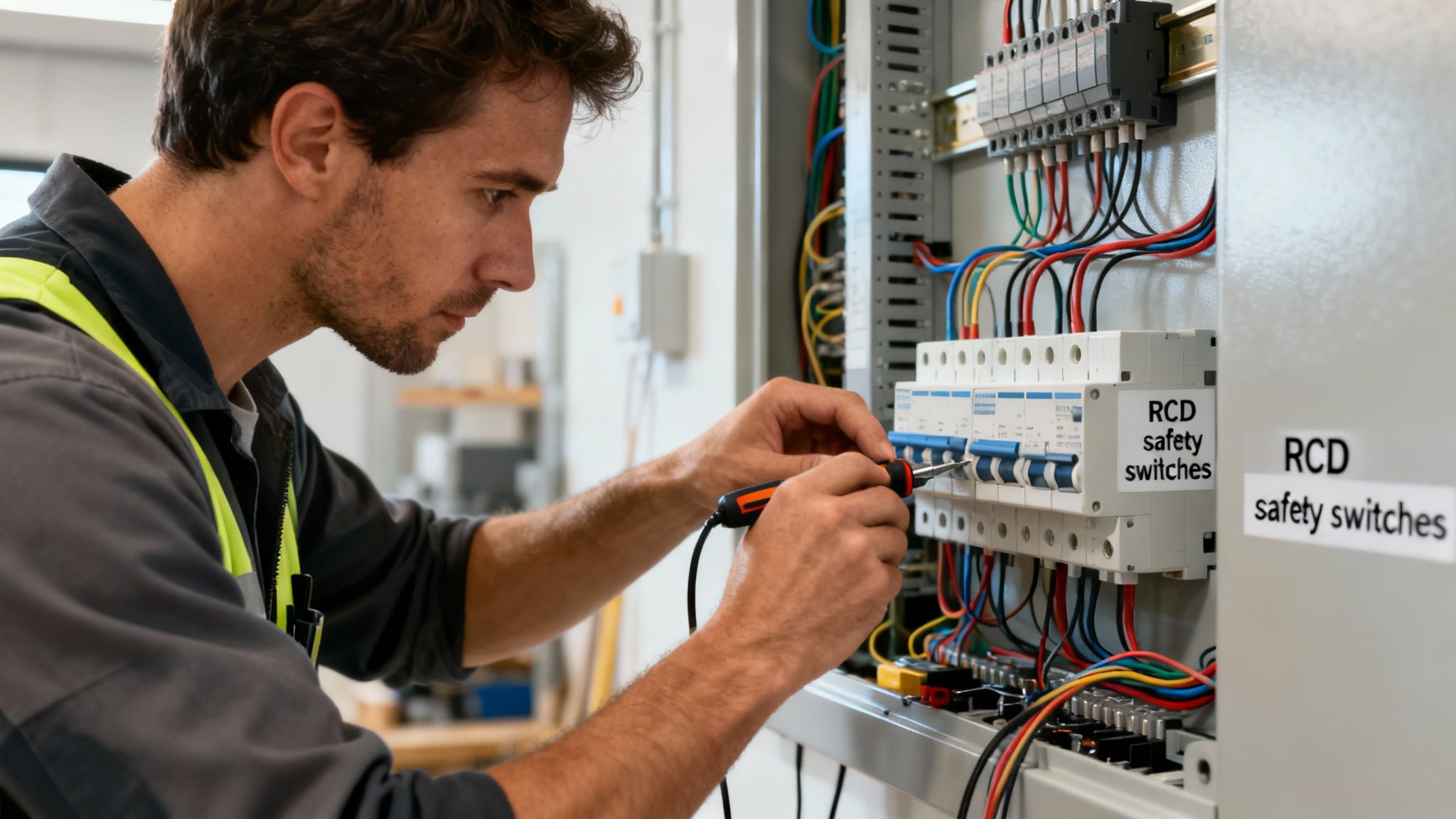
General electrical skills are one thing, but many jobs around a Brisbane home or business demand very specific, niche experience. Hiring a generalist for a specialist’s job is a recipe for trouble—think compliance headaches, systems that don’t work properly, or even serious safety risks. It’s absolutely vital to match the electrician’s proven skills to your exact needs.
Take switchboard upgrades, for instance. Swapping an old fuse box for a modern circuit breaker board is a common request, but it’s far from simple. A good sparkie isn’t just swapping boxes; they’re future-proofing your entire property. This work always includes installing Residual Current Devices (RCDs), the life-saving safety switches that are mandatory on all domestic circuits here in Queensland.
Before you hire a local electrician, you need to ask questions that go deeper than just their licence number. The way they answer will quickly tell you if they have the genuine, hands-on experience your job requires.
Here are a few common specialised jobs and the kind of questions you should be asking:
For home improvements involving specialised wiring, like installing electric skylight systems, you need a qualified electrician to guarantee it’s safe and functions correctly. The same goes for new technologies. With electric vehicles becoming more common, knowing the right questions about home charging stations is key. If an EV is on your radar, understanding the details of an EV charger installation will help you sort the experts from the amateurs in this fast-growing field.
Don’t be afraid to get specific. A true specialist will welcome detailed questions and provide confident, clear answers. Vague responses are a major red flag that they might be out of their depth.
Hiring someone with proven experience in your particular project means the job gets done faster, better, and correctly the first time. It saves you from the costly and frustrating exercise of calling in another professional to clean up someone else’s mess. For any specialised electrical work, always put demonstrated expertise at the top of your list.
You’ve done the hard yards. You’ve checked the licences, weighed up the quotes, and you’ve got a preferred local sparky in mind. Before you shake on it and give them the final go-ahead, there are a few last checks to run through.
This final step is all about making sure the project runs smoothly, with zero misunderstandings. It’s where you formalise what you’ve discussed and get everyone on the same page from day one.
The most important thing you can do now? Get everything in writing. This doesn’t have to be some dense, 10-page legal document. A straightforward written agreement or even a detailed email that you both acknowledge is usually all it takes to solidify your verbal conversations.
A handshake is a good start, but a written agreement is just plain smart. It protects both you and your electrician by creating a clear, mutual understanding of the job before a single tool comes out. This is your best defence against scope creep and surprise costs down the track.
Think of this written agreement as the place to iron out all the practical logistics of the job. It’s often the small, assumed details that cause headaches later on, so it’s best to get them confirmed upfront.
Before any work kicks off, make sure you have clear, written answers to these final questions:
Nailing down these points in writing leaves no room for grey areas. This final bit of diligence gives you peace of mind, knowing you’ve hired a true professional who values clear communication and is ready to deliver quality work without any last-minute surprises.
Even after you’ve done all your homework, a few last-minute questions often pop up before you hire an electrician. That’s perfectly normal. Getting these details sorted will give you that final bit of confidence before you commit.
This is your quick guide to those practical, nitty-gritty queries that come up right at the end of the hiring process. We’ll cover everything from the crucial paperwork you need after a job to what you can (and definitely can’t) tackle yourself.
A Certificate of Compliance for Electrical Work (CCEW) is the single most important document you’ll receive from your electrician. It’s a legal requirement in Queensland for most electrical jobs.
Think of it as their official, legally binding declaration that all work completed at your property meets the strict safety standards of the Australian Wiring Rules (AS/NZS 3000). It’s absolutely non-negotiable.
Always, always ask for this certificate and file it away somewhere safe. It’s your proof that the job was done correctly, which is vital for insurance purposes, your own records, and especially if you ever sell your home.
Yes, without a doubt. It might seem like a simple swap, but in Australia, any job that involves touching your home’s fixed wiring requires a licensed electrician. That includes almost every type of light fitting replacement.
It’s easy to get one tiny connection wrong, and that’s all it takes to create a serious fire hazard or risk of electrocution.
Don’t be tempted to DIY this one. Doing your own electrical work is not just incredibly dangerous; it can also completely void your home insurance policy. If a fire starts because of an incorrectly installed fitting, your insurer could refuse to cover the damage. The only thing you should ever change yourself is a light bulb.
This is a common question, but the answer is pretty straightforward for homeowners. A standard licensed electrician—sometimes called a ‘Level 1’—is qualified for 99% of the jobs you’ll ever need done inside your property boundary.
Their scope covers pretty much everything:
A Level 2 electrician (also known as an Authorised Service Provider or ASP) has extra qualifications to work on the electrical network itself—the poles and wires in the street that connect to your property.
Unless you’re dealing with a direct supply issue from the street, the professional you need is your trusted local electrician.
For professional, reliable electrical services you can trust, contact the team at DLG Electrical. With over 19 years of experience serving Brisbane, our licensed and insured electricians are ready to help. Get your free quote today by visiting us at https://dlgelectrical.com.au.

Master Electrician with over 30 years of experience. Founded DLG Electrical in 2005 after international project work including electrical installations at Stamford Bridge Stadium, London(Home of Chelsea FC).

Local Electricians that can fix all Electric Hot water Systems.
Motion sensor lights are a versatile addition to any home, offering nu
