83 Jean St, Grange QLD 4051
Mon-Fri 07:30 AM - 04:00 PM - Sat - 8:00 - 12 - Sunday Closed
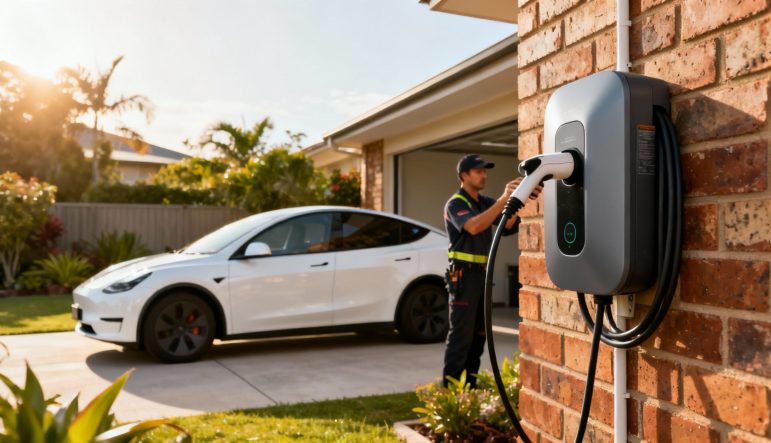
A professional EV charger installation isn’t just about convenience; it’s the safest and most reliable way to power your electric vehicle at home. It involves a licensed electrician fitting a dedicated Level 2 charging station—a game-changer that can fully charge most EVs overnight. You can forget about slow wall outlets or hunting for public stations and simply wake up to a full “tank” every morning.
The buzz around electric vehicles in Brisbane is more than just a passing trend. It’s a genuine shift in how we think about driving. The numbers don’t lie: Australians snapped up over 72,000 electric vehicles in the first half of a recent year alone, a jump of 24.4% from the year before. It’s clear that EVs are quickly becoming the new normal for Queensland drivers. You can dive deeper into the data on Australia’s EV uptake from the Electric Vehicle Council.
If you’re thinking about making the switch, you’ve probably already realised that relying solely on public chargers isn’t a practical long-term plan. Real freedom and convenience come from having your own charging point right at home.
A dedicated home EV charger installation completely changes the ownership experience. It offers a level of ease and dependability that public infrastructure just can’t compete with. Think of it as having your own private petrol station waiting for you in the garage.
This guide is designed to be your straightforward, no-nonsense roadmap to getting that convenience. We’ll demystify the tech, break down the costs, and walk you through the installation process in plain English. Our goal is to give you the confidence to make the best choice for your Brisbane home.
As your local Brisbane electricians, DLG Electrical is here to guide you through the entire process. We’ll make sure your setup is safe, efficient, and perfectly matched to your lifestyle.
Picking the right charger for your new electric vehicle can feel a bit overwhelming, but it really just boils down to a few key differences. Think of it like choosing the right tool to water your garden – a dripping tap, a garden hose, or a firefighter’s hose each has its place. The same logic applies to EV chargers.
Let’s break down the options you’ll find in Brisbane. The three main types are categorised by their power output, which directly impacts charging speed. They’re known as Level 1, Level 2, and Level 3. For almost every homeowner, the real decision will be between a Level 1 and a Level 2 charger.
A Level 1 charger is the most basic setup you can get. It’s essentially a special heavy-duty cord that plugs straight into a standard 240-volt wall socket—the same one you use for your kettle or TV. In fact, most electric cars come with one of these straight from the dealership.
This is the ‘dripping tap’ of our watering analogy. It’s incredibly slow, adding only about 10–20 kilometres of range for every hour it’s plugged in. While it doesn’t need any special installation, charging a modern EV from empty could take a few days. That makes it pretty impractical as your main solution for a daily drive, but it’s handy to have as a backup.
This is the ‘garden hose’ of EV charging and, frankly, the gold standard for home setups. A Level 2 charger is a dedicated unit that’s professionally installed on your wall by a licensed electrician. It runs on a more powerful 240-volt circuit, much like an electric oven or a big air conditioner.
The difference in speed is massive. A Level 2 unit can pump in anywhere from 40 to 85 kilometres of range per hour, depending on the model and your car’s own capabilities. This means you can easily get a full charge overnight, every night. No more worrying about having enough juice for the morning commute. It’s this reliability that makes Level 2 chargers the go-to choice for the vast majority of EV charger installations across Brisbane.
A Level 2 charger turns your garage into your personal fuel station. It completely eliminates “range anxiety” for daily driving by guaranteeing a full battery every morning. It transforms the chore of refuelling into a simple, automated process that happens while you sleep.
The sharp rise in EV ownership is precisely why having an efficient home charging setup is becoming a necessity, not just a nice-to-have. You only need to look at the numbers to see where things are headed.
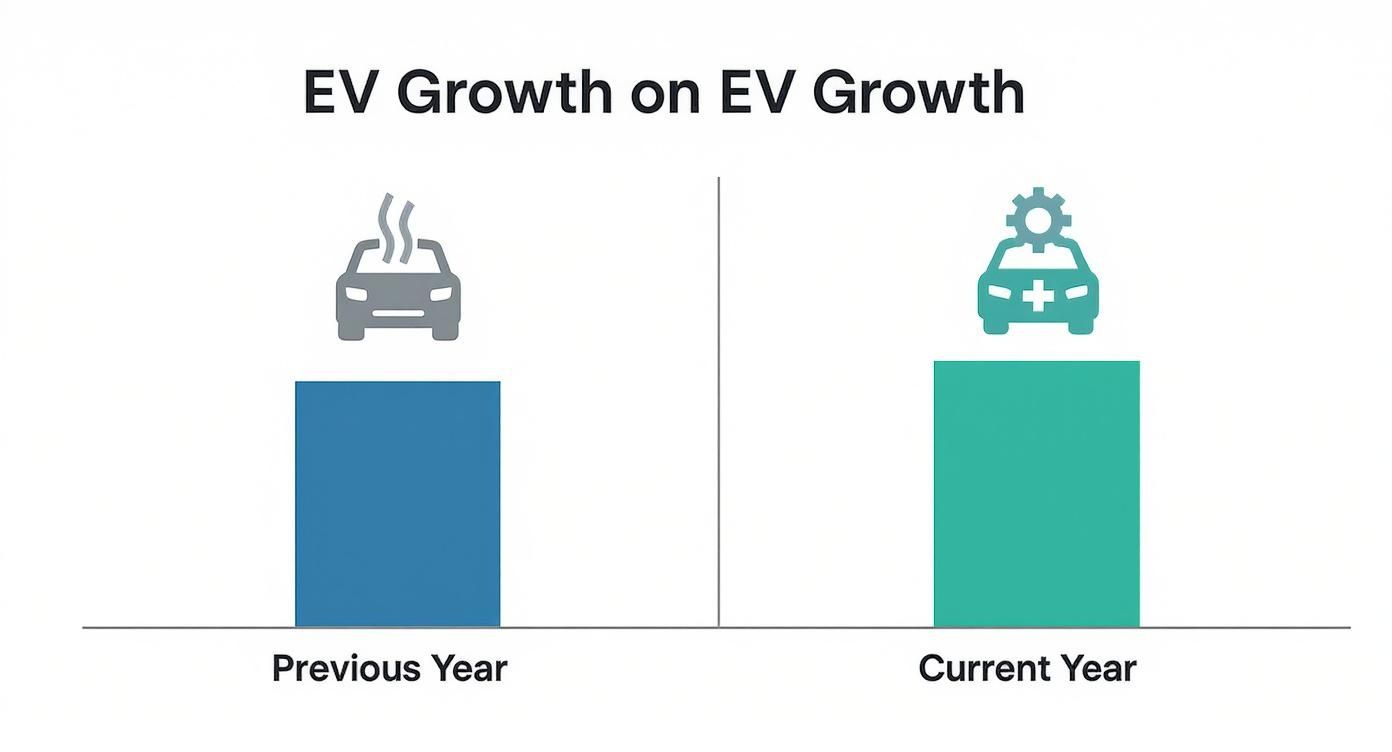
As more and more Brisbanites make the switch, the demand for proper home charging solutions like Level 2 units is growing right alongside it.
Your home’s electrical supply is another piece of the puzzle. Most homes in Brisbane are on single-phase power, which is more than capable of handling a standard 7kW Level 2 charger. However, some newer or larger properties are fitted with three-phase power, which opens the door to even faster 11kW or 22kW chargers. Don’t worry about figuring this out yourself—a good electrician will identify what you have during their site assessment.
Finally, we have Level 3 chargers, also known as DC Fast Chargers. These are the ‘fire hoses’ of the EV world. They use high-voltage Direct Current (DC) to slam power into a car’s battery at an incredible rate, often adding hundreds of kilometres of range in well under an hour.
However, their massive power needs and eye-watering cost (often over $100,000 for the unit and installation) make them completely unsuitable for a residential home. You’ll only find these beasts at dedicated public charging stations along highways or in shopping centre car parks. They’re built for road-trippers who need a quick top-up to get back on their journey.
To make it easier to compare, here’s a quick summary of how the different charger levels stack up for a typical Brisbane home.
| Charger Level | Charging Speed (km/hour) | Power Requirement | Best For |
|---|---|---|---|
| Level 1 | 10–20 km/hr | Standard 240V wall socket | Occasional use, emergency backup, or for plug-in hybrids with small batteries. |
| Level 2 | 40–85 km/hr | Dedicated 240V circuit (single-phase or three-phase) | Everyday home charging. Perfect for getting a full charge overnight. |
| Level 3 | 300+ km/hr | High-voltage industrial DC power | Public charging stations for long-distance travel. Not for home use. |
For almost every EV owner, a Level 2 charger is the clear winner, offering the perfect balance of speed, convenience, and cost for daily use. It ensures your car is always ready to go when you are.
Before we even think about picking up the tools for your new EV charger installation, there’s a vital first step. A licensed electrician needs to give your home’s electrical system a thorough site assessment—think of it as a complete health check before a major operation. This isn’t just box-ticking; it’s a non-negotiable step to make sure your new charger runs safely, efficiently, and meets all Australian standards.
This whole process is about figuring out what your home can realistically handle before we add what is essentially a powerful new appliance. It’s how we get ahead of any potential problems and ensure installation day goes off without a hitch.
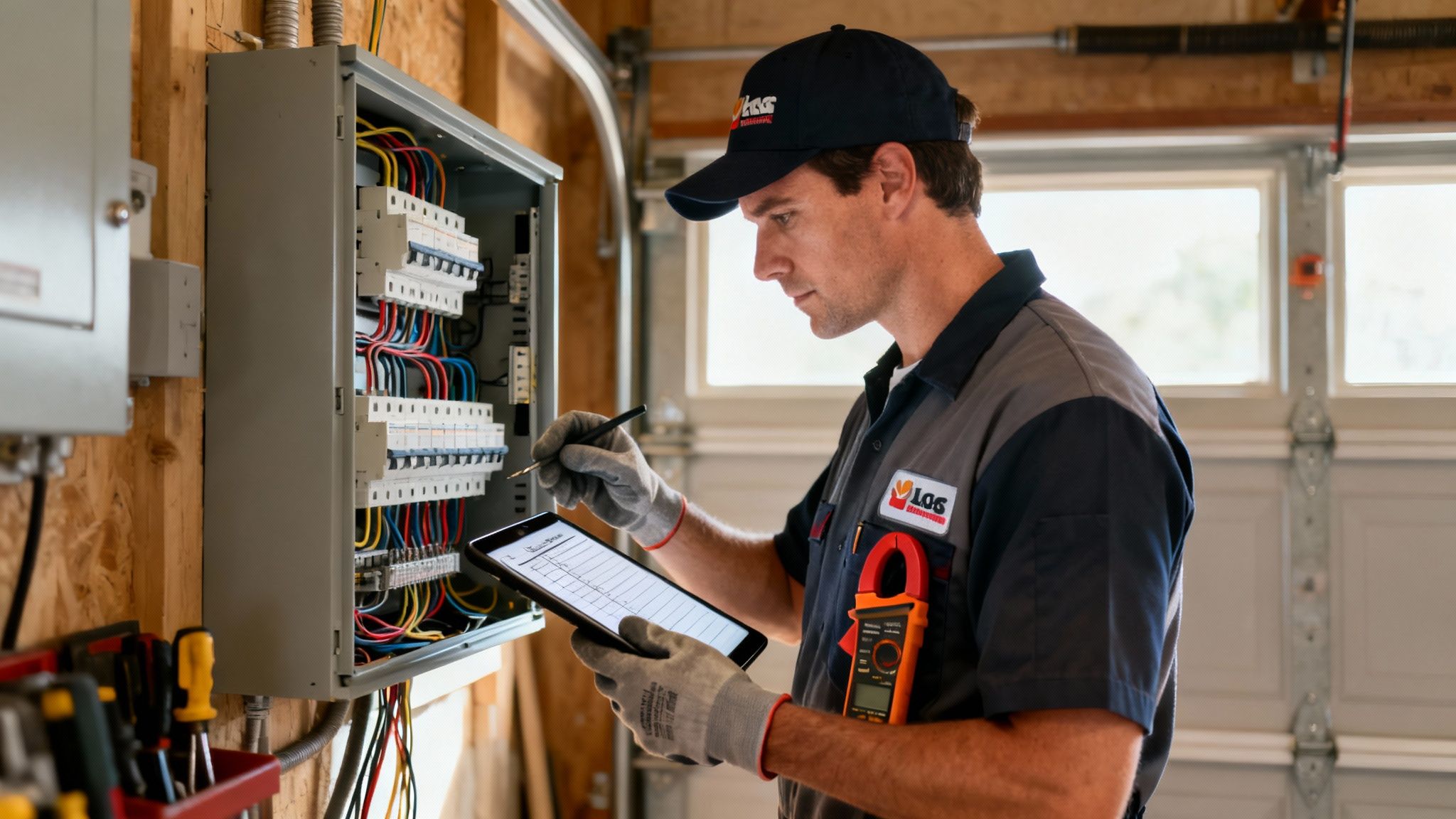
One of the very first jobs for the electrician is to calculate your home’s current electrical load. Picture your home’s power supply as a single water pipe coming in from the street. Every time you switch something on—the air con, the oven, the hot water system—you’re opening another tap on that pipe. An EV charger is like adding a brand-new, very large tap.
We need to be certain that opening this new tap won’t cause the pressure to drop everywhere else, or worse, overload the entire system. This load calculation is a critical safety check to confirm your home has enough capacity to handle the continuous power an EV charger needs.
If your home’s electrical network is its circulatory system, then the switchboard is its heart. This humble box of fuses and circuit breakers is what safely pumps power to every corner of your house. For an EV charger, this ‘heart’ needs to be strong enough to handle a significant extra workload without missing a beat.
The reality is, many older Brisbane homes have switchboards that were put in long before high-powered devices like a Level 2 charger were even a concept. They might still have old-school ceramic fuses or simply lack the physical space for a new, dedicated circuit.
A professional site assessment will tell us if your switchboard is fit for purpose. An undersized or outdated board isn’t just an inconvenience; it’s a major safety hazard and will almost certainly need an upgrade before a charger can be installed.
This is often the biggest variable in the whole installation. A modern, compliant switchboard is the absolute foundation of a safe electrical system. If you’re wondering what an upgrade involves, you can learn more about the importance of a modern electric switchboard for home safety and performance.
Where your charger lives is just as important as how it’s wired. Your electrician will walk through the options with you to find the sweet spot, balancing everyday convenience with technical and safety needs. The goal is to find a location that’s practical for you but also straightforward for the install.
There are a few key things that will guide this decision:
Ultimately, this pre-installation health check becomes the blueprint for the entire project. It flags any potential hurdles, defines the exact scope of work, and allows us to give you a transparent, accurate quote. It’s what makes the difference between a smooth, professional installation and one full of nasty surprises.
Budgeting for any home improvement can feel like a bit of a guessing game, but installing an EV charger is often more straightforward than people think. Getting a clear handle on the costs, available savings, and the necessary paperwork from the get-go is the key to a smooth, hassle-free installation.
The total investment for a professional Level 2 EV charger installation here in Brisbane varies. For a standard setup—think a modern switchboard with plenty of space and the charger located nearby—you’re typically looking at a total cost of $1,500 to $2,500. This figure includes both the charger unit itself and the electrician’s time. Of course, more complex jobs can nudge that price up.
The final quote for your EV charger installation is built from a few key parts. Understanding what goes into it helps you see exactly where your money is going and why one quote might differ from another.
One of the biggest variables we see is the state of a home’s existing electrical system. If our initial site assessment shows your switchboard is a bit long in the tooth or already running at full capacity, it will need an upgrade. This isn’t just an upsell; it’s a critical safety step that usually adds $800 to $2,000+ to the project, depending on the job’s complexity.
Other factors that shape the final price include:
For a more detailed look at what you can expect to pay in different situations, check out our complete guide to EV charger installation cost.
At the moment, there aren’t any direct rebates for private residential EV charger installations in Queensland, but it pays to keep an eye out. The world of government support for EVs is always changing, with the main focus right now on beefing up the public charging network to encourage more people to make the switch.
It’s a good idea to check the Queensland Government’s energy and transport websites every so often for any new incentives or pilot programs that might pop up for homeowners.
Across Australia, governments are pouring serious money into EV infrastructure. For instance, the NSW Government recently put $5.9 million towards funding 159 new regional chargers. It’s a clear sign of the commitment to supporting EV drivers.
Sorting out the admin side of things is a crucial part of any professional electrical job. In Queensland, any major electrical work—and that absolutely includes installing a dedicated circuit for an EV charger—must be completed by a licensed electrician. It’s the law. While you’re looking into it, resources for understanding building permits for homeowners can also be helpful, as permits are often needed for significant home projects.
Once the work is done, your electrician is legally required to give you a Certificate of Electrical Safety. This isn’t just a piece of paper. It’s your official guarantee that the installation was done correctly, tested properly, and meets all Australian safety standards, including the AS/NZS 3000 Wiring Rules.
This certificate is vital for your home insurance and, more importantly, for your peace of mind, confirming your new charging system is completely safe for your family and your car.
So, the big day is here! Getting your new EV charger installed is a genuinely exciting step, and knowing what the process looks like can make everything feel that much smoother. A professional installation isn’t just about hooking up a few wires; it’s a structured process designed to make sure everything is safe, compliant, and ready for you to start charging effortlessly.
For a standard installation, you can expect the process to take between three to six hours. Of course, if the job is a bit more complex—say, it involves a full switchboard upgrade or a tricky cable run through the wall—it might take a little longer. Don’t worry, your electrician will give you a clear and realistic timeline before they get started.
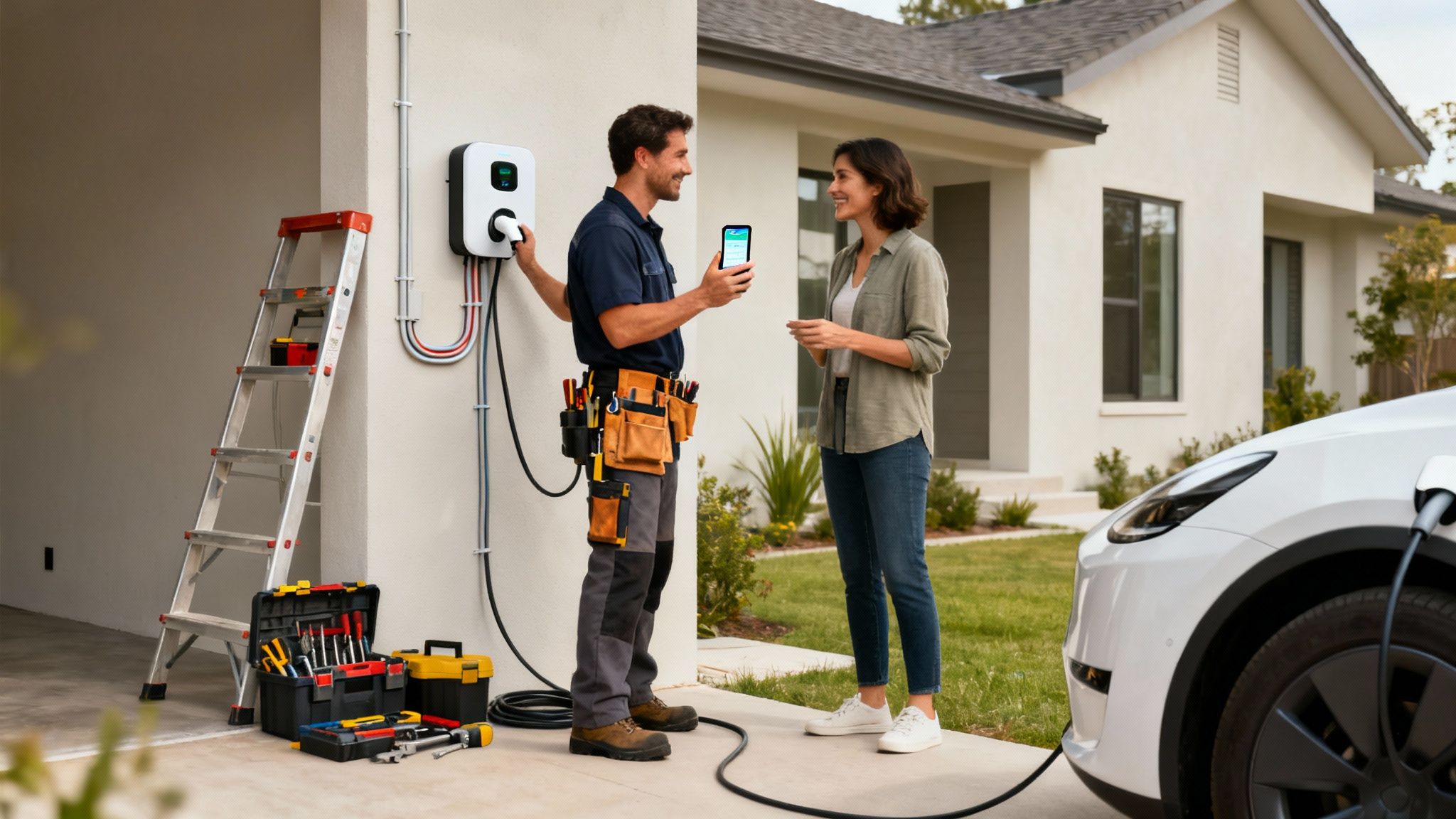
When your licensed electrician arrives, the very first thing they’ll do is walk through the entire job with you one last time. They’ll confirm the final spot for the charger that was agreed upon during your site assessment.
This is your chance to give the plan a final once-over and make sure everyone’s on the same page before any tools come out. It’s a simple but vital step to ensure the final result is exactly what you had in mind.
With the plan locked in, it’s time for the main event. This is the most technical part of the day, where your electrician sets up a safe and dedicated power supply just for your new charger.
Here’s what’s happening behind the scenes:
Once the new circuit is ready to go, the electrician will securely mount the EV charger unit to the wall in the agreed location. They’ll make sure it’s at the perfect height for easy access and that it’s mounted solidly to last for years.
After the unit is fixed to the wall, it will be professionally wired into the new dedicated circuit. Every connection is carefully torqued and double-checked to guarantee a perfect and safe electrical bond.
The testing and commissioning phase isn’t just a quick check; it’s a detailed safety audit. Your electrician will simulate various fault conditions to confirm that every safety feature, from the RCD at the switchboard to the internal protections of the charger itself, functions exactly as designed.
With everything connected, the final stage is to put the entire system through its paces. Your electrician will use specialised testing equipment to verify everything is perfect—correct voltage, polarity, and earthing. They’ll then power up the charger and run a series of commissioning tests.
Once they’re 100% satisfied that everything is working flawlessly, they’ll walk you through the official handover. This is the fun part and usually includes:
This final step ensures you feel completely comfortable and confident using your new EV charger right from the very first plug-in.
When you’re investing in an electric vehicle, it’s easy to get caught up in the hardware—the charger’s brand, its charging speed, and all the smart features. But the single most critical decision you’ll make has nothing to do with the box you mount on the wall. It’s about who you trust to install it.
An EV charger installation isn’t a weekend DIY job; it’s a major electrical upgrade to your property. Trying to save a few dollars by using an unlicensed or inexperienced installer is a massive gamble. The risks are huge, from voiding your charger’s warranty and frying your car’s expensive battery to the very real threat of an electrical fire. Your choice of installer is the number one factor in ensuring safety, reliability, and total peace of mind.
Imagine your home’s electrical system as a network of pipes carrying water. Installing an EV charger is like adding a high-pressure main that demands a huge amount of flow. If that new connection isn’t done by a professional who understands the whole system’s capacity, you’re asking for a burst pipe—overloaded circuits, damaged infrastructure, and seriously hazardous conditions.
A botched installation can cause a whole host of problems:
Finding the right person for the job means looking for more than just a standard electrical licence. You need a specialist. This is where a trusted local electrician in Brisbane with proven EV expertise becomes invaluable.
Here’s a quick checklist to use when you’re vetting an installer:
At DLG Electrical, our entire approach is built on safety and education. We don’t just show up and install a product. We deliver a complete solution, making sure you’re comfortable and confident in how to use your new charger safely and get the most out of it. This commitment is what separates a true professional service from the rest.
The importance of high-quality work is being recognised right across the industry. Just look at the Tesla supercharger site in New Italy, NSW, which recently won AEVA’s Best Charging Station Award. It’s a perfect example of how technical excellence and thoughtful design are being celebrated. This project shows a nationwide push towards installations that nail both high performance and accessibility—a standard every professional should be aiming for. You can find out more about this award-winning site and what it means for the EV charging community.
At the end of the day, a licensed and experienced electrician does more than just connect a few wires. They assess your home’s entire electrical ecosystem, guarantee everything is compliant, and give you a safe, reliable charging system that will serve you well for years to come. It’s an investment in safety that far outweighs any small savings you might make by cutting corners.
Even after you’ve got your head around the basics, it’s completely normal to have a few lingering questions before you commit. Here are some of the most common queries we hear from Brisbane homeowners, answered in plain English.
You might be surprised at how quick a straightforward installation is. If your switchboard is modern and the charger can be located close by, a licensed sparkie can usually have the whole job wrapped up in just three to six hours.
Of course, not every job is that simple. If the project is more involved—say, we need to do a full switchboard upgrade, run a heap of new wiring, or even dig a trench for an underground cable—it can easily stretch into a full day or sometimes longer. Your electrician will always give you a clear timeline after they’ve had a proper look at your property.
Absolutely. Most quality Level 2 chargers are built tough, with robust, weather-resistant casings (look for a rating of IP65 or higher) designed specifically to handle Brisbane’s sun and rain.
That said, if you have the option, installing the unit inside a garage or carport is always our first preference. A bit of shelter goes a long way in protecting the charger from the harshest elements, which can help prolong its lifespan and protect your investment. For a deeper dive into the specifics, this resource offers a comprehensive guide to home EV charger installation.
Look, your electricity bill is going to go up—there’s no getting around that. But it’s crucial to see the bigger picture here. You’re not just adding a new cost; you’re swapping your petrol budget for your power bill. And charging your EV at home is almost always significantly cheaper than filling up at the bowser.
The real trick to keeping costs down is smart charging. By using your charger’s built-in scheduler to power up during off-peak hours (usually in the dead of night), you can tap into the cheapest electricity rates and massively soften the impact on your bill.
In Queensland, for a standard residential EV charger install, you generally don’t need to notify your electricity retailer yourself. However, your licensed electrician has a legal responsibility to submit all the necessary compliance paperwork, including a Certificate of Electrical Safety, to the relevant authorities.
This process ensures the new electrical load on the grid is properly recorded and accounted for. Any professional installer will handle all this paperwork for you as part of the service, so you can have complete peace of mind that everything is done by the book.
Ready to make home charging a reality? The team at DLG Electrical has the expertise to ensure your installation is safe, compliant, and perfectly suited to your needs. Contact us today for a free, no-obligation quote at https://dlgelectrical.com.au.

Master Electrician with over 30 years of experience. Founded DLG Electrical in 2005 after international project work including electrical installations at Stamford Bridge Stadium, London(Home of Chelsea FC).

Local Electricians that can fix all Electric Hot water Systems.
Motion sensor lights are a versatile addition to any home, offering nu
