83 Jean St, Grange QLD 4051
Mon-Fri 07:30 AM - 04:00 PM - Sat - 8:00 - 12 - Sunday Closed
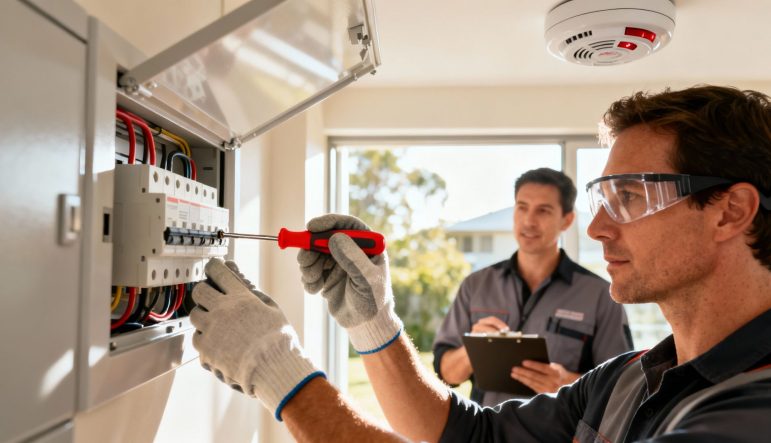
Electrical Home Repairs: Flickering lights, a buzzing power point, or a circuit breaker that keeps tripping aren’t just minor annoyances—they’re your home’s way of telling you something’s wrong with the electrical system. These common symptoms often point to underlying issues that can become serious safety risks if you ignore them.
Learning what these signs mean is the first step in knowing when to call in a professional for electrical home repairs.
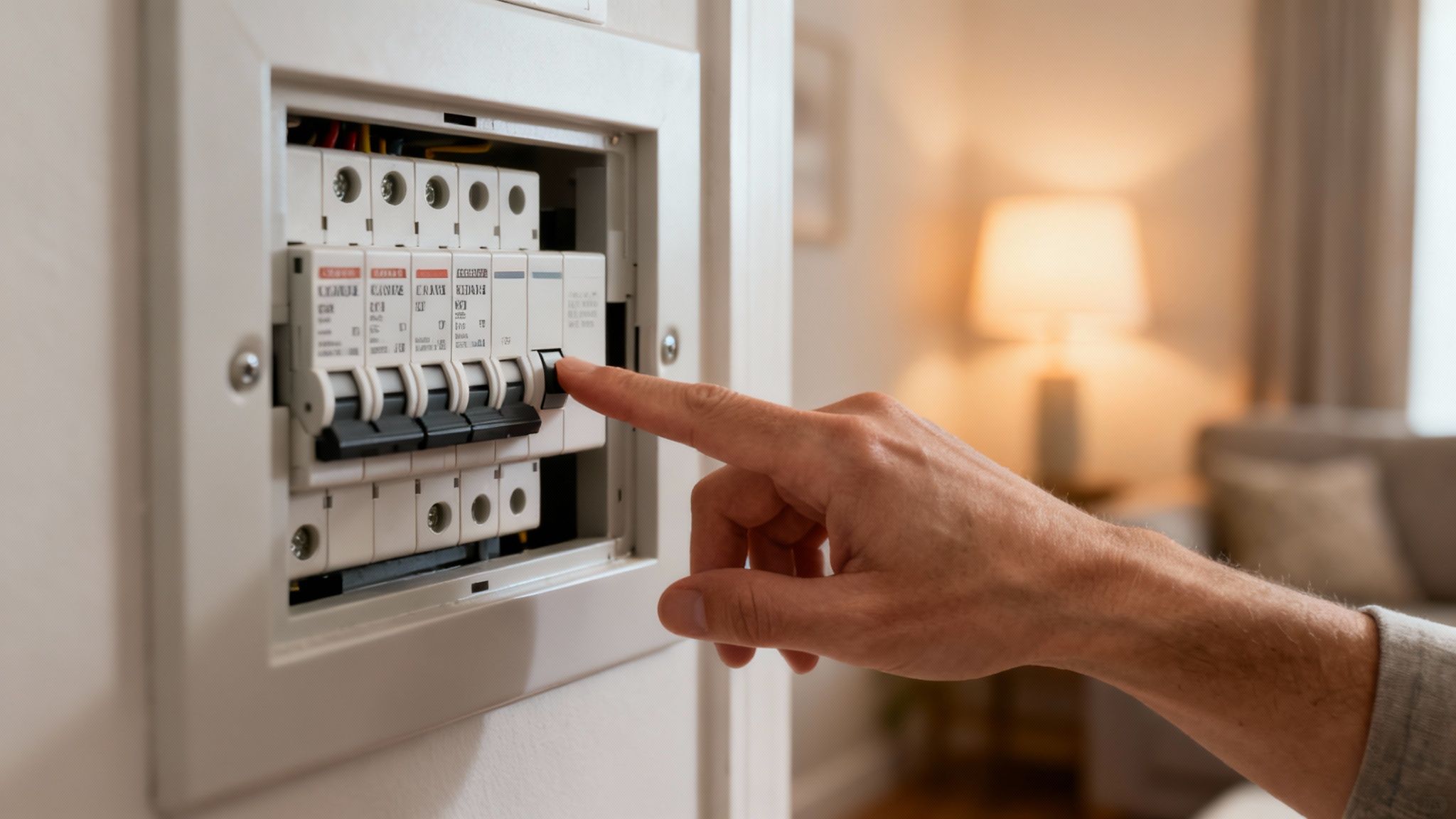
Think of your home’s electrical system like its nervous system—always working behind the scenes. When something goes wrong, it sends out clear signals. Being able to spot these signals helps you know the difference between a simple fix and a genuine hazard that needs a qualified electrician.
This knowledge is more important than ever. In Australia, the electrical services industry is made up of about 45,850 businesses, and their role in keeping our homes safe is growing. With more of us living in higher-density housing and adopting smart home tech, the demand for skilled sparkies for both repairs and upgrades is definitely on the rise.
To help you get a clearer picture, here’s a quick rundown of some common electrical issues you might encounter at home.
| Symptom | Possible Cause | Recommended Action |
|---|---|---|
| Frequent Circuit Breaker Trips | Circuit overload (too many appliances), short circuit, or a faulty breaker. | Unplug some devices from the circuit. If it keeps tripping, call an electrician. |
| Flickering or Dimming Lights | Loose wiring, overloaded circuit, or a problem with the fixture/switch. | Check if it happens with a specific appliance. For persistent flickering, seek professional help. |
| Buzzing or Warm Power Points | Loose wiring, internal damage, or a dangerous electrical fault. | Stop using the outlet immediately and schedule an urgent repair. This is a fire risk. |
| Burning Smell from an Outlet | Overheating wires or a severe electrical fault within the outlet or wall. | Turn off the power at the switchboard if possible and call an electrician right away. |
| Mild Electric Shocks | Faulty appliance, incorrect wiring, or an earthing problem. | Unplug the appliance and do not use the outlet until it’s been inspected by a professional. |
Let’s dig a little deeper into a couple of the most frequent problems we see.
A circuit breaker that trips all the time is easily one of the most common electrical headaches for homeowners. Its whole job is to cut the power when it senses an overload or a fault, which protects your wiring from overheating and prevents fires.
When a circuit breaker trips repeatedly, it’s a clear sign the circuit is drawing more power than it’s designed for. This could be a simple circuit overload—too many hungry appliances on at once—or something more serious like a short circuit.
An occasional trip from plugging in the kettle while the microwave is on might be nothing to worry about. But if it happens constantly, you’ve likely got a bigger issue on your hands. Knowing the basics of identifying a faulty circuit breaker is a great start.
If you’ve already tried unplugging things and the breaker still won’t cooperate, it’s a clear sign you need a professional. For a deeper dive, our guide explains in more detail why your circuit breaker keeps tripping and what your next steps should be.
Ever notice the lights dip for a second when you fire up the air conditioner or the microwave? A brief flicker can be perfectly normal. But if your lights are flickering, dimming, or buzzing away consistently, it’s usually a signal that something is wrong.
This kind of behaviour can point to a few different problems:
Beyond tripping breakers and flickering lights, there are other critical signs you should never ignore.
A burning smell coming from a power point, scorch marks on an outlet, or a socket that feels warm to the touch are all urgent warnings of a dangerous electrical fault. Likewise, getting a mild shock or hearing a buzzing sound from an outlet points to a serious wiring problem that needs immediate attention from a licensed electrician. Brushing these red flags aside can lead to disastrous consequences.
When it comes to electricity, safety isn’t just a guideline—it’s a lifeline. It helps to think of your home’s wiring as its veins and arteries; it’s a powerful, essential system. Just as you wouldn’t perform surgery on yourself, attempting complex electrical home repairs without proper training is incredibly dangerous.
Before you even think about touching anything electrical, no matter how small the task seems, your first and most critical step is to cut the power completely. Every home has a main switchboard (you might know it as a fuse box or breaker panel) that acts as the central command for your entire electrical system.
Find your switchboard—it’s usually tucked away in the garage, a utility room, or a cupboard. Open it up and locate the main switch. This one is typically larger than the others and might be labelled “Main Switch” or “100A”. Flipping this single switch de-energises your entire home, making it the ultimate safety measure before any work begins.
For smaller jobs, like changing a light fitting, you can often just turn off the individual circuit breaker for that specific area, like one labelled “Lights” or “Kitchen”. But if you have any doubt about which circuit controls what, always turn off the main switch. There’s absolutely no room for guesswork when your safety is on the line.
Never assume a circuit is dead just because a light switch is off. Get yourself a simple voltage tester and check the wires before you touch anything. This inexpensive tool is a non-negotiable part of any electrical safety kit and confirms for certain that there’s no live current.
Having the right equipment is just as important as knowing how to shut off the power. Insulated tools are essential. They have thick rubber or plastic handles designed to stop an electrical current from travelling up the tool and into your hand. Using a standard metal screwdriver or pliers on electrical components is just asking for a nasty electric shock.
Beyond being prepared, you also need to recognise the urgent warning signs that mean you should step back and call a professional immediately. These aren’t subtle hints; they’re emergency signals from your electrical system telling you something is seriously wrong.
Keep an eye out for these red flags:
If you notice any of these signs, don’t even think about trying to fix it yourself. Your only move should be to turn off the power at the main switchboard (if it’s safe to do so) and call a licensed electrician. Some jobs are simply not for DIY. While changing a lightbulb is fine, any task involving exposed wiring—from replacing a power point to installing a new light fixture—legally and logically requires a professional. The risks of getting it wrong are just far too severe.
We all love a bit of DIY. It’s satisfying to fix things around the house yourself. But when it comes to electricity, that can-do spirit needs a healthy dose of respect and expertise. Electricity doesn’t give you points for trying; one wrong move can have devastating consequences.
Certain electrical home repairs aren’t just a bad idea for an amateur—in Queensland, they are illegal and dangerously unsafe. Going beyond your skill set can lead to electrocution, house fires, or even voiding your home insurance policy. Suddenly, that attempt to save a few dollars turns into a potential financial catastrophe.
The temptation is real, especially during home renovations. Kitchen and bathroom upgrades are prime examples of where good intentions can go horribly wrong. In fact, a staggering 35% of DIY renovators end up calling in a professional to fix their mistakes, adding unexpected costs and delays. You can dig into more of these trends and the true cost of DIY blunders in these home renovation statistics.
When you weigh it up, the small cost of hiring a licensed electrician is nothing compared to the risks of getting it wrong.
In Australia, the law is crystal clear: any electrical work involving your home’s fixed wiring must be done by a licensed professional. This isn’t just bureaucratic red tape. It’s a critical safety net designed to protect you, your family, and your property.
Here are a few specific jobs that are firmly in the “call a sparky” category:
This simple decision tree can help you assess a potential electrical hazard and figure out the safest way forward.
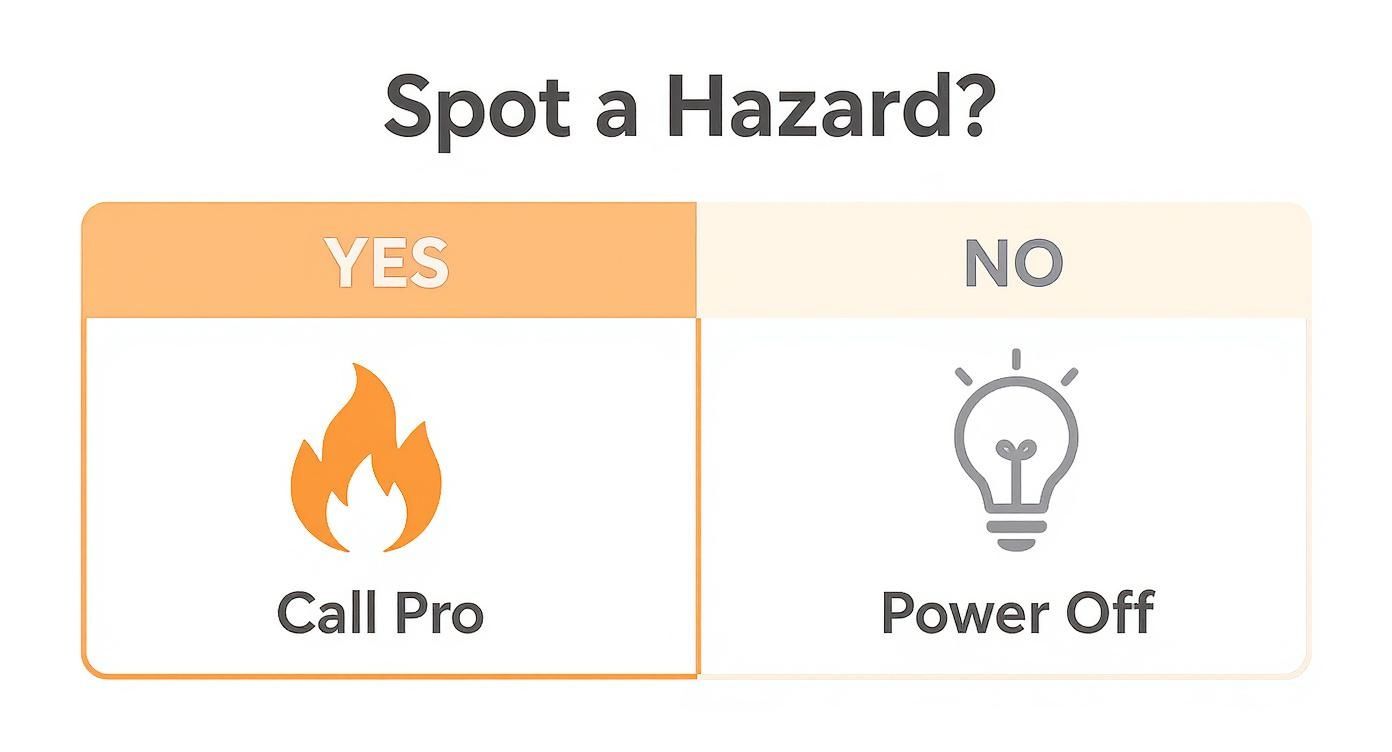
The key takeaway is simple: if you see immediate signs of danger like smoke or a burning smell, call a professional immediately. For any planned work, the first step is always to kill the power.
The most obvious risk of DIY electrical work is a severe electric shock, and that’s terrifying enough. But the dangers don’t stop there. A poorly done repair can create a ticking time bomb—a hidden fire risk that smoulders inside your walls for weeks or months before disaster strikes.
A common DIY mistake is failing to tighten wire terminals properly. A loose connection generates incredible heat as electricity struggles to jump the gap. Eventually, this can melt the plastic insulation and ignite surrounding materials like timber framing or insulation.
On top of the physical danger, there’s the financial fallout. If a house fire is traced back to illegal DIY electrical work, your insurance company has every right to deny your claim. They operate on the assumption that your home meets all legal safety standards. When you perform unlicensed work, you violate that trust, potentially leaving you to cover the devastating cost of rebuilding your home and replacing everything you own.
It’s a gamble that’s just not worth taking.
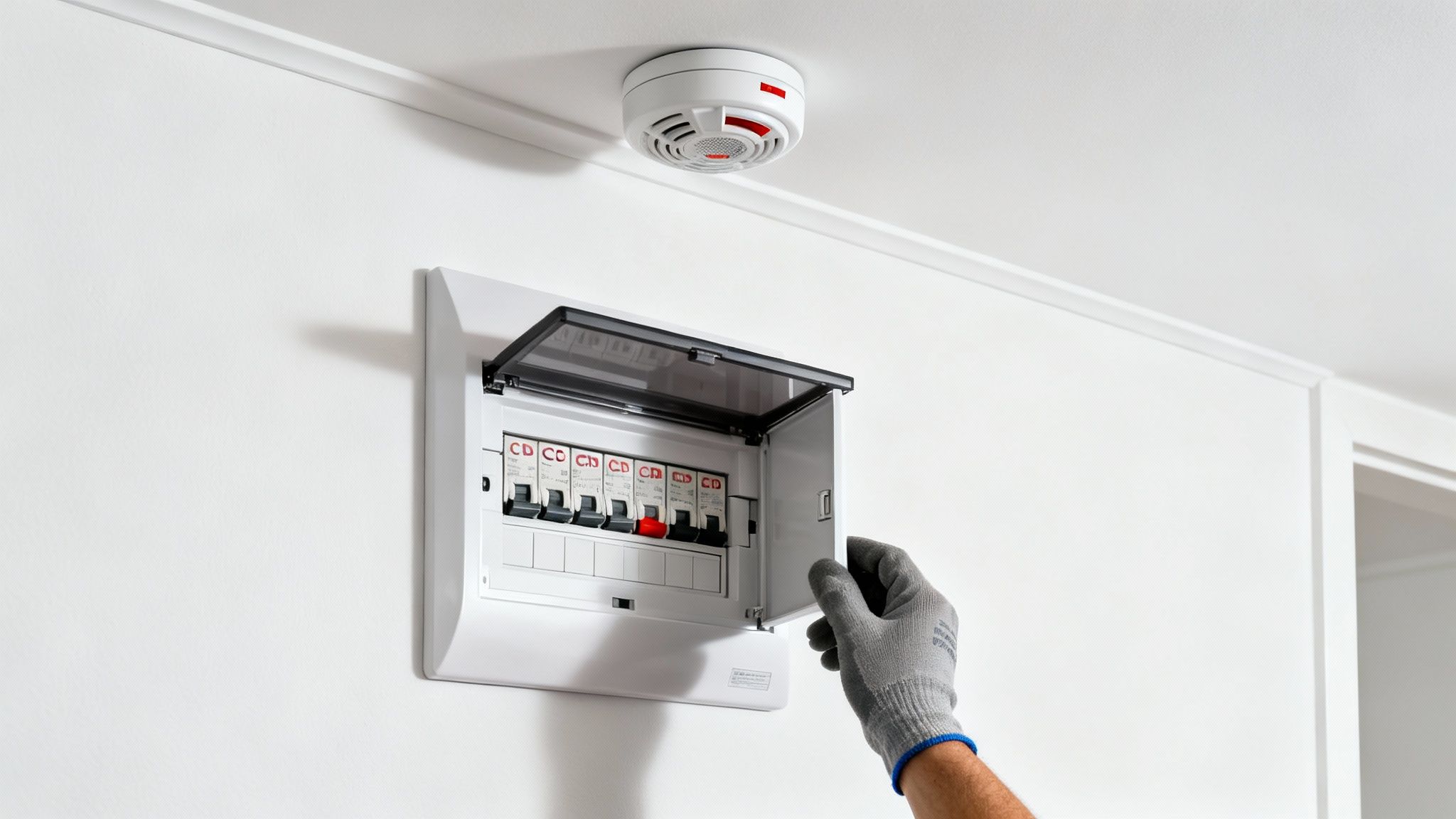
Your switchboard is the heart of your home’s electrical system, while your smoke alarms are your first line of defence in a fire. Bringing both up to scratch isn’t just a smart move for improving your home’s safety; in Queensland, it’s a legal requirement. These upgrades are a core part of responsible homeownership and essential electrical home repairs.
Many older Brisbane homes are still running on outdated fuse boxes or switchboards that simply don’t have modern safety features. This isn’t just a compliance issue—it puts your property and everyone in it at unnecessary risk.
Think of a modern safety switch, also known as a Residual Current Device (RCD), as a high-speed bodyguard for your family. Its one and only job is to watch the flow of electricity in a circuit. The instant it spots a tiny imbalance—like the current taking a shortcut through a person’s body instead of its proper path—it slams on the brakes and cuts the power in milliseconds.
This rapid shutdown is fast enough to prevent a fatal electric shock, making RCDs one of the most important safety devices you can have. They are a legal must-have on all circuits in new homes and for any electrical work done on existing ones in Queensland.
An old switchboard with those classic ceramic fuses just can’t offer this kind of protection. If your board looks like it belongs in a museum, it’s a massive red flag that a critical upgrade is long overdue. To get a better handle on what’s involved, you can learn more about what an electric switchboard for your home upgrade entails and why it’s so vital.
Alongside switchboard safety, Queensland has rolled out some of Australia’s toughest smoke alarm laws, all designed to save lives. The legislation, which has been phased in over recent years, demands that all homes be kitted out with interconnected photoelectric smoke alarms.
So, what does that actually mean for you?
To make things clearer, here’s a simple checklist to see if your home is compliant.
This table breaks down the essentials of the current Queensland smoke alarm legislation. Use it as a quick guide to check if your property is up to code.
| Requirement | Details | Action Required |
|---|---|---|
| Interconnected Alarms | When one alarm sounds, all alarms must sound together. | Test your alarms to ensure they are all linked and sound simultaneously. |
| Photoelectric Technology | Alarms must be photoelectric (not ionisation) type. | Check the alarm unit for “photoelectric,” “optical,” or a symbol with a ‘P’. |
| Power Source | Must be hardwired or have a non-removable 10-year lithium battery. | Verify the power source. If you have replaceable 9V batteries, they are not compliant. |
| Location Coverage | Must be installed in every bedroom. | Check every bedroom for a functional, compliant alarm. |
| Hallway & Level Coverage | Must be in hallways connecting bedrooms and on each storey. | Walk through your home to ensure all connecting hallways and levels have alarms. |
| Expiry Date | Smoke alarms must be replaced every 10 years. | Check the manufacture or expiry date printed on the back of each alarm unit. |
Meeting these rules is about more than just ticking a box for compliance; it’s about giving your family the best possible chance of escaping a house fire safely.
For those keen to understand the backbone of these systems, this guide on Mastering Residential Electrical Panel Wiring offers some great insights into the modern wiring practices that make it all work.
So, you’ve pinpointed an electrical problem and wisely decided to step back from a risky DIY attempt. That’s the right call. The next move is just as important: finding a trustworthy professional to take over.
Hiring the right sparky for your electrical home repairs isn’t just about ticking a job off the list. It’s about guaranteeing the safety and compliance of your entire property. Brisbane has no shortage of electricians, but they are definitely not all created equal.
Making a smart, informed choice protects you from dodgy work, hidden dangers, and surprise costs that can pop up later. Think of it as a careful vetting process that buys you peace of mind and secures the long-term health of your home’s electrical system.
First things first, and this is non-negotiable: confirm the electrician holds a current Queensland electrical contractor licence. This isn’t just a bit of admin. It’s your proof that they’re qualified, up-to-date with the rules, and legally allowed to work on your home.
You can check any electrician’s credentials in a minute using the online Queensland Building and Construction Commission (QBCC) licence search tool. Any genuine professional will gladly give you their licence number to check.
Just as crucial is their public liability insurance. This is your safety net, protecting you and your property if something unexpected goes wrong on the job. Don’t be shy—ask to see their Certificate of Currency. A reputable tradie will have it on hand.
Once the essentials are confirmed, it’s time to dig a bit deeper to find the perfect fit. A quick chat on the phone can reveal a lot about their professionalism and experience.
Get a short list of questions ready for potential candidates:
This initial phone screen is a great way to filter your options down to a few solid contenders. For a deeper dive into choosing the right professional, our guide on what to look for in a Brisbane electrician offers some extra valuable tips.
After a few calls, your next step is to get written quotes from at least two or three electricians. It’s always tempting to jump at the lowest price, but a good quote is about much more than the bottom line.
A professional quote should be detailed, transparent, and break down all the costs for labour and materials. It should also specify if it’s a fixed quote (the price is locked in) or an estimate (the final cost might change). A vague, one-line quote is a major red flag.
Remember to compare apples with apples. One electrician might quote for higher-quality, longer-lasting materials, while another might use a cheaper alternative. The lowest price isn’t always the best value for your money.
This careful approach is more important than ever. With home renovations bouncing back, Australia is experiencing skilled trade shortages, putting qualified electricians in high demand. The Housing Industry Association has highlighted this trend, which means homeowners need to be extra vigilant. A busy market can attract unqualified operators, so making sure your chosen sparky is licensed is your guarantee their work will meet Australia’s strict safety standards.
By taking these deliberate steps—checking credentials, asking the right questions, and properly comparing quotes— you put yourself in the driver’s seat. You can make a confident, safe choice and ensure your electrical home repairs are handled by a true professional.
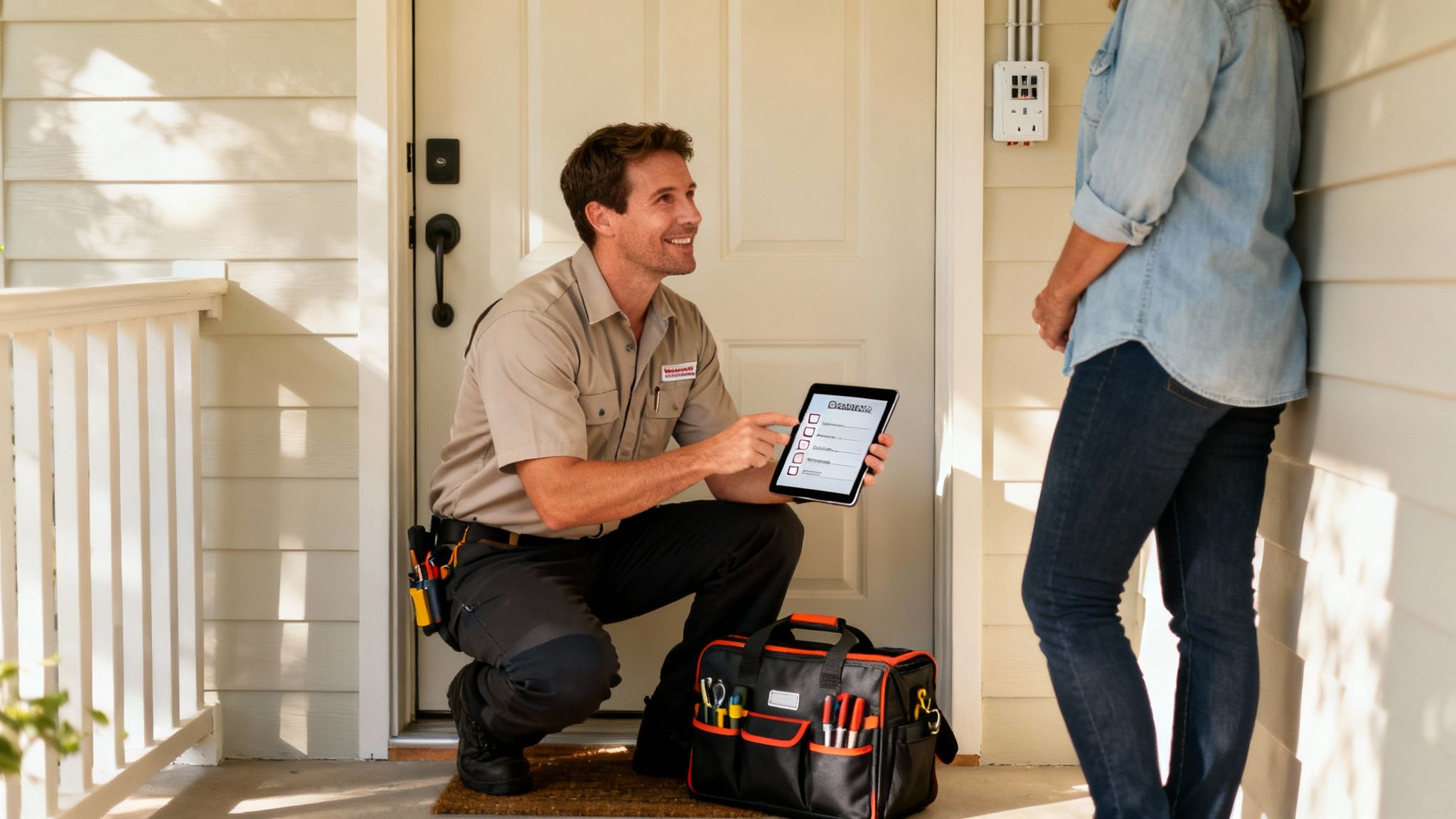
Calling a tradesperson can sometimes feel a bit intimidating, especially when you’re not sure what happens next. But when you call for professional electrical home repairs, the process is straightforward and designed to be completely transparent, keeping you in the loop from start to finish.
It all kicks off with your initial phone call. To get the ball rolling smoothly, try to have a clear description of the problem handy. Jot down what you’re seeing, hearing, or smelling, and when the issue first popped up. This information gives our electricians a valuable head start before they even arrive at your door.
When our licensed electrician arrives, they’ll introduce themselves and have a chat with you about your concerns. They won’t just start pulling things apart; their first job is to be a detective, methodically investigating to pinpoint the exact cause of the problem.
This diagnostic phase is a systematic process that might involve:
This careful assessment ensures we fix the root cause, not just patch up a symptom.
The most crucial step happens after the diagnosis and before any work begins. Our electrician will explain their findings in plain English, outline the required repairs, and provide you with a clear, upfront quote for the entire job.
This means you’ll know the full cost before you commit. No hidden fees, no surprise charges. A professional service is built on trust, and transparent pricing is the cornerstone of that relationship.
It’s important to understand that most electricians charge a call-out fee. This is a standard industry practice that typically covers the cost of the tradesperson’s travel time, their vehicle expenses, and the initial diagnostic work they perform on-site. It gets a qualified expert to your door, ready to solve the problem.
Once you’ve reviewed the quote and given the go-ahead, the electrician will get to work. They’ll complete the repair efficiently, using the correct parts and adhering strictly to all Australian safety standards.
After the job is done, they’ll clean up the work area, test everything to make sure it’s working perfectly, and provide you with a final invoice. If the work requires it, you’ll also receive a certificate of compliance for your records. This structured process ensures your electrical issue is resolved safely and professionally, with no guesswork involved.
When you’re dealing with electrical issues at home, it’s natural to have a few questions. To give you a bit more clarity and confidence, we’ve put together straightforward answers to some of the most common queries we get from Brisbane homeowners.
The cost of hiring a sparkie can vary, but most will charge a call-out fee to cover their travel and initial diagnostic time, followed by an hourly rate.
You can generally expect a call-out fee to be between $90 and $150. After that, hourly rates typically fall in the $100 to $160 range, depending on the electrician’s experience and how complex the job is.
For common tasks like installing a new power point or swapping out a light fitting, many electricians will give you a fixed price. It’s always best practice to ask for a detailed, upfront quote before any work gets underway so there are no surprises later.
An electrical emergency is any situation that poses an immediate danger to people or your property. Don’t hesitate to call an emergency electrician if you notice any of these red flags:
In these scenarios, safety comes first. If you can do so safely, head to your switchboard and turn off the main power switch. Then, call a licensed emergency electrician immediately. Never, ever try to tackle these issues yourself.
The time it takes to complete a repair really depends on the job at hand. Many simple fixes can be sorted out within an hour or two.
A good electrician will always give you a time estimate along with their quote, so you’ll have a clear idea of what to expect before they even start. Clear communication makes the whole process feel much smoother and more predictable.
When you need reliable, professional, and safe electrical solutions in Brisbane, trust the experts at DLG Electrical. With over 19 years of experience, our licensed team is ready to handle all your electrical needs, from urgent repairs to full-scale installations. Get your free, no-obligation quote by visiting us at https://dlgelectrical.com.au today.

Master Electrician with over 30 years of experience. Founded DLG Electrical in 2005 after international project work including electrical installations at Stamford Bridge Stadium, London(Home of Chelsea FC).

Local Electricians that can fix all Electric Hot water Systems.
Motion sensor lights are a versatile addition to any home, offering nu
