83 Jean St, Grange QLD 4051
Mon-Fri 07:30 AM - 04:00 PM - Sat - 8:00 - 12 - Sunday Closed

Your home’s electric switchboard is the central hub that safely distributes power from the main electricity supply to all the different circuits in your house. Think of it as the brain and nervous system of your home’s electrical setup, sending power to lights, appliances, and outlets while constantly watching for overloads and faults.
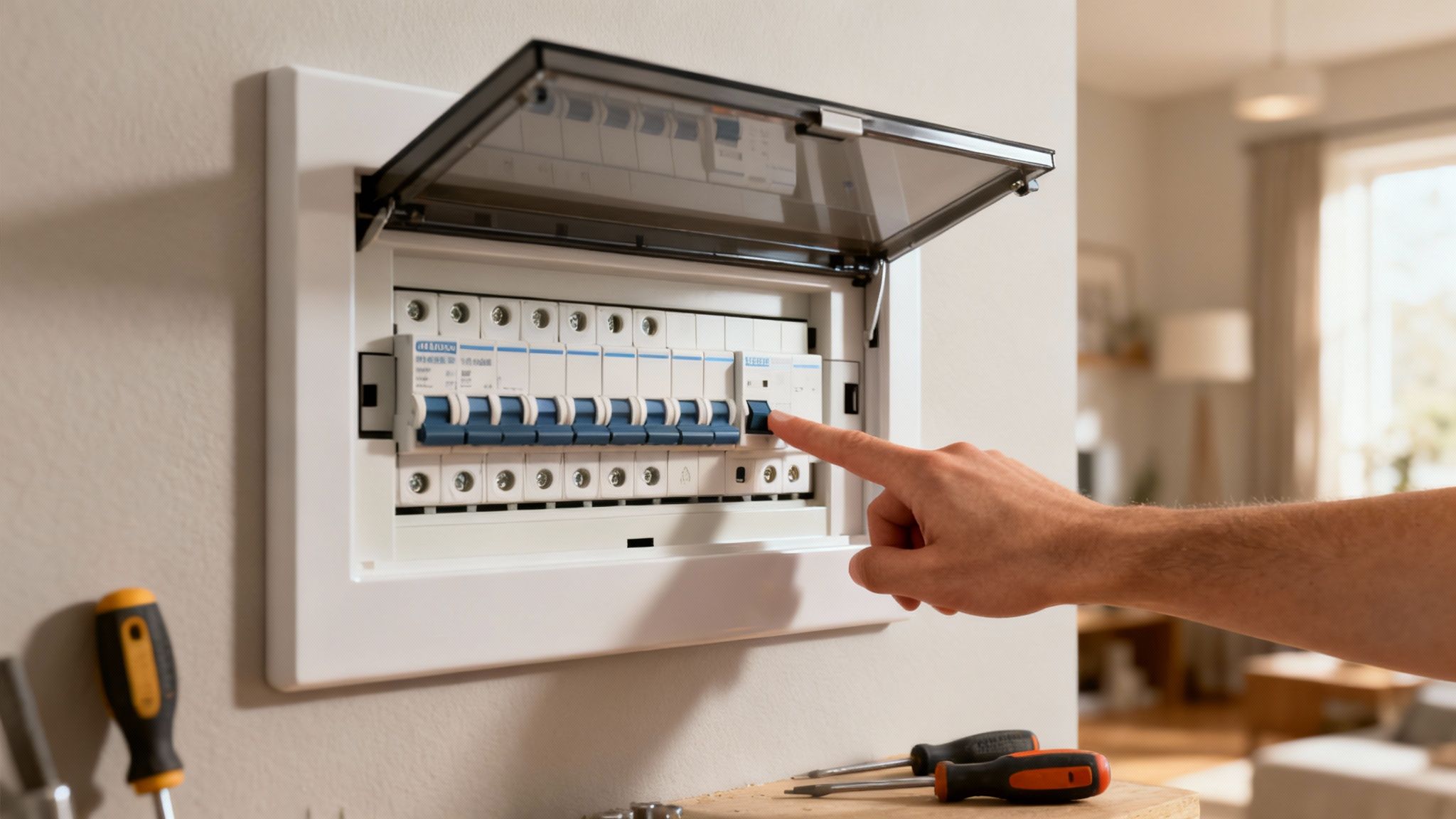
Let’s stick with the human body analogy for a second. If your home’s wiring is the network of veins and arteries, then the electric switchboard is the heart. Tucked away in a metal or plastic box, it holds all the critical safety gear and distribution components, making sure electricity gets exactly where it needs to go, safely and reliably.
This command centre does more than just flick things on and off; its main job is protection. Every single kilowatt of power that comes into your property has to pass through this panel first. Inside, a row of switches acts as a team of vigilant guardians, each one looking after a specific electrical circuit.
A modern switchboard is packed with a few vital parts that work together to keep your home powered up and safe. While the layout might look different from house to house, you’ll almost always find these core elements:
A properly functioning switchboard is the absolute foundation of electrical safety in any home. It actively prevents electrical fires, protects your expensive appliances from power surges, and, most importantly, shields your family from dangerous electric shocks.
Getting to know these components helps you see that your switchboard is so much more than an old-fashioned box of fuses. Making sure everything is up to scratch with national standards is also critical for safety. You can get a better handle on the strict guidelines governing installations by reading up on the current electrical wiring standards in Australia.
And once your system is safe and modern, you can start looking at ways to optimise your power usage. There are plenty of great tips for maximising home energy efficiency that work perfectly with a modern electrical system to help lower your bills.
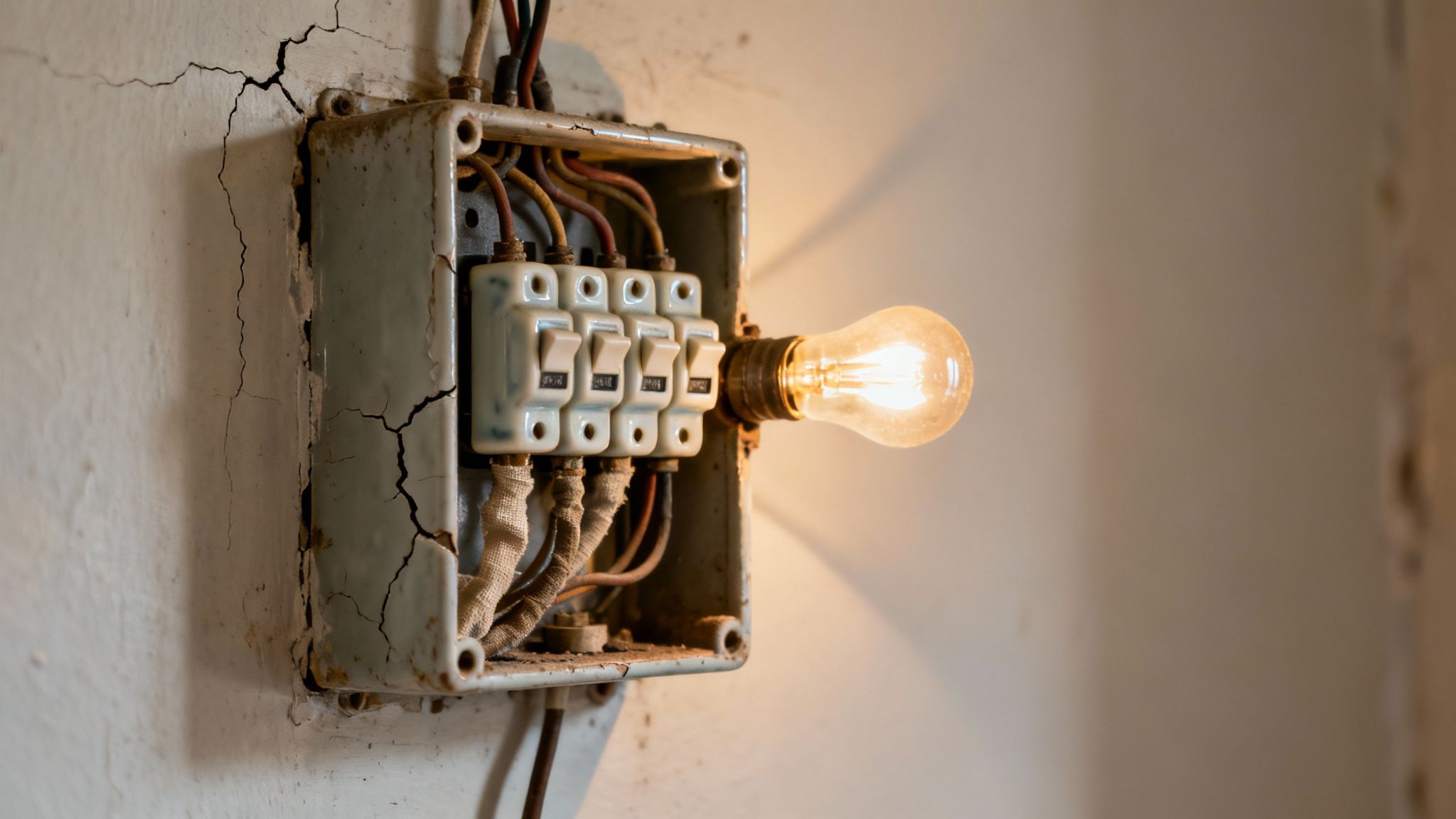
It’s easy to forget about your home’s switchboard, tucked away in a cupboard or on the side of the house. But its age and condition are absolutely critical to your family’s safety. An old switchboard is like having an old, rusty gatekeeper—it might have done a decent job years ago, but it simply doesn’t have the reflexes to handle modern electrical demands and threats. Ignoring the warning signs of an outdated panel isn’t just a minor oversight; it’s a serious risk.
Many older Australian homes, especially those built before the 1980s, just weren’t wired for today’s power-hungry lifestyle. These properties often struggle with an inadequate power supply and lack the modern safety features needed to prevent electrical faults. You can learn more about the common electrical challenges in older Sydney homes, and you’ll see these issues pop up in houses all across the country.
So, how can you tell if your switchboard is past its use-by date? The clues are often hiding in plain sight.
The most obvious red flag is the presence of old-fashioned ceramic fuses with that fiddly rewirable fuse wire. These are relics from a bygone era, offering minimal protection compared to the instant response of modern circuit breakers. If you see these, your board is definitely due for a check-up.
Another dead giveaway is the absence of Residual Current Devices (RCDs), which you probably know as safety switches. Modern electrical standards make these mandatory for a very good reason: they are lifesavers that cut the power in milliseconds to prevent a severe electric shock. If your board doesn’t have them, it’s dangerously out of date.
You might also notice things going a bit haywire around the house. These aren’t just quirky personality traits of an old home; they are symptoms of an electrical system that’s overloaded and struggling to keep up.
Keep an eye out for these common warning signs:
To put it simply, the difference between old and new is night and day. Here’s a quick comparison.
| Feature | Old Switchboards (Pre-1990s) | Modern Switchboards |
|---|---|---|
| Protection Type | Rewirable ceramic fuses | Circuit breakers & RCDs (Safety Switches) |
| Safety Standard | Minimal shock & fire protection | High level of protection against shock & fire |
| Resetting | Requires manual replacement of fuse wire | Simple flick of a switch to reset |
| Capacity | Low; struggles with modern appliances | High; designed for multiple high-power devices |
| Compliance | Does not meet current AS/NZS 3000 standards | Fully compliant with modern safety regulations |
As you can see, the leap in safety and functionality is massive.
These symptoms are more than just minor annoyances. They are your home’s way of screaming that its electrical heart is under serious stress. An old switchboard simply doesn’t have the capacity for modern life—think air conditioners, induction cooktops, electric vehicle chargers, and multiple kitchen gadgets all running at once.
Ignoring the signs of an outdated switchboard is like ignoring the smoke alarm. It’s a warning system telling you that the risk of an electrical fire or a dangerous electrical fault is higher than it should be.
Ultimately, spotting these signs gives you the power to act. A timely upgrade protects your property, keeps your appliances running smoothly, and, most importantly, safeguards your family from electrical hazards that are entirely preventable. If your home is showing any of these symptoms, it’s time to call in a licensed electrician for a professional look.
The technology inside a home’s electric switchboard has come a seriously long way. If your house is still running on an old fuse box, it’s a bit like using a street directory from the 1980s to navigate a modern city—it’s clunky, inefficient, and frankly, a bit of a hazard. The leap from fuses to circuit breakers is one of the biggest safety upgrades your home can have.
Back in the day, switchboards used simple ceramic fuses. Inside each one was a thin piece of wire designed to be a weak link. If a circuit overloaded, this wire would melt and break the connection, cutting the power. It worked, but the whole system was clumsy and had some major built-in risks.
Fuse boxes from yesteryear came with a few big headaches. For starters, they were a massive pain. When a fuse blew, you couldn’t just flick a switch. You had to hunt down the right fuse wire, carefully replace the burnt-out bit, and slot it back in—usually fumbling around in the dark.
But the real issue was the fire risk. It was all too common for homeowners to replace a blown fuse wire with one that was too thick. This “quick fix” would let far too much current surge through the circuit, causing the wiring inside your walls to overheat and potentially start a fire.
The fundamental danger of a fuse system is that it’s imprecise and relies on someone manually getting it right. Modern switchboards take the guesswork out of the equation, offering automated, reliable protection that old technology just can’t compete with.
The modern circuit breaker completely changed the game for home electrical safety. Instead of a wire that melts, a circuit breaker has an internal, automatic switch. The moment it senses an overload or a short circuit, it “trips” and instantly kills the power. Resetting it is as easy as flicking the switch back on after you’ve sorted out the problem.
But the evolution didn’t stop there. The next big step was the introduction of Residual Current Devices (RCDs) and Residual Current Breakers with Overload protection (RCBOs). These add a crucial layer of personal protection, designed to detect tiny electrical leaks that could cause a fatal electric shock and shut off the power in less than 30 milliseconds.
This whole progression marks a massive shift in thinking:
Today’s switchboards are also built with the future in mind. You can get specialised panels designed to seamlessly manage power from different sources, like the grid and your rooftop solar panels, keeping your home both safe and energy-efficient.
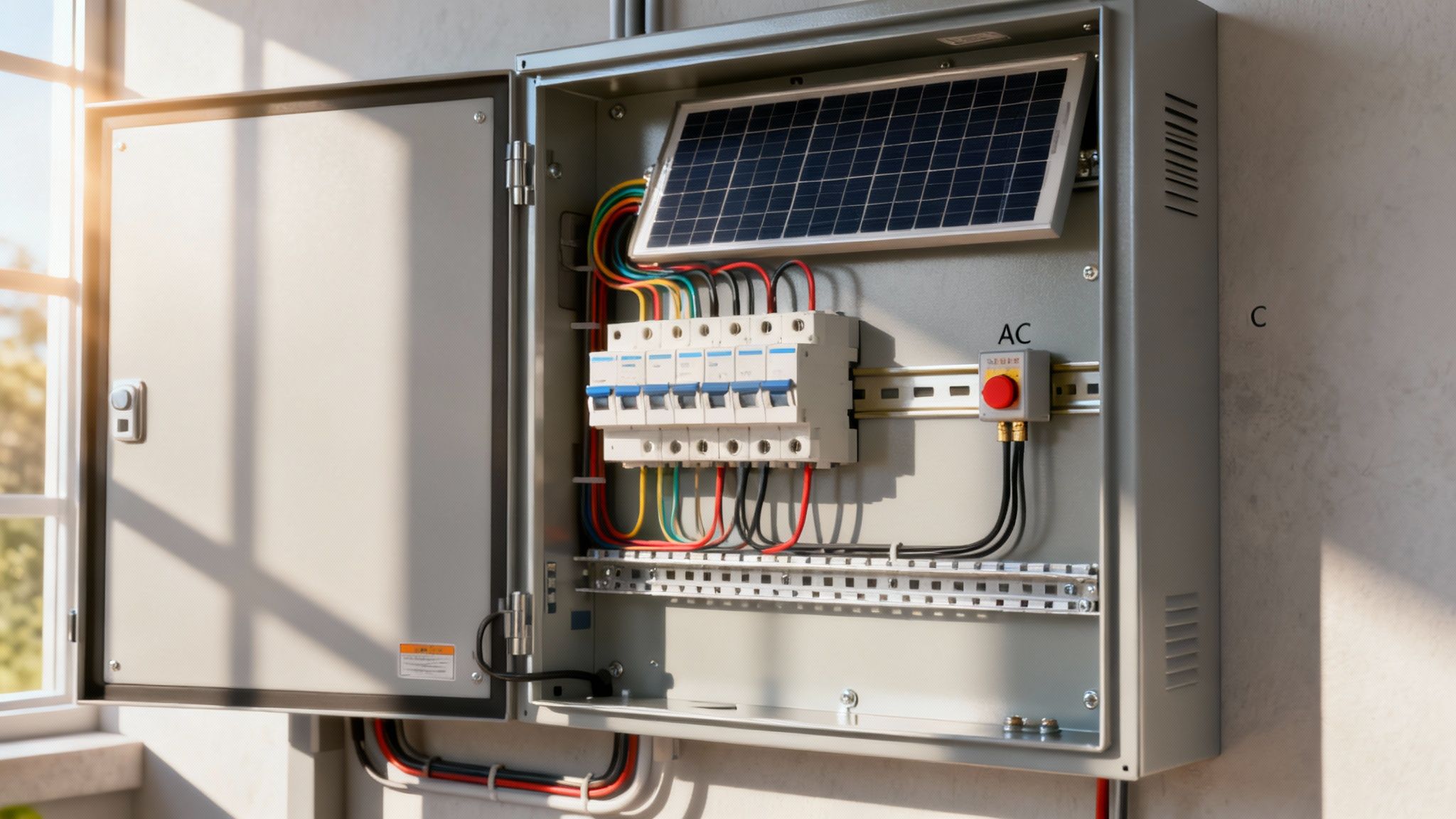
As solar panels become a familiar sight on Aussie rooftops, a lot of homeowners are discovering their existing electric switchboard for home isn’t quite up to the job. Adding a solar system isn’t a simple plug-and-play affair. Think of it like adding a mini power station to your property—and your switchboard needs to be ready to manage this new energy source safely and efficiently.
An older board just wasn’t designed to handle the two-way flow of electricity, which is exactly what solar introduces. It needs to manage power coming in from your panels as well as power being drawn from the grid.
The massive growth in rooftop solar is now one of the biggest drivers for switchboard upgrades across the country. In 2023 alone, Australia added a staggering 2,785 megawatts (MW) of new rooftop solar capacity, bringing our national total to over 22,000 MW. Since solar panels generate direct current (DC) electricity, your switchboard needs the right equipment to safely convert it to the alternating current (AC) your home uses.
To safely harness the sun’s power, your switchboard will need a few specific upgrades. These aren’t just nice-to-haves; they are mandatory to meet Australian standards and keep your home—and the sparkies working on the grid—safe.
A solar-ready switchboard isn’t just about adding a few new switches. It’s about re-engineering your home’s electrical nerve centre to manage power generation, not just consumption. This ensures your system is efficient, compliant, and safe for everyone involved.
Before you commit to an installation, a crucial first step is determining the appropriate size for your solar system to make sure your switchboard can handle the load. This bit of planning can save you from unexpected upgrade costs and guarantee a smooth, safe process from day one. A qualified electrician can take one look at your current panel and tell you exactly what’s needed to get it ready for a clean energy future.
Thinking about a switchboard upgrade might feel like a huge job, but understanding the steps involved makes the whole thing much more straightforward. This isn’t a chaotic DIY project; it’s a structured process handled by licensed professionals, all designed to get your home’s electrical system up to scratch with minimal fuss.
The journey kicks off with a professional consultation. A licensed electrician will come to your home to take a good look at your current electric switchboard for home, figure out your power consumption needs, and spot any hidden issues with your wiring. This is the perfect time to chat about your future plans, like adding an EV charger or a powerful new air con unit, so they can factor that into the new board’s design.
After the assessment, you’ll get a detailed quote. A good quote is more than just a final number; it should clearly break down the costs for labour, the new switchboard enclosure, circuit breakers, RCDs, and any other bits and pieces, like potential wiring repairs.
Once you give the green light and book in the work, the installation can get underway. Here’s a typical rundown of what happens on the day:
An upgrade isn’t just about swapping out old parts; it’s a complete overhaul of your home’s electrical safety core. The process ensures every component works together to protect your property and family, providing peace of mind for years to come.
The total cost of a switchboard upgrade can vary quite a bit, and a few key factors come into play. The size of your home and how many circuits you have are the main drivers—a large house with multiple air conditioners and a pool pump will naturally need a more complex (and expensive) board than a small apartment.
The condition of your existing wiring also has a big say in the final price. If the electrician uncovers old or degraded wiring during the job, it will need to be fixed to ensure the new board can operate safely. This necessary repair work will add to the overall cost. For a deeper dive into what’s involved, check out our complete guide to switchboard repairs and upgrades.
When it comes to the electrical heart of your home, this is one area where DIY is absolutely off the table. Trying to install or upgrade an electric switchboard for home yourself isn’t just a bit risky—it’s illegal in Australia for some very serious reasons. This isn’t a simple plug-and-play job; it’s complex work that demands deep technical know-how, and a single mistake can lead to catastrophic consequences.
Only a licensed and insured electrician has the legal authority to touch your switchboard. This isn’t just bureaucratic red tape; it’s a critical safeguard for your family and your property. Professionals are trained to work within the strict Australian Standards, specifically AS/NZS 3000, often called the “Wiring Rules.” These rules exist to make sure every single installation is done safely and correctly.
Trying to save a few dollars by sidestepping a professional can end up costing you everything. The dangers are severe and go well beyond the initial installation.
This infographic lays out the clear, expert-led process for a safe switchboard upgrade.
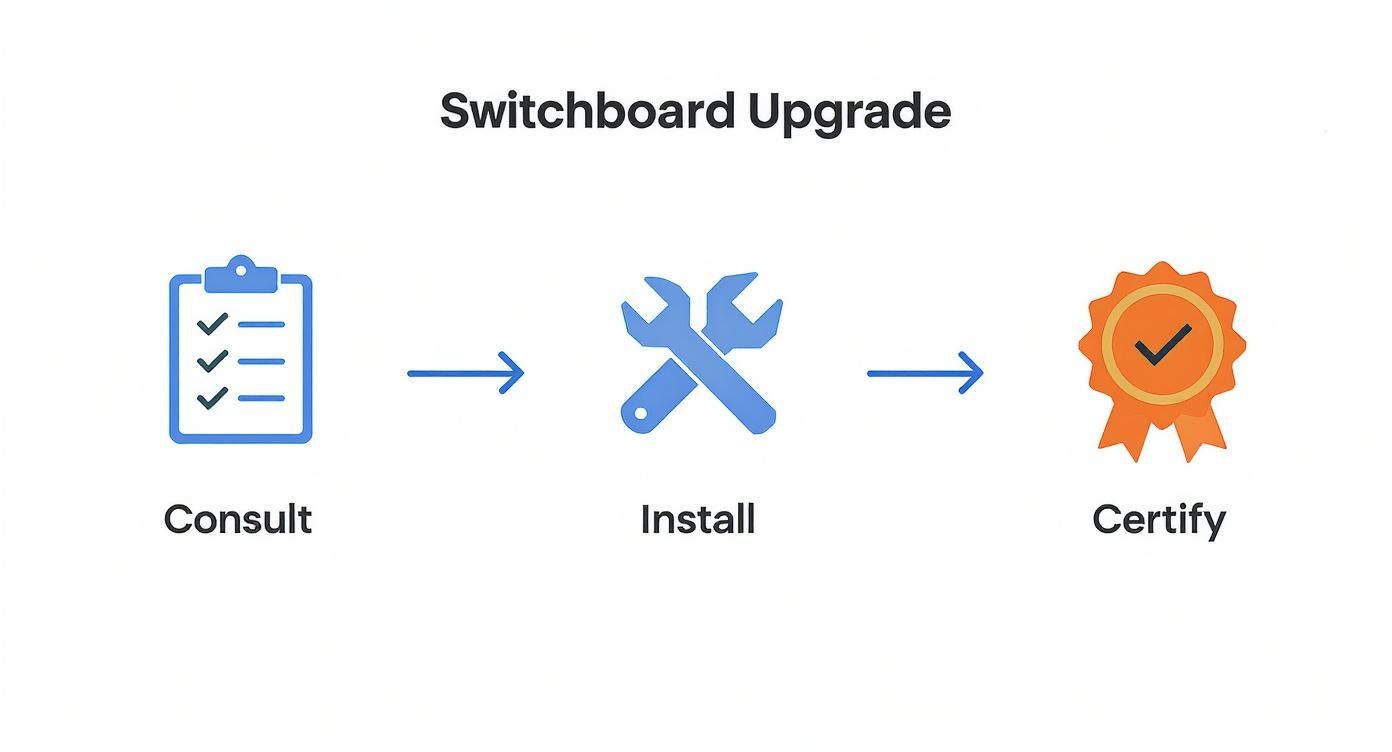
As you can see, the process always finishes with official certification—your guarantee that the work is safe, compliant, and up to standard.
A modern switchboard’s advanced safety features, like RCDs and circuit breakers, are only effective if they are installed and calibrated correctly. Professional installation is the only way to guarantee they will function as intended during an emergency.
It’s worth noting just how reliable switchboards are when installed by a professional. A report found that in South Australia, only four minor shock incidents related to switchboards happened over three years, and all were due to human error during maintenance, not equipment failure. This really highlights their effectiveness when handled properly, as you can read more about in this analysis of switchboard safety and performance.
Ultimately, hiring a professional electrician ensures your switchboard is a source of safety, not a ticking time bomb. For true peace of mind, it’s always best to call a trusted local electrician in Brisbane to handle this critical job.
When it comes to the electric switchboard for your home, a few questions pop up time and time again. Getting straight answers is the best way to keep your home safe and running smoothly, without any of the technical jargon.
Let’s dive into what Brisbane homeowners often ask us.
This is easily one of the most common questions we get. While there isn’t a strict law that says you need a check-up every ‘X’ years for an existing home, the industry rule of thumb is to get a professional inspection every five years.
However, that’s just a baseline. If you’re living in an older home with its original board or you’re about to kick off a major renovation, getting it looked at sooner is a very smart move. Don’t wait for a problem to appear.
Many people use “circuit breaker” and “safety switch” like they’re the same thing, but they perform two very different—and equally vital—jobs.
Here’s the key takeaway: a circuit breaker protects your house and your appliances. A safety switch is specifically designed to protect you and your family from electric shock. A modern, compliant switchboard needs both to be truly safe.
We hear this a lot when someone wants to install a new air conditioner, oven, or maybe an EV charger. The short answer is almost always no.
Older switchboards, especially those ancient-looking ones with ceramic fuses, were never designed for today’s power demands. They’re usually maxed out and simply don’t have the capacity or modern safety features required. Trying to squeeze another high-load circuit onto an already strained system is a major fire hazard. In these situations, a full switchboard upgrade isn’t just recommended; it’s the only safe and compliant solution.
If you need a professional safety inspection or want to discuss a modern switchboard upgrade for your Brisbane home, the experts at DLG Electrical are here to help. Get your free, no-obligation quote today by visiting us at https://dlgelectrical.com.au.

Master Electrician with over 30 years of experience. Founded DLG Electrical in 2005 after international project work including electrical installations at Stamford Bridge Stadium, London(Home of Chelsea FC).

Local Electricians that can fix all Electric Hot water Systems.
Motion sensor lights are a versatile addition to any home, offering nu
