83 Jean St, Grange QLD 4051
Mon-Fri 07:30 AM - 04:00 PM - Sat - 8:00 - 12 - Sunday Closed
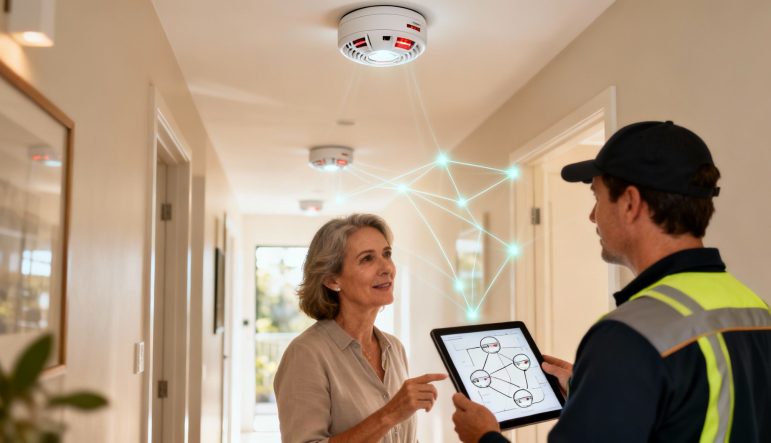
Smoke alarm requirements QLD: In Queensland, the law is simple and non-negotiable: every home must have interconnected photoelectric smoke alarms. These aren’t just suggestions; they are a legal requirement. They must be installed in every single bedroom, in the hallways that connect those bedrooms, and on every level of the house. This system is designed to give you and your family the absolute earliest warning if a fire breaks out, because when it comes to a fire, seconds save lives.
To really get why the smoke alarm requirements in QLD are among the toughest in the country, you have to look past the legal jargon. These laws weren’t drafted in a boardroom; they were forged in the aftermath of a preventable tragedy, born from a collective promise to make sure it never happened again.
This legislation isn’t about ticking boxes. It’s a direct response to what fire science and heartbreaking real-world data have taught us about how house fires start, how they spread, and what gives families the best shot at getting out alive. The focus shifted from just having an alarm to having a smart, interconnected system that works as one.
The catalyst for this complete overhaul was a single, devastating house fire in Slacks Creek in 2011. It remains Australia’s deadliest domestic fire, claiming the lives of 11 people, eight of whom were children.
The coroner’s report that followed was gut-wrenching. It starkly highlighted the absence of working smoke alarms and concluded that if they had been present and functional, there was a “reasonable prospect that some or all of the victims could have escaped.” This event forced a reckoning, prompting the Queensland Government to enact new legislation with a phased rollout that began on 1 January 2017. You can find more details about these legislative changes on detectorinspector.com.au.
The Slacks Creek fire exposed two critical flaws in older alarm systems:
The new laws directly attack these weaknesses. Mandating interconnected photoelectric alarms effectively creates a ‘digital nervous system’ for your home’s fire safety.
Think of it like this: if a fire starts smouldering in a downstairs bedroom, an old, standalone alarm might chirp away unheard by someone sleeping upstairs.
With an interconnected system, the moment one alarm detects smoke, every single alarm in the house goes off. Instantly. This turns a single alert into a house-wide emergency warning, slashing the time it takes for everyone to wake up and get out.
This system is built to cut through the barriers of distance, closed doors, and even deep sleep. It ensures everyone in the home gets the warning at the same time, giving them the best possible chance to escape.
Meeting the smoke alarm requirements QLD enforces is more than just a legal chore. It’s about being an active participant in a statewide safety initiative that protects families. For homeowners, landlords, and property managers, compliance is about safeguarding lives.
When you understand the ‘why’ behind these rules, the task shifts from an annoying expense to a critical responsibility. The investment in modern, compliant alarms isn’t just a cost—it’s one of the most important things you can do for your property and the people who call it home. Getting a professional electrician to install the system correctly provides more than just a compliance certificate; it delivers real peace of mind.
Here’s a quick breakdown to help you keep track of the core requirements.
This table provides a high-level summary of what you need to know to ensure your property is compliant with Queensland’s smoke alarm legislation.
| Requirement | What You Need to Know |
|---|---|
| Alarm Type | All alarms must be photoelectric (AS 3786-2014 compliant). Ionisation alarms are not permitted. |
| Interconnection | All smoke alarms in the dwelling must be interconnected. When one alarm sounds, they all sound. This can be done via hardwiring or with wireless radio frequency technology. |
| Power Source | Alarms must be either hardwired to the home’s mains power with a battery backup, or powered by a non-removable 10-year lithium battery. |
| Installation Locations | Alarms must be installed on each storey, in every bedroom, and in hallways that connect bedrooms to the rest of the dwelling. If there’s no hallway, one must be installed between the bedrooms and the living area. |
| Testing & Maintenance | Alarms must be tested and cleaned at least once every 12 months. Any alarm that fails to test properly must be replaced immediately. |
| Replacement | Smoke alarms must be replaced within 10 years of their manufacture date, or earlier if specified by the manufacturer. The date should be stamped on the alarm. |
| Compliance Deadlines | Required for all new builds and significant renovations since 2017. For all rental properties, compliance was mandatory by 1 January 2022. For all owner-occupied homes, the deadline is 1 January 2027. |
These rules were put in place for one reason: to save lives. Making sure your property meets these standards is a crucial step in protecting your family, tenants, and your investment.
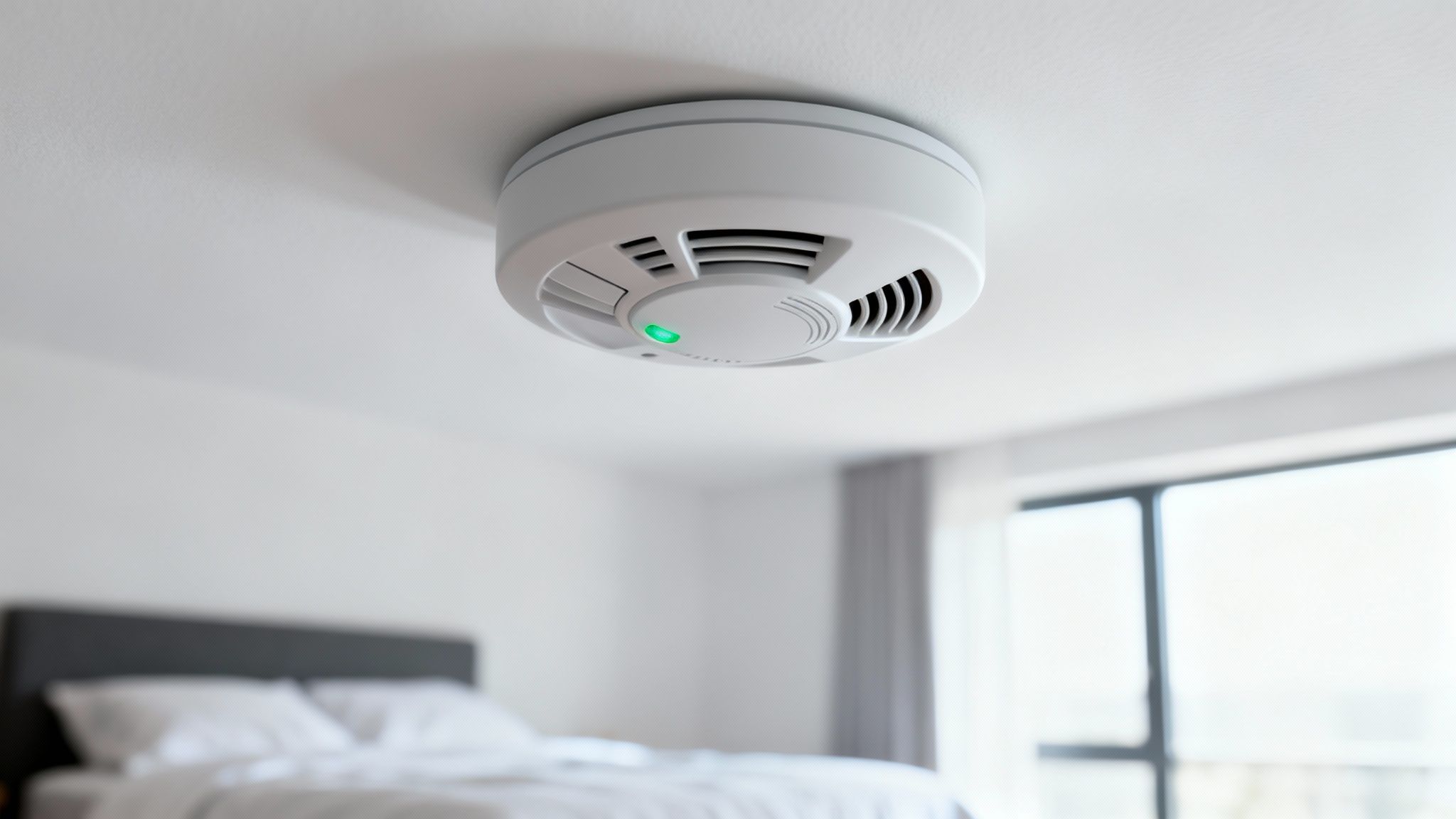
Navigating the smoke alarm requirements in QLD isn’t just about knowing where to put alarms—it’s about understanding which specific type you need to install. The legislation is incredibly precise here, and for a good reason. It removes all the guesswork to maximise safety, leaving only one correct choice for Queensland homes.
At the heart of it all is the difference between two main types of smoke alarms: photoelectric and ionisation. It helps to think of them in simple terms. A photoelectric alarm is like a tiny digital eye, constantly watching for smoke. When smoke particles from a smouldering fire drift into its chamber, they scatter a beam of light, which triggers the alarm.
An ionisation alarm, on the other hand, acts more like a nose, “smelling” the air for signs of combustion. It uses a tiny amount of radioactive material to create a steady electrical current. When smoke particles from a fast-flaming fire enter, they disrupt this current and set off the alarm.
While both types can detect fire, they really shine in different scenarios. Ionisation alarms are pretty good at detecting fast, flaming fires that produce a lot of flame but not much smoke. The problem is, research and real-world fire data paint a different picture of what happens in most house fires. The deadliest residential fires are often the slow, smouldering kind.
These fires typically start in furniture or bedding, churning out thick, toxic smoke long before any flames even appear. This is exactly where photoelectric technology proves its worth.
Because photoelectric alarms essentially “see” the smoke, they can detect these slow-burning fires minutes earlier than ionisation models. That extra time is absolutely critical for getting out safely, especially when your family is asleep.
The decision to mandate photoelectric alarms in Queensland is non-negotiable, a move driven by the harsh lessons learned from tragedies like the 2011 Slacks Creek house fire. It’s backed by extensive testing that proves their superior performance in detecting the very smouldering fires responsible for most fire-related deaths. As a result, the law demands AS 3786-2014 compliant photoelectric alarms.
Once you’re set on a photoelectric alarm, the next decision is how it gets its power. Queensland legislation gives you two compliant options, each with its own set of rules.
The law is clear: you must install hardwired alarms if you’re building a new home, doing a substantial renovation, or replacing an existing hardwired alarm. For all other situations, alarms with 10-year sealed batteries are a perfectly compliant and often more convenient choice. If you’re weighing up the pros and cons, our guide on choosing between hardwired or battery-powered alarms breaks it down further.
While the right smoke alarm is your first line of defence against fire, taking a wider view of your home’s health is always a good idea. Things like overall indoor air quality can also contribute to a safer living environment, which is why some homeowners also choose to get expert air quality tests for a safer home.
Choosing the right photoelectric alarm is only half the battle. Getting the placement right is just as critical for meeting the smoke alarm requirements in QLD. The legislation is incredibly specific here, laying out a precise blueprint for where your alarms must be located to create a proper safety net across your home.
Think of your smoke alarm system as a digital nervous system. If a fire sparks in one room, the ‘nerves’ there must instantly send a signal to the entire system, waking everyone up at once. Correct placement ensures there are no blind spots, giving your family the earliest possible warning, no matter where a fire might start.
Queensland law specifies three non-negotiable areas for smoke alarm installation. To be fully compliant, your property must have alarms in all of these locations.
If a storey doesn’t have any bedrooms, the rule of thumb is to place the alarm in the most likely path someone would use to exit the home. This ensures that any smoke rising through stairwells gets detected fast.
The core principle is simple: an alarm must be positioned to detect smoke before it reaches sleeping occupants. By placing them inside bedrooms and in the hallways leading away from them, you create layers of protection that maximise escape time.
This strategic placement is precisely what makes the system so effective. It’s designed not just to alert you, but to wake you up and guide you safely out of the house.
The real strength of Queensland’s legislation is the requirement for interconnection. This simply means that every alarm in your home must be linked together, either hard-wired or wirelessly, so they can all communicate.
Imagine a smouldering fire starts in a spare bedroom downstairs. Without interconnection, only that single alarm would sound. For anyone sleeping soundly upstairs behind a closed door, that faint, distant beeping might as well not exist.
But with an interconnected system, the moment that downstairs alarm detects smoke, it triggers every other alarm in the house to go off at the same time. The alarm in your master bedroom, the hallway, and the kids’ rooms will all scream a warning. This turns a localised alert into an impossible-to-ignore, house-wide emergency broadcast.
Even with the best intentions, it’s easy to make placement mistakes that can either compromise your system’s effectiveness or lead to endless frustration from false alarms. Knowing where not to install alarms is just as important as knowing where they should go.
Here are some key “dead zones” and problematic areas to avoid:
Getting the placement right is the final piece of the compliance puzzle. It ensures your advanced photoelectric, interconnected system works exactly as intended, providing the reliable, life-saving protection your family deserves.
Understanding the staged rollout of Queensland’s smoke alarm legislation is non-negotiable for every property owner. The government has phased these changes in over a decade to give everyone time to adapt, but the final and most important deadline is now closing in fast. Missing your date isn’t a minor slip-up; it can land you in serious legal and financial trouble.
You can think of the rollout as a series of waves, each one targeting a different type of property to ensure the transition went smoothly. The first wave hit back in 2017, focusing on new builds and properties undergoing significant renovations. Then came the much bigger wave in 2022, which covered all properties being sold or leased.
Now, the final wave is on the horizon. It’s the biggest one yet, and it’s coming for every single remaining home in Queensland.
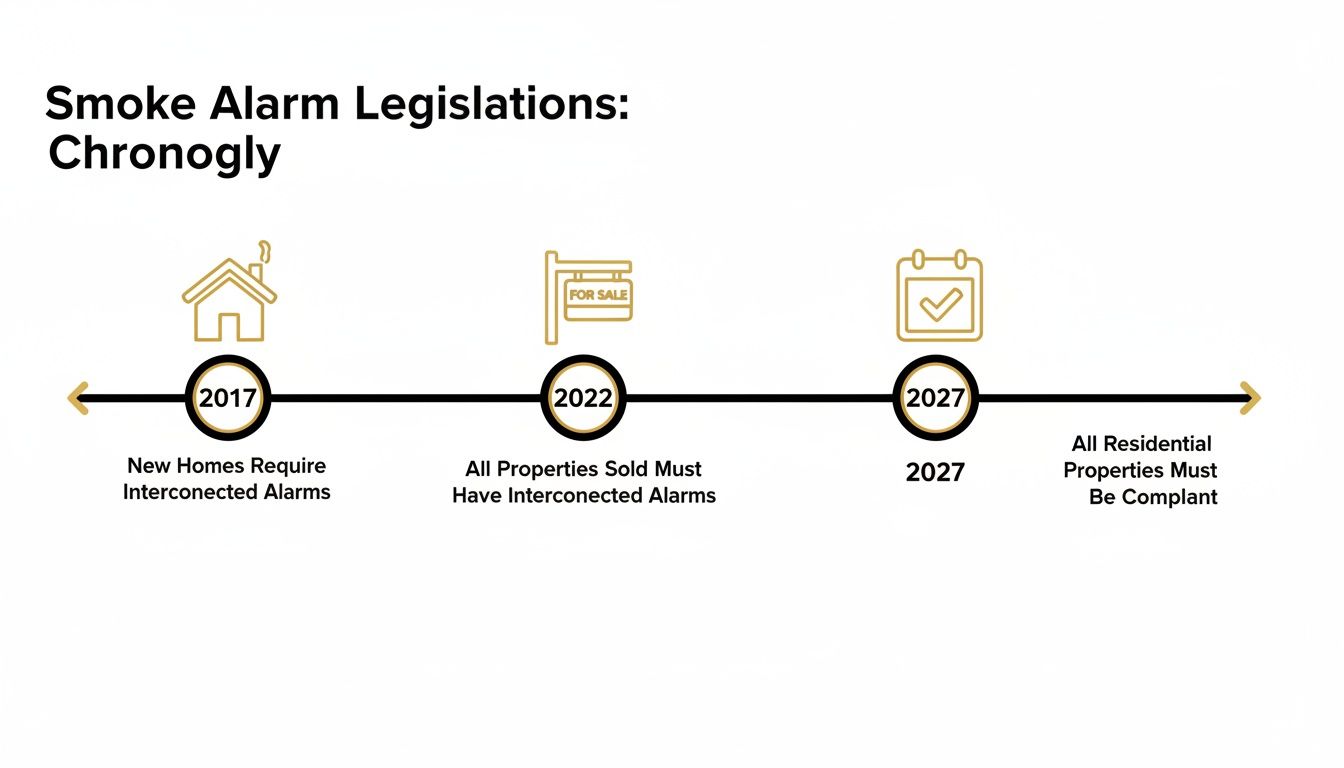
This timeline gives you a clear picture of the deadlines and who they apply to. To break it down even further, here’s a simple table outlining the key dates.
| Deadline | Applies To | Core Requirement |
|---|---|---|
| 1 January 2017 | New builds & substantially renovated properties | Must have hardwired, interconnected photoelectric smoke alarms installed. |
| 1 January 2022 | All properties being sold or leased | Must be upgraded to meet the full 2027 standards before sale or the start of a new lease. |
| 1 January 2027 | ALL other domestic dwellings (including owner-occupied) | Every single home in Queensland must have interconnected photoelectric alarms. |
These dates aren’t flexible. It’s crucial to know which category your property falls into and act accordingly.
As of 1 January 2022, a major deadline passed for a huge chunk of Queensland’s property market. From that day forward, any home being sold, or any new lease being signed, had to be fully compliant with the new smoke alarm requirements qld.
This means if you’ve bought, sold, or rented out a property since that date, it should already have interconnected, photoelectric alarms in all the right spots. For landlords, this wasn’t a set-and-forget task. It’s an ongoing responsibility to make sure the alarms are tested and working correctly before every new tenancy agreement. Getting this wrong puts tenants at risk and leaves landlords wide open to legal action.
The final, catch-all deadline is 1 January 2027. By this date, every residential property in Queensland must meet the upgraded standards, whether it’s being sold, rented, or lived in by the owner. This applies to houses, townhouses, units—you name it.
This is not a friendly suggestion; it’s a legal requirement. Waiting until the last minute is a recipe for disaster. We saw it happen in the lead-up to the 2022 deadline—a massive shortage of compliant alarms and qualified electricians led to long delays and jacked-up prices. The rush for 2027 will be even bigger.
By 1 January 2027, every home must have interconnected alarms in all bedrooms and hallways. When one goes off, they all go off, giving everyone the maximum possible time to escape. As detailed in a guide for landlords, failure to comply can result in fines of up to five penalty units and can completely halt your ability to sell or rent out your property. You can find more details on these landlord obligations here.
The consequences for not being compliant are severe. Procrastinating on this will cost you a lot more than the price of an early upgrade.
Acting now isn’t just about ticking a legal box. It’s about protecting your family, your investment, and your peace of mind—long before the inevitable last-minute scramble begins.
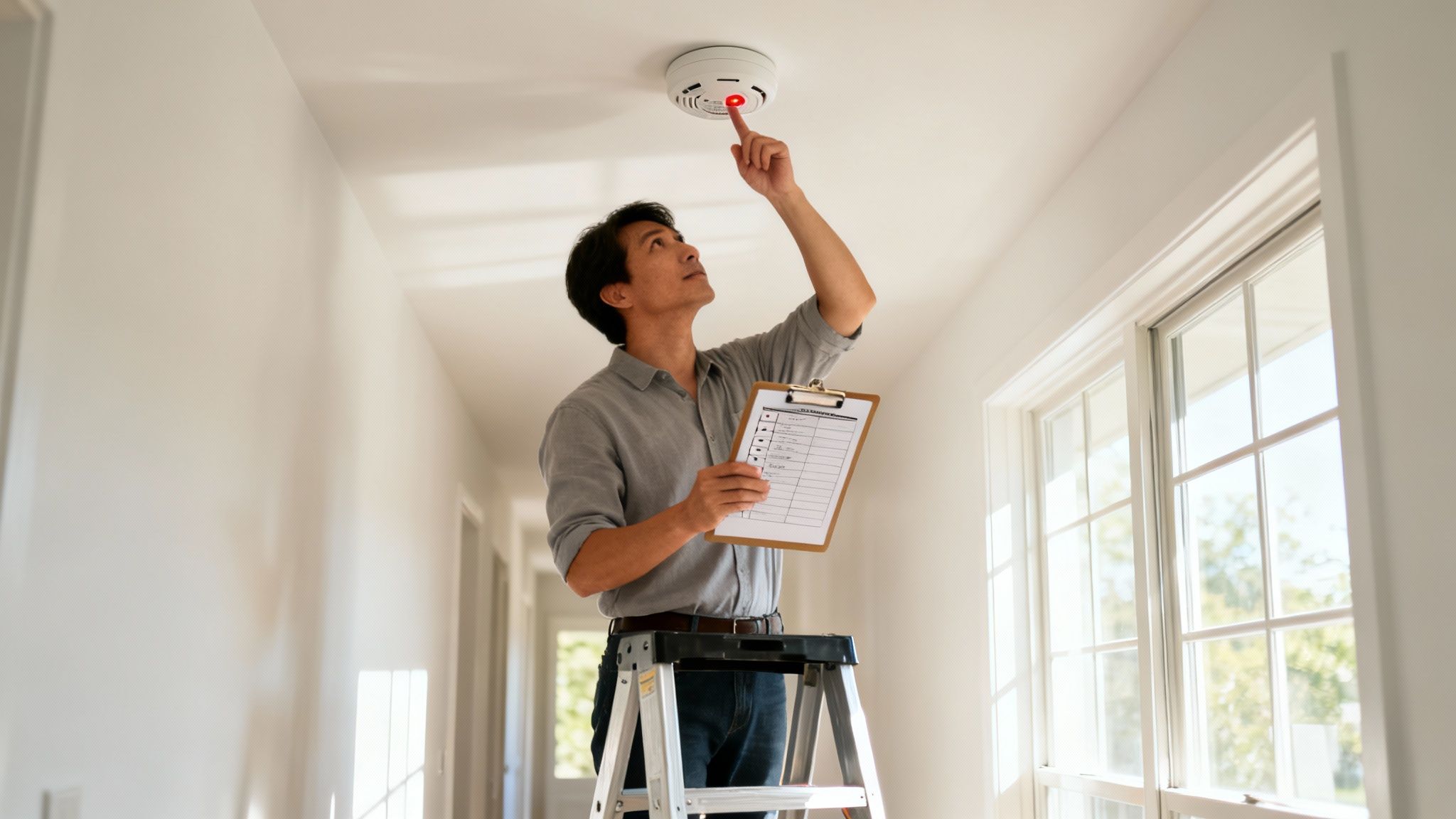
Putting a compliant smoke alarm system on your ceiling is just the first step. For it to actually save lives, it has to work perfectly when the moment comes. Regular testing and maintenance aren’t just suggestions; they are a non-negotiable part of the smoke alarm requirements in QLD.
Think of it like servicing your car. You wouldn’t drive for years without a basic check of the brakes or oil. The same logic applies here—a few simple, consistent checks are all it takes to make sure your alarms are ready to do their job.
The easiest way to stay on top of things is to build a simple routine. It only takes a few minutes and can be broken down into quick monthly and yearly tasks.
Once a month, do the button test. Just press and hold the ‘test’ button on each alarm until you hear that loud, piercing beep. This quick check confirms that the battery and internal circuits are still good to go. If you have an interconnected system, this test is even more important. One button should make every single alarm in the house sound off, proving they’re all communicating as they should.
On top of the monthly test, you’ll need to give your alarms a bit more attention at least once a year.
If you’re a landlord or property manager, the rules for maintenance are much stricter and carry serious legal weight. You are directly responsible for your tenants’ safety, and that means keeping meticulous records is an absolute must.
You are legally required to personally test and clean every smoke alarm in the property within 30 days before a new tenancy starts. This isn’t optional. At the same time, you must replace any faulty alarms or any that have passed their 10-year lifespan. As you can see, the current smoke alarm legislation for QLD holds property owners to a very high standard.
Keeping a detailed logbook of every test, clean, and replacement is just smart business. This record is your legal proof that you’ve done your due diligence, which is invaluable if an incident ever occurs.
Of course, smoke alarms are just one part of the bigger picture. Understanding all the essential maintenance on rental property is key to protecting your investment and keeping tenants happy. While you can handle these tasks yourself, bringing in a professional electrician guarantees compliance and peace of mind, ensuring every little detail of the legislation is met without any guesswork.
Trying to navigate the web of smoke alarm requirements in QLD can feel like a maze. Between getting your head around photoelectric technology, interconnection rules, and strict deadlines for placement, it’s easy to get overwhelmed. The legislation is incredibly detailed for one simple reason—to save lives—but making sure you get every single detail right on your own is a huge ask.
And the risks of getting it wrong are serious. An alarm installed in the wrong spot might not detect smoke in time to make a difference. Worse, a non-compliant system could lead to massive fines or even give your insurance company a reason to deny a claim after a fire. This is one area where “close enough” just doesn’t cut it.
While you’re legally allowed to install 10-year battery-powered alarms yourself, any alarm system that needs to be hardwired into your home’s mains power must be installed by a licensed electrician. But even if you’re only using battery-powered alarms, bringing in a professional gives you total peace of mind that every part of the law has been met.
A qualified electrician does more than just screw alarms to the ceiling; they provide a complete compliance service. They live and breathe the legislation, understanding the nuances like where to avoid “dead air” spaces and the specific requirements for different types of properties.
Hiring a professional ensures:
Not every electrician is a specialist in smoke alarm compliance. When you’re choosing a professional, you’ll want to find a team with proven, specific experience in this area. A specialist will carry out a full assessment of your property, give you a clear quote, and issue a compliance certificate once the job is done.
That certificate is more than just a piece of paper. It’s your official record that proves your property meets all legal standards—crucial evidence for insurance companies, property sales, or tenancy agreements.
Leading up to the 2022 deadline, Queensland saw a massive scramble for compliant alarms and qualified installers, causing shortages and long delays. You can bet the same rush will happen as the 2027 deadline for all remaining homes gets closer. Getting a professional in now helps you sidestep the inevitable last-minute panic and potential price hikes.
For homeowners in Brisbane, finding a trusted local expert is key. A reputable electrician in Brisbane can deliver a seamless, stress-free experience from the first quote to the final certification, ensuring your family and property are properly protected. It turns full compliance from a headache into a straightforward process, delivering not just legal tick-boxes but genuine peace of mind.
Even with a detailed guide, it’s natural for questions to pop up about Queensland’s smoke alarm rules. The legislation is layered, and figuring out how it applies to your specific home can feel a bit tricky. Here, we’ll tackle the most common queries we get from property owners, giving you clear, straightforward answers to cut through the confusion.
Getting this right is non-negotiable, as a simple misunderstanding can leave you non-compliant. Our goal is to clear up any lingering doubts so you have the confidence to protect your property and, more importantly, the people inside it.
Yes, absolutely. This is one of the biggest points of confusion we see. While the 2022 deadline got a lot of attention for properties being sold or leased, it wasn’t the final finish line.
The law sets a hard deadline for everyone. By 1 January 2027, every single home in Queensland must have interconnected, photoelectric smoke alarms installed. This includes your own home, even if you have no plans to sell. Taking action now is not just about keeping your family safe; it’s also about avoiding the last-minute rush and potential price hikes as that 2027 deadline gets closer.
The technology inside the alarm matters just as much as its age. If you have older-style ionisation alarms, they have to go, even if they were only installed a few years ago.
The legislation is crystal clear: all smoke alarms must be photoelectric and meet the Australian Standard AS 3786-2014. It doesn’t stop there. If you have standalone photoelectric alarms that aren’t interconnected, they don’t meet the standard either. The whole system needs to be linked, so when one alarm goes off, they all go off.
An alarm system is only as strong as its weakest link. A non-compliant alarm, regardless of its age, creates a critical gap in your home’s safety net and must be upgraded to meet the full smoke alarm requirements for QLD.
This isn’t just red tape. It’s about giving everyone in the house the earliest possible warning, which is especially crucial for detecting those slow, smouldering fires that often happen at night.
This one comes down to a simple question: what’s powering the alarm? The answer determines whether you can DIY the job or if you need to call in a licensed electrician.
You are legally allowed to install smoke alarms yourself, but only if they are:
For hardwired systems, the rules are completely different.
If an alarm needs to be connected to your home’s 240V mains power, it must be installed by a licensed electrician. This isn’t optional. The same rule applies if you’re replacing an existing hardwired alarm—the new one has to be hardwired by a professional, too. Honestly, given how critical correct placement and interconnection are, getting a pro involved is always the smartest move for safety and guaranteed compliance.
For landlords, compliance isn’t a one-off task; it’s an ongoing legal responsibility. A huge part of that is keeping meticulous records of all smoke alarm maintenance and testing.
You are required by law to test and clean every smoke alarm within 30 days before a new tenancy begins. It’s absolutely vital to document this. Your records should show the date of the test, who did it, and the result for each alarm. You also need to replace any alarms that fail a test or are more than 10 years old. Think of it this way: a well-kept logbook is your proof of compliance, protecting both you and your tenants.
Ensuring your property meets all smoke alarm requirements doesn’t have to be a stressful process. For professional installation and guaranteed compliance, trust the experts at DLG Electrical. Contact us today for a free quote and get the peace of mind that comes with knowing your home is protected by the best.

Master Electrician with over 30 years of experience. Founded DLG Electrical in 2005 after international project work including electrical installations at Stamford Bridge Stadium, London(Home of Chelsea FC).

Local Electricians that can fix all Electric Hot water Systems.
Motion sensor lights are a versatile addition to any home, offering nu
