83 Jean St, Grange QLD 4051
Mon-Fri 07:30 AM - 04:00 PM - Sat - 8:00 - 12 - Sunday Closed
Average Power Bill Brisbane.
That moment the power bill lands in your inbox can be a bit stressful. Am I paying too much? What’s everyone else paying? It’s a common question.
For a typical Brisbane household, the average quarterly power bill is around $350 to $550. But that’s just a ballpark figure. This number can swing wildly depending on how many people are living under your roof and your daily energy habits.
If you’re trying to figure out if your bill is in the normal range, comparing it against city-wide averages is the perfect place to start.
The single biggest factor is almost always household size. More people means more showers, more loads of laundry, and more devices plugged in and charging all at once. Of course, things like your lifestyle choices and the age of your appliances also play a huge part in that final number on the bill.
To give you a clearer picture, this chart breaks down the average quarterly electricity costs for different household sizes right here in Brisbane.
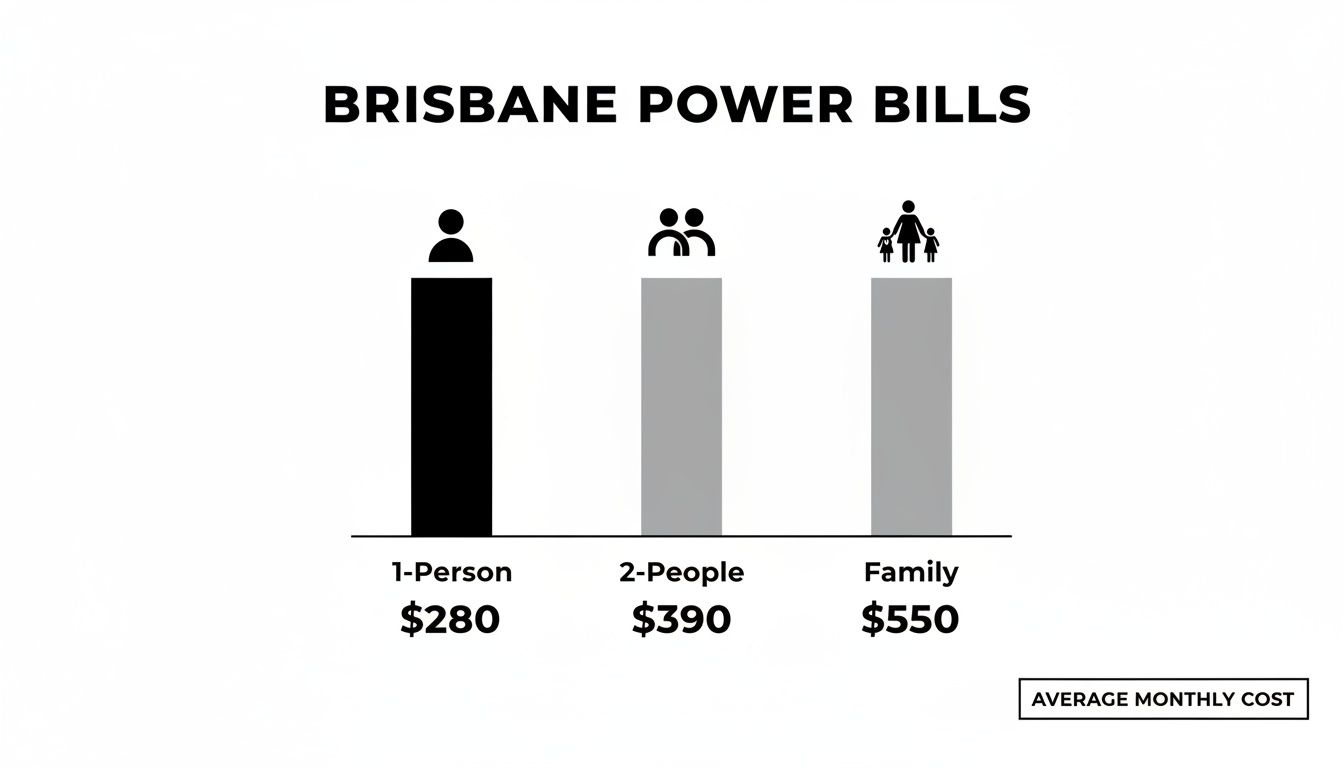
As you can see, a family can easily expect to pay nearly double what a single person does. It just goes to show how quickly those costs can stack up.
To make it even easier to see where you stand, here’s a quick reference guide to typical electricity costs for different household sizes in Brisbane. Use it to benchmark your own spending.
| Household Size | Average Daily Usage (kWh) | Estimated Quarterly Bill |
|---|---|---|
| 1 Person | 6 – 10 kWh | $200 – $320 |
| 2 People | 10 – 14 kWh | $320 – $450 |
| 3 People | 12 – 18 kWh | $400 – $580 |
| 4 People | 16 – 22 kWh | $520 – $700 |
| 5+ People | 20+ kWh | $650+ |
Remember, these are just averages. Your actual bill will depend on your unique situation, but this table gives you a solid idea of what’s considered typical for Brisbane.
No, it’s not just your imagination—power bills have taken a serious jump lately.
Queensland residents saw a pretty dramatic surge between 2022 and 2023. The average electricity price climbed from 24 cents to 33 cents per kilowatt-hour. That’s a massive 37.5% increase, driven largely by rising wholesale energy prices. For a typical household, that added an extra $429 to the yearly bill. You can explore more about these energy price changes to understand the market forces at play.
Your bill is essentially a story about your home’s energy consumption. It reflects everything from the age of your hot water system to how you combat Brisbane’s humid summers. Understanding the benchmarks is the first step toward rewriting that story for a happier ending—and a lower bill.
These figures give you a good baseline, but they don’t tell the whole story. Your individual bill is also shaped by the specific tariffs you’re on, how energy-efficient your home is, and even the retailer you’ve chosen. Later in this guide, we’ll dive into how to decode all these elements and find some powerful opportunities to save.
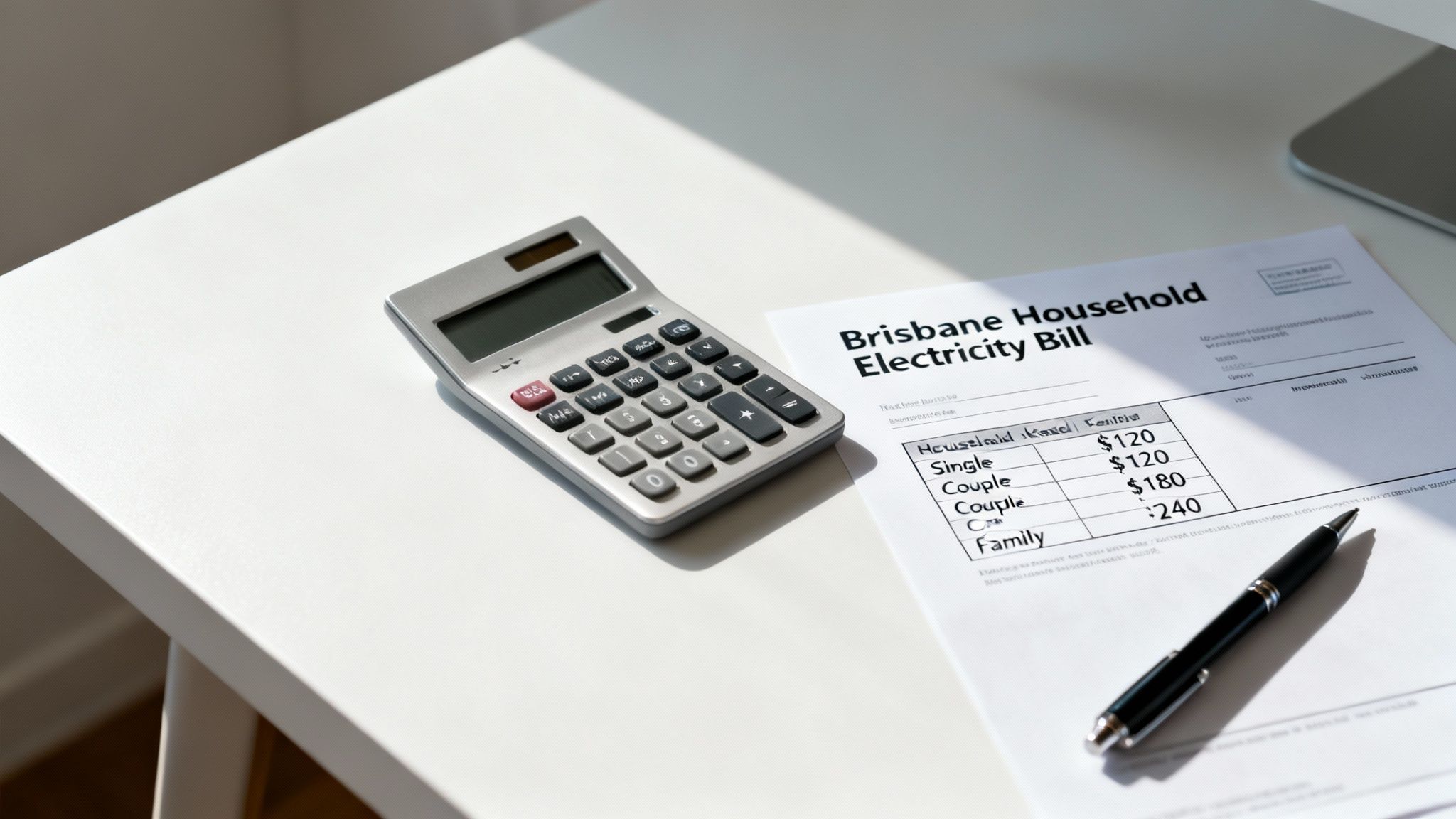
Staring at your power bill can sometimes feel like trying to read a foreign language. Beyond the big, bold number telling you what you owe, there are several moving parts that all contribute to that final cost. Getting a handle on these is the very first step toward taking control of your spending.
You can think of your electricity plan a bit like a mobile phone plan. It’s not just one flat fee; it’s a mix of a fixed access charge and then costs based on how much you actually use the service. Your power bill works in almost the exact same way.
Every bill is really built on two core components. Grasping the difference between them is crucial because it shows you the two distinct ways you can tackle lowering your final bill.
First up is the daily supply charge. This is a fixed, non-negotiable fee you pay every single day, just for being connected to the electricity grid. It doesn’t matter if you use a heap of power or none at all; this charge covers the cost of keeping the poles, wires, and all the other infrastructure that gets electricity to your doorstep in good working order. It’s basically the “line rental” of your energy plan.
The second piece of the puzzle is the usage charge. This is the variable part of your bill, and it’s directly linked to how much power you consume. It’s measured in kilowatt-hours (kWh) and reflects the exact amount of electricity your household has used over the billing period. This is where your daily habits—like cranking the air con or running the clothes dryer—make a direct financial impact.
Understanding this split is powerful. It shows you can’t just reduce your bill to zero by switching everything off, thanks to the supply charge. However, the usage charge is 100% within your control and represents your biggest opportunity for savings.
Another term you might spot on your bill is a controlled load. This is a separate, cheaper electricity tariff for specific, high-consumption appliances—most often, an electric hot water system.
Essentially, it’s a dedicated circuit that your energy provider can switch on and off remotely, usually during off-peak hours when there’s less demand on the grid.
If your home has a controlled load, making sure your hot water system is operating efficiently on this cheaper tariff is a key strategy for managing one of the biggest contributors to the average power bill in Brisbane. By breaking your bill down into these parts, you can stop seeing it as one scary number and start seeing it as a set of manageable pieces you can actually influence.
Ever looked at your power bill and wondered how it could possibly be so high, especially when your neighbour in a similar-sized house seems to be paying much less? The answer usually isn’t a single big mistake but a collection of “energy vampires” quietly working overtime in your home. While lots of small things add up, a few key culprits are almost always responsible for the biggest chunk of your bill.
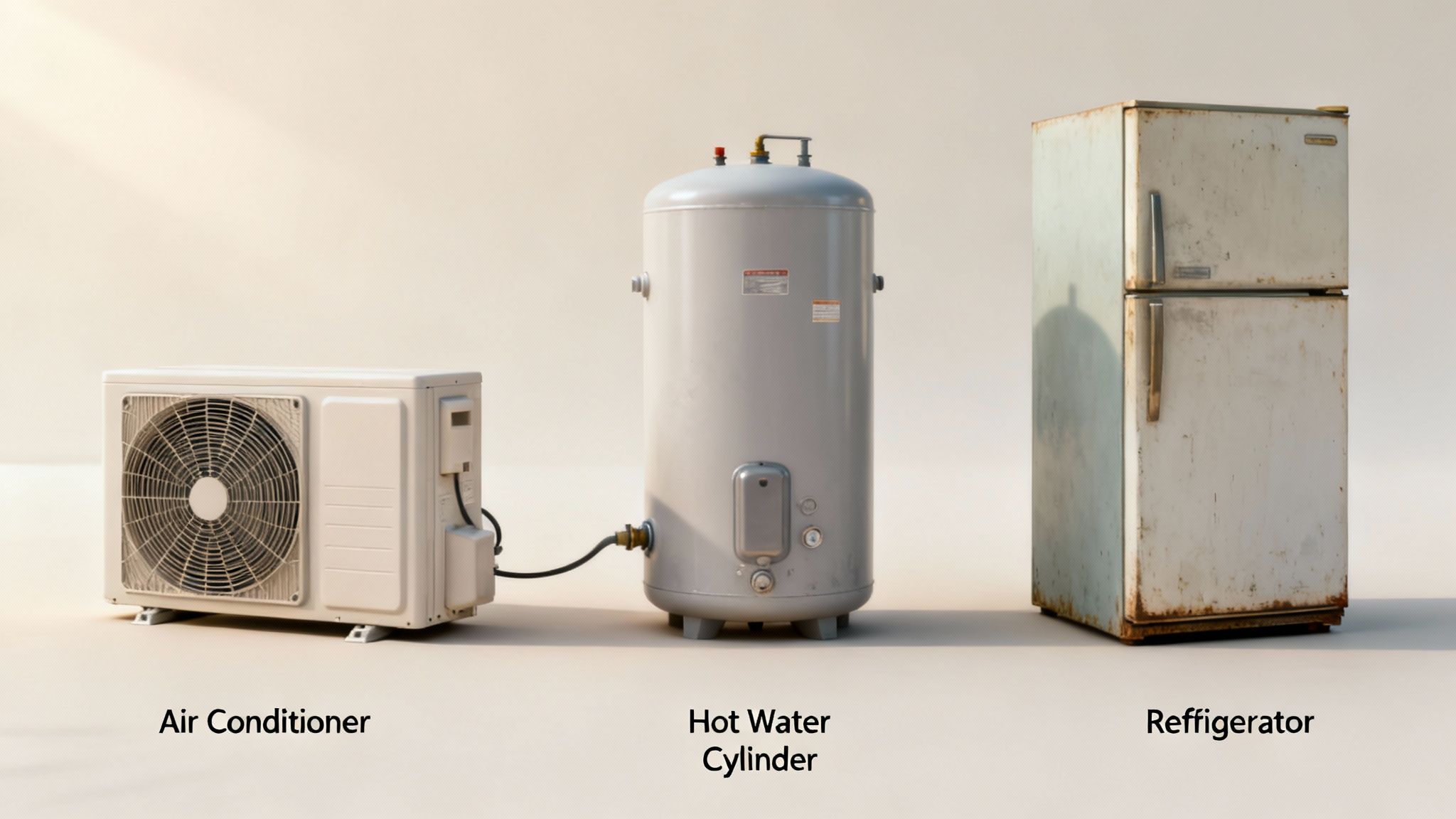
In most Brisbane homes, the battle against high electricity costs is fought on three main fronts: air conditioning, water heating, and inefficient appliances. Think of these as the heavy hitters. They consistently draw the most power and are the primary reason your bills skyrocket, particularly during peak seasons.
Brisbane’s famously hot and humid climate puts a massive strain on these systems. Your air conditioner, for example, isn’t just a comfort—it’s often a necessity that works relentlessly through summer. It can easily become the single biggest expense on your bill. To see exactly how much it’s costing you, check out our detailed guide on the cost of running air conditioning in Brisbane.
Beyond the obvious climate-driven culprits, your home’s unique character plays a huge part in your energy use. The age of your property, the quality of its insulation, and even your family’s daily routines can dramatically change your energy footprint.
A poorly insulated home is like trying to cool a room with a window wide open. Your air conditioner has to work so much harder to maintain a comfortable temperature, which means it’s just burning through energy—and your money. In the same way, older appliances that pre-date modern energy ratings can guzzle electricity compared to their newer, more efficient counterparts.
Your lifestyle is a powerful, and often overlooked, factor. A household where someone works from home will naturally use more power for cooling, lighting, and electronics during the day. Running a pool pump for hours every day also adds a significant and consistent load to your bill.
Demographics tell an interesting story, too. Across Queensland, household electricity bills vary quite a bit by age. Households headed by younger people (18-29) averaged annual costs of $1,744, while those led by seniors (70+) averaged just $1,168. This difference often comes down to household size, the number and type of gadgets in use, and general lifestyle habits.
Let’s break down where all that energy typically goes. Identifying the biggest power-hungry appliances is the first step to making smart changes.
This table shows which common appliances are likely costing you the most, helping you see where you can get the biggest bang for your buck on savings.
| Appliance | Average Hourly Energy Use (kWh) | Estimated Cost Per Hour of Use |
|---|---|---|
| Ducted Air Conditioner | 2.5 – 7.0 kWh | $0.88 – $2.45 |
| Split System Air Conditioner | 0.9 – 2.5 kWh | $0.32 – $0.88 |
| Electric Hot Water System | 3.6 – 4.8 kWh | $1.26 – $1.68 |
| Clothes Dryer | 2.0 – 4.5 kWh | $0.70 – $1.58 |
| Pool Pump | 1.0 – 2.0 kWh | $0.35 – $0.70 |
| Electric Oven | 2.0 – 2.3 kWh | $0.70 – $0.81 |
| Dishwasher (per cycle) | 1.0 – 1.5 kWh | $0.35 – $0.53 |
Costs estimated using an average electricity rate of $0.35 per kWh. Your actual costs will vary based on your specific tariff.
As you can see, cooling and heating water are clear leaders in energy consumption. Tackling these areas first will almost always lead to the most noticeable savings on your bill.
Of course, your energy profile isn’t static—it’s always evolving. Modern technology is adding new, significant loads to our homes. As more Brisbanites make the switch to electric vehicles, the installation of high-power EV home chargers introduces a substantial new electrical demand that will absolutely influence the average power bill.
By getting a clear picture of exactly where your energy is going, you can stop guessing and start taking targeted action. Focusing on these biggest cost drivers is the key to achieving real, lasting savings.
If you feel like your power bill is on a rollercoaster, you’re not imagining it. Even when your household habits stay exactly the same, outside forces can make your costs swing wildly from one quarter to the next.
One of the biggest culprits is the wholesale energy price. This is the raw cost your retailer pays for electricity on the open market before they sell it to you. A whole host of things can make this price jump around—supply shortages, big infrastructure upgrades, even global events. Eventually, those fluctuations find their way onto your bill.
So, even if your personal electricity use is rock-solid and consistent, your costs can still climb or fall based on market movements completely out of your hands. It’s a massive reason why the average power bill in Brisbane can feel so unpredictable.
Another major factor that causes sudden bill shocks is government assistance. Rebates and bill relief schemes are designed to ease cost-of-living pressures, and they can deliver a very welcome, sometimes significant, drop in what you owe.
The catch? These programs are almost always temporary. When a rebate period ends, your bill can suddenly jump right back up to its original amount, creating that jarring “bill shock” moment. It makes it seem like your costs have skyrocketed, when really, the bill has just returned to its true level without the subsidy.
This is a critical point for budgeting: while rebates are a huge help, they’re not a long-term fix. Relying on this temporary relief can mask underlying high consumption habits, making it harder to build sustainable energy-saving routines for the future.
Getting your head around this is crucial. Recent data showed that while Aussie electricity costs appeared to rise by a massive 19.7 percent over a 12-month period, that number was heavily skewed by the end of government rebates. If you strip out the impact of those schemes, the underlying price increase was a much more modest 4.6 percent. You can learn more about these consumer price trends from the ABS to see the full picture.
This distinction is vital for Brisbane residents. It shows that focusing on what you can control—like your home’s energy efficiency—is a far more reliable strategy for financial stability than riding the unpredictable wave of market prices and temporary government aid.
Knowing what goes into the average Brisbane power bill is one thing, but actually doing something about it is where the real power lies. The good news? You have more control over your energy consumption than you might think. With a few conscious changes and some smart upgrades, you can see real savings start to add up, all without having to sacrifice your comfort.
The most effective strategies really fall into two camps: no-cost habit adjustments you can start making today, and strategic investments that pay for themselves over time. Let’s break down the most impactful moves you can make to shrink your next electricity bill.
These are the simple behavioural shifts that won’t cost you a cent—just a little bit of mindfulness. They’re all about plugging the small energy leaks that quietly add up over a billing cycle, often called “vampire power” or standby consumption.
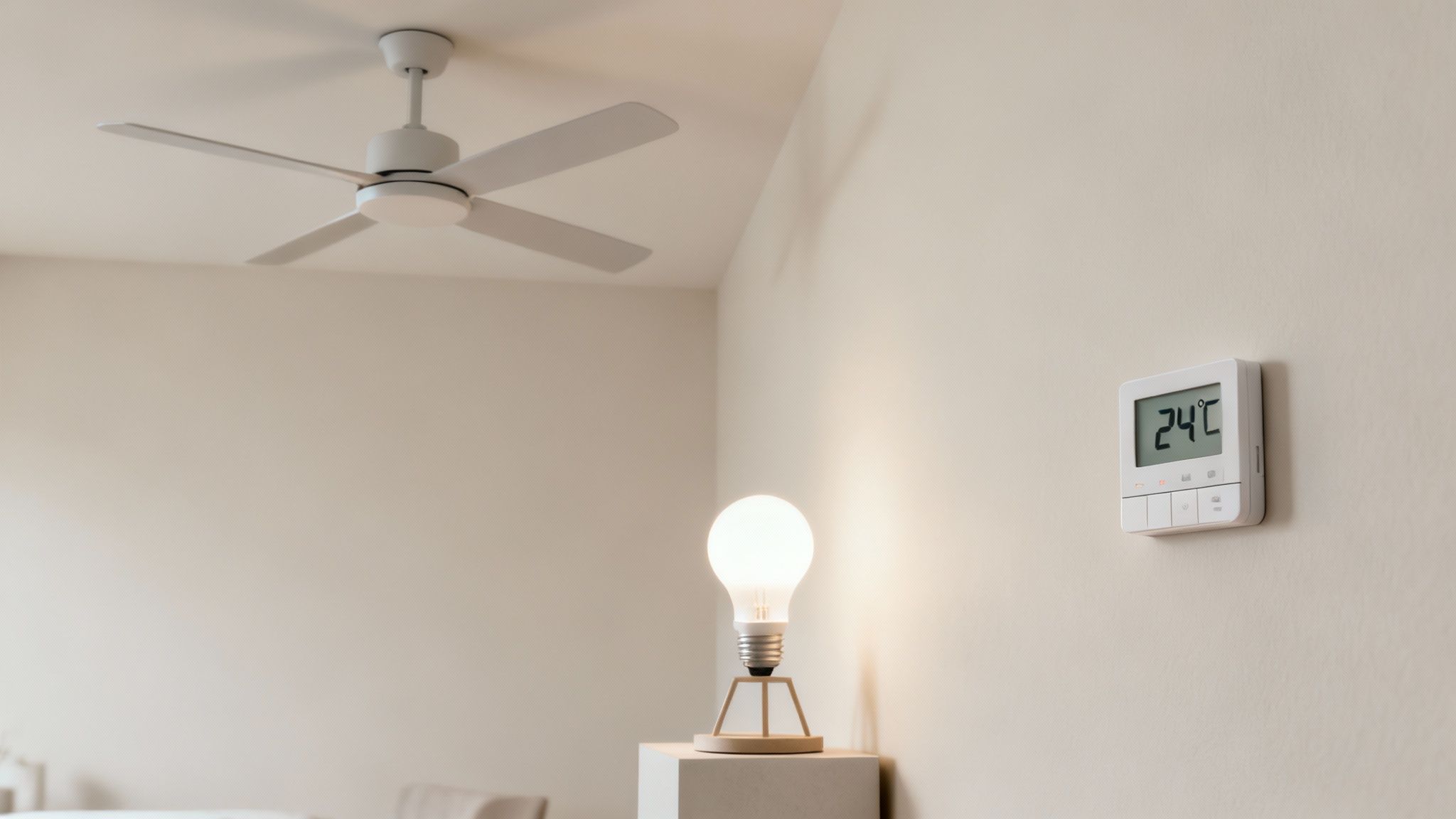
Let’s start with your climate control. In the thick of a Brisbane summer, your air conditioner is almost certainly one of your biggest expenses. By simply setting your thermostat to 24°C, a widely recommended temperature for efficiency, you can cut your cooling costs significantly. For every degree you go colder, your energy use can jump by up to 10%.
Next, have a look at your habits in the laundry and kitchen.
Putting effective strategies into practice is the key to lowering your power bill. For a wider range of ideas, you can check out these smart tips for saving electricity at home that can make a real difference to your monthly budget.
While those daily habits are crucial, some of the biggest and most permanent savings come from upgrading your home’s hardware. These investments might have an upfront cost, but their efficiency pays you back in savings for years to come.
Lighting is one of the easiest and most affordable places to get started.
Upgrading from old halogen or incandescent bulbs to modern LED lighting is a guaranteed win. LEDs use up to 85% less energy and last up to 25 times longer, dramatically cutting both your usage charges and replacement costs over time.
Another fantastic upgrade for any Brisbane home is installing ceiling fans. Fans create a cooling breeze that can make a room feel several degrees cooler than it actually is. This means you can rely less on your power-hungry air conditioner, directly cutting its running time and your bill.
Finally, don’t overlook your hot water system. It’s one of the top three energy guzzlers in any home, so making sure it runs efficiently is critical. If your system is getting old or was never the right size for your household, upgrading to a modern, energy-efficient model can slash your water heating costs.
For more in-depth strategies, our guide on how to reduce electricity consumption offers deeper insights into making your home as efficient as possible. Combining these practical steps gives you a clear roadmap to a consistently lower power bill.
Changing your daily habits is a great first step, but the biggest and most permanent drops in your power bill often come from smart, strategic upgrades. While flicking off switches helps, some improvements need a professional touch to guarantee safety, efficiency, and long-term savings.
Think of it as making clever investments in your home that will eventually pay for themselves.
A professional home energy assessment is the perfect place to start. An experienced electrician can spot hidden problems in your wiring, switchboard, or major appliances that you’d never see yourself. They can pinpoint exactly where your home is leaking energy—and money.
Certain upgrades offer a fantastic return on investment because they target the biggest energy hogs in your home. These aren’t just about shrinking your average power bill in Brisbane; they’re also about making your home safer and more functional.
Here are a few high-impact improvements to consider:
Investing in your home’s electrical backbone is like upgrading the engine in your car. It might not be the most visible change, but it fundamentally improves performance, safety, and long-term running costs.
Another incredibly effective upgrade is making the switch to modern lighting. You can learn more about how a professional LED lighting installation can cut your lighting costs by up to 85%, delivering immediate, noticeable savings on your very next bill.
These expert-led improvements don’t just deliver financial benefits for years to come—they provide genuine peace of mind.
Trying to make sense of your electricity costs can feel like a bit of a puzzle. We get it. To help clear things up, we’ve put together answers to the questions we hear most often from Brisbane locals.
The short answer? Brisbane’s famously hot and humid climate. That air conditioner you rely on to survive the sweltering heat is one of the thirstiest appliances in your entire home. Running it day in and day out is almost always the number one reason for a summer bill shock.
It doesn’t stop there. Your fridge has to work overtime just to keep its cool, and if you have a pool, the pump is likely running for much longer stretches. Compare that to our mild winters, where heating needs are minimal, and it’s easy to see why summer bills are in a league of their own.
It certainly can be, but it really boils down to your household’s routine. These tariffs are designed to give you cheaper “off-peak” electricity rates overnight, while charging a premium during the high-demand “peak” hours in the evening when everyone gets home.
If you’re able to shift your big energy users—think the washing machine, dishwasher, or pool filter—to run during those cheap off-peak times, you could see some serious savings. On the flip side, if your family’s busiest time is right in that peak evening window, you might actually end up paying more.
Here’s the thing: an old switchboard doesn’t actually use power itself, but it can absolutely be an indirect cause of higher bills. More importantly, it’s a huge safety risk.
Old-school fuse boxes are notoriously bad at managing your home’s electrical load. They also can’t support modern, energy-saving tech like solar power or smart home devices.
But the biggest issue is that they often lack the modern safety switches that are legally required today. Upgrading your switchboard isn’t just an expense; it’s a critical investment in your family’s safety and your home’s ability to run efficiently, paving the way for future savings.
Ready to make your home safer and more energy-efficient? The expert team at DLG Electrical can help with switchboard upgrades, hot water system repairs, and energy-saving solutions. Get your free quote by visiting us at https://dlgelectrical.com.au.

Master Electrician with over 30 years of experience. Founded DLG Electrical in 2005 after international project work including electrical installations at Stamford Bridge Stadium, London(Home of Chelsea FC).

Local Electricians that can fix all Electric Hot water Systems.
Motion sensor lights are a versatile addition to any home, offering nu
