83 Jean St, Grange QLD 4051
Mon-Fri 07:30 AM - 04:00 PM - Sat - 8:00 - 12 - Sunday Closed
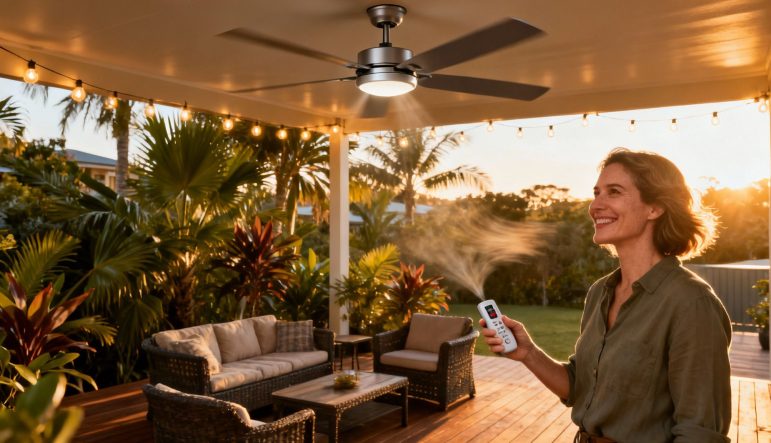
Living in Brisbane, we know our patios, decks, and verandas are basically a second living room. But let’s be honest, that subtropical heat and humidity can make these amazing spaces feel completely off-limits for months on end. This is exactly where a quality outdoor ceiling fan becomes an absolute game-changer, turning a sweltering patio into a breezy retreat you can enjoy all year round.
Think of an outdoor ceiling fan as more than just an appliance; it’s a direct investment in your lifestyle. It’s what allows you to reclaim your alfresco areas during Brisbane’s stickiest months, making that hot, humid space the perfect spot for family dinners, weekend barbies, or just a quiet morning coffee. A well-chosen fan not only brings that much-needed cooling breeze but also adds a real touch of style to your outdoor setup.
The benefits go well beyond just feeling cooler, too. A constant, gentle airflow can completely transform your outdoor experience.
It’s no surprise that Australia’s obsession with outdoor living has sent the demand for these fans skyrocketing, especially here in sunny Queensland. In fact, recent market analysis valued the Australian ceiling fan market at a massive USD 220.38 million in 2024, with projections showing strong growth driven by our love for the alfresco lifestyle.
This guide will walk you through everything you need to know to choose the right fan for your home and get it installed safely.
When it comes to outdoor ceiling fans, it’s not a one-size-fits-all situation. The single most important decision you’ll make is choosing between a damp-rated and a wet-rated model. Picking the wrong one isn’t just a simple mistake; it can lead to warped blades, a rusted-out motor, and even serious electrical hazards.
Think of it this way: a damp-rated fan is like a good quality water-resistant windbreaker. It’s perfect for a covered patio or veranda where it’s shielded from direct rain but still has to deal with Brisbane’s famous humidity and condensation.
A wet-rated fan, on the other hand, is your heavy-duty raincoat. It’s built from the ground up to withstand direct downpours, making it the only safe and durable choice for completely exposed areas like pergolas, open-air decks, or poolside cabanas. The real difference is in how they’re built.
This flowchart can help you figure out exactly what your space needs.
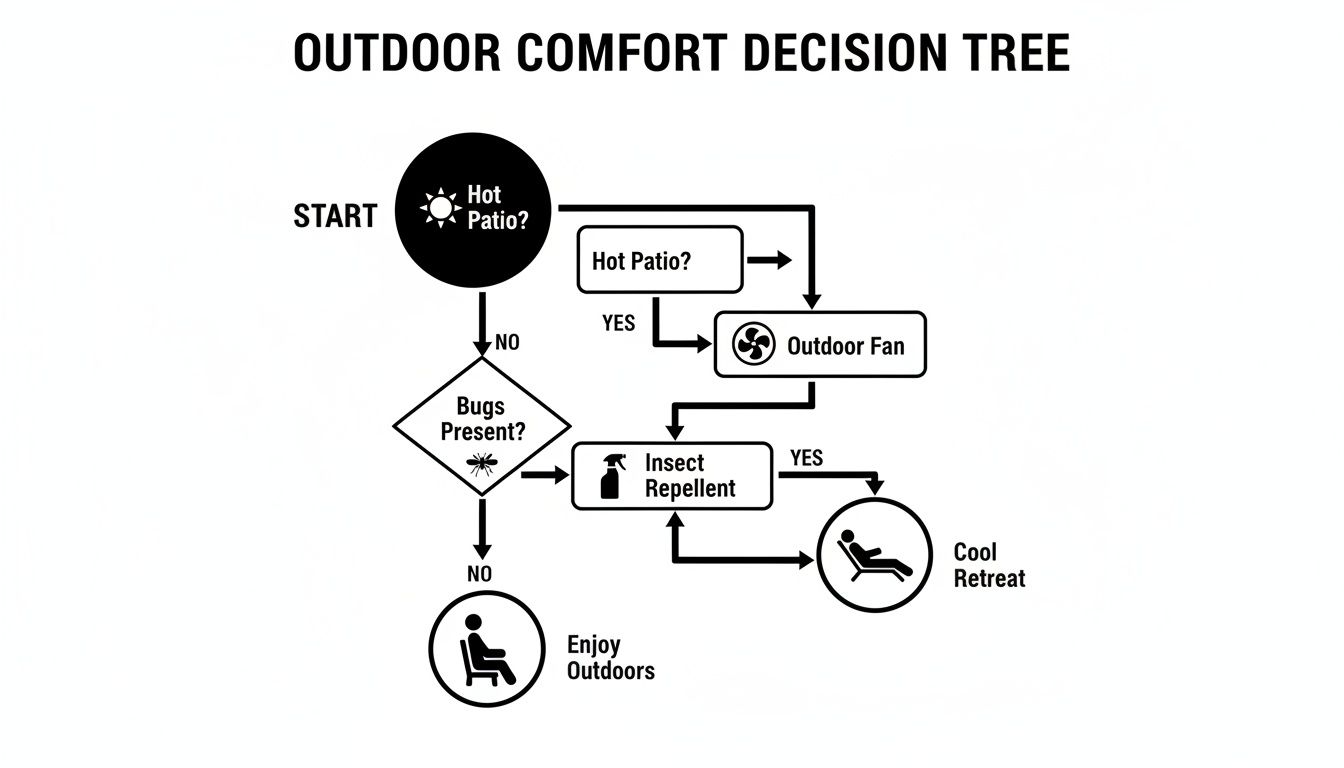
As you can see, the moment your fan is exposed to the elements, a wet-rated model becomes essential.
Damp-rated fans are designed to survive in moisture-heavy environments, just not direct contact with water. Their components are specially treated to resist corrosion from humidity, which is a constant battle in the Brisbane climate.
These fans are the ideal choice for:
While they’re tough, their motors aren’t completely sealed. Direct rain will find its way into the housing, causing irreversible damage to the internal wiring and killing the motor.
For any space that isn’t fully protected by a roof, a wet-rated fan is simply non-negotiable. These are the heavyweights of outdoor cooling, built to handle whatever the wild Queensland weather can throw at them.
A wet-rated fan isn’t just a recommendation for exposed areas; it’s a critical safety requirement. Its sealed motor and weatherproof components are essential for preventing electrical shorts and ensuring it works reliably for years to come.
This superior durability comes from a few key design features:
Yes, this robust construction makes them a bit more expensive, but that investment pays for itself in safety and a much longer lifespan.
Here’s a quick comparison to help you choose the right fan for your outdoor space.
| Feature | Damp-Rated Fan | Wet-Rated Fan |
|---|---|---|
| Best Location | Covered patios, screened porches | Pergolas, gazebos, open decks |
| Motor Housing | Protected against moisture/humidity | Completely sealed and waterproof |
| Blade Material | Treated wood, metal, ABS plastic | All-weather ABS plastic, aluminium |
| Hardware | Rust-resistant | Marine-grade stainless steel |
| Exposure Level | Cannot handle direct rain or water | Can withstand direct rain and storms |
Of course, the motor technology also plays a big part in performance. For a deeper dive, check out our guide comparing AC and DC fan motors to make an even more informed choice.
Ultimately, your fan’s location dictates the rating you need. Be honest about your space—if there’s even a small chance of rain hitting the fan during a classic Brisbane storm, a wet-rated model is the only smart, safe option.
Once you’ve settled on a damp or wet-rated model, the fun part begins: choosing an outdoor ceiling fan that not only performs brilliantly but also elevates the look of your space. But before you get caught up in styles and finishes, let’s talk size. Getting this right is absolutely critical.
A fan that’s too small for your patio will just spin its blades without creating much of a breeze, leaving you hot and bothered. On the other hand, a fan that’s way too big can visually overpower the area and create an unpleasant, gusty whirlwind every time you switch it on.
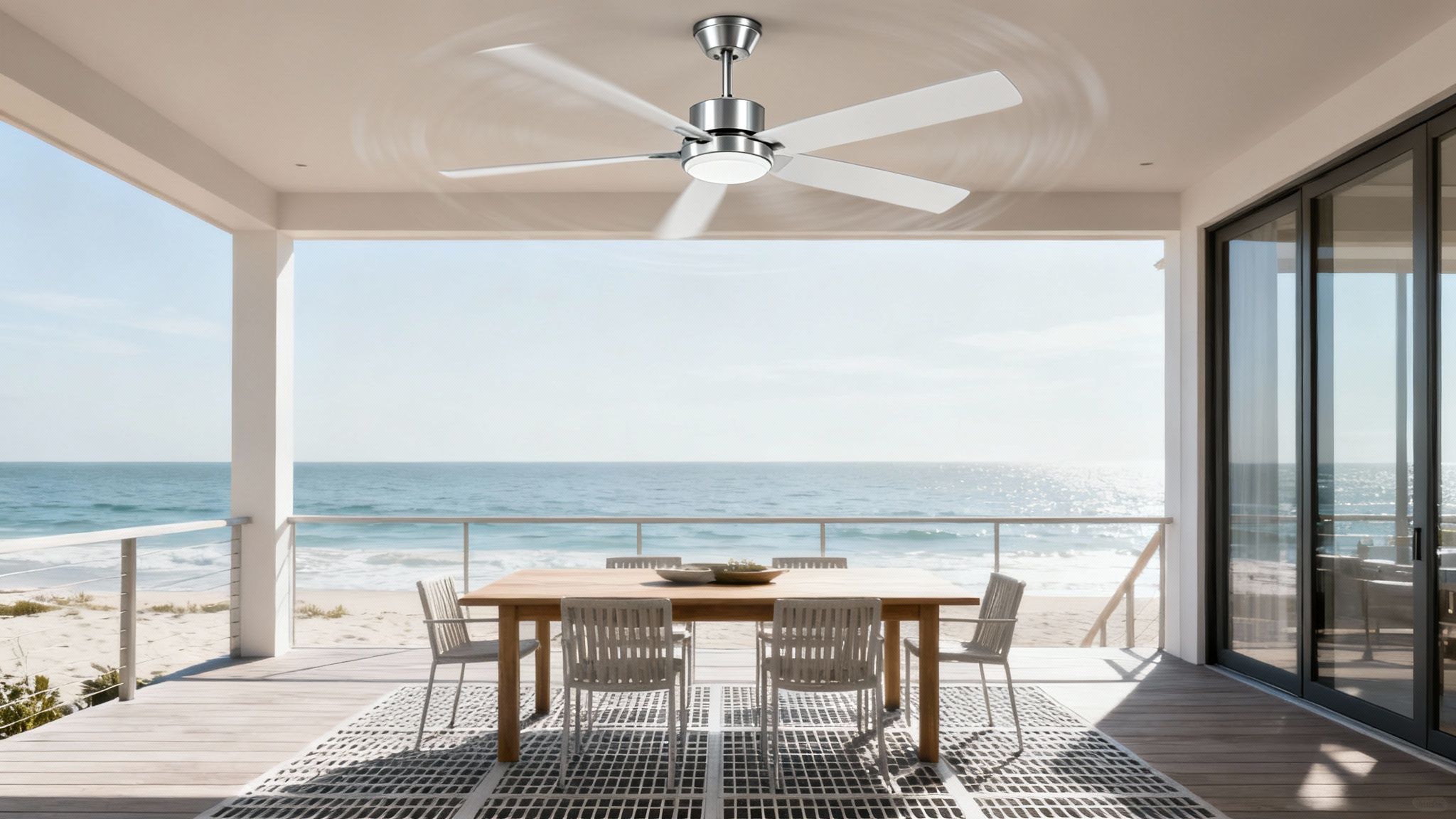
The goal is to match the fan’s blade span—the full diameter from tip to tip—to the square meterage of your outdoor area. This is how you guarantee consistent, comfortable airflow right where you need it most.
Unlike indoor rooms where walls help contain and circulate the air, outdoor spaces are open, allowing the breeze to dissipate. This usually means you’ll want a slightly larger or more powerful fan than you’d pick for an indoor room of the same size. First things first, grab a tape measure and get the dimensions of your space.
Here’s a simple guide to get you started:
| Outdoor Area Size (Square Metres) | Recommended Blade Span (cm) |
|---|---|
| Up to 7 m² | 74cm – 91cm |
| 7 m² – 13 m² | 91cm – 107cm |
| 13 m² – 21 m² | 112cm – 127cm |
| 21 m² – 37 m² | 127cm – 137cm |
| Over 37 m² | 152cm+ or consider multiple fans |
For a more detailed breakdown and some handy tips on measuring different spaces, have a look at our comprehensive ceiling fan size guide. It’s packed with extra insights for both indoor and outdoor applications.
Beyond just the blade span, a fan’s airflow rating is a vital clue to its real-world performance. This is measured in Cubic Feet per Minute (CFM), which is just a fancy way of saying how much air the fan can move. For open outdoor areas, a higher CFM is non-negotiable if you want to create a powerful, cooling breeze that can stand up to the Brisbane heat.
Think of it like this: Blade span is the fan’s reach, while CFM is its strength. A fan with a huge span but low CFM will just lazily stir the air. A high-CFM model, however, will actively create a refreshing wind-chill effect you can actually feel.
When you’re comparing outdoor ceiling fans, always hunt for the CFM rating. A bigger number means more powerful and effective cooling for your patio, deck, or pergola.
The motor is the heart of your ceiling fan, and when it comes to modern tech, there’s a clear winner for both performance and efficiency.
With energy costs on the rise in Australia, investing in a DC motor fan is just a smart financial move. Electricity prices in Queensland saw a 14.9% increase in 2023-24, which is pushing Brisbane homeowners toward more sustainable ways to cool down. An energy-efficient outdoor ceiling fan is a brilliant green alternative to air conditioning, helping you slash your power bills while keeping your alfresco areas comfortable.
For any home in Brisbane, especially those near the coast, the durability of your fan’s materials is non-negotiable. The relentless humidity and salty air will quickly corrode and destroy inferior metals and plastics. To properly enhance your outdoor living areas, such as through professional patio and deck installations, choosing a fan made from the right stuff is essential for longevity.
Keep an eye out for outdoor ceiling fans made from these hard-wearing materials:
You’ve picked out the perfect outdoor ceiling fan, and now comes the final, most crucial step: getting it installed. It’s easy to see this as a weekend DIY project, but here in Australia, installing any ceiling fan is strictly a job for a licensed electrician. This isn’t just a friendly suggestion; it’s a legal requirement that protects your home, your family, and your insurance policy.
Attempting to install an outdoor ceiling fan yourself can have some pretty serious consequences. One wrong move with the wiring could lead to electrical shorts, fire hazards, or even a nasty electric shock. On top of that, if an electrical fire or accident is traced back to unlicensed work, your home insurance claim will almost certainly be denied. That leaves you footing the entire bill for repairs.
When it comes to hardwired appliances, professional installation is simply non-negotiable. Australian law requires a licensed sparky for a reason—it helps prevent the huge number of electrical fires linked to improper DIY jobs. It’s a critical safety measure that ensures every connection is secure, every component is compliant, and your family is safe. You can read more about the importance of professional electrical work in Australia and how it impacts home safety.
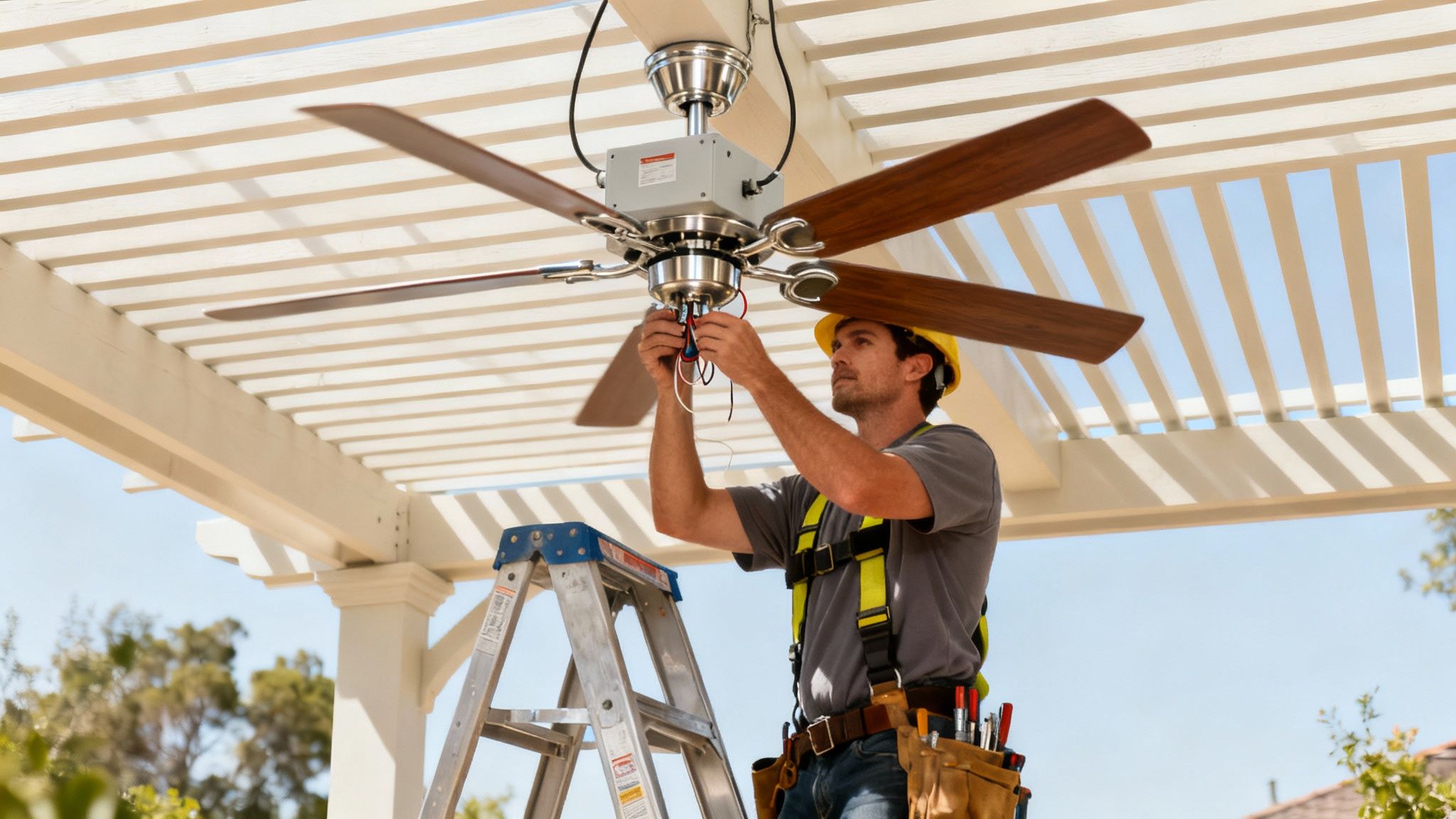
A licensed electrician does a lot more than just connect a few wires. They make sure the entire installation follows the strict Australian Standards (AS/NZS 3000), which are in place for very good reasons. These rules cover everything from where the fan is placed to how it’s wired.
Here are a few of the non-negotiable requirements a professional will manage for you:
That last point is a big one, especially for pergolas or insulated panel roofing where finding a secure anchor can be tricky. A professional knows exactly how to install proper bracing without damaging your roof’s integrity.
Beyond the fan itself, a vital part of any compliant installation is making sure it’s protected by a Residual Current Device (RCD), which you probably know as a safety switch. An RCD is a true lifesaver—it constantly monitors the flow of electricity and can shut off the power in a fraction of a second if it detects a fault.
Think of an RCD as a vigilant guardian for your electrical circuits. If a wire becomes loose or moisture gets into the fan’s motor, the RCD immediately cuts the power, preventing a potentially fatal electric shock or a fire.
Here in Queensland, safety switches are mandatory on all power circuits in new homes. They are also a required upgrade whenever any significant electrical work is done. Your electrician will make sure your outdoor fan is connected to an RCD-protected circuit, adding an essential layer of protection for your family.
Hiring a licensed electrician for your outdoor ceiling fan isn’t an extra cost; it’s an investment in safety, compliance, and your own peace of mind. A qualified professional, like the team here at DLG Electrical, will handle every part of the job correctly from start to finish.
This includes:
This certificate is your official proof that the job was done safely and correctly, which is vital for both your home insurance and, more importantly, your family’s well-being. Don’t take the risk—always leave it to the pros.
An outdoor ceiling fan is a hardworking addition to your Brisbane home, but just like anything exposed to our humidity and weather, a little bit of care goes a very long way. Regular maintenance isn’t just about keeping it looking schmick; it’s about ensuring balanced, quiet, and efficient performance for years.
Think of it as a quick seasonal check-up. By spending just a few minutes every couple of months, you can get ahead of common problems like wobbling, strange noises, and premature wear and tear. This simple routine protects your investment and makes sure your fan is ready to deliver that cool breeze the moment you need it.
This straightforward checklist will help you keep your outdoor fan spinning smoothly, preserving its performance and extending its life.
To keep your fan in top shape, a simple, regular cleaning and inspection is all it takes. Before you start, the most important step is to turn the power off at the circuit breaker. Safety first, always.
Here is a simple four-step process to follow:
A well-balanced fan not only runs quietly but also more efficiently. It’s amazing how just a small amount of dust buildup can throw off the blade alignment, forcing the motor to work harder and use more electricity to create the same airflow.
Even with the best care, you might run into a minor issue from time to time. The good news is that many common problems with outdoor ceiling fans have simple fixes you can often handle yourself.
The Fan is Wobbling
A wobbly fan is usually the easiest problem to sort out. The most common culprit is either dirty blades throwing it off balance or loose screws. Start by giving the blades a thorough clean. If it’s still wobbling, double-check that all mounting and blade screws are firmly tightened.
The Fan is Making Noise
Clicking or rattling noises often point to a loose screw somewhere in the motor housing, light fixture, or blade brackets. A quick inspection and tightening session usually does the trick. If you’re hearing more of a humming sound, it could be related to the type of wall controller or dimmer switch being used. For that, it’s best to call a professional electrician.
If you’ve tried these simple fixes and the problem persists, or if you ever feel out of your depth, it’s time to call in the experts. For any issues involving wiring, the motor itself, or complex noises, a licensed electrician like the team at DLG Electrical can safely diagnose and fix the fault, making sure your fan operates safely and correctly.
Even after covering the basics, a few practical questions always pop up when Brisbane homeowners are ready to choose their fan. We get these all the time, so we’ve put together some straightforward answers to help you finalise your decision with total confidence.
The final cost is split between the fan itself and the professional installation. A good quality outdoor ceiling fan can set you back anywhere from $200 to over $1,000, depending on the brand and features. For the installation by a licensed electrician in Brisbane, you’re typically looking at a range between $250 and $500.
So, what makes that installation price vary? A few things:
Here at DLG Electrical, we don’t do guesswork. We provide a free, detailed quote upfront so you know the exact cost before we even think about touching a tool. No surprises, just honest pricing.
Absolutely. It’s a common misconception that fans lower the air temperature like an air conditioner. They don’t—but what they do is create a powerful wind chill effect.
Think of it this way: your body cools itself by perspiring. The fan’s breeze moves air across your skin, rapidly accelerating the evaporation of that sweat. This simple process can make the air feel up to 6°C cooler than the actual ambient temperature. In the middle of a sticky Brisbane summer, that’s the difference between an oppressive, unusable deck and a comfortable outdoor retreat.
Yes, and this is a big one for anyone in Brisbane’s bayside or coastal suburbs. That lovely sea breeze carries salt, which is incredibly corrosive to standard metals. An indoor-rated or even a basic outdoor fan will start showing signs of rust and deterioration in no time.
If you’re near the water, you should only be looking at wet-rated fans made from one of two key materials:
Spending a little extra on the right materials from the start means your fan will keep looking and performing its best for a long, long time.
This really comes down to old-school tech versus modern efficiency. AC (Alternating Current) motors have been the standard for decades. They’re reliable workhorses, but they’re generally less efficient and usually only offer a few speed settings (low, medium, high).
DC (Direct Current) motors are the clear winner in today’s market. They are incredibly quiet, offer far more speed options for precise control, and—most importantly—use up to 70% less electricity than a comparable AC fan.
While a DC fan might have a slightly higher price tag initially, the significant savings on your energy bills mean they pay for themselves over time. It’s simply a smarter investment for any Brisbane home.
Picking out the perfect outdoor ceiling fan is about more than just surviving another scorching Brisbane summer. It’s a smart investment in your home’s comfort, its look, and even its energy bills. We’ve covered everything from weather ratings to motor types, giving you the know-how to choose a fan that’s just right for your deck or patio. But now comes the most important part: getting it installed properly.
This is where you absolutely can’t cut corners. A safe, compliant, and rock-solid installation means your fan will run smoothly for years to come, protecting your family and your investment. For a job this critical, you need a team that gets it right the first time, every time.
At DLG Electrical, we bring over 19 years of hands-on experience to every single job we do across Brisbane. We’re a family-owned and operated business, and we’ve built our five-star reputation by genuinely understanding what local homeowners and property managers need. Our commitment to safety, quality work, and clear communication is something we live and breathe.
We’re not just general electricians; we specialise in creating comfortable, functional, and beautiful outdoor living areas. Our licensed and insured team makes sure every installation is done by the book, meeting strict Australian Standards and giving you total peace of mind. We handle all the tricky wiring, secure mounting, and compliance checks so you can just kick back and enjoy the breeze.
Choosing the right installer is just as crucial as choosing the right fan. Professional installation guarantees safety, keeps your fan’s warranty valid, and ensures it performs at its best. It’s what turns a good fan into a great one.
We aim to make the whole process completely seamless for you. From our first chat to the final safety sign-off, our focus is on delivering a professional service that you’ll be happy with. We know your home is your sanctuary, and we always treat it with the respect it deserves. See for yourself what a difference true local expertise can make.
Ready to transform your outdoor living space with a perfectly installed ceiling fan? Trust the local experts at DLG Electrical for safe, compliant, and reliable installations. Give us a call today for a free, no-obligation quote and let’s make your Brisbane patio the best room in the house.
Find out more by visiting us at https://dlgelectrical.com.au.

Master Electrician with over 30 years of experience. Founded DLG Electrical in 2005 after international project work including electrical installations at Stamford Bridge Stadium, London(Home of Chelsea FC).

Local Electricians that can fix all Electric Hot water Systems.
Motion sensor lights are a versatile addition to any home, offering nu
