83 Jean St, Grange QLD 4051
Mon-Fri 07:30 AM - 04:00 PM - Sat - 8:00 - 12 - Sunday Closed
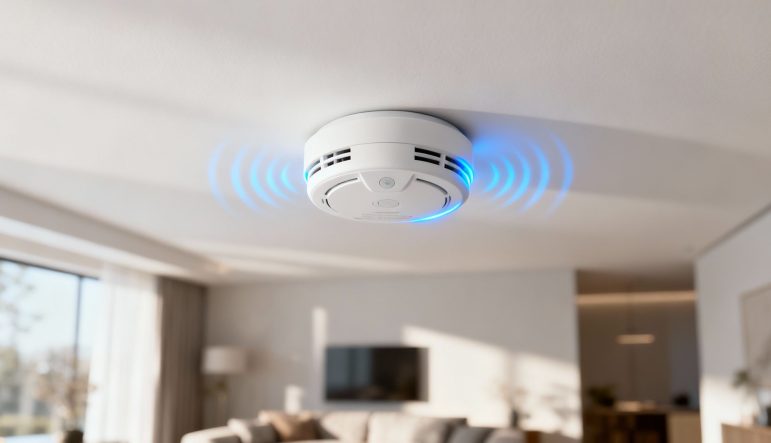
So, what exactly is a Wi-Fi smoke detector? Think of it as your classic smoke alarm, but with one crucial upgrade: it connects to your home’s internet to send instant alerts straight to your smartphone. This means you get notified about a potential fire, no matter where you are—at work, on holiday, or just down at the local shops.
That simple yet powerful feature transforms it from a device that just makes a loud noise into a 24/7 remote safety monitor for your home.
At its core, a Wi-Fi smoke detector runs on a brilliant principle: it combines proven, reliable fire detection technology with the connectivity we use every day. It’s a bit like having a neighbourhood watch for your home, but instead of relying on a neighbour to see smoke and call you, the alarm itself sends the message—instantly and directly.
This immediate communication is what truly sets it apart from older, non-connected models.
The whole process kicks off the moment smoke particles drift into the device’s sensing chamber. Most modern smart alarms, including the ones that meet Queensland’s strict regulations, use a photoelectric sensor. This sensor works by shining a beam of light inside the chamber. When smoke enters, it scatters that light beam, forcing it to hit a sensor and—you guessed it—trigger the alarm.
This technology is particularly good at picking up slow, smouldering fires. These are the types that can start from things like faulty wiring or a dropped cigarette, often producing a huge amount of toxic smoke long before any flames appear.
Once the sensor detects smoke, two things happen at the same time. First, the alarm unleashes an ear-piercing siren—usually around 85 decibels—to wake up and alert anyone inside the house.
Second, and this is the game-changer, its built-in Wi-Fi module jumps into action.
This little module is the device’s communication hub. It connects to your home’s Wi-Fi router, just like your phone or laptop does, and sends a signal through the internet to a secure server. That server then pushes an alert directly to the dedicated app on your smartphone.
A Wi-Fi smoke detector bridges the gap between detection and action. It doesn’t just tell you there’s a problem in your house; it tells you there’s a problem, giving you the power to react from anywhere in the world.
This diagram breaks down the basic workflow, from the first wisp of smoke to the alert on your phone.
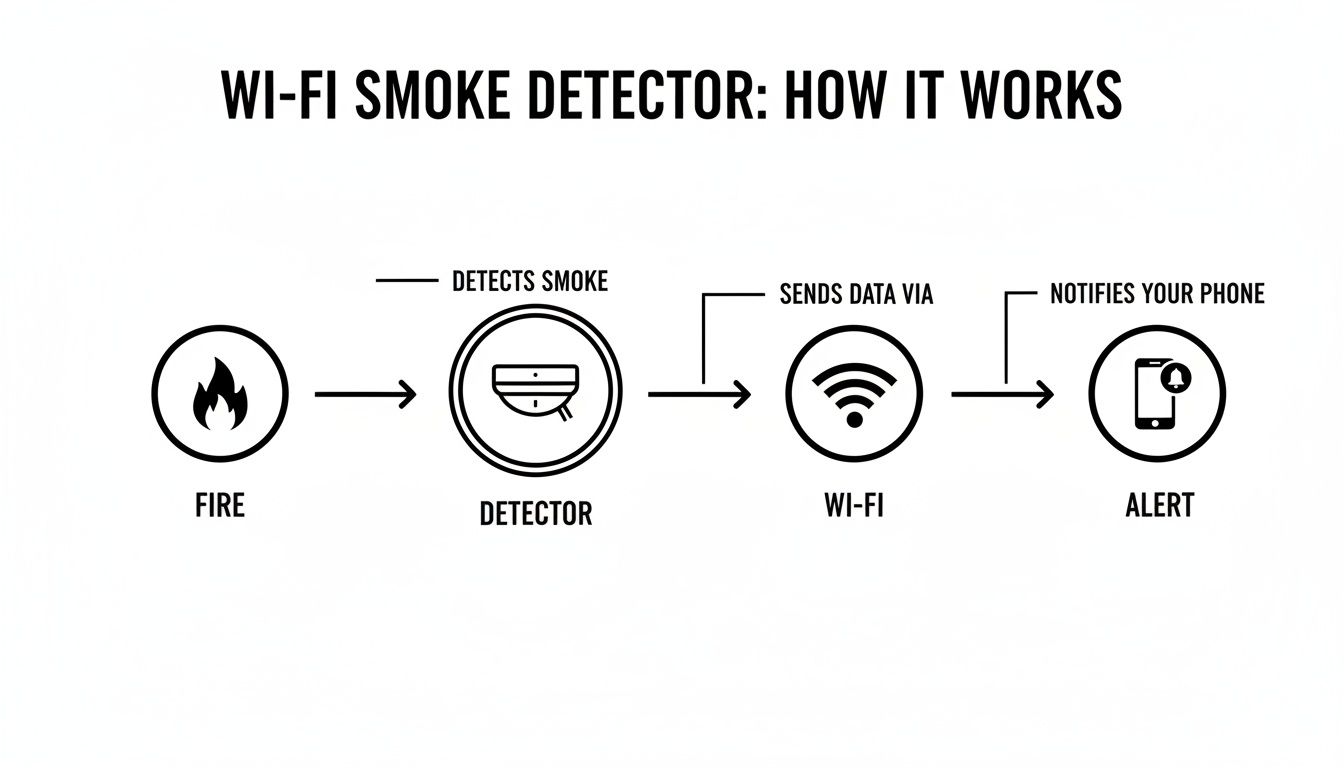
As you can see, it’s a fast, direct chain of events designed to get you the information you need, right when you need it.
To give you a clearer picture, let’s quickly compare these modern alarms to the traditional ones you might be used to.
| Feature | Traditional Smoke Detector | Wifi Smoke Detector |
|---|---|---|
| Alert Type | Loud, audible siren only | Loud siren plus smartphone notifications |
| Remote Access | None. You must be home to hear it. | Yes. Get alerts anywhere with an internet connection. |
| Interconnectivity | Often standalone (battery) or hardwired together. | Wirelessly interconnected with other alarms and connected to your phone. |
| Smart Features | Basic detection only. | Low battery warnings, status checks, and alarm history via app. |
| Power Source | Typically 9V battery or hardwired. | Hardwired with battery backup (required for compliance). |
| Peace of Mind | Limited to when you’re within earshot. | 24/7 monitoring, whether you’re home or away. |
This table highlights the fundamental shift—from a simple local alarm to an integrated part of your home’s safety and security ecosystem.
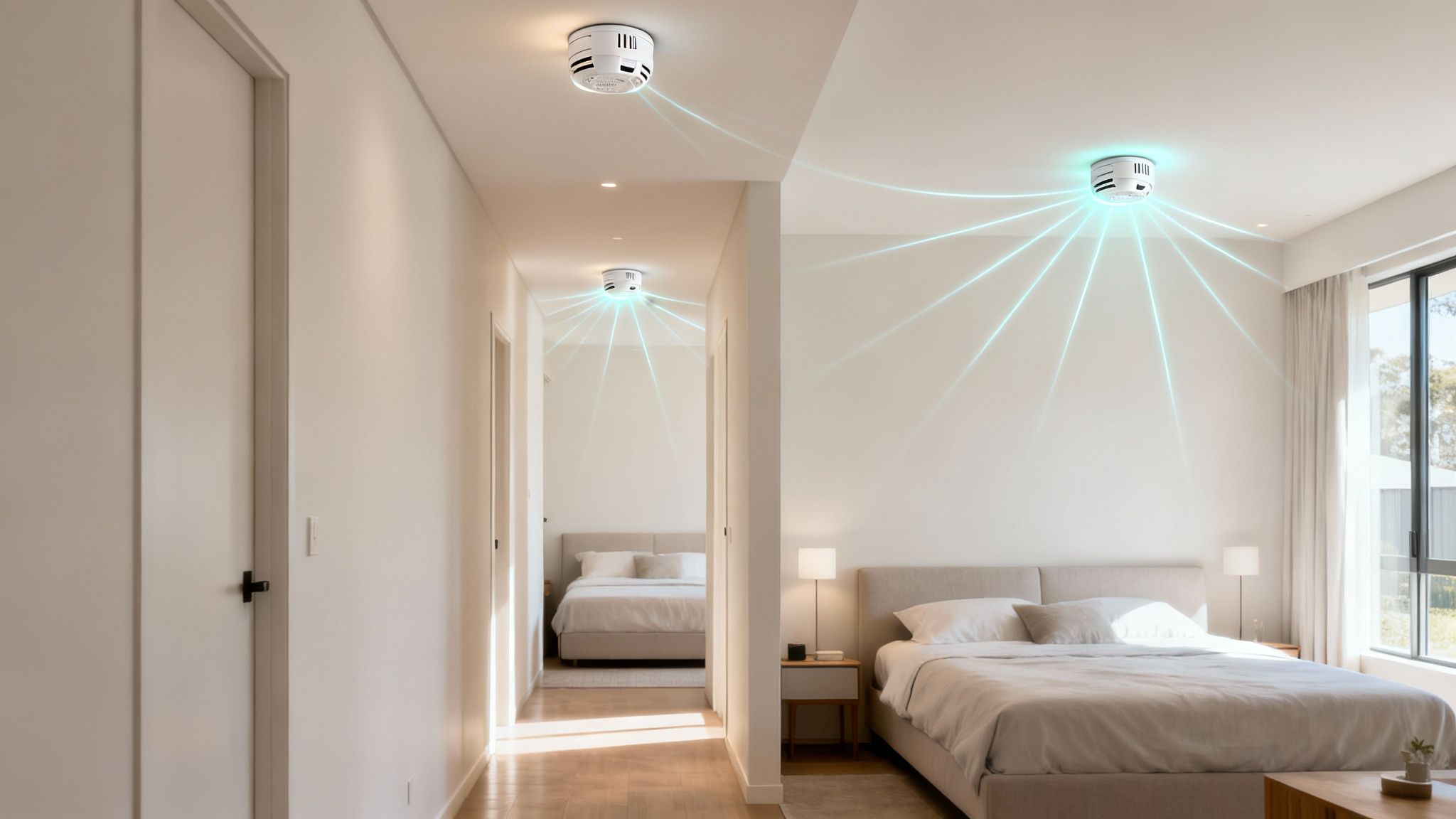
On top of sending alerts to your phone, modern alarms are also designed to be interconnected. They use a low-frequency radio signal to talk to each other, creating a single, unified system throughout your home.
This is a non-negotiable feature under current laws. It means if the detector in the kitchen goes off, so will the ones in the bedrooms, the hallway, and the living room. It’s a critical safety measure that ensures everyone in the house is alerted immediately, especially in larger homes or when people are asleep behind closed doors.
To dive deeper into this, check out our comprehensive guide to wireless interconnect smoke detectors.
This combined approach of interconnection and Wi-Fi alerts gives you the best of both worlds: a powerful local siren network and a reliable remote alert system, all working together to protect your property and loved ones.
If you own property in Queensland, you’ll know fire safety isn’t just a recommendation—it’s the law. The rules for smoke alarms are strict, detailed, and completely non-negotiable. They were designed with one purpose in mind: giving everyone the earliest possible warning to get out safely in a fire.
Navigating the legislation can seem a bit much at first, but the core requirements are actually quite simple. The goal is to create an unbroken safety net across your entire property, leaving no blind spots where a fire could start without anyone knowing. As you’ll see, a modern Wi-Fi smoke detector system isn’t just built to meet these standards; it comfortably exceeds them.
The first step to protecting your family, tenants, and property is understanding exactly what’s required of you.
The absolute cornerstone of Queensland’s legislation is interconnectivity. Put simply, this means when one alarm detects smoke, every single alarm in the house must go off at the same time. This one change has dramatically improved safety outcomes, getting rid of the terrifying risk of a fire starting in one room while people sleep soundly in another.
Beyond that, the law is very specific about the type of alarm and where it must be installed:
This new standard became mandatory for all residential properties back on 1 January 2022. Since then, demand has soared for advanced systems like Wi-Fi smoke detectors, which add remote alerts on top of full compliance.
The Queensland Fire and Emergency Services (QFES) is actively enforcing these rules. In 2023, spot checks revealed a 15% increase in non-compliant rental properties, leading to hefty fines for landlords—up to AUD $1,268 per non-compliant alarm.
This legislation isn’t just red tape; it’s about closing dangerous loopholes. An interconnected system makes sure that no matter where a fire starts, everyone inside gets the warning they need to escape.
Failing to comply doesn’t just put lives on the line; it also comes with serious financial and legal penalties.
While standard hardwired interconnected alarms will tick the legal boxes, a Wi-Fi smoke detector system takes your safety to a whole new level. They meet every single legal mandate while adding a powerful layer of remote monitoring and control you just don’t get otherwise.
Think of it like this: legal compliance ensures the alarm sounds inside the house. A Wi-Fi system ensures you get the alert, no matter where you are in the world. This is a game-changer for protecting your property when you’re at work or on holiday, and it can be the difference between a small scare and a total loss.
Here’s how a Wi-Fi system ticks every box and then some:
For a deeper dive into the specific rules, we recommend you read our detailed guide on Queensland’s smoke alarm legislation.
Ultimately, choosing a Wi-Fi-enabled system isn’t about avoiding fines; it’s about investing in the best protection technology available today. At DLG Electrical, we specialise in installing systems that are 100% compliant, giving Brisbane homeowners and landlords total peace of mind.
Moving beyond just ticking a compliance box, upgrading to a wifi smoke detector system is a serious investment in what really matters: the safety of your home and family. It’s the difference between having an alarm that just makes noise and having a 24/7 guardian that keeps you connected and in control, no matter where you are.
Think about it. You’re finally on that well-deserved holiday, hundreds of kilometres from home. Suddenly, your phone buzzes with a notification: smoke detected in the kitchen. Instead of finding out days later when it’s too late, you can call Triple Zero (000) immediately, potentially saving your home from a catastrophe. This isn’t science fiction; it’s a real-world benefit you can have today.
Or a more common scenario: you’re at work, and a faulty appliance starts to smoulder. A Wi-Fi smoke alarm gives you those precious few minutes to call a neighbour or emergency services, saving the lives of pets trapped inside. These aren’t just hypotheticals—they show how remote connectivity transforms a passive device into an active protection system.
When a fire breaks out, every single second counts. The core advantage of a smart alarm is its power to shrink the time between a fire starting and help arriving. A traditional alarm can only alert people who are close enough to hear it, which is useless if the house is empty.
A smart system, on the other hand, sends an alert straight to your phone. This instant notification empowers you to act immediately, whether that’s calling the fire brigade yourself or getting a family member to check. It’s this direct line of communication that can completely change the outcome.
The numbers from Queensland Fire and Emergency Services (QFES) really drive this home. In the 2022-2023 financial year, QFES recorded 6,472 structure fires, and a staggering 62% of them were in residential properties. Even more shocking, in 45% of fatal fires, smoke alarms were either missing or simply weren’t working. Research also shows that interconnected alarms can detect fires 30% faster than standalone units—a difference that could save an extra 20 lives in Queensland every year.
Beyond the critical emergency alerts, a wifi smoke detector offers a level of convenience older models can’t touch. We’ve all been there—a piece of burnt toast sets off every alarm in the house, sending you scrambling for a chair to frantically press a tiny hush button.
With a smart system, you can silence those annoying nuisance alarms right from your smartphone.
A Wi-Fi smoke detector gives you the power to distinguish between a genuine crisis and a kitchen mishap. Silencing a false alarm from your phone isn’t just convenient; it prevents the dangerous habit of disabling alarms out of frustration.
This is a game-changer for homes with high ceilings or for anyone with mobility challenges. The app also gives you a full health check of your system, showing battery levels and sensor status, so you always know your alarms are ready to go. For landlords and property managers, it’s also worth looking into the best property management apps that can help streamline overall safety and compliance across multiple properties.
The benefits of a smart system extend to every member of the household, especially those with specific needs. A wifi smoke detector does more than just blast a siren; it adds crucial layers of safety through visual and mobile alerts.
This is particularly important for:
Ultimately, upgrading is about embracing a smarter, more connected approach to fire safety. It’s an investment that delivers more than just compliance—it delivers genuine peace of mind.
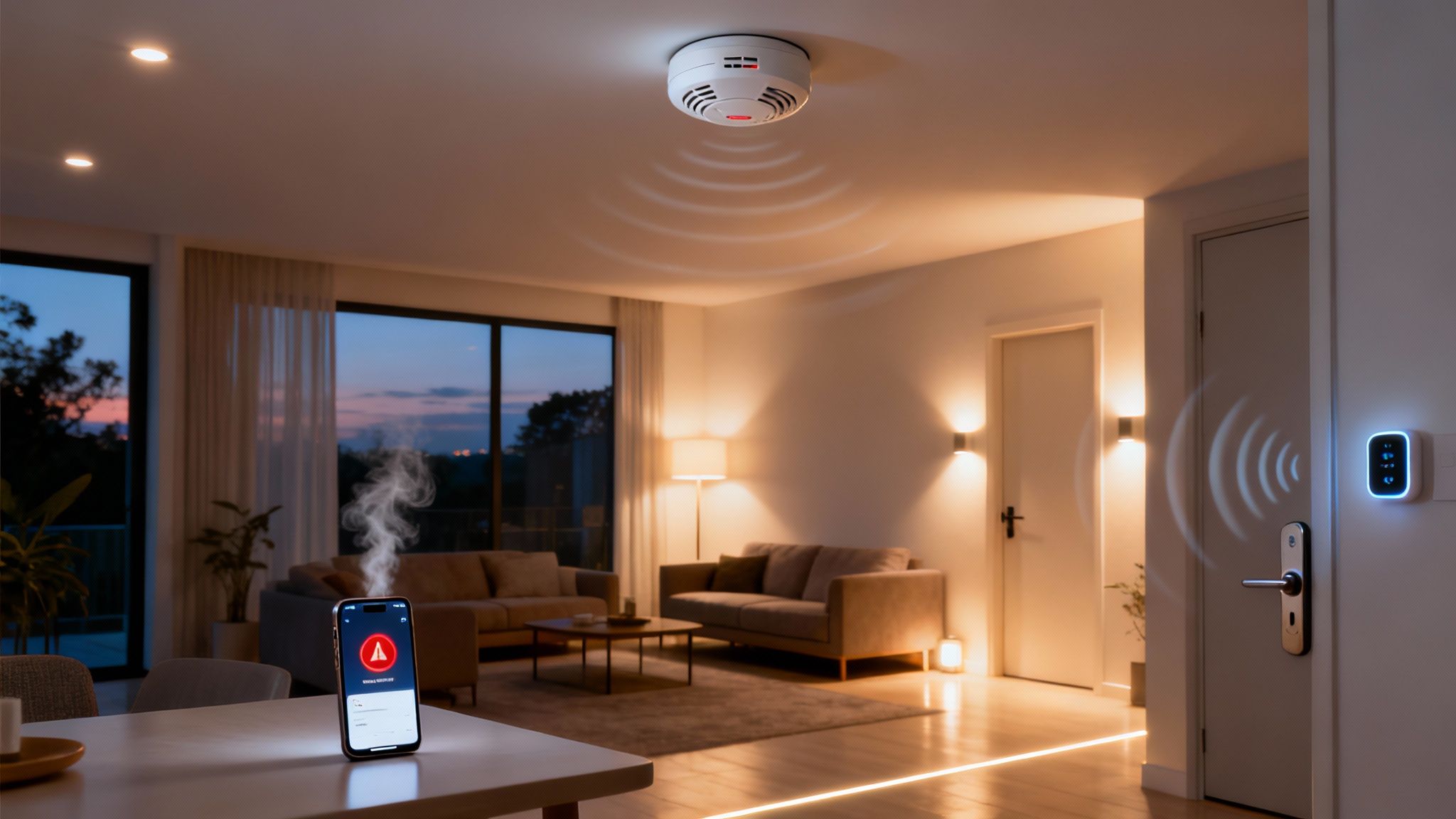
A Wi-Fi smoke detector is much more than a device that makes a loud noise; it’s the central nerve in your home’s automated safety system. On its own, the remote notification feature offers incredible protection. But when you weave it into your smart home ecosystem, it becomes an intelligent first responder that coordinates an immediate, automated reaction to any emergency.
This is where modern fire safety really comes into its own. Picture a smouldering fire starting in the middle of the night. Instead of just a siren waking you up, the alarm can trigger a symphony of life-saving actions before you’ve even had a chance to react. It’s this coordinated response that can make all the difference when seconds count.
The real beauty of a connected system is its power to make other devices react instantly to a fire alert. This creates an automated sequence designed from the ground up to protect your family and your property.
When your smart smoke alarm senses danger, it can command other connected devices in your home to follow pre-set instructions. This network effect turns individual gadgets into a cohesive safety unit, all working together to make your escape faster and safer.
This teamwork is made possible through popular smart home platforms like Google Home and Amazon Alexa, which act as the central hub for all your devices.
Here are just a few powerful examples of automated actions your Wi-Fi smoke detector can set in motion:
These automated routines aren’t just a convenience; they are proactive safety measures that remove obstacles and reduce confusion during an incredibly high-stress event.
Compatibility is the key to building this intelligent safety net. Thankfully, most leading Wi-Fi smoke detectors are designed to work seamlessly with the biggest names in home automation, allowing you to build custom routines and commands using simple voice prompts or your phone.
For instance, linking your alarm to a Google Nest Hub or Amazon Echo device not only allows for voice control but also enables your smart speakers to announce where the fire is—”Smoke detected in the kitchen”—giving you critical information in an instant.
The uptake of these connected technologies is surging right here in Australia. The Australian smart home market is projected to grow significantly, driven by a sharp increase in household IoT device usage. You can learn more about the growth of the smart home market. This trend shows a clear shift towards creating more responsive and intelligent homes.
By integrating your Wi-Fi smoke detector with your smart home, you are building more than just a warning system. You’re designing an active, automated emergency response plan that works tirelessly to protect what matters most.
Here at DLG Electrical, we can help you design and install a cohesive system that not only meets Queensland’s strict legal standards but also provides a superior level of modern, connected protection.
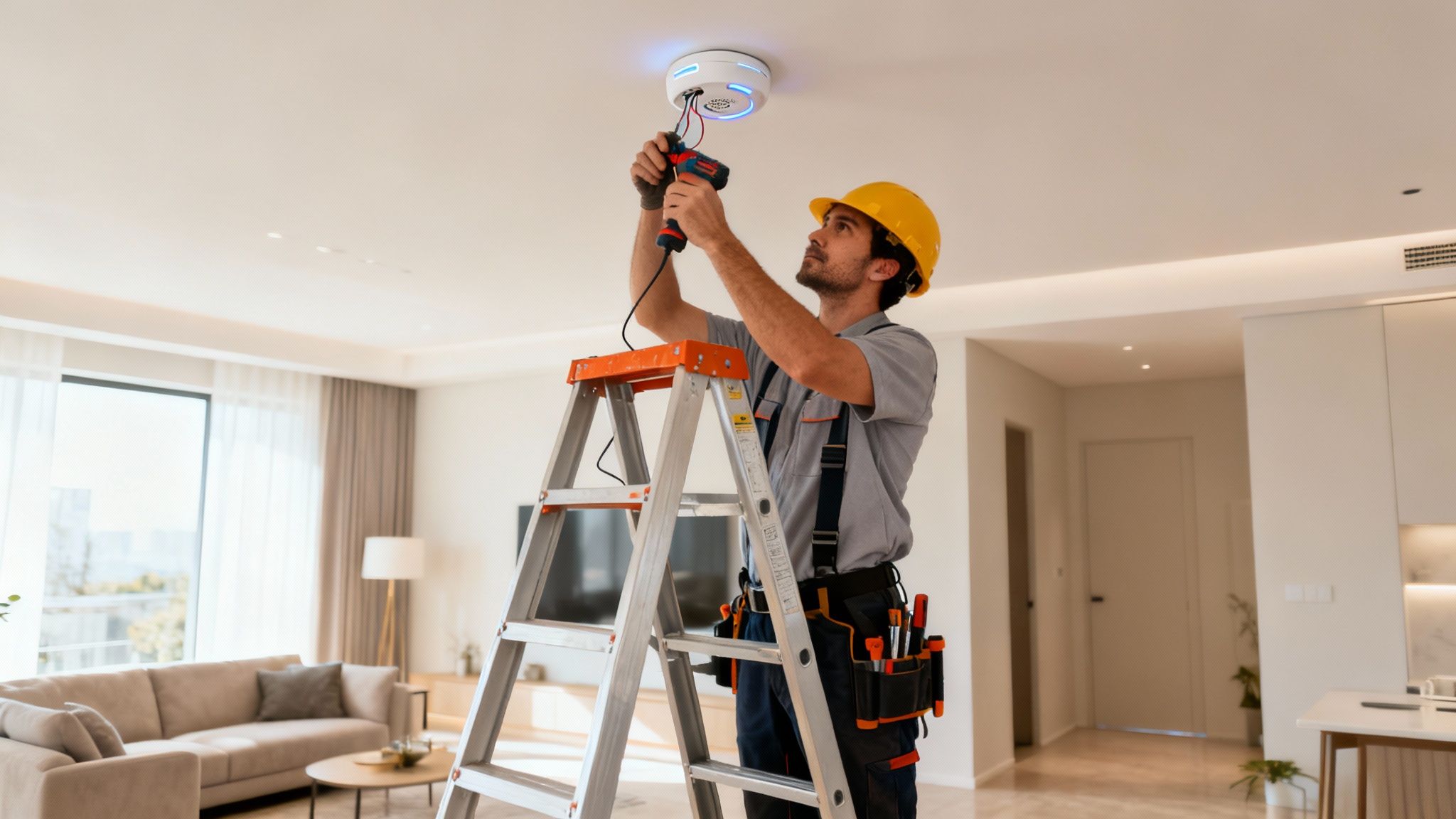
When it comes to the safety of your family and home, some jobs just can’t be left to chance. Installing a wifi smoke detector system is right at the top of that list. While the word “smart” might make it sound like a simple DIY weekend project, the truth is that the effectiveness of these devices hinges entirely on a correct, compliant installation by a licensed electrician.
This is much more than just connecting a gadget to your home network. It’s about building a life-saving electrical system. A licensed sparky isn’t just there to mount an alarm on the ceiling; they’re ensuring the entire network of alarms is correctly powered, flawlessly interconnected, and strategically placed to give you the earliest possible warning when it counts.
Trying to install a hardwired system yourself isn’t just dangerous—in Queensland, it’s illegal. For a system this critical, trusting an expert isn’t just a good idea. It’s an absolute must to guarantee both your family’s safety and your legal compliance.
You might think placing a smoke detector is as simple as picking a spot on the ceiling, but there’s a real science to it, governed by Australian Standards (AS 3786:2014). A professional electrician understands the unique airflow patterns in a home and knows exactly how to avoid “dead air” spaces where smoke can pool without ever reaching the sensor.
Incorrect placement is one of the biggest reasons smoke alarm systems fail. Stick one too close to the kitchen, and you’ll be dealing with frustrating false alarms every time you make toast. Put it near a ceiling fan or an air-con vent, and smoke from a real fire could be blown away from the sensor, delaying the alarm.
A licensed electrician does more than just install a device; they engineer a detection solution for your specific home layout. Correct placement ensures your system is sensitive enough to catch a real threat quickly but smart enough to ignore everyday occurrences.
This expertise is what separates a truly effective safety net from one that just gives you a false sense of security.
The heart of Queensland’s smoke alarm legislation is flawless interconnection—when one alarm sounds, they all sound. A professional electrician guarantees this critical function works perfectly, every time. They make sure every single wifi smoke detector is properly wired into your home’s electrical system and seamlessly paired to its wireless network.
A professional installation from a team like DLG Electrical also provides you with a compliance certificate. This piece of paper is your official proof that your system meets all legal requirements, which is absolutely essential for:
With over 19 years of experience serving Brisbane homeowners, DLG Electrical’s five-star reputation is built on getting the job done right, the first time. Our team is committed to providing installations that give you complete peace of mind. For more insights from our team, check out our guide on finding a trusted Brisbane electrician for your home projects.
While the installation is strictly a job for a professional, you can take a few simple steps to keep your system in peak condition. Regular maintenance is easy with a smart system and ensures your investment continues to protect you effectively.
By combining a professional installation with simple homeowner maintenance, you create the most robust and reliable fire safety system possible for your home.
Deciding to upgrade your home’s safety system is a big step, and it’s smart to have questions. This is modern technology, after all, and you need complete confidence that it will work when it matters most.
We get asked about these systems all the time, so we’ve put together some clear, practical answers to the most common queries we hear from Brisbane homeowners. Let’s clear up the confusion and show you why this is such a leap forward in home protection.
This is easily the first—and most important—question people ask. The answer is incredibly reassuring: if your Wi-Fi drops out, your Wi-Fi smoke detector keeps working as a powerful, life-saving alarm. It does not stop.
The core safety features are designed to be completely independent of your internet connection.
That deafening, 85-decibel siren? It will still sound off to wake everyone in the house. And crucially, all the interconnected alarms will still talk to each other over their own dedicated radio frequency. So, if the alarm in the bedroom goes off, the one in the kitchen will still scream. The only thing you lose temporarily is the notification on your phone.
Think of the Wi-Fi feature as an extra layer of protection, not the foundation. The primary, life-saving alarm functions—the siren and the interconnection—are always on, protecting your home whether you’re online or offline.
The system’s fundamental job is to alert people inside the home to get out, and an internet outage never compromises that.
In a world full of connected devices, worrying about security is perfectly valid. Reputable manufacturers take this incredibly seriously, building multiple layers of security into their products to stop any unauthorised access.
These alarms use strong, industry-standard encryption protocols (like WPA2) to secure the conversation between the detector, your router, and the app on your phone. This makes it extremely difficult for anyone to intercept the data. Honestly, the risk of a hacker specifically targeting your smoke alarm system is incredibly low.
To keep things locked down on your end, just follow a few simple best practices:
When you weigh the immense safety benefits of getting instant fire alerts against the tiny security risk, the choice is pretty clear.
The total investment for a fully compliant Wi-Fi smoke detector system really depends on the unique layout and size of your property. There’s no one-size-fits-all price, because the final cost is a mix of the hardware (the alarm units) and the labour for a professional installation by a licensed electrician.
The main thing that determines how many alarms you need is Queensland’s legislation. The law is very specific: you need an interconnected photoelectric alarm in every bedroom, in hallways connecting bedrooms, and on every level of your home. A two-bedroom apartment will naturally require fewer units than a four-bedroom, two-storey house.
While we can’t give you a flat rate without seeing your home, we believe in being completely transparent. The best way forward is to get a detailed, obligation-free quote that’s tailored to your exact needs. We encourage you to get in touch with DLG Electrical for a precise estimate that guarantees both full compliance and your family’s safety.
For both safety and legal reasons, we have to be blunt here: do not attempt a DIY installation of any hardwired smoke alarm. In Queensland, the law is black and white. Any smoke alarm that connects to your home’s 240V mains power must be installed by a licensed electrician. There are no exceptions.
Even if you’re looking at battery-powered models that don’t need mains wiring, getting a professional in is still the smartest move. A qualified electrician from DLG Electrical guarantees three critical things:
Beyond fire protection, ensuring a comprehensive safe living environment might also involve addressing other unseen hazards, such as those discussed in an Expert Meth Testing Property Guide. Taking a complete view of home safety is always a wise investment.
Ready to upgrade to a smarter, safer, and fully compliant smoke alarm system? The expert team at DLG Electrical is here to provide a professional, seamless installation tailored to your Brisbane home. Contact us today for a free, no-obligation quote!

Master Electrician with over 30 years of experience. Founded DLG Electrical in 2005 after international project work including electrical installations at Stamford Bridge Stadium, London(Home of Chelsea FC).

Local Electricians that can fix all Electric Hot water Systems.
Motion sensor lights are a versatile addition to any home, offering nu
