83 Jean St, Grange QLD 4051
Mon-Fri 07:30 AM - 04:00 PM - Sat - 8:00 - 12 - Sunday Closed
When your hot water system suddenly calls it quits, the first question that pops into your head is almost always: “How much is this going to set me back?” Let’s get straight to it. The total cost of a new hot water system in Brisbane generally falls somewhere between $1,000 for a basic electric storage unit and upwards of $7,000 for a high-end solar setup.
The final price tag really depends on the type of system you choose, its size, and how tricky the installation is.
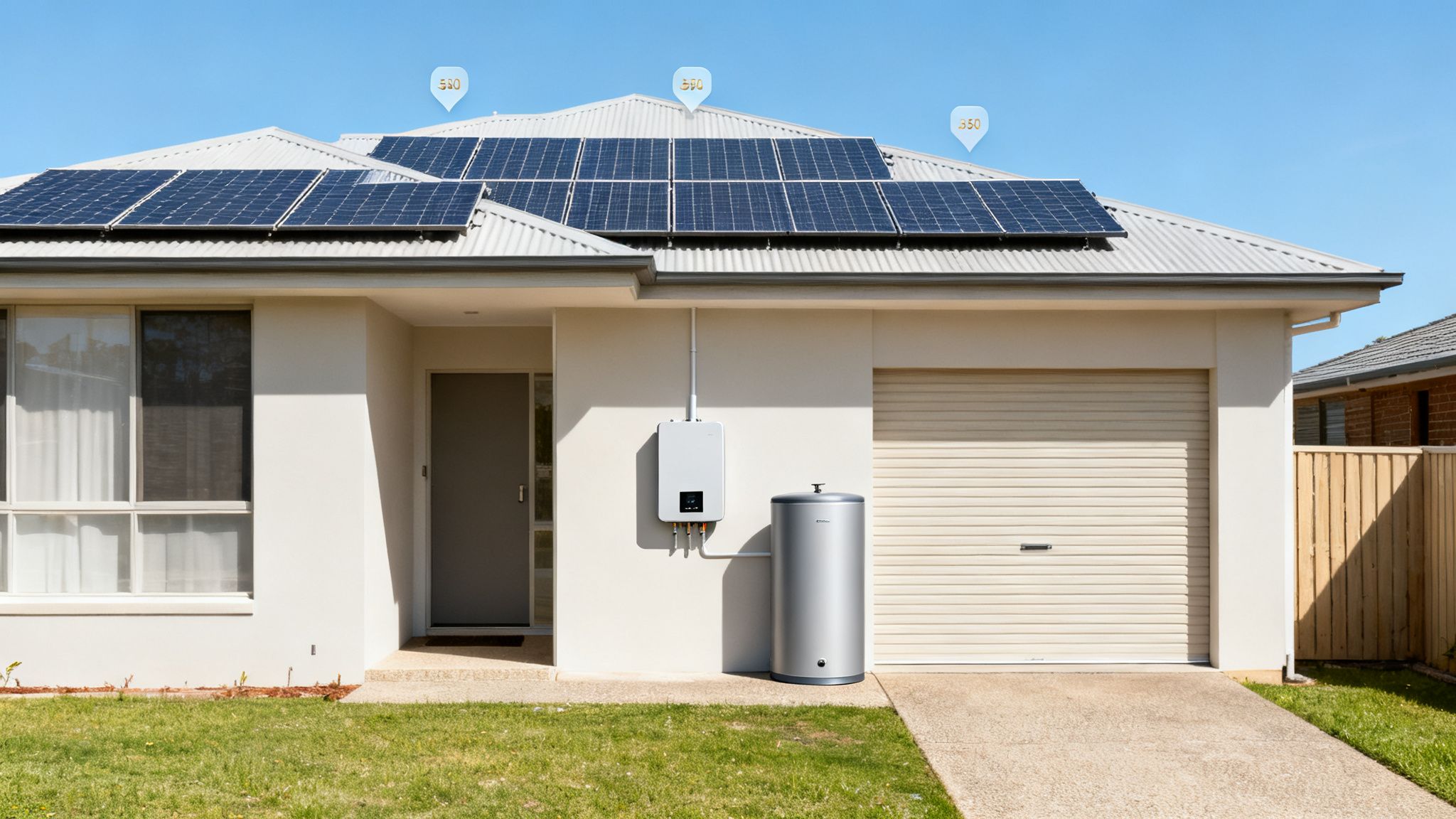
Knowing the price spectrum is the first step to making a smart, confident decision without the panic. The cost isn’t just about the unit you see on the wall; it’s a package deal that includes the hardware, the licensed professional putting it in, and any upgrades your plumbing or electrical wiring might need.
Think of it like buying a car. You’ve got your reliable, budget-friendly models that get the job done, and then you have the premium, eco-friendly options that cost more upfront but save you a bundle on running costs down the track. Your best choice hinges on your budget, how many people are in your household, and what your long-term goals are.
To give you a clearer picture, the total cost is shaped by a few key factors. Getting your head around these will help you decipher quotes and sidestep any nasty surprises.
Let’s paint a picture. You’re a busy Brisbane family, and the old electric system dies right in the middle of the morning shower rush. A common move is to replace it with a new electric storage tank, which is a popular choice here in Queensland, especially with off-peak power tariffs helping to keep the bills down.
On average, the cost to supply and install a new electric hot water system in Brisbane lands between $1,000 and $2,000. This makes it a solid, budget-friendly option for households of 2-4 people. This price usually covers the unit itself, professional labour from a licensed team like DLG Electrical, and all the basic materials needed to get the job done right. If you want to dive deeper into these costs, Crew Plumbing offers a comprehensive breakdown of new hot water systems that’s worth a read.
To give you a handy reference, we’ve put together a table outlining the estimated supply and installation costs for different hot water systems you’ll find around Brisbane. Think of this as a realistic starting point for your budget.
| System Type | Average Supply and Install Cost | Ideal For |
|---|---|---|
| Electric Storage | $1,000 – $2,500 | Budget-conscious households, off-peak tariff users |
| Gas Continuous Flow | $1,800 – $4,800 | Homes with natural gas, endless hot water needs |
| Heat Pump | $3,500 – $6,000 | Energy-savers looking for long-term value |
| Solar Hot Water | $4,000 – $7,000+ | Eco-conscious homes with good sun exposure |
These figures cover a standard installation, but remember that every home is different. Factors like upgrading your switchboard or running new pipes can affect the final price.
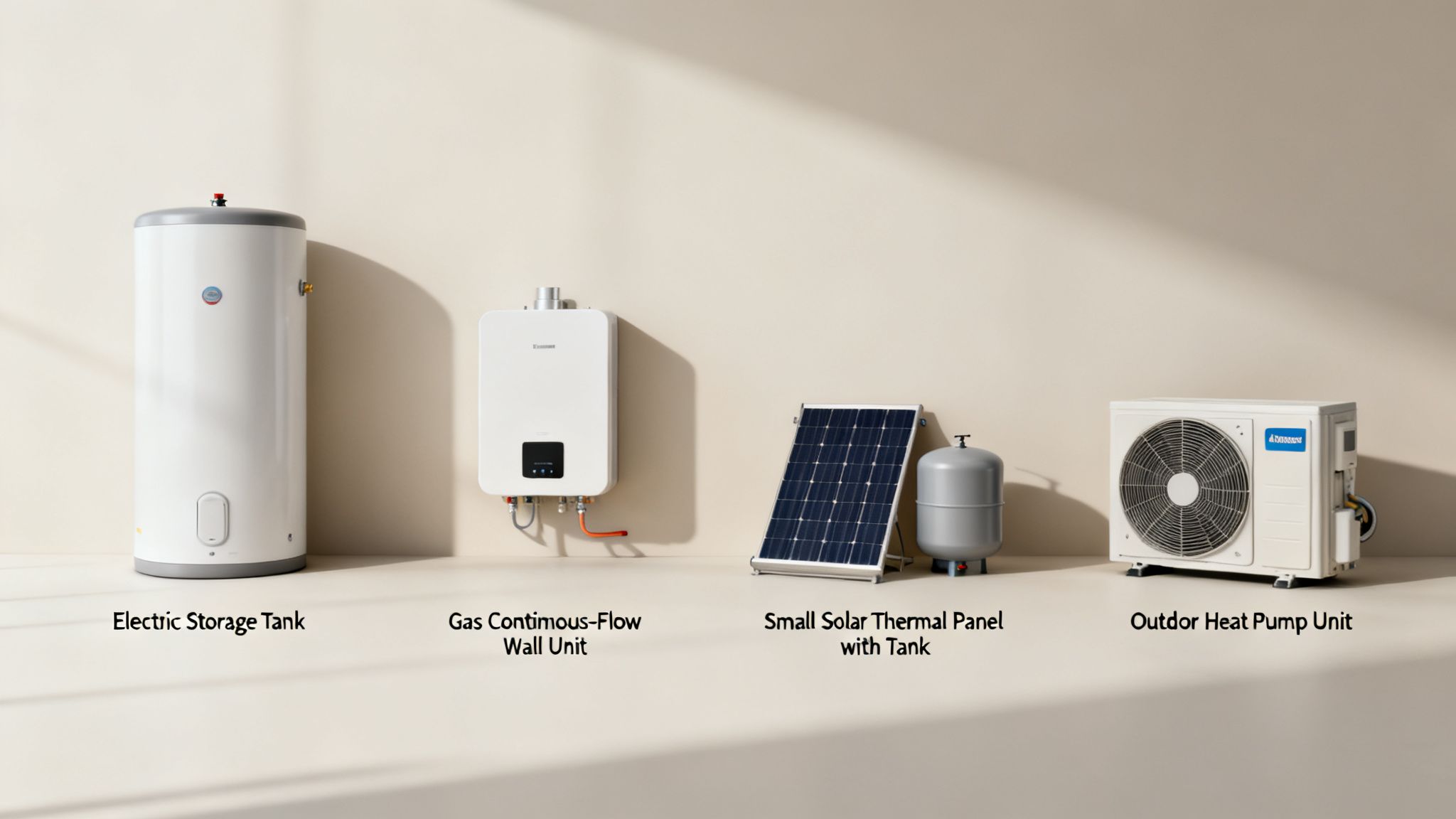
Choosing a new hot water system is a bit like picking a car. You’ve got the reliable, everyday models that are affordable upfront, and then you have the high-tech, eco-friendly options that cost more initially but save you a bundle on “fuel” in the long run. The best choice really boils down to your household’s needs, your budget, and how much you value long-term efficiency.
Understanding what makes each type tick is the key to calculating the true cost of a new hot water system—a figure that goes way beyond the sticker price. Let’s break down the main contenders on the Brisbane market so you can see which one is the right fit for your home or business.
Think of an electric storage system as a giant kettle. It fills a large, insulated tank with water and uses an electric element to heat it up, keeping it ready for when you need it. This traditional approach makes it one of the most affordable options to buy and install.
For many Brisbane homes, this is the go-to solution, especially if you have access to off-peak electricity tariffs. Running the heater during those cheaper, off-peak hours can seriously slash your energy bills. The main trade-off? Once that tank is empty, you’re in for a wait while it refills and heats up again.
A gas continuous flow system, often called an instantaneous or tankless heater, works like an on-demand coffee machine. It only fires up when you turn on a hot tap, using a powerful gas burner to heat water as it flows through the unit.
What this means for you is an endless supply of hot water, and you’re not paying to keep a big tank of water hot 24/7. This is a game-changer for businesses like cafes, gyms, or motels. The installed price for these units usually falls between $1,800 and $4,800, covering the unit itself, labour, and all the necessary compliance certificates.
If you want to get into the technical nitty-gritty, exploring the differences between traditional and tankless water heaters is a great way to see how the mechanics stack up side-by-side.
A solar hot water system is the marathon runner of the group. It demands a significant upfront investment but pays you back over the long haul with massive savings, using Brisbane’s abundant sunshine to heat your water for free.
These systems use collector panels on your roof to absorb the sun’s heat, which is then transferred to water in a storage tank. Most come with an electric or gas booster to make sure you’re never caught out with a cold shower on cloudy days or overnight. While the initial cost of a new hot water system of this type is high, the running costs are the lowest by a country mile.
A heat pump is one of the cleverest bits of tech out there. Instead of creating heat directly like a kettle element, it works like a fridge in reverse. It pulls warmth from the surrounding air and uses that energy to heat the water in its storage tank, making it incredibly efficient.
Because it only uses a small amount of electricity to run its fan and compressor, a heat pump can be up to 75% more efficient than a standard electric storage system. That translates to some serious savings on your power bills, making it a fantastic long-term investment that perfectly bridges the gap between traditional electric and full solar.
Heat pumps are an ideal upgrade for anyone moving away from old electric or gas systems, offering a great balance of high efficiency and a moderate upfront cost. With an average service life of 10-15 years, their performance really shines in Brisbane’s mild climate.
That price tag on a new hot water system? Think of it as just the first piece of the puzzle. The full picture—the true cost of a new hot water system—always includes professional installation, and this is where the details really start to matter.
A “standard” or straightforward installation isn’t just a simple swap. It’s a job for licensed professionals who ensure everything is safe, compliant, and running efficiently from the get-go. This typically involves disconnecting and taking away your old unit, positioning the new one, hooking it up to your existing water and power lines, and then commissioning it to make sure it’s working perfectly.
For this kind of job in Brisbane, you can expect labour costs to range anywhere from $400 to over $1,000, depending on the type of system and how long it takes.
Of course, many Brisbane homes, especially the older ones, have their own unique quirks. It’s these variables that can add costs you might not have initially budgeted for.
Installing a hot water system is a bit like replacing a major kitchen appliance. If you’re just swapping an old fridge for a new one that’s the exact same size, it’s pretty simple. But if the new one is bigger or needs a new water line for an ice maker, you’ll suddenly need a plumber and maybe even a cabinet maker. The same logic applies here.
There are a few common scenarios that can push your installation costs beyond that standard rate:
Beyond the big-ticket items like plumbing and electrical work, a few other necessary expenses contribute to the total installation cost. They might seem small, but they’re critical for a professional, compliant job.
First, safely disposing of your old unit isn’t always free. Most installers will factor this into their quote, but it’s a real cost they have to cover. Second, every new hot water installation in Queensland legally requires a Form 4 compliance certificate. This is a document lodged by your licensed plumber to certify that the work meets all Australian standards and local regulations, and it adds a small fee to the final invoice.
The total installation cost isn’t just about connecting pipes and wires. It’s about ensuring the entire system, from your switchboard to the final tap, works safely and complies with Queensland’s stringent regulations. Skipping any step is a risk not worth taking.
Getting your head around these potential variables is the key to creating an accurate budget. For a detailed look at what goes into a professional installation, you can learn more about our hot water system installation process and what to expect.
Ultimately, the best way to avoid any nasty surprises is to get a detailed, itemised quote from a professional like DLG Electrical. That way, you’ll see exactly where your money is going.
The sticker price of a new hot water system is just the beginning of the story. To really understand the true cost, you have to look past the initial installation bill. The real value—or lack thereof—reveals itself over years of energy bills and maintenance call-outs.
Think of it like buying a car. One model might be cheaper off the lot, but it absolutely guzzles petrol, making it an expensive choice in the long run. Another has a higher upfront cost but is incredibly fuel-efficient, saving you a fortune every year. Your hot water system is exactly the same.
Here in sunny Queensland, the type of energy your system uses will make a massive difference to your annual power bills. Some systems just sip power, while others are notoriously thirsty, leading to huge variations in your household budget over the next decade.
Here’s a rough guide to what you can expect to pay each year to run different systems in Brisbane:
To get a real handle on the financial impact, it’s always a good idea to know how to track expenses effectively for all your household bills, not just your hot water.
A smart financial decision always considers the total cost of ownership (TCO). This combines the upfront installation price with a decade of running costs. As you’ll see, this calculation often proves that the cheapest system to buy is rarely the cheapest one to own.
The table below breaks down how these numbers really stack up over ten years for a typical Brisbane family. It paints a very clear picture of where your money actually goes.
| System Type | Average Install Cost | Est. Annual Running Cost | Estimated 10-Year Total Cost |
|---|---|---|---|
| Electric (Standard) | $1,800 | $1,200 | $13,800 |
| Gas Continuous Flow | $2,500 | $550 | $8,000 |
| Heat Pump | $4,500 | $350 | $8,000 |
| Solar Hot Water | $5,500 | $150 | $7,000 |
It’s pretty clear: while a solar hot water system has the highest initial cost, it easily becomes the most economical choice over its lifespan. Heat pumps and gas systems also offer fantastic long-term value compared to the old standard electric models.
Beyond your energy bills, routine maintenance is absolutely crucial for protecting your investment and ensuring your system has a long service life. Just like your car needs a regular oil change, your hot water system needs a bit of attention to keep it running efficiently and safely.
For any system with a storage tank (electric, solar, or heat pump), the most critical job is checking and replacing the sacrificial anode. This small metal rod is the unsung hero that protects the inside of your tank from turning into a rusty mess.
Think of the sacrificial anode as a bodyguard for your tank. It’s designed to deliberately corrode away so that the steel tank itself doesn’t have to, extending the unit’s life from just a few years to well over a decade.
This simple check, which we recommend every 3-5 years, can be the difference between a system that lasts its full 10-15 year lifespan and one that fails prematurely, leaving you with a flooded laundry and a massive bill. For a deeper dive into what’s involved, check out our complete guide to essential hot water system maintenance.
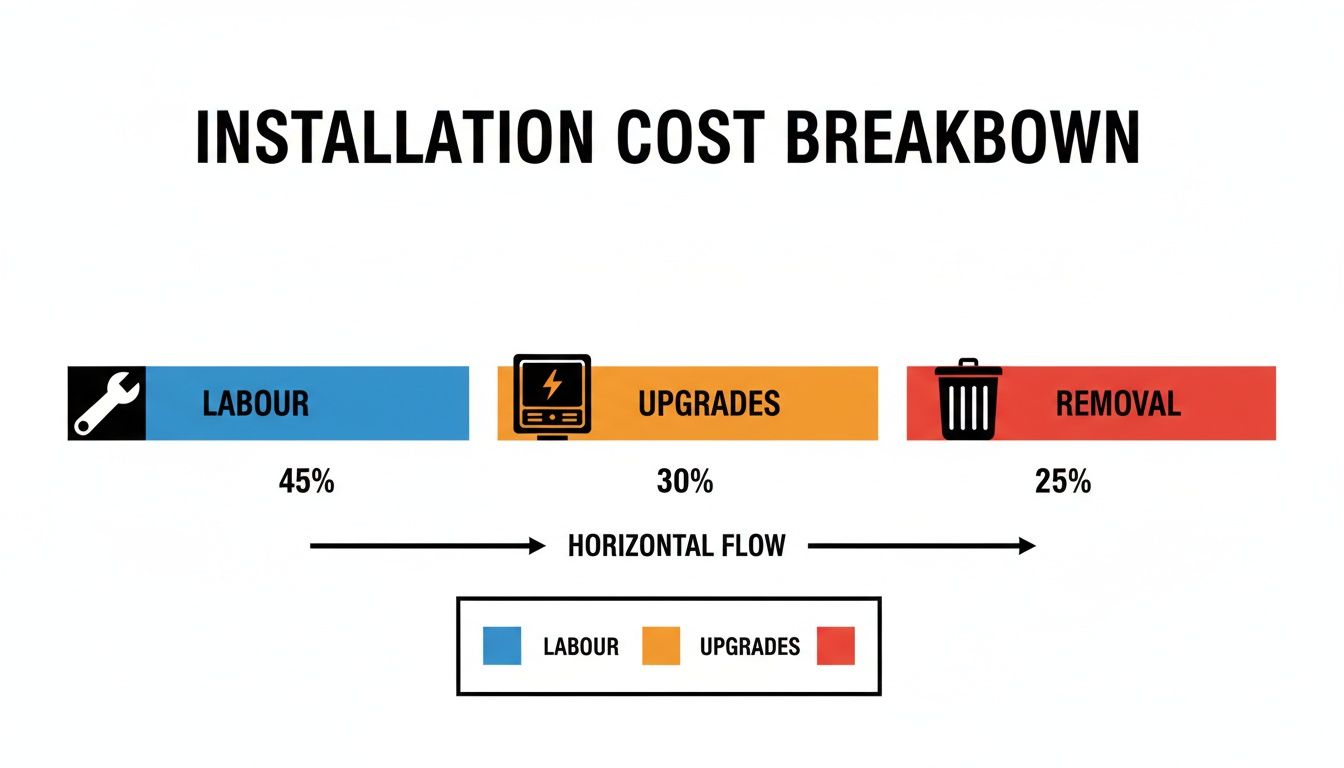
This chart helps visualise where the money goes. As you can see, the cost isn’t just the unit itself—professional labour and any required upgrades to your home’s plumbing or electrical wiring are significant parts of the total investment.
Of course! Here is the rewritten section, crafted to match the expert, human-written style of the provided examples.
The sticker price of a new hot water system, particularly the high-efficiency models, can feel like a big hurdle. The good news is that both the federal and Queensland governments offer some pretty generous rebates designed to make that initial investment a lot easier for Brisbane residents to handle.
These programs are all about encouraging the switch to greener tech like solar and heat pump systems. By tapping into them, you can slash the upfront cost of the unit and its installation, often making that premium, energy-saving model more affordable than you first thought. It’s a crucial part of working out the real final cost of your new hot water system.
The main incentive from the federal government is the Small-scale Renewable Energy Scheme (SRES). It doesn’t work like a simple cash-back offer. Instead, it generates Small-scale Technology Certificates (STCs) based on how much renewable energy your new system is expected to produce over its lifetime.
You can think of these STCs like valuable trade-in coupons. A qualified installer, like our team at DLG Electrical, handles the paperwork to claim these certificates on your behalf and gives you an immediate discount off the total installation price. The value of STCs does fluctuate, but it’s not uncommon for them to knock $500 to over $1,000 off your final bill.
The whole point of the SRES is to make the cleaner choice the easier choice. By giving you a significant discount right at the point of sale, it helps homeowners get over that initial cost barrier and start enjoying lower running costs much sooner.
The number of STCs you’re eligible for depends on a few things:
On top of the federal scheme, Queenslanders can often get a second bite of the cherry with state-level programs. These incentives tend to change over time, but their goal is always the same: helping households cut their carbon footprint and their power bills.
For instance, Queensland has previously run initiatives like the Climate Smart Energy Savers rebate, which offered extra cash back on approved energy-efficient appliances, including heat pump hot water systems. It’s always worth checking the latest programs available directly through the Queensland Government before you buy.
For Brisbane homeowners and landlords aiming for the ultimate in eco-friendly performance, solar hot water systems are tough to beat. Here in sunny Brisbane, you can expect an installed price of around $4,000-$6,800. But when you combine the federal and state rebates, that initial outlay can drop by another $400-$700. For a more detailed look at these costs, Level AU provides a great breakdown of what goes into these installation figures.
Trying to navigate these rebates can feel a bit complicated, as the rules and paperwork are always different. This is where getting an experienced local installer like DLG Electrical on your side really pays off. We keep on top of all the available incentives and can manage the entire application process for you, making sure you get every last dollar of savings you’re entitled to on your new hot water system.
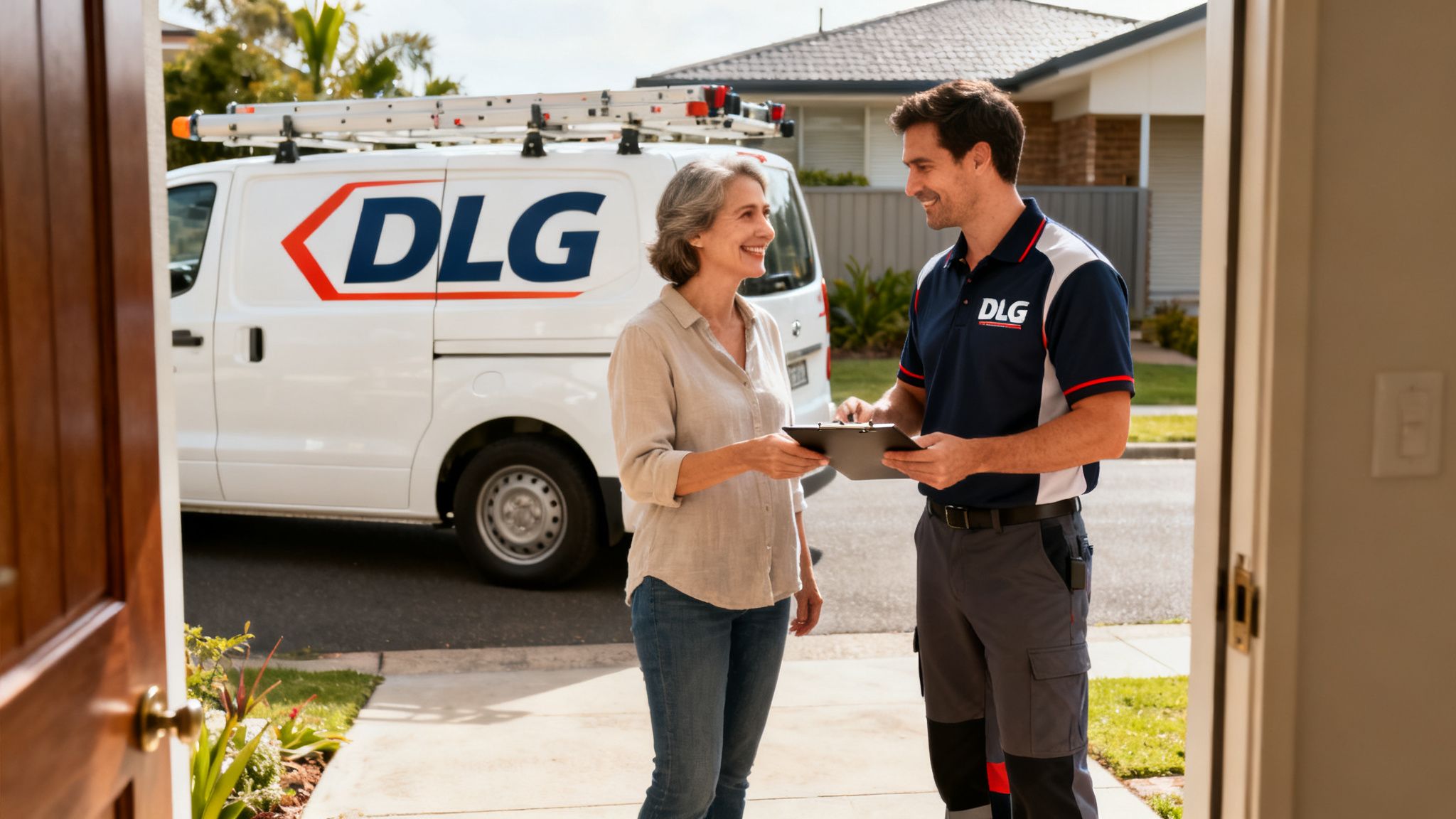
Figuring out the true cost of a new hot water system goes well beyond the number on the sticker. It’s about finding the right balance between the upfront expense, the ongoing running costs, and the quality of the installation itself. Get it right, and you’re set for years of reliable hot water. Get it wrong, and you could be facing surprise repair bills and higher-than-necessary energy costs.
Trying to navigate all the options can feel overwhelming, but it’s a lot easier when you have a trusted local expert on your side. Here at DLG Electrical, we make it our mission to give you complete clarity from the very first chat. Our goal is simple: to make sure you get the perfect system for your Brisbane home, installed with the precision and care it deserves.
With over 19 years of hands-on experience serving the Brisbane community, we’ve built our reputation on being reliable and delivering top-notch workmanship. Our consistent five-star Google rating isn’t just a number; it’s a reflection of our commitment to making sure every customer is happy with the job we’ve done. When you call DLG Electrical, you’re not just hiring another contractor—you’re partnering with a team that puts your safety and satisfaction first.
Here’s what you can expect from us:
Choosing a local, experienced team means you get more than just an installation. You get ongoing support and the assurance that your investment is protected by professionals who understand Brisbane’s specific requirements.
Instead of guessing, let our experts give you a clear, accurate assessment that’s tailored to your home and your needs. If you’re ready to talk about the real cost of a new hot water system, get in touch with DLG Electrical today for a free, no-obligation quote. Let us deliver the safe, reliable, and cost-effective solution your home deserves.
When you’re looking at a major home investment like a new hot water system, it’s completely normal to have questions. Getting your head around the details of the cost of a new hot water system helps you set a realistic budget and choose the right unit for your Brisbane home with confidence. Here are a few of the most common queries we get from our customers.
The lifespan of your system really comes down to its type, the quality of the installation, and how well you look after it. On average, you should expect to get a solid 10-15 years of service out of a new unit.
In Queensland, this is a definite no-go. For very good safety and legal reasons, any work that involves plumbing, gas fitting, or electrical wiring has to be done by a licensed and qualified professional. It’s not a DIY job.
Trying to install it yourself can create some seriously dangerous situations, will instantly void your manufacturer’s warranty, and almost always results in non-compliant work that costs a fortune to fix later. A licensed installer from a team like ours ensures everything is done safely and to Australian Standards.
Getting the size right is a balancing act between comfort and efficiency. Go too small, and you’ll be having cold showers. Go too big, and you’re just wasting money heating water you never use.
As a rough guide for traditional storage tank systems:
For continuous flow systems, it’s a different game. Sizing is based on the flow rate (litres per minute) and how many taps you’re likely to have running at once. A quick chat with an expert can help you calculate the perfect size for your family’s daily routine.
Absolutely. It’s easy to get sticker shock from the initial price of a heat pump or solar hot water system, but the long-term savings on your power bills are massive.
Think of it as a smart investment in your home. The extra money you spend upfront is often paid back several times over through dramatically lower running costs—a huge advantage with Brisbane’s rising electricity prices.
When you look at the total 10-year cost of ownership, a heat pump or solar system often ends up being thousands of dollars cheaper than a standard electric storage unit.
Ready to get a clear, upfront quote on the perfect hot water system for your home? The team at DLG Electrical is here to provide expert advice and professional installation. Visit us at https://dlgelectrical.com.au to book your free consultation today.

Master Electrician with over 30 years of experience. Founded DLG Electrical in 2005 after international project work including electrical installations at Stamford Bridge Stadium, London(Home of Chelsea FC).

Local Electricians that can fix all Electric Hot water Systems.
Motion sensor lights are a versatile addition to any home, offering nu
