83 Jean St, Grange QLD 4051
Mon-Fri 07:30 AM - 04:00 PM - Sat - 8:00 - 12 - Sunday Closed
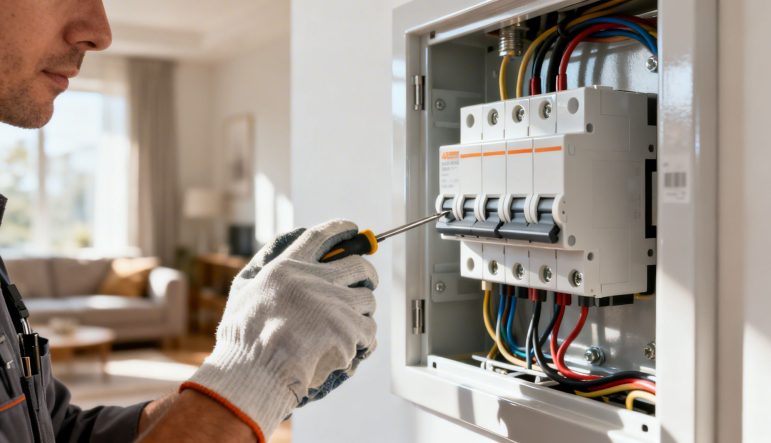
A modern switchboard upgrade is single-handedly one of the most important safety improvements you can make for your Brisbane home. At its core, it’s about replacing old, hazardous gear—like ceramic fuses—with modern circuit breakers and life-saving safety switches. This switchboard upgrades don’t just bring your home up to current Australian Standards; it actively protects your family and prevents electrical fires.
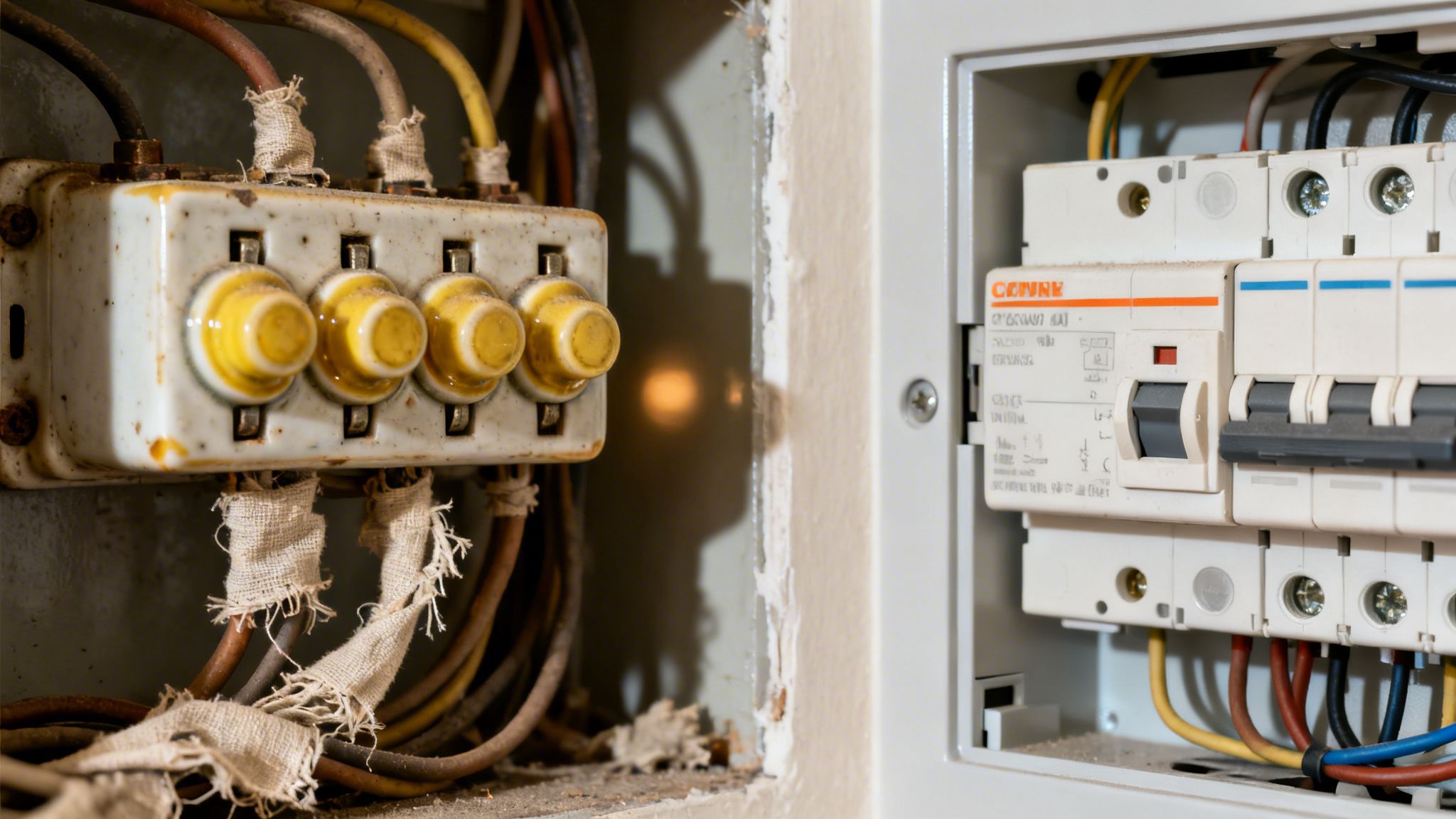
Think of your home’s switchboard as its central nervous system. It’s the command centre, directing electricity safely to every light, power point, and appliance. But when this system is old, it can become a serious, unseen hazard lurking inside your walls.
Many older Brisbane homes, especially those built before the 1990s, are still running on outdated switchboards. These old panels often have ceramic, rewireable fuses—a technology that simply wasn’t designed for the demands of modern life.
Old fuse boxes are a bit like a stubborn, outdated gatekeeper. When a fault happens, the fuse wire is meant to melt and cut the power. The problem? It does absolutely nothing to protect people from an electric shock.
Even worse, they’re notoriously unreliable and can be a massive fire risk if the wrong size fuse wire is used—a common mistake many homeowners made in the past trying to stop nuisance tripping.
Modern switchboards, on the other hand, are fitted with two crucial layers of advanced protection:
To put it simply, outdated fuse boxes are passive. They only react to protect wiring. A modern switchboard is active—it’s designed to protect you. The table below breaks down the key differences.
| Feature | Outdated Ceramic Fuse Box | Modern Switchboard with Safety Switches |
|---|---|---|
| Primary Function | Protects wiring from overloads; does not protect people from shock. | Protects people from electric shock and wiring/appliances from faults. |
| Response Speed | Slow to react. The fuse wire has to melt completely. | Instantaneous. Trips in under 30 milliseconds to prevent serious injury. |
| Resetting After a Fault | Requires manual replacement of the fuse wire, which can be inconvenient and risky. | Simple flick of a switch to restore power once the fault is cleared. |
| Fire Risk | High. Incorrect fuse wire can lead to overheating and fire. | Very low. Breakers are precisely calibrated and safely contained. |
| Compliance | Does not meet current AS/NZS 3000 electrical safety standards. | Fully compliant with all modern Australian safety and wiring rules. |
As you can see, the difference isn’t just about convenience—it’s about a fundamental upgrade in safety that can genuinely save a life.
Upgrading from an old fuse system to a modern switchboard with RCD protection is not just an improvement; it’s a fundamental shift in your home’s safety profile. It moves your electrical system from passive equipment protection to active personal protection.
For households where consistent power is critical for medical equipment, a reliable and safe electrical system is non-negotiable. You can find more dedicated life support information for peace of mind.
At the end of the day, a switchboard upgrade is more than just a technical job—it’s an essential investment in the safety of your family and your property. It’s the difference between an electrical system that might fail dangerously and one that is designed to keep you safe.
By replacing old, unreliable fuses with modern, compliant circuit breakers and safety switches, you are actively shutting down the risk of electrical fires and life-threatening shocks. It’s about making sure your home is a safe place for everyone inside.
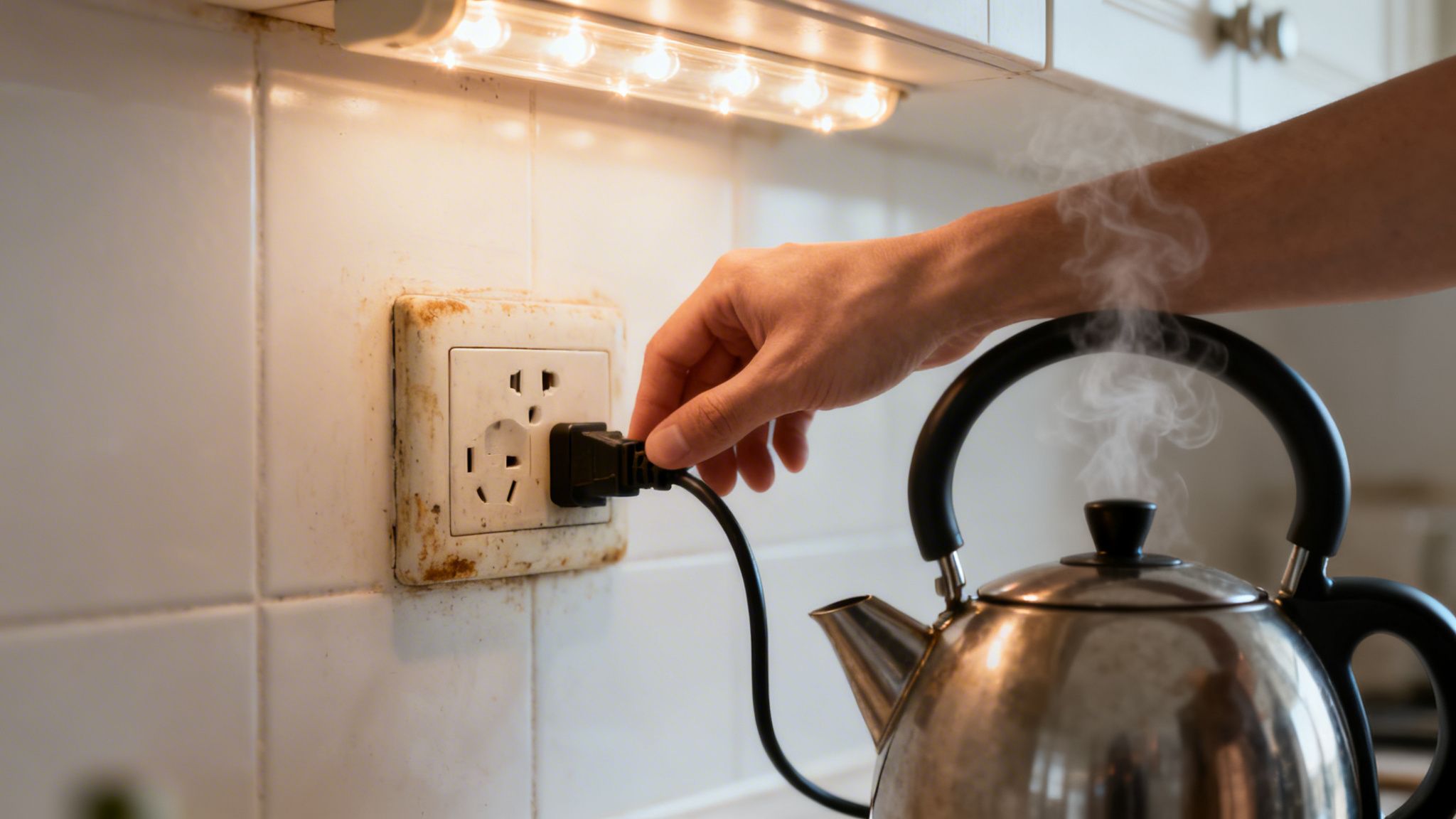
Your home has a way of telling you when its electrical system is under serious strain. An outdated switchboard rarely just gives up without warning; it usually drops hints long before a major failure. Learning to spot these clues is the key to protecting your family and your Brisbane property from avoidable electrical hazards.
Think of these signs as more than just minor quirks. They’re your electrical system’s cry for help. Ignoring them is like disabling a smoke alarm—it’s a risk that’s simply not worth taking. Let’s break down these common household issues so you know exactly what to look for.
Does the power cut out every time you try to run the microwave and toaster at once? This is a textbook sign of an overloaded circuit. It means your switchboard is struggling to keep up with the electrical load, and its safety devices are tripping to stop the wiring from overheating.
While a one-off trip might be a simple appliance fault, frequent tripping is a major red flag. It tells you that your switchboard’s capacity is no longer a match for your modern lifestyle. This constant struggle for power puts immense strain on your entire home’s wiring.
Ever notice the lights dimming for a second when the air conditioner kicks in or the clothes dryer starts its cycle? We call this “The Appliance Power Struggle.” It happens when a large appliance draws a sudden surge of power, causing a temporary voltage drop across the circuit.
This isn’t just a quirky feature of an older home; it’s a direct signal that your switchboard and wiring are struggling to deliver power consistently. It’s a strong indicator that your circuits are running at or very near their limit, and it’s time for a professional assessment.
A faint burning smell from your switchboard is one of the most serious warning signs you can get. It usually means wires are overheating and their plastic insulation is melting—a direct precursor to an electrical fire. If you smell burning, turn off your main power immediately (if it’s safe to do so) and call a licensed electrician.
Sometimes, the clearest warnings are the ones you can see, hear, or smell. Take a good look at your power points and switchboard for any physical clues that something is wrong. These signs demand immediate attention and often point directly to the need for a switchboard upgrade.
Here’s what you should be on the lookout for:
Gambling with these physical signs is a bad idea. Electrical fires can smoulder behind walls and go unnoticed until it’s far too late. A prompt inspection from a qualified electrician can assess the real risk and confirm if a switchboard upgrade is the right solution to keep your home safe.
If a modern switchboard is the central nervous system of your home, then the safety switch is its most important reflex. This small device is arguably the single most critical component protecting you and your family from a fatal electric shock. It’s not just a good idea; for most Brisbane homes, it’s a non-negotiable legal requirement.
Think of a safety switch—also known as a Residual Current Device or RCD—as a hyper-vigilant bodyguard for your electrical circuits. It’s constantly watching the current flowing in and out. The very instant it detects that even a tiny fraction of power is “leaking” where it shouldn’t—like through a person who has accidentally touched a live wire—it snaps into action.
Within just 30 milliseconds, faster than a single human heartbeat, it cuts the power. This incredible speed is what stops a dangerous electrical current from causing devastating injury or death. This is completely different from a circuit breaker, which is designed only to protect wiring and appliances from overloads, not people from electric shock.
It’s a common point of confusion, but knowing the difference between a circuit breaker and a safety switch is absolutely critical. Many older Brisbane homes have circuit breakers, which can give homeowners a false sense of security. But without an RCD, you’re missing the most important piece of personal protection.
To really get to grips with how they work, you can check out our detailed guide on what is a safety switch and how it works. A modern, compliant switchboard upgrade isn’t an either-or situation; it ensures you have both types of protection working in harmony to create a genuinely safe electrical system.
Here in Queensland, electrical safety isn’t just a recommendation—it’s the law. The government has put firm rules in place to ensure homes are protected by safety switches, recognising just how many lives they save. These regulations directly affect homeowners, particularly when you’re selling, leasing, or even just renovating your property.
As a homeowner, you have clear legal duties. For example, when you sell your home, you are legally required to have a safety switch installed on all power point circuits before settlement. Likewise, landlords have six months from the start of a new tenancy agreement to make sure safety switches are protecting all power points in the rental property.
“Within three months of the transfer of a domestic residence, the new owner must have a safety switch installed for all power point circuits. Failure to comply can result in significant fines, as compliance is not optional—it’s a mandatory safety measure for all Queensland homes.”
These rules highlight something crucial: getting compliant isn’t just about ticking a box for a sale or tenancy. It’s about accepting the responsibility to provide a fundamental level of safety for anyone living in the home, whether it’s your own family, a tenant, or the next owner.
This intense focus on safety isn’t just happening in our homes. Right across Australia, there’s a major push to modernise electrical infrastructure at every level. This generational shift is even happening in large-scale electrical substations, where old, risky equipment is being systematically replaced.
For instance, recent reports show that first and second-generation switchboards now make up less than a third of the systems in some operational zones. Meanwhile, modern, fully type-tested switchboards account for nearly half of what’s installed today. This large-scale progress is driven by the very same principles that a switchboard upgrade brings to your home—swapping out outdated, hazardous components for modern, tested technology built for superior protection and safety.
Thinking about a professional switchboard upgrade can feel a bit daunting, but it’s far from the messy, disruptive job you might be imagining. When handled by licensed experts, it’s a smooth, organised process designed to minimise downtime and, most importantly, maximise your safety. Let’s walk through it, step by step.
It all kicks off with a detailed on-site assessment. A qualified electrician from DLG Electrical will visit your Brisbane property to get a proper look at your existing switchboard, wiring, and earthing system. This isn’t just a quick glance; it’s a thorough evaluation to understand your home’s unique power needs, spot any hidden dangers, and map out the upgrade properly.
After the inspection, you’ll receive a comprehensive, fixed-price quote. We believe in total transparency, so this document clearly outlines the scope of work, the high-quality materials we’ll be using (like top-tier Hager and B&R components), and the total cost. No surprises, no hidden fees. Just a clear investment in your property’s safety.
On the day of the upgrade, our electricians arrive ready to give the heart of your electrical system a modern, life-saving transplant. The entire process follows a strict safety-first protocol, ensuring a seamless transition from your old, potentially hazardous board to a new, fully compliant one.
Here’s a breakdown of what happens:
This infographic shows exactly how a safety switch works to protect you and your family.
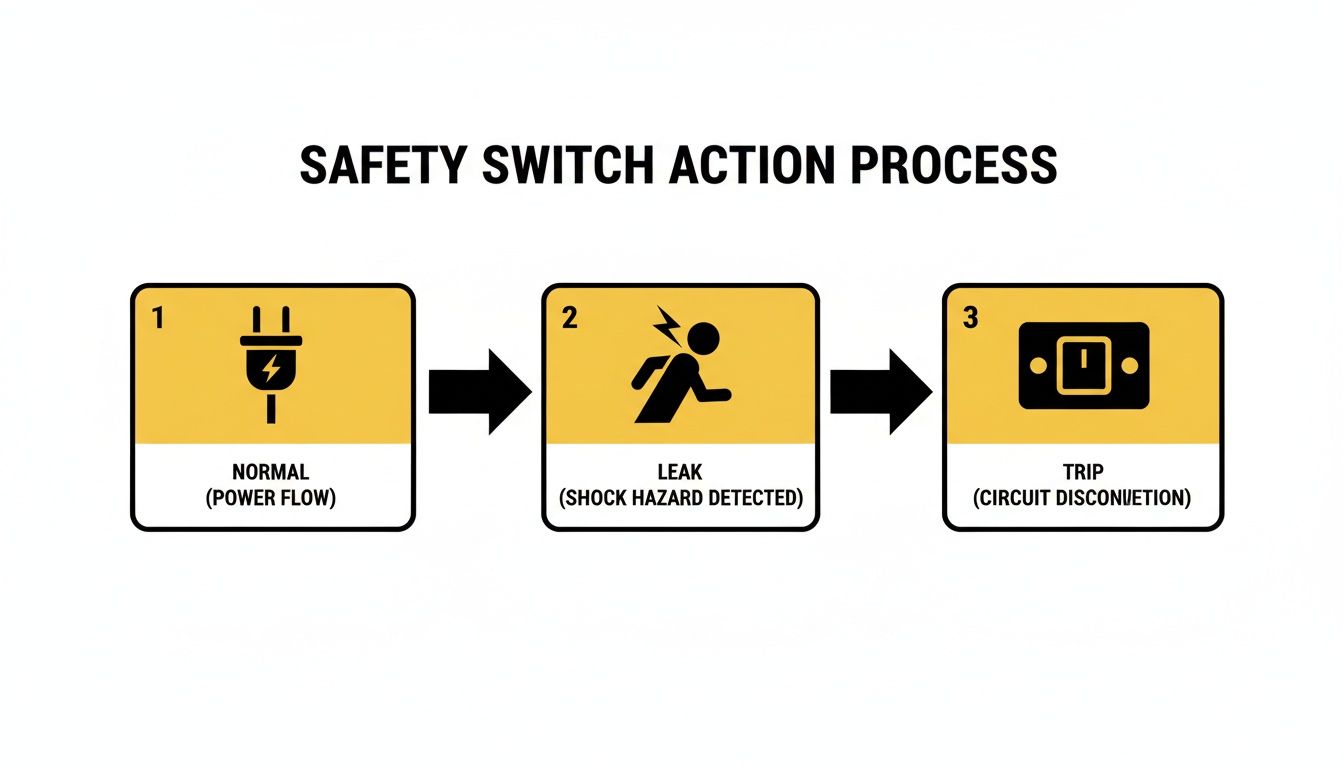
As you can see, its entire purpose is to detect a dangerous electrical leak and cut the power in an instant.
Once the new board is in and the power is back on, we’re not done yet. In fact, this last phase is arguably the most important for your peace of mind.
A switchboard upgrade isn’t complete until every circuit has been rigorously tested. This final check is what guarantees the entire system—not just the new board—is safe and functioning as it should.
Our electricians conduct a series of comprehensive tests across your entire property. We check everything: earth continuity, insulation resistance, and correct polarity. Crucially, we test the trip time of every new safety switch to ensure it reacts within milliseconds, providing you with genuine, life-saving protection.
Finally, we issue you with a Certificate of Compliance. This official document is your proof that the work was performed by a licensed professional and that your home’s electrical system now meets all current Australian Standards. It’s the final handshake that provides documented assurance of a job done right.
Let’s talk about the big question on everyone’s mind: how much does a switchboard upgrade actually cost? It’s the first thing most people ask, and it’s completely understandable to want a straight answer. But the reality is, the final price depends on a handful of key factors unique to your Brisbane property.
Think of it less as a simple product off a shelf and more as a critical investment in your home’s safety, compliance, and even its future market value. There’s simply no one-size-fits-all price tag for a job this important. A small two-bedroom unit will have vastly different needs than a sprawling five-bedroom house with a pool, a couple of air conditioners, and plans for an EV charger. The only way to get a firm number is to have a professional electrician see what they’re working with.
The final cost of your switchboard upgrade is always a mix of labour, materials, and the complexity of your home’s current electrical setup. Any transparent quote from a good sparky will break these things down for you.
Here are the main elements that will shape your quote:
While we can’t give you a precise figure without seeing the job, we can give you some general price ranges for typical residential setups around Brisbane. These numbers should help you budget. For a much more detailed breakdown of what goes into the cost, check out our in-depth switchboard upgrade cost guide.
It’s crucial to see this cost as an investment. A professionally installed, compliant switchboard doesn’t just prevent devastating house fires and electric shocks. It also adds real, tangible value to your property and saves you from failing a building inspection when it comes time to sell.
The need for these upgrades is part of a bigger picture. The Australian electrical services industry is a huge sector, with over 45,850 businesses keeping the country powered. This growth is fuelled by Australia’s ever-increasing appetite for electricity—which hit around 245 terawatt hours in 2023—and the massive push to modernise our infrastructure for renewables. This all highlights just how vital professional switchboard upgrades are in today’s world. You can discover more about the national electrical services industry to see the bigger trend.
When it comes to your home’s switchboard, a DIY upgrade isn’t just a bad idea—it’s illegal, incredibly dangerous, and can have devastating consequences. Your home’s electrical system is a complex network that demands expert knowledge. One wrong move can lead to catastrophic failure, creating a severe fire hazard or a life-threatening risk of electric shock.
This isn’t a weekend project for a handyman. The risks of unlicensed electrical work are immense. Beyond the immediate physical dangers, doing it yourself will instantly void your home insurance. If an electrical fire does happen, you’ll be left completely unprotected and financially on the hook for all the damage. On top of that, you could face hefty legal penalties for performing regulated electrical work without the proper credentials.
Putting your family’s safety in the hands of a professional is the only responsible choice. But how do you know the person you’re hiring is genuinely qualified? It takes more than just a ute and a toolbox. To make sure your switchboard upgrade is done safely and to code, you must hire qualified and licensed electrical contractors.
A legitimate Brisbane electrician will always:
These credentials are your first line of defence against shoddy, non-compliant, and dangerous work. For more on this, check out our guide on finding the best licensed electricians near you for more helpful tips.
Peace of mind comes from knowing your switchboard upgrade was completed by an expert who guarantees safety and compliance. This isn’t just hiring a tradesperson; it’s an investment in your family’s long-term protection.
This push for professional upgrades is part of a much bigger picture. Australia’s switchgear market, which includes the switchboards in our homes, is expected to grow to USD 2.15 billion by 2031. This growth is driven by major infrastructure projects and the rising complexity of our power grid. It really underlines why expert handling of all electrical systems—big and small—is so critical. Hiring a licensed professional ensures your home’s safety keeps pace with these evolving standards.
When you’re looking at a switchboard upgrade, a few practical questions always come up. It’s completely normal to wonder about the process, the costs, and whether it’s really worth it. To give you clarity, we’ve put together some straightforward answers to the questions we hear most often from Brisbane homeowners.
Think of this as a no-nonsense guide to help clear up any lingering doubts. Let’s get into it.
This is usually the first thing everyone wants to know, and for good reason! For a typical residential switchboard upgrade here in Brisbane, you can expect the power to be off for about three to five hours.
We know that’s a decent chunk of your day, so our licensed electricians work to a very precise schedule to keep the disruption to a minimum. We’ll always lock in the time with you well in advance so you can make plans, ensuring the whole process is as smooth as possible.
Absolutely. It might not have the visual wow factor of a freshly renovated kitchen, but a modern, compliant switchboard is a massive plus when it comes time to sell.
Think about it from a buyer’s perspective. A building inspector will spot an upgraded board immediately, flagging it as a sign of a safe, well-maintained home. It tells them the electrical system is up to current Australian Standards, which removes a major point of negotiation and gives them huge peace of mind. It’s a smart investment that directly boosts your property’s marketability.
Yes, in nearly every situation. Adding power-hungry systems like solar panels or an EV charger puts a serious new load on your home’s electrical backbone. An old switchboard, with its ceramic fuses and outdated tech, was never built to handle that kind of demand safely.
A modern switchboard is the non-negotiable foundation for adding new energy technology. It’s the only way to ensure your home can safely manage the extra power draw without overloading circuits—a critical step for both safety and compliance.
This is a great question, as they both protect your home but in very different ways. It’s crucial to understand that these two devices have separate, equally important jobs.
A proper switchboard upgrade ensures your home is fitted with both, giving you complete protection for your property and your family.
Ready to secure your home with a modern, compliant electrical system? The team at DLG Electrical has been protecting Brisbane families for over 19 years. Contact us today for a free, no-obligation quote on your switchboard upgrade.

Master Electrician with over 30 years of experience. Founded DLG Electrical in 2005 after international project work including electrical installations at Stamford Bridge Stadium, London(Home of Chelsea FC).

Local Electricians that can fix all Electric Hot water Systems.
Motion sensor lights are a versatile addition to any home, offering nu
