83 Jean St, Grange QLD 4051
Mon-Fri 07:30 AM - 04:00 PM - Sat - 8:00 - 12 - Sunday Closed
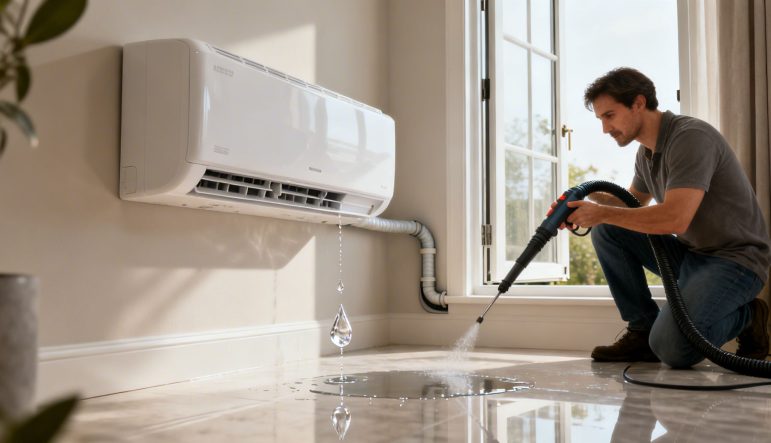
It’s one of the worst sounds a homeowner can hear: the steady drip… drip… drip… of water coming from somewhere it shouldn’t be. If you’ve discovered a puddle under your air conditioner, you’re not alone. This is a classic headache for Brisbane homeowners, but while it’s certainly alarming, the cause is often a simple fix.
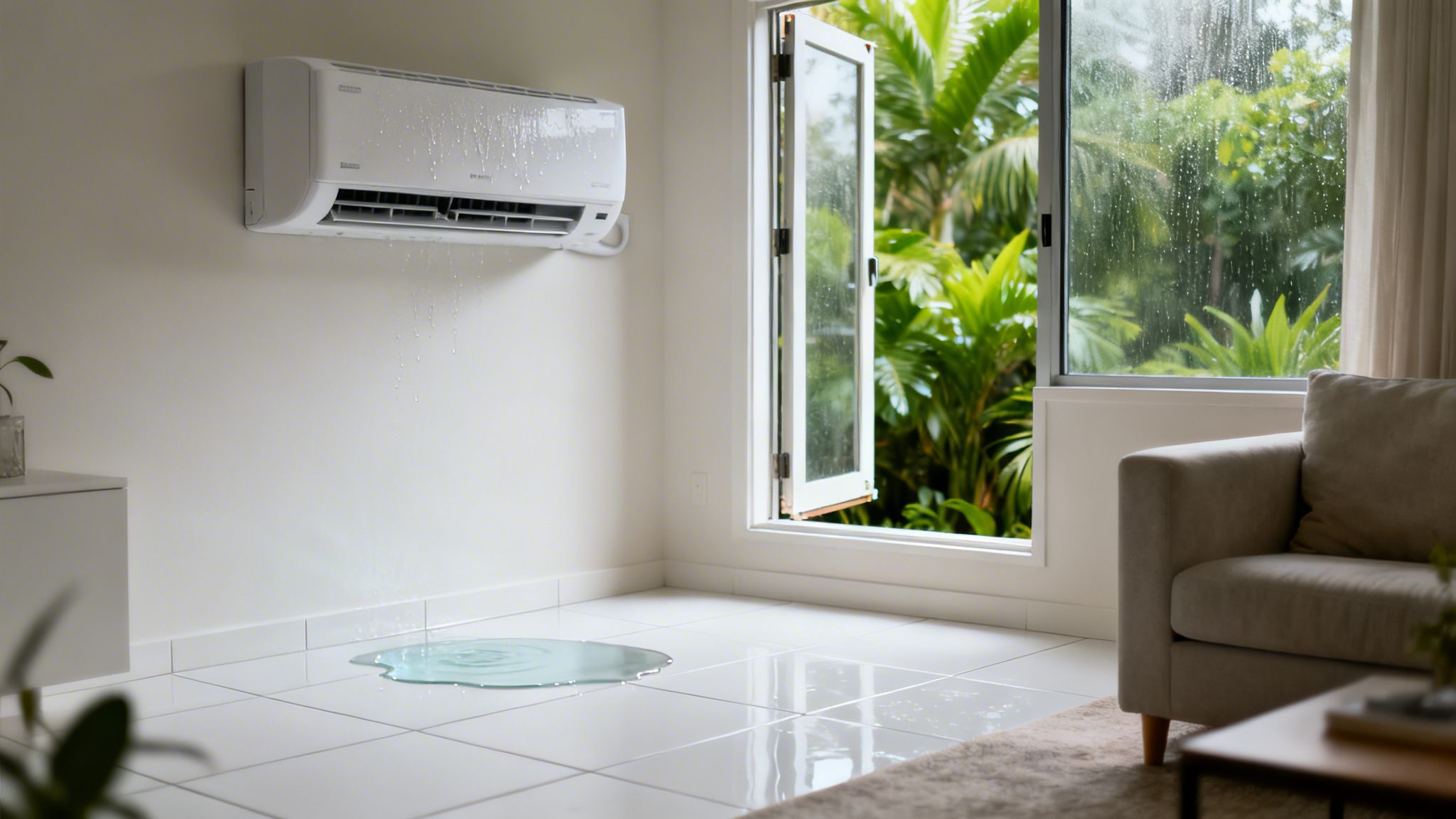
Your aircon’s primary job isn’t just cooling the air; it’s also a powerful dehumidifier. As it pulls that sticky moisture out of the air, it creates condensation. Normally, this water is neatly channelled away outside through a drain line. When that process gets interrupted, you end up with a leak inside.
Think of it like a blocked gutter in a classic Brisbane downpour. The water has to go somewhere, and it’s usually not where you want it. The whole system is designed to be a closed loop, but when one part fails, things get messy fast. If you’re curious about the nuts and bolts, we’ve got a simple explanation of how an air conditioner works that breaks it all down.
So, what’s behind that unwelcome indoor water feature? Let’s break down the usual suspects. More often than not, the issue is simpler than you might think.
Here in Brisbane, our subtropical climate makes our air conditioners work overtime. With humidity often soaring past 70% in summer, our units are constantly pulling large amounts of moisture from the air. This environment is the perfect breeding ground for the sludge and mould that clogs condensate drain lines.
It’s no surprise that local service data shows drain clogs account for over 60% of all AC leak repair calls in the area. It’s the leading cause by a wide margin.
A blocked drain isn’t just an inconvenience; it’s your air conditioner’s cry for help. Ignoring it can lead to serious water damage, mould growth, and even create electrical hazards.
Often, the leak you see is just a symptom of a bigger problem, like frozen AC coils. When those coils thaw, they release a deluge of water that overwhelms the system. This is precisely why a quick visual check of your filters and drains every now and then is so crucial for keeping your system running smoothly and your floors dry.
To help you figure out what’s going on, here’s a quick chart to match the symptoms you’re seeing with the likely cause.
Use this table to quickly match what you’re seeing with its most likely cause and what you should do next.
| Symptom | Most Likely Cause | Immediate Action |
|---|---|---|
| Steady dripping from the unit | Clogged condensate drain line | Turn off the AC. Try to locate the drain line outside and see if it’s blocked at the exit. |
| Water leaking after turning AC off | Frozen evaporator coils | Turn off the AC but leave the fan running to help melt the ice. Check the air filter. |
| Water dripping from multiple spots | Cracked drain pan or major blockage | Turn off the AC immediately to prevent further water damage. This likely requires a professional. |
| Unit struggles to cool and leaks | Dirty air filter causing coils to freeze | Turn off the AC. Inspect and clean or replace the air filter. |
This chart is a great starting point, but remember that some issues can be complex. If you’re not comfortable troubleshooting, it’s always best to call in a professional.
Right, so you’ve spotted a puddle forming under your aircon. Before you start pulling things apart, let’s walk through the first few checks. Safety is everything here, especially when you’ve got water and electricity in the same postcode.
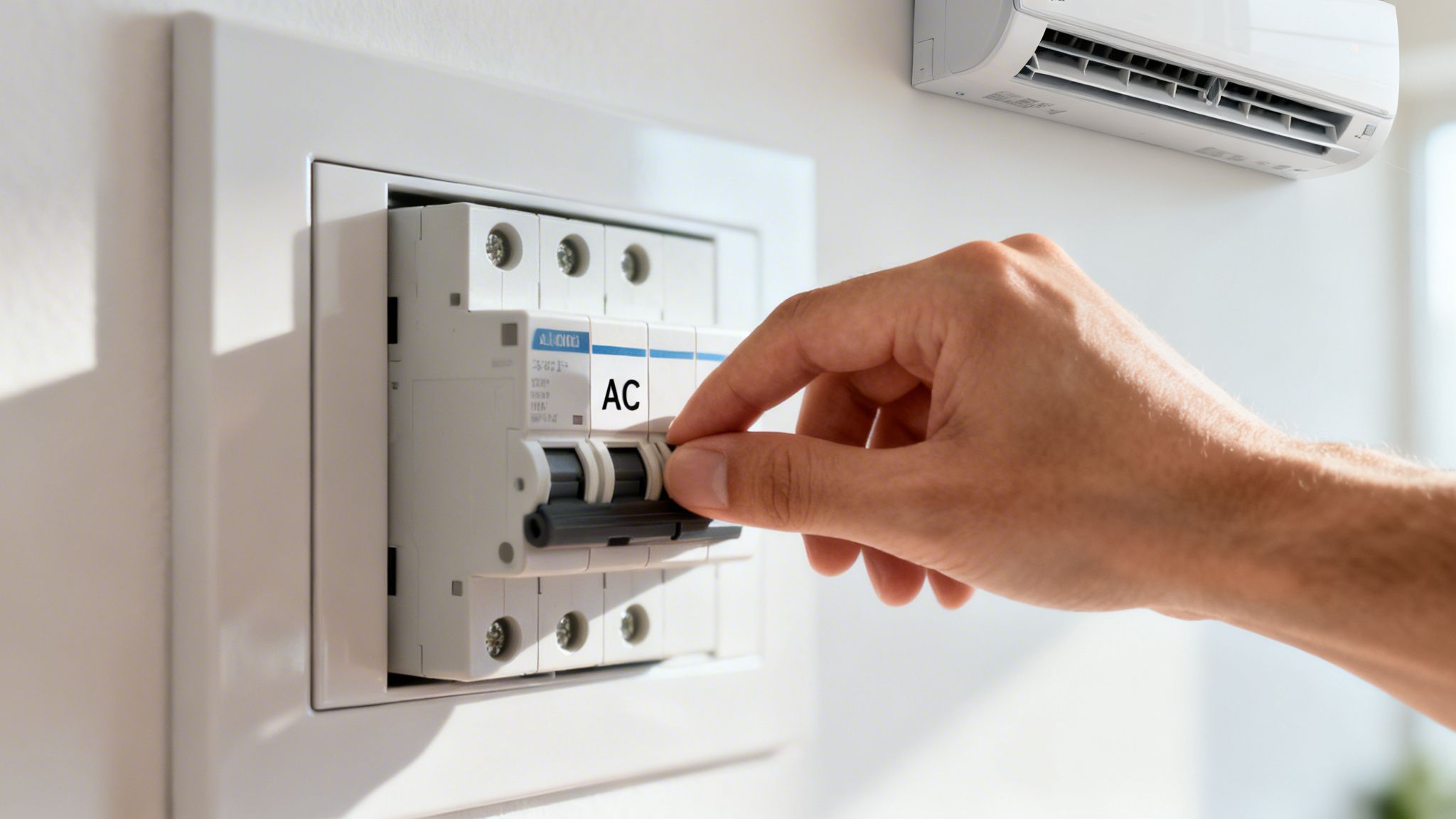
Before you even think about grabbing a tool, your absolute first move is to kill the power. Water and electricity are a lethal combination, so don’t take any chances.
Head to your main switchboard (it’s usually in the garage or a utility closet). Find the circuit breaker for your air conditioner – it’ll probably be labelled “AC,” “Aircon,” or maybe the room it’s in. Flip that switch straight to the OFF position. This simple step means you can poke around the unit without worrying about getting a nasty shock.
Okay, with the power safely off, it’s time to play detective. The first and most common suspect is always the air filter. Pop open the front panel of your indoor unit to get a look at it.
A clean filter should be almost see-through. If yours is caked in a thick, grey blanket of dust, you’ve likely found a big piece of the puzzle. An aircon leaking water is often just a symptom of a much simpler problem.
In fact, clogged air filters are the number two reason we get called out for leaking air conditioners across Brisbane. The blockage stops air from flowing properly, causing the internal evaporator coils to freeze up solid. When that ice melts, you get a sudden flood of water that overwhelms the system. Service data shows this accounts for up to 40% of leak complaints, as the restricted airflow can drop coil temperatures below 0°C. And in a Queensland summer, when AC usage jumps by 75%, those filters get choked up incredibly fast – sometimes in just one to three months. You can read more about the causes of AC water leaks and their prevalence.
While you’re there, glance at the shallow tray sitting just below the coils. That’s the condensate drain pan. Is it full of water? A little bit is fine, but if it’s overflowing, it’s a dead giveaway that there’s a blockage somewhere further down the line.
Pro Tip: If you see a thick layer of ice on the metal fins of the evaporator coil, whatever you do, do not try to break it off. Those fins are delicate and easily damaged. Just leave the power off and let it all melt on its own time.
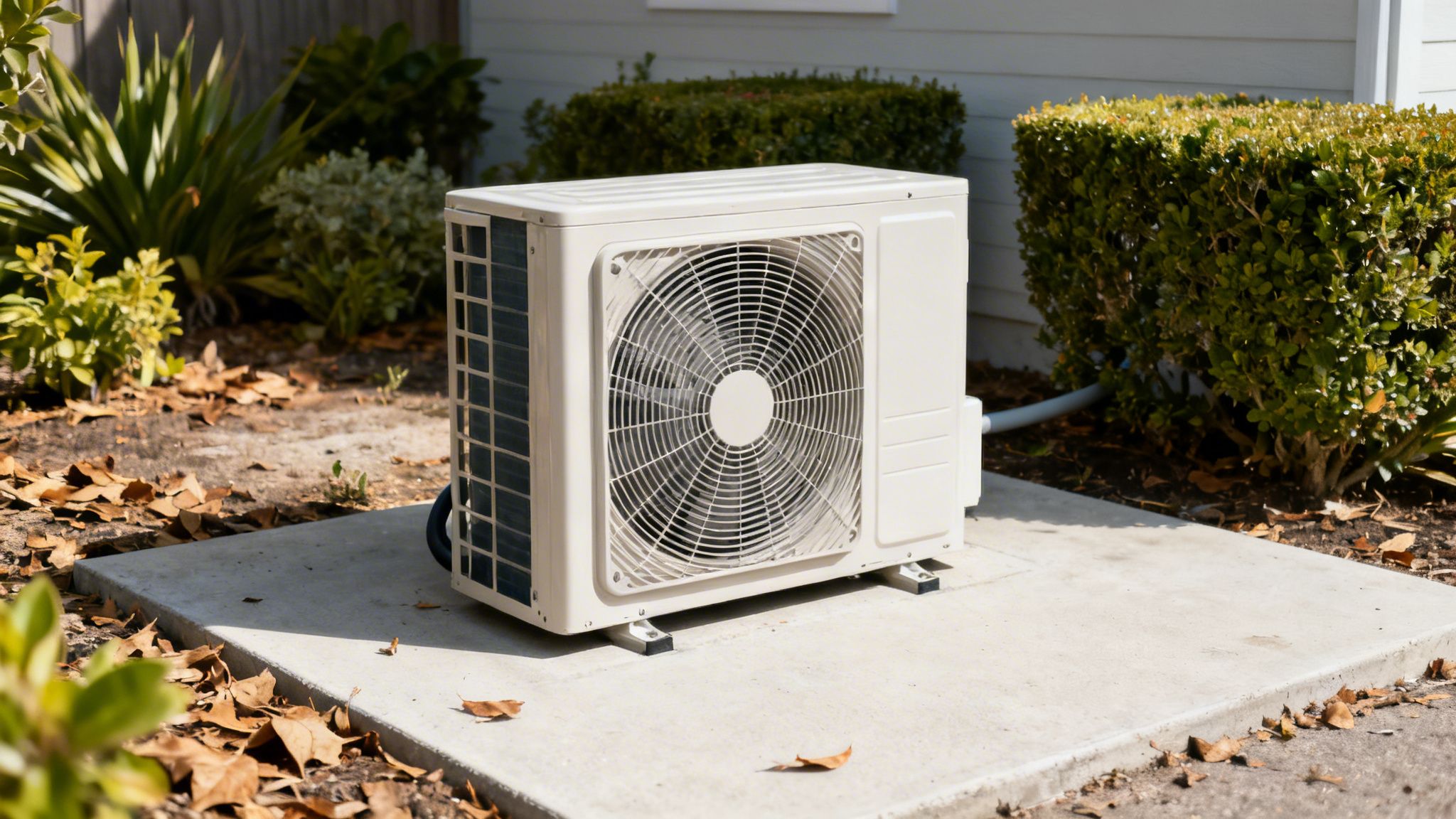
Next, let’s head outside and find where all that water is supposed to go. You’re looking for a small PVC pipe, usually about 20-25mm wide, sticking out of the wall near your outdoor unit. This is the end of the condensate drain line.
Get a good look at the opening. It doesn’t take much to block it up. We often find:
This initial once-over is all about gathering clues. Checking these three spots—the power, the filter and drain pan, and the outdoor pipe—will give you a much better idea of what you’re dealing with. From here, you can figure out if it’s a quick fix you can handle yourself or if it’s time to get a professional in.
So, your troubleshooting points to a simple culprit like a clogged filter or a minor blockage in the drain. Good news—you can likely sort this out yourself. Tackling these small jobs can save you a bit of time and money, but the golden rule is to always put safety first. Before you touch anything, head to your switchboard and turn off the power to the air conditioner. No exceptions.
These two fixes cover the most common reasons we see an aircon leaking water, and they’re well within reach for most homeowners.
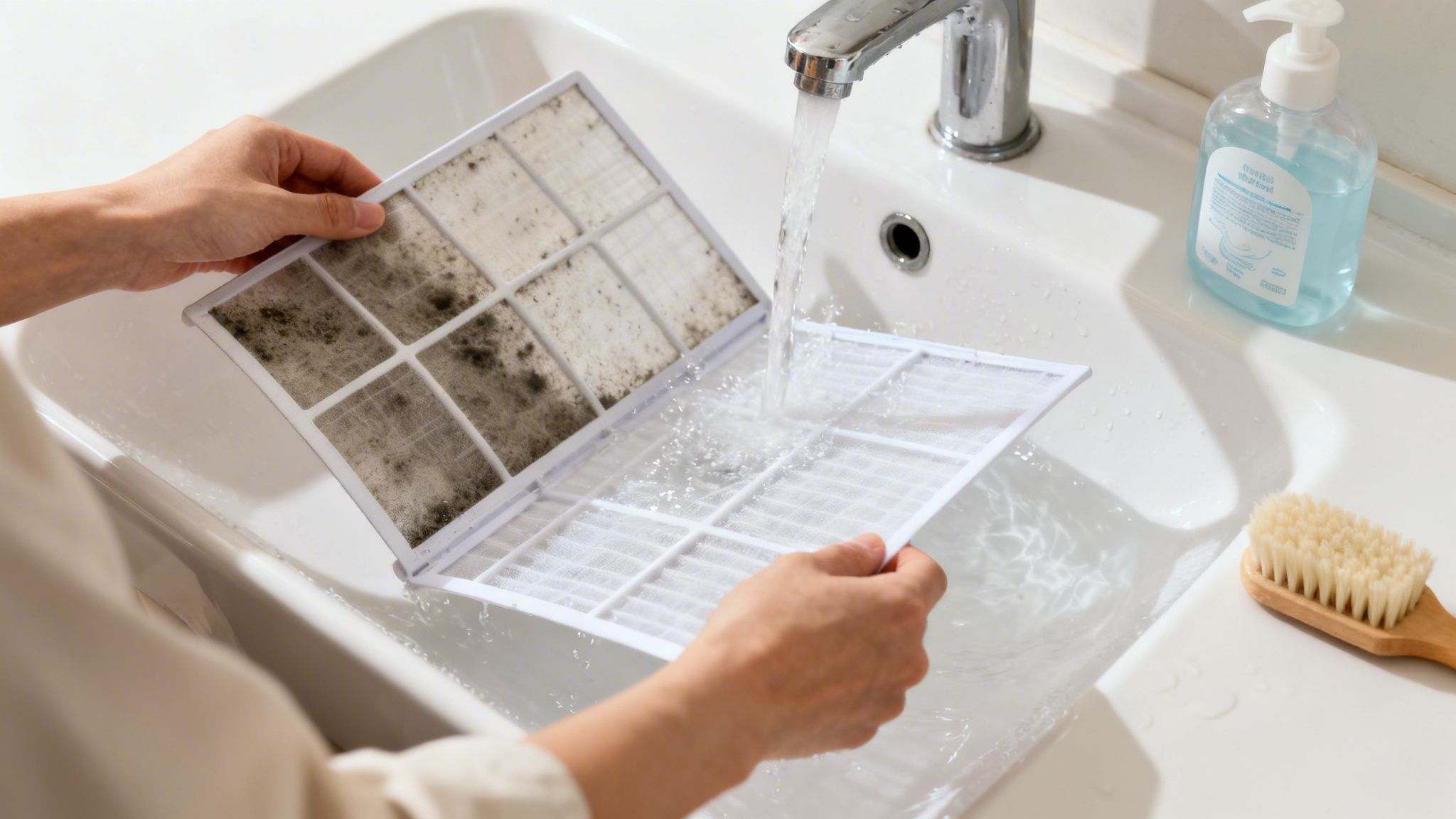
Nine times out of ten, that grey, dusty filter is the source of the problem. A clogged filter restricts airflow, causing the evaporator coil to freeze over. When that block of ice thaws, you get a sudden flood of water that overwhelms the drain pan. Cleaning it is easily the most impactful bit of maintenance you can do.
Getting the filter out is usually straightforward. On most indoor split-system units, the front panel unclips and lifts up, revealing one or two mesh filters. They should slide or pop out without a fight. It’s a good idea to snap a quick photo on your phone so you remember exactly how they go back in.
A clean filter does more than just stop leaks. It makes your air con run more efficiently and seriously improves the air quality inside your home. It’s a tiny task with a big payoff, so try to check it monthly, especially during a hot Brisbane summer.
What if the filter is sparkling clean but water is still pooling in the drain pan? The next suspect is a blockage in the condensate line. It doesn’t take much—just a small buildup of sludge and gunk can stop the water from draining, forcing it to back up and spill into your house.
One of the most effective and safest ways to tackle this is with a wet/dry vacuum. Go outside and find the little PVC pipe where the air con is supposed to drip. Press the vacuum hose firmly over the end of the pipe—you can use your hands or a rag to create a good seal. Let the vacuum run for a minute or two. Often, the powerful suction is all it takes to pull the clog right out.
What You Must Avoid
It can be tempting to reach for a more aggressive solution, but there are a couple of things you should never do:
If the vacuum trick doesn’t do the job, the blockage is probably more serious or located further up the line where you can’t reach it. This is the point where you stop. These DIY fixes are for minor issues only. Pushing your luck could cause a lot more harm than good, and it’s time to call in a professional.
Fixing a leak is a great relief, but making sure it never happens again is the real win. The key to smart homeownership is shifting from a reactive mindset to a proactive one. A few simple maintenance habits can save you from future puddles, stress, and eye-watering repair bills.
This isn’t about getting bogged down in complicated technical work. It’s about building a simple routine that keeps your air conditioner healthy, efficient, and—most importantly—not leaking all over your floorboards. Think of it as a small investment of your time for a massive return in peace of mind.
Consistency is your best defence against a future aircon leaking water. By scheduling a few quick checks, you can catch potential problems long before they spiral into emergencies. Trust me, a little bit of attention goes a very long way.
Here’s a practical schedule any Brisbane homeowner can follow:
That little PVC pipe running outside your house? It’s the most critical exit route for moisture in your entire system. Keeping it clear is non-negotiable. An easy and safe way to do this is with a bit of distilled vinegar.
Every quarter, pour a cup of a 50/50 mix of white vinegar and water down the condensate drain line access point—it’s usually a T-shaped pipe near your indoor unit. This simple trick helps dissolve algae and sludge before they can form a solid blockage. It’s so effective it can prevent over 60% of leak-related callouts we see.
Think of regular maintenance as a tune-up for one of your home’s most important appliances. It not only prevents leaks but also ensures your system runs efficiently, which can lead to noticeable savings on your power bills.
Ultimately, these small actions deliver big benefits beyond just stopping leaks. A well-maintained air conditioner uses less energy, provides cleaner air for your family, and will have a much longer lifespan. Understanding the link between maintenance and efficiency can also help you manage your household expenses. You can learn more about what it costs to run your air conditioner and how to keep those costs down in our detailed guide. Protecting your investment really does start with these simple, proactive steps.
There’s a real satisfaction in fixing something yourself, but some jobs absolutely demand an expert. Pushing your luck with complex air conditioner repairs is a gamble—not just with your unit, but with your safety.
Knowing when to put down the tools and pick up the phone is the smartest move any homeowner can make.
Sure, DIY fixes are great for a dusty filter or a simple clog you can see at the end of the drain line. However, if you’ve tried those basic steps and your aircon is still leaking water, that’s a clear signal something more serious is going on inside. Persistent leaks almost always point to problems that require specialised tools and a trained eye to diagnose properly.
Some symptoms are non-negotiable warnings. If you notice any of these, it’s time to stop what you’re doing and call for professional help right away.
Ignoring these signs is incredibly risky. A small refrigerant leak can quickly cascade into a very expensive compressor failure. Water that keeps leaking can cause serious structural damage to your walls and ceilings, leading to dangerous mould growth.
Ignoring a significant leak is like putting a small plaster on a deep wound. It might hide the issue for a moment, but it won’t stop the underlying damage from getting much, much worse.
If you want to feel confident in your choice, it helps to know what to consider when hiring a Brisbane electrician to ensure you pick a reliable professional.
Not sure if you should tackle it yourself? This chart helps you decide when a DIY approach is safe and when you need a licensed professional.
| Symptom | DIY Action (If Safe) | Call a Professional When… |
|---|---|---|
| Water Dripping Outside | This is usually normal condensation. Just monitor it. | …it’s an excessive amount of water or is coming from inside. |
| Visible Clog at Drain End | Use a wet/dry vac or a thin, flexible wire to gently clear the blockage. | …the clog is deep inside the line and you can’t reach it. |
| Dirty Air Filter | Turn off the power and clean or replace the filter. | …the leak continues even after cleaning the filter. |
| Ice on Evaporator Coils | Thaw the unit (turn it off) and clean the filter. | …the ice returns quickly or you hear hissing sounds (refrigerant leak). |
| Unit Trips Breaker | Reset the breaker once. | …it trips repeatedly. This is an immediate fire hazard. |
| Burning Smell or Smoke | Shut off power at the main switchboard immediately. | Immediately. Do not attempt any DIY fixes. |
Ultimately, your safety is what matters most. If you’re ever in doubt, making the call is always the right decision.
When you call DLG Electrical, you’re not just getting a repair; you’re getting peace of mind. We know that a broken air conditioner is a major headache, especially in the Brisbane heat. Our whole process is built on clarity and trust from the moment you get in touch.
We start by listening to your problem and giving you a transparent, upfront quote with no hidden surprises. A fully licensed and insured DLG Electrical technician will then arrive at your home, fully equipped to diagnose the issue accurately.
We guarantee we’ll fix the problem correctly the first time, ensuring your system runs safely and efficiently. We treat your home with respect and always leave our workspace clean, so the only sign we were there is a perfectly working, non-leaking air conditioner.
Don’t let a small leak turn into a costly catastrophe.
Even after a bit of troubleshooting, it’s completely normal to have a few more questions rattling around when you’re staring at a puddle under your air conditioner. We get these calls all the time from Brisbane homeowners, so let’s clear up a few of the most common queries.
Let’s get straight to it: no. Running an air conditioner while it’s actively dripping water is a really bad idea, and here’s why.
First off, you’re asking for water damage. That drip might seem small, but it can quickly ruin your floors, seep into walls, and stain your ceilings. More importantly, water and electricity are a notoriously dangerous combination. A leak can easily create a serious electrical hazard, putting your home and your family at risk.
The safest bet is to always switch the unit off at the circuit breaker until you’ve got it sorted.
The cost to fix a leaking air conditioner here in Brisbane really can vary. It all comes down to what’s actually causing the problem.
A simple fix, like clearing out a minor gunk buildup in the condensate drain line, is usually just a relatively inexpensive service call. No major drama.
But if you’re dealing with something more complex, like a refrigerant leak or a cracked drain pan that needs to be replaced, the cost will naturally be higher. The only way to know for sure is to get a clear, upfront quote from a licensed technician who can properly diagnose the root of the problem.
A word of advice from experience: ignoring a small leak today almost always leads to a much more expensive repair tomorrow. That moisture can get into the internal components and lead to serious issues like compressor failure—and that’s one of the costliest parts to replace.
Absolutely. It’s so easy to look at a slow drip and think, “I’ll get to it later.” But even a small, persistent leak can cause an incredible amount of damage over time.
The smartest and safest approach is to treat every single leak as a priority. If you want to dive deeper into troubleshooting different types of drips and what they mean, check out this complete guide to finding and fixing AC leaks.
If you’ve tried the simple fixes and your air conditioner is still giving you grief, don’t risk turning a small problem into a costly disaster. Contact DLG Electrical at https://dlgelectrical.com.au. Our licensed Brisbane electricians will find the source of the leak and get it fixed safely and efficiently.

Master Electrician with over 30 years of experience. Founded DLG Electrical in 2005 after international project work including electrical installations at Stamford Bridge Stadium, London(Home of Chelsea FC).

Local Electricians that can fix all Electric Hot water Systems.
Motion sensor lights are a versatile addition to any home, offering nu
