83 Jean St, Grange QLD 4051
Mon-Fri 07:30 AM - 04:00 PM - Sat - 8:00 - 12 - Sunday Closed
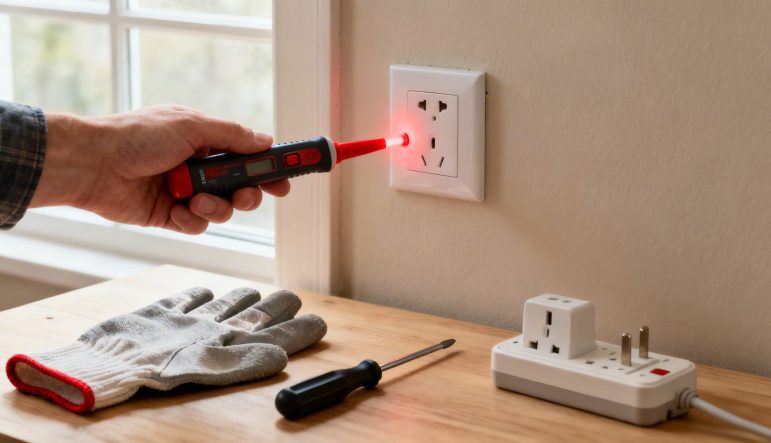
It’s a classic Brisbane moment: you plug something in, and… nothing. A power outlet not working is frustrating, but it’s often just a tripped circuit breaker or a safety switch doing its job. Before you start thinking the worst, a few quick checks can often pinpoint and even fix the problem yourself. Let’s walk through how to troubleshoot it safely.
When an outlet goes dead, it’s easy to assume the outlet itself has failed. While that can happen, the real culprit is usually a protective device elsewhere in your home’s electrical system. Think of a dead outlet not as the problem, but as a symptom—your system is telling you something’s up.
The first place to look is always your switchboard. It’s the command centre for your home’s electricity, and a tripped circuit breaker or safety switch will instantly cut power to an outlet or an entire area.
This usually happens for a few common reasons:
If you’re not familiar with these devices, our guide on what is a circuit breaker is a great place to start. Understanding what it does makes finding the problem much easier.
Sometimes, the issue isn’t even inside your house. We see this all the time in Queensland, a state that has weathered over 80 natural disasters since 2010, leading to nearly $16 billion in damages often linked to electrical failures from storms and floods. This harsh weather can wreak havoc on wiring and outlets, and we often find corroded connections in Brisbane homes in suburbs like Grange and Windsor, where water ingress is a common problem.
A power surge is another big one to watch out for. A sudden spike in voltage from the grid can be why a Power Failure or Surge Can Damage Appliance Main Boards, which can kill not just the appliance but sometimes trip the circuit it’s connected to.
Here is the rewritten section, following all the specified requirements.
Before you even think about investigating a faulty power outlet, you need to have the right tools on hand. This isn’t just about making the job easier; it’s about keeping yourself safe. Tackling any electrical issue without the proper gear is a recipe for disaster.
We’re not talking about a full-blown professional kit here. All you need are a few specific items to turn a potentially dangerous guessing game into a safe, methodical process. With the right tools, you can confidently figure out what’s going on without putting yourself at risk.
First and foremost, you need a non-contact voltage tester. This little pen-sized tool is your most important piece of safety equipment. You simply hold the tip near the outlet, and it will light up or beep if it detects any live current—all without you having to touch a single wire. It’s the only surefire way to know the power is well and truly off before you go any further.
Another absolute game-changer is a plug-in receptacle tester. You can pick one up from any hardware store for a few dollars. Just plug it into the suspect outlet, and a series of lights will immediately tell you what’s wrong. It can diagnose common problems like an open ground, no power, or reversed wiring in seconds.
“A non-contact voltage tester is an absolute must. It’s the one tool that tells you it’s safe to proceed. Never trust a switch alone; always test before you touch.”
These two inexpensive tools take all the guesswork out of the equation and give you clear, reliable information to work with.
For any DIY electrical check, having the right tools is non-negotiable. Some are absolutely essential for your safety, while others are just really handy to have if you need to go a step further, like tightening a loose wire.
Here’s a quick breakdown of the tools we recommend having in your kit before you start.
| Tool | Purpose | Category |
|---|---|---|
| Non-Contact Voltage Tester | Safely detects the presence of electricity without direct contact. | Essential |
| Plug-In Receptacle Tester | Plugs into an outlet to diagnose common wiring faults instantly. | Essential |
| Insulated Screwdrivers | Protects you from shock when working near electrical components. | Recommended |
| Needle-Nose Pliers | Ideal for gripping and manipulating small wires in tight spaces. | Recommended |
| Torch or Headlamp | Provides essential light when the circuit power is turned off. | Recommended |
While the two essential testers are enough for initial diagnostics, having the recommended tools will prepare you for simple fixes and make the entire process safer and easier.
If you’re planning on doing any work that involves opening up the outlet, a few other items are incredibly helpful.
So, you’ve got a power outlet that’s decided to stop working. Before you start thinking the worst (and pricing out a replacement), it’s worth remembering that the outlet itself is often not the problem. The issue is usually something much simpler.
Let’s start with the most common mistake we see. Before you even think about tools, grab a small lamp or a phone charger—something you know for a fact is working—and plug it into the dead outlet. If it powers up, you’ve found your culprit: the original appliance is on the fritz. If the test appliance doesn’t work either, then we know the issue is with the power point.
Now that we’ve confirmed the outlet is the problem, your next stop is the switchboard (or circuit breaker panel). This is the nerve centre of your home’s electrical system, and it’s packed with safety devices designed to trip and cut power during an overload or short circuit. More often than not, a dead outlet is just a sign that one of these devices has done its job.
Open the panel and have a look. You’re searching for a switch that’s sitting out of line with all the others. A tripped circuit breaker will usually be in the “OFF” position, though sometimes it gets stuck in the middle. To reset it, you have to push the switch all the way to “OFF” first, then firmly flip it back to “ON”.
This quick check can get your power back on in seconds. We’ve put together this simple decision tree to help you visualise the diagnostic process.
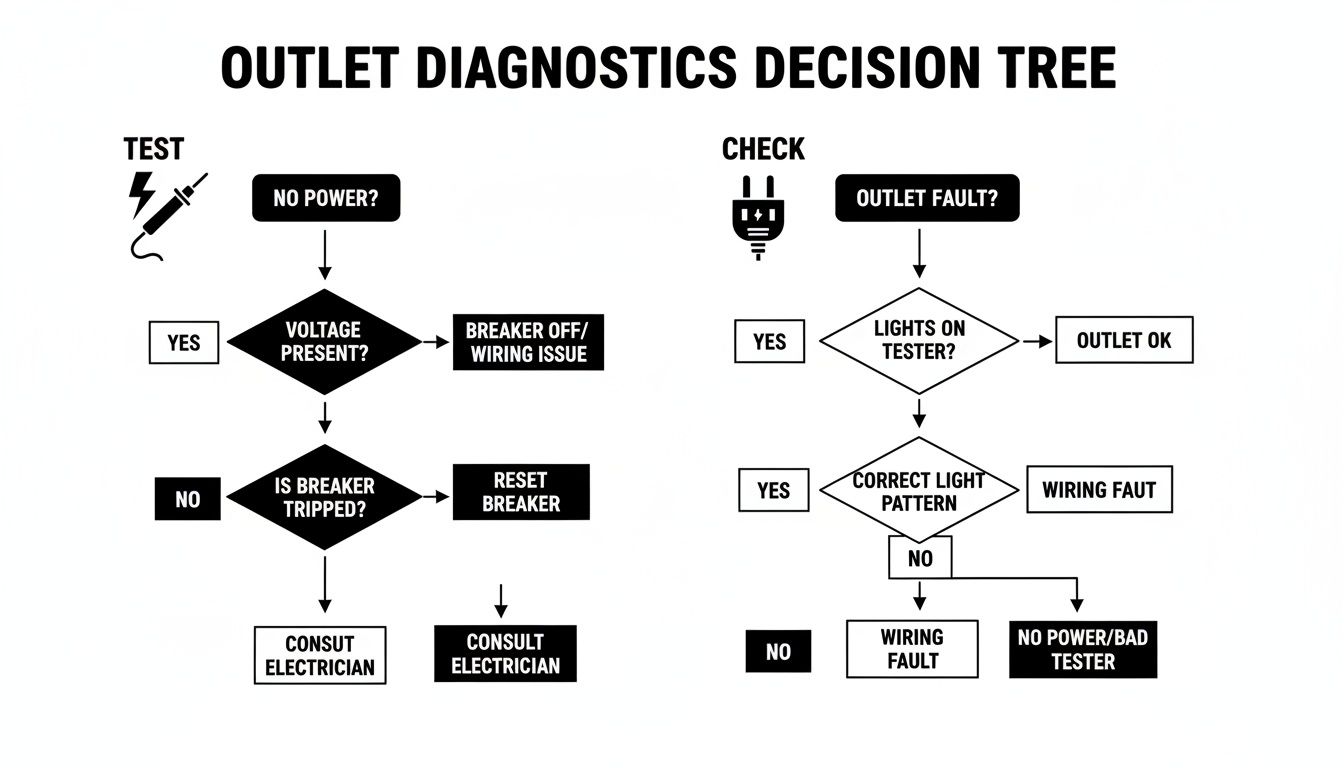
As you can see, a logical path—from testing the appliance to checking the switchboard—is the safest and fastest way to find a solution.
What if you reset the breaker and it trips again instantly? Stop right there. This is a massive red flag. An immediate trip means there’s a serious fault on that circuit, like a short circuit or a faulty appliance that’s still plugged in.
Do not keep resetting it. Unplug every single thing from all outlets on that circuit and try resetting the breaker one more time. If it still trips with nothing plugged in, the problem is in the wiring. It’s time to call a professional.
If it’s a safety switch that has tripped, the reset process is similar, but these devices are much more sensitive to faults. For a deeper dive, check out our guide on what to do when your safety switch has tripped.
Another very common cause, especially for a single dead outlet in wet areas like kitchens, bathrooms, and laundries, is a tripped Ground Fault Circuit Interrupter (GFCI). In Australia, we usually call these Residual Current Devices (RCDs) or simply safety switches. Their job is to cut power the moment they detect a dangerous current leak, which is a common occurrence where moisture is involved.
You can spot these outlets easily by the “TEST” and “RESET” buttons right on the faceplate.
If you press the “RESET” button and it won’t stay in, or if it trips again straight away, you’ve likely got a ground fault somewhere. Unplug anything connected to it and try one more time. If it still won’t reset, the outlet itself is probably faulty and needs to be replaced.
It’s a great habit to test these outlets every few months. It takes less than a minute but gives you the peace of mind that they are ready to protect you and your family when it counts.
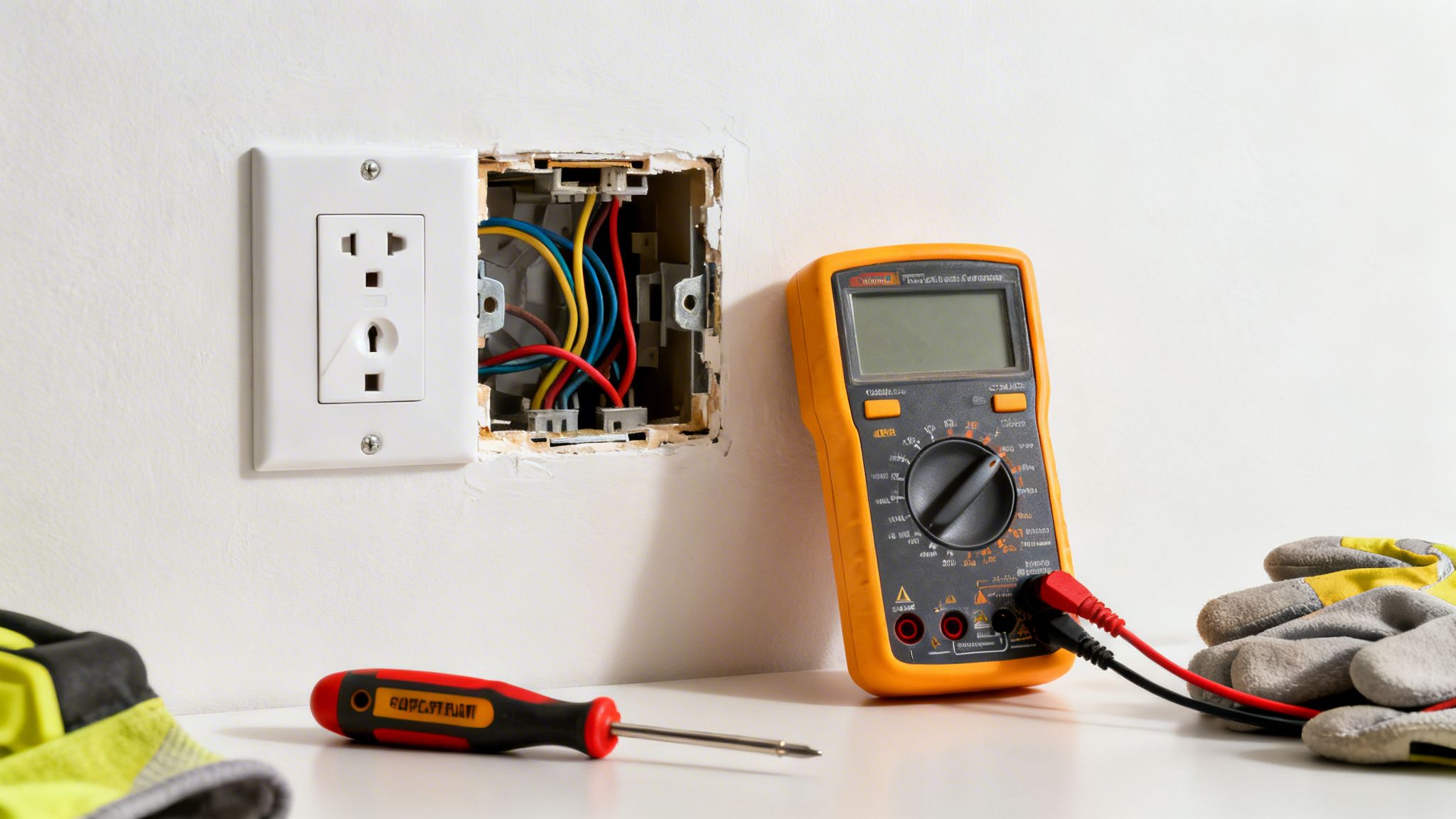
So, you’ve checked the appliance and reset the breakers, but the power outlet is still dead. At this point, it’s a good bet the problem is with the outlet itself. If you’re a homeowner who knows their way around a toolbox and puts safety first, there are a couple of common issues you can probably spot yourself.
But before you even think about touching a screw, let’s go over the most important rule in electrical work: ALWAYS kill the power at the switchboard. Once you’ve flipped the right circuit off, double-check the outlet with your non-contact voltage tester to be absolutely certain it’s dead. Safety is non-negotiable.
One of the most common culprits we see, especially in older Brisbane homes, is a simple loose wire. Over years of plugging things in and out, tiny vibrations combined with the natural expansion and contraction of the materials can cause the terminal screws to work themselves loose. When that happens, you get an incomplete circuit, and the power flow stops.
After you’ve confirmed the power is off, you can take a look.
Give each wire a very gentle tug. A properly secured wire won’t move an inch, but a loose one will feel wobbly or might come right out. If you find a culprit, grab an insulated screwdriver and firmly tighten the terminal screw. Sometimes, that’s all it takes to bring a dead outlet back online.
Other times, the outlet itself is simply old and has given up the ghost. The internal metal contacts that grip the prongs of your plugs lose their tension over time. This creates a poor connection that can either stop working entirely or, more dangerously, generate heat. It’s a classic point of failure and usually easy to spot.
Keep an eye out for these tell-tale signs:
If you see any of these signs, that outlet is no longer safe. Tightening a wire won’t fix a physically broken or burnt-out receptacle. It must be replaced, and that’s a job for a licensed professional to ensure it’s done safely and to code.
In fact, ageing electrical infrastructure is a real issue across many Brisbane suburbs. Industry reports show that preventable asset failures are happening constantly all over Australia because of a “set and forget” mentality. For homeowners in areas like Grange and Windsor, this means outlets in homes built before the 2000s are often prime candidates for failure. You can learn more about how proactive maintenance reduces these risks in the full report on electrical asset maintenance.
Look, we get it. The urge to tackle a home repair yourself is strong, and there’s a real sense of satisfaction in fixing things. But when it comes to electricity, knowing when to put the tools down is the most important skill you can have.
Some issues with a power outlet not working aren’t just minor glitches. They’re bright red flags—urgent warnings of a dangerous electrical hazard brewing inside your walls. Recognising your limits isn’t failure; it’s the smartest, safest move you can make for your home and family.
If you spot any of the signs below, your very next step should be to pick up the phone and call a licensed electrician. Don’t touch it, don’t test it, just call.
Your senses are your best early-warning system for electrical danger. If an outlet is giving off any of these signals, it’s screaming for professional help. Keep a safe distance and do not attempt to use the outlet or fix it yourself.
These are not “wait and see” problems. Every single one points to a serious and immediate fault that needs an expert to diagnose and make safe.
An overheating outlet is one of the leading causes of electrical fires. If you feel any warmth coming from the faceplate, see scorch marks, or smell burning, treat it as an emergency. Unplug everything and call a professional.
Sometimes, a dead power point isn’t just about that one outlet. It can be a symptom of a much larger, more serious issue affecting your home’s entire electrical system. These are problems that are well beyond a simple DIY fix.
You should call an electrician immediately if you notice:
Symptoms like these often trace back to the heart of your system—the switchboard. If you’re dealing with these kinds of issues, you might need professional switchboard repairs and upgrades to ensure your home can safely handle its electrical load. Don’t risk it—let an expert from DLG Electrical take over.
Even after trying all the usual troubleshooting, you might still be scratching your head over a few specific power point problems. When a power outlet is not working, weird and wonderful situations can pop up.
As Brisbane electricians, we’ve heard just about every question there is. Here are our answers to some of the most common queries we get from local homeowners about those tricky outlet issues.
This one puzzles a lot of people, especially in kitchens or home offices. The most likely answer is that you’re looking at a “split outlet.”
This is a deliberate design where each socket is wired to a completely separate circuit. It’s done so you can run high-draw appliances—like a kettle and a toaster—at the same time without tripping the breaker.
If one socket is dead but the other is fine, your first stop should be the switchboard. Chances are, one of the two circuits has tripped. If you reset the breaker and it still doesn’t work, the problem is likely a wiring fault inside the outlet itself, which is a job for a professional.
Absolutely not. A warm power point is a serious red flag and should never be ignored. While it’s normal for a laptop charger or phone brick to get warm, the outlet it’s plugged into must always stay cool.
A warm or hot outlet points to a dangerous electrical fault. It could be a loose wire, an overloaded circuit, or a failing receptacle. This poor connection creates resistance, which generates heat and poses a very real fire hazard. Unplug everything from that outlet immediately and call a licensed electrician.
This is one of the clearest signs an outlet is unsafe. Do not use it again until it has been inspected and repaired.
Getting into the habit of testing your safety switches (also known as RCDs or GFCIs) is one of the most important things you can do for your family’s safety. We recommend testing them every single month. It takes less than 60 seconds.
Simply press the “TEST” button on the safety switch at your switchboard. The power to that circuit should cut out instantly. To finish, just flick the switch back to “ON” or press the reset button to restore power.
If the switch fails to trip or won’t reset properly, it’s faulty and needs to be replaced by a professional to ensure your home remains compliant and safe.
If you’re a tenant dealing with a dead power outlet, it’s important to understand the Landlord Responsibilities for Repairs to know who is responsible for getting it fixed and keeping your home safe.
When a DIY fix isn’t the answer, don’t risk your family’s safety. For reliable diagnostics and professional power point repairs in Brisbane, trust the experts at DLG Electrical. Contact us today for a free quote and peace of mind.

Master Electrician with over 30 years of experience. Founded DLG Electrical in 2005 after international project work including electrical installations at Stamford Bridge Stadium, London(Home of Chelsea FC).

Local Electricians that can fix all Electric Hot water Systems.
Motion sensor lights are a versatile addition to any home, offering nu
