83 Jean St, Grange QLD 4051
Mon-Fri 07:30 AM - 04:00 PM - Sat - 8:00 - 12 - Sunday Closed
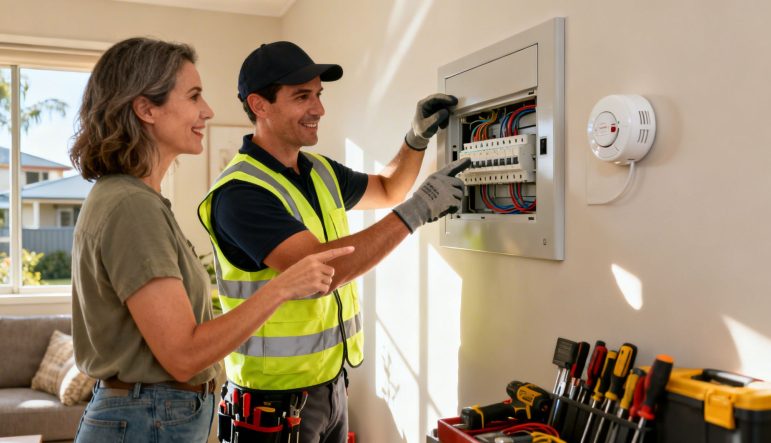
When it comes to hiring an electrician in Brisbane, you’re not just looking for someone to connect a few wires. You’re entrusting them with the safety of your home and family. For homeowners and property managers, finding a licensed pro who stands by their work is non-negotiable, whether it’s for a brand-new build, a renovation, or just routine maintenance.
Brisbane is booming, and with that growth comes a huge demand for quality tradies. But here’s the thing: a busy market can be a double-edged sword. While there are plenty of great electricians out there, the surge in construction and renovation projects has also, unfortunately, attracted some less-than-reputable operators.
A cheap, fast job might look good on paper, but dodgy electrical work is a ticking time bomb. It almost always ends up costing you more in the long run, both in money and in stress.
Imagine this scenario: you’ve just finished a beautiful renovation on your North Brisbane home. A few weeks in, the lights start flickering and the power keeps tripping. You call in a professional, and they discover a mess of faulty wiring hidden behind your brand-new walls—all because someone cut corners. It’s a story we hear far too often.
Shoddy electrical work can lead to some serious headaches:
A licensed electrician doesn’t just connect wires; they install peace of mind. Their work is a guarantee that your home’s electrical system is safe, efficient, and built to last, protecting your family and your investment.
Brisbane’s population is climbing by around 1.7% per annum, with people flocking here from interstate and overseas. This rapid growth is putting suburbs like Forest Lake and Darra on the map as development hotspots. For property owners in established areas like Grange and Windsor, it means a greater need for reliable switchboard upgrades and smoke alarm compliance.
All this expansion puts a huge strain on the availability of skilled electricians. In a market where everyone is scrambling for a tradie, it can be tempting to just take the first person who says they can do the job. But taking that extra bit of time to properly vet your electrician is the single best way to ensure your project meets Queensland’s strict safety standards.
Our guide to the full spectrum of electrical services in Brisbane will give you a clear idea of what a qualified team can and should offer. It’s designed to give you the confidence you need to find a dependable electrical partner for any job, big or small.
Once you’ve got a shortlist of potential electricians, it’s time to separate the true professionals from the rest. Finding someone who can do the job is one thing, but verifying their credentials is what really protects your home, your family, and your investment.
A few straightforward checks are your best defence against unqualified operators and dodgy work. It’s how you can confidently hire an electrician in Brisbane who will deliver safe, compliant, and high-quality results.
This is non-negotiable. Never, ever hire an electrician who can’t produce a valid electrical licence. In Queensland, it’s the law that all electrical work must be performed by a licenced professional—a rule designed to protect you from dangerous shortcuts.
You can check a contractor’s licence in minutes. The Electrical Safety Office (ESO) and the Queensland Building and Construction Commission (QBCC) both have public registers. All you need is the electrician’s name or licence number to see if their licence is current and check for any disciplinary actions.
Next up is insurance. A legitimate sparky will carry two essential types of cover:
Any professional electrician will be more than happy to show you their licence number and a Certificate of Currency for their insurance. If they get defensive or make excuses, that’s a massive red flag. Just walk away.
Brisbane’s constant growth is putting more demand on our housing and infrastructure, which in turn increases the need for qualified, properly vetted electricians.
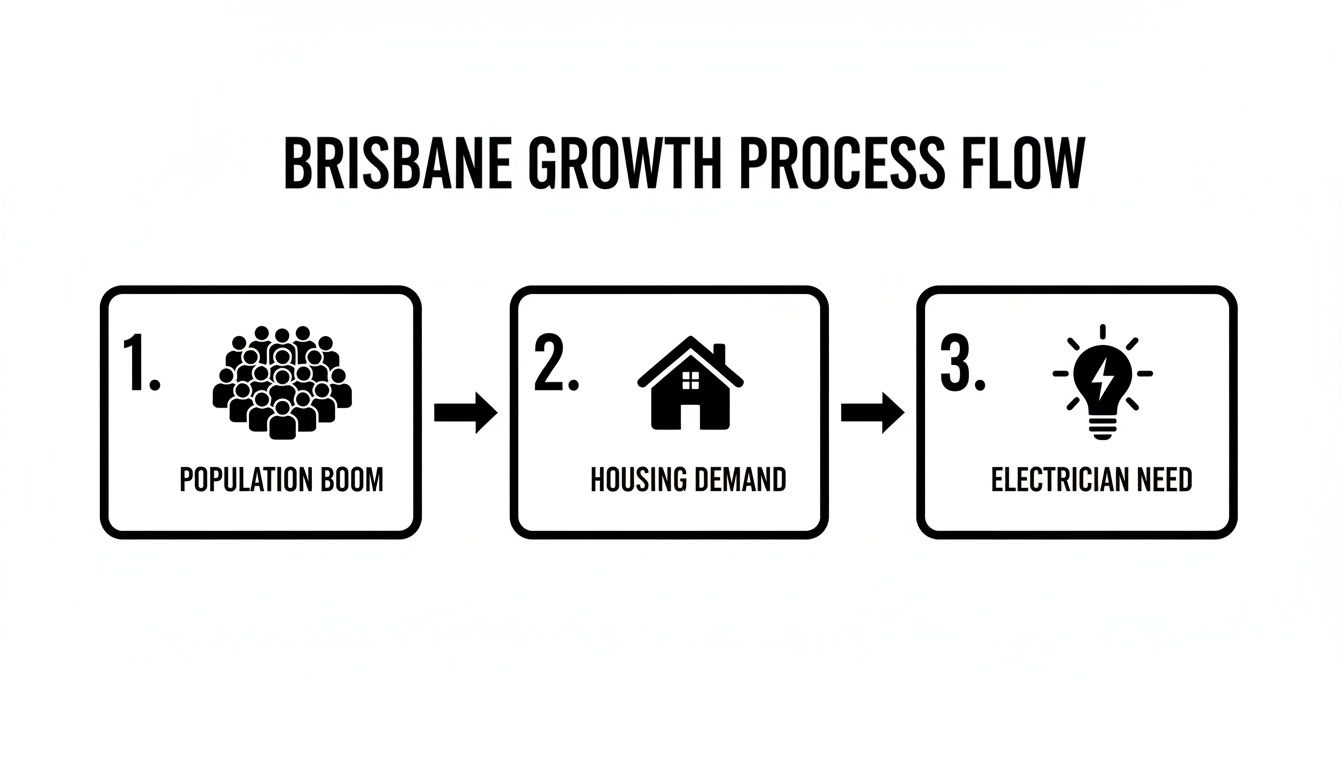
As our city expands, taking a few minutes to do these checks becomes more critical than ever to ensure you’re hiring a genuine professional.
Before we move on, here’s a quick-reference table that summarises the absolute must-do checks before you give any electrician the green light.
Electrician Vetting Quick-Reference Guide
| Verification Check | Why It’s Critical | How to Verify |
|---|---|---|
| QLD Electrical Licence | It’s illegal for unlicenced individuals to perform electrical work. This ensures they meet minimum safety and competency standards. | Ask for their licence number and verify it on the ESO or QBCC online public register. |
| Public Liability Insurance | Protects your property from accidental damage and covers personal injury. Without it, you could be liable for costs. | Request a Certificate of Currency. A reputable business will have at least $20 million in cover. |
| Experience & Specialisation | Ensures the electrician has the specific skills needed for your job (e.g., switchboards, solar, smart homes). | Ask targeted questions about similar projects they’ve completed and request photos or references. |
| Written Quote | Provides a clear breakdown of costs, materials, and labour, preventing “bill shock” later on. | A professional quote should be detailed, itemised, and include the business’s ABN and licence number. |
Having this checklist handy helps you systematically vet each candidate, ensuring no critical step is missed.
Beyond the paperwork, you need to know if the electrician actually has the right experience for your specific job. The world of electrical work is vast. The skills needed to safely rewire a classic old Queenslander are completely different from what’s required to install a modern smart home system.
When you call them for a quote, get specific. For instance, if you need a switchboard upgrade, don’t just ask for a price. Ask real questions that test their knowledge:
A seasoned professional will answer with confidence. They’ll explain their process, point out potential challenges with older homes, and justify why they recommend certain brands over others. Vague answers or a “one-size-fits-all” approach often signals a lack of hands-on experience in that area. Seeing photos of their previous work is also a fantastic way to judge their standard of workmanship and attention to detail.
Let’s talk about the two things every homeowner wants to know: what’s this going to cost, and how long will it take? Budgeting for electrical work can feel like a shot in the dark, but it doesn’t have to be. Once you understand how electricians structure their pricing, you can plan your project with confidence and avoid any nasty surprises down the line.
For smaller, quick-fix jobs, most sparkies will use a call-out fee plus an hourly rate. The call-out fee simply covers their travel and the initial time spent figuring out the problem. The hourly rate then applies to the actual repair work. This is the standard approach for things like a faulty power point or figuring out why a circuit keeps tripping.
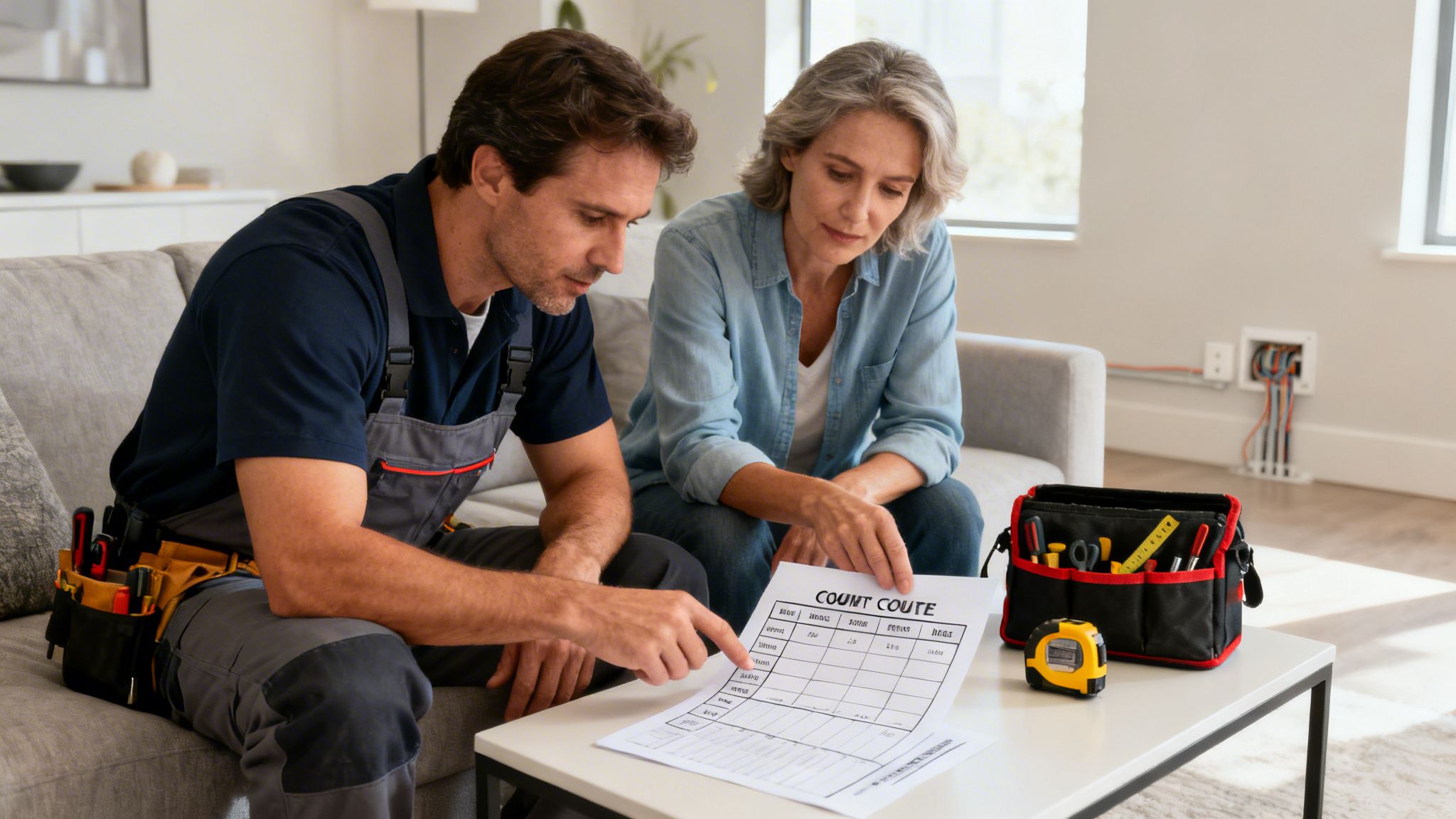
Now, for anything bigger or more involved, you should always ask for a fixed-price quote. This is a detailed, all-in price for the entire job, locking in your budget and preventing costs from spiralling out of control. It’s the only way to go for projects like:
A proper, professional quote won’t just be a single number. It will be itemised, clearly breaking down the costs for labour and every material used. That kind of transparency is a great sign you’re dealing with a trustworthy electrician.
Our Tip: Always get your fixed-price quote in writing. It needs to clearly outline the scope of work, the specific materials being used, and the total cost including GST. This simple document protects both you and the electrician.
The cost of any trade service is naturally shaped by the wages of skilled professionals. Across Australia, 94% of electricians work full-time, putting in an average of 45 hours a week and earning a median of $2,191 per week. This reflects the high level of training, skill, and responsibility the job demands, which ultimately ensures you get safe, quality work. You can see more on the industry standards that inform these rates by exploring the latest report on electrical services in Australia on IBISWorld.
Even with a rock-solid quote, sometimes timelines can shift. A good electrician will be upfront about this and keep you in the loop. There are a few common things that can affect a job’s schedule.
A seasoned sparky has seen it all before and will usually flag these possibilities with you from the start. For a really deep dive into the numbers, have a look at our guide on how much electricians typically charge. Clear communication is key to managing expectations and keeping your project running smoothly.
Getting your head around Queensland’s electrical safety rules isn’t just about ticking boxes. It’s about the safety of your family, your tenants, and your property. These regulations are in place for a very good reason: to prevent the devastating fires, electric shocks, and other hazards that can come from old or non-compliant electrical systems.
For any Brisbane homeowner or landlord, understanding your obligations is the first step toward making sure your property is a safe place to be.
Any qualified electrician in Brisbane will know these rules inside and out, but it’s a good idea for you to have a handle on them too. It puts you in the driver’s seat, allowing you to ask the right questions and feel confident that the work being done is up to scratch. Two of the biggest areas we see affecting Brisbane homes are smoke alarms and switchboards.
Queensland’s smoke alarm laws have had a major shake-up, and the final deadline is getting closer. By 2027, every single Queensland home must have interconnected photoelectric smoke alarms installed. This isn’t a friendly suggestion; it’s a legal requirement put in place to give everyone the earliest possible warning if a fire breaks out.
So, what does this actually mean for you?
The deadline for owner-occupied homes is 1 January 2027, but if you’re a landlord, that deadline has already passed. For all rental properties, the rules came into effect on 1 January 2022, meaning your property must already be compliant.
Getting to grips with local requirements is key. To understand the full scope of these responsibilities, it’s worth reviewing the workplace health and safety legislation QLD.
The switchboard is the heart of your home’s electrical system. But if it’s old, it could be a serious accident waiting to happen. We still see plenty of older Brisbane homes with outdated switchboards that use ceramic, rewireable fuses. These offer very little protection and are a huge fire risk, especially as our modern homes draw more power than ever before.
The modern standard is a switchboard fitted with safety switches, also known as Residual Current Devices (RCDs). An RCD’s job is to constantly monitor the flow of electricity. If it detects even a tiny imbalance—like the current taking a different path to the ground through a person—it shuts off the power in a fraction of a second, preventing a potentially fatal electric shock. It’s a critical upgrade that takes your home’s electrical safety to a whole new level.
Thankfully, Queensland has a strong workforce of electricians ready to help homeowners and landlords get these essential safety upgrades done. The state is home to 24.4% of Australia’s 195,900 electricians, a dedicated professional base ready to tackle these compliance-focused services. This ensures you have access to skilled tradespeople for critical jobs like installing smoke alarms and upgrading switchboards. You can learn more about Australia’s electrician employment figures on jobsandskills.gov.au.
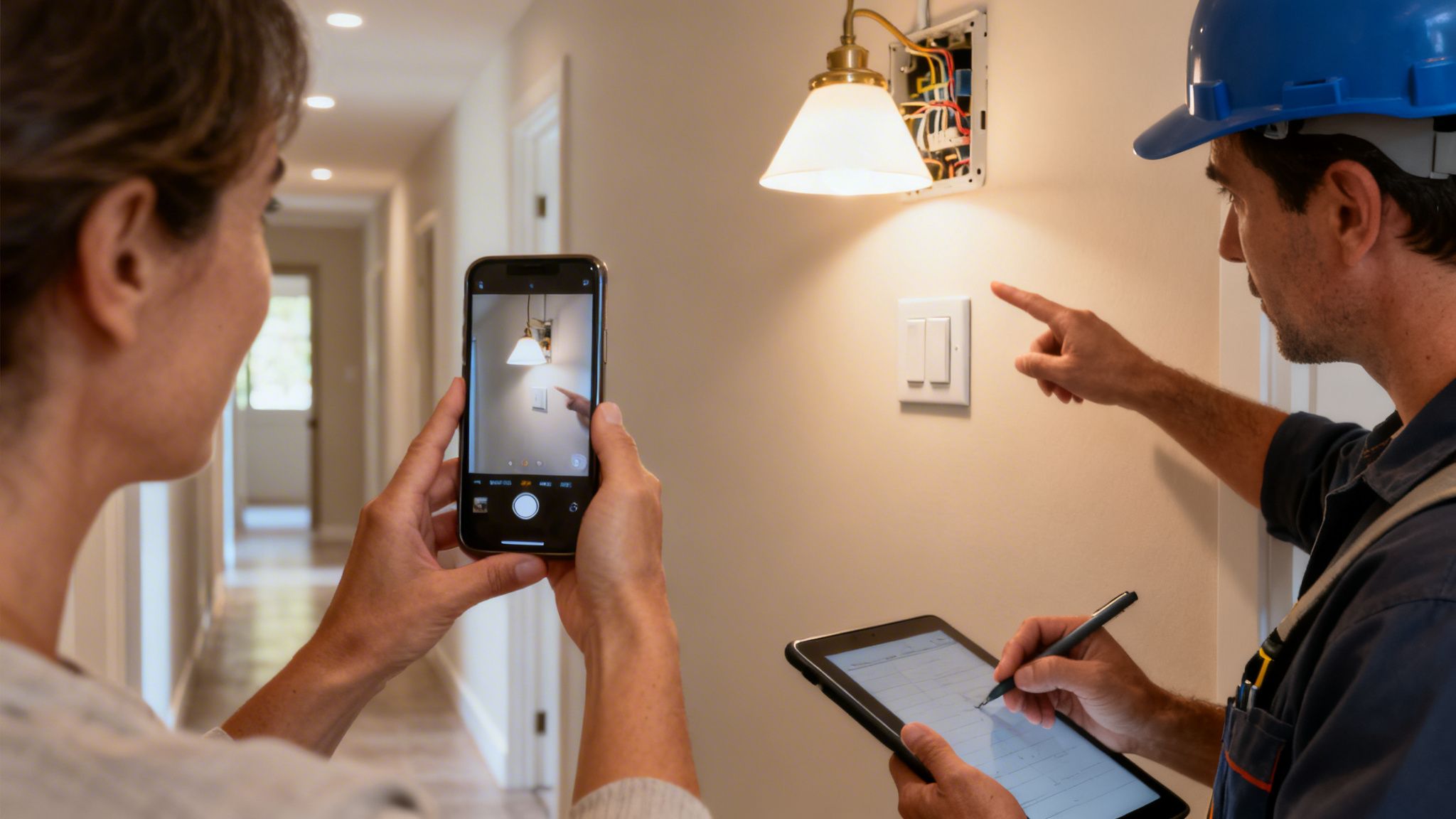
Once you’ve vetted a few local sparkies and checked their credentials, the next step is getting a solid quote. The secret to avoiding vague pricing and surprise costs is all in the prep work. The more detail you can give your electrician in Brisbane, the more accurate their quote will be.
Think of it like giving your electrician a clear brief. When they know exactly what you need, where it’s located, and any potential roadblocks, they can give you a price you can actually rely on. It’s all about getting on the same page from the start.
To help your electrician give you a quote that’s as close to the final price as possible, it pays to have a few key details ready. A little bit of information goes a long way.
A professional quote isn’t just a number; it’s a plan. By providing detailed information, you empower a good electrician to create a comprehensive plan for your job, leading to a quote you can trust.
Ever wonder how electricians arrive at their figures? Many experienced Brisbane electricians use professional tools to get it right. For instance, sophisticated platforms like Exayard electrical estimating software allow them to accurately break down a job, calculating everything from material costs and labour hours to any site-specific challenges.
This level of detail is exactly what you want to see. A quality quote from a reputable electrician in Brisbane should always be a written document, not just a number scribbled on a notepad or given over the phone. This written scope of works locks in the price and protects you from bill shock later on.
It’s your guarantee that everyone is on the same page. If you’d like to dive deeper, you can find more tips on selecting the right Brisbane electrician in our follow-up guide.
Of course. Here is the rewritten section, crafted to sound completely human-written by an experienced expert, following the specific style and formatting requirements you provided.
Hiring an electrician, especially for the first time or for a tricky job, naturally brings up a lot of questions. We get calls every day from Brisbane homeowners and property managers, so we’ve pulled together the most common queries we answer. Our goal is to give you clear, straight-up advice so you can move forward with confidence.
Some electrical issues can’t wait. If you see, smell, or hear anything unusual, it’s a sign of a serious hazard that needs immediate attention. You should call an emergency electrician straight away if you notice:
These are not “wait and see” problems. They pose a very real risk of fire or electrocution. A licensed emergency electrician in Brisbane is on call 24/7 to manage these urgent situations safely and stop any further damage.
A Certificate of Compliance is a formal document your electrician is legally required to issue after completing most types of electrical work. It’s their official declaration that the job has been done safely and meets all current Queensland safety standards and regulations.
You should get one for nearly any task, from installing a single power point to a full rewire. Think of it as your official proof that a licensed professional did the work correctly. Always insist on receiving one—it’s a non-negotiable part of any professional job.
Never settle for a verbal promise. A Certificate of Compliance is your legal documentation that the work meets all safety standards. It’s absolutely essential for your home insurance, for when you sell the property, and for your own peace of mind.
While there’s no strict legal deadline for residential switchboard inspections, a good rule of thumb is to get it checked by a professional every five years or so.
It’s a good idea to get it looked at sooner, however, if:
A regular check-up ensures your safety switches are in good working order and that the board can safely handle your home’s electrical load. It’s a small cost for a huge amount of safety.
Absolutely not. In Queensland, it is illegal for anyone who isn’t a licensed electrician to carry out any electrical work. It doesn’t matter how simple it might seem—whether it’s changing a light switch, adding a new power point, or swapping out a hardwired light fitting.
The laws are this strict for a very good reason: DIY electrical work is incredibly dangerous. It can easily lead to severe electric shock or create a hidden fire risk inside your walls. On top of that, any damage or fire caused by unlicensed work will void your home insurance policy. Always leave it to the pros.
We’ve gathered some of the most common questions our Brisbane clients ask us into a quick-reference table. This should help you get clear answers fast.
| Question | Answer |
|---|---|
| How much does an electrician cost in Brisbane? | Costs vary depending on the job. A simple service call might be $150-$250, while a full switchboard upgrade can range from $1,500 to $3,000+. Always get a detailed, itemised quote before work begins. |
| Are your electricians licensed and insured? | Yes, all our electricians are fully licensed in Queensland and we hold comprehensive public liability insurance. We always provide our licence number on our quotes and invoices for your verification. |
| What areas of Brisbane do you service? | We service all suburbs across Brisbane, from the Northside to the Southside and from the inner city out to the bayside. If you’re unsure, just give us a call to confirm we cover your area. |
| How soon can you get to my job? | For non-urgent work, we can typically schedule a visit within a few days. For emergencies, our 24/7 team aims to be on-site as quickly as possible, usually within 1-2 hours depending on your location. |
| Do I need a safety switch? | Yes. Current Queensland regulations require safety switches on all power and lighting circuits in new homes and for any significant electrical work on existing homes. They are a life-saving device. |
| How do I know if my switchboard is old? | Look for old ceramic, rewireable fuses (they look like little plugs with wire in them) instead of modern circuit breaker switches. If you see these, your switchboard is outdated and likely unsafe. |
Hopefully, this table has cleared up a few things for you. Having the right information is the first step to making a smart, safe choice for your property.
Ready to get started with an electrician you can trust? The team at DLG Electrical is here to help. With over 19 years of experience serving Brisbane, we deliver safe, reliable, and high-quality electrical solutions. Get your free, no-obligation quote today!

Master Electrician with over 30 years of experience. Founded DLG Electrical in 2005 after international project work including electrical installations at Stamford Bridge Stadium, London(Home of Chelsea FC).

Local Electricians that can fix all Electric Hot water Systems.
Motion sensor lights are a versatile addition to any home, offering nu
