83 Jean St, Grange QLD 4051
Mon-Fri 07:30 AM - 04:00 PM - Sat - 8:00 - 12 - Sunday Closed
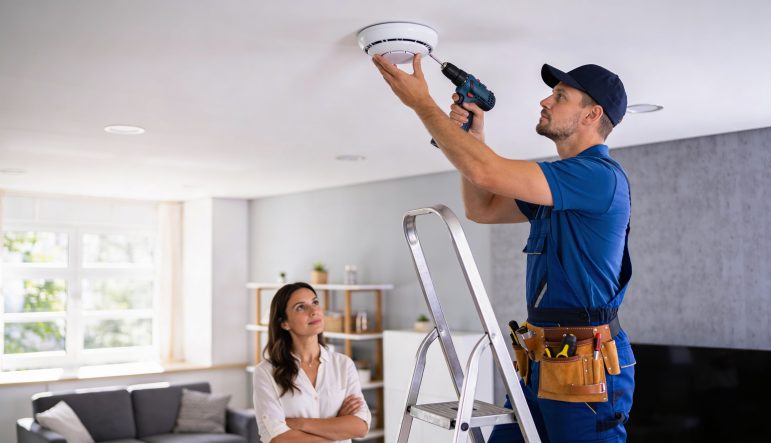
You’re probably in one of two situations right now. You’ve either looked up at the smoke alarm on your ceiling and realised you’re not sure whether it still complies, or you’re a landlord, renovator, or homeowner in Brisbane trying to sort the job out before it becomes a legal and safety problem.
That uncertainty is common. Older homes around Grange, Windsor, and across North Brisbane often have a mix of alarm types, awkward hallway layouts, and piecemeal upgrades from different years. On paper, the law sounds simple. In the roof space and on the ceiling, it often isn’t.
Good smoke detector installation services do more than swap a unit over. They check placement, power source, interconnection, age, compliance, and whether the whole system works as one. That’s the difference between an alarm that merely makes noise and a system that gives your family time to get out.
For Brisbane homeowners, the deadline is January 1, 2027. By that date, owner-occupied homes must meet the same smoke alarm standard that already applies to rental properties sold, leased, or renewed under earlier stages of the law.
The rule itself is straightforward. Many existing homes are not.
Under Queensland’s smoke alarm legislation in the Building Regulation 2021 and Fire Services Act 1990, residential properties must have photoelectric, interconnected smoke alarms installed in every bedroom, in the hallways connecting bedrooms to the rest of the dwelling, and on each storey. The alarms must be hardwired to 240V mains power with a 10-year non-removable battery backup, or powered by a 10-year non-removable battery, and they must meet AS3786:2014.
For many Brisbane houses, the challenge lies not in reading the legislation. It is checking whether the current layout, alarm type, and power source match it.
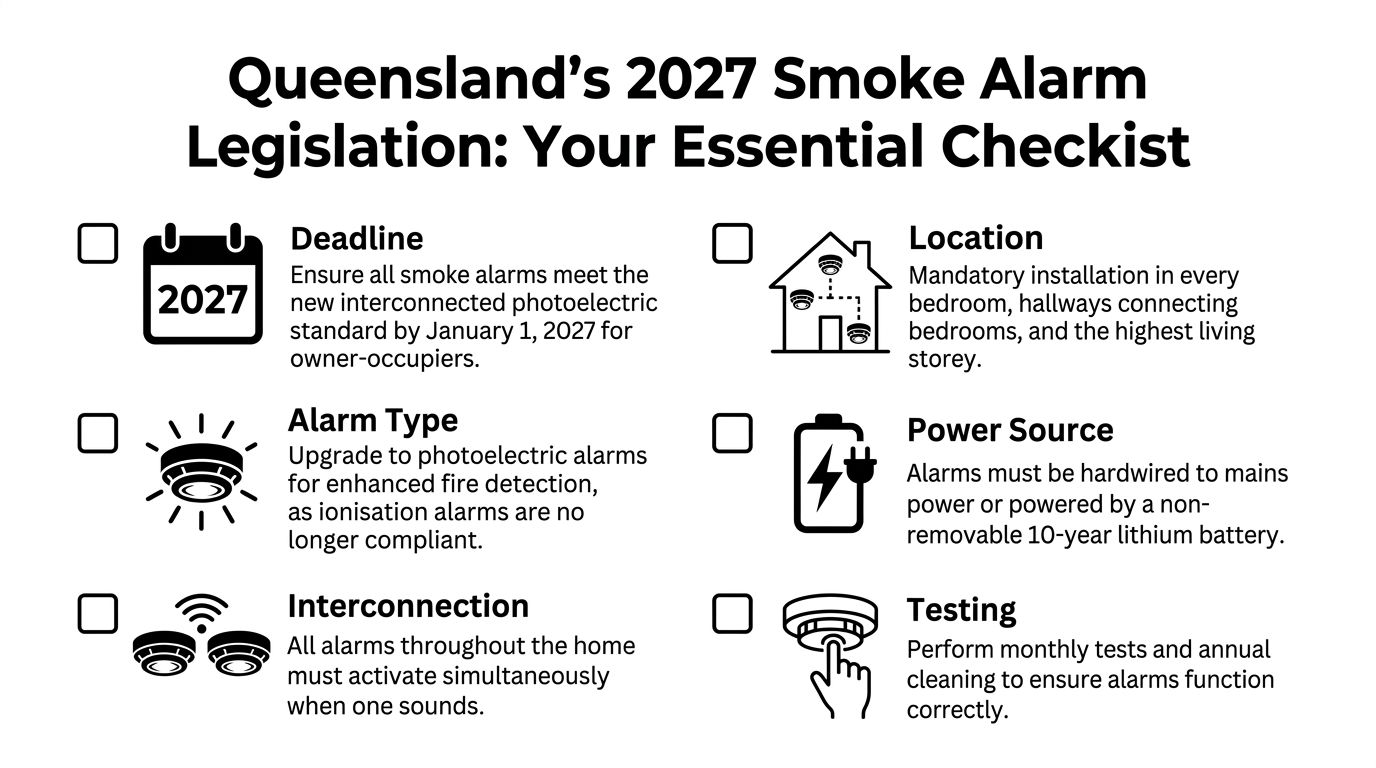
A compliant setup needs five things working together:
That last point catches people out. A unit bought from a hardware shelf is not automatically suitable just because it says “smoke alarm” on the box.
The law is built around how people get trapped in house fires.
In a lot of homes, the first sign of trouble is smoke in one room while someone else is asleep behind a closed door. If the alarm only sounds in a hallway at the far end of the house, warning time drops. If the alarm outside the bedrooms does not trigger the rest of the system, people upstairs or at the back of the house may not hear it soon enough.
That is why Queensland requires interconnected alarms in bedroom areas, not just one unit near the living room or kitchen.
The failures I see are usually practical ones, not complicated legal misunderstandings.
| Common issue | Why it fails |
|---|---|
| One alarm on each level only | Does not cover bedrooms and connecting hallways as required |
| Old ionisation alarms still in place | Wrong alarm type for current compliance |
| Mixed brands or older replacement units | Interconnection can fail or not work at all |
| Hardwired alarm swapped for a battery-only replacement | Can leave the home non-compliant |
| Renovations changed room layout or bedroom use | Existing alarm positions may no longer suit the floor plan |
Older Brisbane homes are the usual problem jobs. Queenslanders, post-war homes, and extended brick houses often have enclosed verandas, added bedrooms, or hallway changes that make the original alarm layout useless for current compliance.
If you want the legal detail set out clearly, read our guide to Queensland smoke alarm laws.
Both can be compliant. The better option depends on the house.
A hardwired 240V interconnected system usually suits homes where roof access is reasonable and cabling can be run without major patching. A 10-year sealed battery interconnected system often makes more sense in finished homes where chasing cables through ceilings and walls would add cost without improving day-to-day safety.
DIY replacements often go wrong here. I see homeowners replace one failed hardwired unit with whatever fits the base, then find out later it does not interconnect properly, does not match the rest of the system, or does not meet the current standard.
The legislation sets the minimum result. The installation method still needs to suit the building, the wiring access, and the layout people sleep in.
At 2 am, the fire that matters most is rarely the dramatic one people picture. In Brisbane homes, the higher-risk scenario is often smoke building from a smouldering mattress, overheated wiring, or soft furnishings before anyone sees flame. That is why Queensland requires photoelectric smoke alarms for compliance, not ionisation alarms.
Photoelectric alarms are better suited to the type of smoke commonly produced in early-stage residential fires, especially smouldering fires that start in bedrooms, living areas, or hallways. That matters because warning time is the whole point. If smoke is building while people are asleep, the alarm needs to respond to that smoke profile, not just sound loud when tested.
This is also where homeowners get caught out. An alarm can still beep, still pass a button test, and still be the wrong technology for current Queensland requirements.
I still find ionisation alarms in older Brisbane houses all the time, particularly in properties that have had piecemeal replacements over the years. One failed unit gets swapped. Another gets left in place because it still works. The owner assumes the house is covered.
It usually is not.
A working alarm is not the same as a compliant alarm. The unit type matters. The age matters. The location matters. If you are checking the full requirement, interconnected smoke alarm rules in Queensland also affect whether the system meets the standard for the home.
The cheapest fix on the day often creates the more expensive problem later. Replacing one chirping alarm with a mismatched unit can leave you with a mixed system that is harder to test, harder to maintain, and more likely to fail a compliance check before a sale or new tenancy.
Common issues include:
In practice, the sensible approach is to assess the whole house and upgrade the system properly, not one nuisance alarm at a time.
For most homeowners and landlords, the answer is straightforward. Install compliant photoelectric alarms in the correct locations and treat them as part of one house-wide safety system.
That does not mean every house gets the same product or installation method. A small unit in a newer townhouse is different from a high-set Queenslander with extensions and poor roof access. But the alarm technology itself is not a grey area. For Queensland compliance, photoelectric is the required choice.
Interconnection means one alarm goes off, then all alarms go off. That’s the requirement that changes smoke alarms from isolated devices into a proper home warning system.
In practical terms, this is what wakes a family upstairs when smoke starts downstairs. It’s what alerts someone in a back bedroom when the first detection happens near a living room or hallway.
For many Brisbane homes, the primary decision isn’t whether to interconnect. It’s how to interconnect.
A hardwired interconnected system links alarms through fixed wiring and uses 240V mains power. In many homes, this is the strongest long-term option.
The advantages are straightforward:
The downside is labour. In an established home, hardwiring can mean roof access challenges, extra cable runs, patching, and more time on site. In a character home in Windsor or an older property with difficult access, that can push the installation into a more involved job.
Wireless interconnected alarms usually communicate by radio frequency rather than physical interconnect cable. They’re still designed to function together as one system, but they avoid some of the disruption involved in running new wires between units.
They suit homes where cable access is poor or where owners want to reduce disturbance to finished ceilings and walls.
The practical benefits are different:
| System type | Usually suits | Main advantage | Main trade-off |
|---|---|---|---|
| Hardwired interconnected | Newer homes, major renovations, accessible roof spaces | Fixed mains-powered setup | More invasive retrofit work |
| Wireless interconnected | Existing homes, finished interiors, difficult access | Faster retrofit with less disruption | Needs careful product selection and setup |
Wireless doesn’t mean careless. Signal pairing, compatible units, battery condition, and placement still matter.
Older homes often drive the decision.
A post-war house with limited roof access, decorative ceilings, or previous patch repairs may not be the best candidate for a full hardwired retrofit in every case. A renovated modern home with easy access and electrical work already underway often is.
That’s why blanket advice doesn’t help much. The right answer comes from looking at:
If you want a local breakdown of how these systems are set up, interconnected smoke alarms in Queensland gives useful background.
DIY replacements commonly fail at the exact point interconnection matters most.
Homeowners often replace a single alarm with a unit that physically fits, then assume the rest of the system still communicates. Sometimes it doesn’t. Sometimes a hardwired base plate doesn’t match properly. Sometimes a replacement unit powers up but doesn’t trigger the others. Sometimes a wireless unit has never been correctly paired at all.
If pressing test on one alarm doesn’t trigger the others, the system isn’t doing the job interconnection is supposed to do.
That’s why smoke detector installation services are not just about fitting devices. They’re about checking that the system acts as one network across the whole home.
You book an installer because one alarm keeps chirping or because a sale, lease renewal, or insurance question forces the issue. Then the electrician gets on site and finds the underlying problem. The alarms are in the wrong spots, half the units are past their service life, or a previous DIY replacement broke the interconnection. That is common in Brisbane homes, especially older properties that have been altered room by room over time.
A proper smoke alarm job should be clear from the start. You should know what is being checked, what needs replacing, where the alarms will go, and what paperwork you will receive at the end.
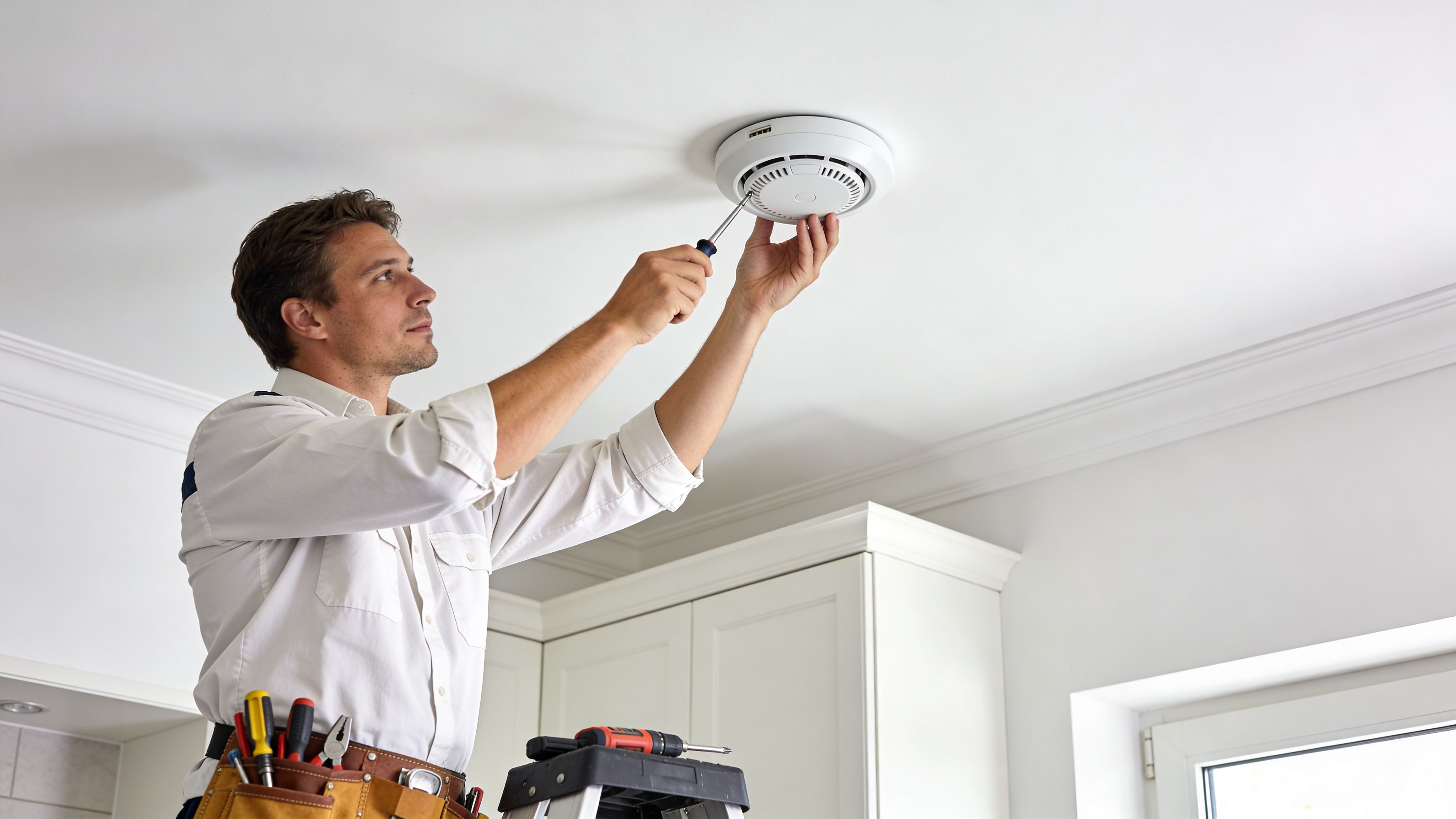
The first visit is about more than counting alarms on the ceiling.
A licensed electrician checks the layout against the legal requirements and the way the home is used. Bedrooms, hallways, each storey, stair connections, existing wiring, roof access, and the condition of the current alarms all matter. A house can look fine at a glance and still miss the mark once those details are checked properly.
The assessment usually covers:
That last point matters more than many owners expect. I regularly see homes where one alarm has been swapped for a different brand or base plate, and the owner assumes the system still works as one network. It often does not.
A straightforward unit with easy ceiling access is one type of job. A high-set Queenslander with patchy old wiring, insulation packed into the roof space, and decorative ceilings is another.
A useful quote should spell out what is included and what could change once access is confirmed. If extra cabling, patching, or replacement of non-compliant alarms is likely, that should be discussed up front.
| What should be included | Why it matters |
|---|---|
| Site inspection | Confirms the legal layout and the actual condition of the existing system |
| Alarm type and quantity | Prevents partial upgrades that still leave the home non-compliant |
| Installation method | Shows whether the job will use hardwiring, wireless interconnection, or a mix |
| Testing | Confirms every alarm activates as a system, not just as individual units |
| Compliance paperwork | Gives owners and landlords a record of what was installed and checked |
DLG Electrical also carries out smoke alarm upgrades as part of wider residential electrical work, which can make sense during renovations or when other ceiling work is already happening.
The sequence is usually straightforward. Power is isolated where needed, final alarm positions are confirmed, old units are removed, and the new alarms are fitted and connected.
The difficult part is often hidden above the ceiling. Tight roof spaces, brittle plaster, insulation, older cable runs, and previous handyman work can all slow the job down. That is why a quick phone estimate only goes so far. Until someone gets eyes on the property, there can be real unknowns.
Good installers also protect the home while they work. Ceiling cut-ins and access points create dust. Older houses can have fragile finishes. A careful electrician plans for that and keeps the mess under control.
An alarm that powers on is not automatically a compliant system.
Each alarm needs to be tested on its own, then tested as part of the full network. If one unit activates, the others should respond properly. If they do not, the installation is unfinished, even if every alarm is mounted neatly and has power.
Here’s a useful visual example of smoke alarm installation in practice:
Most faults show up at this stage. A wireless unit may not have paired correctly. A replacement alarm may not match the existing base. A cable may be live, but the interconnect conductor is not doing its job. Those are the details DIY jobs often miss.
If you want a clearer picture of what should be checked after installation, this guide to smoke alarm testing services covers the practical checks.
For landlords and property managers, documentation is part of the job. For owner-occupiers, it is still worth keeping because it records what was installed, where it was installed, and the condition of the system at handover.
A proper handover should include:
That is the difference between a proper installation and a quick alarm swap on a ladder.
Once the new system is in, the job isn’t finished forever. Smoke alarms need regular attention if you want them to stay reliable.
Most maintenance is simple. The key is doing it consistently.
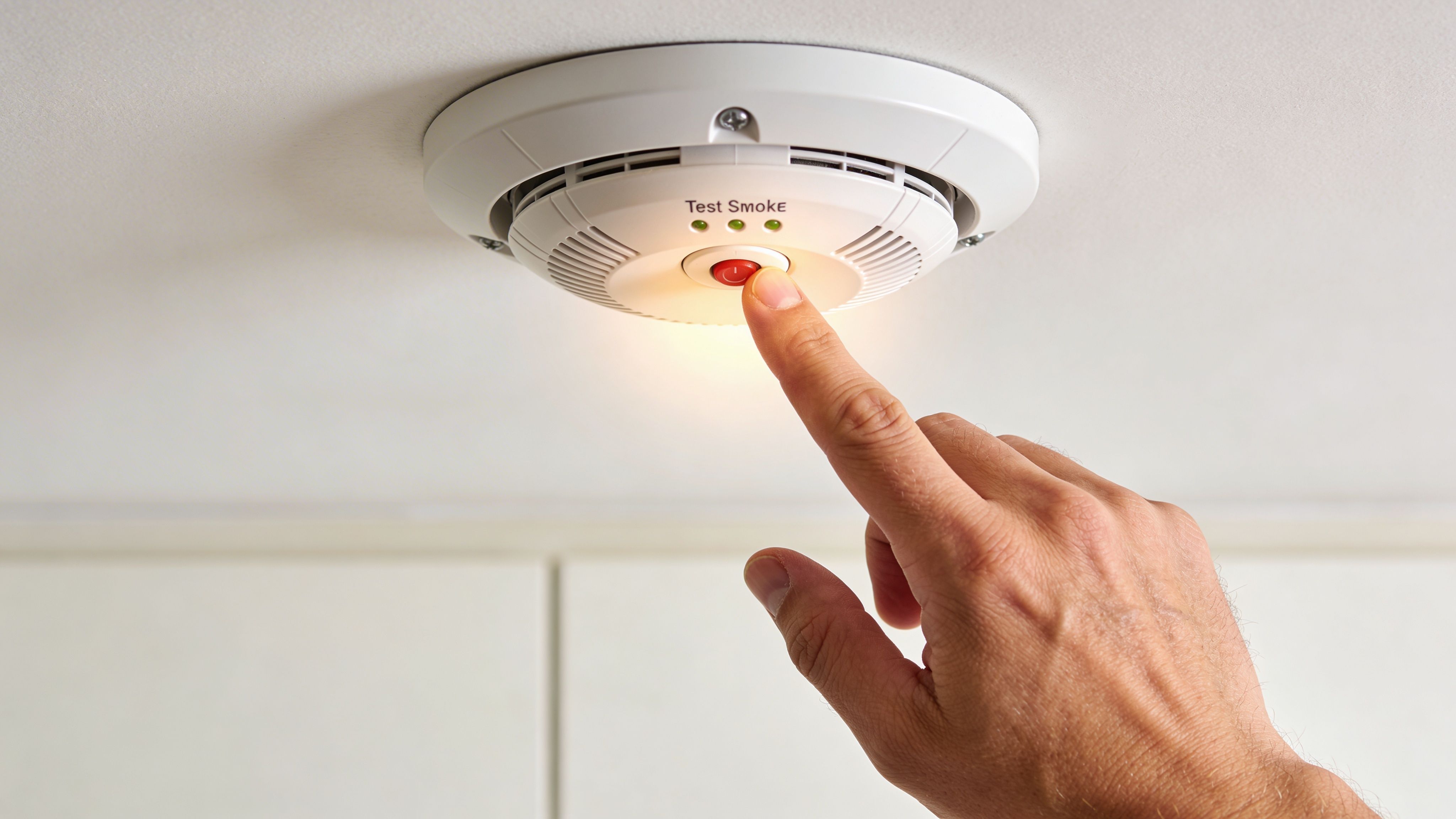
Use a repeatable checklist rather than relying on memory.
If you need a local maintenance reference, this guide to smoke alarm testing services is a useful starting point.
A lot of alarm failures aren’t dramatic. They start with small warning signs.
If an alarm sounds randomly, disconnects from the others, chirps repeatedly, or stops responding properly during testing, don’t assume it will sort itself out. Faults in one unit can affect confidence in the whole system.
Monthly testing is quick. Finding out an alarm network failed during a real fire is not the time to discover a fault.
For some homeowners, especially those who travel often or manage larger properties, smart smoke alarms are worth considering.
According to smart smoke detector trend data, connected alarm systems have been associated with 40% lower emergency response times in connected homes, 25% growth in IoT fire safety installations in Queensland, and 30% fewer false alarms. They’re not legally required, but they can add app alerts and better visibility across the property.
That said, smart alarms are only useful if they’re compatible with the existing electrical setup and installed properly. They’re an upgrade choice, not a shortcut around the compliance basics.
Call a licensed electrician if:
Maintenance is simple. Diagnosis isn’t always. Knowing the difference saves time and avoids risky guesswork.
Smoke alarms are one of those jobs people tend to delay because the ceiling device looks harmless and the rules feel technical. The risk sits in that gap.
In Australia, residential fires caused 123 fatalities in 2022-23, Queensland records over 7,000 structure fires annually, and an estimated 68% of QLD rental properties are fully compliant, leaving others exposed to fines of up to $15,887.50 per non-compliant property according to Australian and Queensland fire compliance figures.
For landlords, that means legal exposure. For homeowners, it means a system that may not perform the way they think it will when smoke spreads through the house at night.
The dangerous jobs aren’t always the obviously bad ones. Sometimes the problem is a neat-looking alarm installed in the wrong place. Sometimes it’s a replacement unit that doesn’t talk to the rest. Sometimes it’s an old hardwired setup that was modified without checking the complete circuit.
That’s why professional smoke detector installation services matter. The work has to be compliant, but it also has to function under real conditions.
Smoke alarms are one layer. Some properties also benefit from broader planning around lighting, switchboards, access, and monitored security.
For homeowners looking at a more complete protection setup, it’s also worth understanding how security systems monitoring can fit into a wider home safety plan, especially where remote alerts and ongoing oversight matter.
The strongest result comes from treating safety devices as part of one plan, not as unrelated add-ons.
DLG Electrical is a Brisbane-based family-owned contractor with over 19 years of local experience, and that matters because older Queensland homes rarely present the same way twice. A proper assessment, compliant installation, full testing, and clear paperwork take the guesswork out of the process.
If your alarms are outdated, mixed, or uncertain, getting them checked now is easier than trying to solve it in a rush later.
Yes. Multi-level homes need coverage that reflects the way people sleep and move through the property. In practice, that means looking carefully at bedrooms, connecting hallways, and each storey, then making sure the alarms are interconnected so the warning carries through the whole home.
It depends on how the space is built and used. A detached shed isn’t treated the same way as a habitable part of the dwelling. An attached area or a converted space needs closer assessment. If a room is being used differently from its original design, get the layout reviewed.
No. A failed hardwired unit should be replaced with a suitable compatible system, not whatever happens to fit the hole in the ceiling. The wiring arrangement, interconnection method, and compliance of the replacement all matter.
Yes. Renovations often change room function, circulation paths, and sleeping arrangements. A new wall, an enclosed hallway, or an added bedroom can change where alarms should be installed. This catches people out regularly after cosmetic upgrades.
That can happen because of dust, insects, steam, age, or a failing unit. It’s worth learning more about understanding common fire alarm issues so you can separate nuisance triggering from a genuine equipment fault. If the alarm is repeated, unexplained, or affects an interconnected system, have it checked properly.
You can test and maintain your alarms as an owner, but installation choices can create compliance and safety problems quickly, especially with hardwired or interconnected setups. DIY work often misses layout rules or system testing.
You need more than a visual guess. Check the alarm type, age, locations, interconnection, and power source. If any of those are unclear, book a compliance assessment rather than assuming.
If you want clear advice, compliant installation, and practical help with your smoke alarm setup, contact DLG Electrical for a free, no-obligation quote.

Master Electrician with over 30 years of experience. Founded DLG Electrical in 2005 after international project work including electrical installations at Stamford Bridge Stadium, London(Home of Chelsea FC).

Local Electricians that can fix all Electric Hot water Systems.
Motion sensor lights are a versatile addition to any home, offering nu
