83 Jean St, Grange QLD 4051
Mon-Fri 07:30 AM - 04:00 PM - Sat - 8:00 - 12 - Sunday Closed
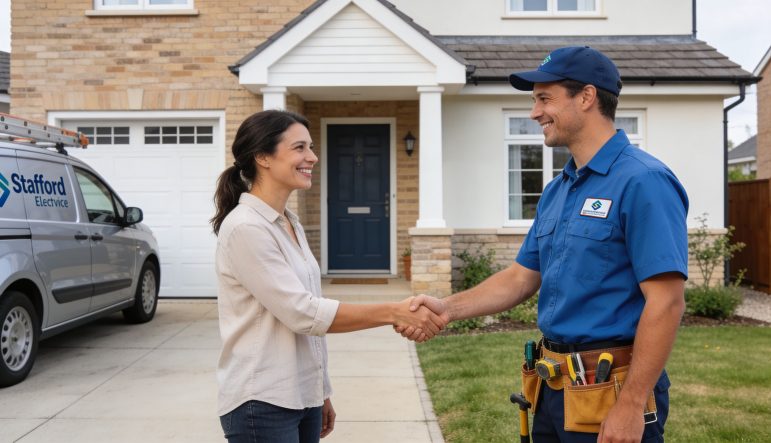
A lot of Stafford homeowners start looking for an electrician at the worst possible time. A light starts flickering the night before guests arrive. The safety switch won’t stay on. You buy an older house, open the switchboard, and realise you’re looking at gear that should’ve been replaced years ago.
That’s when rushed decisions happen. You ring the first number you find, compare quotes that don’t match, and hope the person who turns up knows Queensland rules, not just general electrical work.
If you’re searching for electrician stafford, the hard part isn’t finding someone who says they can do the job. The hard part is working out who’s licensed, who understands local compliance, and who won’t leave you with unsafe work hidden behind a neat-looking finish.
A reliable electrician does more than restore power or swap fittings. They identify risk, explain what’s required, and leave you with compliant work that won’t create problems later. In Stafford, that matters because many homes sit in the awkward middle ground. Not brand-new, not fully original, and often altered over time by renovations, extensions, air con additions, and DIY attempts that should never have happened.
The first check is simple. Don’t start with price. Start with proof.
Before you book anyone, ask for these basics:
A lot of homeowners judge professionalism by punctuality and manners alone. Those matter, but they’re not enough. The trade has real technical and legal standards, and if you want a useful overview of the professional standards of an electrician, that resource gives a solid high-level benchmark for what competent, compliant work should look like.
A contractor who regularly works across North Brisbane will usually diagnose problems faster than someone coming in cold. They’re more likely to recognise the common issues in post-war homes, renovated Queenslanders, and suburban brick houses with outdated switchboards or mixed-age wiring.
That local familiarity also helps when you’re comparing advice. If one electrician says your board is fine and another says it needs urgent correction, context matters. A local operator who understands Brisbane housing stock and current compliance expectations will usually give you a more useful answer than someone treating every house the same.
For a broader look at what homeowners in the area often need, DLG’s article on finding an electrician in Brisbane is worth reading before you book anyone.
Practical rule: If a tradesperson avoids licence questions, pushes for a verbal-only quote, or wants to start immediately without scoping the work, stop there.
The fastest way to get the right help is to describe the job properly. Homeowners often bundle everything under “electrical issue”, but that slows things down. A burnt smell near a power point is not the same as planning extra lighting for a renovation.

Use these three buckets when you call.
| Job type | What it usually includes | What you should do |
|---|---|---|
| Emergency | Sparks, burning smell, tingling, exposed live parts, water affecting electrical equipment | Turn power off if safe and call immediately |
| Urgent repair | Loss of power to part of the home, tripping safety switch, failed oven circuit, failed hot water supply | Book as soon as possible and give clear symptoms |
| Planned project | New power points, lighting upgrades, renovations, switchboard replacement, EV charging, battery integration | Request a site visit and a written scope |
If you smell burning plastic, hear crackling in a switchboard, or get a shock from an appliance or fitting, treat that as an emergency. Don’t keep testing it. Don’t reset it five times. Don’t assume it’s “just one faulty point”.
Isolate the affected circuit if you can do it safely. Then call a licensed electrician.
A lot of callouts sit in the middle category. The house still has some power, but key circuits aren’t working properly. The safety switch trips under load. Lights dim when appliances start. One section of the house has gone dead.
In those cases, details help. Tell the electrician:
Those details cut down guesswork and help the electrician arrive with the right testing approach.
If you’re planning a renovation or future-proofing your home, the discussion shifts from fault-finding to design and compliance. Many homeowners underscope the job at this stage. They ask for “a few extra points” when they require load review, circuit planning, and switchboard capacity checked.
That’s especially true with batteries and newer energy systems. The demand for solar battery storage integrations is rising sharply in Queensland, with over 350,000 new rooftop solar installations in the past year. In flood-prone parts of North Brisbane, electricians also need to account for AS/NZS 3000:2018 updates that affect raised switchboards and safety devices for these installations.
A good call starts with symptoms for faults and goals for upgrades. Mixing the two usually leads to vague quotes and wasted time.
Most hiring mistakes happen before any tools come out. Homeowners accept a vague quote, assume the person is properly licensed, and only realise there’s a problem when the job drags out or compliance questions start surfacing.
A proper vetting process isn’t overkill. It’s the minimum.
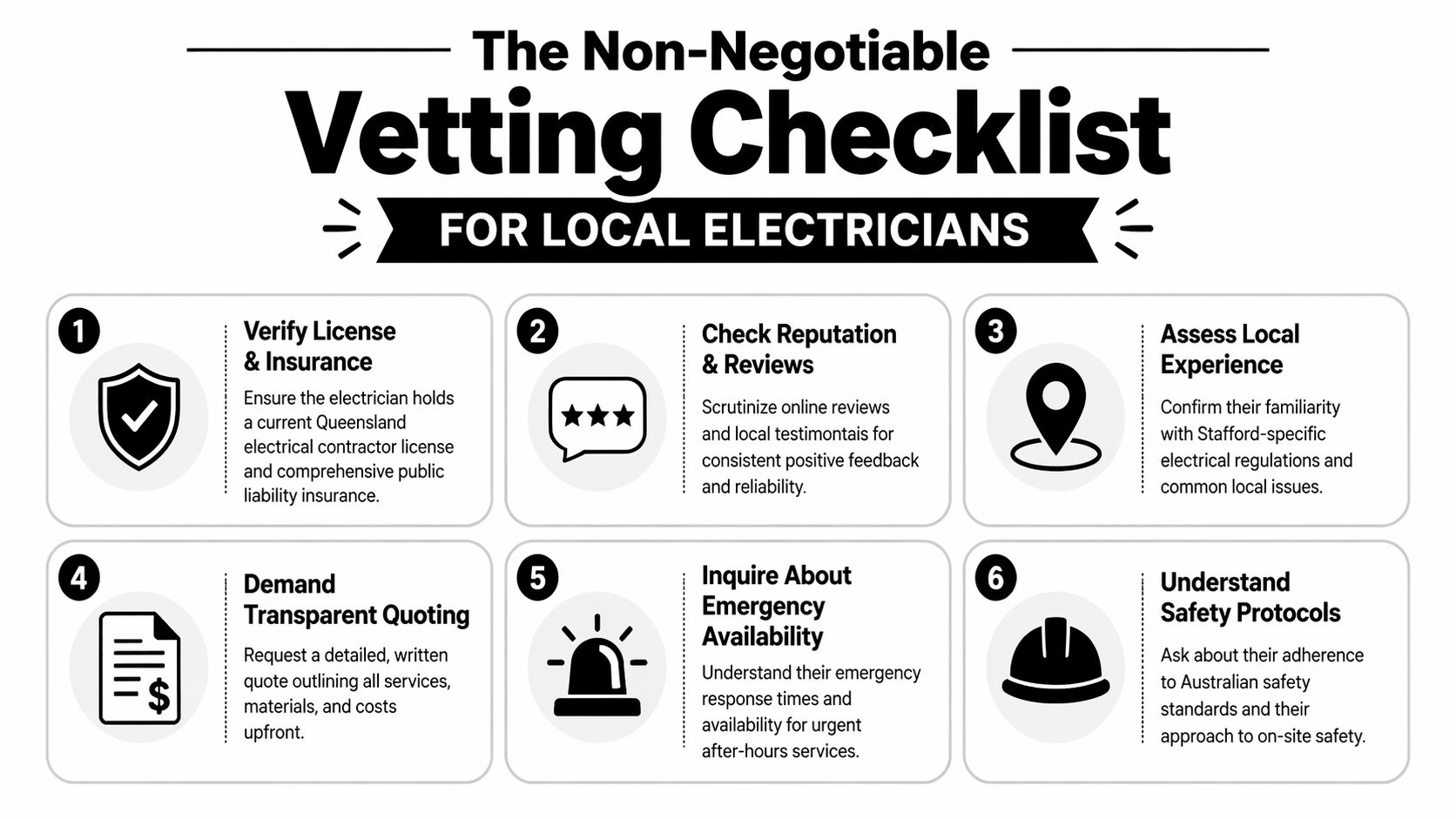
The first thing to verify is the contractor’s legal standing to perform the work. If they can’t show current licence details and insurance, the conversation should end there.
Ask for:
If the name on the quote, vehicle, invoice, and licence doesn’t line up, ask why.
A weak quote often looks cheap because it leaves out the expensive parts. Testing, fault-finding time, switchboard corrections, making good, disposal of old gear, or certification can all disappear from a one-line estimate.
Look for these inclusions in writing:
A written quote doesn’t need to be pages long. It does need to be specific enough that two electricians could read it and understand the same job.
A local electrician often has two advantages. They can usually attend faster, and they’ve seen the same types of houses and recurring defects before.
Stafford homes can include older fuse-era setups, partial rewires, renovated kitchens on old mains, and extensions added long after the original house was built. That mix creates hidden issues. A local contractor is more likely to ask the right questions early, instead of discovering complications halfway through.
If you want a useful outside perspective on how contractors build trust and visibility in their area, the Local SEO Playbook for Contractors is relevant. It’s not an electrical standard, but it does highlight why consistent local presence and verifiable business information matter when you’re judging a trade business online.
Don’t just count stars. Read for patterns.
A useful review mentions things like communication, punctuality, problem-solving, cleanliness, and whether the final invoice matched the original scope. Be cautious if reviews are generic, repetitive, or focused only on how “friendly” someone was.
On-site reality: The electrician you want is the one who notices the unsafe neutral, the wrong breaker type, or the unprotected outdoor point before they start adding new work.
For another practical Brisbane-focused reference, DLG’s guide on choosing an electrician in Brisbane gives homeowners a decent checklist mindset before booking a contractor.
Ask, “What could change the price once you start?”
A competent electrician will answer clearly. They might mention concealed wiring damage, inaccessible cable routes, non-compliant existing work, or a switchboard that won’t legally accept the planned addition without upgrades.
That answer tells you a lot. It shows whether they’ve thought through the job properly, and whether they’re trying to avoid hard conversations until after work begins.
A lot of Stafford owners call after a breaker keeps tripping, a smoke alarm chirps for months, or a property manager asks whether the rental will meet the 2027 rules. By that stage, the job is usually harder and more expensive than it needed to be.
Switchboards and smoke alarms are safety items first. They affect shock protection, fire detection, insurance questions, and whether later electrical work can be carried out legally on the existing installation.
A neat-looking old switchboard can still be unsafe.
Many older Queensland homes were built before current expectations around RCD protection, appliance loads, air conditioning demand, solar integration, and EV charging. In practice, the trouble usually shows up as nuisance tripping, heat damage, overcrowded enclosures, mixed breaker brands, deteriorated cabling, or circuits that no longer suit how the home is used.
Any switchboard upgrade in Queensland has to comply with AS/NZS 3000:2018 and relevant state requirements. That means correct circuit protection, proper segregation, testing, verification, and a Certificate of Testing and Safety where required. It also means checking the existing installation around the board, because adding new protection to unsafe or damaged wiring does not solve the underlying fault.
In Stafford, I regularly see older post-war and renovated homes where the switchboard is only part of the problem. The board may need replacement, but so do damaged consumer mains, old meter panel components, or circuits that have been extended too many times over the years. If you want a clearer picture of what gets picked up during that work, DLG’s guide to switchboard upgrades in older Queensland homes explains the usual scope.
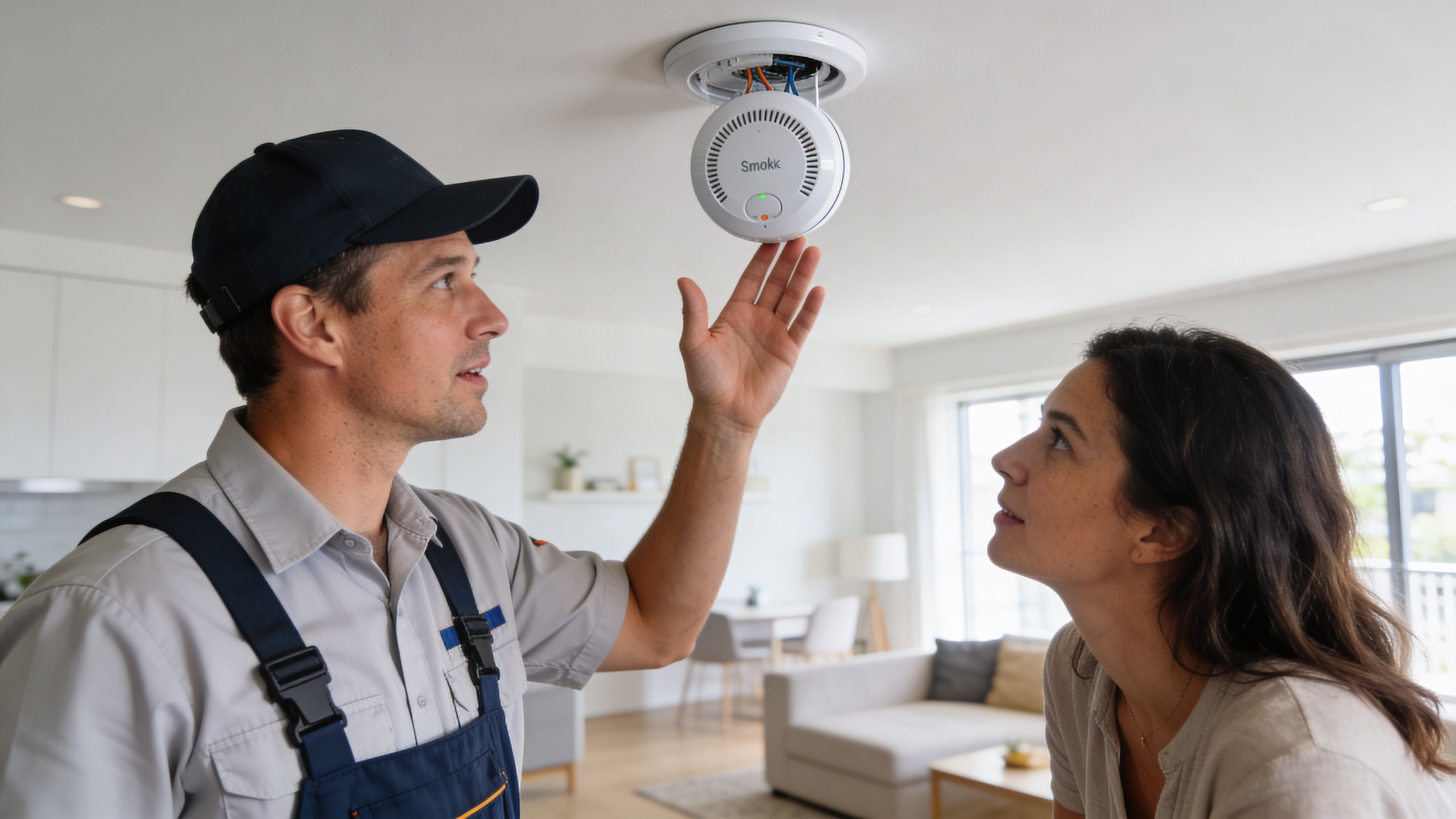
Queensland’s smoke alarm laws are strict for good reason. The required standard is photoelectric alarms that are interconnected and correctly located. In homes being sold, leased, or under an existing tenancy timetable, the compliance date matters. By 1 January 2027, all domestic dwellings in Queensland are due to meet the full smoke alarm requirements.
That deadline should be treated as fixed, but market commentary has suggested many rental properties may still be behind by mid-2025. Waiting until the last minute is a poor plan, especially in older Stafford homes where cable access is tight and alarm locations often need to be reworked to meet the rules properly.
A compliant upgrade is more than swapping alarm heads. The electrician needs to assess each storey, the paths between bedrooms and the rest of the house, any existing alarm points, and whether hard-wired interconnection can be installed cleanly and safely. In some houses, the alarm work also exposes switchboard issues, because new circuits or altered protection may be needed to complete the job lawfully.
The table below reflects what happens on site.
| Approach | Works | Doesn’t work |
|---|---|---|
| Replacing one alarm at a time | Only as a temporary maintenance step where the existing setup already complies | It does not bring an older home up to current interconnected requirements |
| Checking the whole house first | Yes. It identifies placement, wiring routes, and access issues before holes are cut | Skipping the assessment usually leads to missed locations and return visits |
| Using wireless or hard-wired options based on the house layout and legal requirements | Sometimes. The right method depends on the dwelling and compliance pathway | Assuming every home can be solved with the same product choice |
| Using a licensed electrician for the retrofit and testing | Required for hard-wired alarm work and the only sensible approach for compliance sign-off | Handyman work creates liability, especially in rentals and sale contracts |
The main point is simple. Treat smoke alarm compliance as a whole-of-home job, not a room-by-room patch-up.
Stafford homes often have low-access roof spaces, pieced-together renovations, and wiring from different eras in the same ceiling. That changes labour time and it changes how neatly a retrofit can be done. Properties affected by storm damage or past flooding also need extra caution. If any part of the electrical installation has been wet, damaged, or contaminated, it should be inspected before new work is added.
Leave these upgrades too long and they tend to collide with a lease renewal, a sale, an insurance query, or another renovation that already has trades booked. Deal with them early and you have options. Leave them late and you are paying for urgency, access problems, and avoidable rework.
A lot of bad electrical jobs announce themselves before a tool comes out of the van. The warning signs usually show up in the quote, the questions asked, and how the contractor talks about compliance.
In Stafford and across Brisbane, the risk is not just paying too much. It is ending up with work that fails inspection, causes trouble at sale time, or leaves a safety issue sitting behind the plaster.
Pay attention to how the electrician handles the first conversation. A careful contractor will ask about the age of the home, what circuits are affected, whether there has been storm or water damage, and what outcome you need. Someone who jumps straight to a price without checking any of that is guessing.
Walk away if you hear or see any of these:
Cheap electrical work often becomes expensive electrical work. The usual pattern is omitted testing, undersized materials, protection devices left unchanged, or defects found halfway through that should have been identified at the start.
Prices vary for good reasons. Access, ceiling space, switchboard condition, circuit capacity, product selection, and previous DIY work all affect labour and materials.
For routine residential work in Brisbane, homeowners are usually pricing one of three things. A straightforward install or replacement with clear access. Fault-finding where the cause is still unknown. Or upgrade work where bringing one part of the system up to standard exposes other defects nearby. Those jobs do not price the same, and they should not.
For smoke alarm retrofit work in a standard three-bedroom home, many Brisbane properties fall into the low-thousands range, as noted earlier. The final figure depends heavily on roof access, cable paths, alarm locations, and whether earlier wiring needs correction before the new system can be signed off.
Older Stafford homes are where quotes can spread out fast. Mixed-era wiring, tight roof spaces, previous renovations, and switchboards that are already full can all add time. Homes affected by past flooding or water ingress may also need inspection and testing before any new work is connected.
A low number is only useful if the scope is clear.
| If the quote is low because… | That may be fine | That’s a problem |
|---|---|---|
| The scope is smaller | Yes, if the exclusions are written clearly | No, if required items were left out without explanation |
| The electrician knows the local housing stock and works efficiently | Yes | No issue there |
| The materials are a lower spec product you approved | Sometimes | No, if it was hidden to make the quote look better |
| Testing, certification, or rectification is excluded | No | Serious issue |
Ask two direct questions before you accept any quote. What testing is included at the end of the job? What happens if the electrician finds non-compliant wiring, a damaged circuit, or a switchboard issue once work starts?
The answers usually explain the price gap better than the total at the bottom of the page.
A common Stafford call starts the same way. The power has been tripping since the last storm, the switchboard looks dated, and the owner wants the problem fixed without creating a bigger one. In that situation, homeowners do not need a polished sales pitch. They need a licensed electrician who can test properly, explain what failed, and carry out work that can be legally signed off in Queensland.
That is why many local homeowners stay with the same contractor once they find one who is reliable. Good electrical work has a long tail. It affects the next renovation, the next safety inspection, whether new circuits can be added later, and how hard fault-finding becomes when something goes wrong.
DLG Electrical is one option local homeowners use for residential electrical work in Stafford and across Brisbane. The business is family-owned and operated, has over 19 years of experience, is fully licensed and insured, and handles services including switchboard upgrades, smoke detector compliance, repairs, and installations.

Local experience matters in suburbs like Stafford, Grange, and Windsor because the housing stock is mixed. One street can have an older post-war home with limited roof access, a renovated worker's cottage with piecemeal wiring, and a newer extension tied into an original switchboard. The job is rarely just installation. It is diagnosis, compliance, and making sure the new work does not sit on top of old defects.
That is especially relevant in Queensland. Smoke alarm upgrades must meet current state rules by the 2027 deadline, and any home with a history of flood exposure or water ingress should be checked carefully before circuits are reused or extended. A contractor who works in Brisbane homes every week will usually spot those risks earlier and explain the trade-offs clearly.
If you are searching for electrician stafford, choose the contractor who can show a licence, carry insurance, set out the scope in writing, and explain what happens if they find unsafe or non-compliant wiring once the job starts.
If you need help with a switchboard upgrade, smoke alarm compliance, fault finding, or general residential electrical work in Stafford, Grange, or Windsor, contact DLG Electrical for a free quote. They’re a Brisbane-based, family-owned electrical contractor with fully licensed and insured electricians, and they handle practical, compliant work for local homes.

Master Electrician with over 30 years of experience. Founded DLG Electrical in 2005 after international project work including electrical installations at Stamford Bridge Stadium, London(Home of Chelsea FC).


Discover the real cost of RCD safety switch installation in Brisbane. ...
Learn how to go about checking emergency lighting correctly in 2026, i...
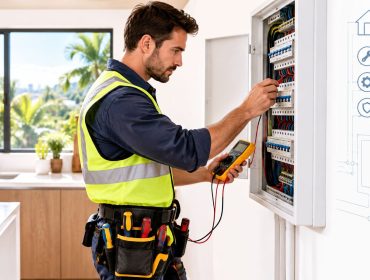
Understand what a residential electrician service covers in Brisbane — installations, re...
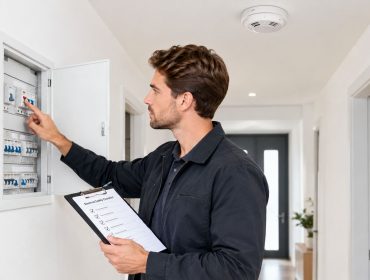
Master the electrical safety check rental property process in Queensland. Learn legal duti...
Master Electrician with over 30 years of experience. Founded DLG Electrical in 2005 after international project work including electrical installations at Stamford Bridge Stadium, London(Home of Chelsea FC).

Local Electricians that can fix all Electric Hot water Systems.
Motion sensor lights are a versatile addition to any home, offering nu





