83 Jean St, Grange QLD 4051
Mon-Fri 07:30 AM - 04:00 PM - Sat - 8:00 - 12 - Sunday Closed
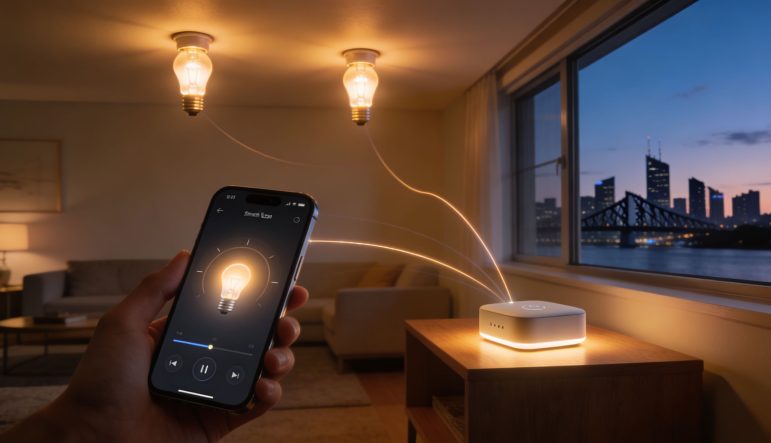
It's usually the same moment that gets people thinking about a smart lighting system. You're carrying bags in from the car and the entry is dark. Or a storm rolls over Brisbane, the power flicks back on, and half the house comes up in the wrong rooms. Or you leave for a weekend away and spend the first hour wondering whether the hall light is still on.
Most homes around Grange, Windsor, and North Brisbane weren't built with this kind of control in mind. They've got standard switches, maybe a dimmer or two, and lighting that works fine until you want it to do something more useful. That's where smart lighting starts to make sense. Not as a gimmick, but as a practical upgrade that gives you better control, better comfort, and in the right setup, lower running costs.
DLG Electrical has been working in Brisbane for over 19 years, so this isn't theory for us. We've seen the difference between systems that look good in a box and systems that actually suit Queensland homes, local wiring conditions, and Australian compliance requirements. A lot of the frustration homeowners have comes from buying bits and pieces online without a clear plan.
Outdoor lighting is often where people first notice the value. If you're looking at how lighting can shape paths, garden edges, or entertaining zones, this Austin guide to contour lighting installation is a useful example of how thoughtful placement changes both safety and appearance. The same principle applies here in Brisbane. Good control matters just as much as the fitting itself.
If you're still deciding whether it's worth upgrading your current lights first, it also helps to understand the broader benefits of LED lighting, because most smart lighting setups are built on LED technology.
A smart lighting system is a lighting setup that gives you control beyond the wall switch. That can mean turning lights on from your phone, dimming them by voice, setting schedules, or having sensors trigger lights when someone walks into a space. In a Brisbane home, that often starts with very practical jobs. Entry lights that come on before dawn. Patio lights that dim for dinner. Exterior lights that don't stay on all night for no reason.
Many homeowners don't ask for “home automation”. They ask for solutions to everyday annoyances:
That's the practical end of smart lighting, and it's where the best systems earn their keep.
Practical rule: Start with the areas you use every day. Entry, kitchen, living, main bedroom, and outdoor access points usually give the best return in convenience.
The best smart lighting system doesn't make you think about technology all day. It works in the background. Switches still make sense. The app is there when you want it, not when you need it just to turn on the kitchen. If the internet drops out, basic lighting should still behave properly. That's a big point many homeowners only realise after installing the wrong products.
In older Brisbane homes especially, planning matters. Some switch locations are awkward. Some circuits were designed for simple on and off control. Some decorative fittings don't play nicely with every smart lamp or dimmer. The right answer depends on the home, not just the catalogue.
Some systems are as simple as replacing a bulb. Others involve smart switches, sensors, and a central hub. The trick is knowing which pieces do what, and which ones are worth paying for in your house.
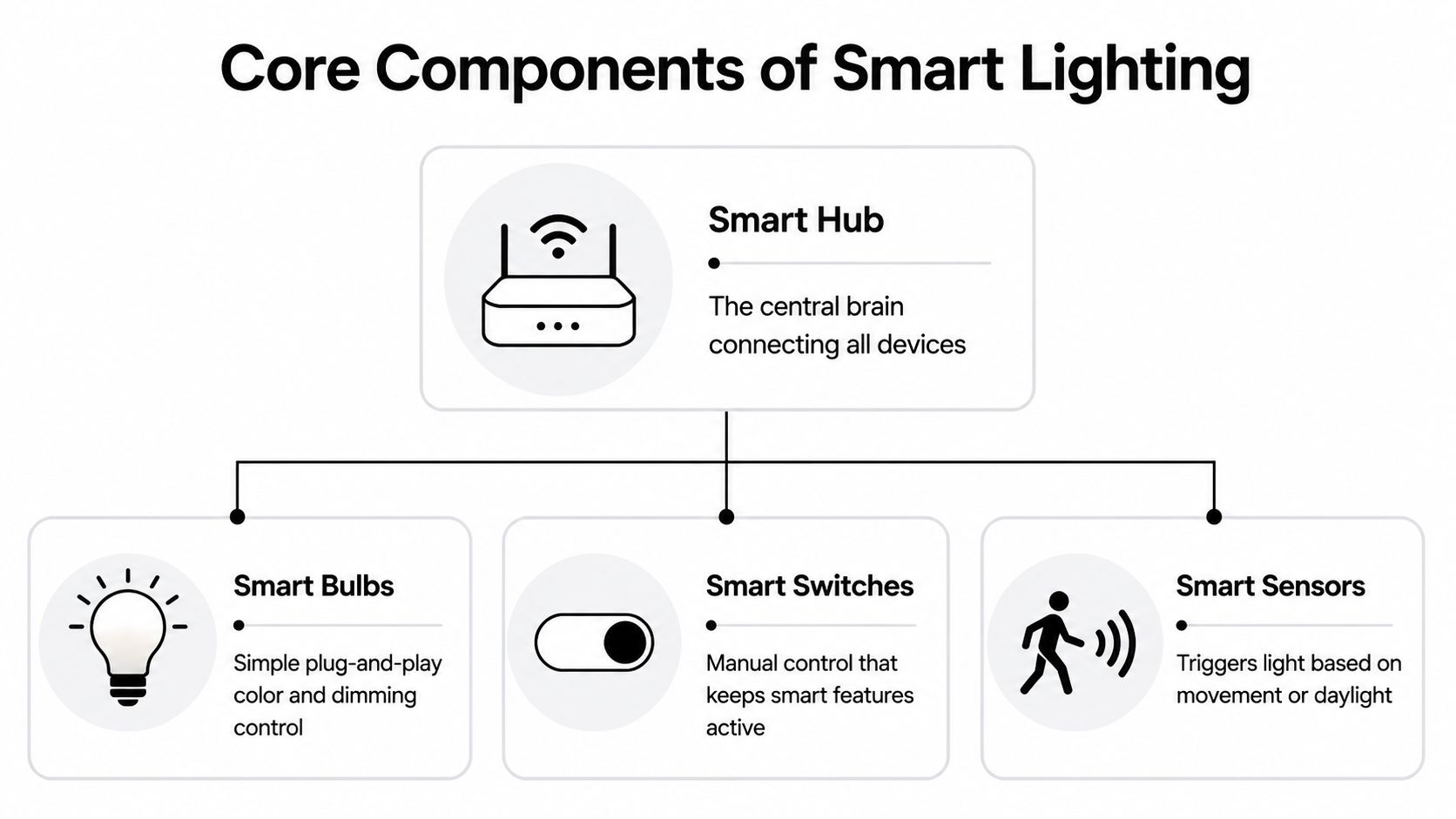
Think of a smart lighting system as a team.
Smart bulbs are the easiest player to add. You screw them in, connect them to an app, and you've got control over brightness, and sometimes colour. They're useful for table lamps, feature lights, and places where you don't want electrical work.
Smart switches replace the wall switch and control the light circuit itself. That matters because the switch stays intelligent even if someone uses it manually. In family homes, that's often the more reliable path.
Sensors add automation. Motion sensors, occupancy sensors, and daylight sensors can trigger lighting based on movement or ambient light.
Hubs or bridges act like the organiser. Some systems can run directly over Wi-Fi or Bluetooth, while others use protocols like Zigbee. A hub usually gives better device coordination, stronger automation, and easier expansion later.
Homeowners often focus on the fitting and forget the communication method.
If you're also updating fittings, understanding the different types of downlights helps, because not every downlight is ideal for dimming, colour tuning, or smart control.
| Feature | Smart Bulbs | Smart Switches |
|---|---|---|
| Best for | Lamps, quick upgrades, renters | Homeowners, renovations, permanent rooms |
| Installation | Usually plug-and-play | Requires licensed electrical work |
| Manual wall control | Can lose smart function if power is switched off | Keeps normal switch use practical |
| App features | Often strong for colour and scenes | Strong for room-based control and reliability |
| Scalability | Fine for a few lights | Better for larger, more organised systems |
| Good fit in Brisbane homes | Handy for trialling smart lighting | Usually the better long-term option |
A common mistake is mixing too many brands and hoping they'll all behave the same way. Some will. Some won't. Compatibility checks save a lot of frustration.
A smart lighting system pays off in three places. It makes daily life easier, it improves security, and it gives you more control over energy use. In Brisbane, where homes often blend indoor and outdoor living and cooling costs already matter, those benefits are easy to feel.
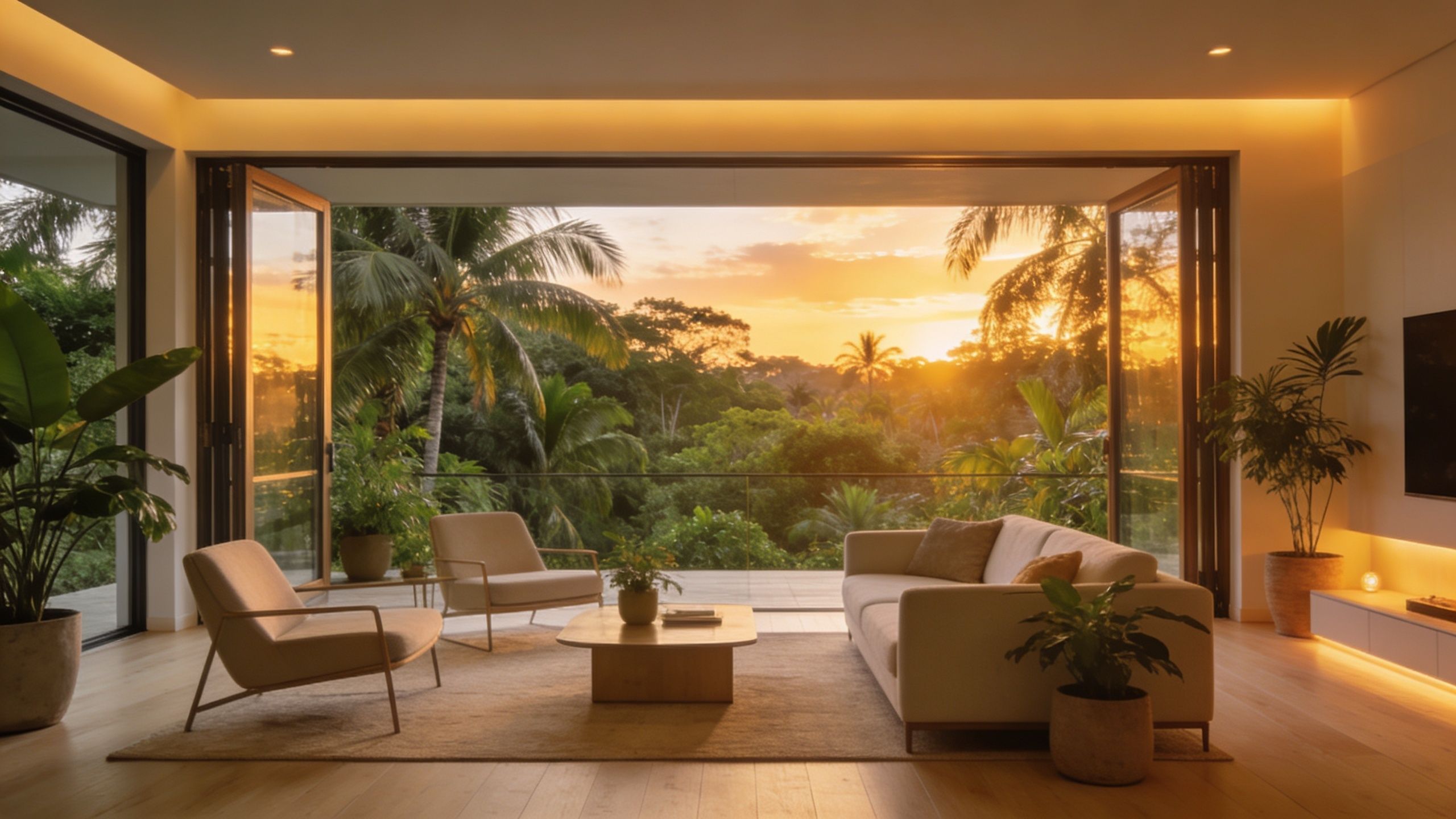
Convenience sounds minor until you live with it. A smart scene can bring the kitchen, dining, and living area to the right level for dinner with one tap. A morning routine can lift hallway and bathroom lighting gently before the rest of the house is awake. A deck light can come on at sunset and turn itself off later without anyone remembering.
For homes with kids, older family members, or shift workers, that control is more than a nice extra. It makes movement through the home simpler and more comfortable.
Lighting is a useful layer in home security because it changes how the property looks and feels from the street. Scheduled lamps can give the house a lived-in look when you're away. Motion-triggered path or side access lighting helps when someone arrives home late. Linked exterior lighting can also work alongside cameras or alarms.
If you're thinking more broadly about connected protection, this guide on protecting your gear with Magic Eagle is a good example of how lighting and security technology can support each other rather than operate as separate systems.
Commercial data provides a useful clue, even if every house is different. In Australia, commercial buildings using smart LED lighting with controls like DALI-2 or Zigbee achieve 30–50% energy savings, and Queensland retrofits with smart controls can cut lighting-related electricity use by 35–45% while still aligning with AS/NZS 1680 standards, according to this smart lighting overview from Illus Lighting.
That doesn't mean every Brisbane home will produce the same result. Homes use lighting differently. But the logic carries over. When lights dim automatically, switch off when rooms are empty, and follow schedules that match how the household lives, waste drops.
In Queensland homes, the easiest energy wins usually come from forgotten lights, overlit spaces, and outdoor fittings that run longer than they need to.
Cost is where smart lighting goes from interesting to practical. Homeowners usually want one clear answer. What's this going to cost me, and when does it pay for itself? The honest answer is that it depends on the size of the system, the type of gear, and how your household uses lighting now.
A smart lighting system usually has three cost layers:
A simple setup with a few smart bulbs in lamps is one end of the scale. A more complete home system with smart switches, outdoor zoning, and sensor-based automation is another. Neither is automatically right or wrong. It depends on whether you want a trial run or a proper whole-home result.
You'll find big overseas claims online. The problem is they don't answer the local question. While some sources cite global energy savings of 50-80%, there is a lack of specific ROI calculations for Australian residential properties, which have unique electricity costs and climate factors. This makes a professional assessment essential for Brisbane homeowners to determine the actual payback period and long-term savings for a smart lighting investment, as noted in this smart lighting and sustainability discussion from Zariot.
That gap matters. A home in Windsor with lots of outdoor lighting, ducted air conditioning, and frequent evening use won't behave the same way as a small unit in an inner suburb. The fittings, the habits, and the opportunities to automate are different.
Instead of chasing a generic payback claim, look at these decision points:
If the system solves daily annoyances and trims waste at the same time, the value is broader than the power bill alone.
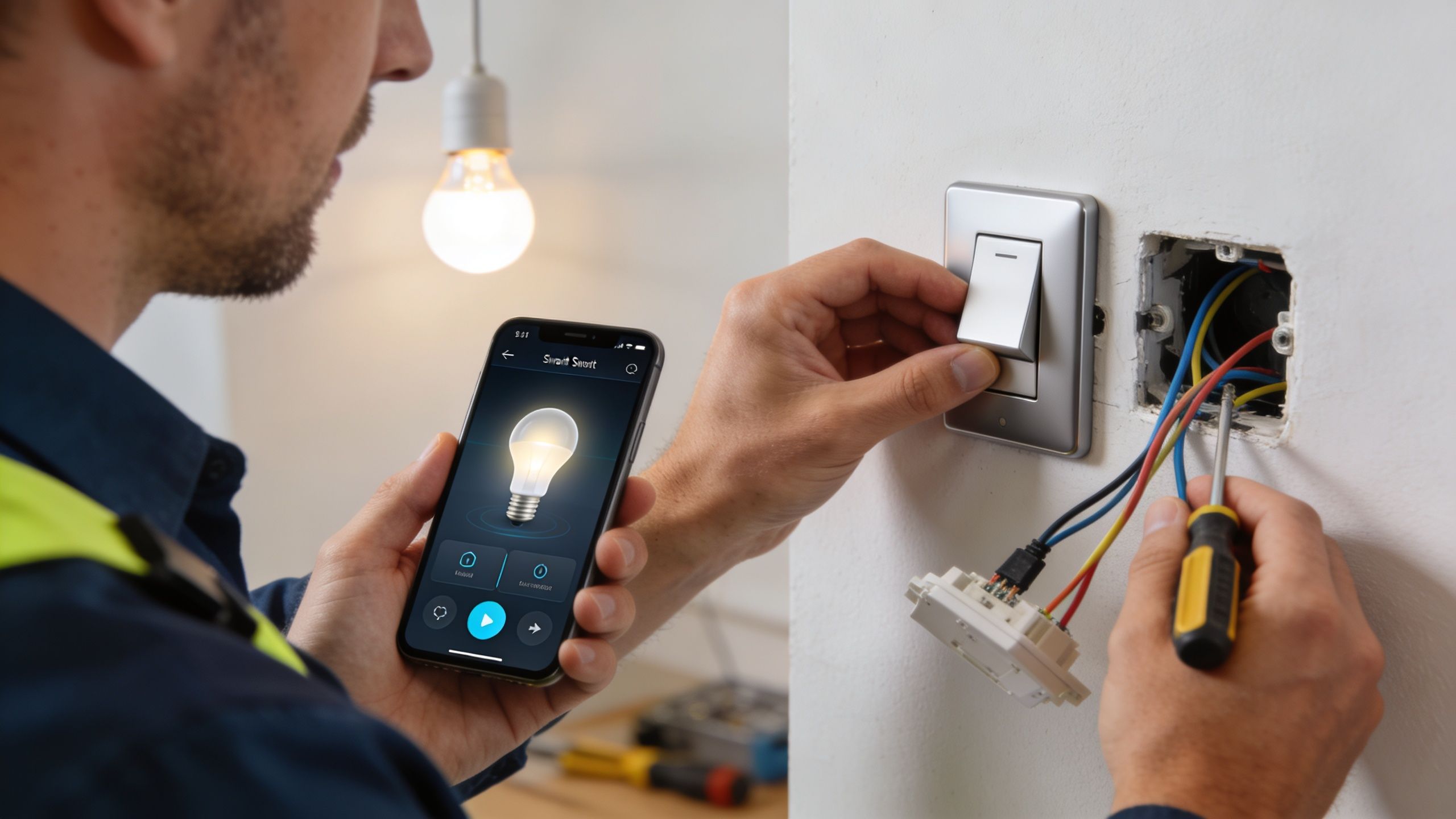
Some parts of smart lighting are suitable for DIY. Some absolutely aren't. The dividing line is simple. If it plugs in or screws in, you may be able to handle it yourself. If it's hard-wired into the home, call a licensed electrician.
DIY-friendly tasks are the low-risk end of the system:
That's a reasonable way to test the waters.
Smart switches, hard-wired dimmers, integrated sensors, circuit changes, and most permanent outdoor lighting control should be installed properly and checked for compliance with AS/NZS 3000. In Queensland, electrical safety isn't optional, and neither is making sure the finished job works as intended with the existing wiring.
That's especially important in older Brisbane homes, where switch wiring can vary and not every product suits every circuit. The wrong dimmer, a poor-quality fitting, or an incompatible driver can cause flicker, dropouts, nuisance faults, or shortened fitting life.
If you're planning a broader LED upgrade at the same time, this guide to LED lighting installation is a useful starting point for understanding fitting replacement and layout choices.
Safety note: If a smart product requires removing a wall switch, opening fixed wiring, or replacing a hard-wired fitting, treat it as electrical work, not a weekend project.
A proper install isn't just about legality. It solves practical problems early.
This walkthrough gives a good visual sense of how smart switch installation and setup come together in practice:
Once the lighting is set up properly, it often becomes the part of the smart home people use most. Not because it's flashy, but because it touches every room and every routine. Lighting can tie together comfort, security, and automation in a way that feels natural.
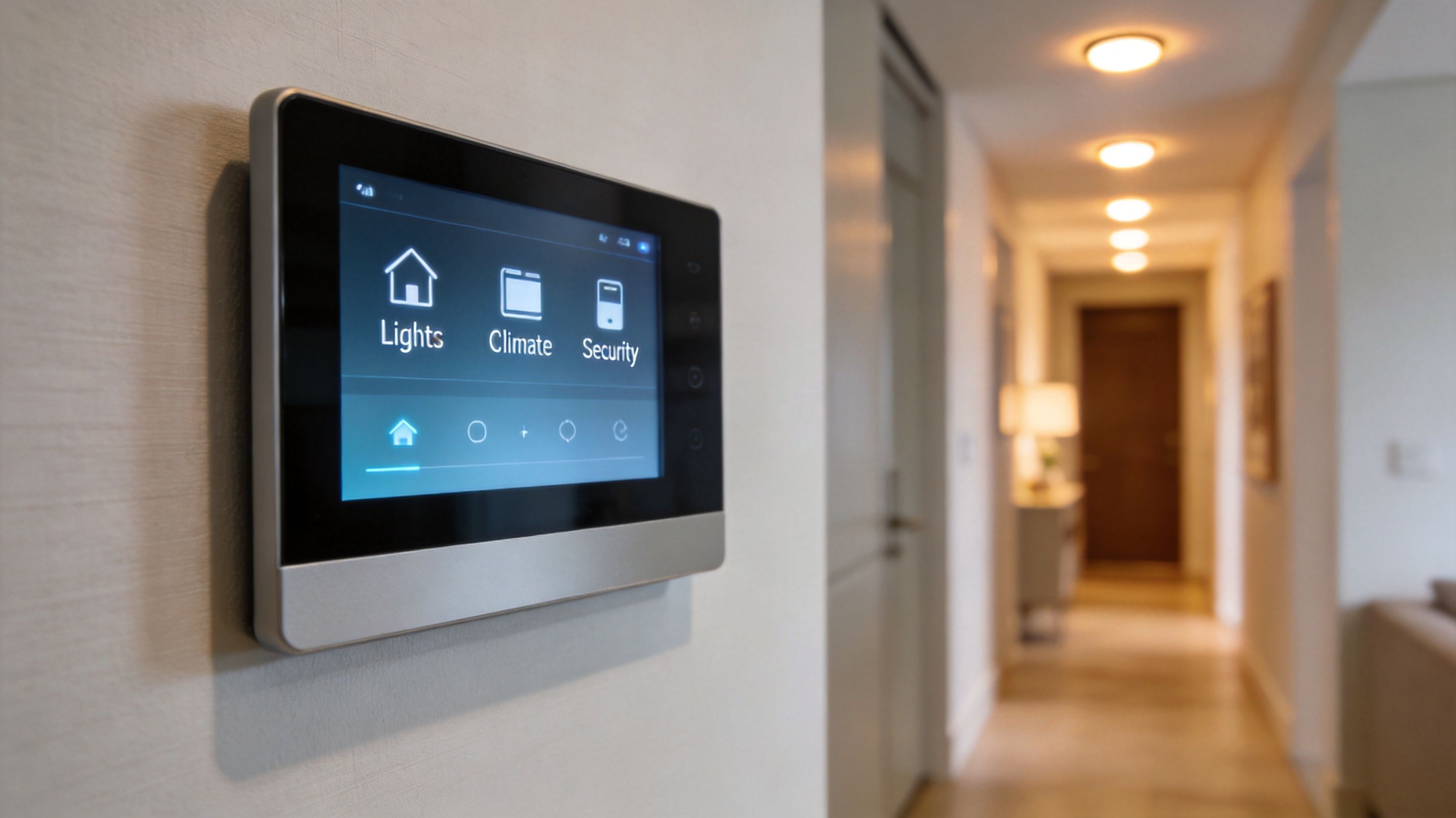
A well-designed smart lighting system can work with:
That means you're not just controlling a bulb. You're shaping how the home responds.
For homeowners who like the idea of connected systems beyond lighting, this building and energy management system guide gives a useful overview of how monitoring and control can extend across a whole property or larger facility.
Not every automation is useful. Some sound clever and end up ignored. The best ones are simple.
A good example is an arrival scene. The front path, entry, and main living area come on to preset levels when you arrive home after dark. Another is night mode, where hallway and bathroom lights stay low rather than switching on at full brightness.
Security-linked lighting is also worth considering. If an external sensor or alarm event occurs, selected outdoor lights can activate to improve visibility around the property.
Many smart homes fail at this point. Too many scenes, too many brands, and too much dependence on one phone app. The result is a system no one else in the house wants to use.
A cleaner approach is better. Use normal switch behaviour where it matters. Keep scene names obvious. Build the system in stages if needed. For Brisbane homeowners wanting help with switch-based control, sensor integration, and compliant installation, DLG Electrical is one local option for planning and installing hard-wired smart lighting components within a broader home electrical setup.
The smartest home isn't the one with the most automations. It's the one that still feels easy to use when guests, kids, or tired adults are operating it.
A smart lighting system doesn't need constant attention, but a little maintenance keeps it dependable. If lights stop responding, check the simple things first. Power at the switch. App updates. Hub status. Internet connection for cloud-based features. Most issues come down to connectivity or a setting change, not a failed fitting.
A few habits make a noticeable difference:
Many Brisbane homeowners don't need a whole-home install on day one. A staged approach often works better. Start with the entry, living area, and outdoor access lighting. Then add bedrooms, garden lighting, or sensors once you've lived with the system and know what you use.
The important part is getting the backbone right early. Product compatibility, safe installation, and sensible zoning matter more than filling the house with gadgets.
If you're weighing up whether smart lighting is worth it, the next step is straightforward. Get advice based on your home, your wiring, and how you use the space. That gives you a realistic view of installation options, likely benefits, and what should be done now versus later.
If you want personalised advice on a smart lighting system for your Brisbane home, DLG Electrical can help with practical planning, compliant installation, and a free quote. You can contact the team through the website to discuss your lighting goals, or call (07) 3185 2243 to arrange a no-obligation assessment for your home.

Master Electrician with over 30 years of experience. Founded DLG Electrical in 2005 after international project work including electrical installations at Stamford Bridge Stadium, London(Home of Chelsea FC).

Local Electricians that can fix all Electric Hot water Systems.
Motion sensor lights are a versatile addition to any home, offering nu
