83 Jean St, Grange QLD 4051
Mon-Fri 07:30 AM - 04:00 PM - Sat - 8:00 - 12 - Sunday Closed
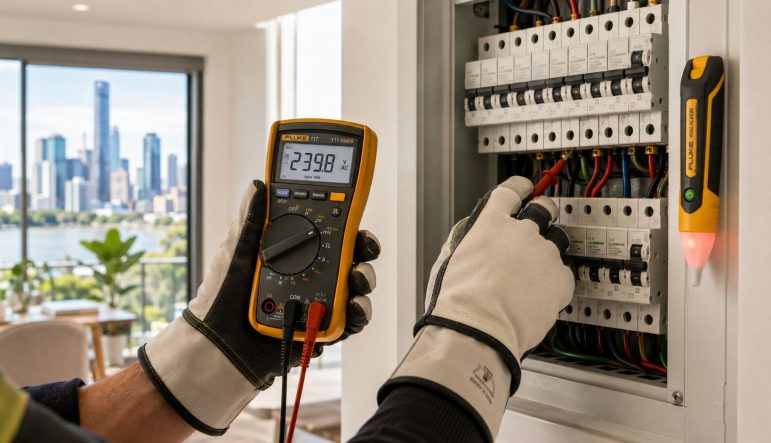
The usual call comes after dinner or during a storm. A safety switch has tripped. Half the house is out. The fridge is still running but the kitchen lights are dead, or the whole place feels unstable because lights are flickering and one powerpoint has stopped working. In older Brisbane homes, especially in suburbs with ageing wiring, those symptoms can point to very different problems.
Electrical fault finding works best when you slow the situation down and treat it like a process of elimination. The wrong move is guessing. The right move is isolating the issue safely, checking what changed, and deciding whether the fault is inside your home, in one appliance, or coming from the network.
That distinction matters because electrical faults aren't just inconvenient. Safe Work Australia records 152 worker fatalities caused by contact with electricity from 2013–14 to 2022–23, and Queensland fire authorities routinely identify electrical faults as a leading cause of accidental house fires according to workplace electrical injury and fatality statistics. At home, individuals don't see the fault itself. They only see the warning signs.
If power drops out in one part of the house, start with one question. What exactly changed? A kettle switched on and the breaker tripped. Rain started and outside lights failed. One bedroom lost power while the rest of the house stayed normal. Those details narrow the field quickly.
The first job is not repair. It's control. Turn off and unplug anything on the affected circuit that was running when the fault appeared, especially portable heaters, kettles, toasters, chargers, outdoor equipment, and anything that may have been exposed to moisture. If there's a smell of burning, visible smoke, cracking sounds, or heat from a switch or outlet, stop there and keep clear.
Practical rule: A small electrical symptom is still an electrical symptom. Flicker, heat, odour, or repeated tripping should never be treated as “one of those things”.
Brisbane conditions make this more important. Storm season brings water ingress, humidity speeds up corrosion, and older homes often hide brittle insulation, tired fittings, and switchboards that have been altered over time. A fault can look minor right up until it isn't.
A calm first response usually looks like this:
Most homeowners can do some basic observation safely. Very few should go further than that.
A lot of bad fault finding starts with the wrong tool or no tool at all. If you're doing basic checks as a homeowner, keep the toolkit simple and focused on safety.
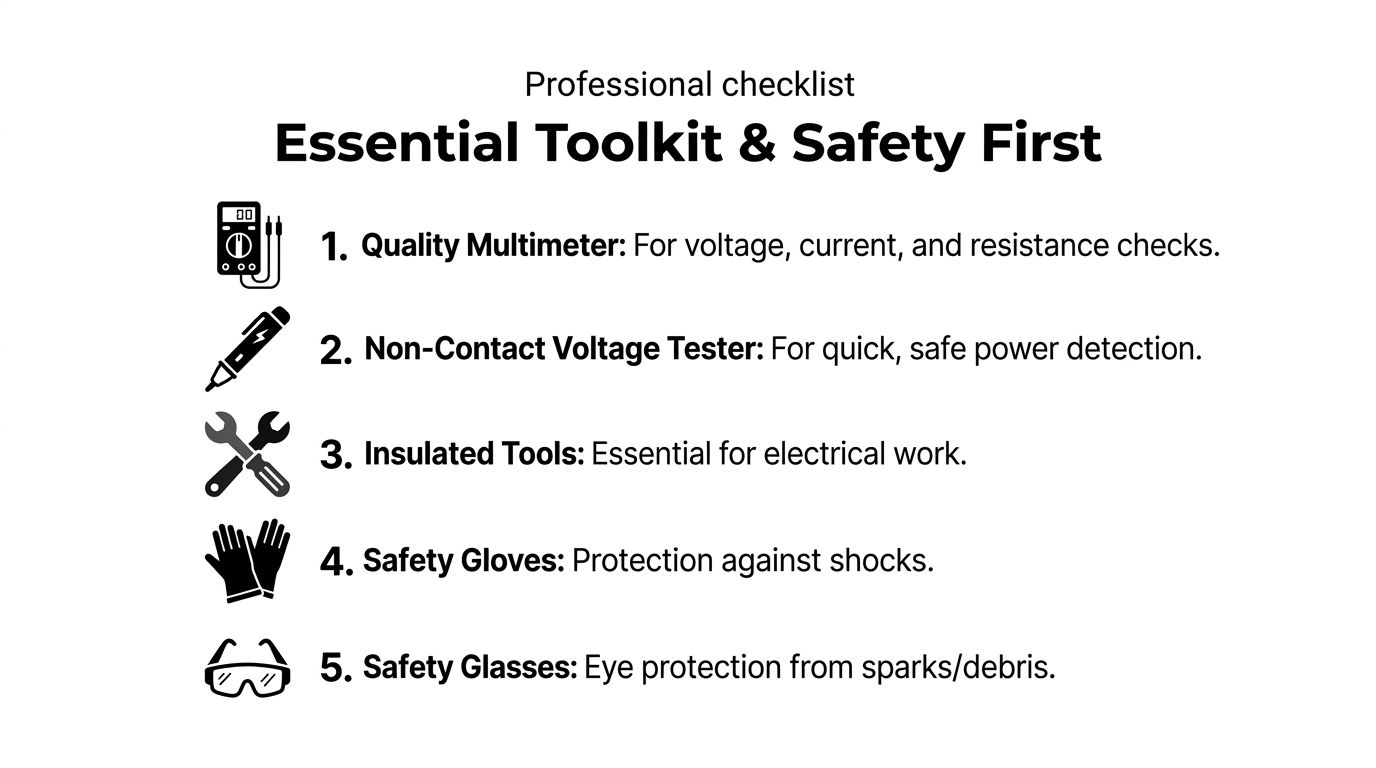
Three tools do most of the useful work in early electrical fault finding:
Add safety glasses and insulated gloves. They're not a substitute for training, but they reduce risk during basic observation.
For people comparing plugs, leads, and appliance connections before they assume a fixed wiring fault, this note on 15 amp plug adapter considerations from Mobile Systems Limited is useful background. Plug mismatch and appliance connection issues can confuse the diagnosis, especially in garages, sheds, and workshop areas.
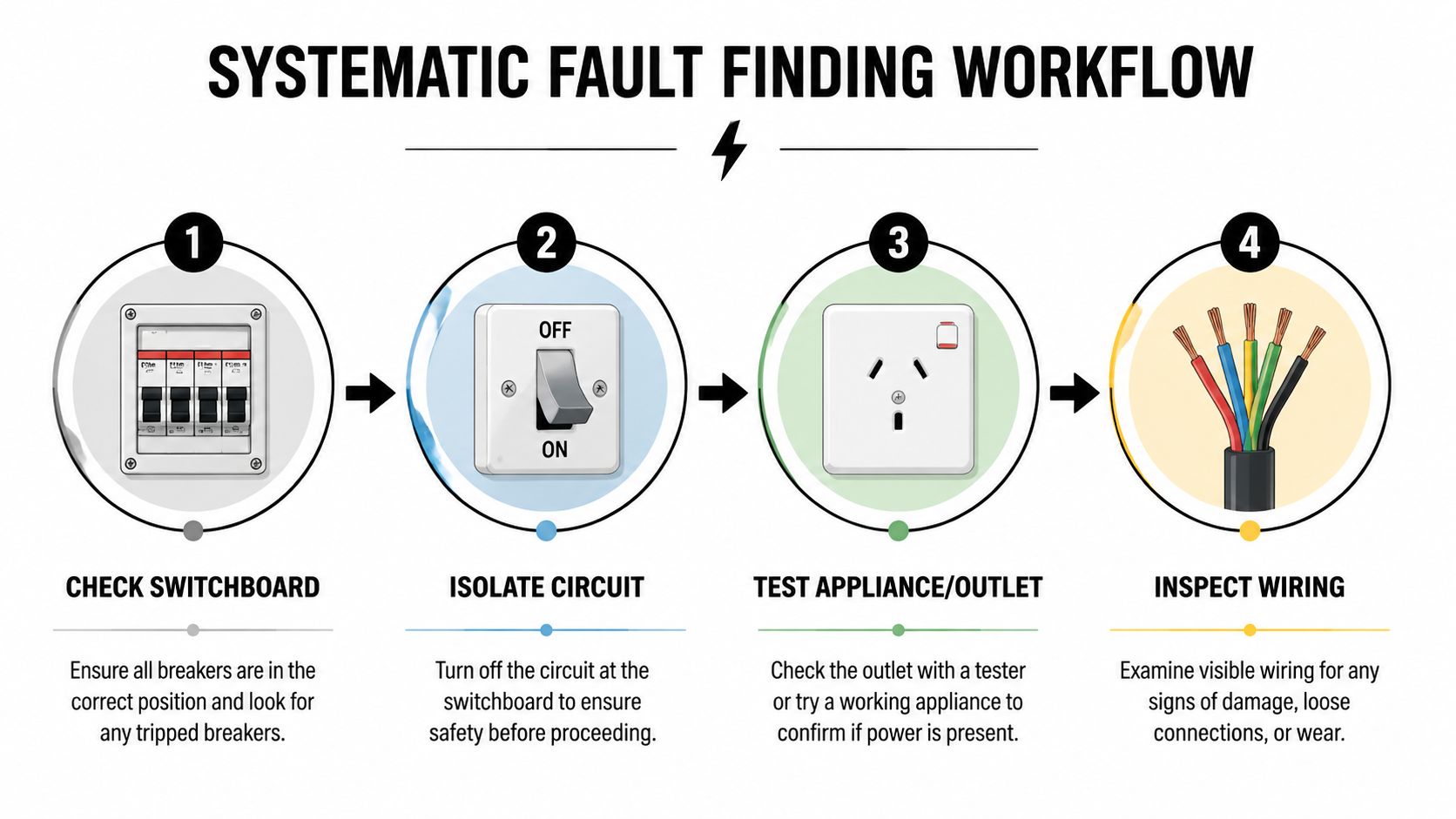
Australian electricians follow a simple workflow because it prevents nasty surprises. The safest sequence is to isolate the circuit, confirm de-energisation, inspect visually, test in a targeted way, then verify the repair. That approach is drawn from guidance on troubleshooting electrical faults with a wire tracer.
For a homeowner, that translates into a strict routine:
Treat your switchboard like a live hazard until you've proven otherwise. Labels help, but labels are often wrong in older houses.
Homeowners won't usually run a formal lock-out tag-out procedure, but the principle still applies. If you've isolated a circuit for checking, don't let someone else wander over and switch it back on. Put a note on the board, tell everyone in the house, and keep control of the area.
If you're not sure whether your protection devices are doing their job, this overview of what a safety switch does gives a practical explanation without getting lost in jargon.
One useful local option for fixed-fault diagnosis is DLG Electrical, which provides fault finding as part of electrical servicing and maintenance in Brisbane. That's relevant when the issue goes beyond appliance checks and starts involving circuits, switchboards, or damaged wiring.
A Brisbane fault call often starts the same way. Half the house is out, the neighbours still have power, and nobody knows whether the problem is inside the property or out in the street. The quickest way to sort that out is to read the switchboard properly before touching anything else.
The first question is simple. Has a protective device tripped, or is the whole property dead with everything still in the ON position?
If a breaker or safety switch has tripped, the fault is usually on your side of the installation. That points to an overloaded circuit, a faulty appliance, moisture ingress, a damaged fitting, or a wiring issue in the home.
If everything at the switchboard looks normal but the property has lost supply, check whether nearby homes are out as well. In Brisbane storm season, that often points to a network problem rather than an internal fault. In that case, it may be faster and cheaper to contact Energex than book a private call-out for a house fault that is not there.
A circuit breaker trips on overcurrent or short circuit. An RCD, also called a safety switch, trips when current leaks to earth. Those are different fault clues, and they matter when you are narrowing the problem down.
Good fault finding follows a set order. Start broad, then narrow the possibilities.
That last point saves a lot of wasted time. If the breaker or RCD still trips with all portable items disconnected, the likely fault is in fixed wiring, an outlet, a switch, a light fitting, an outdoor circuit, or the switchboard itself.
A clear visual explanation helps. This walkthrough sits well alongside the written process:
Brisbane's conditions are significant. Older homes in suburbs with ageing wiring can have loose terminations, mixed alterations from different renovation periods, and circuits that are not labelled well. Add humidity, roof space heat, and summer storm moisture, and intermittent faults become common.
Use this quick check:
| What you find | Likely cause | Who to call |
|---|---|---|
| One breaker or one RCD has tripped | Fault on a house circuit or appliance | Licensed electrician |
| Part of the house is out, part still works | Internal circuit fault | Licensed electrician |
| Whole property is off, switchboard devices still on | Possible supply fault, service fuse issue, or network outage | Check with Energex first |
| Your home and nearby homes are out | Network supply issue | Energex |
| Power returns and fails again during rain or storms | Water ingress on site or unstable network conditions | Start with switchboard checks, then electrician or Energex depending on what tripped |
That distinction matters. I have seen plenty of homeowners pay for a fault call only to find the issue was a local outage already logged with Energex. I have also seen the opposite, where the street supply was fine and the actual problem was a wet outdoor GPO, a failed oven element, or a deteriorated light fitting under an eave.
Once you know the fault is likely internal, trace it in layers.
| Check point | What you're looking for | What it often means |
|---|---|---|
| Switchboard | Tripped breaker or safety switch | Circuit-level problem, appliance fault, or leakage |
| Appliances | Recent use, moisture, heat, damage | Faulty portable device |
| Powerpoints and switches | Heat marks, looseness, discolouration | Connection or outlet issue |
| Lighting circuit | One fitting dead or multiple fittings affected | Lamp, fitting, switch, or circuit problem |
| Outdoor areas | Rain exposure, garden gear, pool or patio circuits | Water ingress or weather-related fault |
Experience makes a difference here. In older Brisbane homes, the failed point you can see is not always where the fault started. A loose connection upstream can leave one outlet dead, trip a breaker under load, or create heat damage that only shows up after repeated use.
Some faults are intermittent. Humidity, corrosion, vermin activity, and movement in aging accessories can produce a fault that appears only when a circuit is loaded or when weather conditions change.
Wire tracers can help locate opens and shorts hidden in walls or conduit, but signal tracing has limits, especially around metallic conduit and mixed cable paths. Electricians usually confirm with multimeter and insulation resistance testing before opening walls or fittings. In industrial settings, more advanced methods go further. If you want an example of how deeper diagnostics work in machinery, these Motor Current Signature Analysis resources from Forge Reliability show how professionals interpret electrical behaviour to identify faults without relying on guesswork.
If your home breaker trips repeatedly and you're trying to narrow down the pattern, this guide on why a circuit breaker keeps tripping is a practical companion to the switchboard checks above.
Homeowners usually don't need a theory lesson. They need to know what a symptom most likely means, and whether there's a safe next step. The examples below are the ones that come up again and again in Brisbane houses and units.
The fridge is still on, but the kettle, toaster, and bench outlets are dead. You check the switchboard and find the kitchen circuit or safety switch has tripped.
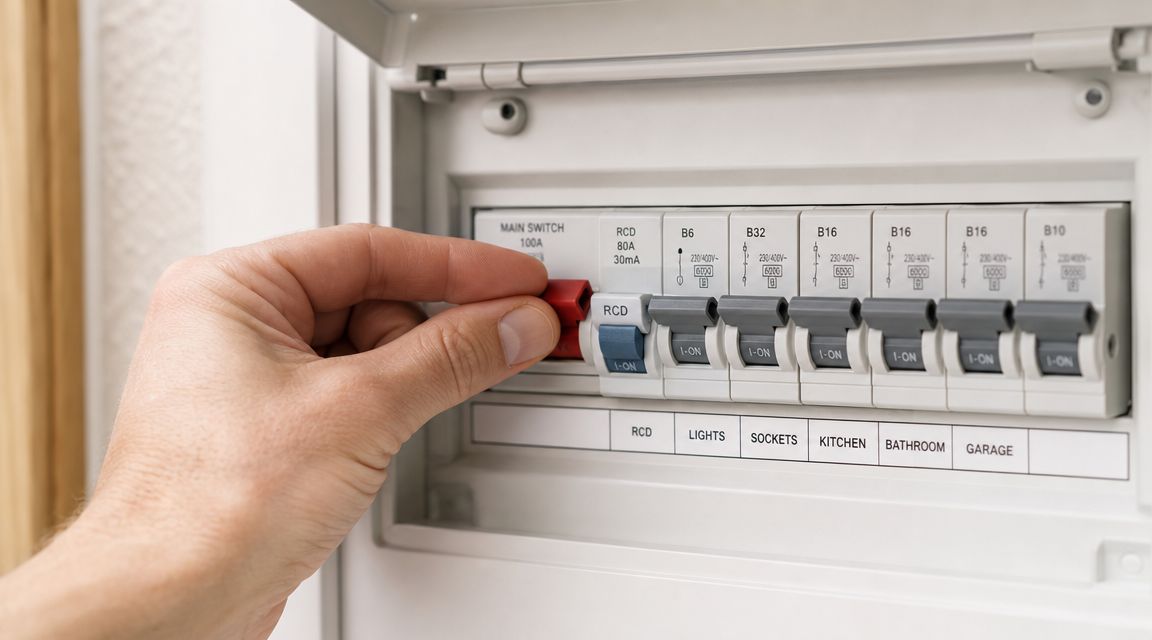
The safest homeowner fix is simple. Unplug everything on that circuit, reset once, then reconnect one item at a time. Kettles, toasters, coffee machines, and older microwaves are common culprits because heat and moisture are hard on them.
If the switch trips again with everything unplugged, stop. That points away from a loose appliance lead and toward fixed wiring, a damaged outlet, or moisture getting into the circuit.
This often gets treated as a dead outlet and ignored for months. Sometimes it is just one failed accessory. Sometimes it's a sign of a loose termination or a break in the circuit feeding downstream points.
Try the obvious safe checks first:
Don't remove the powerpoint cover. In Queensland, that's licensed work.
Start with the lamp itself if it's a replaceable globe. Then check whether the switch feels loose, the fitting shows corrosion, or the problem appears after heavy rain or humidity. Outdoor and bathroom fittings in Brisbane often fail because moisture gets where it shouldn't.
A homeowner can replace a bulb if the fitting is designed for that and access is safe. Beyond that, dead light fittings become a diagnostic job. The fault may sit in the fitting, the switch, the connector, or the circuit.
That usually means one of two things. A portable appliance has an earth leakage problem, or the fixed circuit has one. If unplugging everything doesn't let the RCD hold, don't keep forcing resets.
For a good general checklist of warning signs that justify a fast inspection, this article on signs of electrical problems in a home offers a sensible overview.
Repeated tripping is information. It's not bad luck. The protective device is reacting to something real.
This one needs judgement. If flicker is isolated to one circuit or one part of the house, suspect an internal issue first. If the whole house dims, pulses, or behaves oddly during a broader outage event, the problem may be outside your property. That's where the next distinction matters.
Some faults are diagnostic. Others are warning shots. If you notice burning plastic smells, buzzing, crackling, visible scorching, melted fittings, heat at outlets, or repeated tripping that can't be pinned on one appliance, stop using the affected circuit and call a licensed electrician.
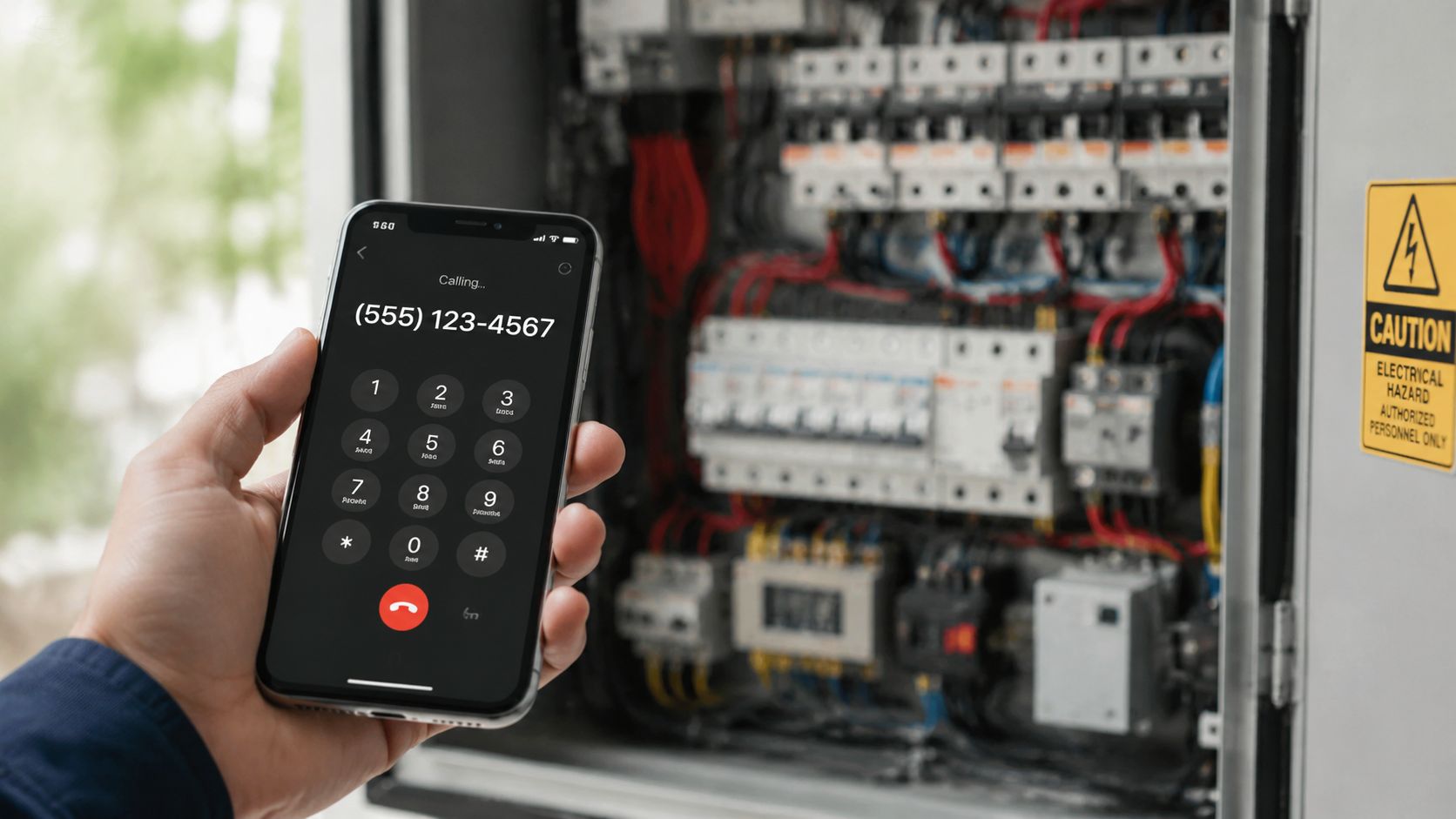
The same applies if you've got an older switchboard, old ceramic fuses, signs of water ingress, or faults that only show up under load. Those aren't good DIY jobs. They need proper testing, safe isolation, and compliance with Queensland electrical requirements.
These symptoms usually point to an internal electrical fault:
In those cases, an electrician is the right call.
Other symptoms suggest the problem may not be yours to fix:
In Queensland, Energex provides separate channels for network issues, and knowing when to contact them instead of an electrician can save time because a significant share of power fault calls are network-related, as explained in this article about distinguishing electrical faults before they escalate. That's especially relevant in older Brisbane suburbs where internal faults and network issues can look similar at first glance.
If the whole property goes odd at once, think bigger than one powerpoint. If one circuit keeps failing on its own, think local.
The mistake homeowners make is assuming every outage needs the same response. It doesn't. The right first call depends on where the fault boundary sits.
Fault finding is cheaper, safer, and less disruptive when it starts before a failure. Brisbane homes have a few local stress points. Humidity, storm-driven rain, heat, and ageing housing stock all make regular electrical checks worthwhile.
Outdoor circuits deserve more attention than they usually get. Check external lights, garden outlets, patio fans, pool equipment areas, and any exposed cabling for cracked fittings, brittle seals, corrosion, or signs that water has been getting in. You're not repairing anything here. You're spotting conditions that turn into faults.
Older suburbs such as Windsor, Grange, and parts of North Brisbane often have homes that have been renovated in stages. That can leave a mix of old and new wiring methods, accessory ages, and switchboard layouts. Those houses benefit from periodic professional review because faults often develop at the joins between old work and newer additions.
A few routines make a real difference:
The homes that age best electrically are the ones where small warnings get checked early.
No. In Queensland, replacing a fixed powerpoint is licensed electrical work. It involves fixed wiring, testing, and compliance. A job that looks simple from the front can still have damaged terminals, no earth continuity, or older wiring behind the wall.
Homeowners can handle very limited tasks such as changing a lamp where the fitting is designed for user replacement and access is safe. Once the job involves fixed electrical accessories, switchboard components, or wiring, it needs a licensed electrician.
A sensible routine for most homes is every 3 to 6 months using the test button on each device. The switch should trip straight away, then reset normally once you restore it.
If it will not reset, feels loose, or trips again without a clear reason, stop testing and book an inspection. That usually points to either a faulty device or a fault on the circuit.
They protect against different problems.
A circuit breaker is there to protect the cable and circuit from overload and short circuit current. A safety switch, also called an RCD, is there to cut power quickly if electricity is leaking to earth, which is the fault condition that can cause electric shock.
In practical terms, if a kettle, heater, or too many appliances on one circuit cause too much current draw, the breaker may trip. If water gets into an outdoor fitting or an appliance develops an earth leakage fault, the safety switch is more likely to trip.
In Brisbane, rain-related tripping is common. Storm season, wind-driven rain, and year-round humidity regularly expose weak points in outdoor lights, patio fans, shed circuits, extension leads, and older socket outlets.
One trip after heavy weather might be enough to tell you where to look. Repeated tripping usually means moisture has entered a fitting or connection and the fault needs proper testing. Keep the affected circuit off and avoid plugging that equipment back in until it has been checked.
One reset after unplugging portable appliances is a reasonable basic check. More than that is guesswork.
If it trips again straight away, leave it off. Repeated resetting can overheat a bad connection, worsen a fault, and make diagnosis harder when the electrician arrives.
This is the question that saves Brisbane homeowners the most time.
Start by checking whether nearby homes are also out, whether streetlights in your area are off, or whether only part of your home has lost power. If your neighbours are affected as well, or the whole property is dead but your switchboard has not clearly tripped, it may be a network supply issue and Energex is the right first call. If one circuit is out, one safety switch will not reset, or the problem started after using a particular appliance, the fault is usually inside the property and an electrician should handle it.
In older Brisbane homes, especially houses with staged renovations or ageing switchboards, internal faults are often isolated to a single circuit rather than the whole home. That is a useful clue.
If you've narrowed the problem down to an internal fault, need help telling the difference between a home issue and a network issue, or want a professional check on an older Brisbane switchboard, DLG Electrical can inspect, diagnose, and repair residential electrical faults safely and in line with Queensland requirements.

Master Electrician with over 30 years of experience. Founded DLG Electrical in 2005 after international project work including electrical installations at Stamford Bridge Stadium, London(Home of Chelsea FC).

Local Electricians that can fix all Electric Hot water Systems.
Motion sensor lights are a versatile addition to any home, offering nu
