83 Jean St, Grange QLD 4051
Mon-Fri 07:30 AM - 04:00 PM - Sat - 8:00 - 12 - Sunday Closed
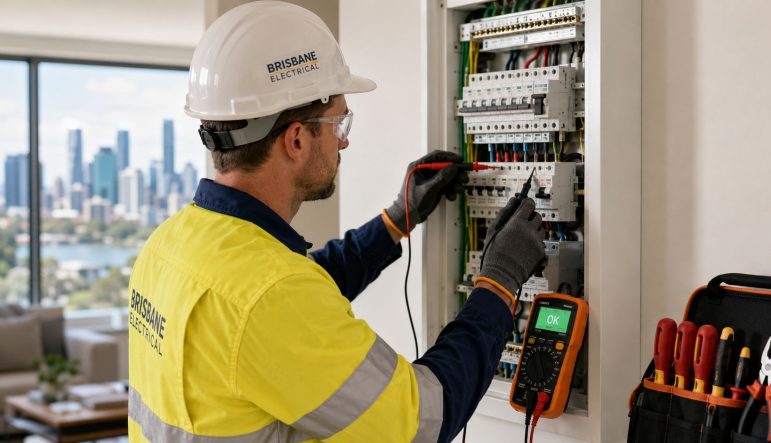
If you're dealing with flickering lights, a power point that feels warm, a safety switch that keeps tripping, or a renovation that's about to open the walls, you're not just choosing a tradie. You're deciding who gets to work on one of the few systems in your home that can seriously injure people or damage property if it's handled badly.
That's why the search for an electrician in Brisbane QLD usually starts with a simple job and quickly turns into bigger questions. Is the wiring safe? Is the switchboard up to standard? Will this job meet Queensland requirements if the property is rented, sold, or renovated later? Cheap electrical work often stops being cheap the moment someone has to come back, trace faults, replace non-compliant parts, or fix paperwork that should have been right the first time.
Brisbane homeowners usually call an electrician for a practical reason. The oven circuit won't hold. The lights dim when the air con starts. The smoke alarms need attention before a tenancy change. A renovation needs new lighting, extra power, and a switchboard that can safely support it all.
Those jobs sit inside a much bigger trade system than is often recognised. Jobs and Skills Australia's electrician occupation profile lists 197,300 electricians across Australia based on the 2021 Census, and the same occupation profile is often used to understand local labour demand. One Brisbane job board snapshot referenced in that market view showed 70 electrician jobs listed for Brisbane QLD, which tells you something important. Electrical work in Brisbane isn't a side service. It's part of a large, formal trade with licensing, training, and clear technical standards.
That scale matters for property owners because it means a proper electrician should approach your job systematically. Fault diagnosis, safe isolation, testing, compliance, and documentation aren't extras. They're the job.
A reliable Brisbane electrician should understand the housing stock in suburbs like Grange and Windsor, where older homes often sit alongside renovated properties and newer builds. The problems are different. An older Queenslander may need investigation into aged wiring or switchboard limitations. A renovated home might need cleaner circuit planning, better load separation, and compliant final verification after new work goes in.
Good electrical work doesn't just restore power. It removes doubt about whether the installation is safe to keep using.
If you run a trade business yourself and want to understand how strong local operators build visibility online, this guide to marketing your electrical business gives useful context on how customers find and compare electricians before they ever pick up the phone.
A lot of electrical faults start small. That's why people ignore them.
A hallway light flickers for a few weeks, then stops. One double power point works only if the plug sits at an angle. The safety switch trips once during heavy appliance use, then seems fine again. None of those signs should be brushed off, because electrical problems often show up intermittently before they become obvious.
In Brisbane homes, the first warning sign is often inconsistency. Power drops on one circuit. A breaker trips when the kettle and microwave run together. Outdoor lighting fails after wet weather. These aren't just annoyances. They usually point to a load issue, a deteriorated fitting, a damaged connection, moisture entry, or a fault that needs proper testing.
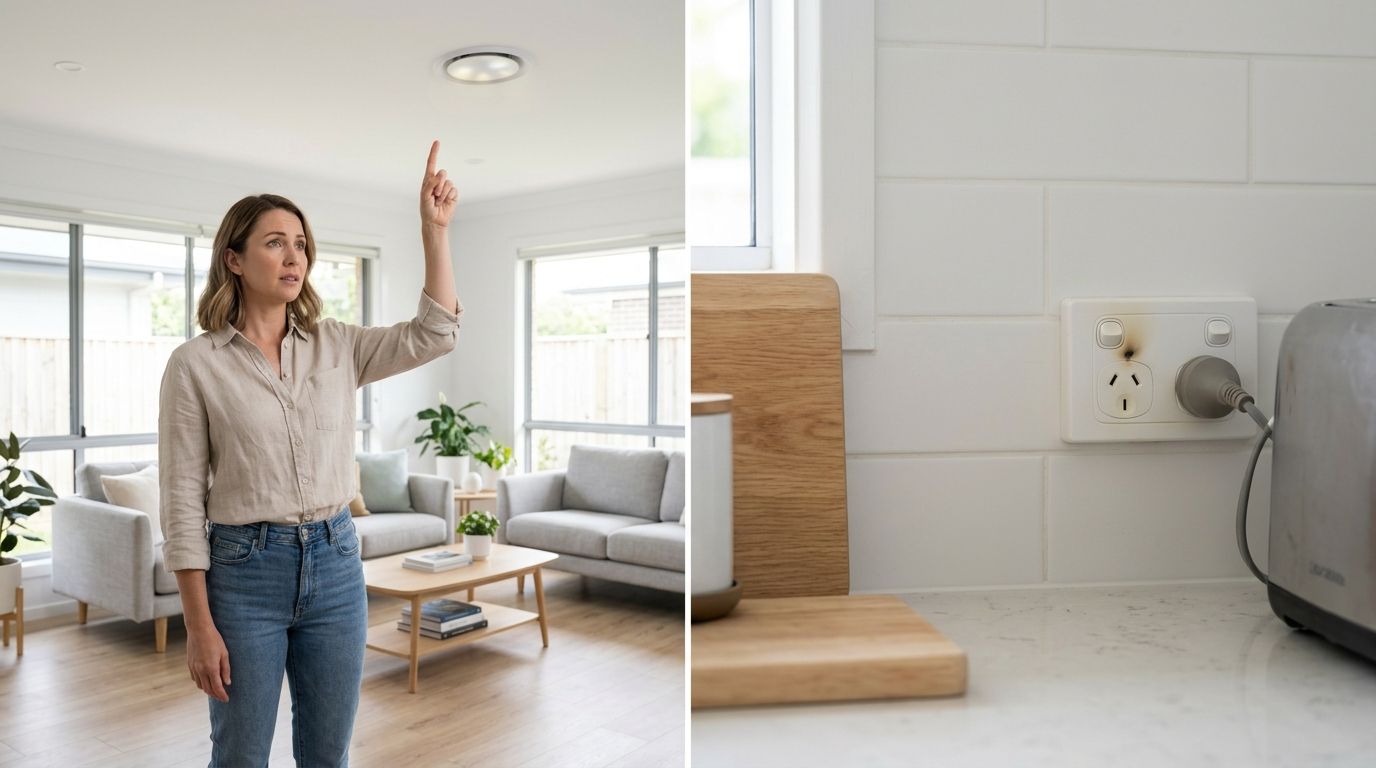
Older switchboards create another common problem. Homes with outdated fuse arrangements or limited circuit protection often can't support how people live now. Add air conditioning, induction cooking, office equipment, EV charging plans, or modern entertainment loads, and weaknesses in the installation show up fast.
Common signs worth taking seriously include:
One of the biggest compliance gaps in Brisbane sits in older homes. The Queensland Electrical Safety Office states that only a licensed electrician can install a safety switch, and safety switches have been compulsory on all power point and lighting circuits in new Queensland homes since 2000. That matters because many older properties don't match newer standards and may need assessment before renovation, lease renewal, or sale. The relevant guidance is available from the Queensland Electrical Safety Office FAQ.
If a fault is recurring, replacing random fittings usually wastes money. The right starting point is testing, isolation, and fault tracing.
When symptoms don't clearly point to one cause, targeted diagnosis is the safest path. A practical example is electrical fault finding for Brisbane properties, where the goal is to identify the fault source before any repair scope is set.
Queensland electrical compliance matters most when something is being altered, upgraded, rented, or inspected after a problem. Homeowners often think of compliance as paperwork. In practice, it affects how the installation is designed, protected, tested, and signed off.
The foundation is AS/NZS 3000, commonly called the Wiring Rules. Standards Australia describes it as the core rule set electricians use for safe and compliant installation work, covering areas such as design, construction, and verification. The official overview from Standards Australia's Wiring Rules page explains why details like circuit design, earthing, and protective device selection matter. Those decisions influence how faults clear, how touch-voltage risk is controlled, and how safe the installation remains over time.
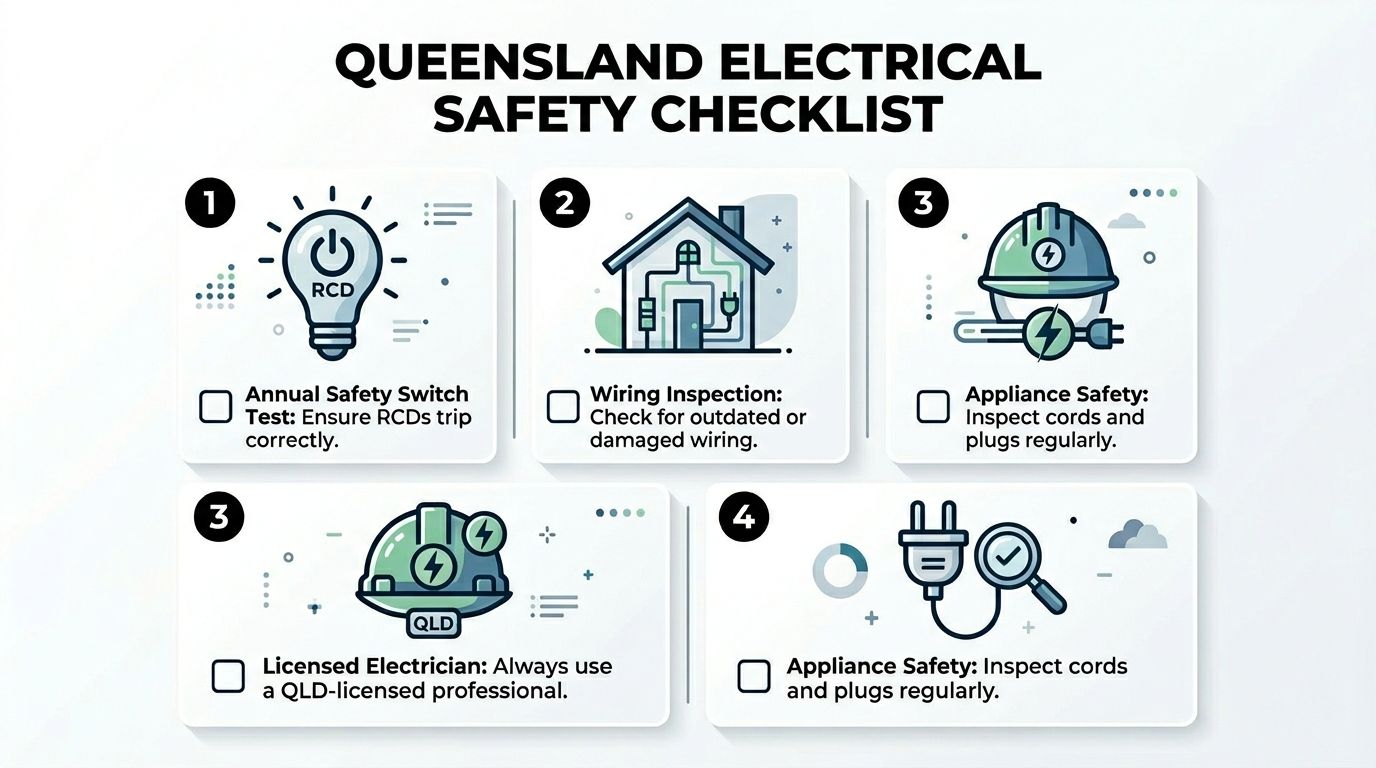
For most homes, the practical compliance questions are straightforward:
Is the switchboard suitable for the current installation?
If circuits have been added over time, the protection arrangement may no longer be appropriate.
Are safety devices fitted where they should be?
This isn't just about having a switchboard that looks modern. It's about whether the protective devices match the circuits and application.
Has altered work been properly verified?
New lighting, added power, kitchen upgrades, shed supplies, and appliance circuits all need compliant installation and testing.
Are smoke alarms aligned with Queensland requirements?
This is especially important for landlords, sellers, renovators, and owner-occupiers planning ahead.
A lot of stress can be avoided by checking smoke alarm obligations early rather than at the end of a sale or tenancy process. This summary of Queensland smoke alarm laws is useful when you need to understand where your property sits.
Queensland has also tightened operational safety expectations around electrical work. WorkSafe Queensland notes that from 1 January 2025 PCBUs and workers must de-energise relevant electrical installations before work proceeds. That update is outlined in WorkSafe Queensland's notice on new electrical safety laws.
For customers, the practical effect is simple. A careful electrician should plan isolation, testing, and temporary arrangements properly rather than taking shortcuts on energised equipment.
Compliance isn't separate from workmanship. A neat-looking job can still be wrong if the protection, testing, or verification isn't right.
Electrical work should solve a defined problem and leave the installation safer, easier to use, and fit for the property. In Brisbane homes and businesses, that usually means more than replacing a failed part. It means checking whether the circuit, protection, and connection method are still right for the way the site is used.
Safety work protects everything connected to it. If the switchboard is outdated, overloaded, or poorly arranged, a switchboard upgrade can be the job that prevents repeated faults, nuisance tripping, and unsafe additions later. The same applies to safety switch installation and smoke alarm compliance work. The work needs to be installed, tested, and set up to suit the property, not just ticked off as complete.
That matters even more for rental properties, sales preparation, and renovations. A landlord or owner may call for one issue, then find the larger risk sits at the board or in older circuits that no longer suit current appliances and usage.
Good repair work starts with fault finding.
A loose neutral, heat-damaged connection, failed fitting, or overloaded circuit can all produce similar symptoms from the customer's side. Lights flicker. Power points stop working. A safety switch trips without an obvious pattern. Replacing parts on guesswork wastes time and can leave the original defect in place.
Typical maintenance and repair work includes:
A proper repair should leave the circuit safe, stable, and tested under normal use. The goal is not to get it running for today. The goal is to stop the same problem returning next week.
New electrical work needs to match the building, the load, and the way the space will be used over time. Extra power points in a home office, new lighting in a renovation, outdoor power, security systems, smoke alarm upgrades, and custom electrical work all need planning before the first cable is run.
Commercial work adds another layer. Access, shutdown timing, tenant coordination, and keeping part of the site operating can matter as much as the installation itself. A neat finish matters, but so do circuit capacity, protection, testing, and clear handover.
DLG Electrical is a family-owned Brisbane contractor handling residential and commercial installations, maintenance, repairs, switchboard upgrades, smoke detector compliance work, security system installations, and custom electrical projects. Their visibility online reflects the same practical reality many trades businesses deal with now, including 2026 tradie SEO strategies, but electrical work is still judged on the result on site. Is it safe, compliant, and fit for purpose?
| Approach | What happens in practice |
|---|---|
| Testing before replacing | Identifies the fault and avoids swapping parts unnecessarily |
| Itemised scope | Shows what labour, materials, testing, and compliance steps are included |
| Upgrading protection when needed | Reduces the risk of adding new work to an unsafe or unsuitable board |
| Patching around existing defects | Often leads to repeat faults, extra labour, and more disruption later |
| Choosing on headline price alone | Can leave out fault diagnosis, documentation, or required safety work |
The difference between a quick job and a sound job usually shows up later. Circuits hold under load. Protection operates properly. Labels make sense. The customer is not paying twice to fix the same issue.
Hiring an electrician gets easier when you stop asking only, “What's the price?” and start asking, “What exactly am I getting?”
That shift matters because two quotes can look similar at first glance while covering very different scopes. One may include proper testing, documentation, and rectification of related defects. Another may only cover the visible task and leave the underlying issue in place.
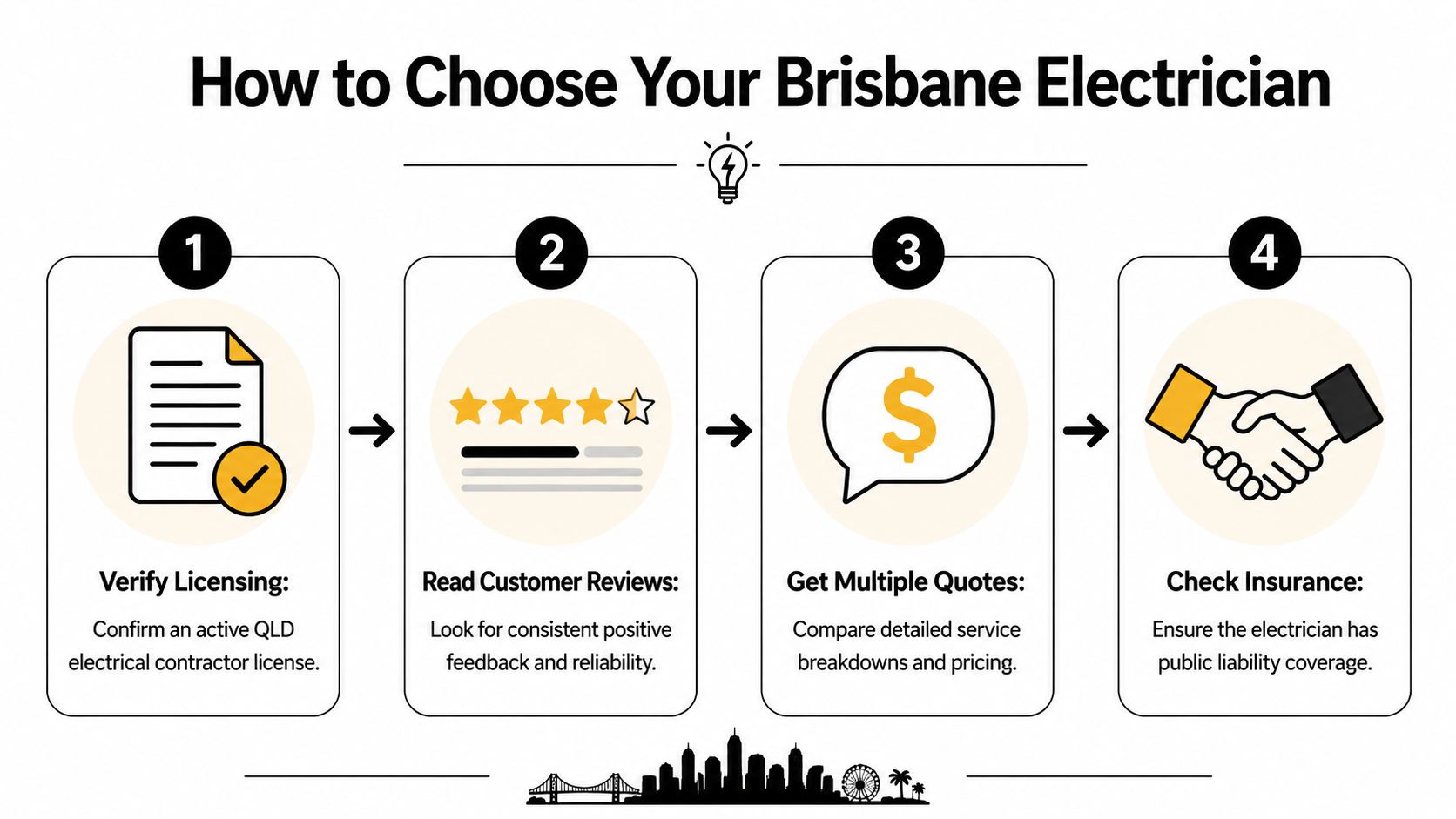
Use this shortlist when comparing any electrician in Brisbane QLD:
Local guidance on hiring an electrician in Brisbane also points customers toward value-based questions, not just the cheapest line item. In particular, this Brisbane electrician guide recommends asking about labour warranties, call-out fee structures, and whether the quote includes the necessary compliance documentation, because those items are central to a properly executed Queensland job.
The way an electrician answers questions tells you a lot.
If you ask why a switchboard needs upgrading, you should get a clear explanation about protection, circuit arrangement, or compliance concerns. If the answer is vague, rushed, or framed only around urgency without detail, keep looking.
This short video is also useful if you want a quick visual on what to check during the hiring process.
A trustworthy electrician should be able to explain the risk, the remedy, and the limits of the quote in plain English.
If you work in the trades yourself, it's also worth seeing how strong contractors present their expertise online. This breakdown of 2026 tradie SEO strategies gives a useful view of how credible service businesses make themselves easier to vet before first contact.
Electrical pricing depends on the job type, the condition of the existing installation, access, materials, and whether the work happens during standard hours or as an urgent call-out. The hardest jobs to price remotely are fault-finding and upgrade work in older homes, because hidden issues often affect labour time and the final scope.
Still, homeowners should have a reasonable starting point before requesting quotes. A Brisbane pricing guide reports typical licensed electrician rates of $90 to $150 per hour, with call-out fees of $80 to $150 depending on location. The same guide lists common benchmark prices for residential work. You can review those figures in this Brisbane electrician cost guide.
| Service | Estimated Price Range (AUD) |
|---|---|
| Power point installation | $150 to $300 |
| Ceiling fan installation | $200 to $450 |
| Switchboard upgrades | $1,000 to $2,500 or more |
| Smoke alarm installation | $120 to $250 per alarm |
| Standard electrician hourly rate | $90 to $150 per hour |
| Call-out fee | $80 to $150 |
Don't use these ranges to chase the lowest quote. Use them to ask better questions.
A switchboard upgrade at the lower end may reflect a straightforward installation with good access and a simple existing setup. A higher figure may reflect a more complex board, added rectification work, or broader compliance issues discovered during inspection. The same logic applies to smoke alarms, fan installations, and extra power points.
When you're comparing pricing, this practical article on how much electricians charge is a helpful companion because it explains how written quotes and scope detail affect the final figure.
The best quote is usually the one that makes the job boundaries obvious. If labour, materials, call-out terms, and compliance inclusions are clear, you're much less likely to get stung by surprises.
The call usually comes after something has already gone wrong. A safety switch keeps tripping before dinner. Settlement is next week and the buyer wants electrical defects addressed. A tenant reports a dead circuit and you need a licensed electrician who can attend, diagnose the fault properly, and complete any required work to Queensland standards.
That is why choosing an electrician is not just a booking decision. It affects safety, documentation, and whether the work holds up under inspection.
Do you handle homes in North Brisbane suburbs like Grange and Windsor?
Yes. Homes in these suburbs often have older wiring, ageing switchboards, and additions done across different decades. Those jobs need careful testing before any repair or upgrade is priced or started.
Can you work on both residential and commercial jobs?
Yes. The scope changes, but the standard does not. Commercial work usually involves access planning, downtime control, and site-specific documentation. Residential work often centres on safety, fault finding, appliance loads, and compliance in older homes.
Do I need a licensed electrician for safety switch installation?
Yes. As noted earlier, safety switch installation must be carried out by a licensed electrician. The same applies to switchboard work, new circuits, most hard-wired appliances, and any repair that involves fixed wiring.
Can I get a quote before committing?
Yes. For straightforward work, a quote can often start from a clear description and a few photos. For faults, switchboard concerns, or larger upgrade work, a site visit is usually the right first step because the safe solution depends on what testing shows on site.
Good quoting starts with good information. If you want a quote that reflects the actual job, send the details that change labour, materials, access, and compliance requirements:
If you are not sure what is wrong, say that plainly. A licensed electrician should test first and quote on facts, not assumptions.
At DLG Electrical, the goal is to leave the property safe, compliant, and reliable in day-to-day use. That matters more than a quick patch that leaves the same fault waiting to return.
If you need advice or a quote for electrical work in Brisbane, contact DLG Electrical. They handle residential and commercial jobs including fault finding, repairs, switchboard upgrades, smoke alarm compliance, maintenance, and new installations. A clear scope, a proper assessment, and licensed workmanship are the right starting point when home safety and Queensland compliance are on the line.

Master Electrician with over 30 years of experience. Founded DLG Electrical in 2005 after international project work including electrical installations at Stamford Bridge Stadium, London(Home of Chelsea FC).

Local Electricians that can fix all Electric Hot water Systems.
Motion sensor lights are a versatile addition to any home, offering nu
