83 Jean St, Grange QLD 4051
Mon-Fri 07:30 AM - 04:00 PM - Sat - 8:00 - 12 - Sunday Closed
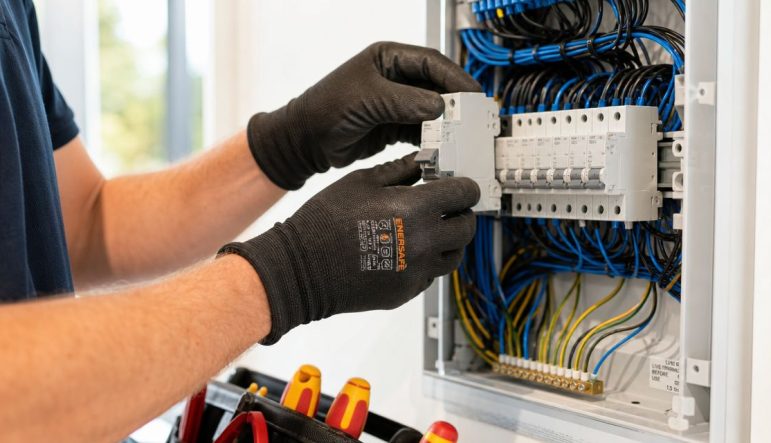
If your lights flicker when the air con starts, or the power trips every time you use a new appliance, it's easy to assume you just need a quick breaker swap. Most homeowners in Brisbane start there. The problem is that a circuit breaker installation often isn't just about one faulty device.
A breaker sits in the switchboard and protects the wiring on that circuit. When it trips, it's doing its job. The question is why it tripped, whether the switchboard is still suitable, and whether the circuit arrangement still matches how your home uses power today.
That matters even more in older Brisbane homes, where a “simple replacement” can uncover bigger issues such as ageing switchboard components, missing safety switch protection, or not enough capacity for modern loads. If you understand the process properly, you're in a much better position to get the work done safely, legally, and without paying twice for a rushed fix.
The usual trigger is practical. The air conditioner is running, dinner is on, and the breaker trips again. Or a new appliance goes in and a circuit that used to cope suddenly starts dropping out. At that point, many homeowners assume the fix is a quick breaker replacement.
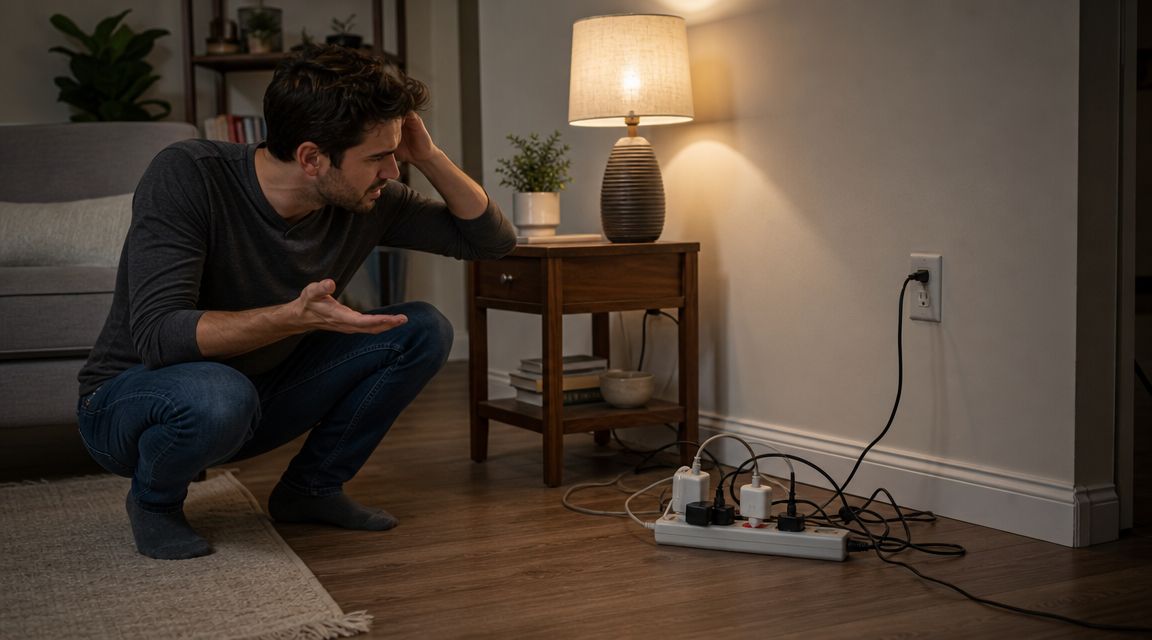
Sometimes the breaker has failed. Often, it has identified a bigger problem.
A circuit breaker is a protective device that shuts power off when a circuit is overloaded, shorted, or faulted. It protects the cable behind the wall and helps limit fire and shock risk. If you want a quick refresher before getting into installation, our guide on what a circuit breaker does explains the basics in plain English.
In Brisbane homes, breaker installation is tied to the condition of the whole switchboard. Before replacing anything, a licensed electrician should check what caused the trip, whether the existing circuit is sized correctly, whether RCD protection is in place where required, and whether the board still has the capacity for how the home is used now.
That matters most in older homes and partly renovated homes. I regularly see switchboards with a mix of old breakers, newer additions, crowded enclosures, and circuits that made sense years ago but no longer suit air conditioning, induction cooking, EV charging, or pool equipment. In that situation, changing one breaker without assessing the board can leave the original fault in place and miss compliance issues at the same time.
Queensland electrical work is licensed work for a reason. A professional installation is not just fitting a new device of the same rating. It includes verifying the fault path, confirming the breaker type and rating match the circuit, checking the switchboard for heat damage or deterioration, and making sure the installation remains safe and fit for purpose under current requirements.
The practical benefit is simple. You avoid paying for a fast swap today, then another call-out when the actual cause shows up next month.
Some warning signs are obvious. Others creep up slowly and get mistaken for “just one of those old house things”. If your switchboard has started behaving differently, it's worth paying attention before it turns into a fault, outage, or safety issue.
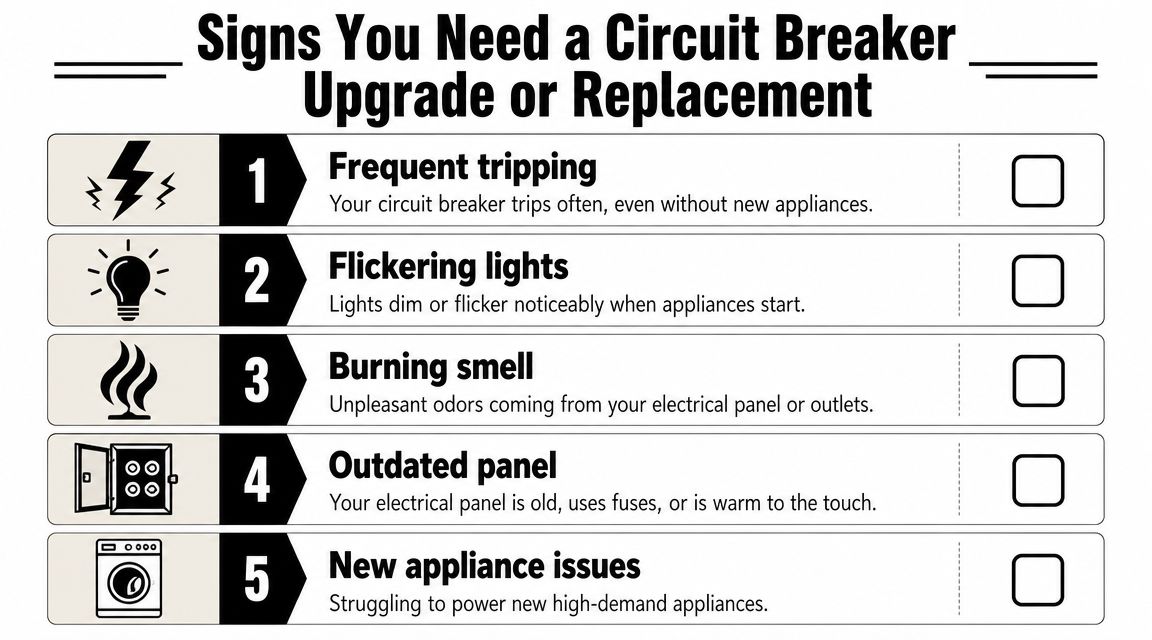
When I inspect homes in suburbs with a mix of old and renovated electrical work, the same patterns show up again and again. The homeowner calls about one tripping circuit, but the switchboard tells the bigger story.
Watch for these signs:
One of the traps with breaker issues is that the visible symptom can look small. A breaker may reset. Power may come back. That doesn't mean the underlying problem has gone away.
If a breaker trips once after an obvious overload, that's one thing. If it becomes part of your weekly routine, treat it as a fault until proven otherwise.
A short video can also help you recognise what a problematic switchboard can look like in practice.
Not every breaker upgrade starts with a fault. Quite a few start with a renovation, a new appliance, or a change in how the household uses electricity.
Common examples include:
A lot of generic online guides focus on breaker size alone. In Australian homes, the more useful question is whether the switchboard, consumer mains, and available capacity can safely support the added load. That's why modern appliance upgrades often lead to a broader assessment rather than a like-for-like breaker replacement.
Many homeowners face unexpected challenges. In Queensland, a breaker change can become a compliance issue if the work involves a new circuit or if the existing board doesn't provide the level of protection expected today.
A key gap in many online guides is the Australian compliance context for RCD and RCBO upgrades in older homes. In Queensland, the Electrical Safety Office mandates safety switches for new circuits, and Queensland Government fire and safety material highlights that older switchboards may not meet current protection standards. That means a “simple breaker install” can legally require a broader switchboard safety upgrade to be compliant, as discussed in this article on RCD and RCBO upgrade considerations in older homes.
For homeowners in older parts of Brisbane, that's often the turning point. The job isn't just replacing what failed. It's making sure the board is still safe for the home you have now.
A homeowner resets a tripping breaker a few times, gets sick of losing power to the oven or air conditioner, buys a replacement online, and assumes it is a quick swap. That is where people get into trouble. In Queensland, circuit breaker work is electrical work on a switchboard, and that must be done by a licensed electrician.
The legal point is simple. A breaker change is not treated as general home maintenance. It sits inside the same safety and compliance framework that applies to other prescribed electrical work, including the obligation to leave the installation safe and suitable for service. That matters because the person changing the device is also responsible for checking whether the fault, the board, and the protection arrangement are still acceptable under current requirements.
I see the same misunderstanding regularly in older Brisbane homes. The failed breaker often is not the whole job. The underlying issue may be heat damage at the terminals, a neutral problem, an overloaded circuit, a board that cannot accept the replacement device properly, or missing safety switch protection on the circuit involved.
At the switchboard, small mistakes have serious consequences. A breaker has to match the board, the cable, the fault level, and the purpose of the circuit. It also has to be installed and tested correctly.
Common problems include:
That is why licensed electricians do not treat breaker replacement as a parts counter exercise. We assess the condition of the board and the circuit before deciding what should be installed.
Shock and fire risk are the obvious dangers, but the fallout does not stop there. If unlicensed work contributes to an incident, the homeowner can be left explaining who did the work, whether it was lawful, and whether the installation would pass scrutiny after the fact.
For a broader view of the legal duties around electrical risk and Queensland safety compliance, this resource gives useful context.
A circuit breaker installation is not a simple swap. In many homes, it is the point where hidden defects, outdated protection, and capacity problems finally show up. The safe approach is to have a licensed electrician handle the work, test it properly, and confirm the switchboard is still fit for the loads your home is carrying now.
When a licensed electrician handles circuit breaker installation properly, the visible part of the job is only half of it. The homeowner sees a breaker changed. The actual work is the checking, matching, testing, and verification around that change.
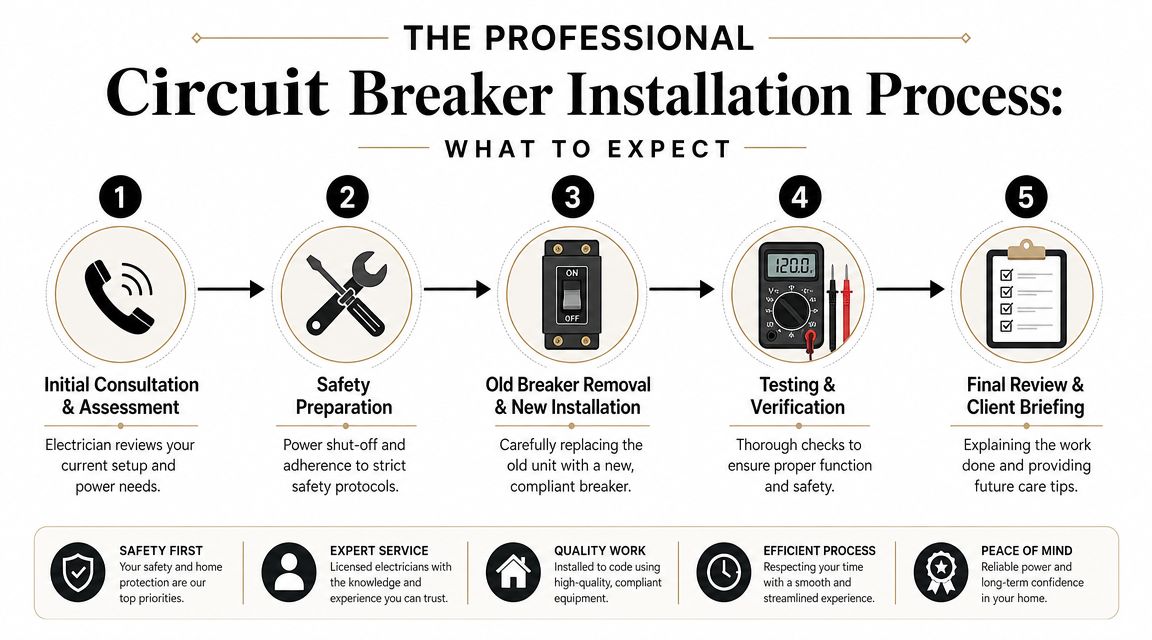
The first step is assessing the switchboard and the reason for the call. If a breaker has failed, that matters. If a new appliance has exposed a capacity issue, that matters more. The electrician checks what the circuit serves, whether the board has the right type of protection, and whether the existing arrangement is suitable for the property.
That early assessment often decides whether the work is a straightforward replacement, a circuit addition, or part of a bigger switchboard upgrade. It's also where a lot of poor-quality work gets avoided.
Once the scope is clear, the electrician isolates the supply and confirms it's safe to proceed. Then the old device can be removed and the conductors inspected for signs of heat, damage, or poor previous termination.
This part is precise work. Technical installation guidance for MCB-style terminations specifies 11 to 13 mm of stripped conductor insulation, followed by proper terminal torque and checks that the breaker handle moves freely after installation. It also requires using the correct conductor size for the breaker's rating. That benchmark is outlined in this technical breaker installation demonstration.
A neat switchboard isn't just about appearance. It usually reflects careful cable preparation, proper seating, clean terminations, and less chance of trouble later.
On site: The best breaker installations look uneventful. No forcing parts into place, no guessing, no “that should do it”.
After the new breaker is installed, the electrician doesn't just turn the power back on and leave. Testing confirms whether the connection is mechanically sound and electrically correct.
Typical checks include:
Those checks sound basic, but they're what separates a proper installation from a cosmetic one. If the breaker was only one part of the issue, testing usually reveals it before the electrician packs up.
A professional visit should feel organised, not rushed. You should expect:
That process is why professional circuit breaker installation gives better long-term value than a quick swap. It solves the right problem.
There isn't one flat price for circuit breaker installation, and any electrician who pretends there is probably hasn't accounted for what affects the job. A breaker replacement in a tidy, modern board is one thing. A call-out to an older home with limited space, mixed legacy gear, and no clear circuit labelling is another.
Homeowners usually want a simple number. The better question is what the quote includes, what the electrician has found, and whether the breaker is the whole problem.
The main cost drivers are practical rather than mysterious. They come down to access, compatibility, compliance, and whether the work stays narrow or expands into switchboard upgrades.
| Cost Factor | Description | Impact on Price |
|---|---|---|
| Breaker type | Standard breaker replacement versus a device with additional protection requirements | More specialised devices usually increase cost |
| Switchboard condition | Old, crowded, damaged, or poorly labelled boards take longer to assess and work on | Poor board condition usually raises labour and scope |
| Fault diagnosis | If the breaker is a symptom rather than the cause, more testing is needed | Additional diagnosis can increase labour |
| New appliance load | EV chargers, air conditioning, induction cooking, and similar loads may require broader planning | May turn a simple install into a larger upgrade |
| Compliance upgrades | Work on older boards can expose the need for safety switch or switchboard improvements | Can materially change the total job cost |
| Access and timing | Standard booked work differs from urgent attendance after a power loss or fault | Urgent or after-hours work generally costs more |
A very low quote often assumes a straight swap and nothing else. That can be fine if the switchboard is modern, the circuit is healthy, and the replacement is like-for-like. In older Brisbane homes, that assumption often falls apart once the board is opened.
If the electrician finds that the circuit arrangement is outdated, the board lacks the required protection for the proposed work, or the new load needs dedicated capacity, the quote has to reflect that. That isn't upselling. It's the difference between compliant work and a stopgap repair.
You're not paying only for a breaker. You're paying for fault diagnosis, safe isolation, correct product selection, compliant installation, and testing that confirms the job is sound.
When you review pricing, don't focus only on the component. Ask whether the quote includes:
If your board may need more extensive work, it helps to understand the broader picture of switchboard upgrade costs in Brisbane.
The right quote should leave you clear on what's being replaced, why it's being replaced, and what else may need attention. That's a much better outcome than approving a cheap breaker change and discovering later that the underlying problem was never addressed.
Choosing an electrician for circuit breaker installation shouldn't come down to who answers the phone first. You want someone who can diagnose properly, explain the options clearly, and carry out compliant work without guesswork.
That matters even more if you live in an older Brisbane suburb, you're renovating, or you're adding modern electrical loads. Breaker work often touches switchboard condition, circuit protection, and future capacity. The person you hire needs to be comfortable with all of it.

A solid contractor should be able to answer these without dancing around them:
If you've never looked into what proper trade qualification involves, this overview of how to become a qualified electrician is useful background. It gives homeowners a better sense of why licensed electrical work carries real training and legal responsibility.
The right electrician is rarely the one who promises the fastest “easy swap” over the phone. The better sign is someone who asks what's tripping, what appliances were added, how old the switchboard is, and whether there have been other symptoms such as flickering or heat.
A good contractor should also know Brisbane housing stock well. A post-war cottage in Grange, a renovated Queenslander in Windsor, and a newer home in the outer suburbs all present different switchboard realities. If you're comparing local options, this guide to choosing an electrician in Brisbane is a practical starting point.
Hire the electrician who wants to inspect first, explain clearly, and leave you with a safer board than you had before.
When you ask the right questions, the sales talk tends to fall away quickly. What's left is experience, licensing, communication, and workmanship. That's what protects your home.
If your switchboard is tripping, struggling with new appliances, or due for a proper safety review, contact DLG Electrical for a free, no-obligation quote. As a family-owned Brisbane electrical contractor with over 19 years of local experience, fully licensed and insured electricians, and a strong reputation for reliable work, DLG Electrical can assess whether you need a straightforward circuit breaker installation or a broader switchboard solution to keep your home safe and compliant.

Master Electrician with over 30 years of experience. Founded DLG Electrical in 2005 after international project work including electrical installations at Stamford Bridge Stadium, London(Home of Chelsea FC).

Local Electricians that can fix all Electric Hot water Systems.
Motion sensor lights are a versatile addition to any home, offering nu
