83 Jean St, Grange QLD 4051
Mon-Fri 07:30 AM - 04:00 PM - Sat - 8:00 - 12 - Sunday Closed
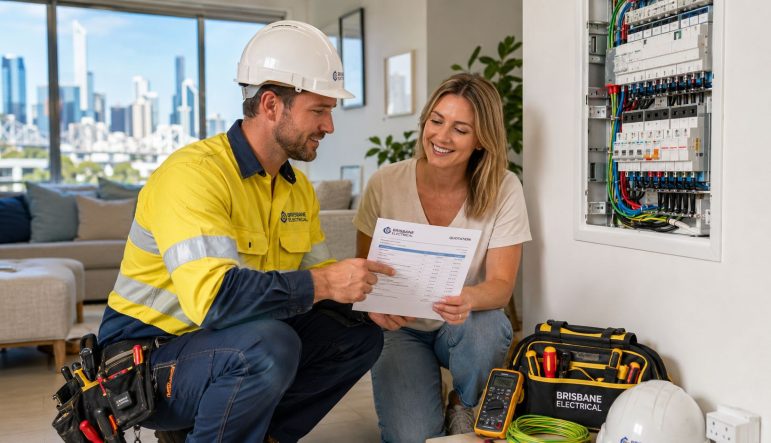
If you're dealing with flickering lights in an older Windsor home, planning a kitchen renovation in Grange, or trying to work out what a rental property needs for smoke alarm compliance, you're probably not looking for a flashy sales pitch. You want straight answers, safe work, and someone who won't leave you guessing once the job starts.
That's a significant challenge when hiring an electrician in Brisbane. As electrical work isn't a weekly necessity, it can be hard to tell the difference between a tidy, compliant operator and someone who's just good at answering the phone. The right hire protects your family, your property, and your budget. The wrong one can create defects, delays, and expensive rework.
Brisbane homes aren't all built the same, and that changes what good electrical work looks like. A post-war home in the inner north, a renovated Queenslander, and a newer suburban build can each have very different wiring layouts, switchboard limits, and compliance issues. That matters when you're comparing electricians, because the person who suits a simple light fitting replacement may not be the right fit for a renovation, recurring fault, or rental compliance job.
The industry itself is large. IBISWorld reports 113,637 people employed in Electrical Services in Australia in 2025, down from 117,866 in 2024. For Brisbane homeowners, that tells you two things. First, you're hiring from a mature trade with real depth. Second, a large pool doesn't remove the need to screen carefully. It makes that step more important.
A lot of people start by searching for the fastest available tradie. That's understandable when the lights are tripping or a power point has stopped working. But speed without verification is where problems begin.
A good electrician in Brisbane should help you answer practical questions such as:
Practical rule: The cheapest or fastest option only works if the work is licensed, clearly scoped, and suitable for the actual condition of the property.
Electrical work sits behind walls, in ceilings, and inside switchboards. You usually don't see the quality of it once the job is done. That's why communication matters so much. The right contractor explains what they're testing, what they're replacing, and what can wait. They don't bury important details in vague language.
If you're comparing local providers, it also helps to understand how strong businesses present their service. This comprehensive playbook for home service growth is useful because it shows how reputable trade businesses think about communication, trust, and customer experience. From a homeowner's side, that's valuable. It helps you spot who is organised and who is improvising.
The days of calling an electrician only for a broken light or dead power point are gone. In Brisbane, many contractors now work across safety systems, energy upgrades, communications, and household infrastructure. One Brisbane provider describes 25 years of experience and lists services including powerpoints, switchboards and safety switches, smoke alarm installation, solar system installation, split-system air conditioning, alarm/CCTV, and telecommunications infrastructure, while another Brisbane-based provider lists smoke alarms, switchboard upgrades, hot water systems, LED lighting, rewiring, RCD safety switches, surge protection, and testing and tagging at Iconic Electrical Data. That's a good reflection of what homeowners should expect from a modern electrician in Brisbane.
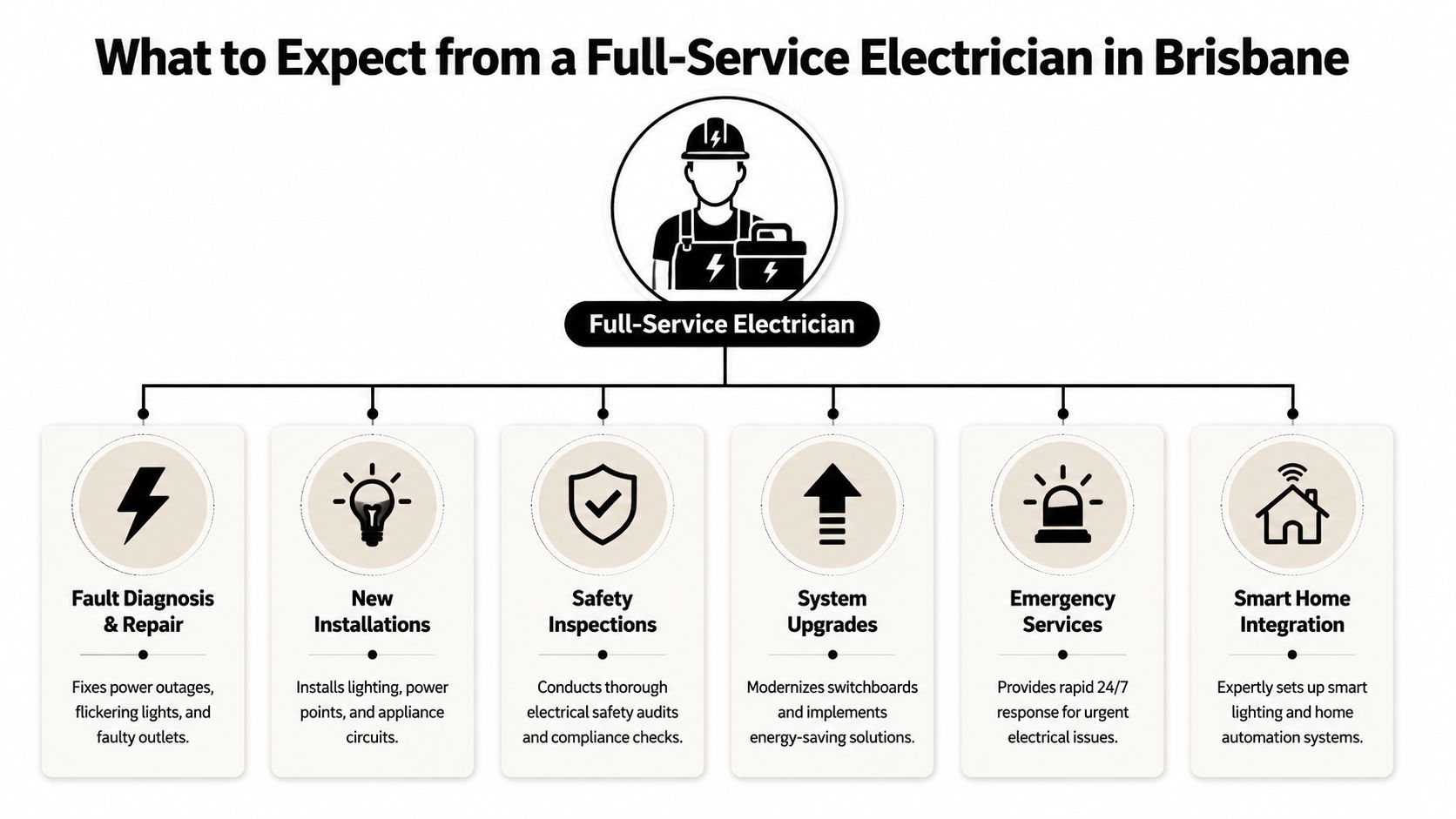
A full-service electrician should be able to handle several categories of work without treating each one like a separate mystery.
The best results usually come when one electrician or one team sees the whole property, not just the immediate fault. If a kitchen renovation needs new appliance circuits, task lighting, under-cabinet lighting, and switchboard assessment, it helps when the contractor can coordinate all of that as one plan.
What doesn't work is piecemeal decision-making. Homeowners sometimes add a circuit now, a fan later, outdoor lighting later again, then discover the switchboard should have been addressed first. That creates more visits, more disruption, and more chance of patchwork outcomes.
If you're renovating, ask the electrician to look at load, layout, and future use together. A good design on day one is cheaper than moving fittings and recutting walls later.
A useful way to think about this is simple. You aren't only hiring someone to complete a task. You're choosing someone who may become your go-to for faults, upgrades, maintenance, and compliance questions over time.
That matters in Brisbane suburbs where homes often evolve in stages. A family might start with smoke alarms and a switchboard check, then later add air conditioning, outdoor entertaining lighting, security cameras, or a home office circuit. A capable full-service electrician can support that progression without losing the history of what has already been done.
This is the part you shouldn't skip, even if the job looks minor. In Queensland, all electrical work must be performed by a licensed professional who has completed a Certificate III in Electrotechnology Electrician, a 4-year apprenticeship, and passed a capstone assessment before applying for a QBCC licence. That training path exists for a reason. Electrical faults can hide behind plaster, insulation, and switchboard covers. The person working on your home needs to know how to test safely and document the work properly.
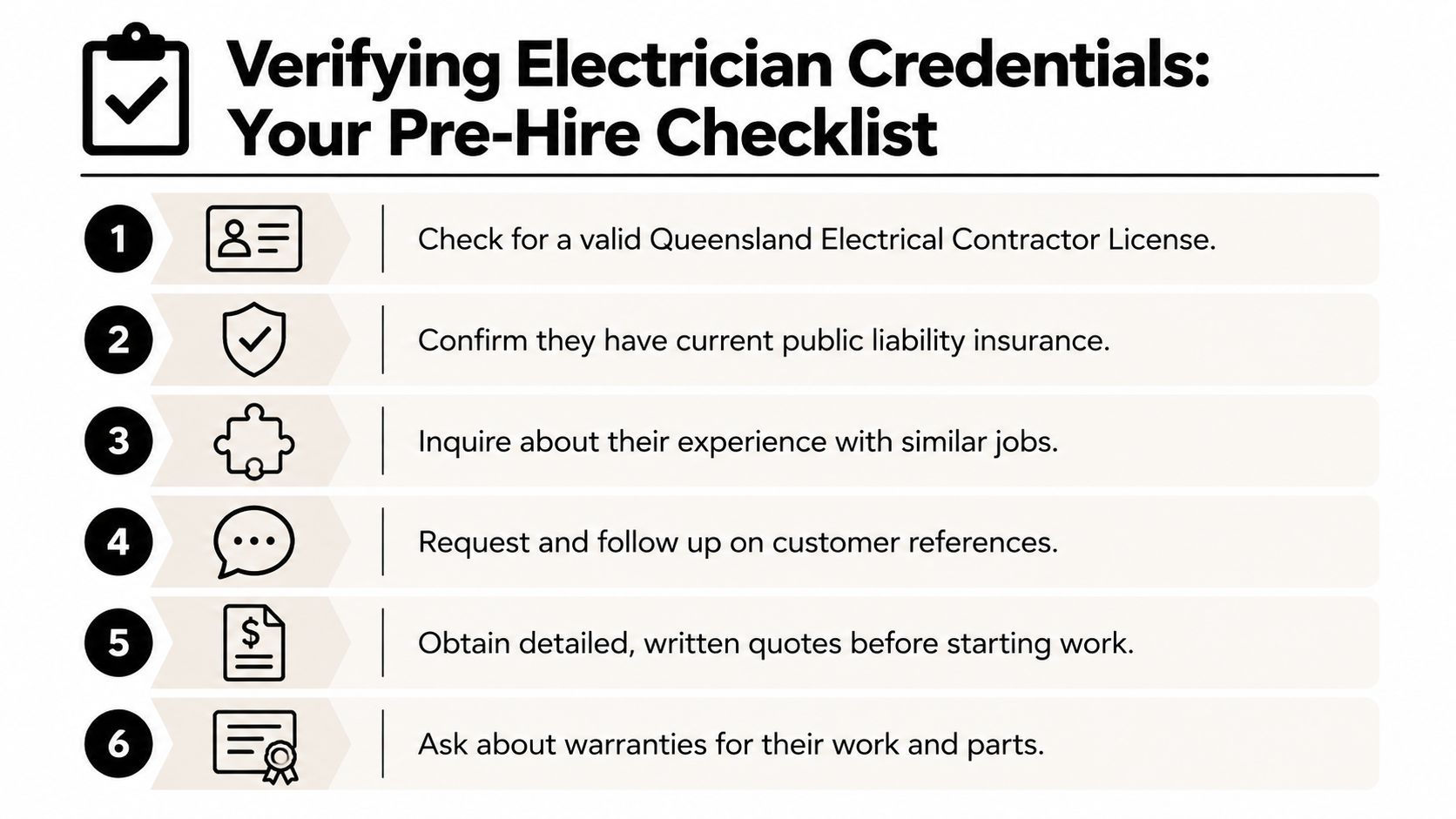
Start with the basics, but be specific.
For a more detailed local guide, this article on how to find licensed electricians near you in Brisbane is a practical reference point.
Unlicensed electrical work can leave you with more than a bad repair. It can leave you with a safety risk, a compliance issue, and no clear path to fix the damage.
You don't need to interrogate anyone. A few calm questions will tell you whether you're dealing with a professional operator.
A short visual overview can also help homeowners understand the pre-hire checks to make before saying yes to any quote.
Licensed electricians don't get defensive when you ask for proof. They expect it. They also tend to speak clearly about limitations. If further testing is needed, they'll say so. If they can't guarantee an outcome until a circuit is isolated and tested, they'll say that too.
That's usually a good sign. Honest uncertainty at the start is better than false certainty followed by changeovers, add-ons, or unexplained delays.
Quoting is where many homeowners get caught out. Not because electricians are all doing the wrong thing, but because the job itself can vary a lot. A dead power point might be a quick replacement. It might also be the symptom of a loose connection elsewhere on the circuit. If the quote doesn't define the scope, you're not comparing like for like.
Most electrical quotes fall into one of these patterns.
None of these is automatically right or wrong. The issue is whether the format matches the job. Fixed pricing works well when the scope is known. For diagnostic work, insisting on a fixed number too early can produce a vague quote with plenty of exclusions.
A quote should tell you exactly what you're buying. If it doesn't, ask for a revision before approving anything.
Look for these elements:
If you want to understand how contractors think through margins, labour, and job structure, this guide on how to price electrical jobs effectively gives useful context from the trade side. It won't replace your quote review, but it does help you understand why some jobs are simple to price and others aren't.
| Question Category | Specific Question to Ask |
|---|---|
| Scope | What exactly is included in this quote, and what is excluded? |
| Diagnosis | If the fault is more extensive than first expected, how will extra work be approved? |
| Materials | Are the fittings and parts specified, or are they provisional? |
| Timing | Will this be done in one visit, or could return visits be required? |
| Property protection | Who is responsible for access, clean-up, and any making-good outside the electrical scope? |
| Warranty | What workmanship warranty applies, and how do I make a claim if needed? |
| Compliance | Will I receive the relevant paperwork once the work is complete? |
A second useful local reference is this guide on how much electricians charge, especially if you're trying to compare quote structures rather than just the bottom-line figure.
A fair quote isn't always the lowest one. It's the one that explains the work well enough that you know what you're approving.
Landlords and renovators run into a different set of problems than owner-occupiers doing ad hoc repairs. Generic advice often misses that. One of the biggest gaps in local electrical content is tenant- and landlord-specific compliance, especially around smoke alarm upgrades, recurring maintenance, and how to document work in Queensland's regulated rental market, as noted in this Brisbane electrician service overview.
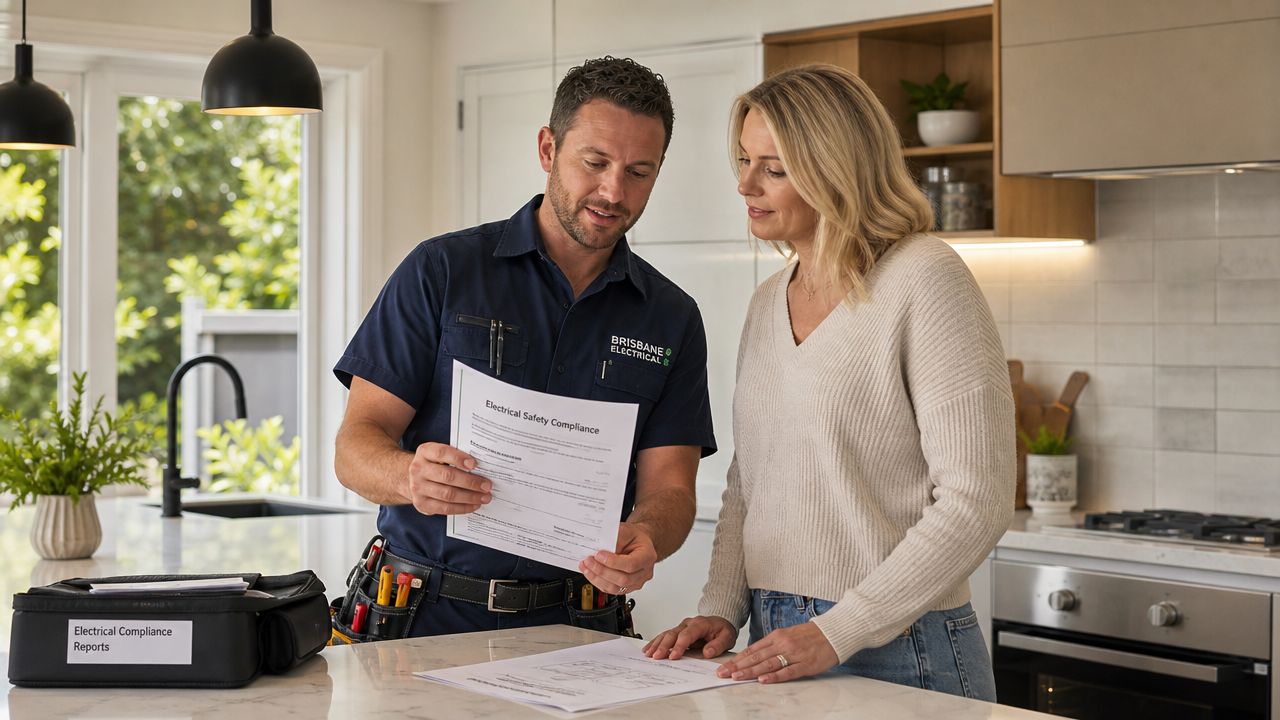
For rental properties, the practical issue isn't just getting work done. It's being able to show what was done, why it was done, and who carried it out. If a tenant reports a smoke alarm issue, a tripping circuit, or a recurring fault, delaying the paperwork side is a mistake. Keep the quote, keep the invoice, and keep any compliance-related records together.
A sensible landlord process looks like this:
If you're dealing with smoke alarms or completed electrical works, this page on an electrical certificate of compliance is worth reviewing so you understand what documentation matters.
For landlords, the work and the paperwork belong together. One without the other can leave you exposed when questions come up later.
Renovation projects in suburbs like North Brisbane, Grange, and Windsor often start with layout decisions, then bring the electrician in after cabinetry, plaster, or appliance choices are already locked. That's backwards.
Electrical planning should happen early, especially if the renovation changes how the home is used. New kitchens, added air conditioning, home offices, garage conversions, and outdoor entertaining areas all change demand and layout.
The most common planning misses are practical:
If you're renovating, ask the electrician to walk the property before finishes are locked in. Mark where appliances will sit. Identify where chargers, data points, CCTV, smoke alarms, and outdoor circuits may be needed. Think about future use, not just the move-in date.
A contractor such as DLG Electrical can fit into that kind of planning when the project needs installations, maintenance, repairs, smoke detector compliance, switchboard upgrades, hot water system electrical work, or custom electrical design. The important part isn't the brand name. It's choosing a licensed electrician who can look beyond the immediate task and coordinate the whole electrical picture.
By this point, the process should feel simpler. Good hiring usually comes down to a few consistent signals. The electrician communicates clearly, confirms licensing, explains the scope in writing, and doesn't dodge questions about warranties or exclusions.
Homeowners tend to have the smoothest experience when they choose someone who is patient in the quoting stage. That's often the same person who is methodical on site. Clear answers before the job usually lead to fewer surprises during the job.
To find an electrician in Brisbane, keep the first step simple. Gather the licence details, ask for the scope in writing, and make sure the contractor understands whether this is a repair, a renovation, or a compliance issue. That one conversation often tells you a lot.
If you want practical advice from a local team, DLG Electrical is a Brisbane-based family-owned electrical contractor offering residential and commercial electrical services, including installations, maintenance, repairs, switchboard upgrades, smoke detector compliance, security systems, and custom electrical design. If your home, rental, or renovation project needs a clear quote and licensed guidance, reaching out for a no-pressure conversation is a sensible next step.

Master Electrician with over 30 years of experience. Founded DLG Electrical in 2005 after international project work including electrical installations at Stamford Bridge Stadium, London(Home of Chelsea FC).

Local Electricians that can fix all Electric Hot water Systems.
Motion sensor lights are a versatile addition to any home, offering nu
