83 Jean St, Grange QLD 4051
Mon-Fri 07:30 AM - 04:00 PM - Sat - 8:00 - 12 - Sunday Closed
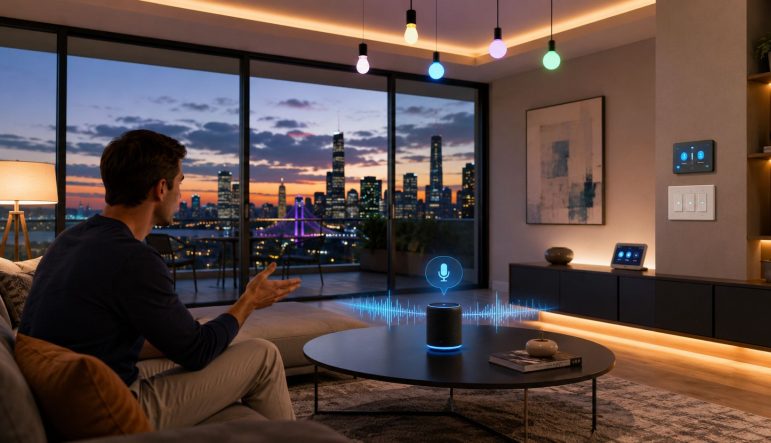
You can tell the house is ready for a voice upgrade when the switches are already annoying you. You're standing in the Brisbane kitchen with your hands full, the lounge lights are too bright, the front door is a few rooms away, and the air conditioning is one tap too many on a hot night. That's usually the moment people start thinking about a voice activated smart home, but the decision is not about the speaker on the bench. It's about what has to change in the wall, the switchboard, and the Wi-Fi so the whole thing works properly.
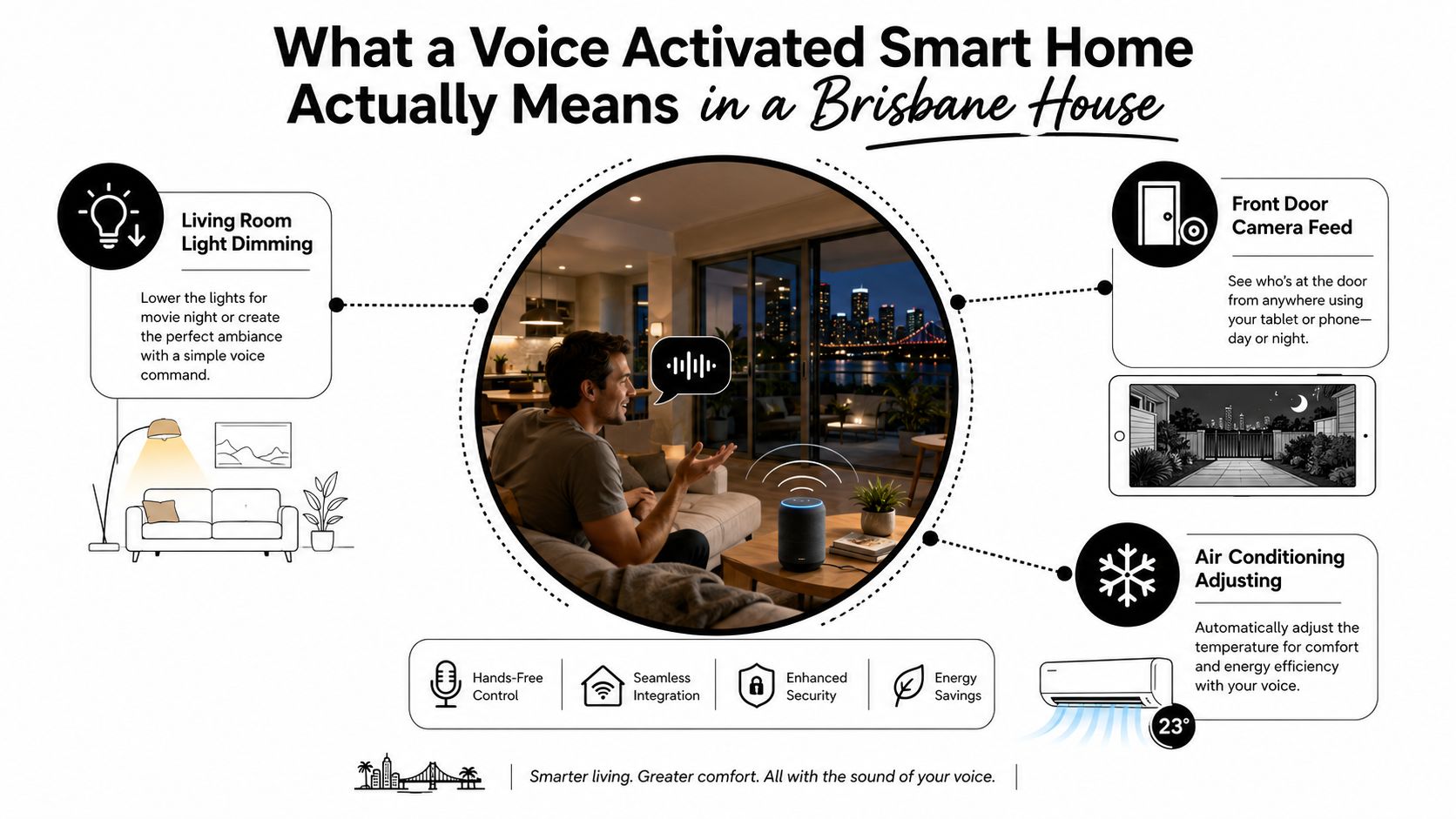
In Brisbane homes, voice control usually sits on top of an existing connected-home setup, not in place of one. The Australian Communications and Media Authority's Connected Home survey found 70% of Australian households had at least one internet-connected smart home device in 2022, and it also found smart speakers were the most common connected device in the home. That matters because voice is usually the layer that ties lighting, security, and climate together after the basics are already there, not a magic replacement for wiring and compliant installation. If you want a broader consumer-facing overview, Splash Access AI insights is a useful contrast to the electrical side, because it shows how voice and automation get discussed when the focus is on experience rather than cabling.
For a Brisbane homeowner, the best way to describe the setup to a tradesperson is simple. A voice activated smart home is a house where a spoken command is captured by a speaker or display, interpreted by software, then sent to devices such as lights, locks, cameras, or climate controls. If you're comparing that idea with a retrofit plan, the kind of practical system design discussed on DLG Electrical's smart home automation Brisbane page is the right frame, because the question is never just “does it talk back?”, it's “what's wired, what's wireless, and what has to be reliable at 9 pm when everyone's home?”
A lot of Brisbane households first test voice control on a single lamp or speaker, then realise it's more useful when it reaches the rooms they use every night. A living room light dims while dinner's still on the stove. The front door camera pops up on a tablet. The air conditioner shifts down a notch before bedtime. Those are the moments that make voice control feel useful, but the usefulness only appears because several systems are already speaking to each other.
The takeaway is that voice control is a layer, not a device. A smart speaker or display listens for a wake phrase, sends the request to software, then tells a switch, bulb, hub, camera, lock, or thermostat what to do. In a Brisbane house, that often means a mix of new gear and old wiring, especially in renovated homes where some rooms still have traditional wall switches and others already run smart fittings. If you're planning the work, it helps to think in terms of which circuits stay as they are and which ones need new control hardware.
The electrical part is usually more ordinary than the marketing suggests. Lights might stay on the same circuit, but the control point changes from a standard switch to a smart switch or a relay behind the plate. A ceiling fan, an extractor fan, a lock, or a split-system controller each brings its own compatibility issue. The speaker sitting on the counter does not make the house smart by itself, it just becomes the front end for all of that hardware.
Practical rule: if the voice command only works when the app is already reliable, the house is still only partly automated.
That's why the most useful definition for a homeowner is not “a house that talks back”. It's a house where a voice assistant, a home network, and the fixed electrical installation all cooperate without the user needing to think about each step. For Brisbane owners, that usually means a retrofit plan rather than a full rebuild, especially in established suburbs where lighting, security, and climate control are being upgraded room by room.
The path from speech to switched light is usually shorter than people think, but there are four separate stages, and each one can fail in a different way. The voice assistant first listens for the wake word locally, so it doesn't need to send every word to the cloud just to wait for a command. After that, the spoken request is converted to text, interpreted by software, then turned into a device instruction that travels back through the home network to the bulb or switch.
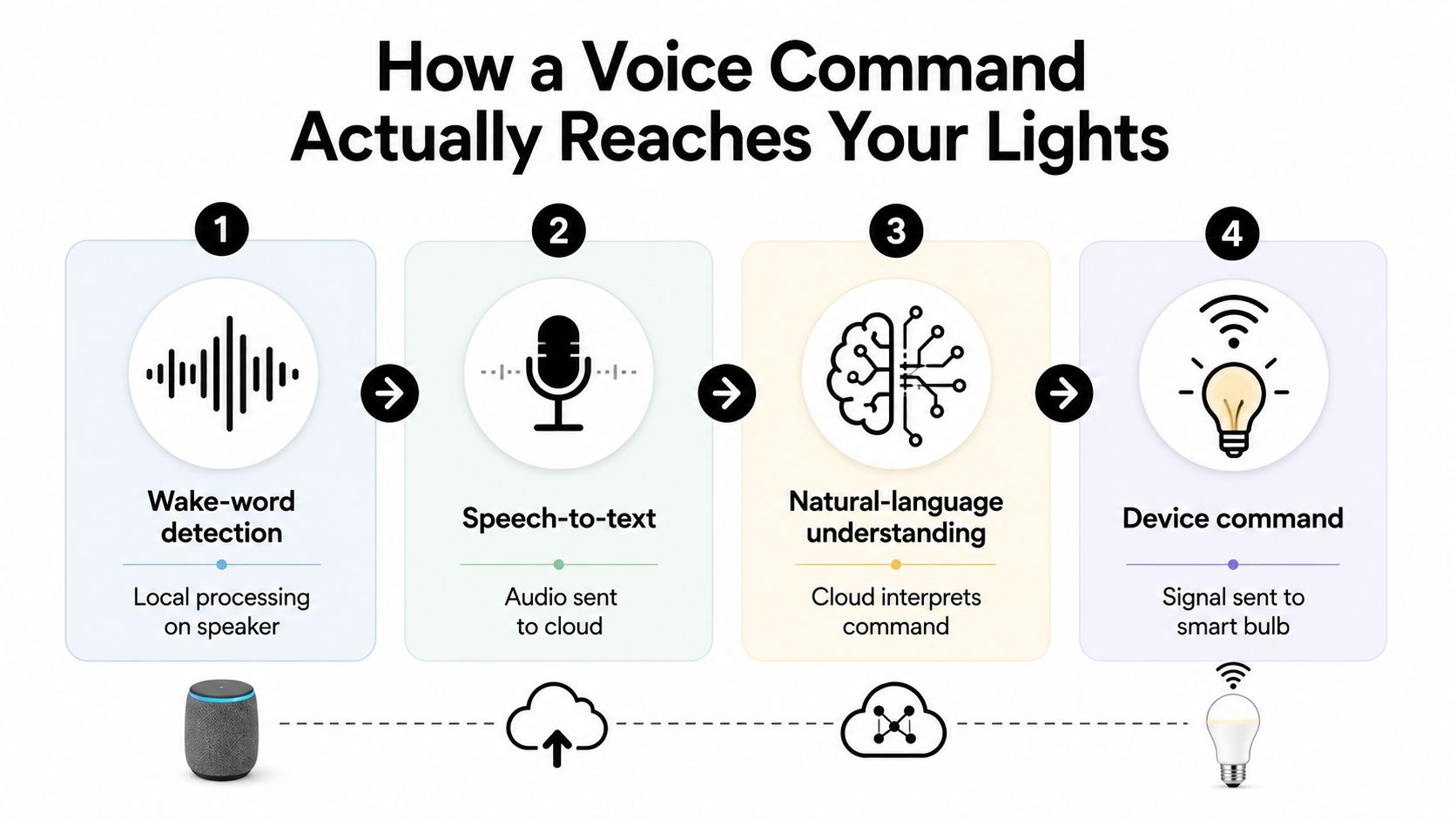
The practical response target for assistants is roughly 0.5 to 2 seconds end-to-end, with a network target of at least 2 Mbps per assistant device and under 100 ms cloud latency for a good user experience in connected-home control, according to industry guidance from Shipshape AI's smart home voice assistant guidance. That doesn't mean every Brisbane home needs a fibre upgrade. It does mean a sluggish command is usually a Wi-Fi or latency problem, not the assistant “thinking too hard”. A command can sound instant in one room and lag in another if the access point is badly placed or the signal has to fight through brick, foil insulation, and distance.
That chain is why placement matters as much as brand choice. A speaker near a noisy air conditioner, a weak router, or a cluttered microwave-heavy kitchen can make the whole system feel flaky. For those considering a lighting-first retrofit, the practical notes in DLG Electrical's smart lighting system guide sit in the right place, because lighting is often the first load homeowners want voice control to reach reliably.
The other thing worth understanding is that not every command needs a fast cloud round-trip in the same way. Turning on a light is a simple actuation. Searching a camera clip or building a routine is more complex and usually feels slower. That difference becomes important once a house has multiple assistants, multiple rooms, and more than one person trying to issue commands at the same time.
A proper voice activated smart home is built in layers, and each layer has a different job. The speaker or display is only the interface. The hub or bridge is the translator. The switches, bulbs, locks, cameras, smoke alarms, and HVAC controllers are where the actual house changes happen. If those layers aren't chosen with the wiring in mind, the system ends up looking clever on the app and frustrating on the wall.
The first layer is the voice endpoint. That's your Echo, Nest device, HomePod, or similar unit. It needs power, network access, and a place where it can hear clearly. The second layer is the control platform, which can be cloud-based or partly local. The third layer is the device itself, and that's where the electrician's work starts to matter. Some smart switches need a neutral conductor, some need a deeper back-box, and some older walls don't have the space or cable path for a clean install without extra work.
A smart bulb is easy to add, but it isn't always the best answer. If someone turns the wall switch off, the bulb disappears from the assistant until power is restored. Smart switches solve that problem better because they keep the load available and move the control logic into the switch itself. That's why they're often the more durable retrofit choice in family homes, rentals, and rooms where people still expect a normal wall switch to work.
Smart locks and cameras add another layer of decision-making. They're convenient, but they're also the devices that raise the most privacy and reliability questions, especially in shared homes. HVAC controls can be very useful in Brisbane because they're tied to comfort, but they also need to be matched to the existing air conditioning system rather than assumed compatible.
The cleanest installs are the ones where the network, the switchboard, and the end device were planned together, not pieced together after the first smart speaker arrived.
For homeowners comparing options, the inventory is simple. You're buying the voice front end, the control layer, and the physical endpoints that live in the wall or on the ceiling. That's why DLG Electrical's smart home automation installation page belongs in the planning phase, because a good install is as much about cable routes and switch locations as it is about app setup.
The DIY route is tempting because it gets you talking to the house fast. A smart speaker, a few smart bulbs, and some plug-in devices can make a room respond to voice commands without opening the wall. For a renter, a short-term property, or a homeowner who wants to test the concept before committing, that can be a sensible start.
A wired installation is different. It replaces the control point, often adds a neutral where needed, and ties the system more cleanly into the switchboard and the existing electrical layout. That costs more effort upfront, but it usually gives a more stable result in a Brisbane home where people expect the lights to work every time, not only when the app is awake and the Wi-Fi is behaving.
| Factor | DIY plug-in devices | Wired installation by an electrician |
|---|---|---|
| Up-front effort | Fast to start, little disturbance | More planning, more labour, more site time |
| Reliability | Depends heavily on Wi-Fi and device placement | Usually stronger, because the control points are built into the fixed wiring |
| Power outage behaviour | Devices stop when power is off, then need recovery | Same outage limit, but the system is generally easier to restore cleanly |
| Compliance | Limited by what the device can safely do without electrical work | Better suited to Queensland wiring and smoke alarm compliance requirements |
| Handover | Easy to remove, but often messy for the next owner or tenant | Easier to document and explain if the install is properly labelled |
A useful comparison from another access-control context is Nimbio's explanation of cellular vs NFC gate access. The point there, and it applies here, is that the user experience can look simple while the underlying method is very different. Voice control has the same split. A simple front end can hide a lot of infrastructure, but it doesn't remove the need for the right wiring.
My view as an electrician is straightforward. If you're only testing the idea, DIY can make sense. If you want a house that feels integrated, survives everyday use, and can be handed over without a long explanation, a wired installation is usually the better decision. The more rooms and loads you want involved, the less “temporary” the DIY approach looks.
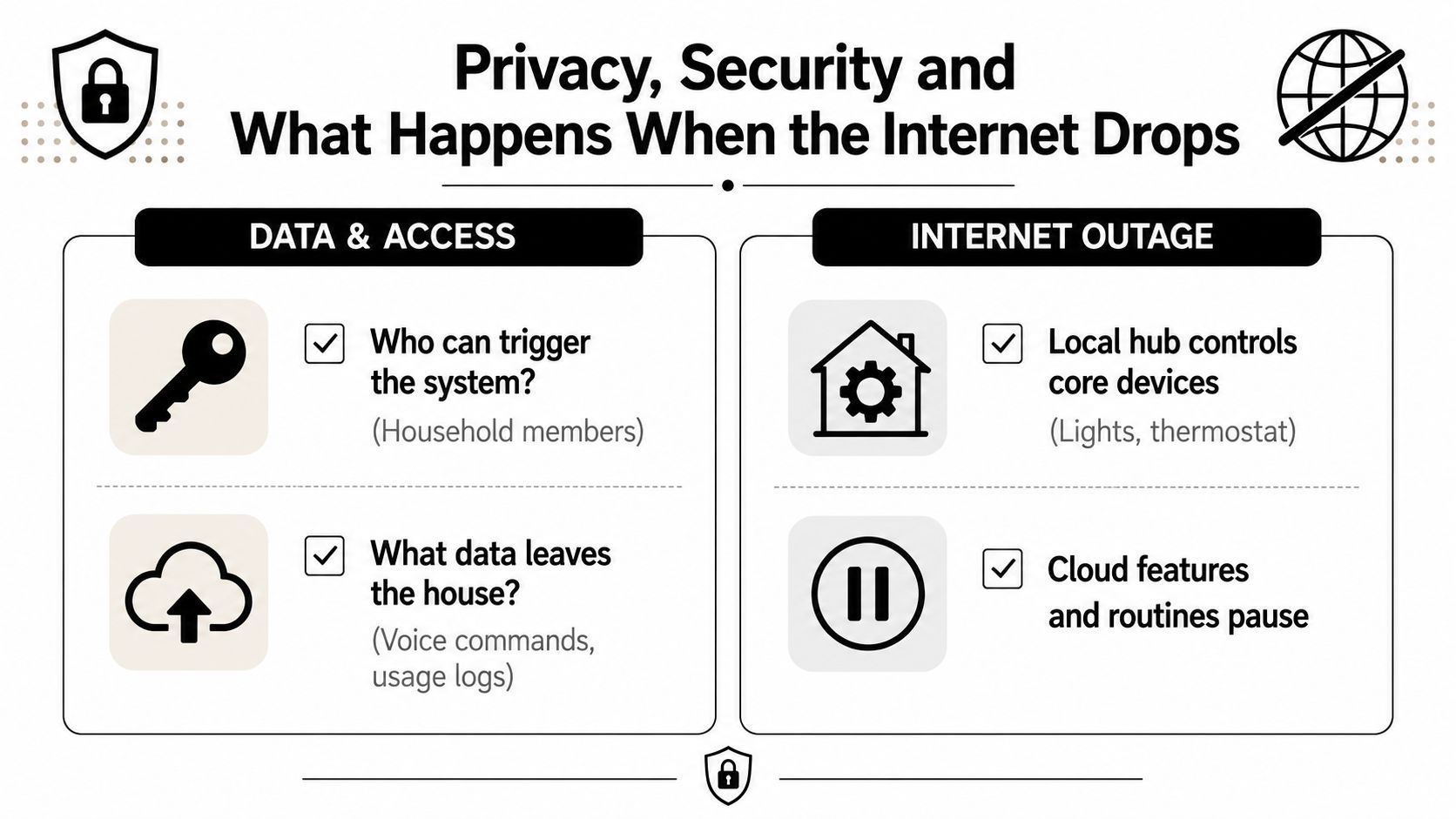
The biggest mistake in voice control marketing is pretending privacy is just a settings menu. In a shared house, the question is who can speak commands, where the speaker sits, and what happens when the assistant hears more than it should. Research notes that privacy concerns are a major barrier to adoption of voice-activated smart home technology, and a 2023 security paper highlighted the need for speaker-orientation-aware privacy control to reduce unintended activation and abuse, which is exactly the problem families and renters worry about in practice.
Place speakers away from open windows, guest rooms, and thin shared walls where possible. Use mic mute when you're not actively using the assistant. Set voice match or household profiles if the platform supports them, and split devices into zones so a command from one part of the house doesn't trigger the whole place by accident. None of that is fancy, but it reduces the chance that a guest, a child, or a nearby conversation triggers the wrong device.
The resilience question is just as important. Voice systems usually lose cloud-based features when the NBN or router fails, but some locally controlled devices can still respond if the hub stays powered and the network is intact inside the house. Smoke alarms should never depend on voice control, and front-door lighting should still have a manual path. The point of automation is convenience, not replacing a hardwired safety function.
If a critical light or alarm only works through the app, it's not resilient enough for a family home.
The paper on smart home automation in the Springer collection also points to ongoing work on adaptation and decision-making in these systems, which is another reminder that household context matters as much as device choice. In plain terms, that means a good setup should have clear fallback control. A switch on the wall, a manual override, and a system that doesn't collapse because one cloud service is having a bad night are worth more than a clever routine you never use.
Brisbane homeowners usually ask the wrong first question. They ask what the speaker costs, when the better question is what the install has to do to the house. A cheap speaker can sit on a shelf, but if the project needs new switch gear, a neutral run, or a switchboard update, that's where the quote changes direction.
An entry-level retrofit is usually a couple of rooms, one voice assistant, and a small set of smart bulbs or plug-in devices. It suits people who want to test voice control without changing the fixed wiring. A mid-range setup adds smart switches, a hub, and some security integration, which is where the system starts to feel like a real house-wide control layer. A whole-home installation is the most involved path, with multiple zones, more devices, and the electrical work needed to make everything line up cleanly at the switchboard and wall plate.
The line items that surprise homeowners are usually the same ones. Older switch locations may need extra work if there's no neutral conductor in place. Some houses need a deeper back-box or rework around cramped wall cavities. If the switchboard needs upgrades to support the project properly, that's not a smart-home extra, it's part of making the home safe and compliant.
In Brisbane, it's worth comparing the labour line against the hardware line, because two quotes can look similar while one includes real electrical work and the other only covers devices. DLG Electrical is one local contractor that lists smart home technology work alongside other residential electrical services, which puts the quote in the right category. The key is not the brand name. It's whether the scope covers the wiring and compliance work your house needs.
Before you accept a quote, ask which existing circuits the voice system will rely on and whether any switch locations need a neutral run or a back-box change. Ask how smoke alarm compliance will be maintained, especially if lighting work is being done in bedrooms, hallways, or circulation areas. If the electrician can't answer that clearly, keep shopping.
Also ask what happens if the Wi-Fi drops, who owns the app accounts, and how the system will be handed over if you rent the property out or sell later. A good quote should include the electrician's licence details, warranty terms, the device list, and a plain description of what's excluded. That way there's no argument later about whether commissioning, labelling, or cleanup was included.
If you're in Brisbane and want the installation side handled properly, book a site visit before you buy more hardware. A good electrician can tell you quickly whether your home is ready for a voice controlled retrofit or whether the switchboard, wall plates, or network need attention first.
If you want a Brisbane electrician who can look at the wiring, switchboard, lighting control, and compliance side of a voice activated smart home, talk to DLG Electrical. They work through the practical install issues homeowners face, then provide a quote that reflects the full electrical scope instead of just the smart speaker on the bench.

Master Electrician with over 30 years of experience. Founded DLG Electrical in 2005 after international project work including electrical installations at Stamford Bridge Stadium, London(Home of Chelsea FC).

Local Electricians that can fix all Electric Hot water Systems.
Motion sensor lights are a versatile addition to any home, offering nu
