83 Jean St, Grange QLD 4051
Mon-Fri 07:30 AM - 04:00 PM - Sat - 8:00 - 12 - Sunday Closed
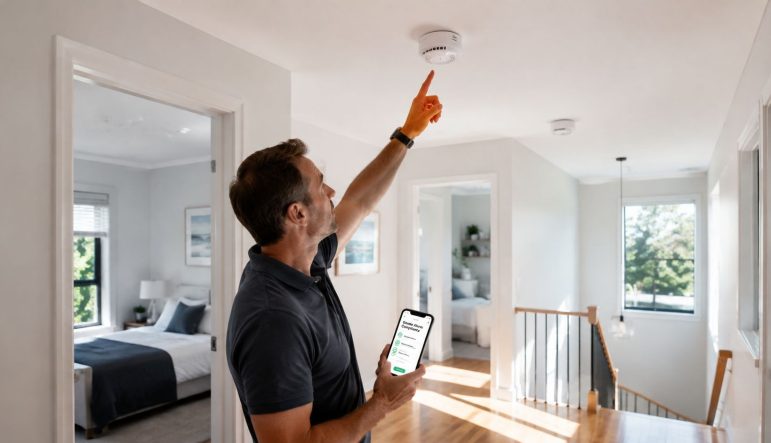
By 1 January 2027, every Queensland home needs interconnected, photoelectric smoke alarms in each bedroom, in hallways connecting bedrooms, and on every storey of the dwelling. The exact number depends on your floor plan, so a modest home may need several alarms rather than one.
You may be checking this after hearing a chirp from an older alarm, preparing to renovate, or looking at a property before a sale or tenancy change. The confusion is understandable because Queensland's requirements have been introduced in stages, and the answer to “how many smoke alarms do I need in my house?” depends on bedrooms, levels, hallways and the route occupants would use to leave.
The important point is that compliance and protection work together. An alarm count that looks sufficient on paper can still leave a sleeping occupant poorly warned if devices are installed in the wrong locations, aren't interconnected, or are affected by fans and air-conditioning. This guide explains the Queensland rules in practical terms, with layout examples and placement details relevant to Brisbane homes.
Property owners often use the same disciplined approach for other safety obligations. If you operate a trade or service business, resources such as audit-proof your garage door business can help explain why documented compliance matters beyond having equipment in place. For a Queensland-focused overview, you can also review DLG Electrical's guide to smoke alarm laws in Queensland.
Queensland's smoke alarm rules aren't optional maintenance suggestions. They set a minimum standard for the type, position and connection of alarms in a home, with the final statewide deadline approaching for properties that haven't yet transitioned.
The practical test starts with four questions:
A hallway alarm alone isn't a substitute for an alarm inside each bedroom. Similarly, placing one device in a living area doesn't cover bedrooms on another part of the floor. The layout determines the count because the law is designed to provide warning where people sleep and along the route between sleeping areas and the rest of the dwelling.
Practical rule: Count bedrooms and storeys first, then inspect the path from each bedroom to the rest of the home. Don't count devices that are present but incorrectly located.
The change matters most at night. A fire can begin away from the room where someone is sleeping, and a single alarm may not be heard promptly through closed doors. Interconnection creates a network, so activation in one part of the dwelling alerts occupants elsewhere at the same time.
A Brisbane electrician should also assess ceiling access, existing wiring, battery backup, alarm compatibility and the actual floor plan. A visual check can identify obvious gaps, but it may not confirm that every interconnected unit activates together or that a device has been installed outside airflow zones.
Queensland's requirements have three connected parts: location, alarm technology and interconnection. Missing any one of them can leave a property short of the intended protection.
Queensland Fire Department states that, by 1 January 2027, existing private homes must have photoelectric, interconnected smoke alarms installed on each storey, in every bedroom, and in hallways connecting bedrooms with the rest of the dwelling. Where there's no hallway, the alarm must be placed between the bedroom and the rest of that level. On a level without bedrooms, at least one alarm must sit on the most likely path of travel to an exit. You can confirm the requirements in the Queensland Fire Department smoke alarm guidance.
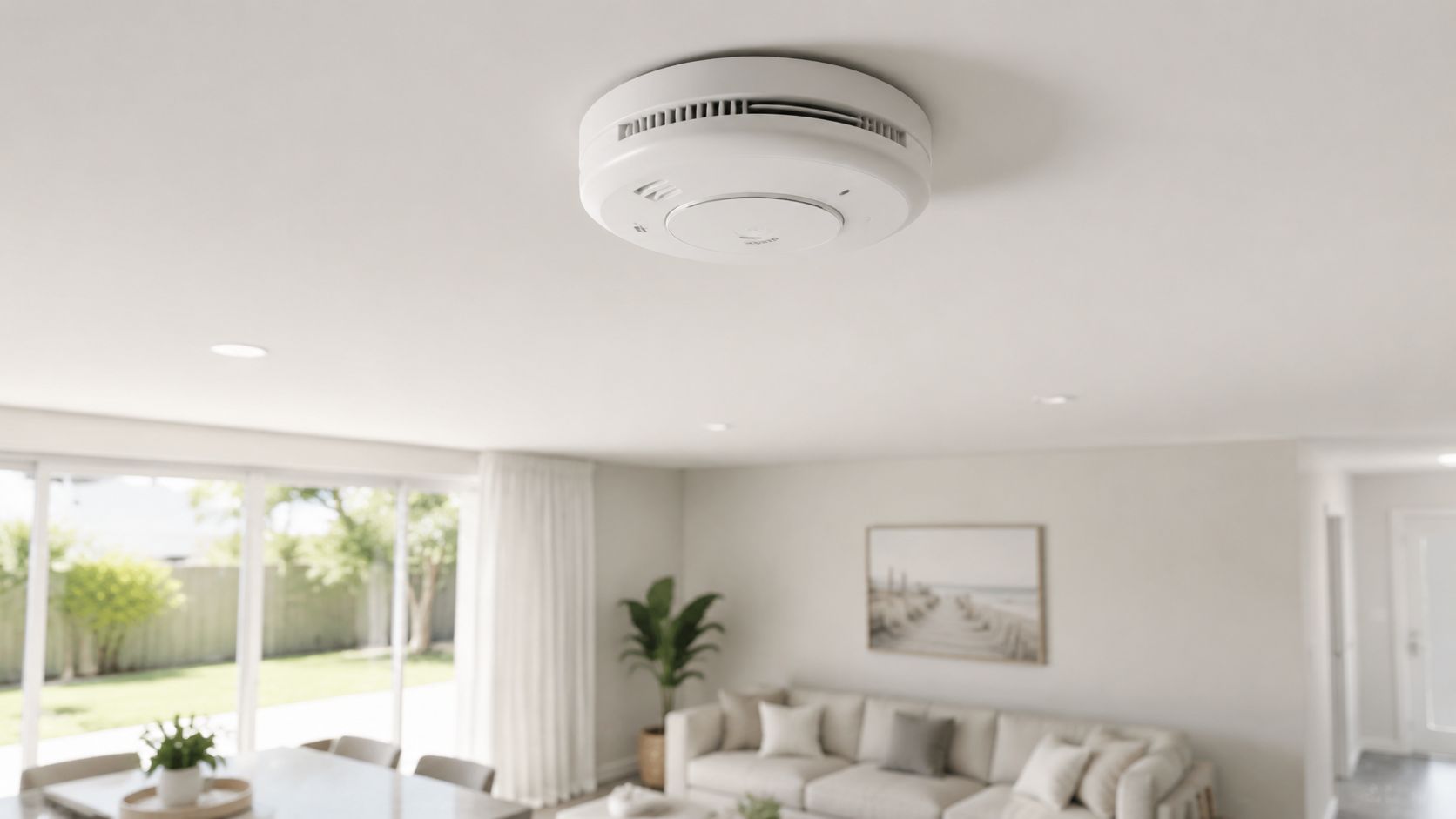
The minimum count often starts with one alarm per bedroom, one in each relevant connecting hallway and one on every floor. That isn't a universal formula because rooms and circulation areas can overlap. For example, a bedroom opening directly into a living area may require an alarm between the bedroom and the rest of the level rather than in a conventional hallway.
A storey without bedrooms still needs coverage. The alarm belongs on the most likely escape path, such as a route leading from the living area towards an exit. This is why counting bedrooms alone can produce an incomplete result.
A photoelectric alarm uses light within its sensing chamber to identify smoke particles. Queensland's required standard specifically calls for photoelectric alarms, which are suited to detecting smoke from smouldering fires before flames become obvious.
That technology doesn't mean the alarm can be installed anywhere. Smoke must reach the sensing chamber, and strong airflow or a poor position can interfere with that process.
An interconnected system links the alarms so that when one activates, the others sound as well. In simple terms, one alarm detects the danger and the whole network warns the occupants. That matters when the first alarm is near a kitchen, garage or remote room and someone is asleep elsewhere.
Replacing an old standalone alarm with another standalone model doesn't create this network. The devices must be compatible and installed as an interconnected system, whether the connection is made through wiring or an approved wireless method.
Queensland introduced its smoke alarm reforms in stages. The legislation requiring photoelectric, interconnected alarms in bedrooms, connecting hallways and on every level was introduced in January 2017, according to the Queensland Fire Department's smoke alarm frequently asked questions.
The staged approach means a homeowner shouldn't assume that an older property is exempt because its alarms still sound during a test. The standard applying to the property depends on its circumstances and the transition point reached.
| Property type | Compliance deadline |
|---|---|
| New homes | The current Queensland standard applies when the home is built. |
| Homes undergoing substantial renovation | The current standard applies when the relevant renovation work occurs. |
| Rental properties | Rental properties must meet the interconnected photoelectric standard under Queensland tenancy requirements. |
| Remaining existing private homes | 1 January 2027 |
The table is a practical planning guide rather than a substitute for checking the property's building and tenancy circumstances. New construction and substantial renovation can trigger requirements earlier than the statewide deadline for remaining existing homes.
For landlords and property managers, the issue is particularly direct. Rental properties must meet the same interconnected photoelectric standard, so an inspection should confirm alarm locations, interconnection and operation rather than merely record that a device is mounted somewhere on the ceiling.
For owner-occupiers, the final date is a planning deadline, not a reason to delay. Electrical access, ceiling construction and the number of alarms can affect the installation process. Organising an assessment early gives you time to resolve wiring, positioning and compatibility issues without treating the deadline as an emergency repair.
The key answer remains layout-based. Queensland doesn't provide one fixed number that suits every house. Bedrooms, connecting hallways and storeys determine what the home needs.
Alarm placement affects two outcomes at once. The device must be close enough to smoke to respond promptly, but it also needs protection from airflow, corners and nearby fittings that can delay detection or trigger nuisance alarms.
Queensland Fire says ceiling mounting is preferred where practicable. The alarm shouldn't be installed within 300 mm of a corner, 300 mm of a light fitting, 400 mm of an air-conditioning supply vent, or 400 mm of ceiling-fan blades, as set out in the Queensland Fire placement requirements.
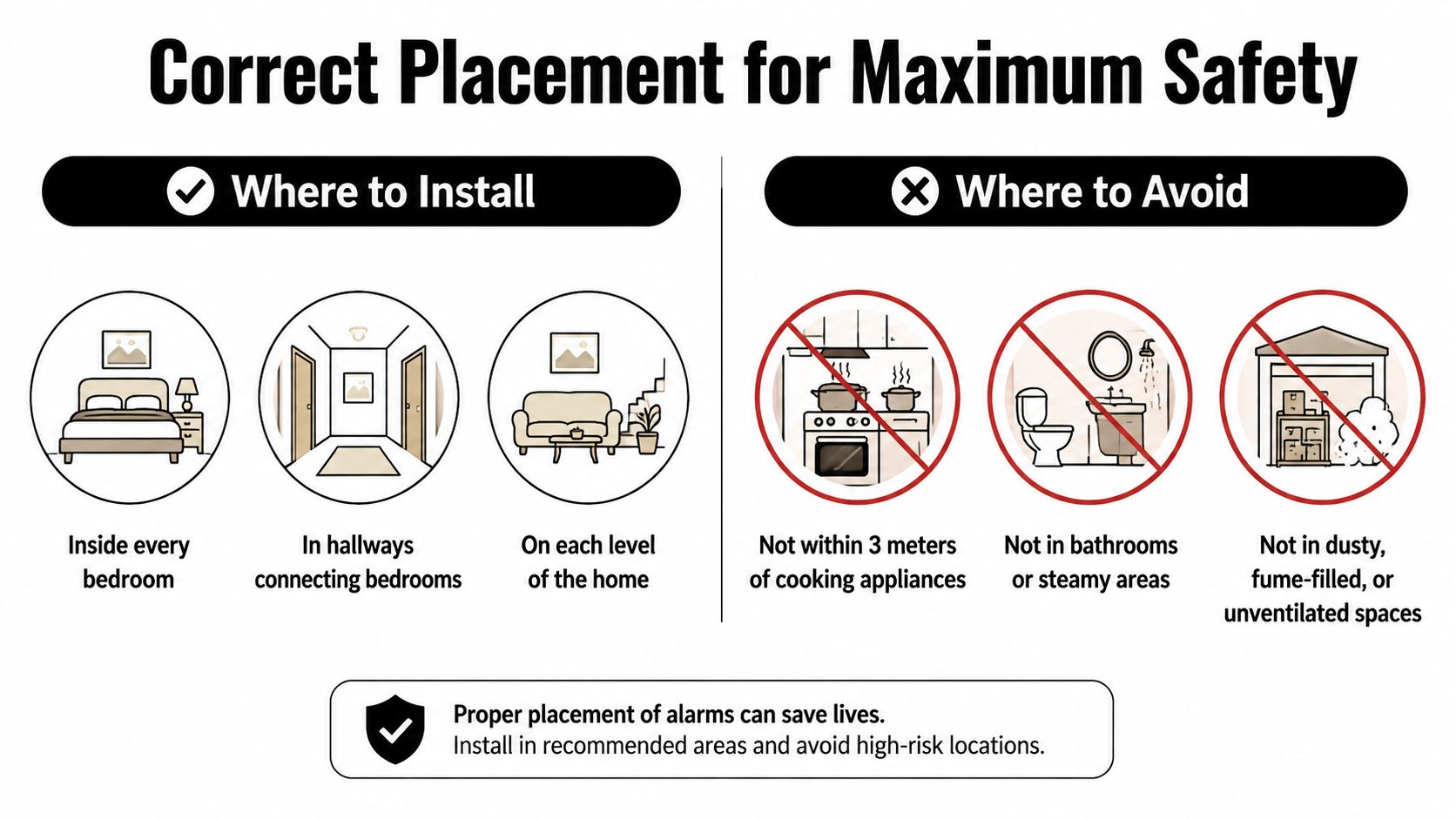
Hot smoke rises and spreads across the ceiling before moving down through the room. Corners can contain dead-air spaces where smoke doesn't circulate as expected, so an alarm pushed tightly into a corner may respond later than one positioned in the active ceiling area.
Fans and air-conditioning create a different problem. A ceiling fan can move smoke away from the sensing chamber, while an air-conditioning supply vent can disturb the smoke pattern and carry dust or cooking particles towards the alarm. That may produce nuisance alarms, or it may delay the arrival of smoke during a real fire.
The alarm count only works if each device can receive smoke and communicate its warning effectively.
Use the ceiling where practicable, keeping the required clearances from corners, lights, vents and fan blades. If ceiling mounting isn't practicable, wall mounting is permitted when the alarm sits 100–300 mm below the ceiling and more than 300 mm from the corner where two walls meet.
A wall-mounted alarm shouldn't be placed low because that position is convenient. Smoke rises, and the specified band below the ceiling helps keep the sensing chamber in the area where smoke is expected to collect.
For a more detailed room-by-room explanation, see this practical guide to where to install smoke alarms.
Correct placement often requires more judgement than measuring a wall and drilling a hole. Ceiling height, roof access, room openings and airflow all affect the final position.
Floor plans make the layout rule easier to apply. The following examples are simplified, so the final position in a real Brisbane property still needs to account for corners, lights, fans, vents and the path to an exit.
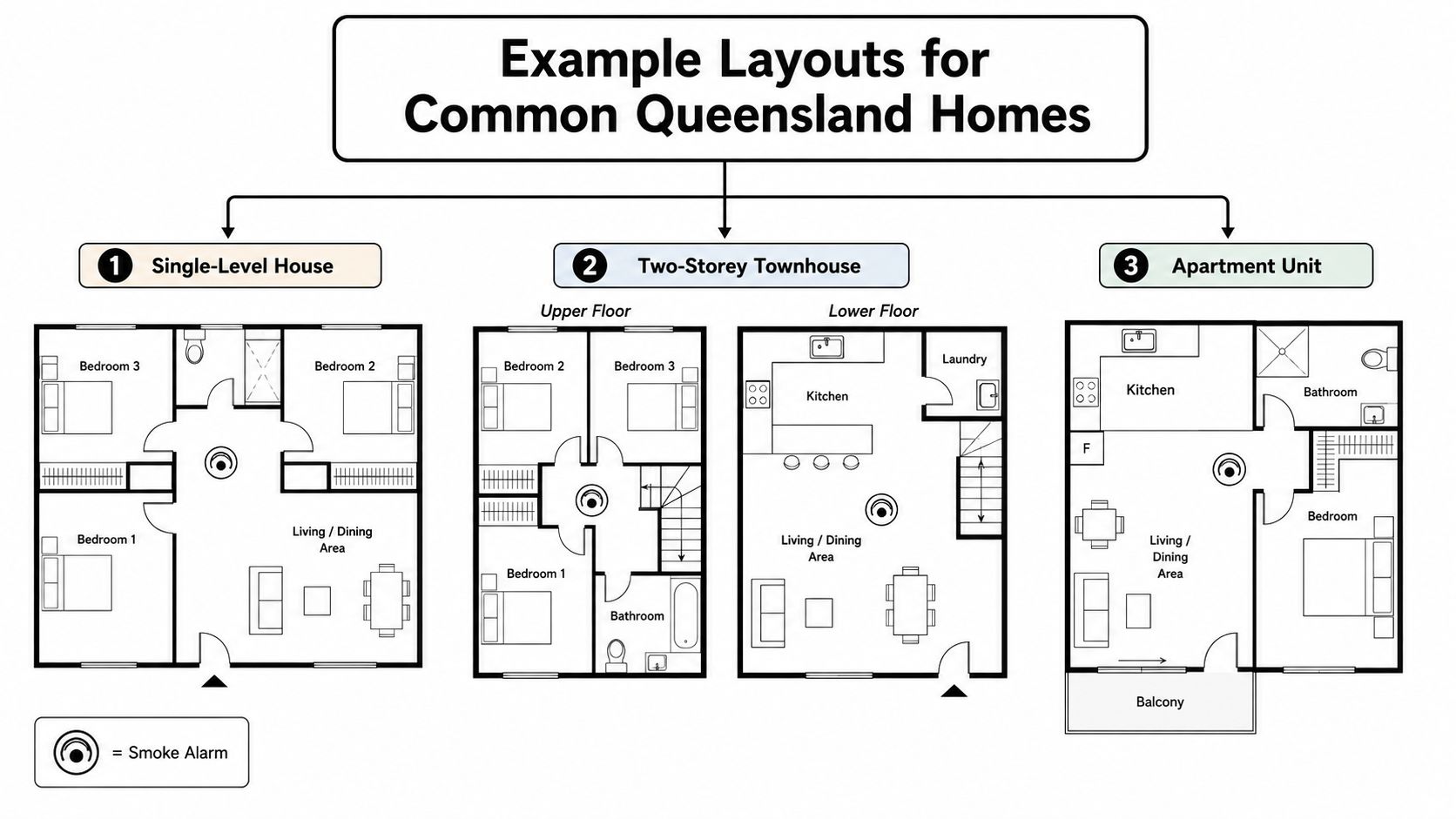
A typical single-level arrangement might include three bedrooms grouped along a hallway, with the kitchen, dining and living areas beyond the hallway.
A sensible compliance count would usually begin with:
The important distinction is that the hallway alarm doesn't replace the bedroom alarms. If the bedrooms open directly into the living area without a hallway, the required device may need to sit between each bedroom and the rest of the level, subject to the applicable placement rules.
A two-storey home needs the layout assessed separately on each level. Upstairs, place alarms inside each bedroom and in the hallway connecting those bedrooms to the stairs or the rest of the upper level.
Downstairs, assess the living areas, kitchen arrangement and the route towards an external exit. Because the lower level is a storey in its own right, it needs an alarm even if it contains no bedrooms. The device should be on the most likely path of travel to leave the dwelling, rather than being hidden in an unsuitable corner near a fan or vent.
This approach prevents a common mistake, which is installing alarms upstairs and treating the stairwell as sufficient coverage for the entire house. Each storey needs its own considered location, and all alarms must operate as one interconnected system.
The accompanying video provides another way to visualise how alarm positioning relates to a home's rooms and circulation paths.
Interconnected smoke alarms need more than secure mounting. The installer must confirm that the devices are compatible, connected correctly and positioned so the network provides useful warning throughout the dwelling. Hardwired systems also require electrical work, while approved battery-powered or wireless systems still need careful configuration and testing.
A licensed electrician can assess the existing circuit, ceiling access, alarm age and placement constraints before recommending a compliant arrangement. That's particularly useful in older Brisbane homes where previous alarms may be standalone units, wiring may not suit the intended network, or renovations may have changed the original escape paths.
DLG Electrical is one Brisbane service provider offering photoelectric, hardwired and interconnected smoke alarm installation and testing. For broader property fire-safety planning, a practical fire extinguisher inspection guide can help you understand why extinguishers also need regular attention.
For homeowners who want a technician to verify operation rather than rely on a visual check, DLG's smoke alarm testing services guide explains the testing process and the issues an inspection can identify.
The safest next step is to sketch your floor plan, mark every bedroom and storey, and then book a compliance assessment before buying replacement alarms at random.
DLG Electrical can inspect your Brisbane home, identify missing or incorrectly positioned alarms, and install and test a compliant photoelectric interconnected system. Visit DLG Electrical to request a quote and arrange practical advice for your property.

Master Electrician with over 30 years of experience. Founded DLG Electrical in 2005 after international project work including electrical installations at Stamford Bridge Stadium, London(Home of Chelsea FC).

Local Electricians that can fix all Electric Hot water Systems.
Motion sensor lights are a versatile addition to any home, offering nu
