83 Jean St, Grange QLD 4051
Mon-Fri 07:30 AM - 04:00 PM - Sat - 8:00 - 12 - Sunday Closed
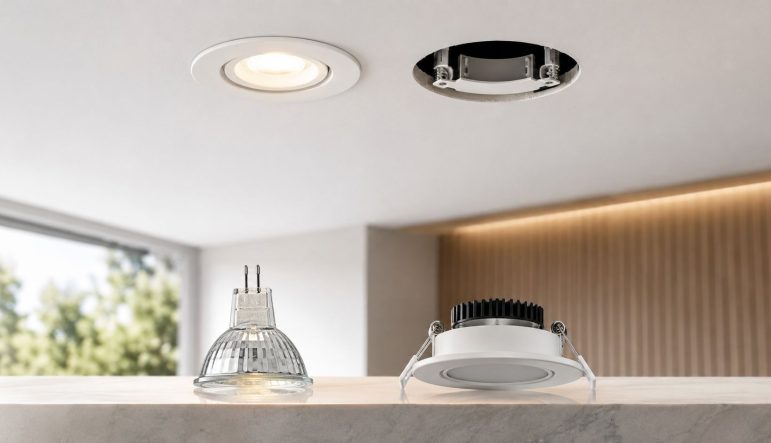
A downlight is a recessed ceiling light that sits flush with the ceiling and casts light downward. In Australia, the key distinction isn't just brightness or appearance, it's the fitting's insulation rating and compliance with electrical safety requirements.
You may be standing in a half-finished Brisbane kitchen, looking at a ceiling marked with pencil circles and wondering why a simple light needs so much planning. The fitting seems small, but the choice affects the roof space above it, the insulation around it, the position of nearby smoke alarms, the quality of light on your benchtop and the electricity used every time you switch it on.
That's why the useful answer to what is a downlight goes beyond “a light recessed into the ceiling”. In a Queensland home, it's part of a ceiling system. The fitting must suit the insulation, the ceiling construction and the intended room use, while the installation must meet Australian safety expectations.
This guide follows the practical questions a homeowner usually has, from how a downlight works to the differences between LED, halogen, fixed, adjustable, IC-rated and non-IC fittings. It also explains how to mark out positions, avoid common layout problems and decide when the work belongs with a licensed electrician.
A renovation often starts with a style decision. You choose kitchen cabinetry, benchtops and wall colour, then someone asks whether you want downlights. The ceiling plan may show a neat grid of fittings, but that tidy layout can hide important questions. Will insulation be able to sit over the fittings? Will the lights create shadows while you prepare food? Is there enough room to maintain the fittings later?
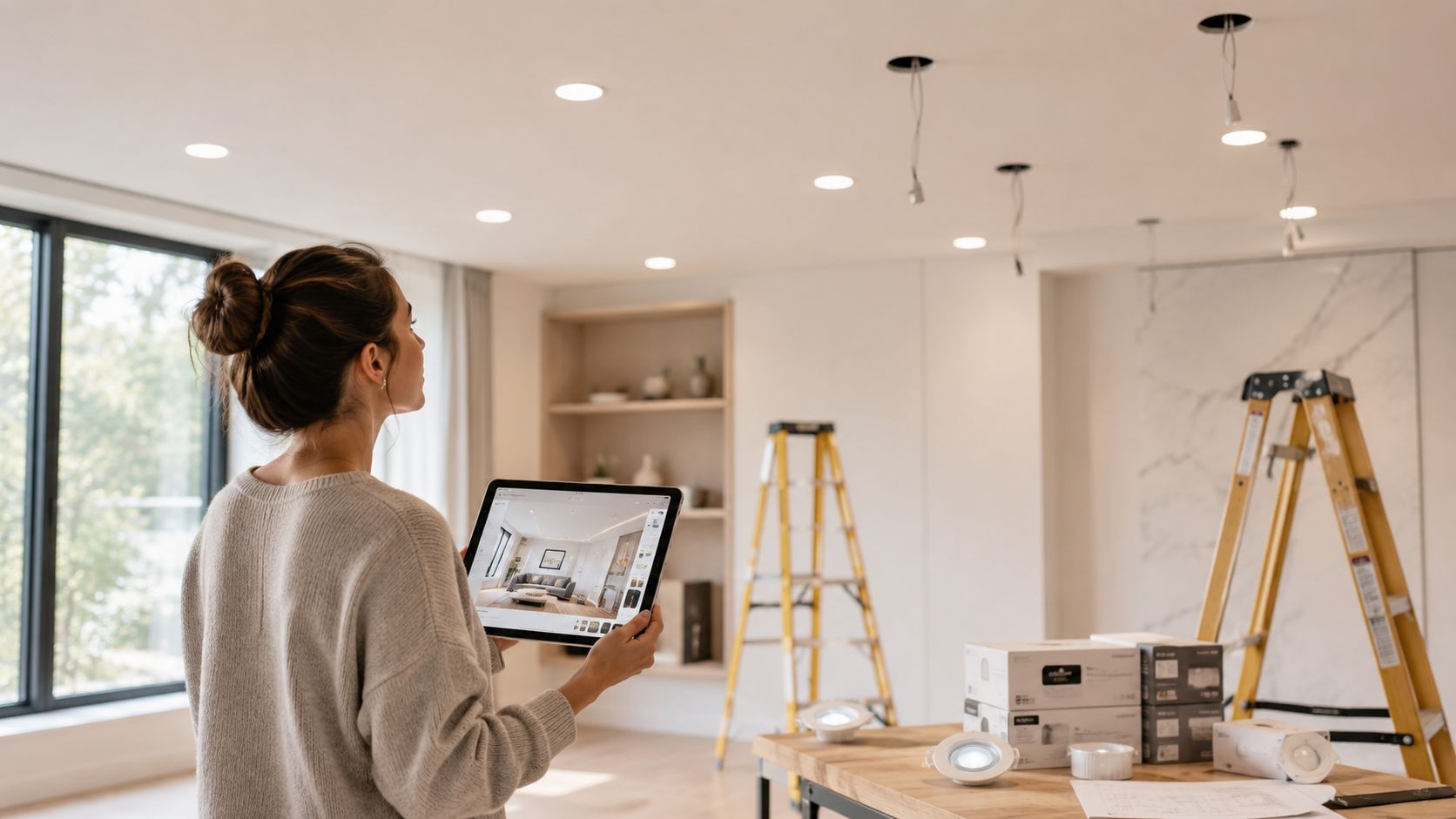
Downlights became a mainstream residential lighting choice in Australia during the 2000s, after 50-watt halogen downlights became common in Australian homes. A regulatory change followed in 2012, when a proposed 37-watt-per-lamp cap was adopted through changes to Minimum Energy Performance Standards, limiting 12-volt halogen downlight lamps to 37 watts. The history is documented in the ACEEE record on Australian lighting policy.
That background explains why many older Brisbane homes have ceilings filled with halogen fittings, transformers and insulation gaps. LED technology has changed the practical options, but it hasn't removed the need to check thermal performance and electrical compliance.
Queensland safety guidance warns that ceiling insulation must not cover downlights and reminds householders to switch off power before entering a roof space. The same guidance makes clear that recessed lighting needs more care than an ordinary surface-mounted fixture, because part of the fitting sits inside the ceiling cavity. You can review the local advice in the Queensland electrical safety guidance for the home.
By the end, you'll be able to identify the decisions that matter, choose fittings suited to an insulated ceiling, plan useful light rather than random brightness and recognise when a licensed electrician should take over.
Think of a downlight as a small window set into the ceiling. The visible trim sits at ceiling level, while the body of the fitting extends above the plasterboard. Instead of hanging into the room like a pendant or projecting from the ceiling like a batten, the downlight keeps most of its structure in the ceiling cavity.
Plain definition: A downlight is a recessed luminaire designed to direct light downwards from a ceiling opening.
The visible parts are straightforward:
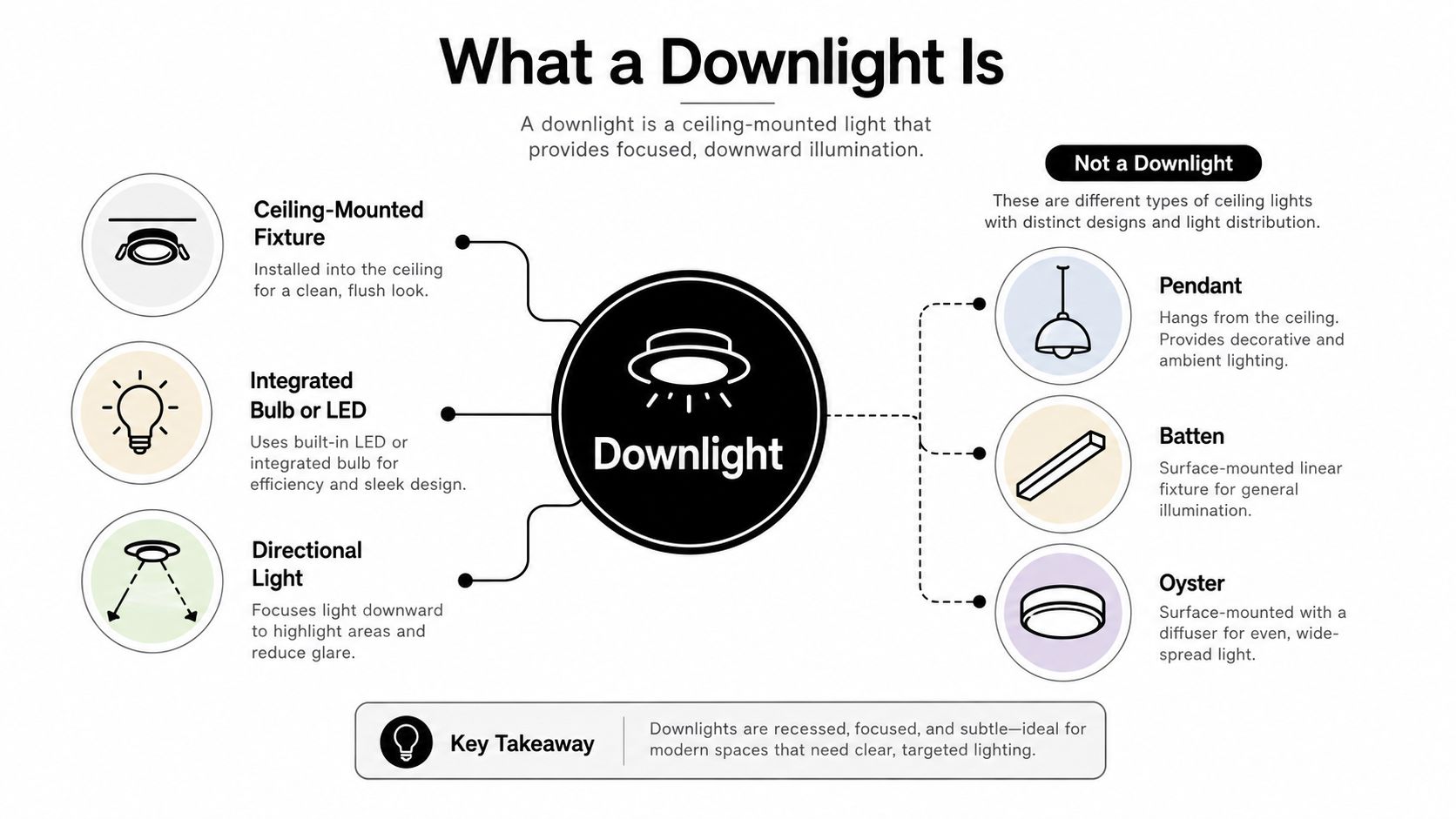
The lamp sends light through an aperture and reflector or lens. A narrow beam can highlight artwork, a wall or a particular work area. A wider beam spreads light across a larger part of the room and is often more suitable for general illumination.
The beam angle doesn't describe how bright the fitting is. It describes how widely the light spreads. Two fittings can have similar brightness but produce very different results if one concentrates its light and the other distributes it broadly.
A downlight also needs a ceiling cut-out, which is why replacement isn't always a simple matter of swapping a globe. Residential fittings in Australia commonly use a 90 mm ceiling cut-out, with 70 mm also widely used, according to the Queensland safety material cited above. The existing hole, the new fitting's dimensions and the ceiling structure all need to match.
In Australia, a downlight is a regulated electrical product, not merely a decorative ceiling accessory. The lighting industry moved from widespread halogen use toward stronger energy and safety controls, and the Regulatory Compliance Mark became mandatory for LED lighting products sold in Australia by 2013, as recorded in the Australian lighting industry history.
This matters at the point of purchase and during installation. A fitting that looks suitable may still be wrong for an insulated ceiling, incompatible with a dimmer or unsuitable for the existing cut-out. The product marking, manufacturer instructions and roof-space conditions belong in the decision from the start.
Once the basic concept is clear, the choice becomes more practical. A kitchen, bedroom and hallway don't need identical fittings, and a fitting that works in an open ceiling may be unsuitable after insulation is installed.
| Downlight Type | Best For | Key Trade Off |
|---|---|---|
| Integrated LED | Most modern replacements and new installations | The LED module may not be replaceable like a traditional globe |
| Legacy halogen | Existing fittings awaiting replacement | Higher heat output and greater energy demand than modern LED options |
| Fixed LED | General lighting where the ceiling is flat | Light direction is limited |
| Adjustable or gimbal | Sloping ceilings, artwork and feature walls | The mechanism can add cost and may need careful aiming |
| IC or IC-F-rated | Insulated ceilings where the product allows insulation contact | The fitting still needs to be installed according to its instructions |
| NON-IC | Situations where a clear air space can be maintained | Insulation and storage in the roof space need more careful separation |
| Dimmable fitting | Living rooms, bedrooms and flexible entertaining areas | The driver and dimmer must be compatible |
| Fixed-colour fitting | Straightforward, consistent room lighting | The chosen colour appearance can't be changed later |
LED has become the practical default for many Australian upgrades because modern LED fittings produce light with less heat and lower electrical demand than older halogen designs. That doesn't mean every LED is automatically suitable. A compliant LED fitting still needs the correct thermal rating, driver, dimmer compatibility and installation method.
Halogen fittings also create a common trap during renovation. A homeowner may remove the lamp and assume the old fitting is now safe to cover because a cooler LED lamp has been inserted. The housing and wiring arrangement still matter, so replacing only the lamp may not resolve the ceiling safety issue.
Fixed fittings suit a flat ceiling where the desired light falls directly below each position. Adjustable gimbal fittings allow the beam to tilt, which helps on a sloping ceiling or where you want to direct light towards a painting or textured wall.
Adjustment is useful, but it isn't a substitute for good layout. A gimbal aimed at a benchtop can still produce glare if the fitting sits in the wrong place, and a fitting aimed across a room may create uneven brightness.
Warm white usually feels relaxed in bedrooms and living areas. A cleaner, cooler appearance may suit a utility space or task-focused area, but the right choice depends on the finishes and the atmosphere you want.
Trim colour also affects the visual result. White tends to blend into a standard painted ceiling, while black or other finishes can become a deliberate design feature. Choose the safety and insulation classification first, then settle on colour, shape and trim.
The most important downlight decision often happens above the ceiling rather than below it. A fitting produces heat, and that heat must be controlled so it doesn't transfer into insulation, timber or other combustible building materials.
Australian recessed downlights are governed by AS/NZS 60598.2.2 and related electrical-safety requirements. The safety objective is to prevent excessive luminaire temperature rise and ignition of nearby materials. The Australian recessed-lighting standard guidance explains that compliance can involve a manufacturer-approved barrier tested to AS/NZS 5110, the specified separation distance or applicable Wiring Rules clearances.
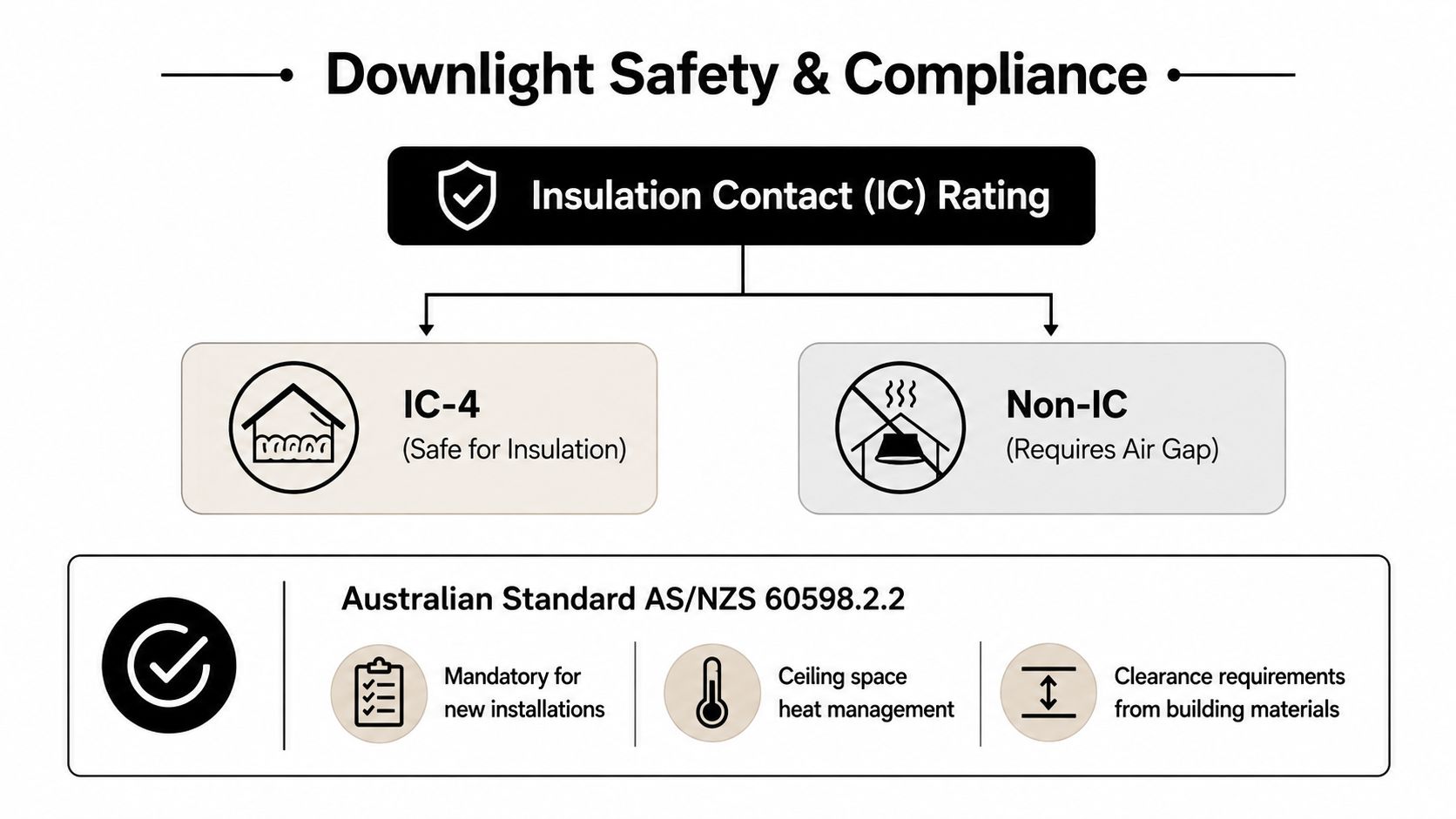
The insulation classification tells you how the fitting can interact with the material around it. It isn't a style label.
The wording matters. “Can be covered” and “can be abutted” aren't interchangeable, and the manufacturer's installation instructions remain part of the compliance process. A product needs to be selected for the actual ceiling, not just for the appearance of its trim.
The lamp may continue working while the ceiling system remains unsafe. The risk comes from heat moving into surrounding insulation and timber, particularly where an older non-rated fitting has been covered or where a clearance has gradually been lost during roof-space work.
An IC or IC-F fitting can also support better insulation continuity because the installer doesn't need to leave a large exposed gap around every light. That can improve the practical performance of the ceiling envelope while reducing ambiguity during installation. For product-specific guidance and installation considerations, see fire-rated downlights and ceiling safety.
Brisbane renovation rule: If insulation is being added or replaced, treat every existing recessed fitting as a point to inspect, not an obstacle to work around.
Older homes often have a mixture of fitting types, replacement lamps and altered insulation. A licensed electrician can identify the rating, check the roof-space arrangement and specify a replacement or barrier system that matches the ceiling conditions.
A safe fitting can still produce poor lighting if it's positioned without considering what happens below. The aim isn't to fill the ceiling with identical circles. The aim is to place light where people cook, read, walk, wash and work.
A wider beam spreads light more gently, while a narrower beam creates stronger focus and sharper transitions between lit and darker areas. The infographic below gives practical planning prompts, including a 60-degree general beam, a 40-degree task beam, a wall offset commonly described as 500 to 600 mm, and a spacing approach based on the beam angle.
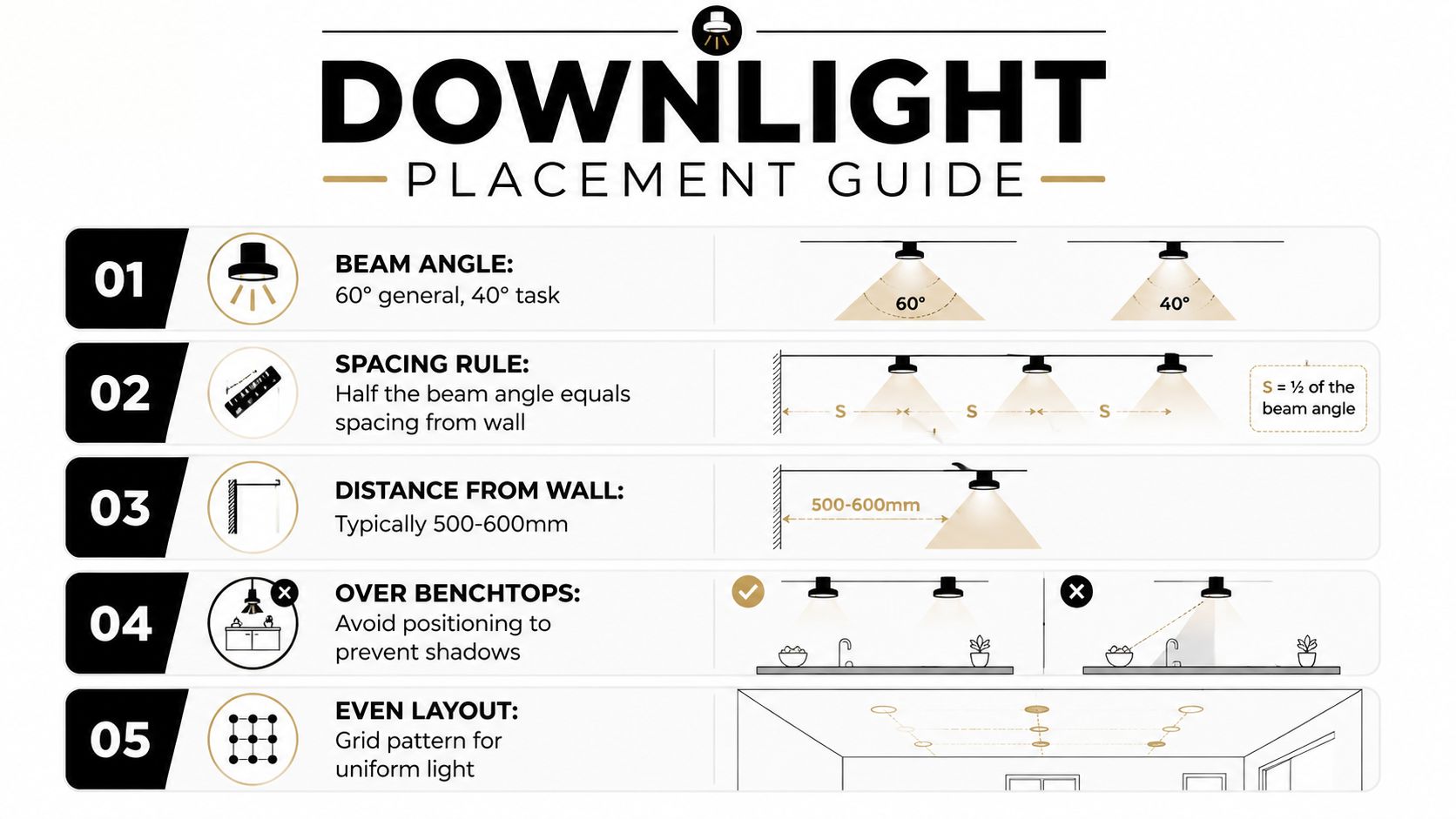
Treat those figures as planning guidance rather than a substitute for the fitting's photometric information. Ceiling height, beam angle, surface colour and the fitting's output all affect the final result.
In a kitchen, place task lighting so your body doesn't block the beam while you're working. A row directly behind the person at the bench can cast shadows across chopping and preparation areas, so the layout should respond to the benchtop and overhead cabinetry.
A living room usually benefits from zones rather than a bright grid. One group can light a walkway, another can highlight a wall, while lamps or pendants provide a softer layer for sitting areas. In a hallway, consistent spacing and a comfortable beam usually matter more than high output.
Bathrooms need careful coordination with wet-area requirements, ceiling construction and ventilation. The fitting location also has to work with exhaust fans, framing and access panels.
Queensland fire guidance warns that smoke alarms must be positioned within defined limits from light fittings and fan blades, and QFES material warns against placing an alarm within 300 mm of a light fitting. Read the Queensland smoke alarm installation information before finalising the ceiling plan.
Before anyone cuts the plasterboard, mark the proposed centres and check:
Older halogen-heavy homes can have a different upgrade case from a recently built LED home. Australian Energy Rating material reports that residential lighting use was more than 700 kWh per household each year, representing around 10 to 20 per cent of household electricity, and its 2010 residential lighting study recorded an average downlight power of around 47 watts per lamp. These figures appear in the Australian residential lighting report.
The same source records a Victorian government retrofit trial that estimated replacing halogen downlights with low-energy lamps could save about $161 million annually and reduce residential electricity consumption substantially. That doesn't give every Brisbane household the same payback. Your result depends on the age of the fittings, how often the lights operate and how much of the home's lighting comes from downlights.
If a home still relies heavily on older halogen fittings, replacing the fittings can reduce energy demand while also addressing heat and insulation concerns. If the home already has efficient LEDs, a full replacement may be less urgent, and improving zoning or control may deliver more useful everyday value.
Dimming helps because a room doesn't always need full output. A living room may need bright light for cleaning and lower light for watching television. Bedrooms and dining areas can benefit from the same flexibility, provided the fitting and dimmer are designed to work together.
LED drivers can behave poorly with an incompatible dimmer. Symptoms include flicker, buzzing, limited dimming range, drop-out at low levels or a visible change in colour. Leading-edge and trailing-edge dimmers control the load differently, so the electrician should confirm the manufacturer's compatibility list rather than assuming an old halogen dimmer will suit the new LED.
If your existing lights pulse or behave unpredictably, this practical guide on how to stop flickering dimmer lights can help you identify the issue before you choose replacement fittings.
Smart controls add another layer. Use them to create zones, scenes or schedules, but keep the basic switching arrangement understandable for everyone in the home. A kitchen may need separate work-surface and general-lighting zones, while a hallway may only need simple switching.
For more ideas about reducing lighting demand, see this guide to energy-efficient lighting choices. In most retrofit situations, choose an efficient LED that is clearly marked as compatible with the insulation arrangement, then verify dimming before buying a whole batch.
Use this order when choosing a fitting:
Queensland safety guidance tells householders to switch off power before entering roof spaces. Recessed luminaire installation also involves electrical connections, ceiling cut-outs, heat clearances and compliance checks, so it isn't a suitable task for improvised DIY work. The LED downlight installation guide provides further context, but a licensed electrician should assess and complete the electrical installation.
DLG Electrical can help Brisbane homeowners select and install downlights for insulated ceilings, including projects in North Brisbane, Grange and Windsor. Ask for advice before cutting the ceiling, particularly if you're replacing older halogen fittings, adding insulation or changing dimmers.
DLG Electrical offers practical downlight advice, compliant installation and free quotes for Brisbane homes, including North Brisbane, Grange and Windsor. Visit DLG Electrical to discuss your ceiling, insulation and lighting-control requirements with a licensed local team.

Master Electrician with over 30 years of experience. Founded DLG Electrical in 2005 after international project work including electrical installations at Stamford Bridge Stadium, London(Home of Chelsea FC).

Local Electricians that can fix all Electric Hot water Systems.
Motion sensor lights are a versatile addition to any home, offering nu
