83 Jean St, Grange QLD 4051
Mon-Fri 07:30 AM - 04:00 PM - Sat - 8:00 - 12 - Sunday Closed
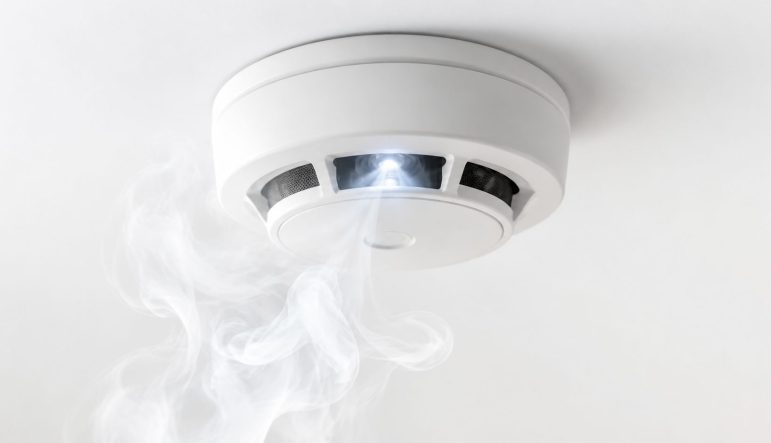
A photoelectric smoke alarm detects smouldering fires using a light-scattering sensor, typically responding at 8% to 16% obscuration per metre, compared with 40% to 60% for ionisation alarms. In Queensland, it's the legally required standard for residential and rental properties because it performs more effectively in domestic fire situations.
You're making toast in a Brisbane kitchen when the alarm sounds. Or a cushion starts smouldering after sitting too close to a heater, and the warning comes before flames are obvious. That sound is doing its job, but the type of detector behind it determines how the alarm recognises danger.
Queensland homeowners, landlords and renovators aren't choosing photoelectric technology only because it's a sensible upgrade. The state has made it part of a staged legal requirement, with deadlines that affect different properties at different times. The practical question isn't just whether photoelectric alarms are better than older ionisation units. It's whether your home has the right alarms, in the right locations, interconnected and ready before installation demand increases.
A photoelectric smoke alarm is a fire detector that uses light to identify smoke particles in the air. Inside the alarm, a light source and a light-sensitive sensor sit in a small chamber. Under normal conditions, the light doesn't reach the sensor directly. When smoke enters, it scatters the light towards the sensor, and the alarm sounds.
That design matters most when a fire starts. Upholstered furniture, bedding, wiring insulation and other household materials can smoulder before they produce a large flame. A photoelectric alarm is designed to recognise the smoke from that slow-burning stage, giving people an earlier warning while they're asleep or in another part of the house.
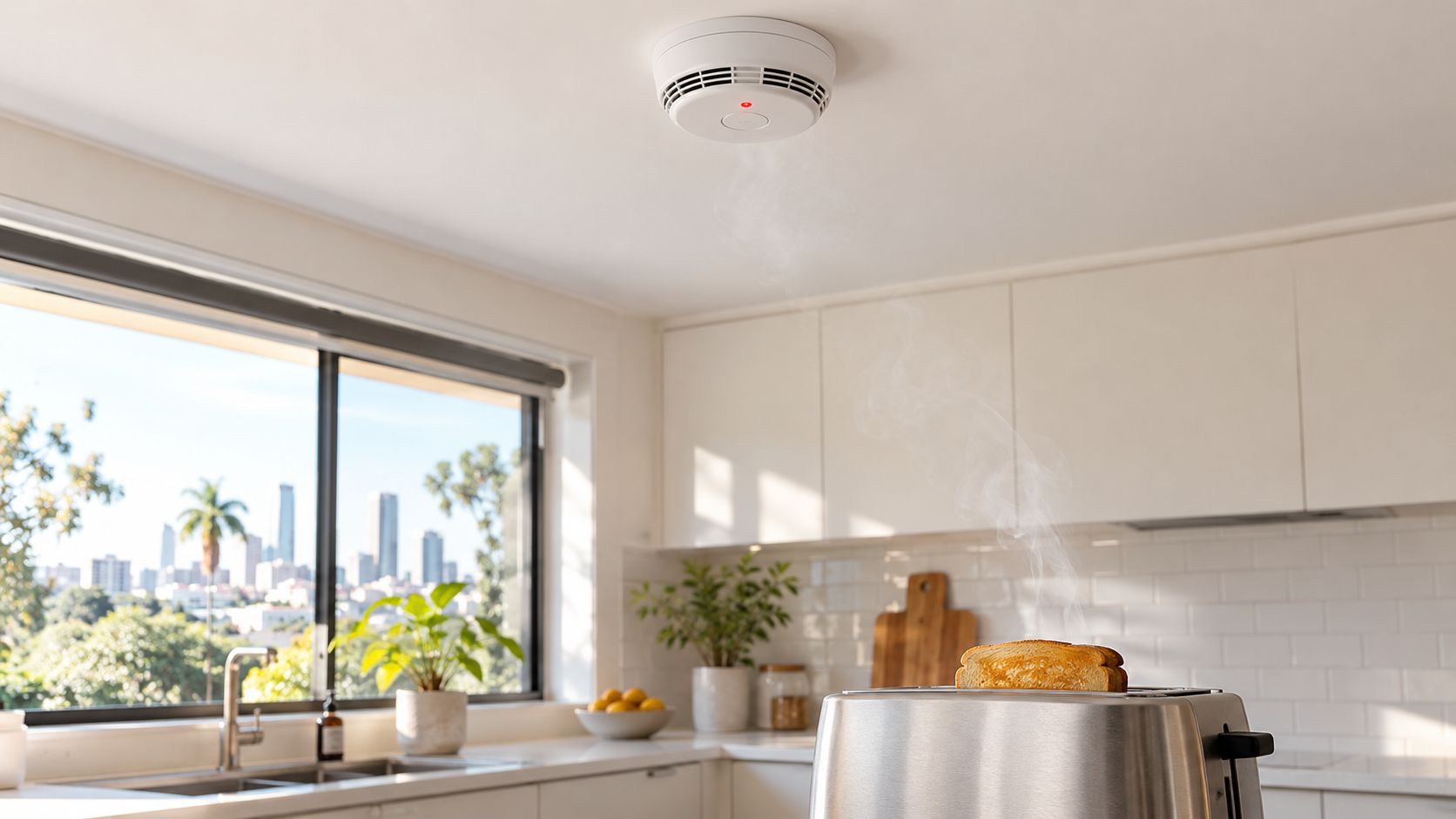
A cooking incident can also expose the difference between a nuisance alarm and a useful warning. Toast smoke may activate a correctly positioned alarm, but repeated alarms often indicate poor placement, dust contamination or an unsuitable location too close to cooking appliances. The answer isn't to disconnect the unit. It's to check the alarm's position and have the system assessed if the problem continues.
Queensland began its staged statewide move to photoelectric alarms on 1 January 2017, when new and substantially renovated homes had to use interconnected AS 3786-2014 photoelectric alarms in every bedroom, in hallway connections and on each level. The requirement extended to leased and sold homes from 1 January 2022, and it applies to all other homes by 1 January 2027, according to the Queensland Government's smoke alarm installation guidance.
The rules also cover the alarm's age, power source and interconnection. A compliant unit must be less than 10 years old, hard-wired or powered by a non-removable 10-year battery, and linked so every alarm activates when one detects smoke.
That gives you a straightforward mental model. A photoelectric alarm isn't just a round device fixed to the ceiling. In Queensland, it's part of a coordinated warning system designed to detect smoke early and alert occupants throughout the dwelling.
The sensor works like a torch shining across a dark room. The beam travels in a controlled direction, while a light-sensitive receiver sits off to the side. With clean air in the chamber, the receiver sees little or no light.
Smoke changes that arrangement. Particles enter the chamber and interrupt the beam, scattering some of the light sideways. The receiver detects that change, the alarm's electronics assess it as smoke, and the sounder activates.
The light source operates inside the chamber. An LED sends light across the sensing area, but the beam is aimed away from the sensor.
Smoke enters through the openings. Particles from a smouldering material move into the chamber with the surrounding air.
Scattered light reaches the sensor. The sensor detects the redirected light and triggers the alarm when the signal reaches its operating threshold.
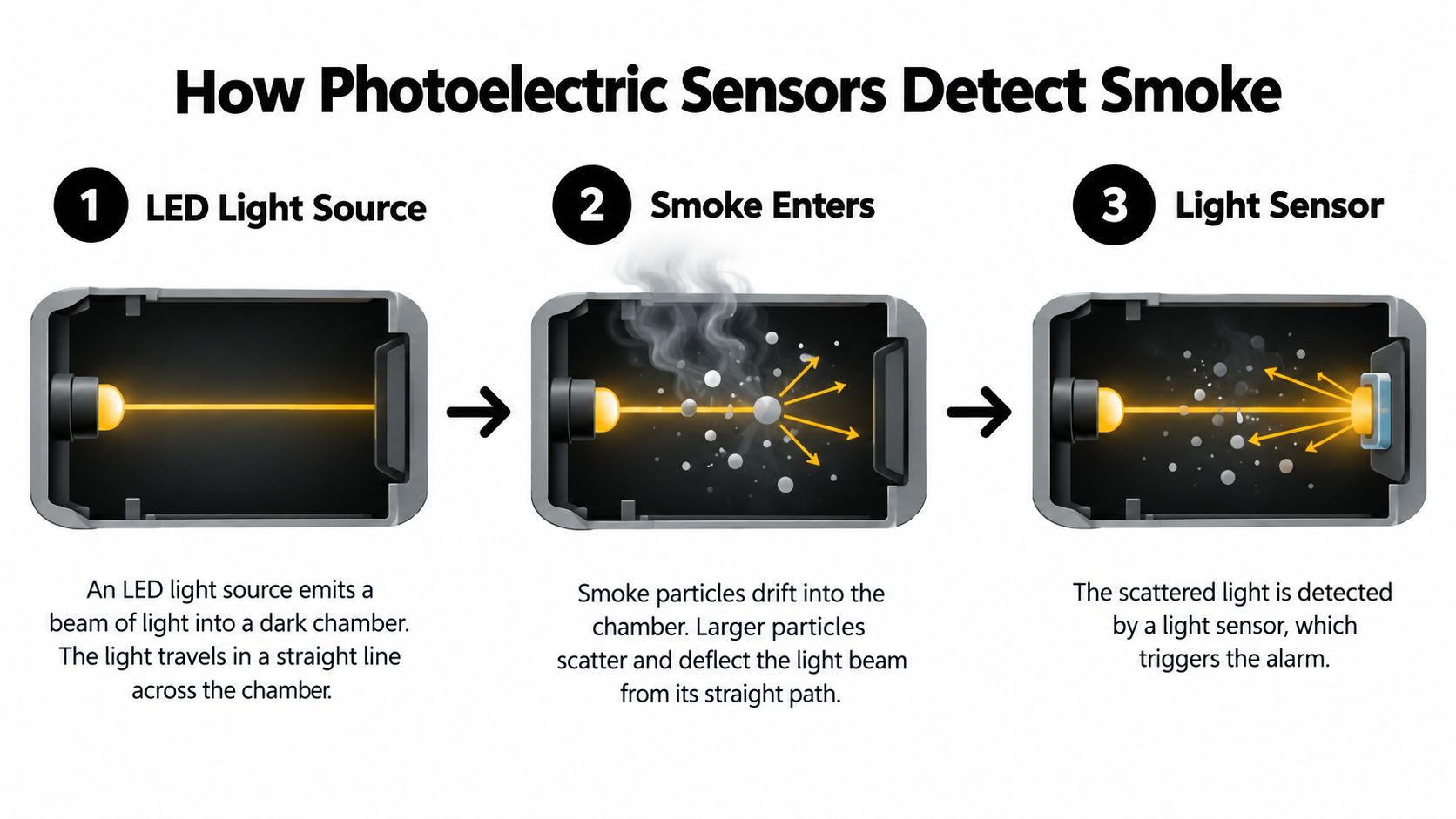
The sensor doesn't need to see flames. It responds to the smoke pattern entering the chamber. That's why photoelectric technology suits bedrooms, hallways and living areas where a slow-burning fire can threaten sleeping occupants before anyone notices heat or flame.
Ionisation alarms use a different method. They monitor an electrical current in an ionised chamber, and smoke disrupts that current. Their response profile differs from photoelectric alarms, which is why the two technologies shouldn't be treated as interchangeable labels for the same device.
A Parliamentary source on the AS 3786 standard reported that photoelectric alarms typically respond at 8% to 16% obscuration per metre, while ionisation alarms typically respond at 40% to 60% light obscuration per metre. The Queensland Residential Tenancies Authority's smoke alarm guidance identifies photoelectric alarms as the most effective type in domestic situations and aligns them with the AS 3786-2014 standard used in Queensland compliance requirements.
In practical terms, light scattering gives the alarm a way to recognise smoke before a fire becomes an obvious open flame. The device still needs correct positioning, a clean sensing chamber and a working power supply. Sensor technology can't compensate for an alarm that's disconnected, buried under dust or installed where airflow prevents smoke from reaching it.
Photoelectric and ionisation alarms detect different smoke characteristics. A photoelectric model uses scattered light, while an ionisation model detects a change in electrical current. For a Queensland home, that technical distinction has a direct compliance consequence because the required residential system uses interconnected photoelectric alarms that meet the relevant standard.
| Feature | Photoelectric alarm | Ionisation alarm |
|---|---|---|
| Detection method | Light scattering inside a sensing chamber | Disruption to an ionised electrical current |
| Strongest practical use | Smouldering, slow-burning household fires | Fast-flaming fire scenarios |
| Typical household concern | Can alarm if smoke reaches the chamber from cooking or another nearby source | Can be more prone to nuisance alarms in some household conditions |
| Queensland residential position | Required technology for the staged residential standard | Not a substitute for the required photoelectric system |
| Network requirement | Must be interconnected where Queensland rules apply | A standalone unit doesn't meet the interconnected photoelectric requirement |
The comparison doesn't mean an ionisation alarm has no detection value. It means the device is built around a different fire profile. A fast-flaming fire and a slow-smouldering fire produce different smoke conditions, so response behaviour won't be identical.
Photoelectric alarms are the practical choice for sleeping areas and the circulation paths connecting them to the rest of the dwelling. A person may be asleep behind a closed door while smoke develops elsewhere, so a networked system is more useful than relying on one detector near the likely source.
Cooking smoke remains a placement issue, not a reason to reject photoelectric technology. Installing an alarm directly beside a cooktop can create repeated activations and encourage occupants to ignore or disable it. Positioning must follow the applicable Queensland guidance and the manufacturer's instructions, with professional advice where the layout is unusual.
Older ionisation units also create a common trap during renovations and property transactions. A detector can still beep during a test and look physically intact, yet fail to provide the technology and interconnection required for the property's compliance category. The practical guide to choosing the right smoke detector for Australian homes can help homeowners identify the questions to raise before buying replacements.
The useful decision is therefore clear. Don't compare alarms only by purchase price or by whether the test button works. Check the sensing technology, Australian Standard marking, age, power source, placement and interconnection. In Queensland residential work, photoelectric is the regulated direction, not merely a preferred upgrade.
A compliant alarm system is determined by more than whether a photoelectric detector is fixed to the ceiling. Queensland requirements cover technology, standard, placement, power, age and interconnection. The Queensland smoke alarm compliance requirements guide provides a useful reference before an upgrade, sale, tenancy or renovation.
An existing home being upgraded generally requires interconnected photoelectric alarms that comply with AS 3786-2014. When one alarm detects smoke, the other units in the dwelling must sound as well. This gives occupants a better warning in multi-room homes, particularly when someone is asleep behind a closed door, on another level or away from the alarm that first detects the smoke.
Standard: Confirm that every alarm is a compliant photoelectric unit marked for AS 3786-2014.
Interconnection: Check that the alarms communicate across the dwelling. If one activates, the others must activate together.
Age: Queensland guidance requires alarms to be less than 10 years old. Replace an older unit even if it still responds when the test button is pressed.
Power: A hard-wired 240V alarm must be installed by a licensed electrician. A non-removable 10-year battery alarm is accepted as an alternative power source under the stated requirements.
Placement: Provide coverage on every storey, inside every bedroom and in hallways connecting bedrooms with the rest of the home.
This arrangement changes the coverage pattern from a single older detector in a central hallway. Alarms are placed where people sleep and along the routes connecting bedrooms with shared areas, while the system allows an activation in one location to alert the rest of the dwelling.
The rollout began with new and substantially renovated homes on 1 January 2017. Leased and sold homes came within the staged requirement from 1 January 2022. Remaining homes are scheduled to meet the standard by 1 January 2027, as outlined in the Queensland Fire and Emergency Services smoke alarm requirements.
Landlords, sellers, owner-occupiers and renovators can face different compliance considerations based on what happens to the property and when. A sale or new tenancy should not be the first point at which the alarms are checked.
The deadline also creates an installation planning issue. An ABC News report published in 2026 cited estimates that more than 1 million Queensland homes may still be non-compliant, and that 70% to 80% of owner-occupied homes had yet to meet the 2027 standard. The reported Queensland compliance backlog may increase demand for compliant alarms, electricians and inspection work as the deadline approaches. Check the property early, because locating suitable alarms and booking electrical work can take time.
Start with the floor plan, not the box of alarms. Mark every bedroom, each level and the hallways connecting bedrooms with the rest of the dwelling. Then identify existing alarms, their age, their power source and whether they activate together during a test.
Battery-operated alarms can be simpler to fit because they don't require a new 240V electrical connection. Even so, the unit still needs to be a compliant photoelectric alarm, positioned correctly and interconnected where required. A battery alarm that isn't linked to the rest of the system leaves a coverage gap.
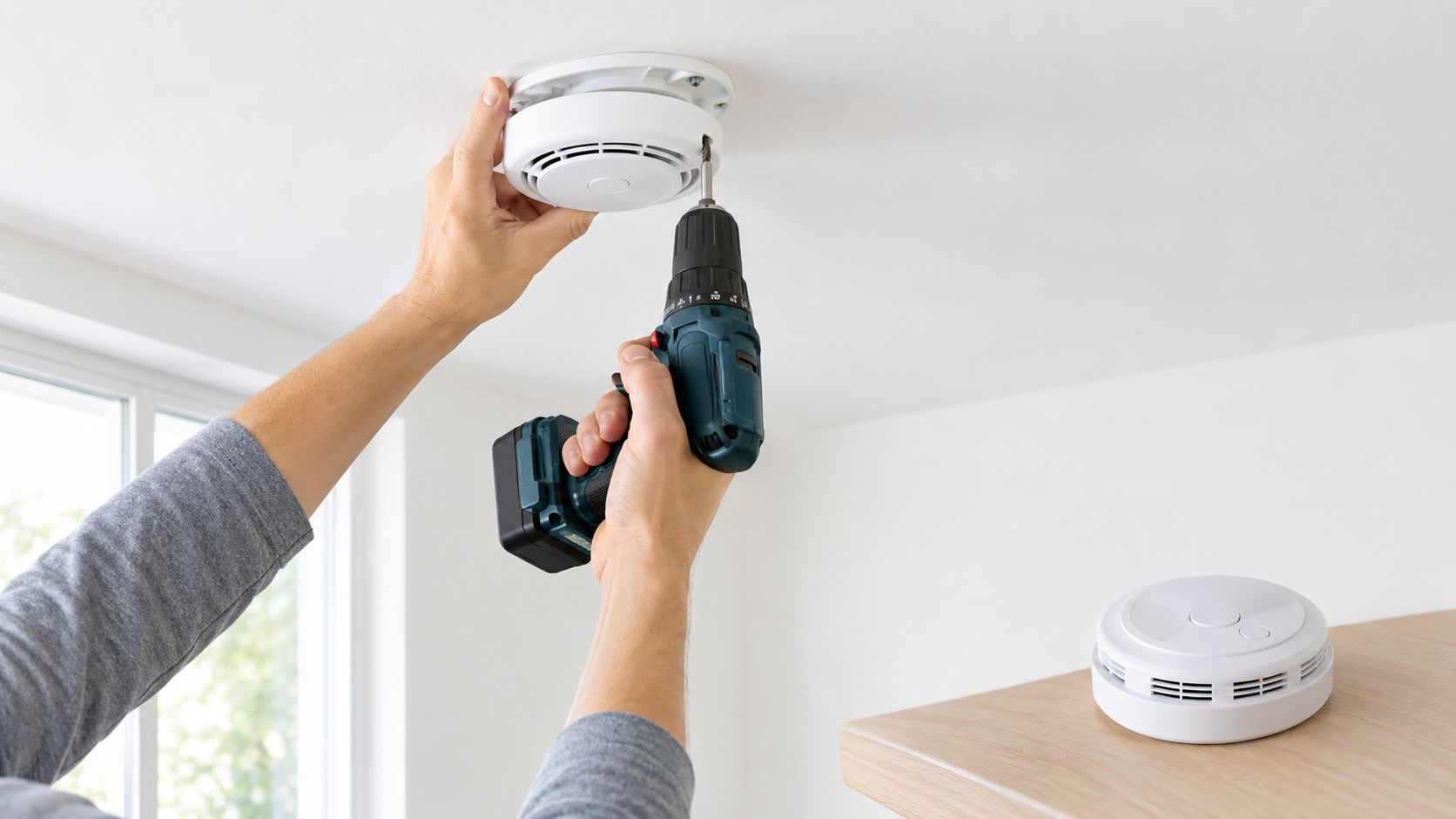
Avoid placing a detector where cooking fumes, bathroom steam or strong air movement will repeatedly reach it. Don't cover a nuisance alarm with tape, remove its battery or leave it disconnected. Those shortcuts stop the warning system from doing its job and can create a compliance problem.
Hard-wired installations need a licensed electrician. The same applies when an existing system requires new cabling, 240V connections, interconnection work or fault diagnosis. Electrical work in a ceiling isn't a suitable DIY task, and a neat-looking alarm doesn't prove that the wiring or network operates safely.
A professional installer should also check whether the ceiling structure, access, existing cabling and alarm locations suit the required layout. In some Brisbane homes, renovations have changed room boundaries or created extra sleeping areas, so the old detector positions may no longer provide the required coverage.
For broader electrical safety planning, Evright Industrial's electrical services resource provides useful context on the types of electrical work that require a structured, safety-first approach. For a residential smoke alarm job, ask the electrician to confirm the alarm model, standard, power method, interconnection method and testing process before work begins.
Compliance: Are the proposed alarms photoelectric and compliant with AS 3786-2014?
Interconnection: Will every alarm activate when one unit is tested?
Power: Will the installation use hard-wired 240V units or accepted non-removable 10-year battery units?
Placement: Will the electrician assess every storey, bedroom and connecting hallway rather than replace only the existing alarms?
Documentation: Will you receive details of the installed products and any work completed?
The questions to ask an electrician before hiring are especially useful for landlords and property managers who need a clear record of what was inspected and installed.
DLG Electrical provides Brisbane smoke alarm installation and compliance support, including photoelectric, hard-wired and interconnected systems. Booking early gives the electrician time to inspect the property properly instead of trying to arrange urgent work during a deadline-driven rush.
A compliant alarm can still fail if dust blocks the sensor, power runs out or the unit reaches the end of its service life. Put maintenance on a regular household routine rather than waiting for a low-battery chirp.
Test the system: Press the test button on each alarm and confirm that the interconnected units sound together. If one alarm responds but the others remain silent, arrange fault finding.
Keep the casing clean: Gently remove dust from the outside of the alarm using a soft brush or vacuum attachment. Don't spray cleaning chemicals into the openings or dismantle the sensing chamber.
Watch for warning signs: Repeated nuisance alarms, unexplained chirping, a missing status light or failure during testing needs attention. Don't silence a recurring problem without identifying its cause.
Replace ageing units: Queensland requirements specify alarms must be less than 10 years old. Check the date marked on the alarm, not just the date you moved into the property.
Check battery type: A removable battery arrangement may not meet the relevant Queensland requirement where a non-removable 10-year battery is required as the alternative to hard-wiring.
If one alarm fails but the others work, replace or repair the affected unit according to the manufacturer's instructions and the system design. If several alarms fail together, the interconnection, power supply or wiring may need professional testing.
Landlords should keep installation and replacement records, while homeowners should record the alarm age and test results somewhere easy to find. That simple record helps prevent forgotten units from staying in service beyond their permitted life.
The essential answer to what is a photoelectric smoke alarm is practical rather than theoretical. It's a light-scattering detector designed to warn occupants about smoke from smouldering fires, and in Queensland it forms part of a regulated, interconnected residential system. Check your alarms before the compliance deadline, arrange licensed electrical work where necessary and replace any unit that's too old or fails its test.
DLG Electrical can inspect Brisbane homes, install compliant photoelectric smoke alarms, and configure hard-wired or interconnected systems where required. Visit DLG Electrical to arrange a smoke alarm assessment or request a quote before installation demand increases.

Master Electrician with over 30 years of experience. Founded DLG Electrical in 2005 after international project work including electrical installations at Stamford Bridge Stadium, London(Home of Chelsea FC).

Local Electricians that can fix all Electric Hot water Systems.
Motion sensor lights are a versatile addition to any home, offering nu
