83 Jean St, Grange QLD 4051
Mon-Fri 07:30 AM - 04:00 PM - Sat - 8:00 - 12 - Sunday Closed
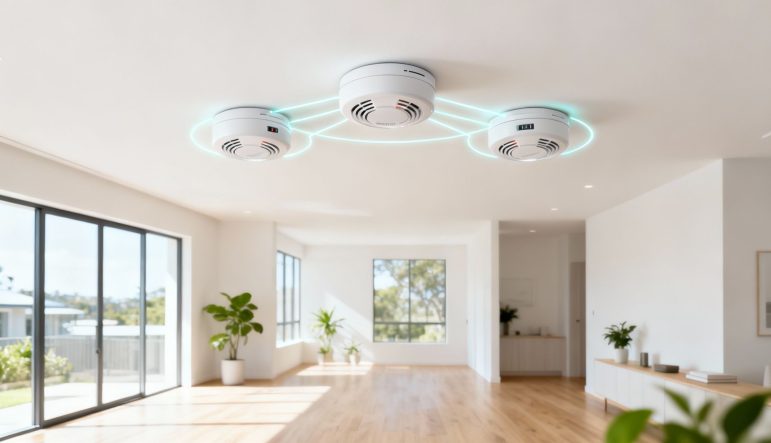
If you own a property in Queensland, getting your smoke alarms sorted is no longer a “nice-to-have”—it’s a critical safety and legal requirement. The rules are now crystal clear: your property must be fitted with interconnected photoelectric alarms, with the final deadline fast approaching.
For rental properties, this has been the standard since 2022. For everyone else, the clock is ticking towards the 1 January 2027 deadline, which applies to all homes, whether you’re living in it or selling it. It’s all about creating a safer standard for every single Queenslander.
Trying to get your head around the smoke alarm legislation can feel a bit overwhelming, but it all comes down to one simple, powerful idea: saving lives with smarter technology. The government rolled out these new laws to make sure every home has a top-notch early warning system, especially for those smoky, smouldering fires that can catch you off guard.
The biggest change was the mandate for interconnected photoelectric smoke alarms. Think of it like a synchronised safety net for your entire house. If one alarm detects smoke in a bedroom downstairs, it doesn’t just beep away on its own. Instead, it instantly sets off every other alarm in the home.
This means an alarm triggered in the garage will be heard loud and clear in the upstairs master bedroom, giving everyone inside the maximum time to get out safely. It’s a massive leap forward from the old, standalone battery alarms that only alert people in the immediate area, a system that tragically failed families who slept through a fire in another part of the house.
To give property owners enough time to adapt, the government wisely introduced these changes in stages. It’s fair to say Queensland’s smoke alarm laws are now among the strictest in the country, rolled out over a decade to bring every property up to the new standard.
The final piece of the puzzle locks in on 1 January 2027. From this date, every single home in Queensland—from the smallest rental unit to the largest family home—must have compliant smoke alarms that meet Australian Standard AS3786-2014. You can find out more about this final phase of the legislation to make sure you’re ready.
This timeline gives a great overview of the key dates.
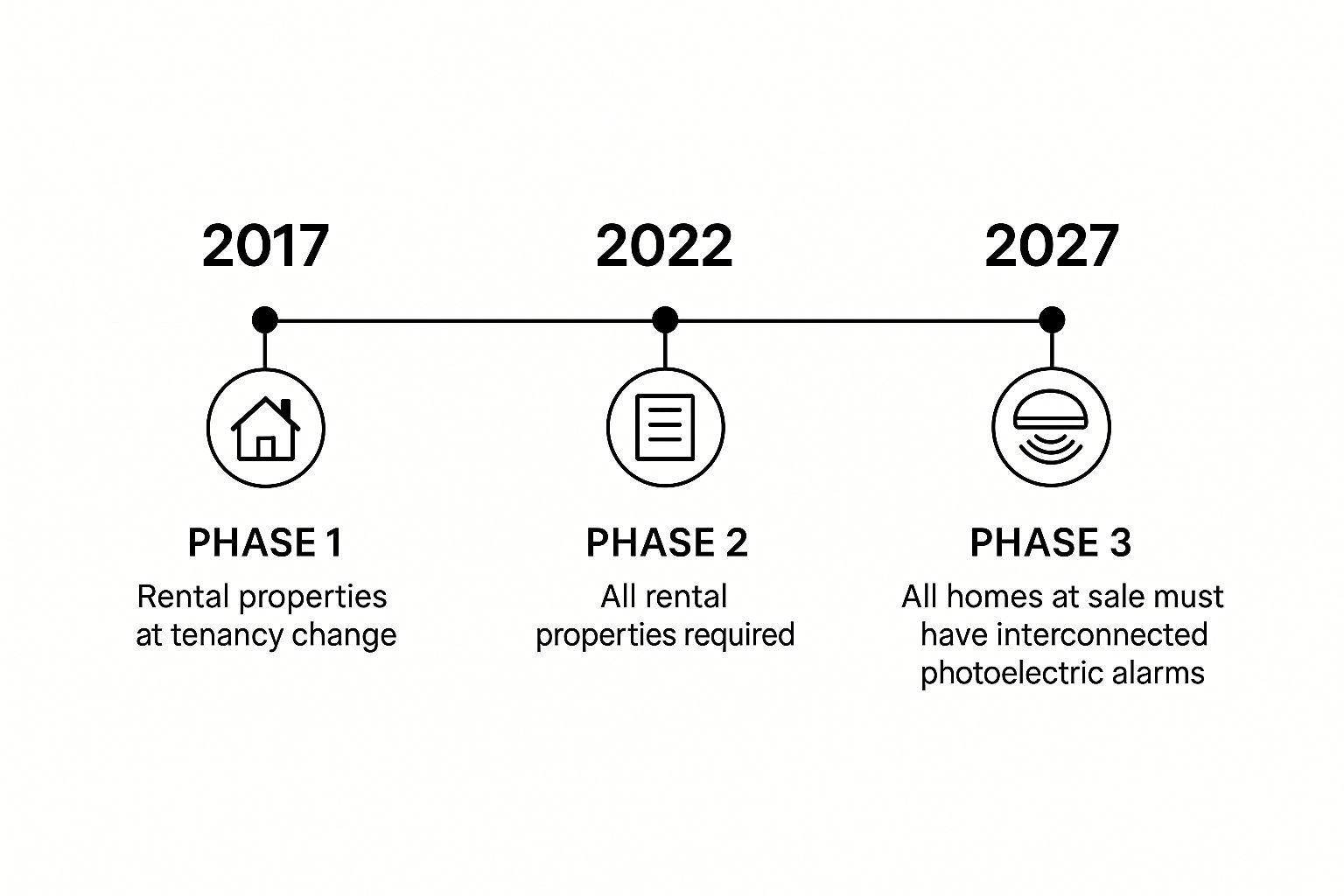
As you can see, the rollout was a progressive process. It started with properties being sold or leased, then expanded to cover all rentals, and now the final deadline is set to bring every home in the state into line.
To make it even clearer, here’s a quick breakdown of the key deadlines and what they mean for different property types.
| Deadline | Affected Properties | Core Requirement |
|---|---|---|
| 1 January 2017 | New builds and significantly renovated homes | Must have hardwired, interconnected photoelectric smoke alarms. |
| 1 January 2022 | All rental properties and properties being sold or leased | Must be upgraded to meet the new interconnected photoelectric standards. |
| 1 January 2027 | All owner-occupied homes (every dwelling in QLD) | Must have compliant, interconnected photoelectric smoke alarms installed. |
This table neatly sums up the journey. The goal has always been to ensure that no matter what type of home you’re in, it’s protected by a modern, reliable, and interconnected system.
Not all smoke alarms are created equal, and Queensland’s laws are now very specific about the technology required to keep your property compliant and, more importantly, safe. The legislation is designed to phase out older, less effective models in favour of a much higher standard for every home.
To understand why this change was so critical, you need to know the difference between the old and the new. For years, many homes were fitted with ionisation alarms. These are pretty good at detecting fast-flaming fires—the kind that produces lots of tiny, invisible smoke particles. The problem? They are notoriously slow at sensing the slow, smouldering fires that are far more common in homes. These are the fires that produce thick, visible smoke long before any real flames appear.
This is where photoelectric alarms step in, and the difference is night and day.
Think of a photoelectric alarm like a security camera inside a dark chamber. It sends out a straight beam of light. When thick, dense smoke from a smouldering fire drifts into that chamber, the smoke particles scatter the light beam, hitting a sensor and triggering the alarm.
This ability to effectively ‘see’ the smoke early is what makes them lifesavers. It provides those crucial extra minutes you need to get everyone out safely.
By making photoelectric technology mandatory, the legislation directly tackles the weak spot of older alarms. It puts the focus squarely on detecting the most common and deadly types of household fires at the earliest possible moment.
That’s exactly why they are the only type of alarm permitted under the current Queensland laws.
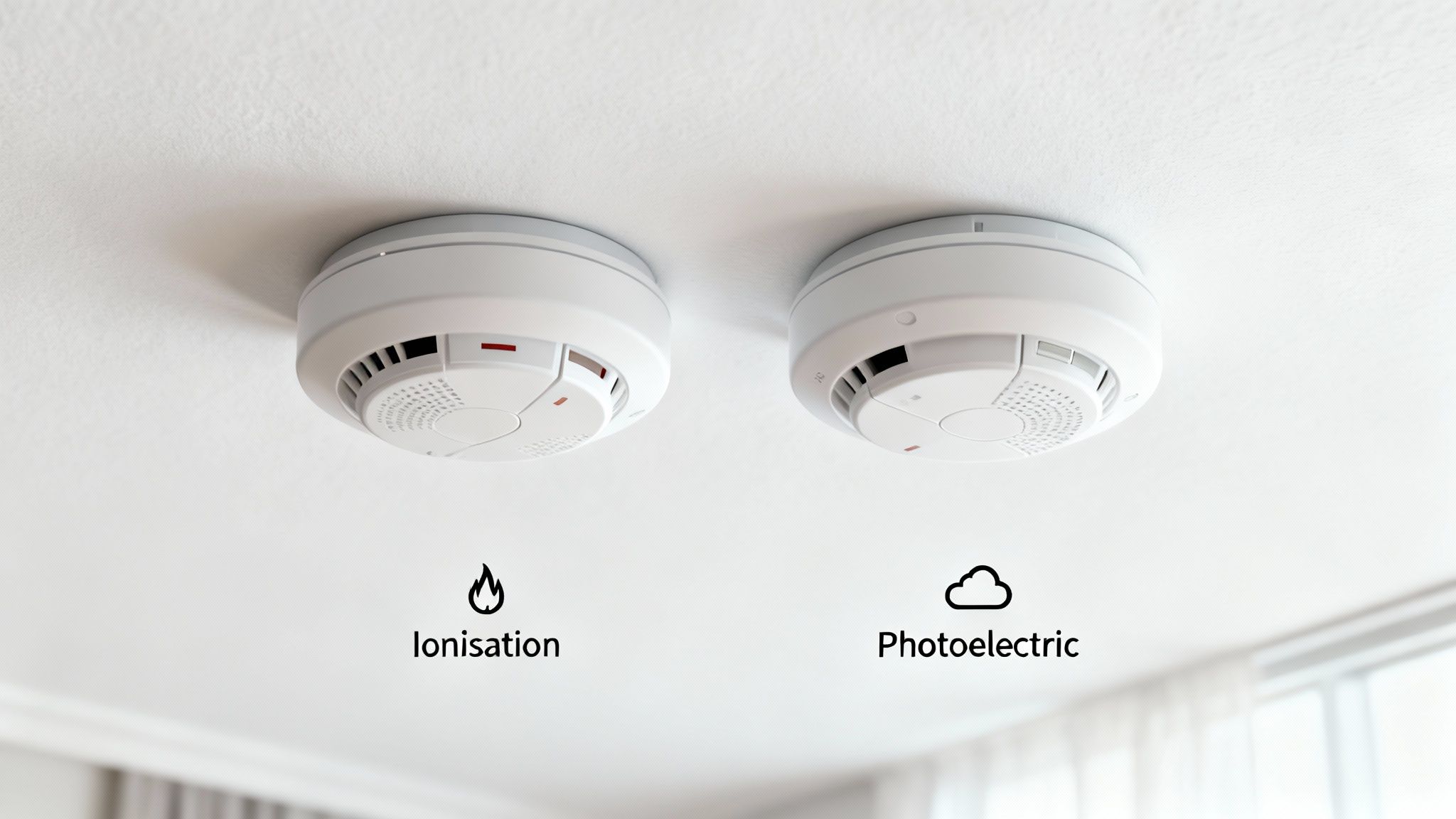
The second non-negotiable part of the legislation is that all your alarms must be interconnected. In simple terms, this means when one alarm goes off, they all go off. A fire starting in a downstairs lounge room will instantly trigger the alarm in the upstairs bedroom on the other side of the house.
This simple change creates a powerful, whole-house alert system. It completely removes the deadly risk of someone sleeping through a fire that starts in a distant part of the home. If you want a deeper dive into how this technology works, check out our detailed guide on interconnected smoke alarms in QLD.
So, to be compliant, every single alarm in your property must tick all of these boxes:
There are no shortcuts here. Choosing an alarm that meets every one of these criteria is the only way to ensure your property is both safe for its occupants and 100% legally compliant.
Installing the right type of alarm is a massive step, but true smoke alarm compliance in QLD hinges just as much on where you put them. Think of it like a security system—you wouldn’t point a security camera at the floor and hope for the best. The same logic applies here; the right placement guarantees the earliest possible warning when every single second counts.
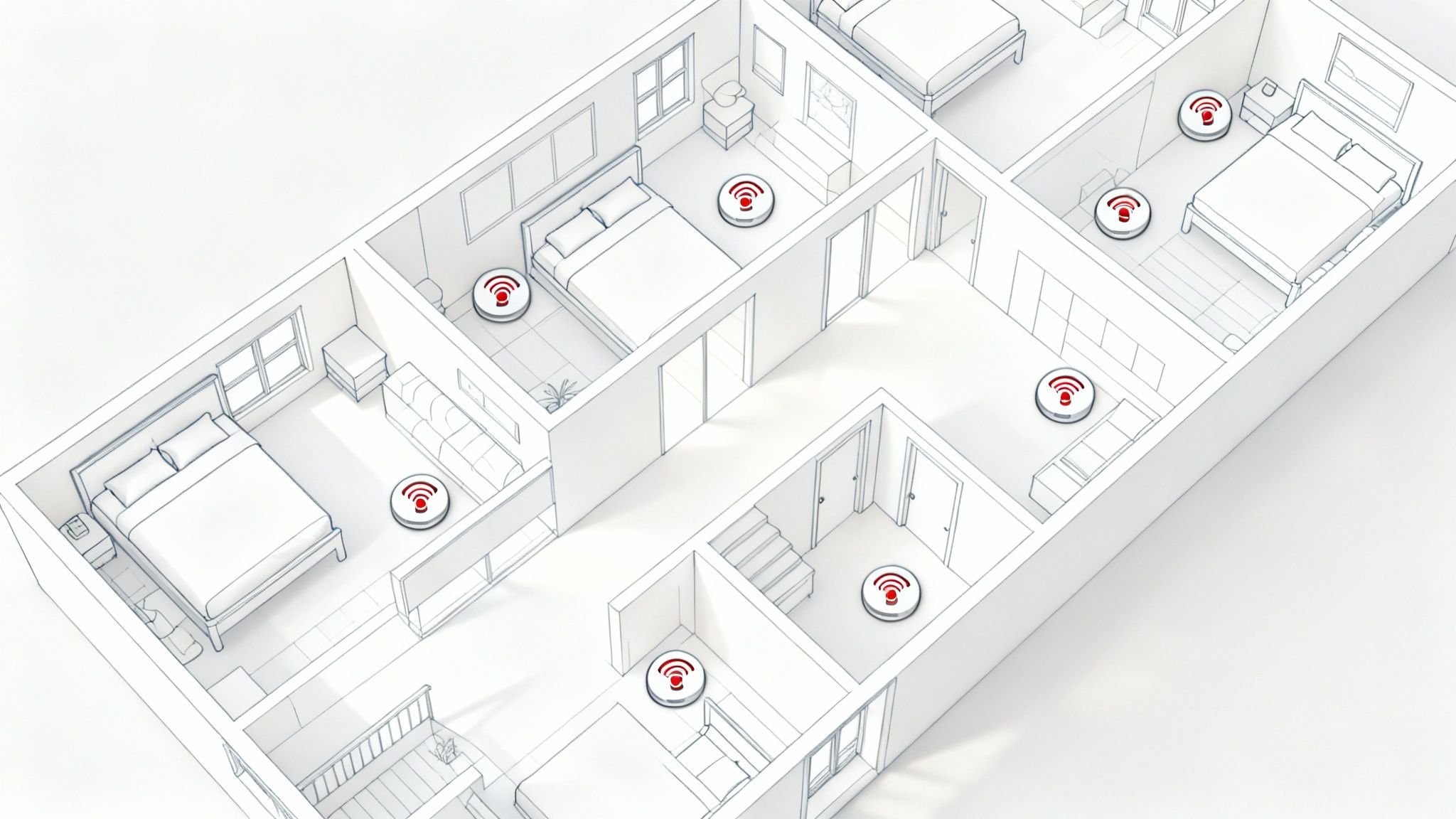
Thankfully, the legislation provides a clear blueprint for total coverage, taking all the guesswork out of the equation. It’s designed to create overlapping zones of protection that keep your entire home safe.
To meet the legal standard, smoke alarms have to be installed in very specific spots. There’s no wiggle room here, as these locations have been pinpointed as the most critical for giving you and your family that vital early warning.
Your property must have a compliant smoke alarm:
This setup creates a mandatory safety net. For instance, a two-storey home with three bedrooms upstairs needs at least five alarms: one in each bedroom, one in the upstairs hallway, and one more on the ground floor. If you’re looking for a professional to handle the installation, exploring comprehensive smoke alarm solutions will ensure everything is done by the book.
Beyond just being in the right rooms, the exact position of the alarm on the ceiling is also crucial for it to work properly. Shoddy placement can seriously delay an alarm’s response time or even stop it from working at all.
A poorly placed smoke alarm is almost as useless as having no alarm at all. Interference from airflow or getting stuck in ‘dead air’ spaces can render even the best technology ineffective in an emergency.
Keep these simple rules in mind to steer clear of common mistakes:
When you’re a landlord or selling a property in Queensland, smoke alarm compliance isn’t just a recommendation—it’s a serious legal duty. Getting it wrong doesn’t just put lives on the line; it can land you in hot water with some hefty financial and legal penalties.
Think of this checklist as your roadmap to getting it right with confidence. Navigating these rules is about more than just screwing alarms to the ceiling. It’s also about proper documentation and clear communication, whether you’re dealing with a new tenant or a prospective buyer. A structured approach ensures every box is ticked, protecting both your investment and the people inside it.
For landlords and sellers, keeping track of everything is key. Using an essential property inspection checklist template is a great way to keep your records organised and prove you’ve done your due diligence.
Let’s break the process down into clear, manageable steps. From the first audit to the final paperwork, this guide will walk you through achieving full smoke alarm compliance in QLD.
Once the alarms are physically installed, don’t forget the paperwork—it’s just as important. Your documentation is your legal proof of compliance, and it’s absolutely non-negotiable when you rent or sell a property.
Under Queensland law, every rental property must have interconnected photoelectric smoke alarms installed. This is checked off as part of the entry condition report (Form 1a) when a new tenancy begins, confirming the alarms are there and working. The rules are strict: alarms must be photoelectric, powered by either a 240V hardwired connection or a 10-year sealed lithium battery, and any unit over 10 years old or that fails a test must be replaced.
For sellers, the process is a bit different. You must provide the buyer with a ‘Form 24’ before the settlement. This is a legal declaration confirming the property meets all the smoke alarm requirements.
Failing to hand over this form—or providing a false one—can cause serious contractual headaches. The buyer could even make a claim against you for 0.15% of the purchase price. Following this checklist ensures you’ve covered all your bases, from the hardware on the ceiling to the signature on the dotted line.
Getting your smoke alarms compliant isn’t a “set and forget” job. It’s an ongoing commitment to safety that involves both landlords and tenants working together. A compliant system is only effective if it’s regularly looked after. Think of it like the safety features in your car—airbags and seatbelts are crucial, but you still need to make sure they’re in good working order to trust them in an emergency.
The legislation is quite clear about who does what, dividing the duties to make sure nothing gets missed. This shared responsibility keeps the system ready to go at a moment’s notice, protecting everyone inside the property.
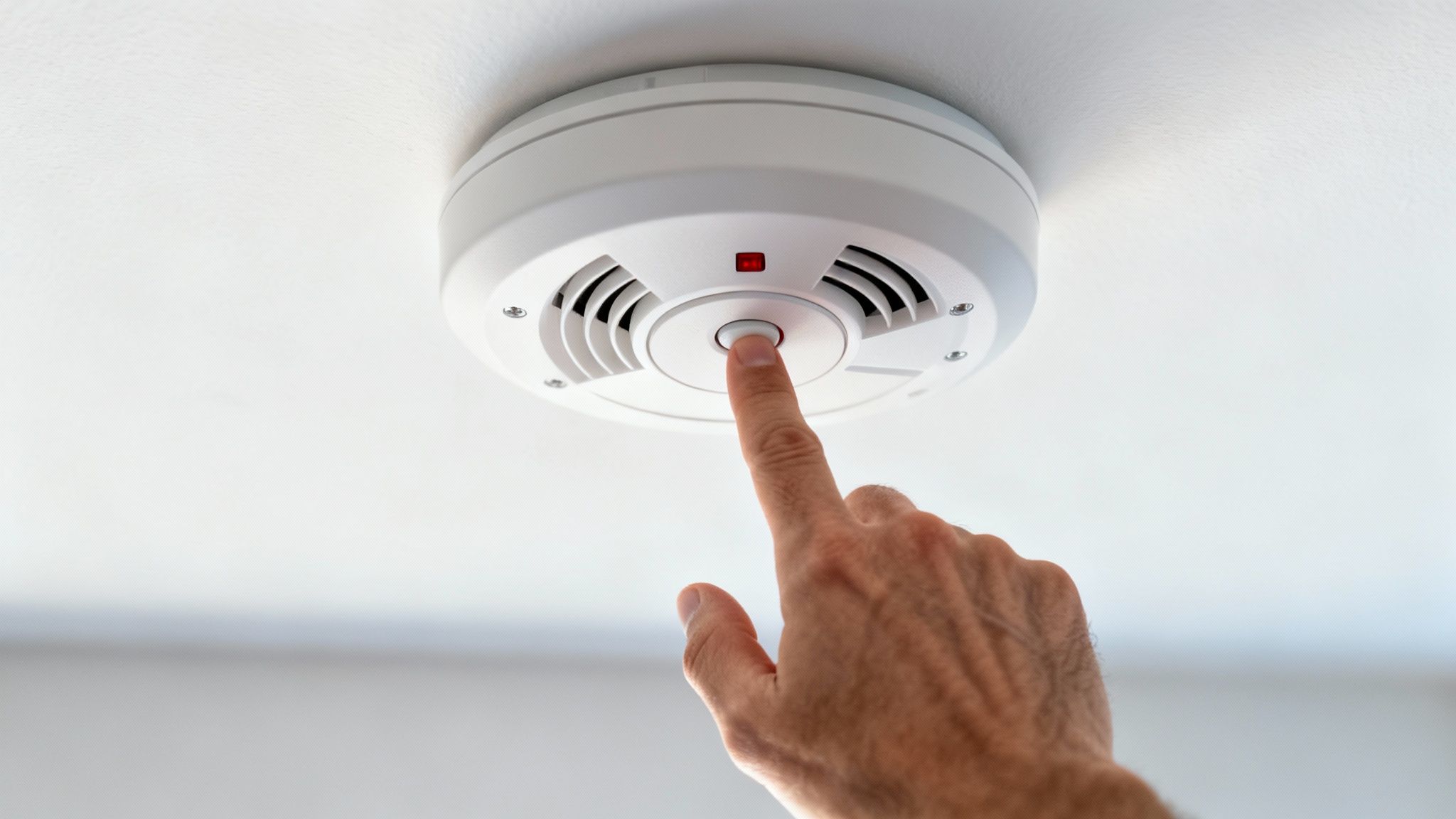
As the landlord or property manager, your main responsibilities are tied to key moments like the start of a new tenancy and the long-term lifespan of the alarms themselves. Your job is to make sure the system is professionally checked and maintained at these critical points.
Within 30 days before a new lease starts, you must:
On top of this, it’s always the landlord’s job to replace any smoke alarm that is more than 10 years old or that simply fails a test.
Tenants have an active, hands-on role in the day-to-day upkeep of the smoke alarm system. These simple checks are the first line of defence against any issues that might pop up between professional inspections.
During the tenancy, a tenant needs to:
It’s truly a partnership for safety. The landlord sets the system up for success at the start, but it’s the tenant’s regular checks and quick reporting that keep it that way throughout the tenancy.
This teamwork ensures that the interconnected alarm system remains a reliable safety net, ready to do its job and protect everyone in the home.
It’s easy to push smoke alarm compliance down the to-do list, but ignoring Queensland’s laws is a massive gamble. The consequences of getting it wrong go way beyond a simple slap on the wrist—they can be financially crippling and carry a heavy personal burden.
The most immediate threat is a fine. The Queensland Fire and Emergency Services (QFES) can and do issue on-the-spot infringement notices to property owners who haven’t met their obligations. Think of it as a sharp, expensive reminder that compliance isn’t optional.
If you’re selling your home, the financial stakes get even higher. Non-compliance can take a direct bite out of your settlement figure.
There’s a standard clause in Queensland property contracts that allows a buyer to claim a reduction of 0.15% of the purchase price if the smoke alarms aren’t up to code at settlement. On a $700,000 property, that’s a $1,050 penalty—money straight out of your pocket for an issue that would have cost a fraction of that to fix properly beforehand.
As serious as fines are, they pale in comparison to the two heavy hitters: your insurance being voided and your personal liability. If the worst happens and a fire breaks out, you can be sure your insurance provider will launch a forensic investigation.
If that investigation reveals your property wasn’t fitted with legally compliant smoke alarms, your entire insurance claim could be rejected. This isn’t just a minor setback; it could leave you facing the full, devastating cost of rebuilding your home and replacing every single possession.
Insurers treat safety breaches very seriously. To get a better sense of how this works, it’s worth understanding the common insurance claim denial reasons that can leave homeowners exposed.
Beyond the financial ruin, there’s the immense legal and moral weight. If someone is injured or, tragically, killed in a fire at your non-compliant property, you could face severe legal action. The responsibility for providing a safe living environment rests squarely on the owner’s shoulders.
At the end of the day, the true cost of non-compliance isn’t measured in dollars, but in the potential for irreversible loss.
Even when you think you’ve got a handle on the new smoke alarm laws in Queensland, a few practical questions always seem to pop up. It’s one thing to know the rules, but it’s another to apply them to your specific property. Let’s clear up some of the most common queries we get from homeowners, landlords, and sellers.
We want to cut through the confusion and give you the confidence that you’re making the right calls for your home or investment property. Think of this as the final piece of the puzzle to get your property compliant.
This is easily one of the most frequent questions we hear, and the answer really boils down to what’s already on your ceiling. It’s all about whether you’re touching the 240V mains wiring.
If you’re installing 10-year non-removable lithium battery alarms from scratch (where there were no hardwired alarms before), you generally don’t need a licenced electrician. However, if you are replacing existing 240V hardwired alarms, you absolutely MUST hire a licenced electrician. Any work involving mains power is not a DIY job—it’s illegal and incredibly dangerous.
Act fast. As a landlord, the responsibility to fix a faulty alarm is entirely yours, and you need to treat it with urgency.
Once a tenant lets you know a smoke alarm isn’t working, the law requires you to have it repaired or replaced by a qualified person within a reasonable timeframe. The safety of your tenants is paramount. It’s also smart practice to document all your communications and the steps you’ve taken to fix the problem—it creates a clear paper trail.
No, the legislation is the same for every type of residential home, whether it’s a standalone house, a townhouse, a duplex, or an apartment. The requirements for interconnected photoelectric alarms apply across the board.
The main difference with apartments or units comes down to who is responsible. The owner of the individual unit (the landlord) is responsible for compliance inside their property. The body corporate’s responsibility is usually limited to the alarms in common areas like hallways, lobbies, or stairwells.
The final, non-negotiable deadline is 1 January 2027. This is the date when every single home in Queensland must meet the new, higher safety standard.
By this date, ALL residential properties—including owner-occupied homes—must be fitted with compliant interconnected photoelectric smoke alarms. Even if you have no plans to sell or rent out your property, you are legally required to upgrade by then. We strongly recommend getting it done sooner rather than later to protect your family.
Navigating smoke alarm compliance qld can feel like a minefield, but you don’t have to go it alone. For professional advice and fully compliant installations, trust the experts at DLG Electrical. We’ll make sure your property is safe, secure, and meets every Queensland regulation. Contact us today for a free quote.

Master Electrician with over 30 years of experience. Founded DLG Electrical in 2005 after international project work including electrical installations at Stamford Bridge Stadium, London(Home of Chelsea FC).

Local Electricians that can fix all Electric Hot water Systems.
Motion sensor lights are a versatile addition to any home, offering nu
