83 Jean St, Grange QLD 4051
Mon-Fri 07:30 AM - 04:00 PM - Sat - 8:00 - 12 - Sunday Closed
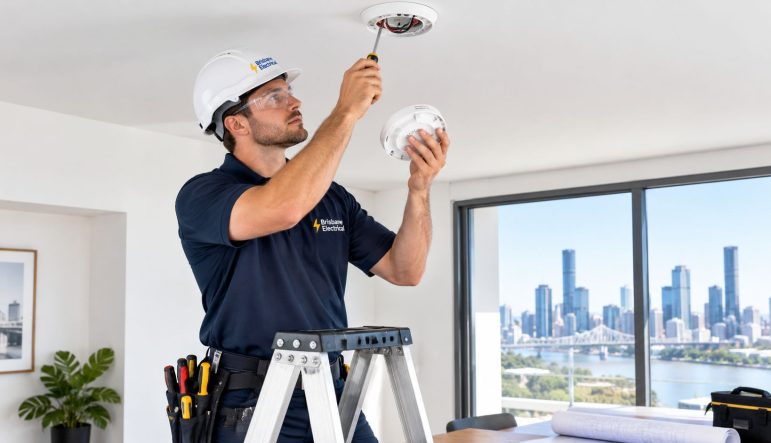
A Brisbane homeowner can make a costly mistake in the smoke alarm aisle. One box is a battery alarm, another is a hardwired unit, and both look simple enough to fit with a screwdriver. The important question isn't which package has the better price. It's who is legally allowed to connect the alarm, who carries responsibility for compliance, and what evidence the owner needs afterwards.
For a hardwired system, the answer is a licensed electrician. In Queensland, a 240V smoke alarm connected to the home's electrical wiring is regulated electrical work, not a general handyman task. The owner or landlord remains responsible for making the property compliant, while the electrician performs the electrical work and provides the required compliance documentation.
That distinction matters for Brisbane homeowners, landlords, tenants, renovators and anyone preparing a property for sale or re-leasing before the 1 January 2027 Queensland deadline. A tenant may be able to test an alarm or replace a compatible battery-only unit, but that doesn't make the tenant responsible for installing a hardwired system.
A homeowner standing in a Brisbane hardware aisle might compare a basic battery alarm with a hardwired model and assume the decision comes down to convenience. That assumption changes as soon as the replacement connects to the home's fixed 240V wiring.
A battery alarm can be suitable in circumstances where no electrical work is involved and the selected unit meets the relevant Queensland requirements. A hardwired replacement, however, involves mains power and may also involve interconnection between alarms. Queensland Government guidance says that electrical work associated with smoke alarm installation must be carried out by a licensed electrician, while compliant wireless alarms may avoid electrical work altogether. The Queensland smoke alarm installation guidance sets out that distinction clearly.
Practical rule: If the job involves connecting, extending, altering or testing fixed 240V wiring, book a licensed electrician rather than attempting the installation yourself.
The legal framework also covers where the alarms go. Queensland requirements call for photoelectric, interconnected alarms in every bedroom, in hallways connecting bedrooms and on each level of the dwelling. That means the electrician isn't just changing a device on the ceiling. They may need to assess the complete alarm arrangement against the property's layout.
Three questions usually determine the correct path:
For hardwired interconnected alarms installed by a licensed electrician, Queensland guidance also requires a Certificate of Testing and Compliance under section 227 of the Electrical Safety Regulation 2013. That certificate is part of closing out the job properly, especially where the property will be sold, leased or inspected.
A hardwired smoke alarm is a mains-powered alarm connected to the home's electrical installation. It receives its normal operating power from a 240V circuit, with battery backup used to keep the alarm operating if mains power is interrupted. The battery backup doesn't turn the installation into a battery-only system. The fixed electrical connection is what makes the work regulated.
That differs from the alternatives commonly found in Brisbane homes:
The visible unit is only one part of the system. Behind the base, the electrician may be dealing with the active, neutral, earth and interconnect conductors, the mounting surface, the circuit protection and the condition of the existing wiring. Access through a roof space can make the work straightforward. Finished ceilings, renovations and difficult roof layouts can make cable routes more involved.
A like-for-like replacement isn't automatically a DIY job just because the new alarm fits the old base. The electrician still needs to confirm compatibility, isolate the relevant circuit, connect the replacement correctly and test the interconnect. A unit that appears to fit can still be unsuitable for the existing system.
For a plain-language overview of the hardware and installation considerations, see this guide to wired smoke alarms. It helps explain why the cabling, rather than the plastic alarm body, is what places the job in electrical work.
The practical distinction is simple. Replacing a battery-only unit without touching fixed wiring is different from replacing or installing a 240V alarm. Once the ceiling connection involves mains conductors, the person doing the work needs the appropriate Queensland electrical licence.
Queensland treats mains-powered smoke alarm installation as electrical work because the electrician is working on the fixed electrical installation. The Queensland Fire Department smoke alarm FAQ states that 240V smoke alarms must be connected by a licensed electrician. NSW and Western Australia follow the same broad approach for hardwired or mains-powered alarms, but the Queensland requirements are especially important for Brisbane properties because they combine electrical licensing with detailed smoke alarm placement and interconnection rules.
The installation method doesn't change the owner's responsibility. A landlord can't hand the job to a handyman just because the property is tenanted, and a reseller who supplies the alarm can't automatically install the 240V connection. The person terminating or altering the mains wiring must hold the required electrical licence, and the business undertaking the electrical work must be properly licensed as a contractor.
The most important document for a hardwired interconnected installation is the Certificate of Testing and Compliance required under section 227 of the Electrical Safety Regulation 2013. Queensland guidance identifies this certificate as part of the compliance process for hardwired interconnected smoke alarms installed by a licensed electrician.
Keep the certificate with the property records. It gives the owner evidence that the electrical work was tested and documented by the person responsible for the installation. It shouldn't be confused with a product warranty, an invoice or a tenant's record of pressing the test button.
| Requirement | What It Covers | Who Issues It |
|---|---|---|
| Licensed electrical work | Connection or alteration of 240V fixed wiring | A licensed electrician |
| Photoelectric alarm system | The alarm type required by Queensland smoke alarm rules | The installer selects compliant equipment |
| Interconnection | Communication between required alarms | The electrician tests the completed system |
| Section 227 certificate | Testing and compliance evidence for qualifying hardwired interconnected work | The licensed electrician responsible for the work |
Electrical safety paperwork can sit alongside broader workplace and site obligations. For contractors managing renovation or property work, WHS compliance for Safety Space is a useful resource for reviewing Queensland workplace safety responsibilities.
A contractor who can't explain the licence, testing and certificate process is giving you a warning before the first alarm is installed. The Queensland electrical contractor requirements are also worth reviewing when you're checking whether a business is set up to take responsibility for the electrical scope.
Homeowners often ring the trade they already know. That can work for a battery replacement, but it becomes risky when the request is described only as “change the smoke alarms”. The right professional depends on whether the job involves fixed 240V wiring, system design, alarm monitoring or routine maintenance.
| Professional | Scope of Work | Can Issue s227/Form 16 | Best For |
|---|---|---|---|
| Licensed electrician | Installs, replaces, wires and interconnects 240V smoke alarms | Can issue the section 227 certificate when the work qualifies. Other forms depend on the work performed | Hardwired installations, rewiring, fault finding and testing |
| Fire-safety specialist | Advises on broader fire-safety arrangements and may coordinate alarm work | Electrical certification must come from the appropriately licensed electrical contractor | Larger fire-safety planning and coordinated projects |
| Security firm | May supply or service alarm equipment, depending on its licence and technical scope | Cannot certify electrical work unless the appropriately licensed electrical contractor performs it | Security integration or approved equipment servicing |
| Handyman | May handle non-electrical maintenance, such as a battery-only unit where lawful | Cannot certify or perform unlicensed 240V electrical work | Limited non-electrical tasks only |
The electrician is the trade who can take responsibility for the electrical installation itself. That includes assessing existing bases, running or extending cabling where permitted, connecting the mains supply, completing the interconnect and testing the system.
A fire-safety specialist can still be useful where a project involves more than domestic smoke alarms. The catch is that the electrical portion must remain with the licensed electrical contractor. Ask who will physically connect the wiring and whose licence will appear on the electrical documentation.
Security companies are another common source of confusion. Some can service compatible alarm equipment or work with wireless systems, but equipment familiarity isn't the same as authority to alter fixed 240V wiring. If the quote says “replace hardwired alarms”, ask whether a licensed electrician will attend and provide the required certificate.
A handyman may be able to change a battery-only device without touching fixed wiring, provided the task and product are compliant. They can't terminate, extend or interconnect mains cabling just because the cable is already visible in the ceiling. The Queensland Fire Department's smoke alarm guidance places the installation responsibility with the owner or landlord and distinguishes that responsibility from the tenant's day-to-day testing role.
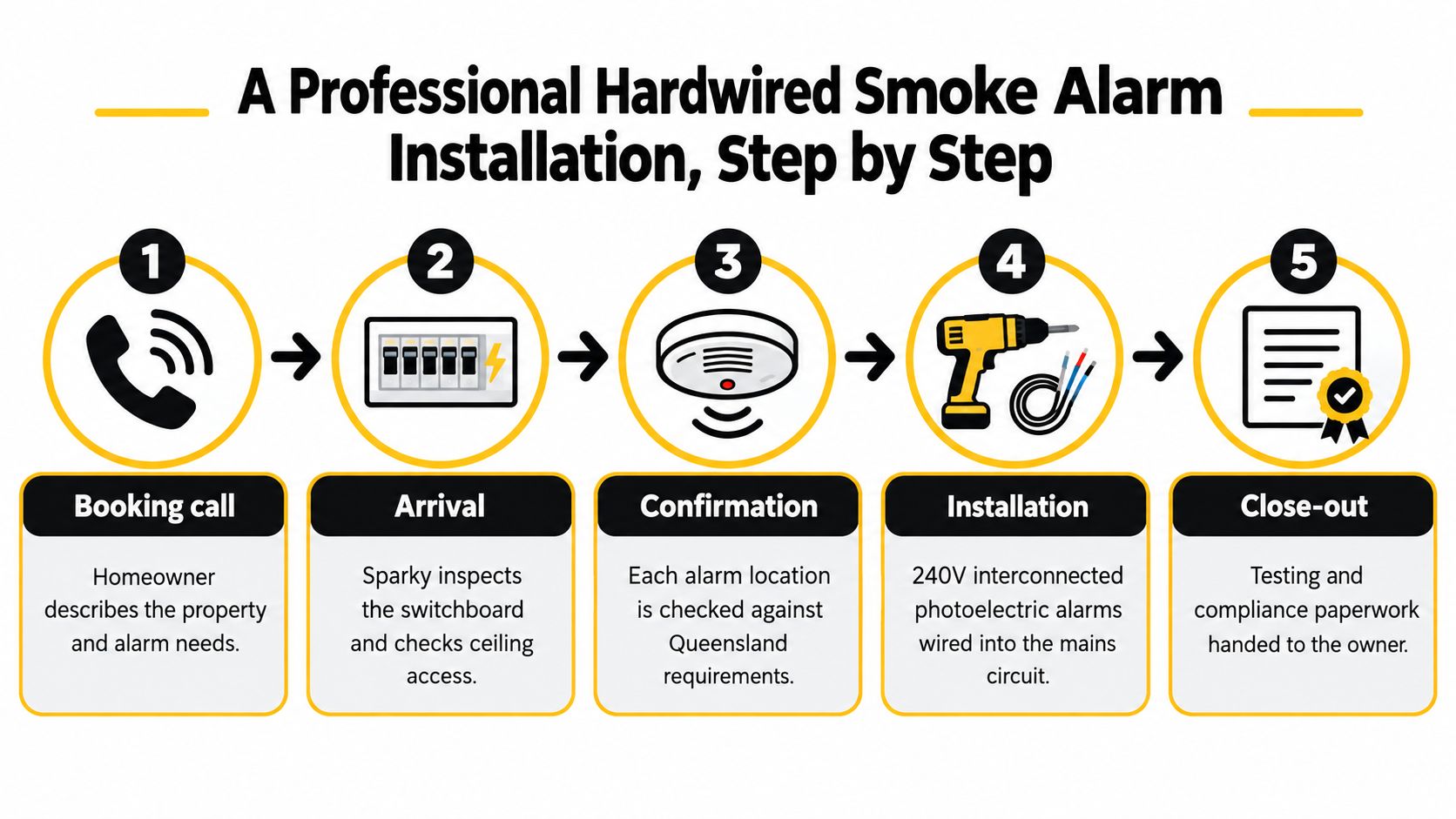
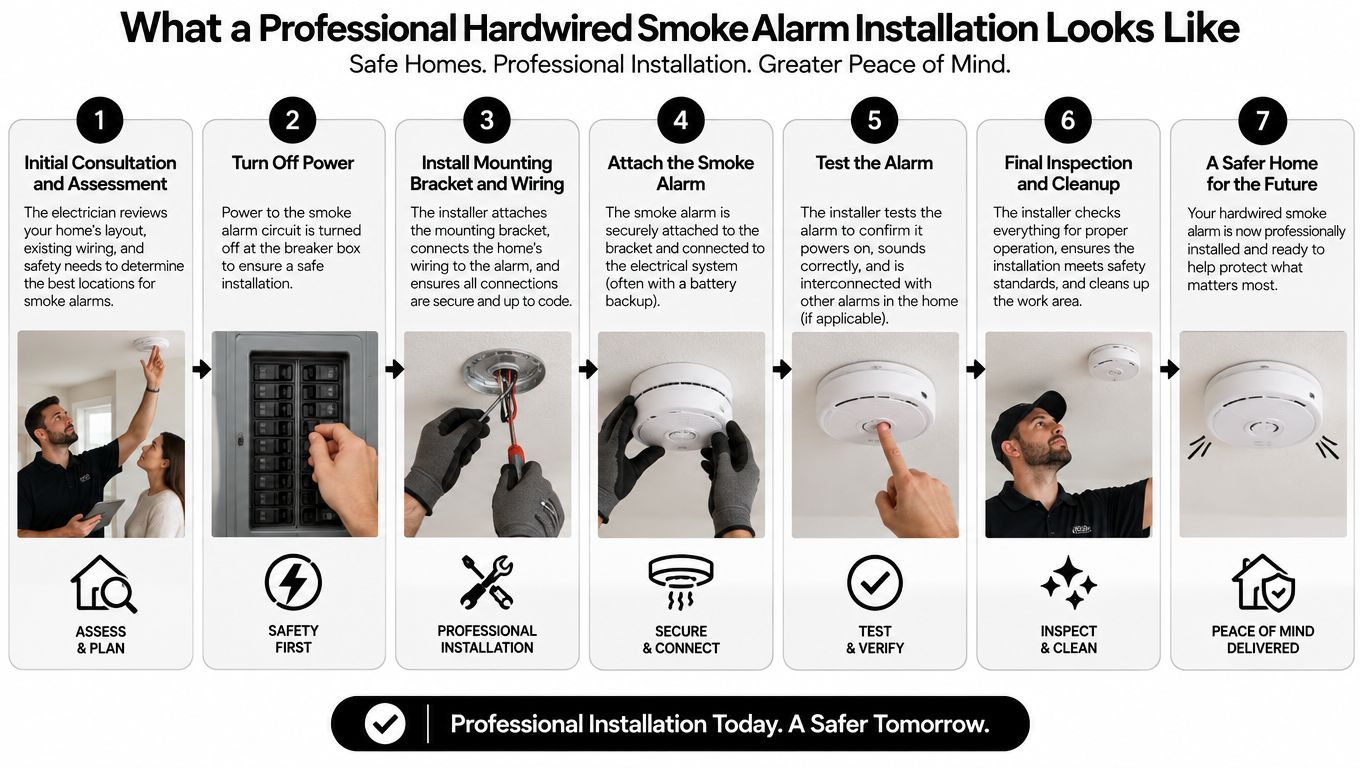
A sound installation starts before anyone cuts a ceiling hole. The electrician needs the property's address, the existing alarm type, the number of levels, the bedroom layout and any information about recent renovations. Photos of the alarms and switchboard can help the contractor prepare, but they don't replace an on-site assessment.
At the property, the electrician checks the switchboard, identifies the relevant circuit and looks at roof or ceiling access. They then compare the alarm locations with Queensland's required arrangement, including every bedroom, connecting hallways and each level of the dwelling. An alarm may be operational yet still leave the property short of the required coverage if a renovation changed the layout.
After isolating the relevant supply, the electrician removes the old unit where necessary and checks the mounting point and wiring. For a new or altered hardwired system, they connect the mains supply and interconnect conductors, secure the alarm base and fit the compatible photoelectric alarm.
A proper job includes more than making the alarm sound once. The installer checks each unit, tests the interconnection and confirms that the system responds as intended from the required locations. Where a ceiling is being replaced or a renovation is underway, the electrician can coordinate cable routes and alarm positions before the ceiling is closed.
The owner should receive a practical handover. That normally includes an explanation of the test button, the system's response, any maintenance responsibilities and the documents associated with the work. The section 227 certificate is especially important for qualifying hardwired interconnected installations because it records the testing and compliance close-out identified in Queensland guidance.
Before the electrician leaves, check that you have:
A professional doesn't leave loose conductors, unexplained alarm chirps or uncertainty about which devices are connected. If the work is part of a sale, tenancy change or renovation, ask for the paperwork before the invoice is treated as the complete handover.
There isn't one reliable Brisbane price for a hardwired smoke alarm job. A compatible replacement using existing wiring is a different project from a whole-property upgrade, and a new interconnect route is different again. A quote that doesn't separate those scopes makes it difficult to compare electricians fairly.
The main price drivers are practical:
| Job Type | Typical Brisbane Cost | Main Cost Drivers |
|---|---|---|
| Compatible replacement on existing wiring | Ask for a written quote | Alarm compatibility, access, testing and disposal |
| Interconnected upgrade | Ask for a written quote | Number and location of alarms, cable routes and ceiling access |
| New installation during renovation | Ask for a written quote | Open or finished ceilings, switchboard work and coordination with other trades |
| Fault finding and repair | Ask for a written quote | Intermittent faults, damaged cabling, incompatible units and circuit access |
A contractor may charge differently depending on whether they supply the alarms or install customer-supplied equipment. Customer-supplied units can also create compatibility and warranty questions, particularly when several alarms need to communicate with each other.
Ceiling access is often the biggest physical variable. An accessible roof space can allow the electrician to route cable without extensive making-good work. Finished ceilings, ornate surfaces, additions and difficult roof structures require more care and may involve separate patching or painting arrangements.
Switchboard condition can affect the scope as well. The electrician may identify a circuit issue, inadequate protection or other electrical defect that needs attention before the alarm installation can be completed safely. That shouldn't be presented as a surprise extra. A written quote should state what the smoke alarm work includes and what happens if the electrician finds an unrelated defect.
Ask each contractor to state:
The cheapest quote isn't necessarily the lowest-cost outcome if it leaves the property with incompatible alarms, incomplete coverage or no compliance record. Compare the finished scope, not just the first line of the invoice.
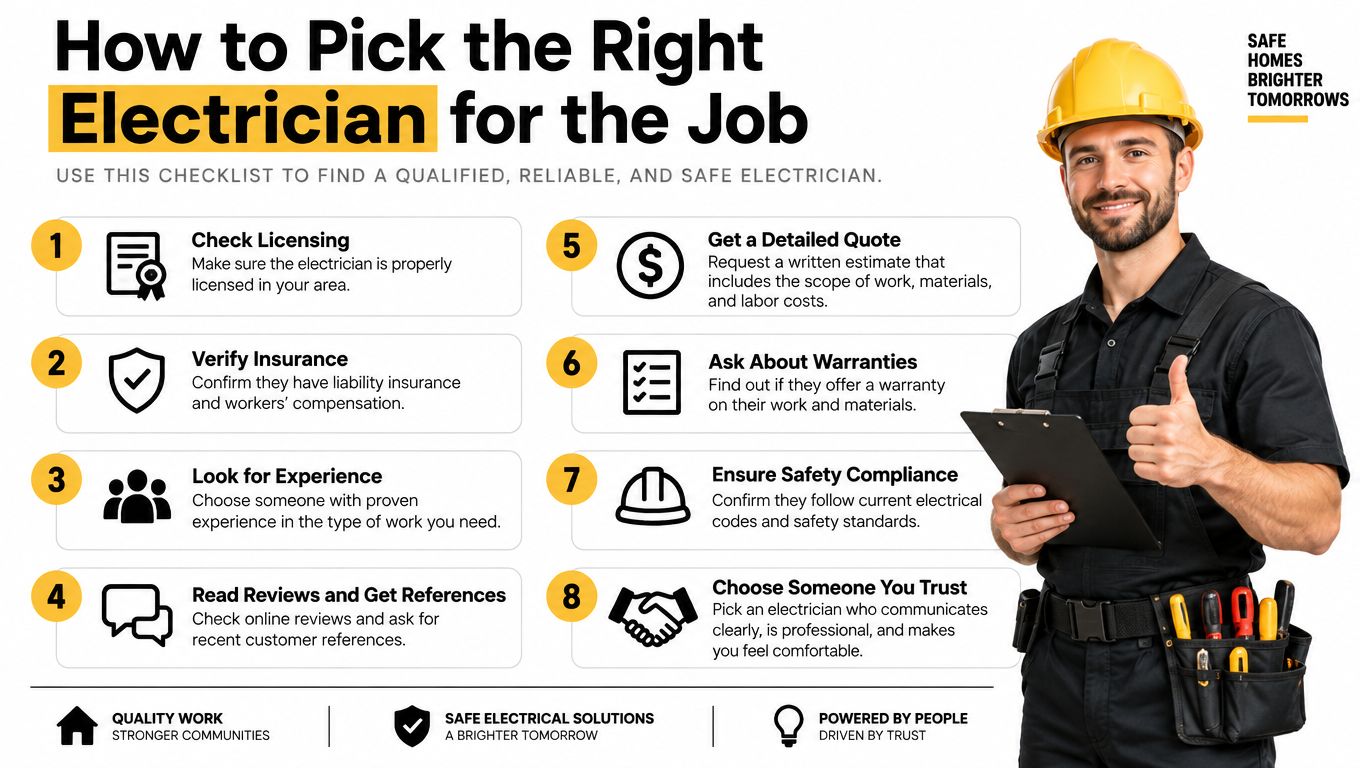
Start with the licence, not the advertising. Ask for the Queensland electrical contractor licence details and the individual electrician's licence details before approving work. The business and the person carrying out the work need to be appropriate for the electrical scope, and the contractor should be comfortable explaining who will supervise the job.
A good quote answers ordinary questions without evasive language. It names the alarm type, describes the locations, explains the interconnect method and identifies the testing and certificate process. It also separates optional work from the work required to complete the agreed installation.
Don't accept a vague “we'll make it compliant” promise without a written scope. Also be cautious if a contractor suggests skipping interconnection, leaves the alarm locations to guesswork or refuses to identify the licensed person responsible for the work.
A simple comparison sheet makes three written quotes easier to assess. Record the proposed equipment, number of alarms, cable method, exclusions, testing, certificate handover and payment milestones. A phone call to recent Brisbane customers can also reveal whether the contractor arrives organised and completes the paperwork.
For contractors and marketing teams, background resources such as Transactional LLC's electrician SEO explain how electrical services are presented online. That isn't a substitute for checking a licence, insurance or workmanship, but it can help you distinguish a detailed service page from a quote that avoids technical specifics.
You can also use this practical list of questions to ask an electrician before hiring when comparing responses. The electrician who gives a clear answer about licensing, interconnection and certification is usually easier to hold accountable than one who only talks about replacing the visible alarm.
The responsibility ladder is straightforward. The owner or landlord is responsible for property compliance. The licensed electrician performs and documents the hardwired electrical work. The tenant carries out routine testing and reports problems, but isn't responsible for installing the system.
That distinction matters before the 1 January 2027 Queensland deadline. Queensland guidance identifies the need for compliant photoelectric, interconnected alarms in the required locations, including owner-occupied and rental dwellings. Owners who wait until a sale, lease or re-lease is already underway may have less time to resolve access problems, incompatible wiring or incomplete records.
A tenant can press the test button and notify the owner when an alarm fails. A tenant shouldn't be expected to install a 240V alarm or alter fixed wiring. If an owner asks a tenant to arrange the work, the owner still needs to ensure that the contractor is properly licensed and that the installation is documented.
Keep the electrician's invoice, alarm details and section 227 Certificate of Testing and Compliance together. The certificate doesn't replace the owner's responsibility, but it provides important evidence that qualifying hardwired interconnected work was tested and completed through the appropriate electrical process.
Before booking, ask the electrician to confirm:

Don't leave the inspection until the deadline is close. Book a licensed Brisbane electrician, request a written scope, and keep the certificate with the property records once the work is complete. If you're a landlord, give the tenant clear instructions for testing and fault reporting after the installation.
DLG Electrical provides Brisbane smoke alarm installation, testing and hardwired smoke alarm services through licensed electricians, with the work aligned to Queensland compliance requirements. Visit DLG Electrical to request a quote for your property and discuss the alarm locations, wiring and certification needed.

Master Electrician with over 30 years of experience. Founded DLG Electrical in 2005 after international project work including electrical installations at Stamford Bridge Stadium, London(Home of Chelsea FC).

Local Electricians that can fix all Electric Hot water Systems.
Motion sensor lights are a versatile addition to any home, offering nu
