83 Jean St, Grange QLD 4051
Mon-Fri 07:30 AM - 04:00 PM - Sat - 8:00 - 12 - Sunday Closed
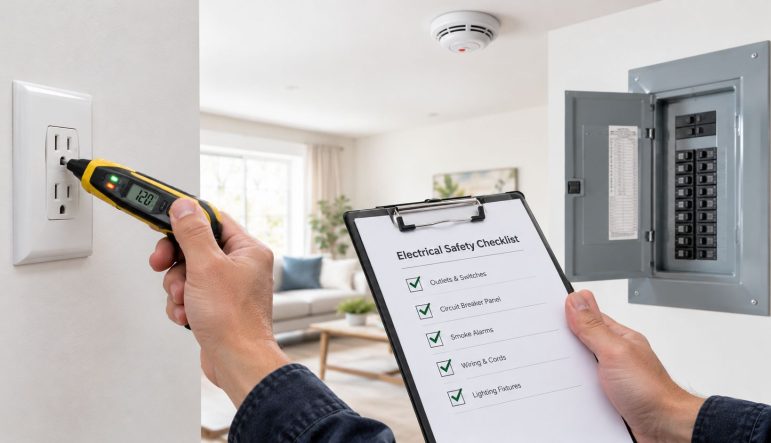
A safe-looking home can still hide electrical risks behind outlets, inside switchboards, within aging wiring and around hardwired appliances. Australian fire-safety evidence shows why a routine matters. Over the three years preceding June 2023, fire services in South Australia attended 520 house fires linked to electrical issues, causing approximately A$27.9 million in damage. The same briefing linked nearly 11% of preventable house-fire deaths in Australia to electrical issues, with accidental house-fire deaths almost four times more likely during winter. Read the homeowner electrical checklist by Northpoint Construction alongside this Brisbane-focused guide, but keep the boundary clear: you can inspect visible components and press test buttons, but you mustn't open a switchboard, alter wiring or repair a fault yourself.
Use these eight checks as a practical maintenance rhythm. Walk through visible outlets, cords and appliances regularly, test safety devices at their recommended intervals, review outdoor equipment before the wet season and arrange licensed inspections when a fault is hidden, recurring or connected to fixed wiring. DLG Electrical is a relevant Brisbane option for licensed electrical inspections, repairs, smoke detector compliance and switchboard work.
Start at eye level and work through every room, including the garage, laundry and outdoor entertaining areas. Look for cracked faceplates, loose switches, discoloured sockets, scorch marks, buzzing, unusual warmth and plugs that fall out easily. A warm or marked outlet isn't a cosmetic issue. It may indicate a loose connection, arcing or excessive load, so stop using it and arrange an electrician's assessment.
Check appliance cords and plugs for cuts, crushed insulation, exposed conductors or heat damage. Don't cover damaged insulation with tape and keep cords away from rugs, furniture edges, sinks and hot surfaces. Replace a damaged appliance or have it assessed rather than continuing to use it because it still powers on.
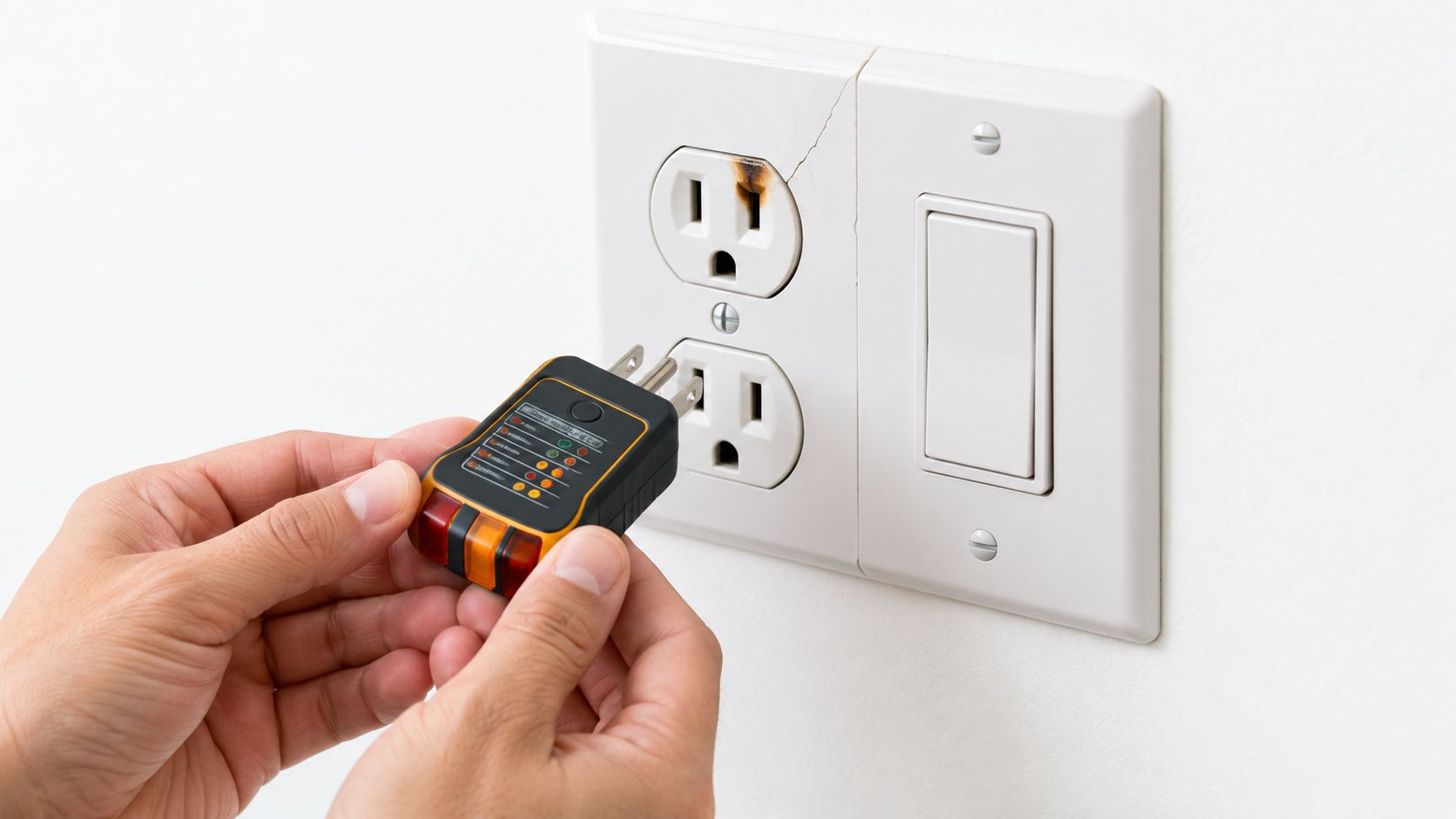
A plug-in tester can identify some outlet faults, but it can't prove that all wiring, earthing or protective devices are safe. It also doesn't justify opening an outlet or tightening a connection. Use it as an observation tool, record anything abnormal and escalate loose, hot, damaged or sparking outlets to a licensed electrician.
Australian fire services identify damaged cords, overloaded power boards, heaters near combustible materials and faulty appliances as practical electrical fire risks. South Australian fire-safety guidance also reports that electrical appliances and faults cause almost 40% of home fires in NSW, while a working smoke alarm increases survival in a home fire by 50%. Those figures make a visual outlet check a meaningful safety task, not a tidying exercise.
A useful demonstration can help household members recognise what a tester does and what it cannot prove.
A switchboard can show the first sign of a problem that is not visible elsewhere. One trip after an unusual event may be temporary. Repeated trips, a breaker that will not reset, heat, buzzing, burning smells or discolouration require prompt attention because they can indicate overload, a fault or a poor connection.
Keep the switchboard accessible, dry and free from stored items. Check that each circuit is labelled in plain language, such as kitchen power, hot water, air conditioning or garage outlets. Test the labels only through normal switching when it is safe to do so, and record any circuit that does not match the description. An accurate circuit map helps household members isolate the correct area during an emergency and gives an electrician useful information during an inspection.
You can identify the main isolation point, note which switches move and record when trips occur. Write down what was operating at the time, such as an oven, heater or air conditioner. Do not remove the switchboard cover, change a breaker rating, repeatedly reset a device or touch exposed components. Breaker sizing, cable capacity, earthing, terminations and circuit loading require a licensed electrician.
Practical rule: A breaker that trips is reporting a condition, not causing an inconvenience that should be defeated.
Arrange a professional assessment before or during renovations, and before adding induction cooking, air conditioning, electric hot water, solar or an EV charger. It is also sensible before buying an older Brisbane property, or when several high-load appliances share circuits designed for lighter use. The electrician can test protective devices, identify unverified previous work and rank repairs or upgrades by risk and need.
For licensed electrical workers pursuing qualification, completing a TP Training LV rescue course provides relevant training for switchboard and live-wire environments.
A switchboard upgrade regulations guide explains why renovation work may require more than adding a power point. The appropriate outcome could be a targeted repair, improved circuit protection, clearer labelling or a full switchboard replacement. A cheaper visible change may leave unsuitable wiring, limited capacity or an inadequate board in service.
Landlords, property managers and homeowners should retain inspection and repair records. Include the date, affected circuit, symptoms and work completed. Review the log after any trip or renovation. It prevents repeated temporary fixes and gives the next electrician a reliable history of the installation.
Fault current needs a safe path away from people. That depends on the integrity of earthing conductors, the bonding of relevant metalwork and the operation of protective devices. These elements aren't reliably assessed by looking at a socket or switching a light.
Ask an electrician to consider earthing and bonding during a broader safety inspection, particularly in an older home, after renovations or when the property has experienced unexplained shocks, nuisance trips or equipment damage. Metal water and gas services, switchboards, outdoor structures and pool areas may require specific bonding arrangements. A professional can verify continuity and condition rather than assuming the presence of a green-and-yellow conductor means the system is safe.
Surge protection and RCD protection address different problems. An RCD is intended to reduce electric-shock risk by detecting leakage to earth and disconnecting supply rapidly. A surge protective device helps manage voltage spikes that can damage electronics and appliances. One doesn't replace the other.
A home surge protection guide can help you decide whether a switchboard-mounted device, plug-in protection for sensitive equipment or a coordinated approach is appropriate. Whole-home protection may be worth discussing where a property has valuable electronics, solar equipment, smart-home systems or a history of storm-related damage. Plug-in boards still need correct use and replacement when damaged or no longer serviceable.
The homeowner check is straightforward. Press each RCD test button at the interval specified by the manufacturer, with every three months used as a practical benchmark in Australian government guidance. The device should trip and then reset as directed. If it doesn't trip, won't reset or trips repeatedly, leave the affected circuit isolated where safe and contact a licensed electrician.
Western Australian government data recorded 23 of 29 residential electrocution deaths over a 17-year period as potentially preventable if RCDs had been installed. This is a WA-specific benchmark, not a Brisbane rate, but it demonstrates why RCD presence and operation deserve a distinct place on a home electrical safety checklist. The WA RCD and smoke alarm fact sheet also makes clear that pressing the button doesn't replace professional verification of trip performance, wiring, earthing or circuit coverage.
Wiring problems often reveal themselves indirectly. Burning odours, flickering lights, unexplained warmth, repeated breaker trips and shocks can all justify an electrical inspection, even when every outlet appears intact. Rodents, renovation work, moisture, heat and age can damage insulation in roof spaces, wall cavities, garages and crawlspaces.
During a visual walk-through, look only at accessible wiring and equipment. Note cracked conduit, exposed cable, loose junction-box covers, cable rubbing against sharp metal and damage near roof access points. Don't pull on wiring, remove covers or attempt a taped repair. Electrical tape may hide the defect while leaving the conductor, connection or surrounding material unsafe.
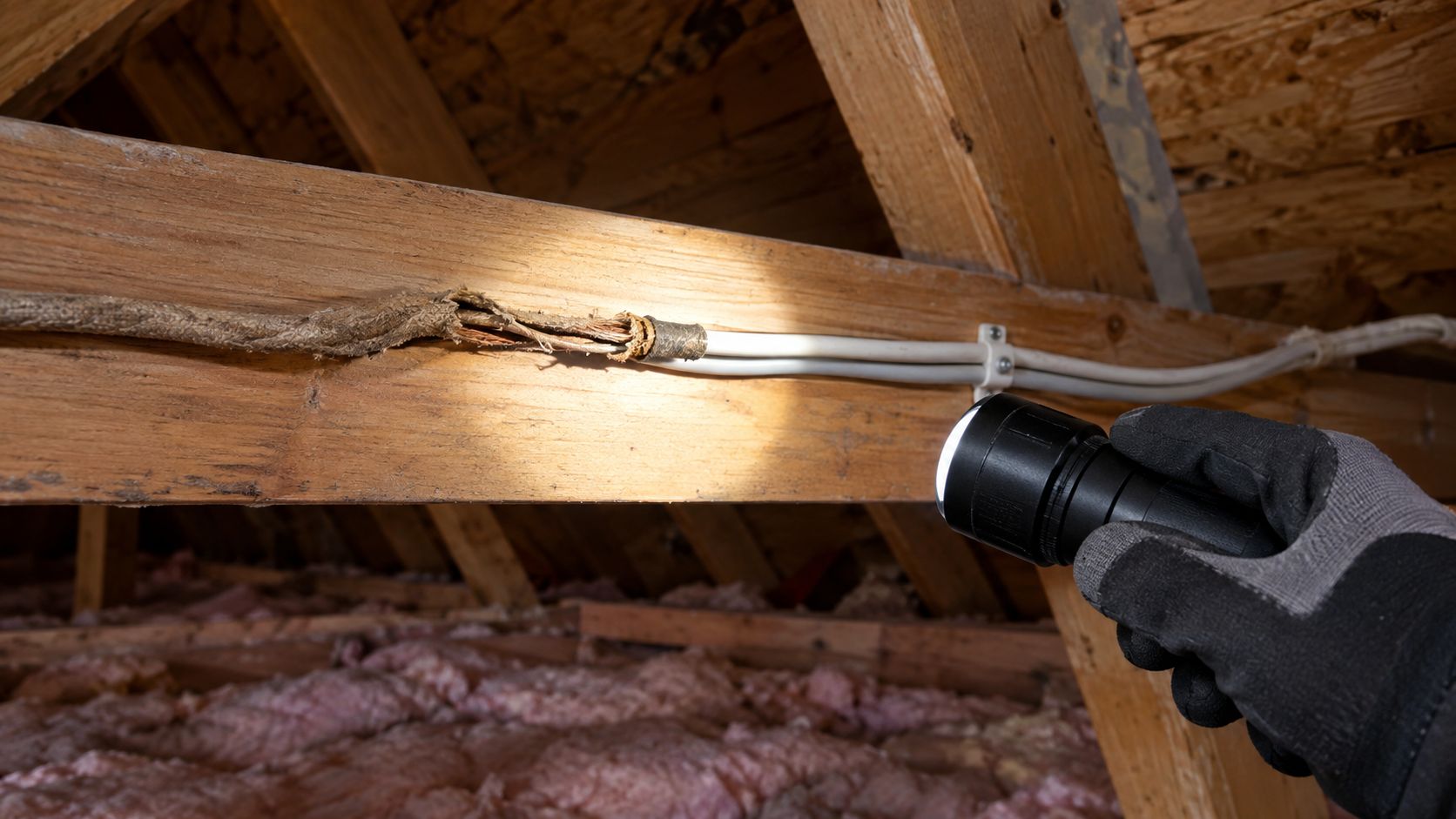
A property's age doesn't prove that rewiring is required, but it should prompt better questions. Ask for electrical inspection reports when purchasing, find out whether renovations included electrical work and establish which circuits have been altered. An electrician can assess conductor condition, insulation, cable sizing, routing, connections and signs of unsafe or unverified previous work.
Damaged insulation is a repair trigger, not a maintenance detail.
Take photographs from a safe position and record the room, location and symptoms. This helps an electrician prepare for the visit without encouraging a homeowner to enter a hazardous roof space or handle live equipment. Keep storage away from accessible switchboards, wiring and heaters so signs of damage remain visible and combustible materials don't crowd electrical equipment.
Frequent trips deserve investigation rather than a larger fuse or breaker. The cause might be a faulty appliance, damaged cable, moisture ingress, overload or an installation defect. Each possibility requires a different response, which is why replacing a protective device without finding the cause can make the situation more dangerous.
For a Brisbane home, schedule a wiring assessment when you notice a burning smell, see damaged insulation, inherit undocumented DIY work or plan a substantial renovation. The electrician should explain what requires immediate isolation, what can be monitored and what work can be staged. That distinction helps you control cost without trading away safety.
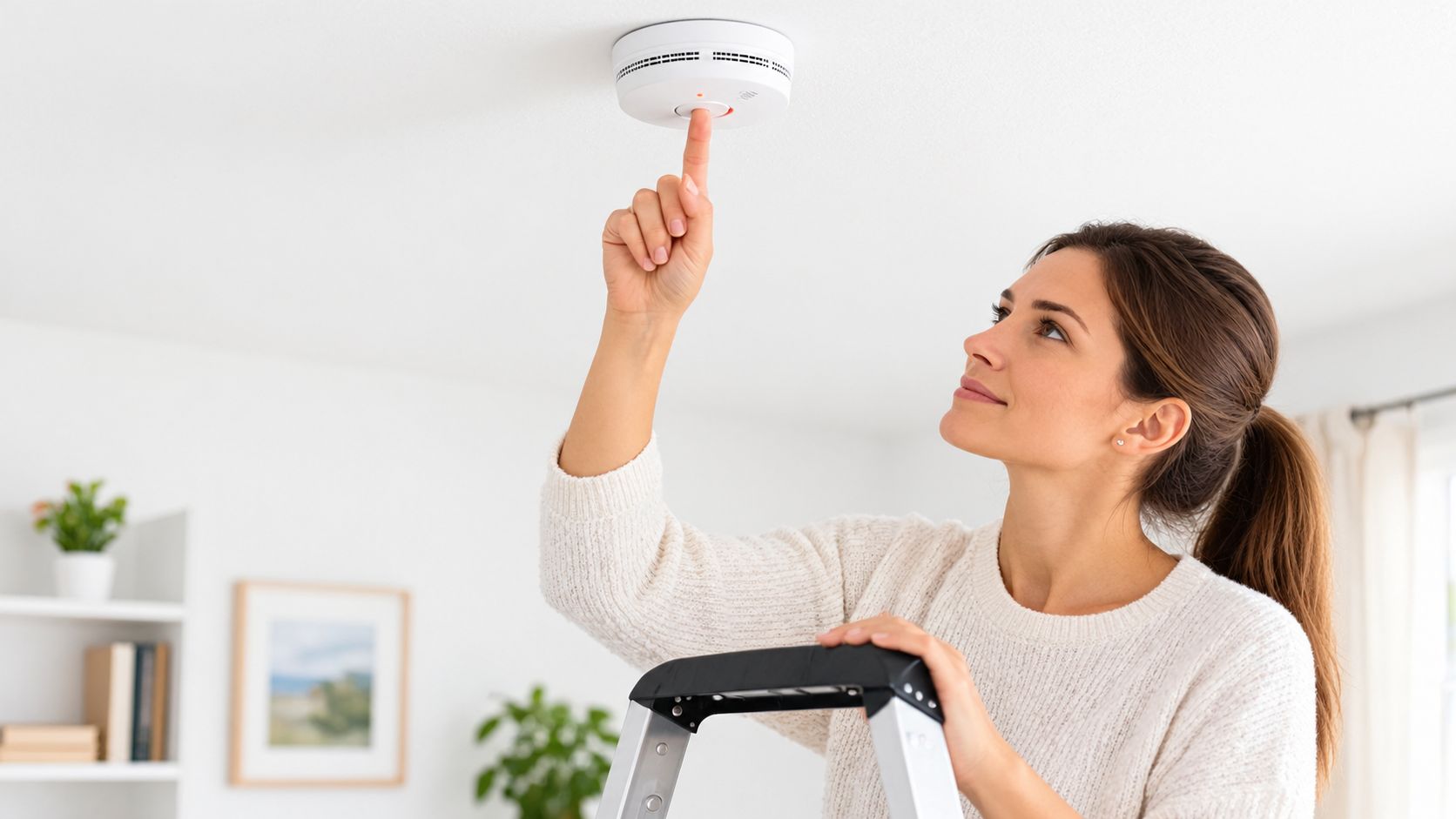
A smoke alarm that has power but fails its test is not providing reliable protection. Press each alarm's test button for five seconds every month, replace removable batteries every 12 months or as required, and confirm alarms are located in bedroom corridors and on every level. Follow the maintenance guidance from Fire and Rescue NSW home electrical-safety guidance.
Check the manufacture or installation date, listen for the complete test signal and clean dust from the alarm as the manufacturer directs. Replace the complete unit at 10 years, or sooner if specified. A chirping alarm, damaged casing, failed test or unit that remains silent after a battery change should be replaced, not left in service.
Installation rates alone do not show whether alarms operate or wake occupants. A Commonwealth parliamentary report recorded smoke-alarm installation in 96.6% of Queensland households, compared with 94.1% in NSW and 94.0% in Western Australia in 2013–14. In relevant NSW residential fire records, 48% had an alarm present, 46% had no alarm and 6% were unknown or not applicable. Of alarms recorded as present, 65% operated and 43% alerted occupants. These figures appear in the Commonwealth parliamentary smoke-alarm report.
Queensland homeowners should plan for the upcoming requirement. By 1 January 2027, existing private homes, townhouses and units will be required to have interconnected photoelectric alarms throughout the dwelling, including every bedroom, connecting hallway and storey. The alarms must comply with AS 3786-2014, be under 10 years old and operate when tested, as outlined in the Queensland smoke-alarm checklist.
Existing hard-wired alarms generally require hard-wired replacements. Existing non-mains alarms can generally be replaced with compliant 10-year non-removable-battery units. New builds and major renovations require hard-wired 240-volt alarms.
Map every alarm, record its date and identify whether it is mains-powered. A licensed electrician must handle hard-wired replacement and any work involving fixed wiring. For details on compliant installations, see our smoke detector installation requirements guide. Landlords should keep compliance records and treat checks as ongoing maintenance rather than a one-time installation.
Brisbane's outdoor electrical equipment faces rain, humidity, sunlight, garden growth and, in some locations, coastal salt exposure. Inspect outdoor outlets, lights, pool equipment, spas, sheds, pumps and extension-lead connections for cracked covers, corrosion, loose fittings, water staining and UV-damaged insulation.
Outdoor equipment must be designed and installed for outdoor conditions. An indoor outlet with a cover added later isn't automatically suitable, and a weatherproof cover can't correct damaged cable, poor drainage or an incorrectly installed connection. Keep outlets clear of vegetation, soil, stored materials and standing water. Don't use damaged extension leads, join connections where water can collect or run cables through puddles.
Before the wet season, walk the exterior during daylight. Check that covers close properly, conduit remains secure, lighting fittings haven't cracked and pool or spa equipment has no visible damage. Test the relevant RCD using its test button according to the manufacturer's instructions, then arrange professional attention if it fails, won't reset or trips repeatedly.
A cover protects an outlet from weather. It doesn't make unsafe wiring safe.
Any exposed or damaged cable needs professional assessment. The electrician may recommend replacement, improved enclosure protection, conduit, relocation or a new dedicated circuit. Don't open a junction box outdoors to dry it out or tighten a connection. Isolate the area if possible and keep people away until the fault is assessed.
Include exterior equipment in the household log. Record the date of inspection, any RCD result, visible damage and the action taken. That record is particularly useful for rental properties, pool installations and homes with multiple sheds or detached structures.
High-load appliances change the demands placed on a home's electrical system. Electric hot water, air conditioning, induction cooking, ovens, clothes dryers, pool pumps, workshops and EV chargers may require correctly designed circuits, suitable protection and installation that matches the manufacturer's requirements.
Homeowners can inspect plugs, cords, isolation switches and accessible connections for heat, damage or moisture. Keep ventilation spaces clear around appliances and don't continue using equipment that causes a breaker or RCD to trip. A tripping device may indicate an appliance fault, moisture, overload or wiring problem. Resetting it repeatedly doesn't solve any of those causes.
Before replacing a major appliance, keep its electrical specifications and ask an electrician whether the existing circuit is suitable. A kitchen renovation may require changes to circuit allocation. A new air conditioner, electric hot-water system or workshop tool may need dedicated supply. Connecting several high-load appliances to one shared circuit because a spare socket exists is a common planning mistake.
The electrician should verify cable sizing, circuit protection, isolation, connections, earthing and the manufacturer's installation requirements. Fixed appliances and hardwired equipment aren't DIY replacements, even when the physical appliance appears easy to swap. Ask for compliance documentation and retain it with the appliance manual.
A standard household outlet isn't automatically suitable for regular high-load EV charging. Queensland Fire Department EV fire-safety guidance recommends electrically compliant charging equipment installed by a qualified electrician to AS/NZS 3000, including Appendix P guidance for EV socket outlets and charging stations. It also recommends an interconnected smoke alarm in the charging area, caution in wet weather and extra care during electrical storms.
Map where charging occurs. Is the vehicle in an enclosed garage, beside sleeping areas or on a circuit shared with hot water, air conditioning, a workshop or solar-battery equipment? Tell the electrician about the full load profile, not just the vehicle and charger. Use only extension leads and sockets intended for EV charging, and stop if equipment becomes hot, damaged or wet.
Lighting faults can be subtle. Flickering, intermittent operation, buzzing, heat around a fitting, darkened insulation, loose fans or a dimmer that behaves erratically all deserve attention. Walk through bedrooms, bathrooms, kitchens, roof spaces, garages and outdoor areas with the lights operating, then inspect accessible fittings once they're switched off and cool.
Match every lamp to the fixture's instructions. Never exceed the rated wattage, and don't assume a bulb that fits physically is electrically suitable. LED lamps often reduce heat and energy use, but they still need compatible dimmers, appropriate fittings and correct installation. A new lamp won't correct damaged wiring or a failing driver.
Bathrooms and exterior areas need fittings rated for moisture and their specific location. Recessed lights need the required clearance and ventilation, particularly where insulation has been added or roof-space storage has changed. A ceiling fan should operate smoothly without buzzing, and its controls should be wired and secured correctly.
Use this short visual review:
An electrician can assess circuit allocation, fixture connections, insulation clearance and compliance. Don't remove a recessed fitting to inspect the wiring or push insulation away from a hot light. Record the location and symptom, isolate the circuit if there is sparking or heat and arrange a professional inspection.
| Item | 🔄 Implementation complexity | ⚡ Resource requirements | 📊 Expected outcomes | 💡 Ideal use cases / tips | ⭐ Key advantages |
|---|---|---|---|---|---|
| Electrical Outlet and Switch Inspection | 🔄 Low, visual checks & basic testing | ⚡ Minimal, outlet tester/multimeter, basic tools, short time | 📊 Identify loose/damaged outlets, incorrect polarity, GFCI needs | 💡 Routine safety checks; test monthly; GFCI near water | ⭐ Quick, low-cost hazard detection; prevents shocks/fires |
| Circuit Breaker and Switchboard Assessment | 🔄 High, panel access and potential upgrades | ⚡ High, licensed electrician, diagnostic tools, permits | 📊 Confirm capacity, correct breaker sizing, reduce overloads | 💡 For renovations or frequent trips; inspect every 5–10 years | ⭐ Major safety and capacity improvement; enables modern loads |
| Grounding, Bonding, and Surge Protection Assessment | 🔄 Medium, specialized tests and bonding checks | ⚡ Moderate, ground testers, electrician, possible ground rods | 📊 Improved shock protection and reduced equipment damage | 💡 Install whole-home surge at panel; test GFCIs monthly | ⭐ Essential protection for people and electronics |
| Wiring Condition and Insulation Assessment | 🔄 High, may require invasive inspection/rewiring | ⚡ High, electrician, thermal imaging, possible wall access | 📊 Detect hidden fire/shock hazards; may require rewiring | 💡 Prioritize in older homes or when smelling burning; budget accordingly | ⭐ Identifies and removes major hidden electrical risks |
| Smoke Detector and Safety Device Compliance | 🔄 Low, testing and simple installations | ⚡ Minimal, detectors/batteries or wiring for hardwired units | 📊 Life‑saving early warning; legal and insurance compliance | 💡 Test monthly; replace units every 10 years; interconnect where possible | ⭐ Highest life‑safety impact for low cost |
| Water Resistance and Weatherproofing of Exterior Connections | 🔄 Medium, sealing, enclosures, possible conduit work | ⚡ Moderate, weatherproof fixtures, GFCIs, corrosion‑resistant materials | 📊 Reduced corrosion/failures; safer outdoor use in wet/coastal areas | 💡 Use IP‑rated devices, stainless/marine fixtures; inspect before wet season | ⭐ Extends equipment life and prevents outdoor electrocution risks |
| Appliance and Heavy Equipment Electrical Verification | 🔄 Medium, dedicated circuits and correct gauges required | ⚡ Moderate, electrician, correct breakers/wiring, possible three‑phase | 📊 Prevents overloads, ensures appliance efficiency and safety | 💡 Always use dedicated circuits for major appliances; keep specs handy | ⭐ Ensures reliable operation and prevents circuit/fault damage |
| Lighting System Performance and Code Compliance | 🔄 Medium, fixture, wiring and ventilation checks | ⚡ Moderate, fixtures, LED bulbs, electrician for complex installs | 📊 Improved safety, energy savings, and code compliance | 💡 Use LED‑compatible dimmers; match bulb wattage; ensure recessed ventilation | ⭐ Energy efficiency, better illumination, and reduced fire risk |
A homeowner electrical safety checklist works best when it becomes a repeatable habit rather than a once-only inspection. Use a practical rhythm that matches the task:
The checklist ends where safe observation ends. Don't open a switchboard, remove outlet covers, alter fixed wiring, repair damaged insulation or install hard-wired smoke alarms yourself. A plug-in tester, visual inspection or test button can reveal a concern, but none proves that concealed wiring, earthing, circuit loading or protective-device performance is compliant.
Stop using the affected appliance or circuit and contact a licensed electrician if you notice burning smells, sparks, heat, buzzing, shocks, damaged insulation or repeated breaker trips. If there is an immediate fire or shock hazard, keep people away, isolate power only if you can do so without approaching danger and contact emergency services as appropriate. Don't keep resetting a breaker to restore convenience.
Record each finding with the room, device, symptom, date and action taken. Prioritise active heat, arcing, exposed conductors, failed RCDs, non-operating smoke alarms and water-damaged equipment ahead of cosmetic upgrades. For Brisbane homeowners, landlords, renovators and property managers, DLG Electrical can assess switchboards, RCDs, wiring, outlets, fixed equipment and smoke-detector compliance, then provide a practical repair or upgrade pathway. Request a professional quote when the inspection identifies a fault you can't safely verify or correct.
DLG Electrical provides Brisbane residential electrical inspections, switchboard and RCD testing, wiring checks, smoke detector installation and compliance work, along with repairs and fixed-appliance services. Visit DLG Electrical to discuss your checklist findings and request a quote for inspection, repair or upgrade work.

Master Electrician with over 30 years of experience. Founded DLG Electrical in 2005 after international project work including electrical installations at Stamford Bridge Stadium, London(Home of Chelsea FC).

Local Electricians that can fix all Electric Hot water Systems.
Motion sensor lights are a versatile addition to any home, offering nu
