83 Jean St, Grange QLD 4051
Mon-Fri 07:30 AM - 04:00 PM - Sat - 8:00 - 12 - Sunday Closed
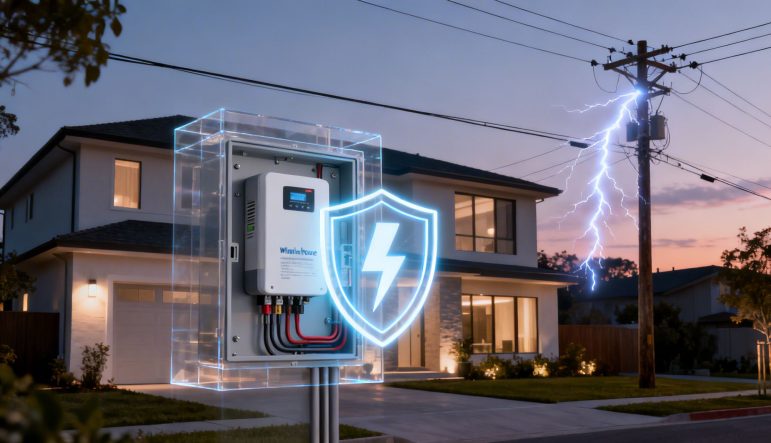
Surge protection for your home is an essential safeguard, diverting dangerous voltage spikes away from your valuable electronics and preventing costly damage. Think of it as an insurance policy for everything you plug into a wall outlet—from your smart TV and computer to your fridge and washing machine.
Without it, your devices are left vulnerable to sudden failure from power surges, both big and small.
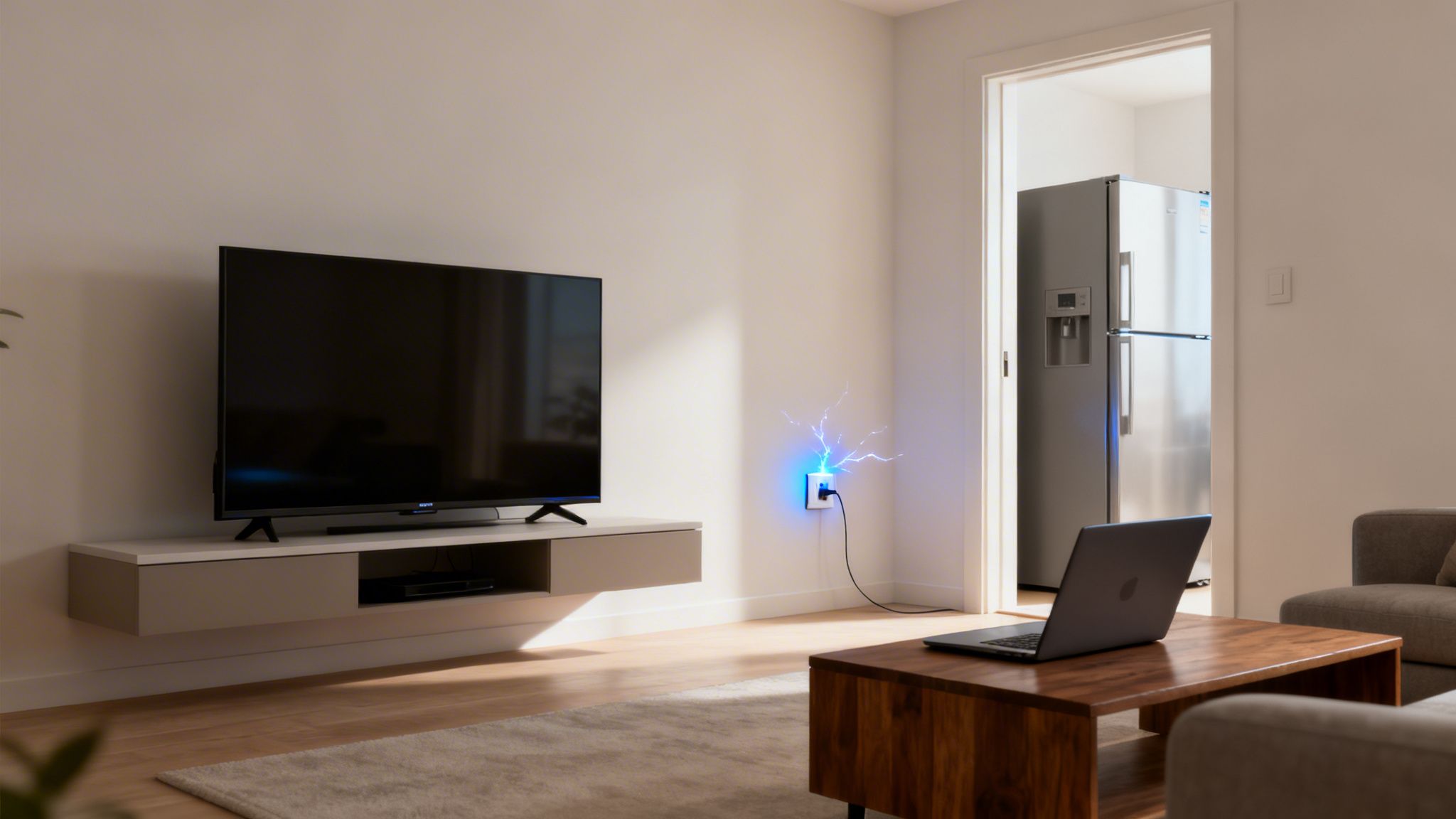
Think of your home’s electrical system like a plumbing network. Most of the time, the current flows steadily, just like water in pipes. A power surge, however, is like a sudden, high-pressure blast of water that can burst those pipes—and destroy everything connected to them. That’s exactly what a voltage spike does to your sensitive electronics.
In the past, homes had simpler appliances that could handle minor electrical hiccups. Today’s homes are filled with microprocessors and delicate circuits that make our lives easier but are far more vulnerable to damage from even small power fluctuations.
Many homeowners only think of power surges during dramatic events like a lightning strike in a Brisbane thunderstorm. While these external surges are incredibly destructive, they’re not the most common threat you face.
The reality is that up to 80% of power surges are generated internally—right inside your own home.
These smaller, frequent surges happen every time a large appliance cycles on or off. The most common culprits are probably running in your home right now:
Each time these powerful devices demand a burst of energy, they create tiny electrical disturbances. One disturbance might seem harmless, but their cumulative effect acts like a slow poison, degrading the internal components of your other electronics over months or years. This is often why a perfectly good TV or computer suddenly fails for no apparent reason.
A single major surge can easily destroy thousands of dollars worth of equipment in an instant. Protecting your home is not an expense—it’s a critical investment in preserving your assets and ensuring your peace of mind.
To better understand these risks, let’s break down the key concepts.
| Concept | What It Means for Your Home |
|---|---|
| Power Surge | A sudden, temporary increase in voltage that exceeds the normal level, damaging electronics. |
| Internal Surges | Small, frequent spikes caused by your own large appliances cycling on and off. |
| External Surges | Large, destructive spikes from outside sources like lightning or grid faults. |
| Point-of-Use Protection | Power boards that protect specific devices plugged into them. Offers limited protection. |
| Whole-Home Protection | A device installed at your switchboard to protect the entire house from all surges. |
This table highlights the different threats and the layers of protection available. While power boards are better than nothing, only a whole-home solution guards against every type of surge.
The demand for proper surge protection is rising fast across the country. In Australia, the market for home surge protection devices hit USD 53.9 million in 2023 and is projected to climb to USD 85.8 million by 2030.
This growth isn’t just a number; it’s driven by a real need. With heightened awareness of electrical safety and the increasing frequency of severe weather in regions like Queensland, homeowners are taking action. You can explore more about these market trends and what they mean for protecting your property.
Ultimately, without proper safeguards, every device you own is at risk. Installing a comprehensive surge protection system is no longer a luxury—it’s a fundamental part of modern home ownership.
To really get why surge protection for home systems is so important, you first need to know what causes these sudden, destructive spikes in your power. When most people think of a power surge, they picture a big lightning strike during a Brisbane storm. And while that’s definitely a major cause, it’s not the only one.
Power surges actually come in two different flavours, and both can be bad news for your home’s electronics.
The ones everyone knows about are external surges. These are the big, high-energy events that start outside your home. They can be incredibly destructive, often frying any unprotected electronics in a split second. Think of an external surge as a massive wave of electricity crashing over your home.
These powerful events are usually caused by a few key culprits:
But here’s the thing: while these external events are dramatic, they aren’t actually the most common threat your home faces.
The vast majority of power surges—more than 80% of them—are actually generated right inside your own home. These are smaller, more frequent surges that happen every time your large appliances kick on. They don’t have the brute force of a lightning strike, but their constant, repetitive nature can be just as damaging over time.
Imagine these internal surges as tiny, constant tremors shaking the sensitive electronics in your home. One small tremor won’t bring the house down, but hundreds of them every single day will eventually weaken the structure until it fails. That’s exactly what’s happening to the microprocessors inside your smart TV, computer, and other modern gadgets.
Common sources of these internal surges include:
Every time one of these power-hungry devices starts up, it creates a small electrical ripple that travels through your home’s wiring. This is what causes that slow, creeping damage—and it’s often why an expensive appliance or computer just mysteriously stops working “for no reason.”
The reality is that the appliance was likely weakened over months or even years by thousands of tiny, internal power surges. This progressive degradation is something only a comprehensive surge protection strategy can prevent.
Understanding the difference between these two types of surges is the key to protecting your home properly. Both are destructive in their own way, and a complete surge protection for home plan has to deal with both of them. Our detailed guide on what causes power surges goes even deeper into these electrical events.
Here’s a simple breakdown:
| Surge Type | Origin | Frequency | Impact |
|---|---|---|---|
| External Surges | Outside the home (lightning, grid faults) | Infrequent | Catastrophic, immediate failure |
| Internal Surges | Inside the home (appliances) | Very Frequent (daily) | Cumulative, slow degradation |
If you only protect against one type, you’re leaving yourself exposed to the other. A lightning strike can wipe out thousands of dollars worth of electronics in an instant, while those small internal surges can quietly kill them over time, leading to surprise replacement costs you weren’t planning for. That’s why a layered approach, which we’ll talk about next, is so essential.
So, how do you actually protect your home from those damaging power surges we’ve talked about? It’s not about picking one magic device off a shelf. The best approach is to create a layered defence system. Think of it like securing your property—it’s not enough to just have a strong front gate; you need security inside the walls, too.
A complete surge protection strategy for your home relies on two distinct layers of defence. The first is your frontline barrier against external threats, and the second is a team of personal bodyguards for your most valuable electronics. Together, they offer robust protection from both massive outside surges and the smaller, sneakier ones that happen inside.
The foundation of any solid plan is a whole-home surge protector. This is a heavy-duty device, also known as a Type 1 or Type 2 Surge Protection Device (SPD), which must be installed by a licensed electrician right at your main electrical switchboard.
Think of it as the ultimate gatekeeper for your entire home. It stands guard where the main power line from the street connects to your property, constantly watching for any large, dangerous voltage spikes coming from the grid.
When it detects a massive surge—like one from a nearby lightning strike or a major fault on the utility network—it acts instantly. The device diverts that huge blast of excess energy away from your home’s wiring and safely into your earthing system. This single action stops the overwhelming majority of a catastrophic surge before it even gets a foot in the door, protecting everything from your lights and power points to hardwired appliances like air conditioners and ovens.
While a whole-home system is your most powerful shield, it’s not designed to catch 100% of every single surge. A tiny amount of leftover voltage, sometimes called “let-through” voltage, can occasionally get past the main gatekeeper. More importantly, whole-home units can’t do anything about the smaller internal surges created by your own appliances.
This is where your second layer of defence comes into play: point-of-use surge protectors.
A point-of-use protector, usually a power board or a single-outlet adapter, acts as a personal bodyguard for a specific electronic device. Its job is to “clean up” any residual voltage that slips past the main system and to absorb the small, internally-generated surges that occur nearby.
For example, when your fridge’s compressor or your air conditioner kicks on, it can create a small voltage ripple on the circuit. A point-of-use protector will absorb that spike before it can degrade the sensitive microchips in your new smart TV or computer.
As this diagram shows, surges come from both outside and inside your home, which is why having both layers of protection is so important.
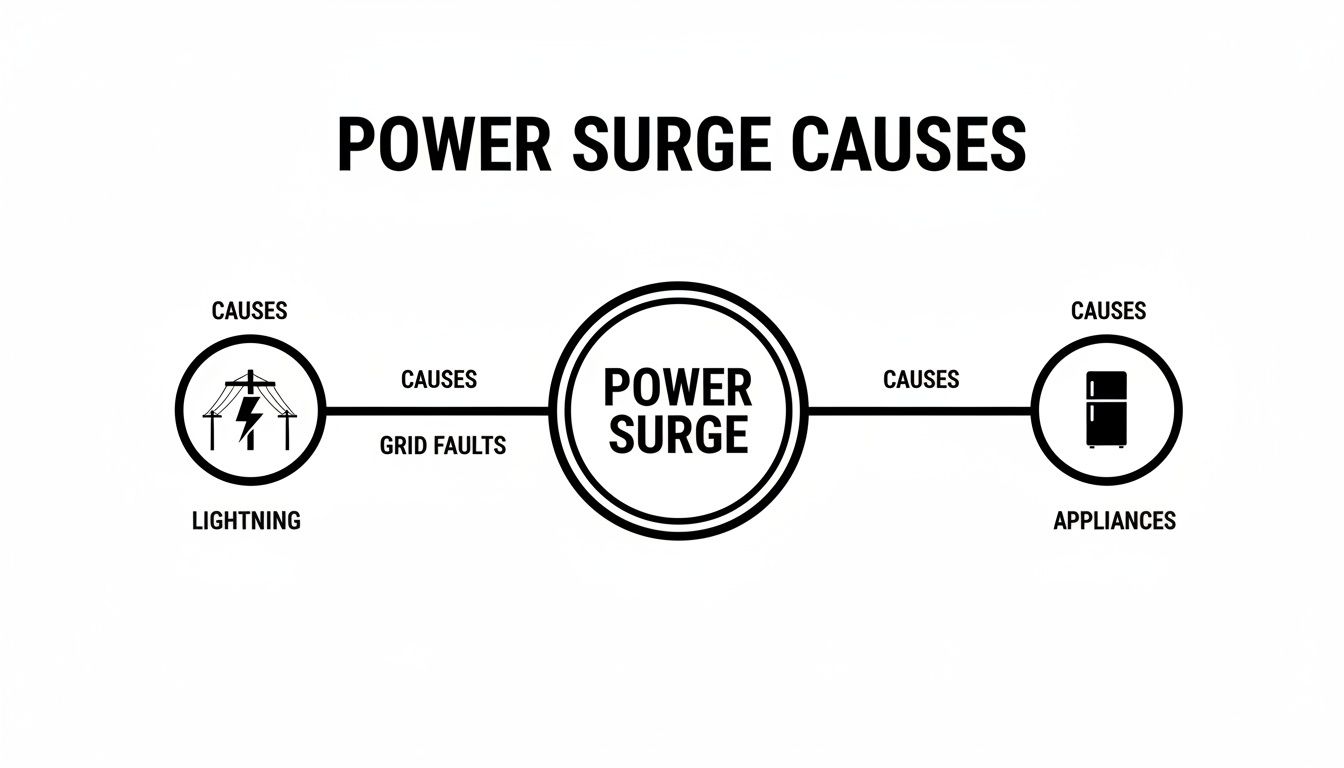
The image makes it clear that threats originate from the grid (lightning, utility faults) as well as from within your own walls (appliances cycling on and off). This reinforces why a two-pronged strategy is the only way to get comprehensive protection.
To build an effective system, it helps to see how these two types of protectors work together. The whole-home unit handles the big, external threats, while point-of-use protectors manage the smaller, internal spikes and any leftover energy from an external event.
For a deeper dive into the mechanics, you can read our guide on what a surge protector is and how these devices work.
This table breaks down the key differences to help you understand their distinct roles.
| Feature | Whole-Home Surge Protector (Type 1/2) | Point-of-Use Surge Protector (Type 3) |
|---|---|---|
| Primary Role | Blocks large, external surges from entering the home. | Protects specific devices from internal surges and residual voltage. |
| Installation Location | At the main electrical switchboard. | At the wall outlet where the device is plugged in. |
| Protection Scope | Protects the entire home, including all outlets and hardwired items. | Protects only the devices plugged directly into it. |
| Installation | Requires a licensed electrician. | Simple plug-and-play. No professional installation needed. |
| Best For | Essential first line of defence for every home. | Critical final protection for valuable and sensitive electronics. |
By combining both, you create a powerful, multi-layered defence. The whole-home protector absorbs the initial, massive hit from outside threats. Then, the point-of-use devices shield your most expensive gear—like your entertainment system, home office setup, and smart appliances—from any remaining voltage or internal surges.
This combination provides the most reliable surge protection for your home, giving you genuine peace of mind that your valuable electronics are safe.
When you’re thinking about surge protection for your home, it’s easy to get fixated on the upfront cost. But that’s looking at it the wrong way. A better way to frame it is as a critical investment, not just another expense. The real question isn’t, “What does it cost?” but rather, “What’s the financial risk of leaving my home completely unprotected?”
The answer becomes crystal clear once you start adding up the replacement value of all your modern electronics. A single major power surge, whether from a nearby lightning strike or a fault on the grid, can wipe out thousands of dollars worth of equipment in the blink of an eye. For most families, that’s a financial hit they simply can’t afford to take.
Let’s put this into perspective with a realistic scenario.
Picture a typical Brisbane home in the middle of a summer storm. A nearby lightning strike sends a massive voltage spike screaming down the power lines and straight into your switchboard. If you don’t have a whole-home surge protector standing guard, that destructive energy floods your entire electrical system.
So, what’s the damage? Let’s tally up the replacement costs for some common household items that are incredibly vulnerable to surge damage:
In this one event, you’re suddenly facing a staggering replacement bill that could easily blow past $8,000. And that doesn’t even touch on hardwired items like your air conditioning units, security system, or smart lighting.
The cost of replacing your essential electronics after just one significant power surge can be more than ten times the cost of having a professional whole-home surge protection system installed. It’s a clear case of proactive prevention versus reactive disaster recovery.
Now, let’s compare that potential loss to the cost of getting comprehensive surge protection. Installing a professional, whole-home surge protection system is a one-time investment that costs just a fraction of that potential $8,000 disaster. It stands guard 24/7, ready to sacrifice itself to save your valuable gear.
The financial justification is powerful. You’re essentially pre-paying a small, manageable fee to prevent a massive, unexpected financial blow down the track. It provides a clear return on investment (ROI) simply by safeguarding the assets you already own.
On top of that, this calculation only covers the big, catastrophic surges from outside your home. It doesn’t even factor in the slow, cumulative damage caused by smaller, daily internal surges from your own appliances turning on and off. These tiny spikes gradually wear down sensitive electronic components, leading to premature failure and forcing you to replace items years before you should have to.
A layered protection strategy—combining a whole-home system at the switchboard with point-of-use protectors for sensitive devices—is the best defence against both types of threats. It extends the lifespan of all your electronics, saving you money on frequent replacements and repairs. This turns the initial cost into a genuine long-term saving. By taking this proactive step, you’re not just buying a device; you’re securing your investments and your financial peace of mind.
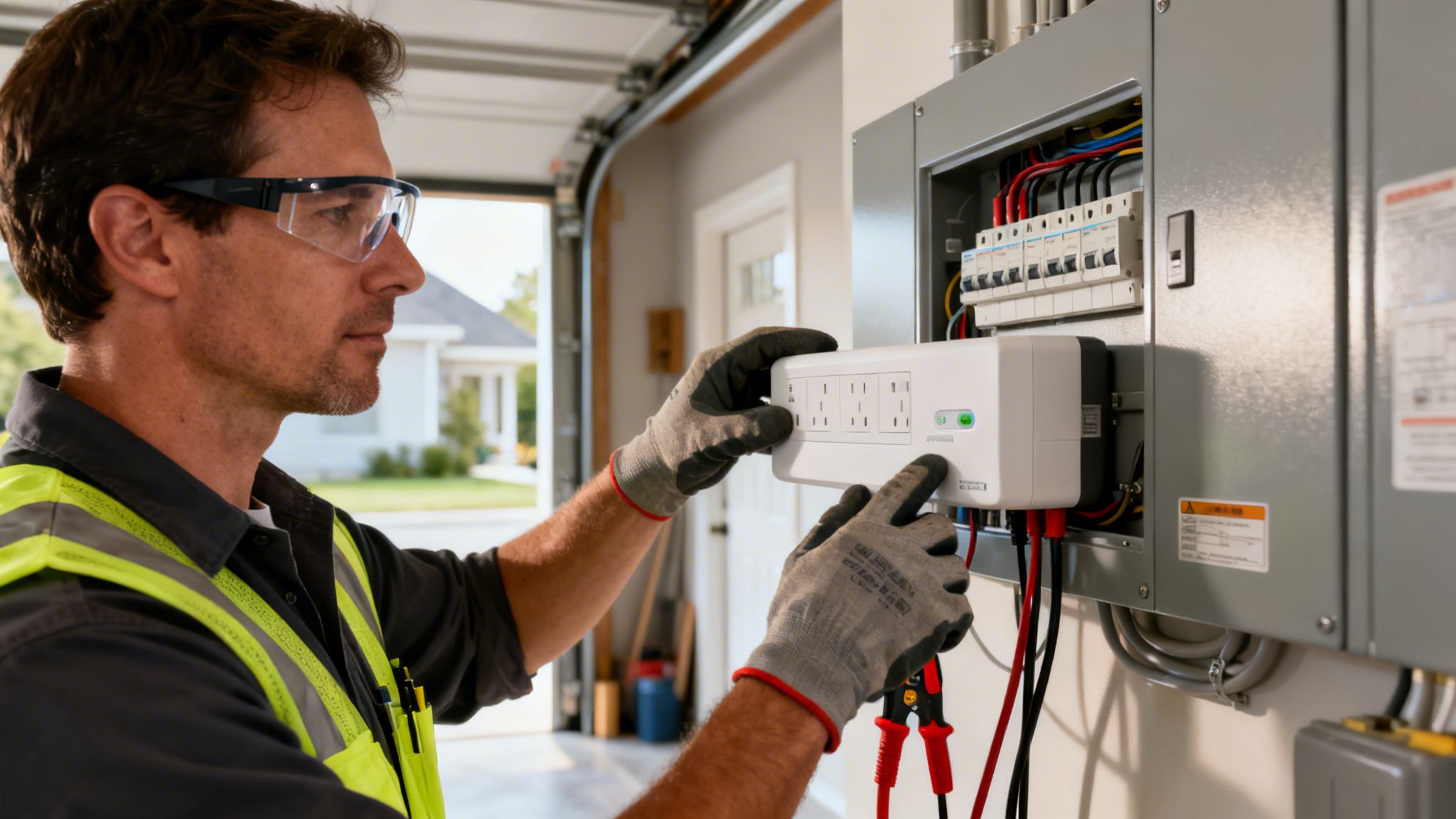
Choosing the right surge protection for home is a great first step, but it’s only half the battle. The quality of the installation is just as critical. A top-tier device wired up incorrectly offers nothing more than a false sense of security, and it won’t be there for you when a big surge hits. This is especially true for whole-home systems, which connect directly to the heart of your property’s electrical network.
Let’s be perfectly clear: installing a whole-home surge protector is a complex job that means working inside your main electrical switchboard. This is not a DIY project, no matter how handy you are. In Australia, the law is strict—any work on a switchboard must be performed by a licensed and insured electrician.
Trying to do this yourself is incredibly dangerous. You’re risking severe electrocution, electrical fires, and catastrophic damage to your home’s wiring. A professional sparkie ensures the device is installed safely, works effectively, and meets all national standards. It’s also a good time to check if your switchboard is up to the task. If your panel is old, you might need to find out how to upgrade your electrical panel to create a solid foundation for your new protection.
When you hire a licensed team like DLG Electrical, the installation is a safe and streamlined process. Here’s a quick rundown of how it usually goes:
In Australia, all electrical work, including surge protection installation, is governed by very strict safety regulations. The main one you need to know about is AS/NZS 3000:2018, known in the industry as the “Wiring Rules.”
Following AS/NZS 3000 isn’t just a good idea—it’s a legal requirement. It ensures your surge protection is installed to be both safe and effective, giving you complete confidence that your home and family are properly protected.
This standard outlines exactly how surge protectors have to be installed, covering everything from the correct wire gauges and breaker types to proper earthing methods. A licensed electrician is trained in these rules and guarantees every job is fully compliant. If you’re interested, our guide on the modern electric switchboard for home explains more about how all these important components work together.
Once installed, a whole-home surge protector is pretty low-maintenance. However, it’s not a “set and forget” device that lasts forever. These units work by absorbing the energy from power surges, and just like a shock absorber in a car, they wear out over time.
Your main job is simple:
The lifespan can vary depending on how many surges it takes, but a quality unit will often provide protection for many years under normal conditions.
So far, we’ve covered how power surges happen, the damage they can cause, and the best ways to defend your electronics. Now it’s time to put it all together and take the most important step. Getting professional **surge protection for your home** isn’t just an upgrade; it’s a proactive move to shield your valuable assets from the all-too-common threat of electrical spikes.
For any homeowner in Brisbane, the risks are very real. Our notorious storm season brings powerful external surges from lightning, while our heavy reliance on air conditioning and other large appliances creates a constant barrage of internal surges. A layered defence, combining a whole-home system at the switchboard with point-of-use protectors for sensitive gear, is the only way to achieve genuine peace of mind.
Choosing the right electrician is every bit as critical as choosing the right surge protection device. You need a licensed, insured, and experienced professional who truly understands Brisbane’s local conditions and is committed to keeping your family safe.
At DLG Electrical, we bring 19 years of dedicated experience to every single job. As a family-owned business with top ratings across North Brisbane suburbs like Grange and Windsor, we’ve staked our reputation on quality workmanship and service you can count on.
Installing a whole-home surge protector isn’t just a technical task—it’s about protecting your family and your financial investments. A professionally installed system ensures your defence is robust, compliant with Australian standards, and ready for whatever the grid throws at it.
This is absolutely not a job for a DIY weekend project. Our licensed electricians make sure every installation is flawless, from the first assessment of your switchboard right through to the final safety checks. We handle everything, guaranteeing your system gives you maximum protection from day one.
Don’t wait until a destructive power surge forces your hand. The cost of having a professional system installed is a tiny fraction of the thousands of dollars you could lose in a split second from damaged TVs, computers, and appliances. It’s time to be proactive and secure your home’s electrical future.
Contact the friendly team at DLG Electrical today for a free, no-obligation quote. We’re here to answer your questions and give you a clear, cost-effective solution that’s right for your home. Let us help you protect what matters most.
Even after seeing the benefits, it’s natural to have a few practical questions before committing to a surge protection system. As electricians, we get asked these all the time. Here are some straightforward answers to the most common queries we hear from homeowners.
Relying on home and contents insurance for surge damage can be a frustrating and often fruitless exercise. While some policies might offer a bit of coverage for a major event like a lightning strike, you’ll almost certainly be hit with an excess, and the claims process can be a real headache.
The biggest challenge is proving a power surge was the direct cause of an appliance failure. On top of that, insurance definitely won’t cover the slow, silent damage caused by the small, everyday surges that gradually wear down your electronics. Think of proactive surge protection as a much more reliable and stress-free way to look after your gear.
Surge protectors aren’t a “set and forget” for life. Their job is to absorb the excess energy from a power surge, and each time they do, they wear down a little. A professionally installed whole-home unit will serve you well for many years, but its lifespan really depends on how many hits it takes.
A surge protector works by sacrificing itself to save your electronics. Think of it as a single-use shield against a major electrical threat.
Most quality surge protectors, whether whole-home or point-of-use, have an indicator light (usually green). If that light goes out or starts flashing, it’s a clear signal the device has done its job, absorbed a significant surge, and is no longer offering protection. That’s your cue to call a licensed electrician for a replacement.
If you’re renting, you can’t make changes to the property’s main switchboard, so a whole-home surge protection system is off the table. But that doesn’t mean you have to leave your expensive electronics exposed.
Your best bet is to use high-quality, point-of-use surge protectors for all your valuable equipment. Focus on your big-ticket items: the TV, computer, gaming consoles, and sound system. When you’re buying power boards, look for a high joule rating and a clear indicator light. It’s a simple but effective way to create a strong defensive line for your personal property.
Yes, absolutely. In fact, we strongly recommend this layered approach for the best possible protection. Think of the whole-home system as your first line of defence, like a security guard at the front gate stopping the main threat. It’s designed to block the vast majority of a large, external surge.
But sometimes, a tiny bit of residual energy can sneak past that primary shield. This is where your point-of-use protectors come in. They act as the final bodyguard, absorbing that last bit of voltage and giving maximum protection to the sensitive, expensive electronics plugged directly into them.
Ready to secure your home against damaging power surges? Don’t leave your valuable electronics to chance. Contact the experienced and trusted team at DLG Electrical for a free, no-obligation quote on a professional surge protection system. Protect your investments today by visiting DLG Electrical.

Master Electrician with over 30 years of experience. Founded DLG Electrical in 2005 after international project work including electrical installations at Stamford Bridge Stadium, London(Home of Chelsea FC).

Local Electricians that can fix all Electric Hot water Systems.
Motion sensor lights are a versatile addition to any home, offering nu
