83 Jean St, Grange QLD 4051
Mon-Fri 07:30 AM - 04:00 PM - Sat - 8:00 - 12 - Sunday Closed
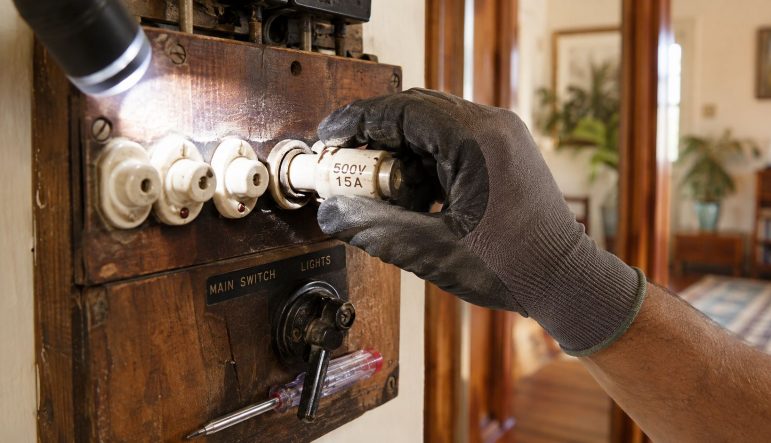
You're standing in a dark Brisbane kitchen with a torch in one hand and a spare length of fuse wire in the other. The switchboard looks familiar if your home was built decades ago, but that familiarity can be misleading. A blown ceramic fuse may be the immediate reason one part of the house has lost power, yet the fuse can also be warning you about an overloaded circuit, damaged wiring, a faulty appliance, or an obsolete switchboard.
Ceramic fuse replacement is therefore not just a matter of putting in a new piece of wire. Queensland guidance requires the correct rating and safe isolation, while repeated failures call for diagnosis by a licensed electrician. The safest approach is to treat the fuse as evidence, not automatically as the problem.
The first clue is often local rather than total. The kitchen lights may be out while the lounge room still works, or the power points in a bedroom may be dead while the rest of the house remains live. In an older Brisbane property, that pattern commonly leads back to a ceramic fuse holder on the switchboard.
A rewirable ceramic fuse uses a porcelain-bodied carrier containing a thin fuse wire. The wire is selected to carry the circuit's intended current and breaks when excessive current passes through it. Unlike a modern plug-in circuit breaker, the fuse doesn't reset. It needs correctly rated fuse wire or a matching cartridge before the circuit can be energised again.
Ceramic and porcelain fuse boards were the standard in Australian residential construction from the 1940s through the late 1970s, leaving some properties with electrical equipment roughly 45 to 80 years old today, as outlined in historical guidance on ceramic-fuse switchboards. Older homes in Brisbane's inner south and western suburbs, including Coorparoo, Woolloongabba and Holland Park, can still have original or partly updated boards where rewire work never reached every circuit.
That age matters because ceramic fuses protect wiring against overload but don't provide earth-leakage protection. Modern switchboards generally use circuit breakers and safety switches, also called RCDs, to provide a different level of protection.
Practical observation: A single blown fuse can remove power from one circuit while leaving the rest of the board live. Don't assume the whole installation is safe just because some lights are still working.
Before touching anything, identify the affected circuit and look at the holder without forcing it. A blackened carrier, heat damage, a burning smell or a fuse that has failed repeatedly changes the job from a straightforward replacement into an electrical fault investigation.
A one-off failure after an obvious overload can happen, but a recurring blown fuse deserves attention. The protective device is doing its job by interrupting current. Replacing it repeatedly without finding the reason can leave the underlying hazard in place.
Queensland safety advice explains that if a fuse blows again after the appliance has been unplugged, the fault may be in the wiring and a licensed electrician should be called. The state regulator also warns against oversize fuse wire because it can damage wiring or start a fire. Read the Queensland Electrical Safety guidance on re-wiring fuses before considering any replacement.
Several warning signs point away from a simple ceramic fuse replacement:
Older Brisbane homes deserve particular caution because their wiring and switchboards may have been designed around household loads that no longer match a renovated kitchen, ducted equipment, induction cooking or several portable heaters. Guidance discussed by Australian electrical parts specialists also highlights scorch marks, warm fuse carriers, buzzing, crackling, flickering lights and frequent nuisance blowing as signs that inspection is more appropriate than repeated replacement.
The useful question isn't “How quickly can I fit another fuse?” It's “What made this fuse operate, and has that cause been removed?”
Queensland's regulator describes a specific sequence for replacing rewirable fuse wire. It starts with isolation, not with pulling out the carrier. If the board shows heat damage, the fuse rating is unclear, or the fuse has failed more than once, stop and call a licensed electrician instead.
Remove the carrier only after the supply has been isolated. Inspect the fuse wire and holder for a clear break, blackening, looseness or heat damage, but remember that appearance alone may not prove the fuse has failed. If the carrier, contacts or surrounding base show discolouration, don't continue.
The replacement must match the original fuse rating. Never use oversize fuse wire, copper substitutes or foil. A higher rating can allow more current through wiring that wasn't designed to carry it, which is precisely the risk the fuse is meant to control.
Refit the carrier firmly, restore power using the sequence advised for the installation, and test the affected circuit. If the replacement blows immediately or the circuit behaves abnormally, isolate it again and arrange professional diagnosis.
Safety rule: If you can't confirm the rating, the board's condition or the reason for the failure, ceramic fuse replacement is no longer a suitable DIY task.
Electrical work can involve serious shock and fire risks. For an overview of the broader regulatory considerations around older boards, see switchboard upgrade regulations and safety requirements. A service visit is a small inconvenience compared with damaging the switchboard, wiring or property.
A single replacement can make sense when the board is in good condition, the rating is clearly marked, the circuit has a known one-off cause and there are no signs of overheating. It may restore power without disturbing an otherwise serviceable installation.
A full upgrade deserves consideration when the board still relies on rewirable ceramic fuses, lacks RCD protection, has a history of repeated faults or needs to support new circuits. Aluminium wiring, renovation work, insurance questions and substantial changes to household loads also justify an electrician's assessment. A like-for-like replacement may solve today's outage while leaving the wider safety limitations untouched.
| Factor | Single Fuse Swap | Full Switchboard Upgrade |
|---|---|---|
| Immediate purpose | Restore one failed circuit | Replace obsolete protection and improve board functionality |
| Suitable condition | Clean, isolated failure with no heat damage | Aged, damaged or repeatedly faulting switchboard |
| Personal protection | Doesn't add RCD coverage | Can include modern safety switches and circuit breakers |
| Future work | Limited to the existing circuit | Better suited to renovations and additional electrical loads |
| Cost context | Usually limited to diagnosis and the component | Brisbane guidance commonly places a typical home upgrade around A$1,200 to A$2,500, as noted in Brisbane ceramic-fuse switchboard pricing guidance |
| Main trade-off | Lower immediate disruption, older protection remains | Greater upfront work, broader safety improvement |
In homes built before 1990, especially older Queenslanders, the original porcelain fuse base may still be present. The right decision depends on inspection, not the age of the fuse alone. For a plain-language comparison of the protective functions involved, see the difference between a fuse and a circuit breaker.
Any upgrade should be completed by a licensed electrician, with the required compliance documentation submitted to the Electrical Safety Office.
Some conditions remove the choice from the homeowner. Scorching, melted carriers, buzzing, warmth, burning odours and repeated fuse failures all indicate that changing the fuse without testing the circuit could conceal a dangerous fault.
Water is another clear trigger. Outdoor meter boxes and switchboards can take on moisture after storms, particularly where seals, covers or surrounding building materials have deteriorated. A post-storm board in Stafford or Chermside may contain dampness, debris or corrosion that isn't obvious from the front. Don't open or handle a wet board.
Call a licensed electrical contractor if:
A homeowner may be permitted to replace a like-for-like fuse in their own home under the applicable Queensland framework, but permission doesn't make an uncertain job safe. Once the condition of the carrier, wiring or circuit is unclear, the electrician needs to test the installation and determine whether repair, rewiring or a switchboard upgrade is appropriate.
For households comparing electrical contractors, questions to ask an electrician before hiring can help you check licensing, scope, testing and documentation. If you're also planning standby power work, a directory such as find a generator installer in GA can help locate a specialist, although generator installation remains separate from diagnosing a Brisbane ceramic-fuse board.
A licensed electrician can provide the relevant testing and compliance records for completed work. Keep those documents, particularly if the repair involves an upgrade, a rental property or an insurance query.
Keep the following checklist near the switchboard, but treat it as a decision aid rather than permission to work on a damaged board.
Older Brisbane homes in Woolloongabba, Red Hill and Camp Hill may still have ceramic fuse carriers, but the local address doesn't determine whether a board is safe. An inspection should consider the condition of the wiring, the presence of RCD protection on relevant power and lighting circuits, the board's enclosure and the demands placed on the installation.
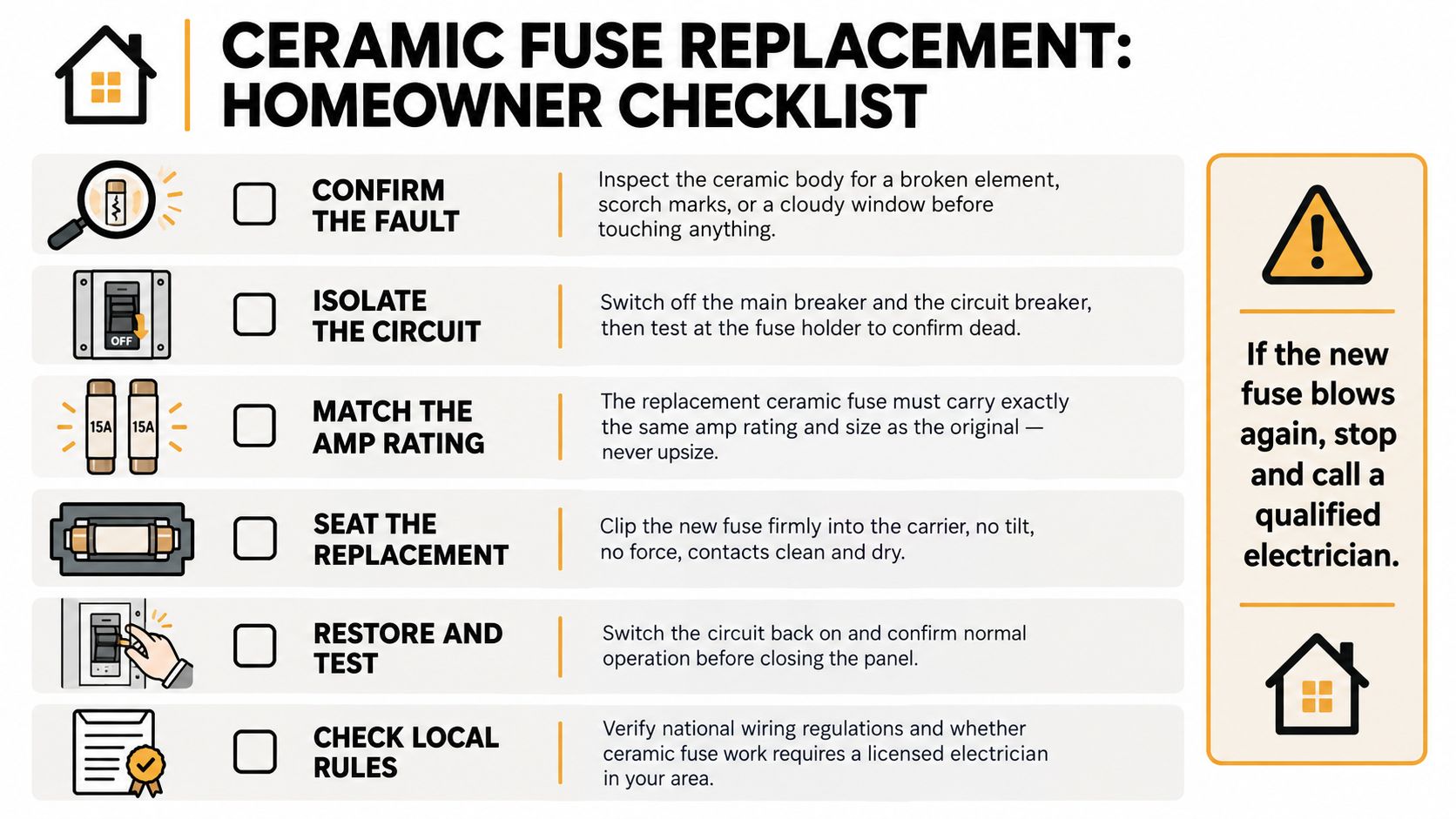
Keep the fuse rating visible inside the board door, retain receipts and any Form 4 documentation, and arrange an inspection after major storm exposure or when the switchboard shows new symptoms. If anything looks, smells or feels wrong at the board, call a licensed Brisbane electrician before touching a fuse.
DLG Electrical can assess Brisbane switchboards, diagnose repeated ceramic fuse failures and explain whether a single repair or modern upgrade is appropriate. Visit DLG Electrical to discuss a switchboard assessment and request a practical quote from a licensed local team.

Master Electrician with over 30 years of experience. Founded DLG Electrical in 2005 after international project work including electrical installations at Stamford Bridge Stadium, London(Home of Chelsea FC).

Local Electricians that can fix all Electric Hot water Systems.
Motion sensor lights are a versatile addition to any home, offering nu
