83 Jean St, Grange QLD 4051
Mon-Fri 07:30 AM - 04:00 PM - Sat - 8:00 - 12 - Sunday Closed
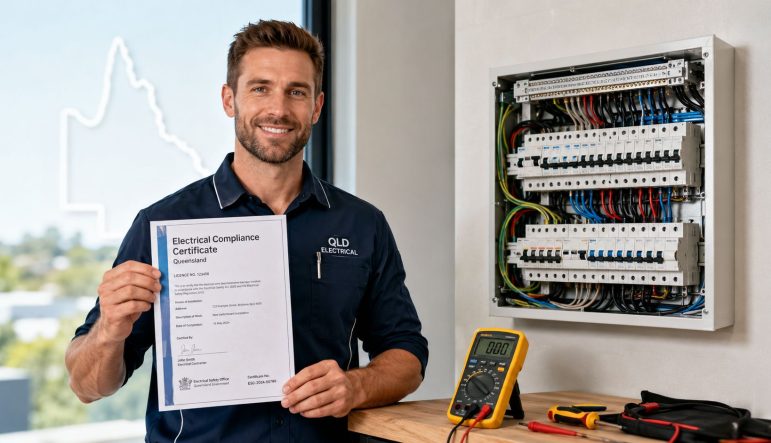
You've finished a renovation, swapped an old cooker for a new one, added an air-conditioner, or you're getting a rental ready for the next tenant. The work looks done. The lights turn on. Then someone asks, “Did you get the electrical certificate of compliance?”
That's usually the moment property owners realise this document isn't admin for admin's sake. In Queensland, it's the record that separates properly tested, signed-off electrical work from work that only looks complete.
For homeowners in Brisbane, the practical issue is simple. If licensed electrical work has been carried out, you need more than the installation itself. You need evidence that the work was inspected, tested, and certified by a licensed person. That matters when you're renovating, maintaining a rental, dealing with insurance questions, or answering buyer enquiries during a sale.
An electrical certificate of compliance isn't typically sought until something triggers its necessity. A kitchen renovation finishes. The switchboard gets upgraded. A smoke alarm system is brought up to standard. A property manager asks for paperwork. A buyer wants proof the recent electrical work was done properly.
That's when the certificate stops feeling like paperwork and starts feeling like protection.
In Queensland, the point of certification is safety first. The broader national framework treats electrical compliance records as formal proof that work met the required safety standard at the time it was inspected, and Safe Work Australia reports that electricity-related hazards cause workplace fatalities and serious injuries every year, which is why documentation, testing, and traceable sign-off are treated as core controls rather than optional paperwork, as noted in electrical certification guidance.
If you own a house, unit, or investment property in Brisbane, an electrical certificate of compliance helps you answer three practical questions:
Practical rule: If the job changed fixed wiring, circuits, or protection devices, treat certification as part of the job, not an optional extra.
A lot of confusion comes from people assuming certificates only apply to big jobs like new builds or full rewires. In practice, plenty of smaller works can trigger certification obligations too. That's where owners get caught out. The job feels minor, but the compliance duty isn't.
What doesn't work is relying on a verbal “all good”, a paid invoice with no description, or a photo of the finished fitting. None of those prove the work was tested and certified.
What does work is keeping the certificate with your property records. If you've had electrical work done in the last few years and can't find the paperwork, now's the time to ask for it.
Think of an electrical certificate of compliance as the roadworthy certificate for your home's wiring. It doesn't mean every future issue in the property disappears. It means the electrical work listed on that document was completed, inspected, and tested to the required standard at the time it was signed off.
That distinction matters. A certificate is tied to specific work. It isn't a magic blanket over every cable in the house.
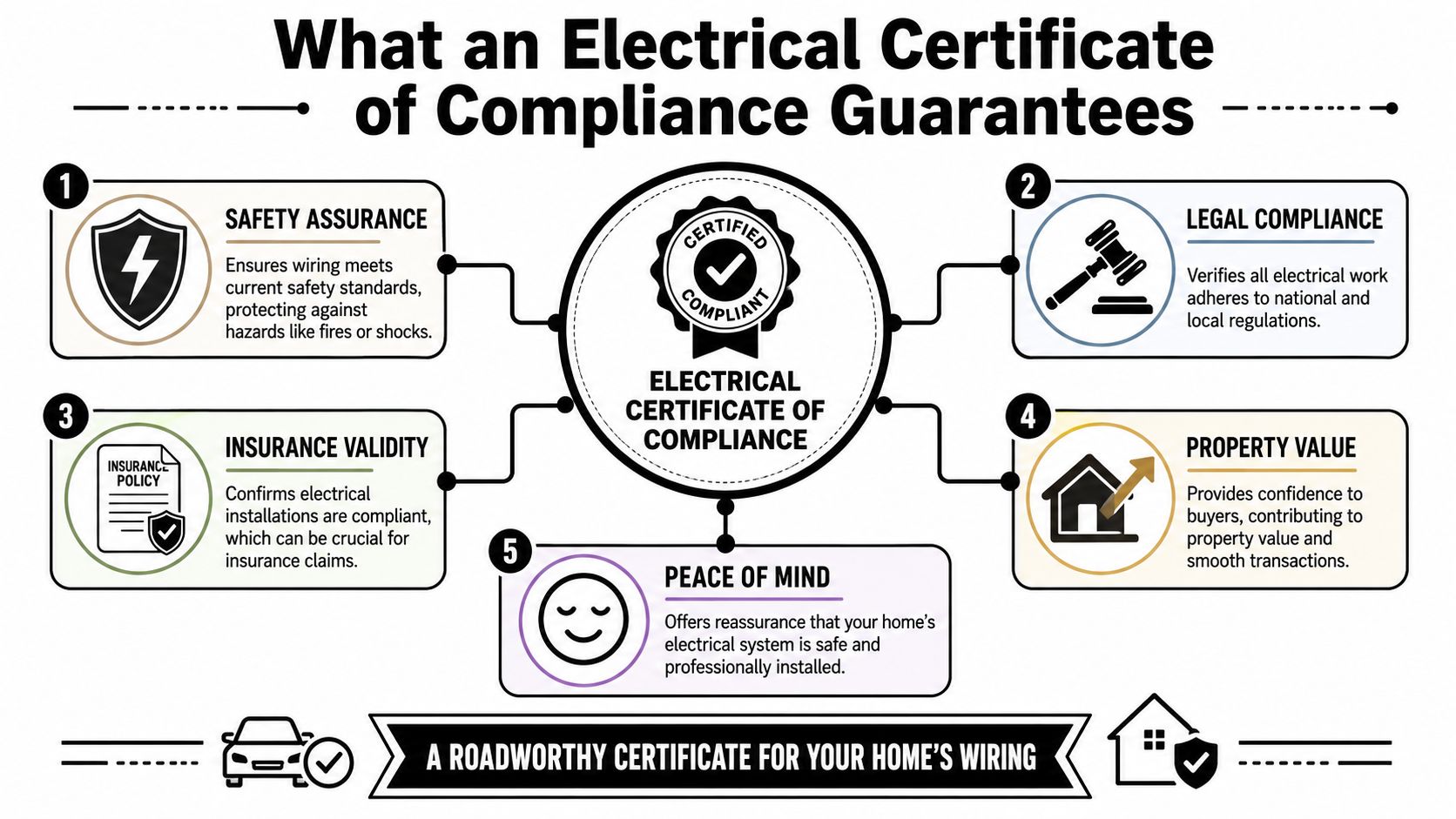
The legal side is straightforward. An electrical certificate of compliance is the record that the completed installation work complies with AS/NZS 3000 and was tested to confirm the circuits and protection devices operate safely, as explained in this overview of an electrical certificate of compliance and testing.
That means the document isn't just saying “an electrician attended”. It's saying the electrician is putting their licence and responsibility behind the listed work.
The testing side is where the certificate earns its value.
Testing is used to detect overloaded circuits and protection-device failures before energisation. In plain language, it helps catch the sort of faults that later show up as nuisance tripping, blown fuses, or more serious fire and shock risks in fixed wiring work such as new power points, switchboard upgrades, ovens, air-conditioners, ceiling fans, and similar installations.
A good analogy is a pressure test on plumbing. You don't assume a pipe is sound because it looks neat. You test it. Electrical work is the same.
A neat install can still be a dangerous install if nobody verified polarity, protection, and circuit performance.
A certificate generally gives you confidence in the specific completed work. It does not automatically certify unrelated older wiring elsewhere in the property unless that work was part of the scope.
That's why detailed descriptions matter. “Kitchen renovation electrical works” is more useful than “electrical works completed”. The more precise the record, the easier it is later when a buyer, landlord, or another tradesperson needs to know what was done.
Quality of installation also matters well beyond compliance wording. If you want a practical example from the solar side, Interactive Solar on quality installations makes the point well. The equipment can be excellent, but poor installation quality undermines the whole result. Electrical certification sits in that same space. It backs up workmanship with testing and traceable sign-off.
In Queensland, the most useful way to think about this is by trigger, not by job size. Owners often assume only major projects need paperwork. That's not how electrical compliance works in practice.
Queensland's framework requires electrical work to be tested and certified as safe, and one of the biggest gaps in homeowner advice is failing to distinguish between new installations, alterations, and maintenance. That matters for common Brisbane jobs such as switchboard changes, smoke alarm upgrades, hot-water repairs, and solar or EV-related work, as discussed in this guide to Queensland electrical certificate triggers.
A quick visual summary helps:
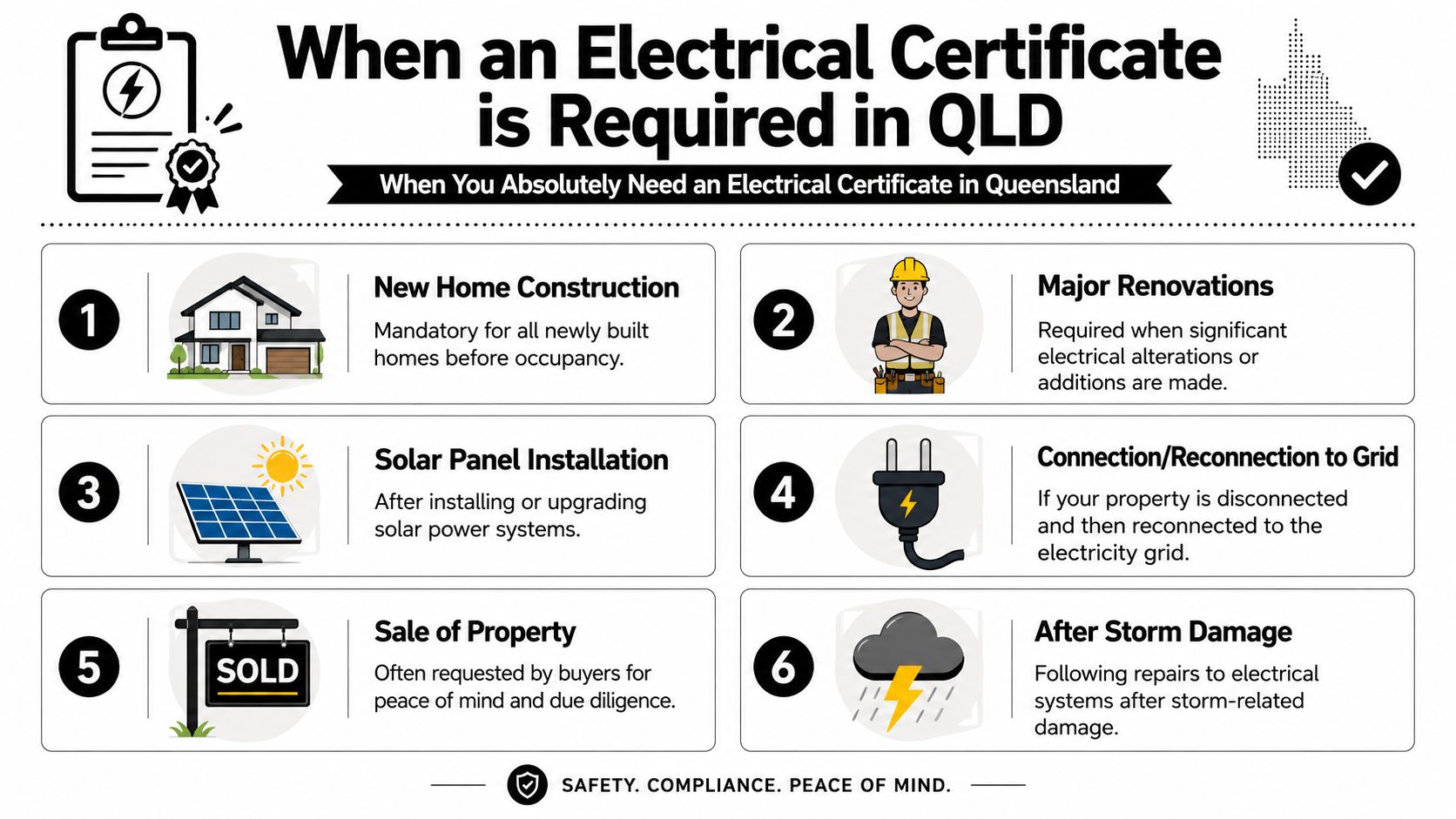
If the work involves fixed wiring, a new circuit, changes to protection, or an alteration to existing installation work, expect certification to be part of the process.
Typical examples include:
This video gives a useful general overview before you book the work:
Property transactions expose missing paperwork quickly. A buyer might ask for evidence of the switchboard upgrade. A property manager may want confirmation that recent electrical maintenance was properly certified. A landlord might assume last year's certificate covers everything in the property, even though later alterations can change that position.
If you manage rentals, DLG has a separate guide on the electrical safety certificate for landlords that helps clarify the compliance side from an owner's perspective.
If work was added later, the old certificate doesn't automatically stretch to cover it.
| Scenario | Certificate Required? | Key Consideration |
|---|---|---|
| New fixed wiring installed | Yes, in practice | New installation work needs testing and certification |
| Switchboard changed or upgraded | Yes, in practice | Protection devices and associated circuits must be verified |
| Air-conditioner added on a new circuit | Yes, in practice | Dedicated supply and isolation work are part of the installation |
| Like-for-like maintenance only | It depends | The exact scope matters. Ask whether the work counts as maintenance or alteration |
| Smoke alarms hard-wired or altered | Often yes | Hard-wired changes can trigger certification obligations |
| Solar or EV equipment added | Yes, in practice | Added systems affect the existing installation and require proper sign-off |
| Selling a property with past electrical works | Existing paperwork may not be enough | Buyers often want proof for the modified work, not just older records |
| Rental maintenance after electrical alterations | Often yes | Landlords need records that match the work actually carried out |
You replace a cooktop, add a new air-conditioner circuit, or have a switchboard upgraded. The lights come back on, the invoice gets paid, and the job looks finished. For compliance purposes in Queensland, that is only part of the job. The work also needs to be checked, tested, and properly documented.
If a contractor is vague about the paperwork, treat that as a warning sign. Certification should follow a clear process from the start, especially for Brisbane owners who may need records later for a tenant, buyer, insurer, or the next electrician.
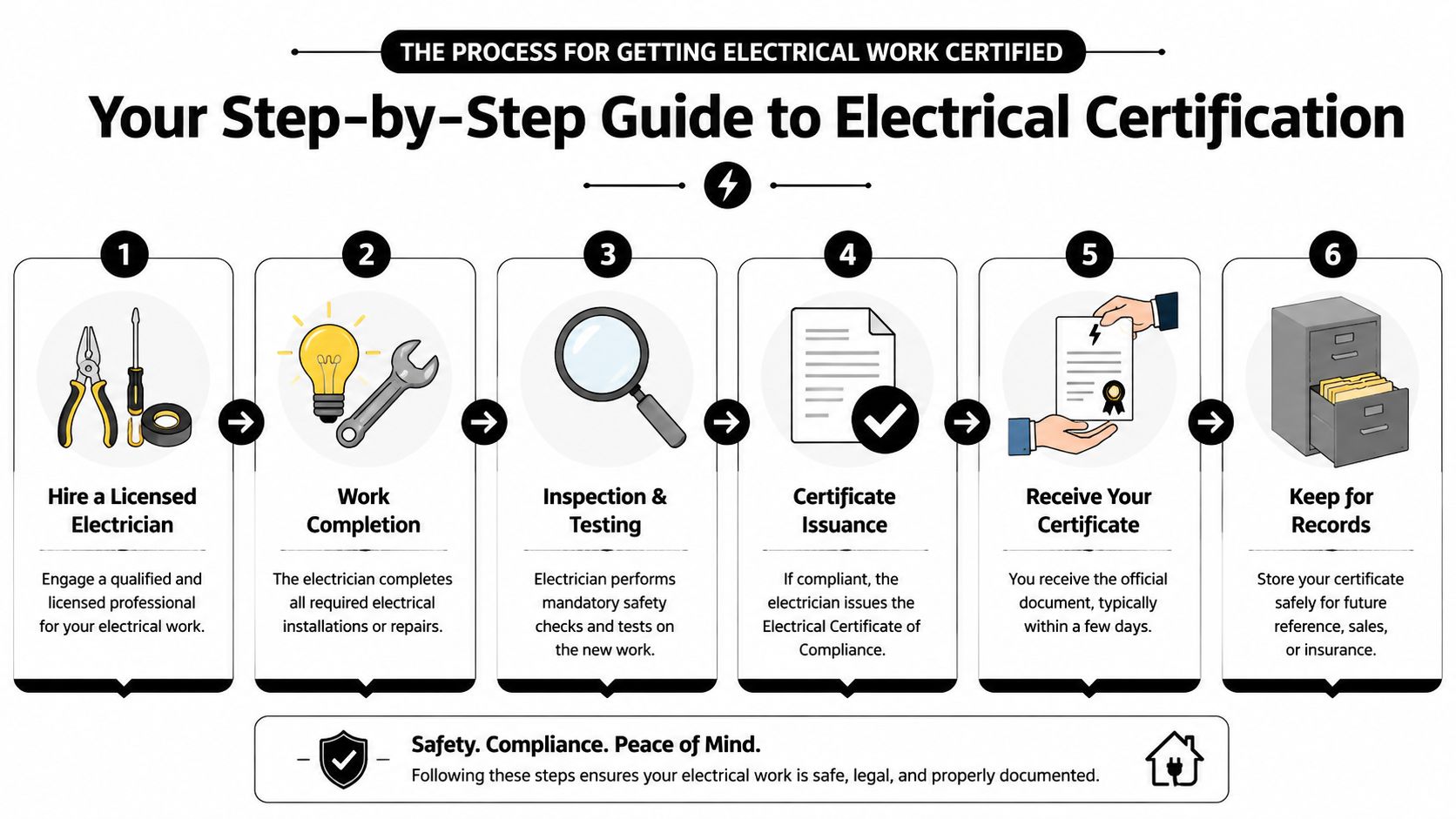
A proper certification process usually runs in this order. The electrician confirms the scope. The work is completed. The altered or new circuit is inspected and tested. The certificate is then issued with details that match the job.
That testing step matters. A new circuit can look fine at the wall and still have a polarity fault, a weak connection, or a protection issue sitting behind the cover plate. Energy Safe Victoria explains the kinds of electrical tests used to verify safety after installation work in its guide to electrical installation testing.
On a real job, the electrician will usually check items such as:
The exact tests depend on the job. Replacing a light fitting is not the same as adding a dedicated oven circuit or changing a switchboard. Good electricians adjust the testing to suit the work, but they do not skip it.
If the job involves hot-water services, it can help to understand the appliance symptoms before booking. Ring Hot Water has a useful guide on how to diagnose faulty heating elements. That does not replace licensed electrical testing, but it can help you describe the fault clearly.
Owners and landlords do not need to speak in technical terms. Ask direct questions.
That last question catches plenty of confusion. If a contractor has done several tasks in one visit, make sure the paperwork reflects what was installed or altered.
For a local point of reference, DLG's Brisbane electrician guide outlines the kinds of jobs where licensed electrical work, testing, and certification should form part of the normal process.
The paperwork should match the physical work, down to the address and job description.
The problems are usually ordinary, not dramatic. A small job gets squeezed in as an afterthought. The fitting works. Nobody asks about certification. Months later, the owner is selling, leasing, renovating again, or trying to trace a fault, and there is no clear record of what changed.
I see this most often with work that owners assume is too minor to matter. A new circuit for an air-conditioner. Hard-wired appliance work. Alterations made during a kitchen update. Those are the jobs worth documenting properly because they affect the installation beyond the single item you can see.
Good compliance is not complicated. It is careful work, proper testing, and a certificate that arrives without you having to chase it.
A certificate is only useful if you can read it. Most owners file it away without checking whether it matches the work done.
You don't need to understand every technical shorthand on the page. You do need to verify that the key identifying details are right and that the scope makes sense.
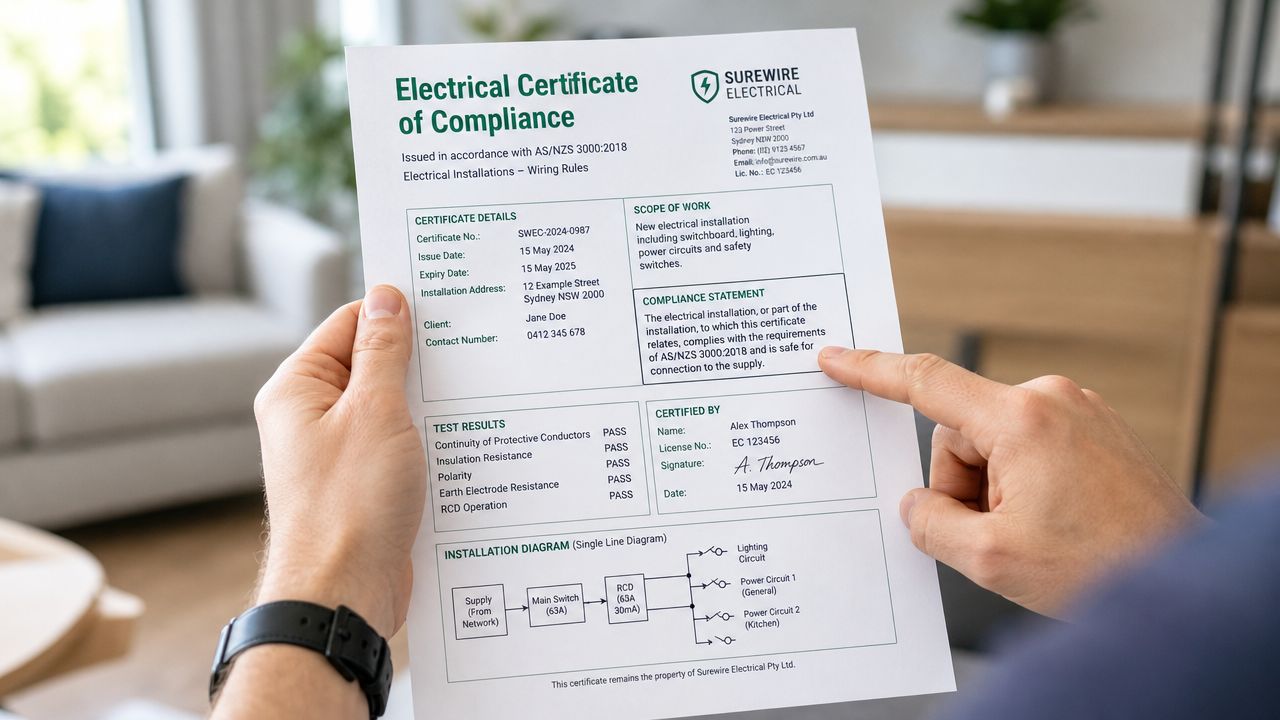
Start with the basics:
If you've had a switchboard replacement and the certificate only says “minor electrical works”, ask for clarification. The wording should help, not create more uncertainty.
Some owners treat the certificate as something only needed for a conveyancer or insurer. It has a broader role than that. Across the national safety framework, these documents act as the gate between tested work and energised work. A strong illustration comes from the Northern Territory, where Power and Water Corporation will not reconnect supply without a Certificate of Compliance under Regulation 5(3) of the Electricity Reform (Safety and Technical) Regulations 2000, as set out in Power and Water's Certificate of Compliance requirements.
That example is from another jurisdiction, but the lesson is useful in Queensland too. The certificate isn't decorative. It's part of how electrical safety control is documented.
For a broader background on the standards that sit behind certified electrical work, this guide to electrical wiring standards in Australia is worth reading alongside your paperwork.
Read the certificate like you'd read a building plan. Focus on what was included, not what you assumed was included.
Before you file it away, confirm:
A few questions come up on almost every Brisbane job.
Sometimes, but only for the work it covered.
One of the biggest misunderstandings in sales and rentals is assuming an earlier certificate covers the whole installation forever. It often doesn't. Buyers and property managers commonly assume a prior certificate covers everything, yet legal and safety obligations can change after any addition or alteration, often requiring new certification for the modified work, as highlighted in this discussion of certificate validity after alterations.
If you added a cooktop circuit, changed the board, or installed new hard-wired equipment after the old certificate was issued, treat that later work as its own compliance question.
The practical answer is this. It records that the listed work complied at the time of inspection and sign-off. It isn't a forever-pass for later changes, damage, wear, or unrecorded alterations.
That's why owners should think less about “expiry” and more about whether the installation has changed since the certificate was issued.
There isn't one universal figure that applies to every job, and a fixed number without context is misleading. On some jobs, certification is part of the quoted electrical work. On others, especially where someone is trying to certify existing or undocumented work after the fact, the cost and effort can be higher because inspection, testing, and possible rectification are involved.
If someone offers to “just issue the paperwork” without proper inspection and testing, that's not the shortcut you want.
Start by asking the electrician or contractor who completed the work. If you've bought the property and inherited partial records, build a folder now rather than waiting until the next lease renewal or sale.
For trade businesses generally, systems matter here. A lot of paperwork problems come from missed calls, delayed admin, and poor follow-up, which is why some contractors use services like a dedicated service for electricians to keep enquiries and records from slipping through the cracks. From the customer side, the takeaway is simple. Choose electricians who run an organised process and can produce documents when needed.
If you're planning electrical work in Brisbane, the cleanest path is to discuss certification before the job starts, not after the walls are painted and the invoice is paid.
If you need licensed electrical work completed and properly certified in Brisbane, DLG Electrical can provide a free quote and explain the compliance requirements for your specific job, whether it's a switchboard upgrade, renovation, hot-water repair, smoke alarm work, or rental property maintenance.

Master Electrician with over 30 years of experience. Founded DLG Electrical in 2005 after international project work including electrical installations at Stamford Bridge Stadium, London(Home of Chelsea FC).

Local Electricians that can fix all Electric Hot water Systems.
Motion sensor lights are a versatile addition to any home, offering nu
