83 Jean St, Grange QLD 4051
Mon-Fri 07:30 AM - 04:00 PM - Sat - 8:00 - 12 - Sunday Closed

If you live in Wilston, there’s a good chance your electrical questions don’t start with a renovation plan. They start with something small. A light that flickers in the hallway. A switch that feels warm. A circuit that trips when the kettle and toaster run together. In older character homes, those signs often point to wiring or switchboard issues that have been building for years. In newer homes, the problem is usually capacity. More devices, more appliances, more demand.
That’s why choosing an electrician wilston homeowners can rely on matters. You’re not just hiring someone to replace a fitting or add a power point. You’re trusting them to work safely inside a home that may have old cabling, past alterations, tight roof spaces, or a mix of original and modern circuits.
A lot of Wilston homes have personality. Timber floors, VJ walls, decorative ceilings, raised construction, narrow roof access, and additions completed at different times. Those features make the suburb attractive, but they also create electrical work that needs care, planning, and local knowledge.

Some jobs are straightforward. Others aren’t. A simple fan replacement can uncover brittle wiring. A kitchen upgrade can reveal that the existing board has no room for new circuits. A smoke alarm install can expose broader compliance issues. That’s normal in suburbs with a mix of older homes, renovated workers cottages, and newer builds.
Brisbane has approximately 822 licensed electricians in a competitive market, and DLG Electrical has operated for 19 years with a family-owned approach and a five-star Google rating in North Brisbane suburbs including Wilston, according to Brisbane electrician industry trends. For homeowners, that matters because experience shows up in the details. Clean cable runs, tidy switchboard labelling, careful fault finding, and realistic advice instead of rushed fixes.
Reliable electrical work isn’t just turning up on time. It means:
A good electrical job should feel boring once it’s finished. Everything works, nothing trips, and you stop thinking about it.
Electrical work in Wilston is rarely one-size-fits-all. A post-war cottage, a raised Queenslander, and a newer townhouse can all sit on the same street, but they usually need very different solutions. The right scope depends on the age of the wiring, past renovations, current load demands, and whether the home needs to suit a growing family, a sale campaign, or a rental standard.
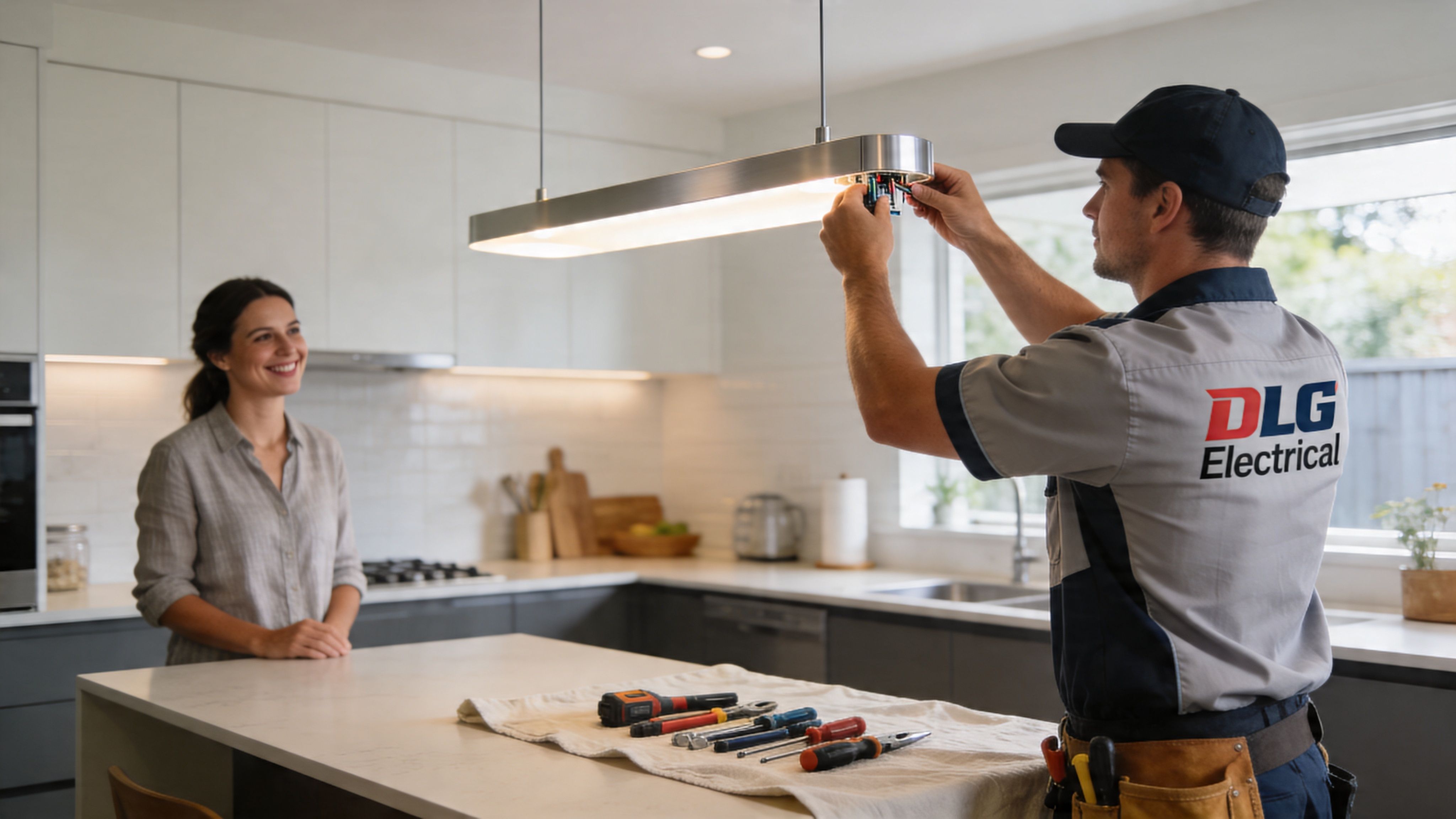
In many older Wilston houses, the switchboard is the first place we look. It often shows the gap between how the home was originally wired and how it is used now. Air conditioning, induction cooking, larger hot water systems, home office equipment, and outdoor power all put more demand on circuits than older boards were built to handle.
Older boards can also make even small additions harder than they should be. Limited circuit space, poor labelling, mixed generations of breakers, and missing safety switches all add time, risk, and cost to future work.
A switchboard upgrade usually improves:
For many Wilston homeowners, this is the job that makes the rest of the electrical system easier to manage.
A lot of the work we do is practical. Homes built decades ago were never designed for today’s device charging, kitchen appliances, or work-from-home setups. One living room outlet and a few table lamps might have been enough once. They are not enough for many families now.
The upgrades that tend to deliver the biggest day-to-day improvement are straightforward:
If extension leads and power boards have become permanent fixtures, fixed outlets are usually the safer and tidier answer.
Hot water problems need proper diagnosis, not guesswork. The fault may be in the element, thermostat, isolator, supply, timer, or the wiring feeding the unit. Replacing parts without testing can waste money and still leave the original issue in place.
That matters in Wilston because many homes have been upgraded in stages. A renovated kitchen may sit beside older subcircuits. A newer bathroom may be connected back to an ageing board. An extension added years later can introduce joins, load imbalances, or circuit layouts that are not obvious until something stops working.
DLG Electrical handles work such as switchboard upgrades, hot water system repairs, smoke detector compliance, security installations, and custom residential electrical work across homes with exactly that kind of mixed history.
Security lighting, alarms, and smoke detectors work best as part of a plan for the whole property. Placement matters. Cable routes matter. So does the way the household uses bedrooms, hallways, entries, decks, and side access after dark.
Piecemeal installs often leave gaps. One detector in the wrong location, a sensor light aimed too narrowly, or a camera position that looks fine on paper but misses the approach to the house. Good results come from a layout that suits the property, compliant installation, and equipment that the homeowner can use confidently every day.
Electrical safety gets ignored most often in homes that seem to be working fine. Lights turn on, the oven runs, and nothing appears urgent. But compliance problems usually sit in the background until a tenant reports an issue, a sale inspection raises questions, or a fault creates a real hazard.
For landlords and property managers, that risk is higher than many assume. A Queensland Electrical Safety Office audit found that nearly 40% of rental properties had at least one potentially dangerous electrical issue, and smoke alarm laws effective from 2026 can bring fines of up to $15,684 per breach, according to Queensland rental electrical safety guidance.
Smoke alarm compliance isn’t a box-ticking exercise. The details matter. Alarm type, placement, interconnection, and power source all affect whether the home meets the rules and whether the system performs properly when it’s needed.
Landlords usually run into trouble in three situations:
If you own or manage a rental in Wilston, the safest approach is a full compliance review rather than replacing single units one by one.
Safety switches save lives, but only if they’re installed where they should be and tested as part of a broader inspection. In older homes, it’s common to find partial protection, mixed-era wiring, or previous work that made sense at the time and no longer suits current requirements.
Look more closely if you’ve noticed:
Most dangerous electrical defects don’t announce themselves clearly. They show up first as minor inconvenience.
The most reliable path is methodical. Inspect the switchboard, confirm circuit protection, check smoke alarms, test affected circuits, and document what needs rectification. What doesn’t work is patching the visible issue while ignoring the rest of the installation.
Homeowners often want the cheapest fix. That’s understandable. But on safety items, the better trade-off is usually a proper repair or upgrade done once, with clear certification and confidence that the property is compliant.
A Wilston electrical job often starts with a simple question that turns out to be tied to the house itself. A failed light fitting in a post-war cottage can reveal brittle cabling in the ceiling. A new fan in a renovated Queenslander can become a larger job if the mounting, switch wiring, or circuit protection is not up to current expectations. That is why the process matters as much as the task list.
DLG Electrical approaches quoting the same way we approach the work. Inspect first, explain what we find, then price the job based on the actual condition of the installation.
Most jobs follow a clear sequence:
That order keeps surprises down.
Pricing is rarely set by the fitting alone. In Wilston, the age and layout of the home often have more impact on cost than the item being installed.
The main factors are:
| Service | Typical Timeframe | Estimated Cost (inc. GST) |
|---|---|---|
| Power point installation | Usually completed in one visit | From $180, depending on access and whether wiring already exists nearby |
| Pendant light installation | Usually completed in one visit | From $160 for a straightforward replacement. More if support, wiring changes, or high-access equipment is needed |
| Ceiling fan installation | Usually completed in one visit | From $250 for replacement of an existing fan point. New wiring or bracing increases cost |
| Smoke alarm compliance work | Varies by home layout and existing alarm setup | From $450 for smaller homes. Final price depends on alarm locations, interconnection needs, and existing system condition |
| Switchboard upgrade | Usually a scheduled half-day to full-day job | Commonly $1,200 to $2,500+, depending on board size, circuit protection required, and defect rectification |
| Hot water electrical fault finding | Depends on testing required and parts needed | From $180 for diagnosis, with repair costs based on the fault, isolator condition, and parts required |
| Security lighting installation | Varies by cable route and mounting location | From $220 for straightforward installations. Surface type, height, sensor setup, and cable path affect final cost |
These are guide prices, not fixed quotes. They help set expectations, but the final figure should reflect the actual site conditions.
Good quoting means matching the scope to the house, not guessing low over the phone and correcting it later.
Trust in electrical work is built long before a switch is installed. It comes from how the job is assessed, how clearly risks are explained, and whether the advice makes sense for the property instead of the invoice.
For Wilston homes, local experience matters because the suburb isn’t uniform. Some houses need delicate work around older finishes. Others need practical upgrades to support modern loads. The electrician has to recognise the difference quickly.
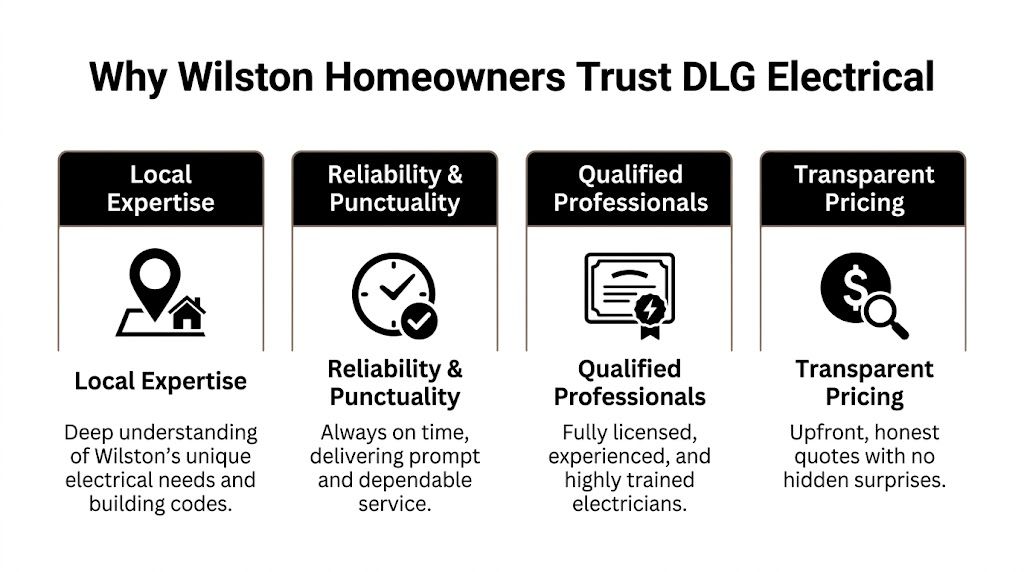
Most homeowners aren’t searching for a long list of technical terms. They want signs that the electrician will be safe, competent, and straightforward to deal with.
Those trust signals usually come down to four things:
The wrong approach is easy to spot. Replace the failed fitting but ignore the overloaded circuit. Reset the breaker but never investigate why it tripped. Install new appliances without checking switchboard capacity. Those shortcuts save time for a day and create bigger problems later.
The right approach is more disciplined:
That’s how long-term trust is built in residential electrical work.
A family-owned electrical business usually survives by being consistent. Homeowners remember whether the quote was clear, whether the job ran on time, and whether the advice felt honest. They also remember when someone answers questions without trying to upsell every decision.
In a suburb where many clients plan to stay in their homes for years, that matters. People want an electrician they can call again for the next stage, whether that’s a renovation, safety work, lighting improvements, or maintenance after a storm.
If you need an electrician wilston homeowners can call for practical advice, start with a quote and a proper conversation about the job. The clearest next step is to outline the problem, mention your suburb, and include any details about the age of the home, recent renovations, or recurring faults.
DLG Electrical offers free, no-obligation quotes, with service hours of Monday to Friday, 7:30 AM to 4:00 PM. If the work isn’t urgent, a contact form is an easy way to send through photos and a short description so the scope can be assessed accurately.
Yes. Any electrician working on your home or investment property should hold the right licence and insurance. It protects you if something goes wrong and helps ensure the work is completed, tested, and documented properly.
No. Wilston is part of the wider North Brisbane area we service, including nearby suburbs with many of the same housing styles. That matters because a 1930s Queenslander in Wilston often presents different electrical issues from a newer brick home a few streets away, and local experience helps with both.
Yes. A lot of Wilston homes need a careful balance between upgrading safety and preserving the parts of the house worth keeping. Access under floors and in roof spaces can be tight, wiring may have been altered over decades, and finishes often need protection during the job.
That kind of work benefits from a measured approach. Test first, trace what has been added over time, then recommend what should be repaired, replaced, or left alone.
Start by paying attention to the pattern. If it trips when one appliance is used, the fault may be with that appliance. If it trips across different rooms or at random times, the issue could be in the circuit, switchboard, or existing wiring.
Keep the breaker off if it will not hold. Repeatedly resetting it can make the problem harder to diagnose and may put the installation under more stress.
In many cases, yes. Early upgrades give you time to address placement, power supply, and any related faults without rushing the job. For landlords and homeowners planning renovations or a sale, that usually means fewer delays and fewer last-minute surprises.
Yes. Planned electrical work should start with a site assessment and a clear scope. If the problem needs fault finding first, that should be explained upfront so you know what is being checked, what the likely causes are, and how the next step will be priced.
If you want practical advice on an older Wilston home, recurring faults, or a safety upgrade that needs to be done properly, speak with DLG Electrical about the job and the safest way to tackle it.

Master Electrician with over 30 years of experience. Founded DLG Electrical in 2005 after international project work including electrical installations at Stamford Bridge Stadium, London(Home of Chelsea FC).

Local Electricians that can fix all Electric Hot water Systems.
Motion sensor lights are a versatile addition to any home, offering nu
