83 Jean St, Grange QLD 4051
Mon-Fri 07:30 AM - 04:00 PM - Sat - 8:00 - 12 - Sunday Closed
You turn on the shower on a cool Brisbane morning, wait for the familiar rush of hot water, and get nothing but lukewarm spray. The system may look like a simple tank tucked beside the house, but several electrical, mechanical and thermal processes have to work together before that water reaches the bathroom.
Understanding how does an electric hot water system work helps you make sense of strange noises, inconsistent temperatures and unexpectedly high electricity bills. It also helps you compare a traditional resistive storage tank with an instantaneous unit or a modern heat pump, where the meter arrangement, tank size and switchboard can matter as much as the heater itself.
In a Brisbane home, hot water may heat overnight on a controlled-load tariff, lose warmth through the cylinder during the day, then be reheated before the evening peak. That schedule runs in the background, but it affects both comfort and the electricity bill.
Showers, dishwashing, laundry and cleaning all draw from the same energy budget. Water heating is the second-largest segment of household energy use, accounting for 15% to 30% of household energy consumption, with about 23% in an average home, according to Australian government guidance on hot water systems.
A conventional electric storage unit heats water before you need it and holds that supply in an insulated cylinder. The tank still loses some heat between uses, so the element may run while the household is asleep or nobody is using a tap. With a continuous tariff, that reheating can occur whenever the thermostat detects a temperature drop. With an off-peak arrangement, the system generally has a defined period in which it can heat, so tank capacity and household timing become more important.
The running cost depends on more than litres used. It reflects the tariff, the system's electrical demand, insulation, tank size and how often stored heat must be restored.
The practical point: A hot water bill measures the cost of storing and replacing heat, not just the water flowing from the taps.
System choice changes that calculation. An instantaneous electric heater avoids storing hot water but can demand substantial electrical capacity while operating. A heat pump uses electricity to move heat from the surrounding air into the tank, rather than creating all the heat directly through resistance. Its purchase, installation and tariff requirements differ, yet its lower electrical demand can change long-term operating costs. These differences matter when comparing a standard storage unit with a heat pump or instantaneous system.
Most electric hot water systems fall into two broad categories. Storage systems heat water in advance and hold it in an insulated cylinder. Instantaneous systems heat water as it passes through the unit, so they don't need a large reserve of heated water.
Inside a conventional electric storage cylinder, one or more immersed resistive heating elements sit in the water. Electricity passes through the element, resistance produces heat, and that heat transfers into the surrounding water. The process is similar to an oversized kettle, except the element operates under the control of a thermostat and the water remains inside an insulated tank.
The control sequence is straightforward:
Water naturally forms layers inside the cylinder. Hotter water stays near the top, where the outlet draws it first, while colder replacement water remains lower down. This thermal stratification allows the system to deliver usable hot water before the entire tank has reached the same temperature. Victorian government guidance on electric hot water systems describes the same basic arrangement, including the role of the thermostat and off-peak operation.
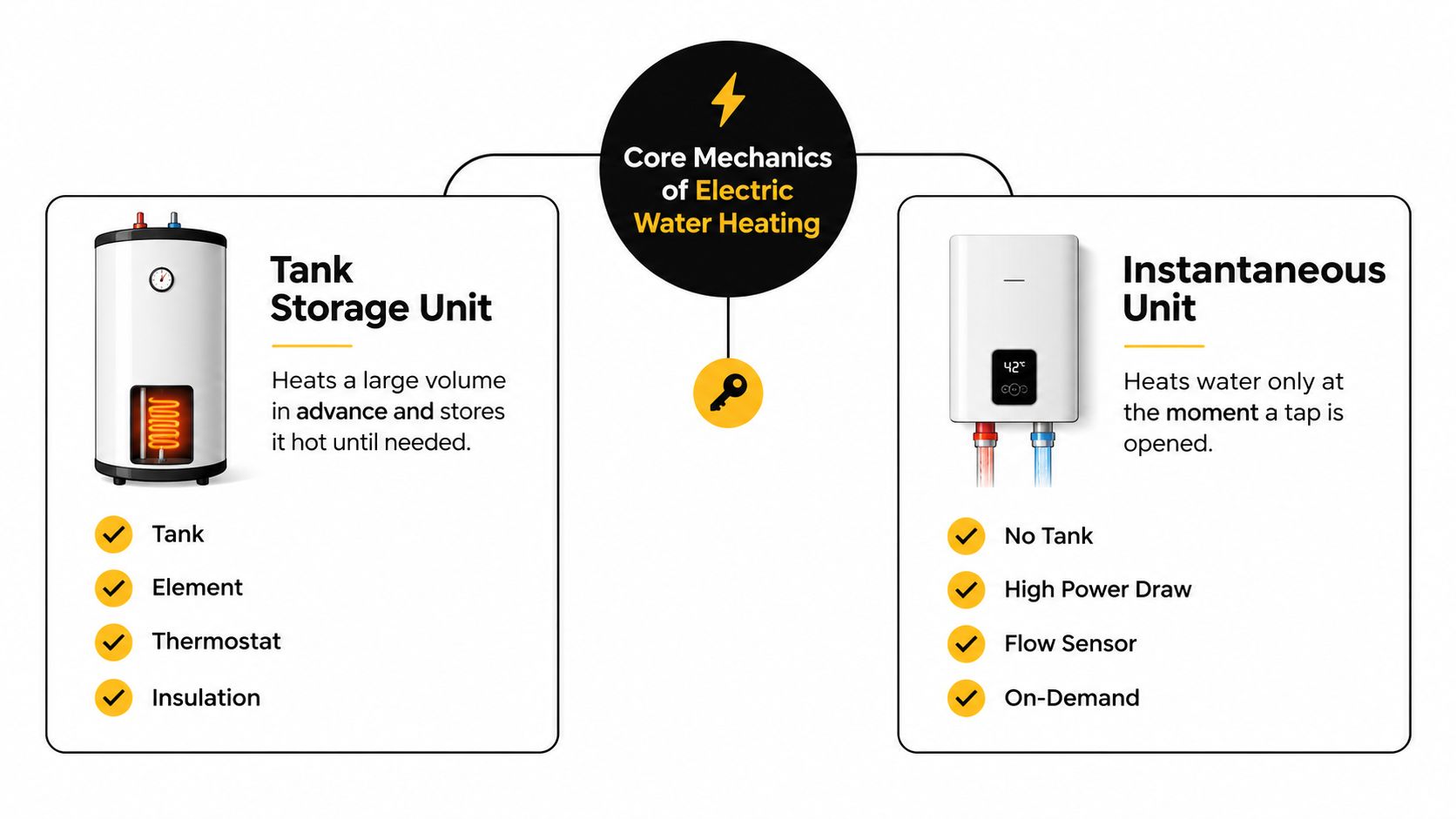
An instantaneous electric unit has no large storage cylinder. When you open a hot tap, water flow activates a sensor. The unit then sends electricity to powerful heating elements, which transfer heat through a compact heat exchanger while the water moves through it.
When you close the tap, the flow sensor tells the unit to stop heating. That removes the need to keep a tank hot between uses, but it creates a different electrical demand. The heater must deliver substantial power during the short period when water is flowing, so the available supply, circuit protection and household demand all need careful assessment.
Storage units are often easier to match with off-peak supply because they can heat water during a scheduled window and retain it for later. An instantaneous unit delivers heat immediately, but it can't store energy for a later shower. The distinction is important when an electrician assesses an older Brisbane property, particularly if the existing switchboard has limited capacity.
For homeowners who need to understand a failed element, the electric hot water element replacement guide provides useful context about the component that turns electrical energy into heat. Any work inside the heater or its supply circuit should be handled by a licensed professional.
A resistive electric water heater works like a very large toaster immersed in a tank. Its element converts electrical energy into heat, so the element itself operates at effectively 100% efficiency. The complete system performs less efficiently because some heat escapes before anyone opens a tap.
A storage cylinder must keep water hot between uses. Heat gradually leaks through the tank and connected pipework, even when insulation is working properly. This is known as standby loss. A South Australian residential baseline study found electric storage water heaters had system efficiency of up to 76% to 80%, while typical domestic units used about 1.5 to 2.5 kWh per day to maintain stored water temperature, as documented in the South Australian residential water heater baseline study.
The same tank can have very different running costs depending on its electricity arrangement. A continuous supply lets the element operate whenever the thermostat calls for heat. An off-peak or controlled-load arrangement limits heating to nominated periods, which may provide a different energy rate.
That schedule changes how the system must be sized and used. A tank on controlled load needs enough stored hot water to cover demand after the heating window closes. A continuous tank can recover at other times, but its element may run during higher-cost periods.
For example, a Brisbane home with a larger tank heating overnight on Energex controlled load tariff 31 may shift its electricity use to a lower tariff than a smaller tank operating continuously on tariff 11. The trade-off is stored volume. The larger tank must hold enough heat for morning showers and other demand before the next controlled heating period.
CHOICE explains this balance in its hot water system buying guide. Electric storage tanks can cost less to purchase and install, yet their running costs may be higher when they use peak electricity. Off-peak supply can reduce the energy rate, but the household needs suitable storage and may have less flexibility after several people use hot water in succession.
Check before replacing the tank: Read the electricity bill, inspect meter labels and check the switchboard controls. A new heater connected to the wrong supply arrangement can create an unexpected bill even when the equipment is operating normally.
A Brisbane electrician should confirm whether the existing system uses continuous, off-peak or controlled-load supply. That choice affects element operation, recovery timing, tank sizing and the practical cost of each heating cycle. Suitable energy monitoring systems can help separate hot water consumption from other major electrical loads, making the effect of a tariff change easier to verify.
A heat pump still uses electricity, but it doesn't make heat in the same direct way as a resistive element. A fan draws in surrounding air, and a refrigeration circuit containing a compressor transfers available heat from that air into the stored water. Electricity powers the fan and compressor, while the surrounding air supplies much of the heat moved into the tank.
That distinction changes the relationship between electricity and hot water. A resistive element uses electrical energy directly to produce heat. A heat pump uses electrical energy to operate a heat-moving process. It can therefore deliver more heat to the water than the electrical input alone would provide.
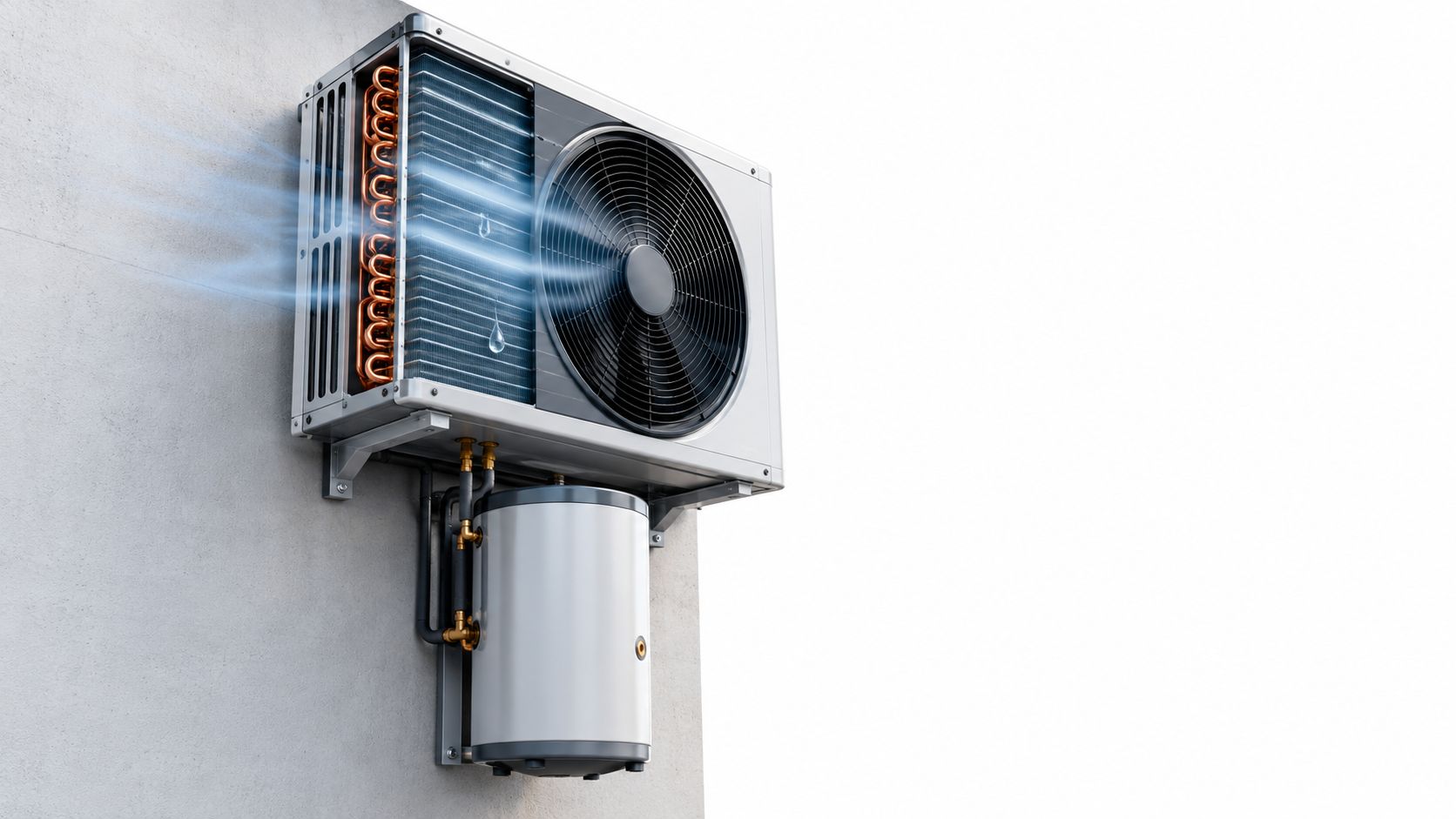
Victorian government guidance says heat-pump hot water systems use 60% to 75% less electricity than regular electric hot water systems by moving heat from the air with a fan and compressor rather than directly heating water with an element, according to its heat-pump hot water planning guidance.
The equipment still needs a tank, controls and safe electrical connections. It may also need a suitable location with adequate airflow, space for installation and consideration of compressor noise. Brisbane's climate can provide favourable conditions for air-source operation, but an installer still needs to assess the property rather than assume every location will suit the technology.
Heat pumps also fit more naturally into a household with rooftop solar or flexible electricity controls. The system can be scheduled to heat water when solar generation is available or when the electricity supply is more favourable, provided the equipment and tariff support that arrangement. AER and Ausgrid material reports heat-pump systems using around 30% of the electricity of a conventional electric hot water system, and an average winter peak-demand addition of about 0.2 kW when connected to general supply, as discussed in the Victorian government material linked above.
That doesn't make a heat pump the automatic choice. Installation conditions, existing plumbing, controls, household demand and the switchboard all matter. A heat-pump hot water installation service can help identify whether the proposed location and electrical supply are suitable before the owner commits to an upgrade.
A hot water fault often gives you clues before the system stops completely. The water may become lukewarm, the safety switch may trip, pressure may change or a valve may release water. Start with observations that don't require opening the unit, removing covers or touching electrical components.
Lukewarm water may point to an element that isn't heating correctly, a thermostat that isn't controlling temperature properly or a tank that has exhausted its stored supply. If the problem appears after a change to the meter or tariff, the system may also be operating during a different schedule than expected.
No hot water can have several causes. Check whether the switchboard safety switch or circuit breaker has tripped, but only reset it once if there are no signs of water around electrical equipment. If it trips again, leave it off and arrange professional testing. Repeated resetting can expose the circuit to an unresolved fault.
A leaking valve or tank needs prompt attention. Look for water around pipe connections, the temperature and pressure relief valve, the drain outlet and the base of the cylinder. A small valve discharge isn't the same as a tank rupture, but water near electrical equipment still warrants caution.
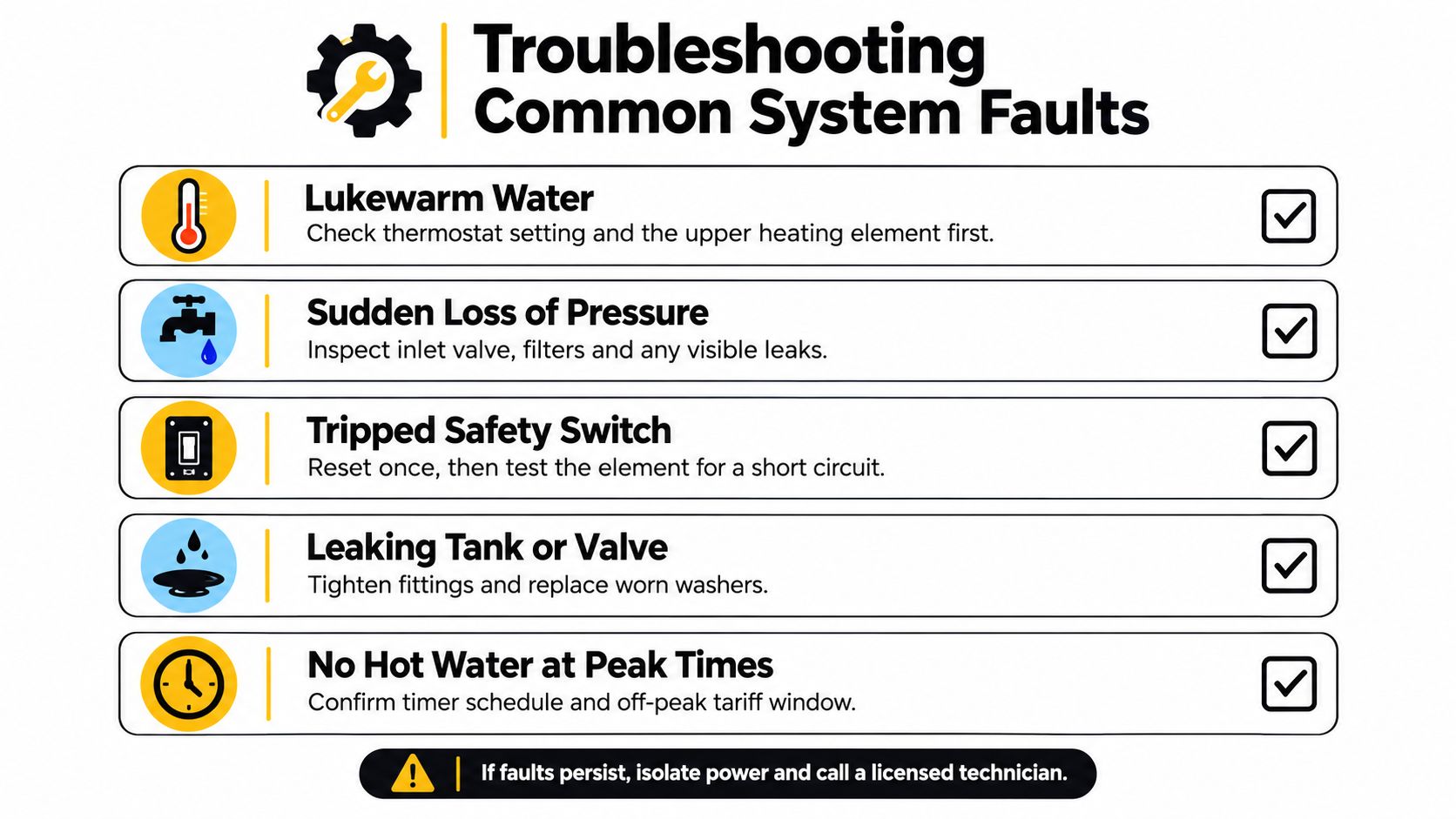
A homeowner can record the symptoms, check visible valves for obvious leaks and confirm whether the switchboard has a tripped protective device. You can also note when the fault occurs, such as after several showers, during the evening or outside the expected off-peak period. That information gives the technician a useful starting point.
Don't remove the tank's access covers, test live terminals, bridge a thermostat or replace an element yourself. Water and electricity create a serious hazard, and a fault inside the unit may remain present even when the visible symptom seems minor.
The following video can help homeowners recognise the basic components and operating arrangement before a service visit:
A failed tank or valve can also cause damage beyond the heater enclosure. If water has reached flooring, cabinetry or wall cavities, these water damage restoration tips offer useful guidance on responding to moisture and mould risks. For an electrical fault, isolate the supply if it can be done safely and call a licensed electrician.
A hot water system needs more than occasional attention after it fails. Maintenance helps identify leaks, corrosion, damaged wiring and deteriorating controls before those issues affect household safety or cause an emergency call-out.
The temperature and pressure relief valve is a critical protective component. It releases water if pressure or temperature rises beyond a safe operating range. Don't cap, block or permanently tie off the discharge pipe. A valve that drips continuously, fails to operate during an approved service check or shows signs of corrosion needs assessment and may require replacement.
A safety-switch test is not the same as an electrical inspection. The test button checks the protective device's operating mechanism, but it doesn't confirm that the element, thermostat, cable or connections are healthy. A licensed electrician can test those components with suitable instruments while the circuit is isolated and safe.
Older Brisbane homes deserve particular care. A replacement heater, instantaneous unit or heat pump can impose different circuit requirements from the existing equipment. An older switchboard may need improvement before the new appliance is connected, especially where the property has limited space, outdated protection or a history of nuisance tripping.
Never treat a tripped protective device as an inconvenience to defeat. It may be warning you about moisture, insulation damage, a failed element or another electrical problem.
Professional maintenance should include an assessment of the heater's electrical isolation, protective devices, cabling, thermostat, element and visible plumbing condition. Keeping these checks organised is particularly useful for landlords and property managers, who need to respond promptly to faults and maintain safe rental premises.
The best electric hot water system isn't chosen by tank size or purchase price alone. Start with the home's actual pattern of use. A small household with predictable demand may suit an instantaneous unit or a compact storage system, while a larger household using several showers close together may benefit from stored capacity or a carefully sized heat pump.
Then check the electricity arrangement. Ask whether the existing system uses continuous supply, off-peak electricity or controlled load. Confirm when the supply is available and whether the proposed heater can operate under that arrangement. A tariff that looks cheaper can be unsuitable if the tank can't hold enough hot water for the household's routine.
The property itself also sets boundaries:
Australian homes have relied heavily on electric hot water for decades. ABS data recorded electricity use by 68% of Brisbane households with a hot water system and 80% in the rest of Queensland, as reported in the Australian Bureau of Statistics household hot water data. That history explains why many properties already have an electric storage arrangement, but it doesn't mean the existing tariff, tank or switchboard remains the right match today.
A qualified assessment can compare repair, replacement, tariff changes and heat-pump installation without treating one technology as suitable for every home. DLG Electrical provides Brisbane electrical services including electric hot water repairs, thermostat and element replacement, system servicing and electrical upgrades.
Book an assessment with DLG Electrical to check your hot water system, tariff connection, safety devices and switchboard before you repair or replace the equipment. Their licensed Brisbane electricians can help identify the practical option for your home's usage, wiring and hot water requirements.

Master Electrician with over 30 years of experience. Founded DLG Electrical in 2005 after international project work including electrical installations at Stamford Bridge Stadium, London(Home of Chelsea FC).

Local Electricians that can fix all Electric Hot water Systems.
Motion sensor lights are a versatile addition to any home, offering nu
