83 Jean St, Grange QLD 4051
Mon-Fri 07:30 AM - 04:00 PM - Sat - 8:00 - 12 - Sunday Closed

So, how much does it actually cost to get air conditioning installed in Brisbane? It’s one of the first questions we get, and the honest answer is: it depends.
For just the labour to install a standard air conditioner, you’re typically looking at a range between $555 and $740 here in Brisbane. But that’s only one piece of the puzzle. The total cost, including the aircon unit itself, can swing wildly depending on the system you choose and how tricky the installation is.
When you start searching for aircon installation costs, you’ll quickly realise there’s no single, fixed price. It’s a bit like buying a car—the final figure depends on whether you’re after a reliable little runabout or a top-of-the-line SUV with all the bells and whistles. The size, brand, and unique layout of your home all play a major role in the final number.
This guide is designed to give you a solid starting point for budgeting. We’ll break down the average costs you can expect to see in Brisbane, covering both the price of the unit and the installation work. Getting your head around these numbers is the first step to making a smart decision for your home’s cooling.
Let’s get down to the brass tacks. While labour rates are important, it’s the all-in investment that really matters for your budget. The table below gives you a clear snapshot of the estimated total costs for different types of air conditioners in the Brisbane area.
This table summarises the estimated total costs for different air conditioner types in the Brisbane area, including both the unit and standard installation.
| Air Conditioner Type | Average Total Cost Range |
|---|---|
| Window/Wall Unit | $800 – $1,500 |
| Single Split System | $1,500 – $3,500 |
| Multi-Split System | $3,000 – $6,000+ |
| Ducted System | $6,000 – $13,000+ |
Think of these figures as a baseline. A more complex job, like an installation in a two-storey home or a property that needs significant electrical upgrades, will naturally push the final price higher.
These costs also reflect broader national trends. Across Australia, the average labour for a standard aircon install sits somewhere between $529 and $706, putting Brisbane right in that ballpark. This is exactly why getting a detailed, tailored quote that accounts for your specific needs is so crucial. For more details on this, you can check out the latest national air conditioner installation prices.
Before you can even think about installation costs, you need to get one thing straight: the type of air conditioner you choose is the single biggest factor that will shape your final bill. Picking the right system is the first and most important step in managing your budget.
Think of it like this: a simple window unit is like a personal fan for just one room. It gives you instant, focused cooling right where you need it. On the other end of the scale, a fully ducted system is like the central nervous system for your home’s climate, quietly and efficiently controlling the temperature everywhere at once. In between, you have split systems, which offer a great balance of power and flexibility.
If you really want to get into the nitty-gritty, it’s worth learning how to pick the right AC unit for your specific home layout and needs.
This image gives you a quick visual breakdown of the air con hierarchy, from the most basic window shakers to the top-tier ducted setups.
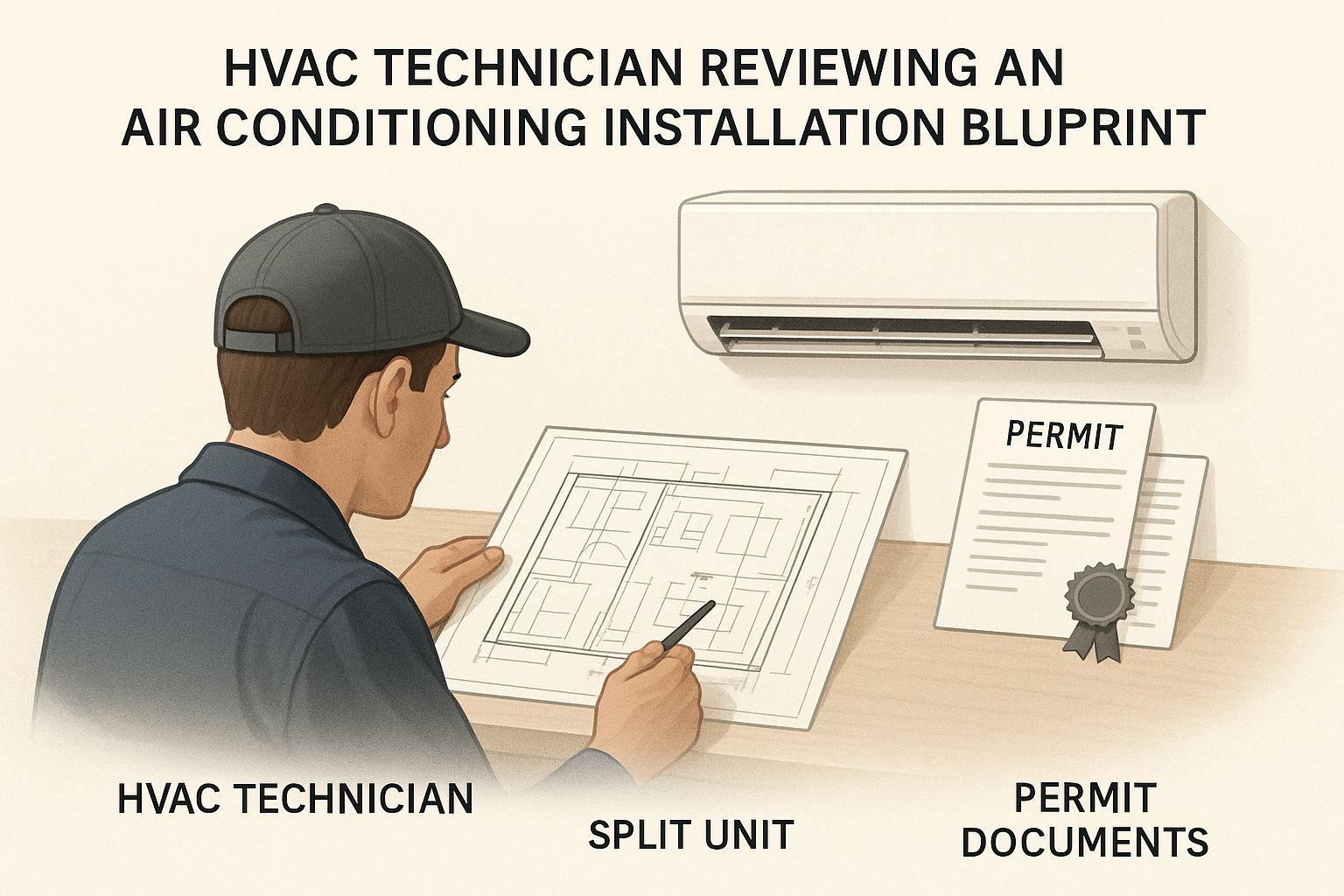
As you can see, the price and complexity climb pretty steeply as you move from cooling a single room to controlling the climate of your entire house.
These are your entry-level, budget-friendly options, built to cool down a single space. They’re self-contained boxes that slot into a window frame or a dedicated sleeve in the wall.
Sure, they aren’t the prettiest or quietest choice, but their low upfront cost makes them a solid solution for renters or for cooling small, isolated areas like a home office or a granny flat.
This is, without a doubt, the most popular choice for Brisbane homes, and for good reason. A single split system has one sleek indoor unit mounted on a wall, connected to a single outdoor unit.
They are incredibly quiet, very energy-efficient, and pack enough punch to cool a large open-plan living area or a master bedroom. Their versatility and awesome performance make them the perfect middle-ground option for most homeowners.
A multi-split system takes the single-split concept and dials it up a notch. It lets you connect multiple indoor units—sometimes up to five or more—to just one powerful outdoor unit.
This is a fantastic solution for homes that don’t have the roof space for ductwork. You get independent temperature control in different rooms, all while saving precious space outside.
A massive advantage of multi-split systems is zoning. You can run the air con in the living room during the day, then switch to cooling just the bedrooms at night. This can lead to some serious energy savings compared to running a huge system that cools the whole house at once.
This is the Rolls-Royce of home cooling solutions. A central indoor unit, usually hidden away in the roof space, pushes cool air through a network of ducts to discreet vents in multiple rooms.
While it has the highest installation cost, it delivers perfectly uniform, whisper-quiet temperature control throughout your entire home. It’s the ultimate set-and-forget system.
The overall cost for air conditioning installation right across Australia is pretty broad, stretching anywhere from $600 to over $12,000, depending entirely on the system you go with.
Split systems are the go-to choice for countless Brisbane homeowners, but figuring out the final cost means looking beyond the price tag on the box. The total figure you’ll pay is a tale of two parts: the cost of the physical unit itself, and the cost of professional labour to get it running perfectly.
Understanding this split is the key to setting a realistic budget and avoiding any nasty surprises down the track.
When you start shopping, you’ll see a huge price range for the units themselves. This is because, just like cars, air conditioners come in different tiers—budget-friendly, mid-range, and premium. The brand name, energy efficiency, and cooling capacity (measured in kilowatts or kW) are the main drivers of the unit’s price. A smaller 2.5kW unit for a bedroom will naturally cost less than a powerful 7.0kW system designed for a large, open-plan living area.
To give you a clearer picture, the market for split systems generally breaks down into three main categories. Entry-level brands like Kelvinator and TCL offer reliable, no-frills cooling. Stepping up to mid-range favourites such as Fujitsu or Panasonic gets you better efficiency and more features. And for those seeking top-tier performance, quiet operation, and smart tech, premium brands like Daikin and Mitsubishi lead the pack.
You can discover more insights about air conditioning installation costs to see how these prices fit into the bigger picture.
To make it easier, here’s a quick comparison of what you can expect to pay for the unit alone.
| Brand Tier | Example Brands | Approx. 2.5kW Unit Cost | Approx. 7.0kW Unit Cost |
|---|---|---|---|
| Entry-Level | Kelvinator, TCL | $899 – $1,200 | $1,500 – $1,900 |
| Mid-Range | Fujitsu, Panasonic | $1,300 – $1,800 | $2,200 – $2,800 |
| Premium | Daikin, Mitsubishi | $1,800 – $2,400 | $3,000 – $3,800+ |
As you can see, the jump from a small bedroom unit to one that can handle a large living area is significant, often doubling the price within the same brand tier.
Once you’ve chosen your unit, the next piece of the puzzle is the installation labour. Most electricians in Brisbane will quote based on a “standard back-to-back installation.” This is the simplest, quickest, and most cost-effective scenario.
A back-to-back installation means the indoor head unit is mounted on an exterior wall, and the outdoor compressor unit is placed directly behind it on the ground outside. This setup minimises the length of piping and electrical cabling required.
A standard installation typically includes:
Any deviation from this simple setup will add to the labour cost. For instance, if you live in a multi-storey home, need the outdoor unit placed on the roof, or require more than 3 metres of piping, the price will increase to cover the extra time and materials needed to complete the job safely and correctly.
When you get a quote for a new air conditioner, it’s easy to think that’s the final number. But that initial price is often just the starting line, not the finish. Think of it like the base price of a car before you add any options—those extras can quickly stack up. A standard quote typically covers the basics, but several common factors can push the final bill higher.
One of the biggest surprises for many homeowners is the need for extra electrical work. If your home’s switchboard is old or already maxed out, it will likely need an upgrade to safely handle the load of a new air conditioner. This isn’t an upsell; it’s a critical safety measure that can add several hundred dollars or more to the total cost.
On a similar note, a new air conditioner often requires its own dedicated electrical circuit to stop it from tripping your existing wiring every time it kicks in.
The location and complexity of the job itself play a massive role in the final price. What seems like a simple task can become more involved—and more expensive—when our technicians run into real-world challenges on site.
Here are a few common scenarios that add to the cost:
It’s important to understand that these aren’t “hidden” fees in a sneaky sense. They are simply variables that can’t be priced until a professional has properly assessed your property. A good, honest installer will spot these potential needs during the quoting process and discuss them with you upfront.
Knowing about these potential add-ons empowers you to ask the right questions. When you get a quote, make sure to ask if it includes switchboard checks, the possibility of a new circuit, and the disposal of any old equipment. This helps you compare apples with apples and arrive at a truly comprehensive price.
The installation cost is a one-time expense, but it pays to think about the ongoing expenses too. You can learn more about the cost of running aircon in our detailed guide.
Choosing the right air conditioner is only half the battle. Honestly, the quality of your installer is just as critical—a shoddy installation can lead to poor performance, sky-high running costs, and a much shorter lifespan for your brand-new system. A great installer, on the other hand, makes sure your investment pays off for years to come.
Finding a qualified and trustworthy technician in Brisbane requires a little homework, but it’s time well spent. The final figure on how much does it cost to install aircon often reflects the installer’s expertise and their commitment to doing the job right. Think of it like hiring a specialist mechanic for a high-performance car; you want someone who knows the machine inside and out, not just the cheapest guy on Gumtree.
Your absolute top priority is making sure your installer is fully licensed and insured. In Australia, any technician handling refrigerants must hold an ARC Tick certification from the Australian Refrigeration Council. This isn’t just a friendly suggestion; it’s a legal requirement designed to protect you, your system, and the environment.
Beyond the legal must-haves, you’ll want to look at their experience and reputation. When you’re looking for the right installer, it’s smart to check out the full a range of professional AC services they provide, as it often points to a broader scope of expertise. For bigger or more complex jobs, you might even need a specialised commercial electrical contractor in Brisbane to ensure all the wiring is up to code and can handle the load.
Here’s a quick checklist of what to ask for:
Never, ever accept the first quote you get. Best practice is to get at least three detailed, written quotes from different installers. This isn’t just about price shopping; it lets you compare the scope of work, the quality of the components they’re proposing, and the overall professionalism of the company.
A proper quote is far more than just a number scribbled on a piece of paper. A professional quote will break down all the costs, specifying the exact make and model of the unit, materials, labour charges, and any potential extras like switchboard upgrades.
Be very wary of quotes that seem too good to be true. An unusually low price often signals that corners are being cut, whether it’s through inferior materials, rushed work, or an unlicensed operator. A detailed, transparent quote shows professionalism and gives you the confidence that you’re partnering with a real expert who will get the job done right the first time.
Knowing the numbers is the first step, but a bit of clever planning can seriously shrink the final figure on your installation quote. Staying cool in Brisbane doesn’t have to mean breaking the bank, especially if you approach it with a few smart strategies.
One of the easiest ways to save cash is simply timing your installation right. Demand for air conditioning services absolutely skyrockets during Brisbane’s sweltering summer months. If you schedule your installation during the off-season—think autumn or winter—you’ll often find installers are offering more competitive prices to keep their teams busy.
Beyond timing, how you buy your system really matters. Always ask your installer if they offer package deals that bundle the air conditioning unit and the installation labour together. This is often far cheaper than buying a unit from a big-box retailer and then trying to find a contractor to put it in.
It’s also crucial to look past the initial price tag and think about the long-term value.
A unit with a higher energy-efficiency rating might cost more upfront, but it translates directly into lower power bills for years to come. That initial investment often pays for itself through ongoing savings.
Thinking about long-term energy use is key, especially if you’re trying to figure out why your electricity bill is so high.
Finally, keep an eye out for any government rebates or incentives that might be available for installing high-efficiency models. These programs can offer substantial cash back, making a premium unit much more affordable. For bigger home upgrades that include a new aircon, exploring specialised options such as renovation financing like an FHA 203(k) Loan can help wrap up the installation and other renovation costs into one package.
Here are a few more actionable tips to keep in mind:
Even after breaking down all the costs, it’s natural to have a few more things on your mind. Let’s tackle some of the most common questions we hear from Brisbane homeowners to help you feel confident about moving forward.
For a standard, back-to-back split system in a single-storey Brisbane home, our team is usually in and out in about 2 to 4 hours. It’s the most straightforward job we do.
But not every installation is that simple. If we’re dealing with tricky access points, need to run extra-long pipes, or the job requires complex electrical work, it can easily stretch into a full day. And if you’re looking at a full ducted system? That’s a much bigger project, often taking a few days to get everything perfectly in place.
Good news—for most standard aircon installations in a residential home, you do not need council approval. You can generally get started without wading through any red tape.
The main exceptions are if you live in an apartment with a strict body corporate that has rules about where outdoor units can go, or if your property is heritage-listed. If you’re in one of those situations, it’s always a smart move to double-check with them first.
One of the most common questions we hear is whether it’s cheaper to install an air conditioner in winter. The answer is yes, it often is.
Installers are run off their feet during the summer peak. Booking your job during the off-season, like autumn or winter, can often get you better pricing and more scheduling flexibility. We’re always keen to keep our team busy, and that can mean great savings for you.
Ready to get a clear, upfront quote for your aircon installation? The team at DLG Electrical provides expert advice and professional service to ensure your job is done right the first time. Contact us for a free quote today!

Master Electrician with over 30 years of experience. Founded DLG Electrical in 2005 after international project work including electrical installations at Stamford Bridge Stadium, London(Home of Chelsea FC).

Local Electricians that can fix all Electric Hot water Systems.
Motion sensor lights are a versatile addition to any home, offering nu
