83 Jean St, Grange QLD 4051
Mon-Fri 07:30 AM - 04:00 PM - Sat - 8:00 - 12 - Sunday Closed
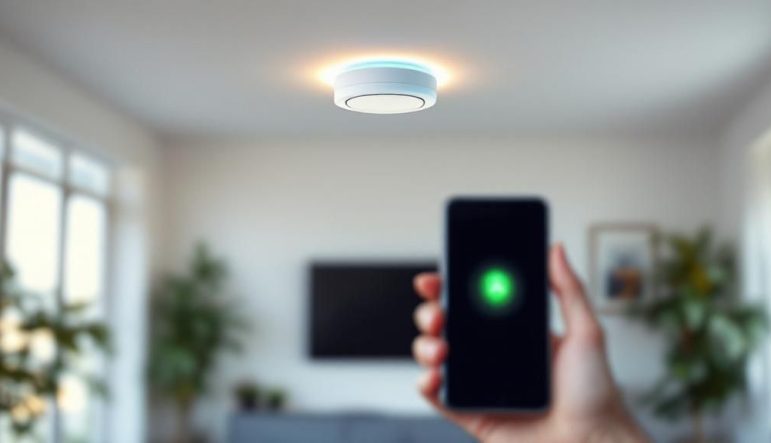
At its core, a WiFi smoke detector is a modern safety device that connects to your home’s internet network. This connection allows it to send instant alerts straight to your smartphone if it picks up any sign of smoke. It’s a huge leap forward from traditional alarms, which are only designed to blast a loud siren inside the house. With a smart alarm, you’re kept in the loop about a potential fire, no matter where you are.
Think of a standard smoke alarm as a standalone bell—it does its job, but it only alerts people who are close enough to hear it. A smoke detector with WiFi, on the other hand, is like having a connected safety guardian for your home. It closes the gap between the on-site siren and remote notification, creating a far more comprehensive safety net for your family.
This immediate, remote communication is where the real value lies. If a fire breaks out while you’re at work, away on holiday, or just out grabbing groceries, you won’t be left wondering. You get a real-time notification on your phone, giving you the critical time needed to call emergency services or ask a neighbour to check on things. This can be the difference between a small incident and catastrophic damage.
This infographic breaks down some of the key reasons why Australian homeowners are making the switch to smarter fire safety.
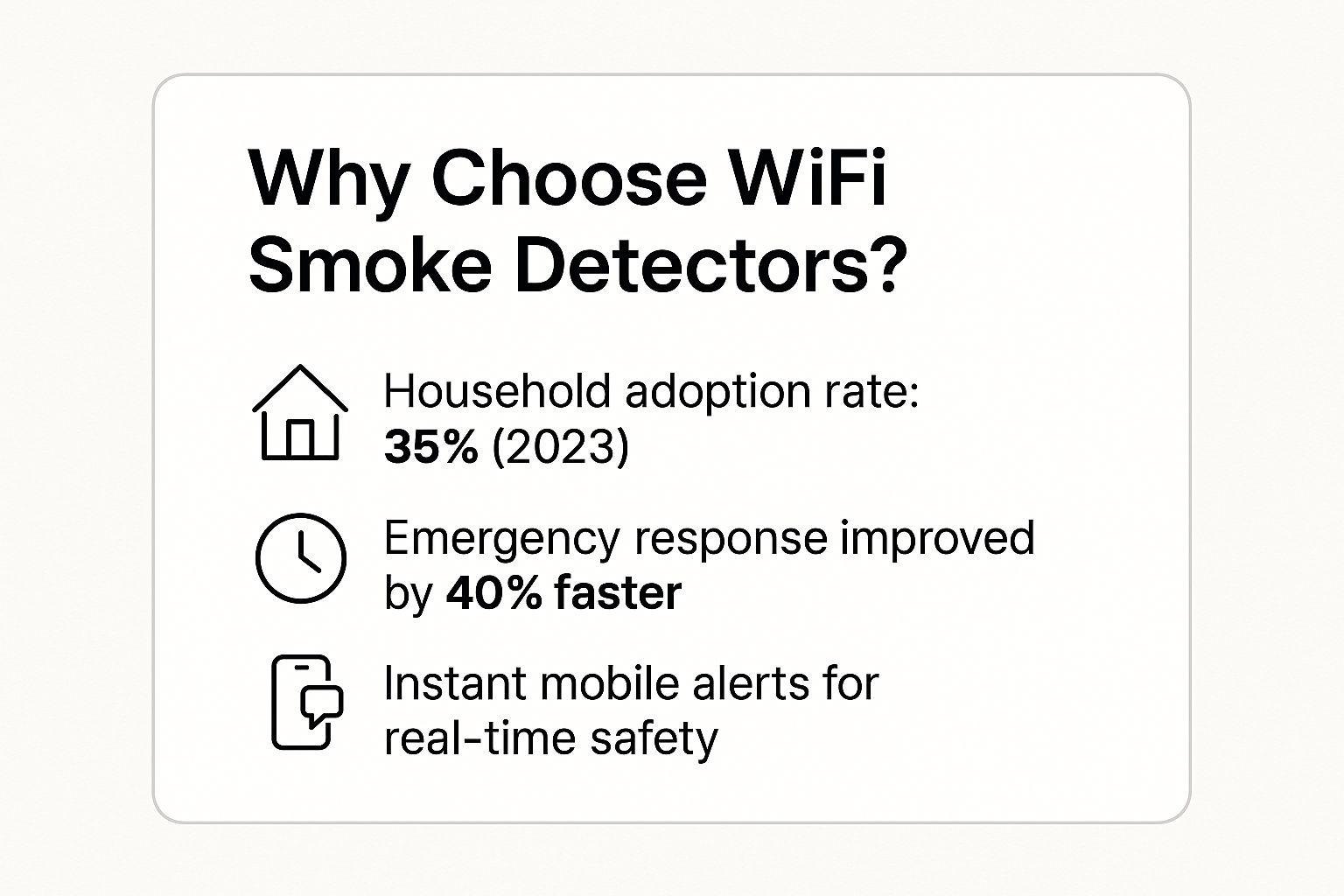
The data speaks for itself. With faster emergency response times and instant alerts, WiFi detectors provide a significant upgrade in home protection.
To give you a clearer picture, let’s quickly compare the old and the new.
| Feature | Traditional Smoke Detector | WiFi Smoke Detector |
|---|---|---|
| Alert Method | Loud, audible siren only | Audible siren + smartphone notifications |
| Remote Access | None | Yes, via a dedicated app |
| Location Pinpointing | No, just a general alarm | Yes, specifies which room detected smoke |
| System Status | Requires manual button press | Real-time status checks via app (battery, sensor health) |
| False Alarms | Requires physical silencing (fanning, button) | Can often be silenced from your phone |
This simple comparison highlights how a WiFi-enabled system offers layers of control and information that traditional alarms just can’t match.
A WiFi smoke detector is a fantastic example of a smart home device, falling under the wider umbrella of IoT solutions that bring internet connectivity to everyday objects. By integrating with your home network, it unlocks features that go far beyond a simple beep.
The biggest advantage is transforming a passive safety device into an active, communicative part of your home’s ecosystem. It doesn’t just react to danger; it actively informs you, giving you the power to respond from anywhere.
This fundamental shift from local-only alerts to complete remote awareness is fuelling some serious market growth. The global smart wireless smoke detector market was valued at around USD 1.5 billion in 2023 and is projected to expand significantly. We’re seeing this trend play out right here in Australia, with more and more homeowners demanding smarter, more connected safety solutions.
In Queensland, current safety regulations demand that all smoke alarms in a home must be interconnected. This means when one alarm detects smoke, every alarm throughout the house sounds at the same time. A WiFi-enabled system honours this rule and then takes it to the next level. Not only do all the alarms go off, but the system can also tell you precisely where the danger is.
Here’s how that creates a much smarter safety net:
This level of detail and control makes a massive difference, both in a genuine emergency and in day-to-day life. If you’re looking into compliant, high-quality options, you can learn more about how superior smoke detectors like Brooks can protect your home or business.
A modern safety system does a lot more than just make noise; it communicates. This creates layers of practical benefits that boost your safety and even make daily life a little more convenient. The true advantage of a smoke detector wifi system isn’t just one single feature, but how all its capabilities work together to give you genuine peace of mind, whether you’re at home or thousands of kilometres away.
Picture this: you’re at the office and a potential fire starts smouldering in your kitchen. Instead of having to rely on a neighbour hopefully hearing a faint alarm through the walls, you get an instant, specific notification right on your phone. That immediate alert means you can call emergency services without a second’s delay, potentially saving your home from catastrophic damage.
This is what connectivity does. It transforms a passive alarm into an active safety partner. It’s a significant upgrade that offers tangible, real-world advantages far beyond a simple siren.
When an alarm sounds, it’s easy for panic and confusion to set in. A traditional system just blares, offering no information beyond the fact that smoke has been detected somewhere. A smart system, on the other hand, gives you critical context when every single second counts.
You’ll receive a notification that pinpoints the exact location of the danger, like “Smoke detected in the living room” or “Carbon monoxide alert in the upstairs hallway.” This allows you to:
This location-specific detail is invaluable. It can turn a moment of pure chaos into a more controlled and informed response.
We’ve all been there. A bit of burnt toast or a cloud of steam from the shower sets off a piercing alarm, sending you scrambling for a chair to frantically wave a tea towel at the ceiling. A quality smoke detector wifi system puts an end to that frustrating ritual for good.
With a smart system, you can often silence a non-emergency alarm directly from your phone. A simple tap in the app temporarily hushes the siren, giving you time to clear the air without all the drama.
This feature is more than just a convenience; it stops people from becoming complacent or, worse, disabling their alarms out of pure frustration. Keeping your system active and trusted is a key part of maintaining home safety. While WiFi smoke detectors are crucial for early warnings, understanding proactive house fire prevention measures is just as vital for total home safety.
A smoke alarm is only useful if it’s actually working. Smart detectors take the guesswork out of the equation by constantly giving you insight into your system’s health. This gives you complete confidence that you are protected around the clock.
Key Maintenance Benefits:
This proactive approach ensures your safety net is always in place and ready to go when you need it most, turning home safety from a reactive worry into a managed certainty.
Trying to choose the right smoke detector wifi system can feel a bit like wading through a sea of technical jargon. Let’s cut through the noise. This section is your practical guide to making a smart, safe, and compliant choice for your home.
The heart of any smoke alarm is its sensor—the part that actually does the detecting. Getting your head around the different types is the first, and most important, step to protecting your home properly.
On the market, you’ll mainly find two types of smoke alarm sensors: photoelectric and ionisation. Both are designed to sniff out smoke, but they work in different ways and are better at spotting different kinds of fires.
For anyone living in Queensland, the decision is actually made for you by law.
Photoelectric alarms are the required standard for all Queensland homes. This is because they are significantly more effective at detecting the common, smouldering fires that can fill a home with toxic smoke long before any flames are visible, giving occupants crucial extra time to escape.
This legal requirement isn’t just red tape; it’s a life-saving measure that highlights why choosing the right sensor technology is so critical.
A single smoke alarm is only useful if you’re close enough to hear it. Modern safety standards, especially here in Queensland, demand that all smoke alarms in a house are interconnected. What does that mean? If one alarm detects smoke, every single alarm in the house goes off at the same time.
Think about it: a fire could start in the garage while you’re fast asleep upstairs. An isolated alarm down there might not be loud enough to wake you. But with an interconnected system, the alarm right outside your bedroom door will blast, giving you an immediate warning no matter where the fire started.
Today’s systems are even smarter. While you can hardwire alarms together, many modern smoke detector wifi systems use a clever wireless mesh network. This lets them all chat with each other without needing any extra wiring run between them. If you’re curious about how this works, you can explore the advantages of Brooks mesh technology to see just how reliable these wireless safety nets can be.
Another fork in the road is how your alarms get their power. The choice is between hardwired alarms (with a battery backup) and units that run on batteries alone.
| Power Source | Pros | Cons |
|---|---|---|
| Hardwired (with Battery Backup) | Gets its power straight from your home’s mains, so it’s always on. The battery backup is there for power cuts. | Needs to be installed by a licensed electrician. |
| Battery Only | Super easy to install yourself. You can stick them just about anywhere without worrying about wiring. | You’re relying entirely on battery life. Needs regular checks and replacements. |
For ultimate reliability and to meet the rules for new builds or major renovations, hardwired alarms are hands-down the best choice.
The “smart” in a smoke detector wifi system really comes down to its ability to communicate better. These features turn a simple alarm from a loud noise into an intelligent part of your home safety plan.
Look for models that have voice alerts. Instead of just a high-pitched shriek, these alarms will tell you exactly what and where the danger is (e.g., “Warning: Smoke in the Hallway”). This clear information can cut down on panic and help guide your family to the safest way out.
Plus, smooth integration with smart home setups like Google Home or Amazon Alexa is a huge bonus. You can check on your alarms with a simple voice command or even set them up to trigger other smart devices—like turning on all the house lights when an alarm sounds, lighting up your escape route.
Here in Queensland, making sure your home has the right smoke alarms isn’t just a smart move for safety—it’s the law. If you’re a homeowner, landlord, or property manager in Brisbane, understanding these rules is non-negotiable for protecting both people and property. The legislation is detailed and strict, but it doesn’t have to be overwhelming.
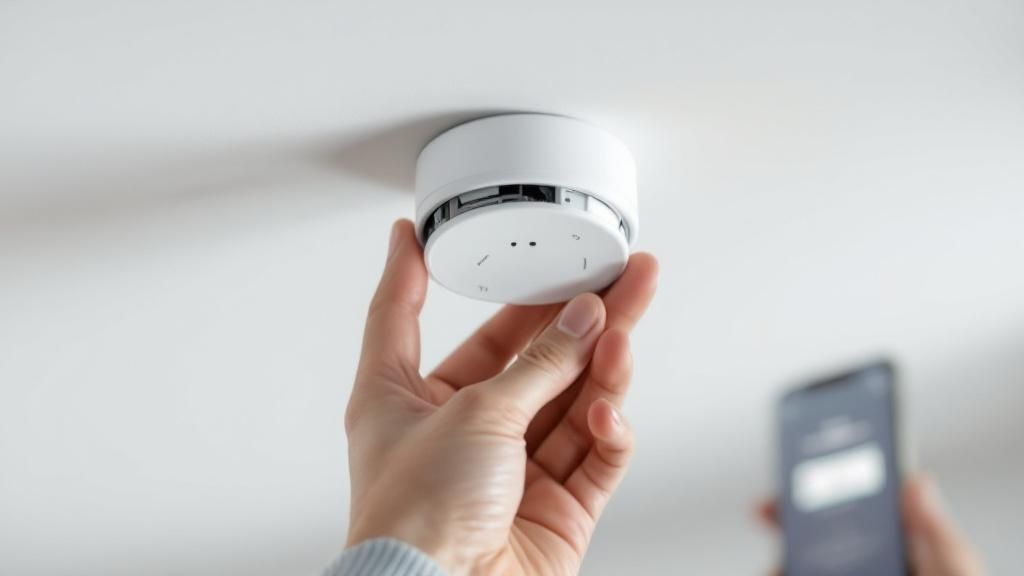
We’ll break down exactly what you need to know. This will help you choose a smoke detector wifi system that’s not only clever and convenient but also ticks every box for Queensland’s tough safety standards.
At its heart, the legislation is all about giving you the earliest possible warning if a fire breaks out. These rules apply to every single residential property, whether you live in it yourself or rent it out. Ignoring them can lead to hefty fines, but more importantly, it puts lives at risk.
Compliance boils down to three key things: the type of sensor, where you put them, and making sure they all talk to each other. Let’s dig into what each of these means for your home.
First things first: every single smoke alarm you install in a Queensland home must be a photoelectric type. As we’ve covered, photoelectric sensors are far better at picking up slow, smouldering fires—which are tragically the most common and deadly kind of house fire.
They work by “seeing” the smoke particles, sounding the alarm long before you’d ever see flames. This is a crucial difference, and it means those old ionisation alarms are no longer compliant for any new installation or when replacing an old alarm.
The Bottom Line: You must use photoelectric smoke alarms that comply with Australian Standard (AS) 3786:2014. Always check the packaging and the alarm itself to be sure. It’s the only type of sensor the law allows.
The law is also crystal clear about where your alarms need to go. The whole point is to create a protective net covering your entire home, especially where everyone sleeps.
You must have smoke alarms installed:
This comprehensive layout ensures that no matter where a fire might start, an alarm is close enough to detect it fast.
This is probably the most critical part of the legislation. All the smoke alarms in your home must be interconnected. What does that mean? If one alarm detects smoke, every other alarm in the house goes off at the same time.
Think about it. A fire starts quietly in the downstairs living room while your family is asleep upstairs. A single, isolated alarm down there might not be loud enough to wake them. But with an interconnected system, the alarm just outside their bedroom doors will blast, giving an impossible-to-miss warning. This single feature massively boosts the chances of getting everyone out safely.
Many modern smoke detector wifi systems handle this interconnection wirelessly, which makes installation a whole lot easier than drilling holes and running new cables through your walls. This shift towards interconnected, smarter safety is a trend we’re seeing across the country as regulations become stricter. For example, the mandate for all new or replacement alarms to comply with AS 3786:2014 standards is a key driver. You can learn more about how these regulations are shaping the smart home market and influencing the technology available to homeowners.
Bringing your new smart smoke alarms online is a pretty straightforward process, but it’s one you absolutely have to get right. When it comes to installation, you’ll go down one of two paths, and it all depends on the type of alarm you’ve chosen. Nailing this first step is non-negotiable for both legal compliance and the dependable performance of your system.
One path is the DIY route, which only applies to battery-powered alarms. These units are specifically designed for you to install yourself, letting you place them exactly where they need to go without ever touching your home’s wiring. This makes them a fantastic choice for adding extra protection to an existing system or for homes where running new cables just isn’t practical.
The other path demands a professional touch. Hardwired smoke alarms, which hook directly into your home’s mains power, must be installed by a licensed electrician in Australia. This isn’t a friendly suggestion—it’s a legal requirement to guarantee the setup is safe and meets national standards.
Proper placement is more of a science than just screwing an alarm into the ceiling. The whole point is to give it the best possible chance of detecting smoke early while cutting down on those infuriating false alarms from burnt toast. A well-placed smoke detector wifi unit is your first line of defence, not a regular dinner-time annoyance.
First and foremost, you have to follow Queensland’s legal placement rules: an alarm in every bedroom, in hallways that connect bedrooms, and on each level of the house. Beyond that, here are a few best practices from the field:
Correct placement is the foundation of an effective alarm system. Taking a few extra minutes to find the optimal spot ensures your alarms are ready to protect you when it matters most, not just annoy you when you’re making toast.
Once your alarms are physically mounted, it’s time for the “smart” part of the job. This is where you’ll connect each device to your home network, unlocking its ability to send you alerts no matter where you are. The process is generally simple, with the manufacturer’s app guiding you every step of the way.
You’ll start by downloading the companion app for your brand of alarm onto your phone. From there, you’ll create an account and follow the on-screen prompts to link each smoke detector wifi unit to your home’s WiFi. This usually just involves pressing a button on the alarm to put it in pairing mode, then picking your network from a list in the app.
A strong, stable internet connection is absolutely vital here. It’s crucial to make sure your alarms aren’t in a WiFi blackspot; you can find ways to solve WiFi dead zones to ensure you always get those critical alerts.
The final step is to personalise the system to fit your family’s life. This is all done inside the app and is what transforms a bunch of separate alarms into a truly intelligent safety network.
Key App Setup Steps:
With these steps complete, your smart alarm system is now fully operational. You’ve just added a robust, interconnected, and intelligent layer of protection to your home.
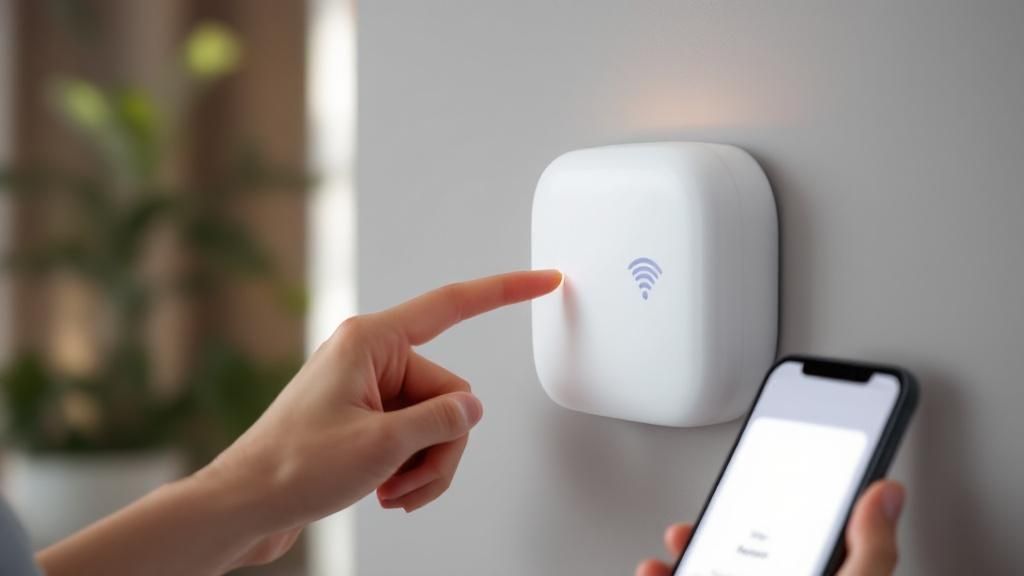
Making the leap to a smart home safety system is a big decision, and it’s completely natural to have a few questions. A smoke detector Wi-Fi system adds a powerful new layer of protection, but we know homeowners have practical concerns about reliability, cost, and how it all actually works.
Our job is to clear up that uncertainty. We’ll tackle the most common questions we hear every day, giving you clear, straightforward answers. We want you to feel confident and fully informed when choosing the right safety setup for your family.
This is, without a doubt, the most important question we get asked. The answer is a resounding yes. Your family’s safety is never, ever dependent on your internet connection. A smoke detector Wi-Fi system is cleverly designed with multiple layers of protection to ensure it works no matter what.
Think of the Wi-Fi feature as a bonus communication tool, not the core function. Even if your internet drops out, all the essential safety features keep running perfectly.
The most critical function—that loud, piercing siren—is always local. It will sound to alert everyone inside the house. And if your alarms are interconnected, they will still talk to each other and all go off together, even without an active internet connection.
The only thing you lose during a Wi-Fi outage is the ability to get notifications on your phone. The fundamental, life-saving alarm system inside your home remains on guard.
Better yet, if your alarms are hardwired (which we always recommend), they run on your home’s main power supply and have a battery backup. That means they’ll work through a power outage, too, keeping you protected around the clock.
Just like a Wi-Fi outage, a power cut won’t knock out a properly installed smoke alarm system. This is exactly why battery backups are so critical and come standard in all modern hardwired alarms.
Your system is built to handle these common scenarios. The combination of mains power and battery backup is your guarantee that the alarms are always watching over you.
It’s a fair question—will a house full of smart alarms slow down your Netflix stream or gobble up your monthly data? You can put that worry to rest.
A smoke detector Wi-Fi system is designed to be incredibly light on data. For almost their entire life, these devices sit in a low-power, low-data state. They only use a tiny, almost unnoticeable amount of data to “check in” with the network and confirm they’re online and working.
The only time they use a little more data (and it’s still a very small amount) is when they actually need to send an alert to your phone. This minimal usage means your smart alarms will have absolutely no noticeable impact on your internet speed for gaming, streaming, or working from home.
For an interconnected system to function as a single, reliable network, we strongly recommend sticking with one brand. While different alarms might all meet the same Australian Standard, their wireless communication methods are proprietary. They simply aren’t designed to talk to each other.
If you try to mix brands, you risk the most important feature—interconnection—failing completely. This means that if one alarm detects smoke, the others might not sound. In Queensland, where interconnection is a legal requirement, this would make your entire system non-compliant and, far more importantly, unsafe. Always use compatible models from the same manufacturer for a seamless safety net.
If you’re ever unsure about compliance, we’ve covered it all in our complete guide to smoke alarm regulations.
Just like standard models, every single smoke alarm sold in Australia—including smart Wi-Fi units—has a mandatory 10-year lifespan. This isn’t a sales tactic; it’s a critical safety requirement.
Over a decade, the sensitive electronic sensors inside the alarm degrade, making them less reliable at detecting smoke. To stay compliant with the law and keep your family safe, you must replace every alarm in your home every 10 years from its date of manufacture. You’ll always find this date printed clearly on the device itself.

Master Electrician with over 30 years of experience. Founded DLG Electrical in 2005 after international project work including electrical installations at Stamford Bridge Stadium, London(Home of Chelsea FC).

Local Electricians that can fix all Electric Hot water Systems.
Motion sensor lights are a versatile addition to any home, offering nu
