83 Jean St, Grange QLD 4051
Mon-Fri 07:30 AM - 04:00 PM - Sat - 8:00 - 12 - Sunday Closed
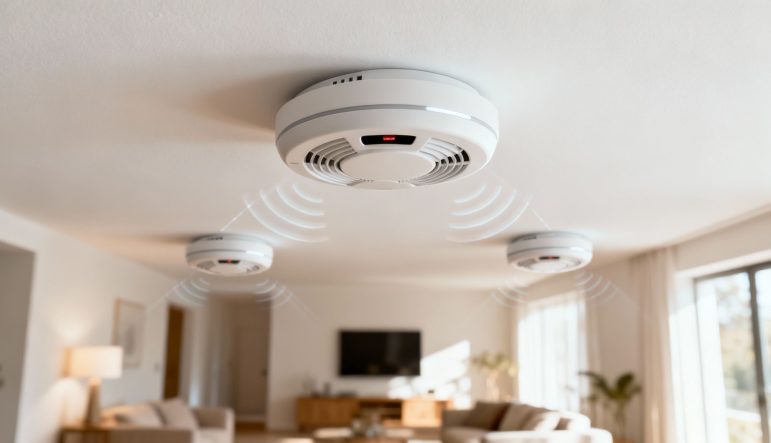
Wireless smoke alarms are safety devices that are interconnected, communicating with each other using radio frequency. What this really means is that if one alarm detects smoke, they all sound an alert at the same time. This simple feature turns your entire home into a powerful early warning system, paving the way for faster, safer evacuations.
Imagine a small fire starting in the garage while your family is asleep upstairs. A single, standalone alarm in that space might go unheard behind closed doors, delaying your response when every single second is critical. This is the exact safety gap that modern wireless smoke alarms are designed to close, making them a game-changing upgrade for any Australian home.
It helps to think of them not as individual units, but as a synchronised team. When one member of that team senses a threat, it instantly sends out a signal to all the others. An alarm in the basement triggers the alarm in your bedroom, giving you an immediate, house-wide alert that cuts through the noise and confusion of an emergency. This interconnected approach is especially vital in multi-level homes where sound doesn’t travel easily between floors.
This simple principle of a unified alert system offers several life-saving benefits:
This chart breaks down the effectiveness of standalone alarms compared to interconnected wireless systems.
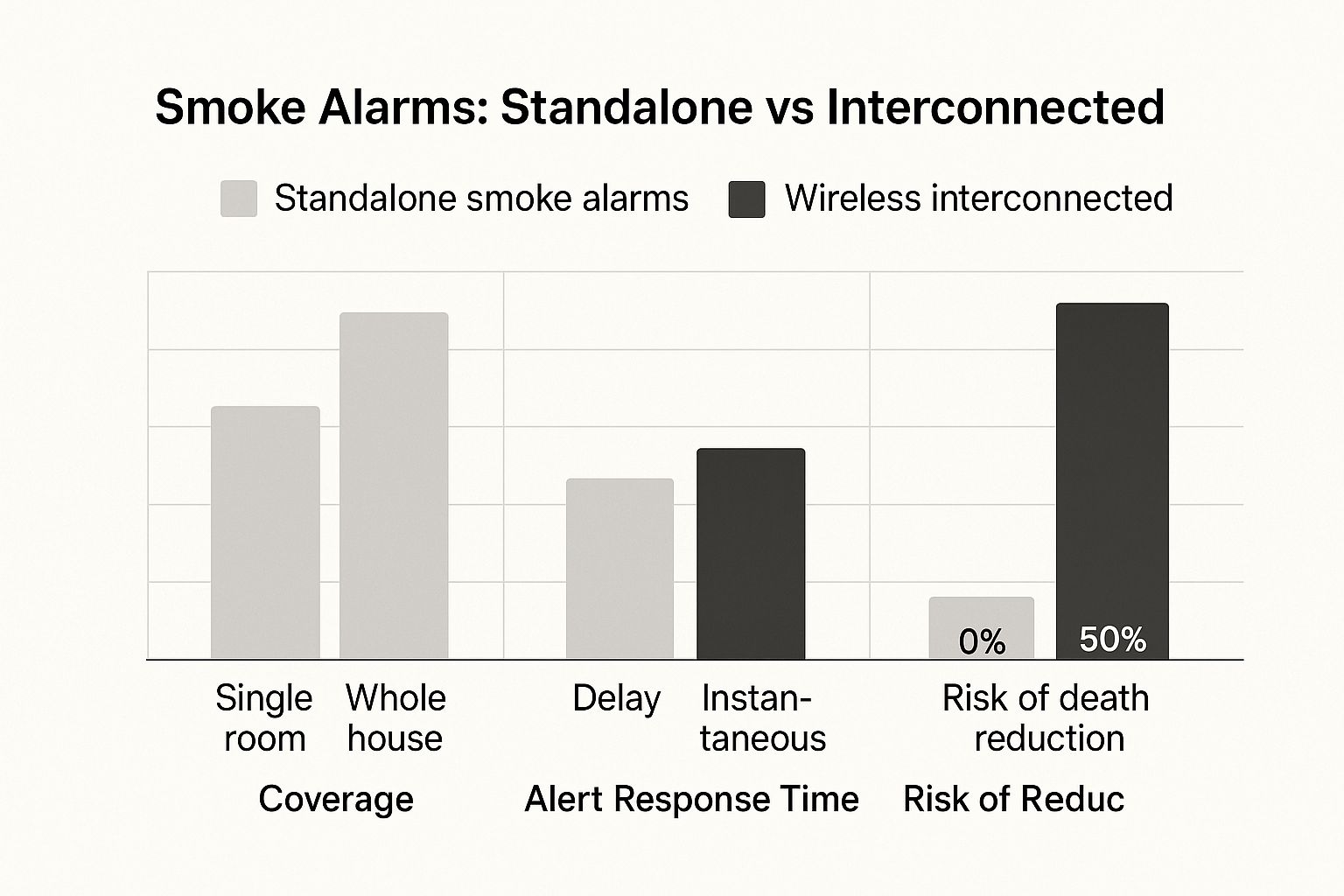
As you can see, the data clearly shows that an interconnected system delivers far better protection by guaranteeing an instant, whole-home alert.
Upgrading to an interconnected system is one of the single most impactful safety improvements you can make as a homeowner. Research has consistently shown that working smoke alarms can halve the risk of dying in a house fire.
Beyond direct fire protection, being a responsible homeowner also means understanding your property’s total value. This includes knowing important details like how to understand rebuild cost for insurance to make sure you’re fully covered. This guide will walk you through everything you need to know about choosing, installing, and maintaining the right wireless alarm system for your family’s safety.
To really get your head around the power of modern wireless smoke alarms, you need to understand the tech that turns a bunch of separate detectors into a single, coordinated safety network. It all comes down to something called radio frequency (RF) interconnection. Sounds a bit technical, but the idea is actually pretty simple.
Think of each alarm in your house as being tuned into its own private radio station. When one unit senses smoke, it doesn’t just start beeping on its own. It instantly broadcasts a high-priority alert on this private channel to every other alarm in the network. That signal tells them all to sound their sirens at the exact same time, creating an impossible-to-ignore warning throughout the entire home.
This isn’t like your home Wi-Fi or Bluetooth. It’s a dedicated, robust communication link built for one job and one job only: saving lives. Because it’s a closed network, the signal won’t get bogged down by your other household gadgets, giving you a rock-solid connection when it matters most.
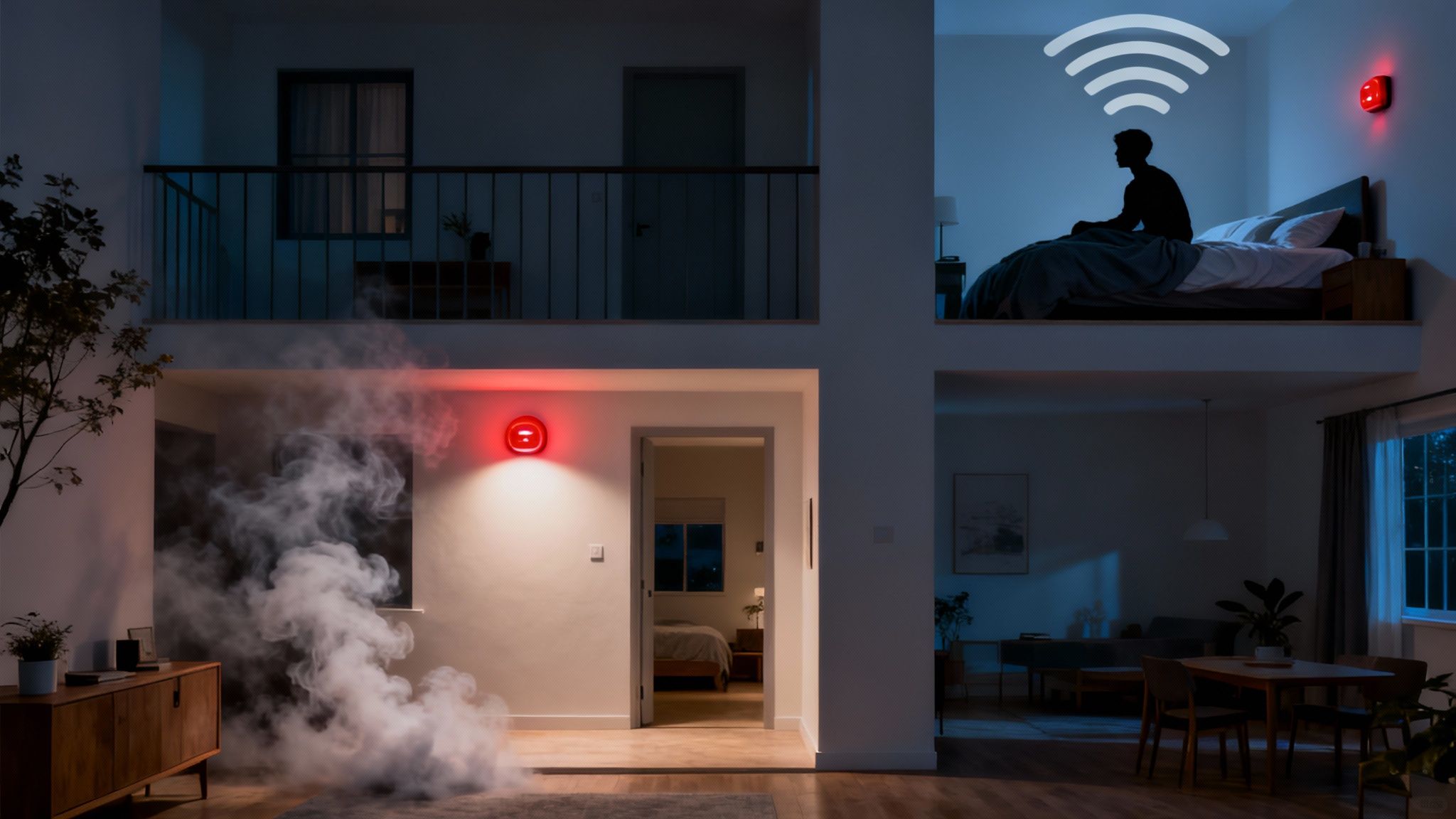
The real-world benefit of this technology hits home when you think about a common scenario. Imagine a small electrical fire starting in the lounge room downstairs while your family is fast asleep upstairs with their bedroom doors shut. A standalone, disconnected alarm might beep away for minutes before anyone hears it—if they hear it at all. Those minutes are absolutely critical.
Now, with an interconnected system, the moment that downstairs alarm picks up smoke, it sends out its signal. Instantly, the alarm right outside your bedroom door, and the one inside it, erupts with a piercing siren. You’re woken up immediately, not by some faint, distant noise, but by an urgent alert right where you are.
This simultaneous activation is the key difference between a single point of failure and a comprehensive safety net. It eliminates the dangerous delay caused by distance and closed doors, giving you the maximum possible time to react and evacuate safely.
This interconnected functionality is now a core requirement of Australian safety standards, especially in states like Queensland, where it’s mandatory for all alarms to “talk” to each other. It’s a clear recognition that the earliest possible warning is the most effective tool we have in preventing a tragedy.
Inside each of these modern alarms is a clever sensor designed to detect specific kinds of fires. The Australian Standard AS 3786:2014 mandates the use of photoelectric sensors, and for very good reason. These sensors are exceptionally good at picking up the large smoke particles produced by smouldering fires, which are the most common type of fire in homes.
You can think of a photoelectric sensor like a tiny tripwire made of light.
This method is far more reliable for detecting those slow-burning fires from things like faulty wiring or smouldering furniture than the older ionisation technology. This is what makes photoelectric wireless smoke alarms the safest and most compliant choice for Australian homes.
While our focus here is on fire, the principles of interconnected safety are being used more and more broadly. For instance, similar wireless alarm systems for safety are now used effectively for fall prevention in healthcare settings. It just goes to show how this technology can create a powerful, responsive network that protects what matters most.
The single biggest reason to upgrade to a wireless smoke alarm system is its ability to create an instant, whole-home alert. This isn’t just a nifty feature; it’s a critical, life-saving function that directly counters the dangers of modern house fires. Today’s homes are full of synthetic materials in furniture, carpets, and electronics, which can cause a fire to spread with terrifying speed.
In these situations, every second is priceless. A standalone alarm going off in a distant part of the house, like the garage or a spare room, can easily be missed. This is especially true at night when you’re asleep behind a closed door. That delay eats away at the precious moments your family needs to get out safely. Interconnected wireless alarms completely eliminate this dangerous gap.
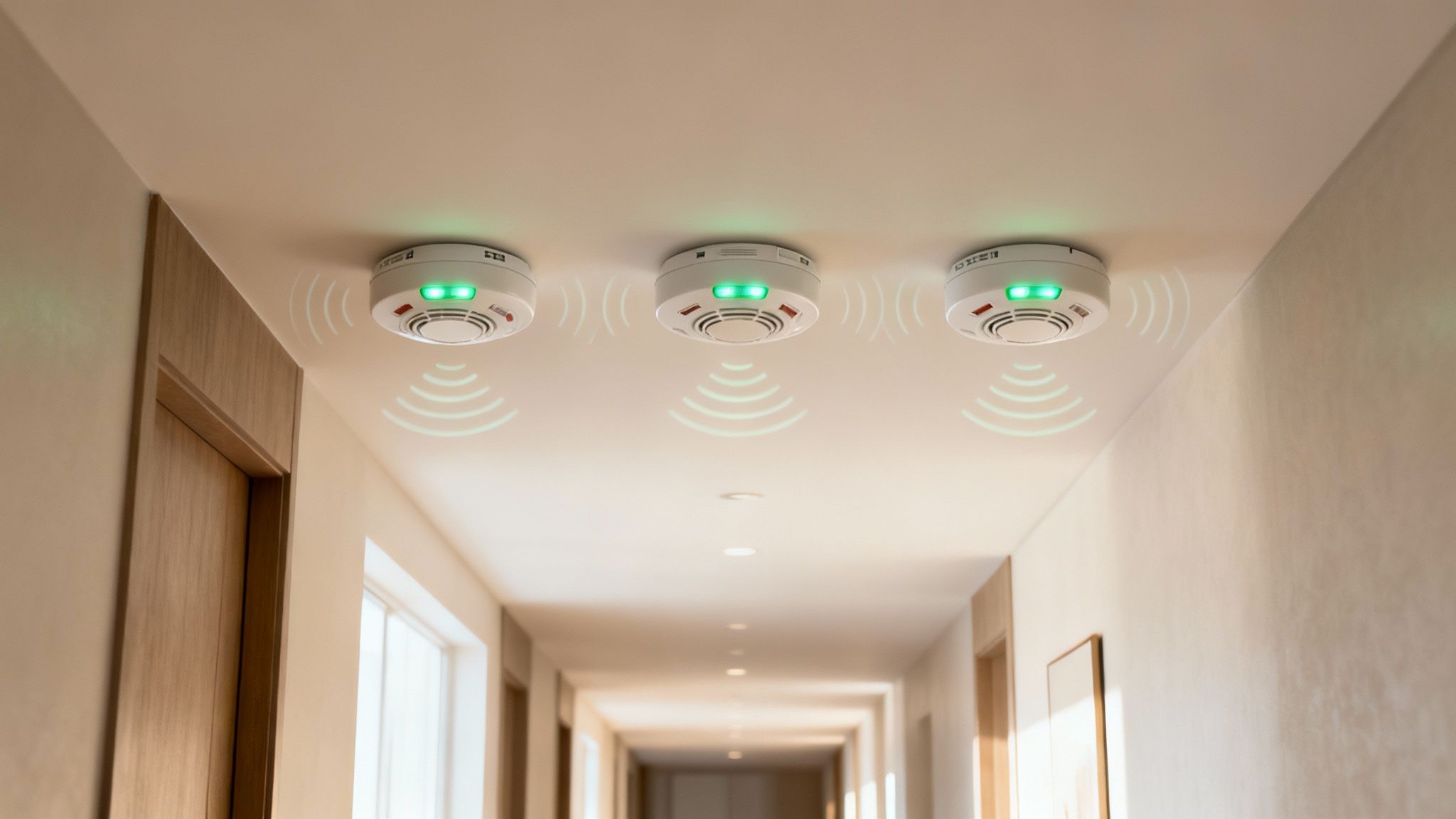
When one interconnected alarm senses smoke, it doesn’t just sound off by itself. It instantly broadcasts a radio frequency signal to every other alarm in your home, triggering a synchronised, house-wide siren. A fire starting in the kitchen will immediately set off the alarm in your bedroom, giving you the earliest possible warning, no matter where the danger begins.
This unified alert system is specifically designed to overcome common household barriers:
By making sure the alarm sounds right where you are, an interconnected system cuts through these issues. It provides an immediate and unmissable warning that a threat exists somewhere in your home. This core capability is precisely why safety regulations across Australia are increasingly mandating interconnected alarms.
Australian fire services and safety experts have gathered overwhelming data showing the profound impact of working, interconnected alarms. The evidence is so compelling it has directly shaped legislation to slash residential fire fatalities.
According to fire safety authorities, the presence of working smoke alarms can halve the risk of death in a residential fire. This single, powerful statistic underscores why functional, modern alarms are not optional—they are essential.
This evidence has driven huge policy changes. In Queensland, for instance, laws now mandate that smoke alarms be installed not just in hallways but inside every single bedroom. This change was a direct response to tragic incidents where closed bedroom doors prevented occupants from hearing a hallway alarm. You can discover more insights about Queensland’s progressive smoke alarm laws on detectorinspector.com.au. These regulations acknowledge a simple truth: the only way to guarantee an alert is to have an alarm in the room with you, linked to every other detector in the house.
This undeniable, evidence-based approach builds a powerful case for upgrading from older, isolated detectors to a modern network of wireless smoke alarms. It’s a fundamental shift from isolated points of detection to a comprehensive, intelligent safety net that protects your entire family. The small investment in interconnected technology pays enormous dividends in peace of mind and, most importantly, in providing the crucial time needed to escape a fire unharmed.
Figuring out the smoke alarm rules in Australia can feel like a headache, but it all comes down to one simple goal: getting the earliest possible warning in a fire. These regulations aren’t just bureaucratic red tape; they’re life-saving standards built on tough lessons and hard data about what actually works. For any homeowner, getting this right isn’t just a legal duty—it’s the most basic part of keeping your family safe.
While every state and territory has its own rules, Queensland has really set the standard for the whole country with some of the most effective smoke alarm legislation around. These rules give us a clear roadmap for what top-tier fire safety looks like in a modern home, and other states are starting to follow suit.
At its heart, the legislation is about creating a complete safety net, making sure there are no blind spots in your home’s protection.
To meet today’s Australian standards, especially the benchmark set in Queensland, your smoke alarm setup has to tick three critical boxes. Think of these as the absolute non-negotiables for a compliant and effective system.
These three rules work together perfectly: a fire is detected quickly (photoelectric), the alert is heard everywhere (interconnection), and there are no gaps in coverage (location). For a full breakdown, you can check out our guide on the current smoke alarm legislation in QLD.
The key thing to remember is that compliance isn’t about just having an alarm. It’s about having the right type of alarm, in all the right places, working together as one unified system. This is where wireless technology really shines.
As modern building codes across Australia increasingly require both interconnected and photoelectric alarms, wireless systems have become the go-to solution. They tick all the regulatory boxes while giving homeowners the flexibility they want. Driven by strict safety standards, wireless smoke alarms are making up a bigger and bigger share of new installations, marking a clear shift away from standalone alarms to integrated, whole-home alert systems.
Even though battery-powered wireless smoke alarms are simpler to install than their hardwired cousins, meeting the legal standards is not a weekend DIY job. For landlords, getting a professional to install and certify your system is a legal requirement. For homeowners, it’s a smart investment in your family’s safety and your own peace of mind.
A licensed electrician makes sure your alarms are:
Hiring a professional takes all the guesswork out of it. It gives you documented proof that your home meets every legal requirement and, more importantly, the absolute confidence that your safety net will work when you need it most. That peace of mind is priceless.
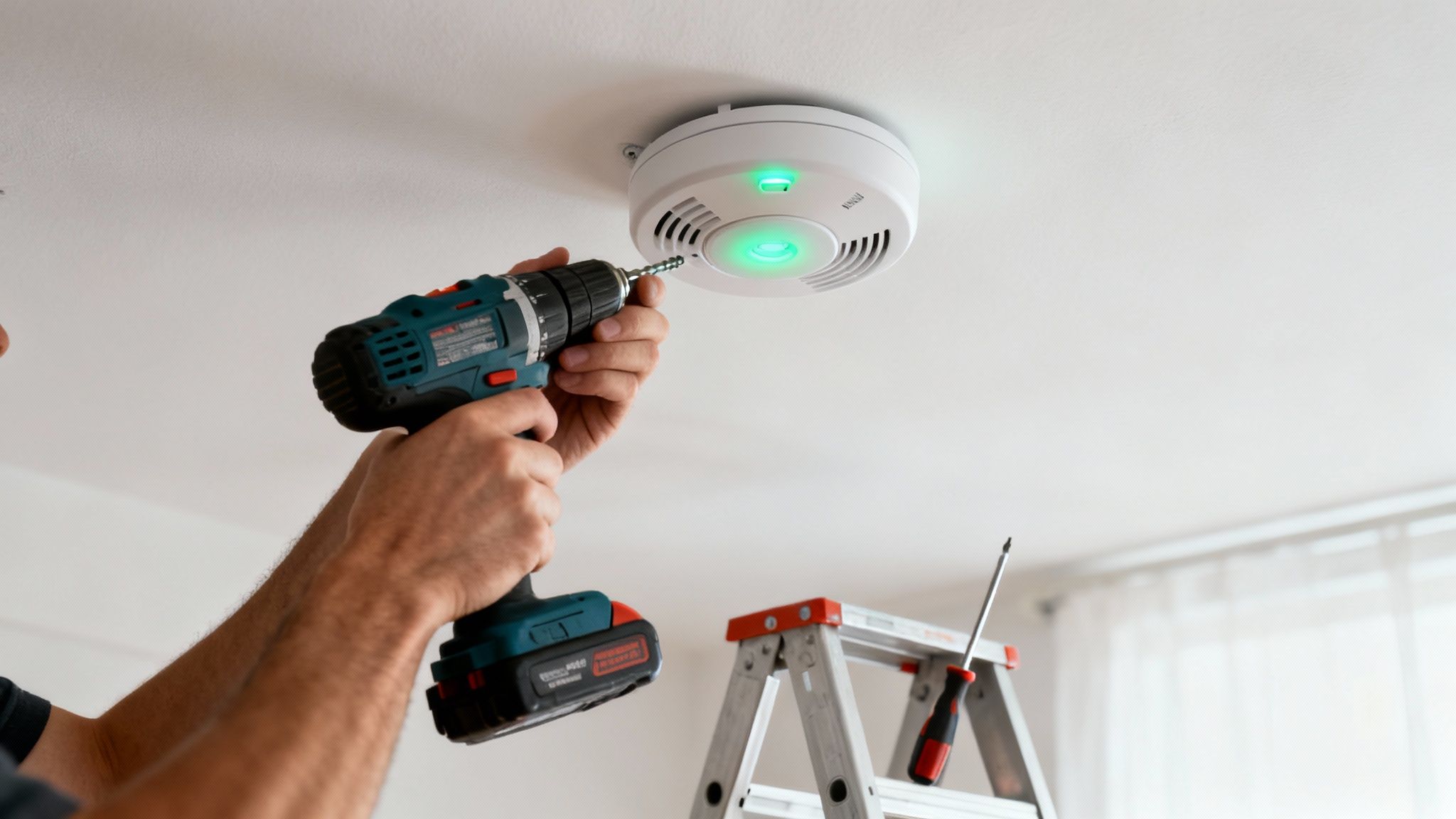
Alright, let’s get down to the practical side of things. Picking the right wireless smoke alarm system isn’t complicated when you know what to look for. The goal is simple: create a reliable, interconnected safety net that covers your entire home, leaving no blind spots.
This is more than just grabbing a few alarms off the shelf; it’s about being strategic. You’ll need to think about battery life, the unique layout of your home, and exactly how many alarms are needed to meet strict Australian standards. Get these choices right, and you’ll have a system that’s not only compliant but genuinely effective at protecting what matters most.
Before you even think about adding alarms to your cart, let’s focus on a few critical features. These are the details that separate a basic, standalone alarm from a truly dependable, interconnected system.
Once you’ve got your alarms, getting them in the right spot is everything. An incorrectly placed detector can seriously delay its response time, and in a fire, every second is critical. While we always recommend a professional installation for guaranteed compliance, understanding the process helps you appreciate how it all works together.
Proper placement is non-negotiable for effective fire detection. A well-placed alarm can detect smoke up to a minute faster than one installed too close to a wall or corner, giving your family critical extra time to escape.
Your safety net is only as strong as its weakest link, which is why a little bit of regular maintenance is so important. These simple checks will ensure your wireless alarm system is always ready to go.
Here’s our simple checklist to keep everything in top shape:
While a confident DIYer can install these alarms, hiring a licensed electrician is the only way to guarantee your system is fully compliant and positioned for maximum effectiveness. If you’re weighing up your options, you can learn more about what’s involved in our guide to professional smoke detector installation cost.
Today’s wireless smoke alarms are already a massive leap forward, but the technology is far from standing still. We’re now seeing these essential safety devices become key players in the wider smart home ecosystem, offering a level of control and awareness that was once unthinkable. This integration is changing the game from simple detection to intelligent, proactive response.
Imagine getting an instant alert on your phone the moment an alarm is triggered, no matter where you are. Whether you’re at work, on holiday, or just out in the garden, you get immediate insight into your home’s safety. This kind of remote access allows you to assess the situation and alert emergency services faster, turning your smoke alarm from a local siren into a global alert system.
One of the biggest frustrations with older smoke alarms is the dreaded nuisance alarm. We’ve all been there: you’re searing a steak or just finished a steamy shower, and suddenly the whole house is filled with a piercing siren. It happens so often that many people are tempted to disable their alarms temporarily, which creates a huge, dangerous safety gap.
This is where artificial intelligence (AI) is making a real difference. The integration of AI in wireless smoke alarms is a major step forward, allowing them to distinguish between real threats and common false alarms. Smart algorithms can analyse the particles in the air, learning to tell the difference between cooking smoke, steam, and the specific signature of a dangerous fire. You can learn more about how AI is reducing nuisance alerts in the smoke alarm market at coherentmarketinsights.com.
By dramatically cutting down on false alarms, smart technology encourages homeowners to keep their systems active at all times. This ensures they are always protected, which is a critical step towards foolproof fire safety.
These intelligent systems are also paving the way for more advanced communication between devices. For instance, many modern systems now use mesh technology, where each alarm acts as a repeater to strengthen the network’s signal. This creates an incredibly robust and reliable connection that covers your entire property, eliminating dead spots.
You can explore the advantages of Brooks mesh technology to see how this works in practice. This forward-thinking approach shows that wireless alarms aren’t just a current necessity—they’re a core part of a future-proof, intelligent, and truly reliable home safety strategy.
Deciding to upgrade your home’s safety system is a big step, and it’s natural to have a few questions. As you think about making the switch to wireless smoke alarms, you want clear, straightforward answers to feel confident in your choice. Let’s tackle some of the most common queries we hear from homeowners.
This is the number one question we get, and the answer is a definite yes. Modern wireless alarms don’t use your home’s Wi-Fi network, which can get congested or drop out. Instead, they operate on a dedicated radio frequency (RF) signal, creating their own private, robust network. Think of it as a closed-loop system designed for one critical job: communication during an emergency.
On top of that, they come with built-in 10-year lithium batteries. This means they aren’t reliant on your mains power. In a blackout—a time when fire risk can actually go up—your wireless alarms will keep working perfectly. This gives them a real edge over many hardwired models that don’t have a battery backup.
It’s a fair question. The sealed 10-year lithium batteries are engineered to power the alarm for its entire operational life, which is a full decade. This isn’t just a marketing gimmick; it’s a design standard that eliminates the need for those yearly battery swaps and gets rid of those infuriating low-battery chirps in the middle of the night.
After ten years of service, the entire alarm unit is designed to be replaced. This ensures that not only the battery but all the sensing components are fresh and reliable, ready to protect your family for the next decade.
Of course, you should still give your alarms a quick test every month. It’s the best way to make sure every unit is powered up and the interconnection is working as it should.
We strongly advise against mixing brands in an interconnected system. Each manufacturer uses its own unique radio frequency and communication language to link its alarms together. Trying to pair a detector from one company with another will almost certainly fail. You’ll end up with a disconnected system, which creates dangerous gaps in your safety net.
For your network to work properly—with every alarm sounding at once—you must stick with the same manufacturer and, ideally, the same product line. This ensures they can all “speak” to each other instantly and create a single, unified alert throughout your home.
For guaranteed compliance and professional installation of your wireless smoke alarm system, trust the experts at DLG Electrical. Ensure your family’s safety is in the hands of licensed professionals. Contact us today for a free quote!

Master Electrician with over 30 years of experience. Founded DLG Electrical in 2005 after international project work including electrical installations at Stamford Bridge Stadium, London(Home of Chelsea FC).

Local Electricians that can fix all Electric Hot water Systems.
Motion sensor lights are a versatile addition to any home, offering nu
