83 Jean St, Grange QLD 4051
Mon-Fri 07:30 AM - 04:00 PM - Sat - 8:00 - 12 - Sunday Closed
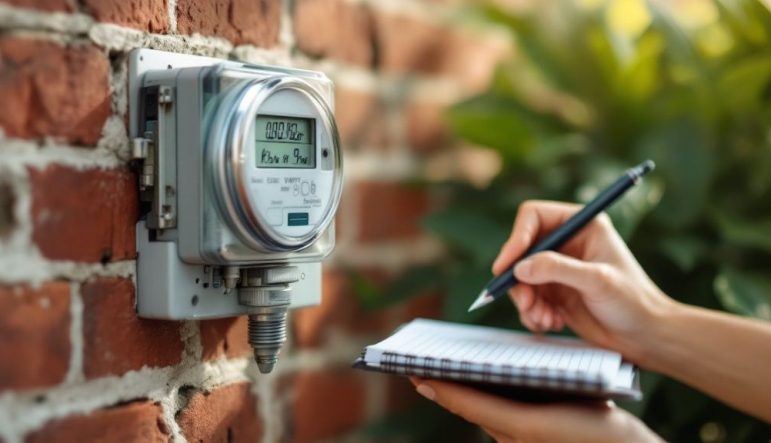
How to Read Electricity Meter ? Before you can learn how to read your electricity meter, you first need to track it down and figure out exactly what kind you have. For most homes, this is pretty straightforward. You’ll usually find the meter in a grey or white box mounted on an exterior wall, but it’s worth checking the garage or a utility cupboard if it’s not immediately obvious.
Getting a handle on your meter type is the first real step to understanding your energy usage.
Once you’ve located the meter box, the next job is to identify what you’re looking at. In Australia, you’ll generally come across one of three main types, and each one looks and functions a bit differently.
If you’re still scratching your head trying to figure out which one you have, don’t guess. Getting some professional advice from a local sparky can clear things up fast. For example, an electrician in Ashgrove can not only help with meter identification but also perform any related electrical safety checks to give you complete peace of mind.
To help you tell them apart, here’s a quick visual guide to the most common meter types you’ll find at an Aussie property.
Use this table to quickly determine which type of electricity meter is installed at your property.
| Meter Type | What It Looks Like | How You Read It |
|---|---|---|
| Digital Meter | A simple electronic screen (LCD or LED) showing a sequence of numbers. | Read the numbers directly from the screen, from left to right. |
| Dial Meter | A series of small, clock-like dials with pointers. | Read the dials from left to right, noting the last number each pointer has passed. |
| Smart Meter | Looks similar to a digital meter, but may have more advanced display options or communication lights. | Readings are sent automatically, but you can usually view the current reading on the display. |
As you can see, each meter requires a slightly different approach. While smart meters handle the hard work for you, knowing how to read a digital or dial meter is a useful skill for keeping track of your consumption between bills.
This image breaks down the key differences between the two most common meters you’d need to read manually.
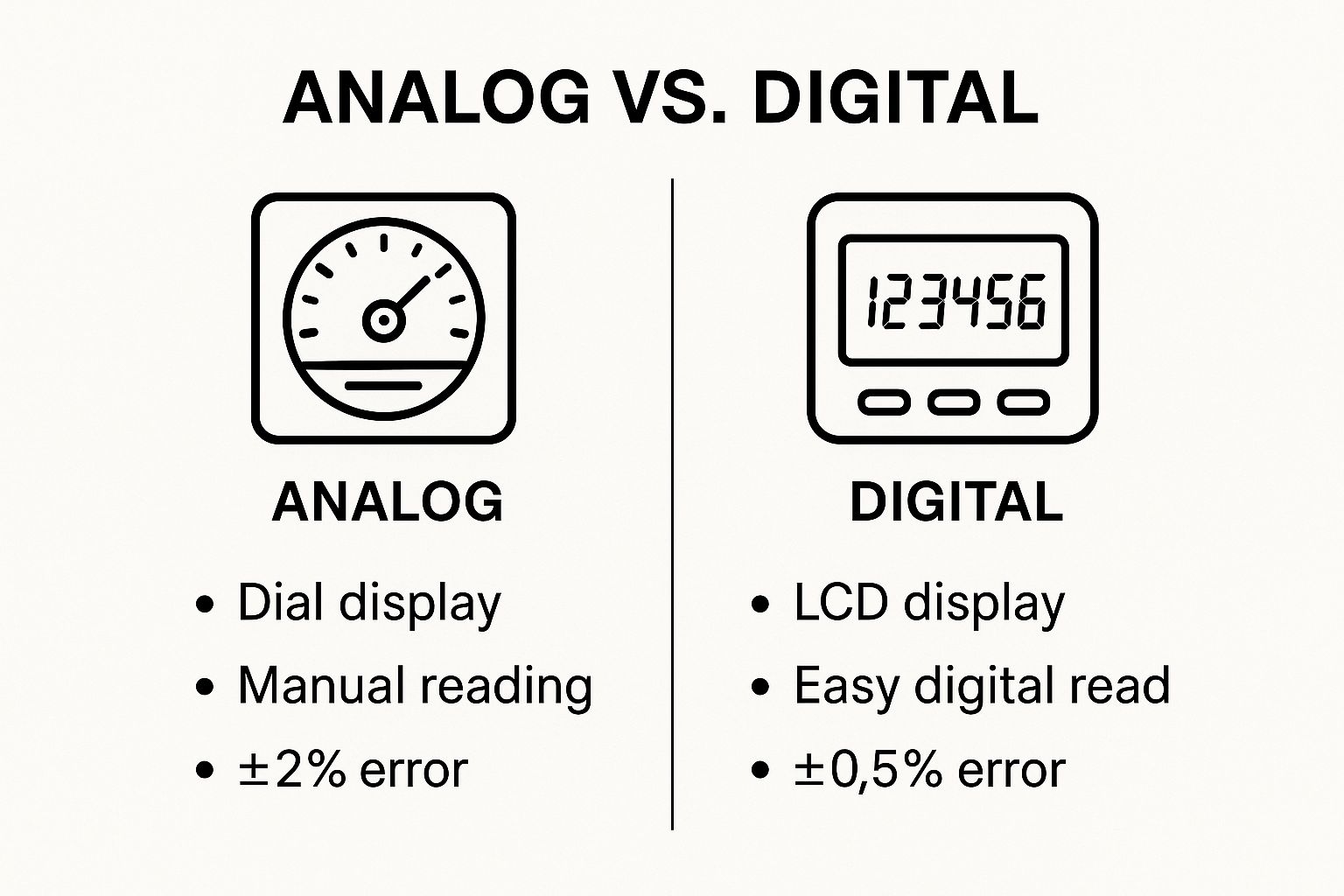
It’s clear that digital meters offer a massive advantage when it comes to accuracy. Their margin for error is tiny compared to their analogue counterparts, which makes them a much more reliable tool for tracking your power usage.
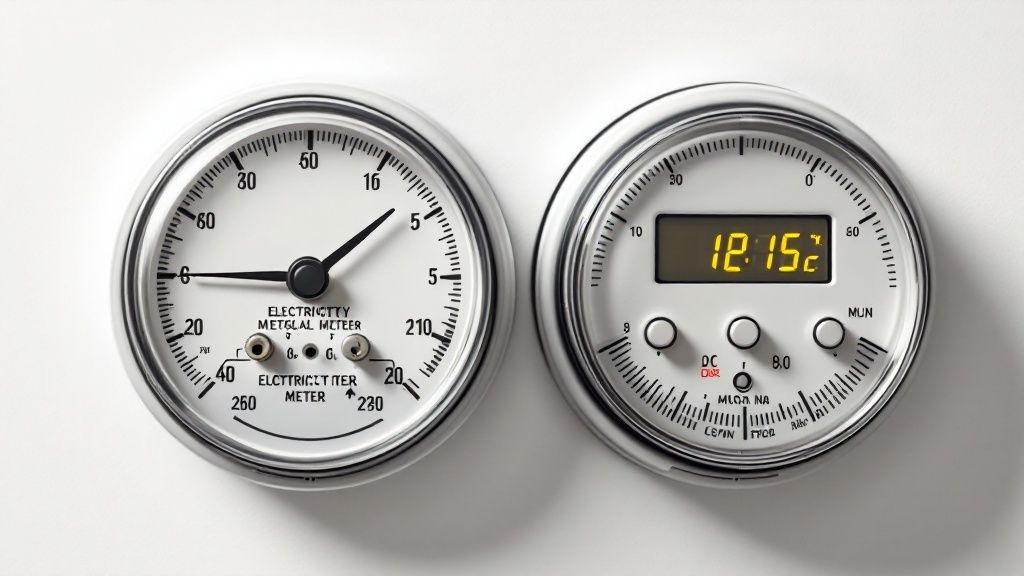
If you’ve got a digital meter at home, you’re in luck. They are by far the easiest type to read. With a clear LCD or LED screen, there’s none of the guesswork you get with older, analogue dial meters. The numbers are displayed right there for you, making the whole process quick and painless.
The main number you’re looking for is your total electricity consumption, which is measured in kilowatt-hours (kWh). This is the figure your energy retailer uses to work out your bill.
Don’t be alarmed if the numbers on your meter’s screen keep changing. Most digital meters automatically cycle through a few different displays. It’s crucial to wait for the right screen before you start jotting anything down. It’s pretty common to see test screens, the time, or other technical data flash by.
Your meter reading will almost always be clearly labelled or followed by the letters “kWh“. You’re looking for a screen that shows a sequence of numbers, usually about five to seven digits long.
If the display is blank, it’s likely just in a power-saving sleep mode. Give the “display” or main button a press to wake it up and get the cycle started.
Pro Tip: When you take down a reading, write down all the numbers you see from left to right. Some meters might show a number after a decimal point—you can usually ignore this last digit, as most energy providers only bill for whole kWh units.
If your energy plan is a time-of-use tariff, your meter will show separate readings for different times of the day. This is a common setup in Australia designed to help manage household energy costs by charging different rates at different times.
Your display will cycle through each tariff, which is often identified by a number or a simple code. For example, you might see:
To get an accurate picture of your usage, you’ll need to record the kWh figure for each of these rates as they appear on the screen.
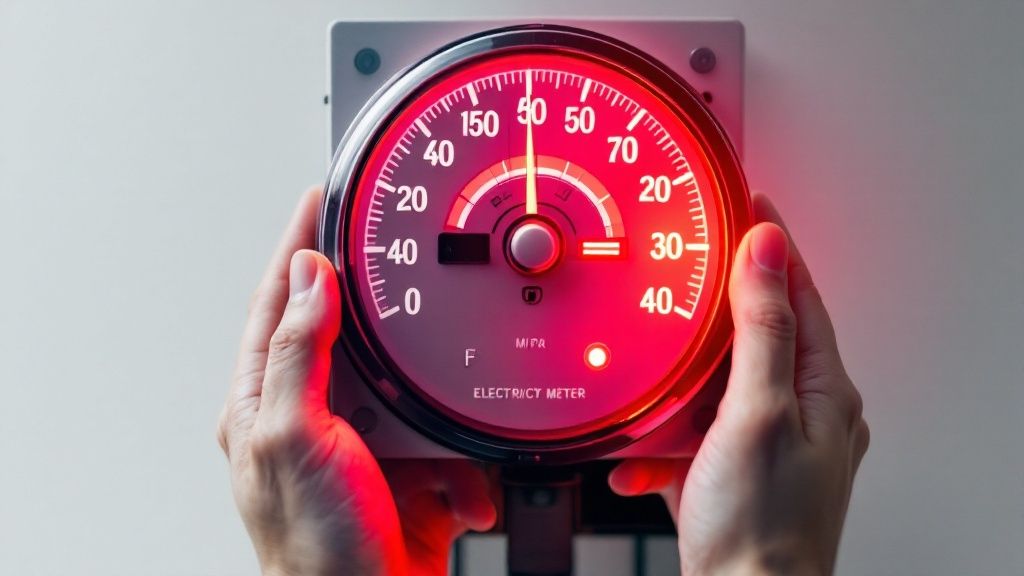
At first glance, a dial meter can look like a row of confusing little clocks. While they might seem old-fashioned compared to their digital cousins, learning how to read a dial electricity meter is a straightforward skill once you get the hang of it.
Getting it right is the key to avoiding an estimated bill that doesn’t reflect what you’ve actually used.
The most important thing to realise is that you read the dials from left to right, just like you’d read a sentence. But there’s a small twist that often catches people out.
Take a closer look at the dials. You’ll notice they don’t all spin in the same direction. In fact, they alternate between clockwise and counter-clockwise. This isn’t a mistake; it’s a deliberate design feature, and knowing this is half the battle.
Typically, the first dial on the left turns clockwise, the second turns counter-clockwise, the third clockwise, and so on. Before you write anything down, always check which way the numbers are going on each individual dial.
The Golden Rule: If a pointer is sitting directly between two numbers, you must always record the lower of the two. The only exception is if the pointer is between 9 and 0; in this case, you should record it as 9.
Let’s walk through an example. As you move from left to right, you need to write down the number that the pointer has just passed for each dial.
This final check is the most common source of error, so it’s critical for an accurate reading.
Once you have your full sequence of numbers, that’s your kWh reading. It’s now ready to submit to your energy provider, ensuring you’re only paying for the power you’ve actually used.
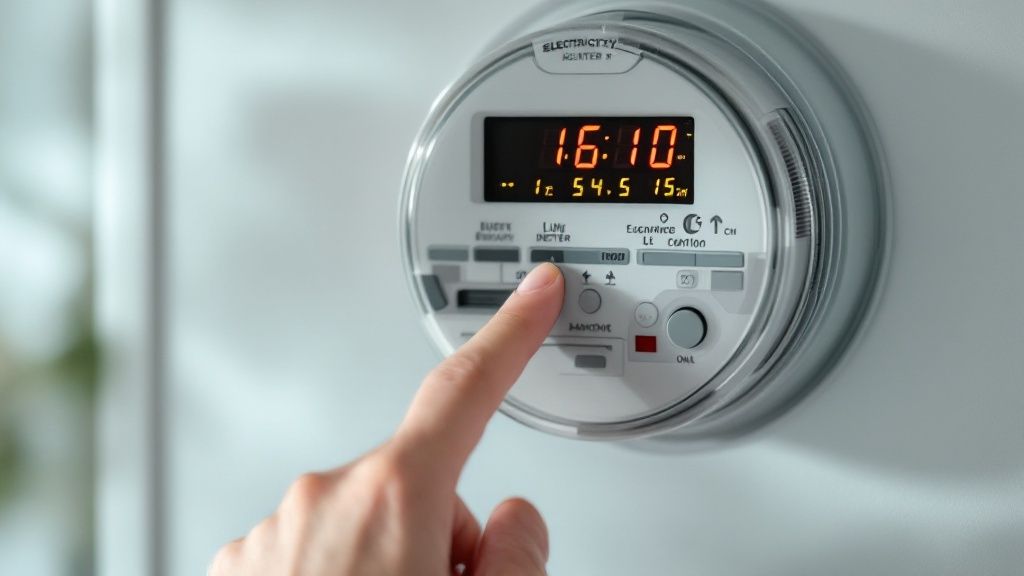
Smart meters have been a massive step up from the old analogue models, giving Australian households a whole new level of insight into their power usage. Gone are the days of a technician traipsing through your yard for a manual reading. Instead, a smart meter automatically sends your usage data straight to your electricity provider.
This means the end of estimated bills. You only ever pay for exactly what you’ve used. But the real game-changer isn’t just the automated readings; it’s the rich, detailed data you can now access.
So, how do you see what your smart meter is recording? The simplest way is through your energy retailer’s online portal or mobile app. Most major providers now offer dashboards that show your electricity consumption in near real-time, often broken down into daily or even hourly chunks.
This level of detail is incredibly powerful. For the first time, you can see exactly when your household is chewing through the most power. Is it the morning rush as everyone gets ready? Or is it in the evening when the TV, lights, and kitchen appliances are all humming along?
Pinpointing your peak usage times allows you to make simple but incredibly effective changes. You might decide to run the dishwasher late at night or use the clothes dryer during off-peak periods to take advantage of cheaper electricity rates.
Once you understand these patterns, you can start making smarter energy choices. Armed with this knowledge, shifting energy-hungry tasks to off-peak hours can lead to some serious savings on your next bill.
The accuracy of smart meters also helps the wider energy network. Unlike the guesswork of estimated readings, smart meters provide precise consumption data that helps suppliers manage the grid more effectively. In New South Wales, for example, these devices even allow for remote safety inspections and faster reconnections after electrical work, speeding up jobs that used to require a site visit.
If you have solar panels, getting a handle on your smart meter data is even more important for making sense of those complex bills. For anyone navigating net metering, understanding the solar true-up meaning can be particularly helpful for figuring out your net energy usage over the billing period.
Submitting a meter reading can feel like just another chore, but it’s one of the most powerful ways to get a handle on your household budget. When your energy provider relies on estimates, you’re often not paying for your actual usage.
This can mean you’re overpaying throughout the year, or worse, you get stung with a massive catch-up bill when someone finally takes an actual reading. It’s a common frustration for many households.
Learning how to read your own meter and sending the figures through ensures every dollar you spend is for power you’ve actually used. This simple habit puts you back in control and prevents those nasty billing surprises. If you’ve ever found yourself wondering why your electricity bill is so high, inaccurate estimates could easily be the culprit.
This push for greater accuracy is exactly why Australia is in the middle of a nationwide smart meter rollout. Traditional meters are the main reason for estimated bills, but the government’s Legacy Meter Replacement Program is working to have all old meters replaced by 2030.
These new smart meters send real-time data straight to your provider, which gets rid of the guesswork completely. It’s all about giving you the information you need to properly manage your electricity use.
By providing accurate readings—whether you do it yourself or it’s done automatically by a smart meter—you get a crystal-clear picture of your consumption. This is the essential first step to figuring out where you can make changes to lower your costs.
Once you know exactly how much power your home is using and when, you can start putting effective strategies in place to cut down on consumption. For some great ideas, check out this practical advice on how to reduce electricity bills at home.
Even after you’ve figured out how to read your meter, a few common questions always seem to pop up. Don’t worry, you’re not the first to ask! This is the part where we tackle some of the most frequent queries we hear from homeowners, helping you get a proper handle on your energy usage.
So, you’ve taken your reading, and the number has shot up unexpectedly. Before you panic, let’s rule out the simple stuff. Have you installed any new power-hungry appliances recently? Is the air conditioner working overtime in a heatwave? These are often the culprits.
If the number still feels off, the first thing to do is double-check your reading method. This is especially true for the old-school dial meters, where a small mistake can easily throw your numbers out.
Once you’re confident the reading is accurate, pull out your last few energy bills and compare. A sudden, unexplained jump could be a red flag for a faulty appliance that’s chewing through more power than it should.
A great trick is to take daily readings at the same time for about a week. This helps you spot patterns and can point you toward the source of the high consumption. If you really want to get into the details, our guide on how to calculate electrical energy consumption walks you through the whole process.
Takeaway: A shockingly high meter reading isn’t always a sign of a faulty meter. More often than not, it’s a clue that something in your home is using a lot more electricity than you realise—making it the perfect opportunity to investigate and cut down your costs.
This is a big one for many Australians. You’ve got this shiny new smart meter that sends data to your retailer automatically, so why is it so hard to access that information yourself in real-time? It’s a fair question, and the short answer is that the systems for giving consumers instant, second-by-second data are still being rolled out.
The good news is, things are changing for the better. The Australian Energy Market Commission (AEMC) has put forward proposals to give consumers near-instant access to their own smart meter data. This is a huge step forward that will affect over 3 million customers, empowering you to track your usage live and make smarter decisions about your energy efficiency. You can read up on the project on the AEMO website.
For now, the best tool you have is your energy retailer’s online portal or app. They usually update every 24 to 48 hours, giving you a pretty good picture of your usage patterns.
If you ever suspect an electrical fault with your meter or your home’s wiring, don’t take any chances—it’s time to call a professional. For safe, reliable electrical services in Brisbane, you can trust the experts at DLG Electrical. Visit us at https://dlgelectrical.com.au to get a free quote.

Master Electrician with over 30 years of experience. Founded DLG Electrical in 2005 after international project work including electrical installations at Stamford Bridge Stadium, London(Home of Chelsea FC).

Local Electricians that can fix all Electric Hot water Systems.
Motion sensor lights are a versatile addition to any home, offering nu
