83 Jean St, Grange QLD 4051
Mon-Fri 07:30 AM - 04:00 PM - Sat - 8:00 - 12 - Sunday Closed
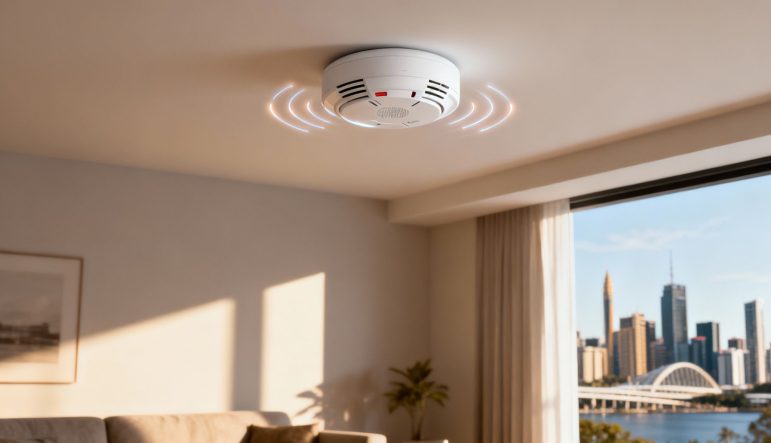
A wireless smoke alarm is a battery-powered device that does two things really well: it detects smoke, and it uses radio frequency to tell every other connected alarm in your home about it. Instantly.
This creates an interconnected network. It means an alarm triggered in the garage is heard loud and clear in the upstairs bedroom, giving everyone a crucial, whole-home warning without needing a single new wire run through your walls.
Think of your smoke alarms like a team of security guards posted around your property. In an old-school, non-connected setup, if the guard in the basement spots trouble, they might shout for help, but their voice won’t reach the guard on the top floor. It’s a recipe for disaster.
With a wireless system, the moment one guard detects smoke, they don’t just shout—they hit a panic button that radios the entire team simultaneously. Every single alarm shrieks in unison. There’s absolutely no mistaking it for a low battery chirp; this is a real emergency.
This is the core idea behind interconnected smoke alarms. They don’t rely on you hearing a faint beep through a few closed doors. Instead, they create a synchronised, property-wide alert that can slash precious seconds off your family’s escape time during a fire. This is especially vital in multi-level Brisbane homes, where a fire can start silently on one floor while everyone is asleep on another.
This infographic gives you a great visual of how these alarms form a seamless safety net across a multi-story home.
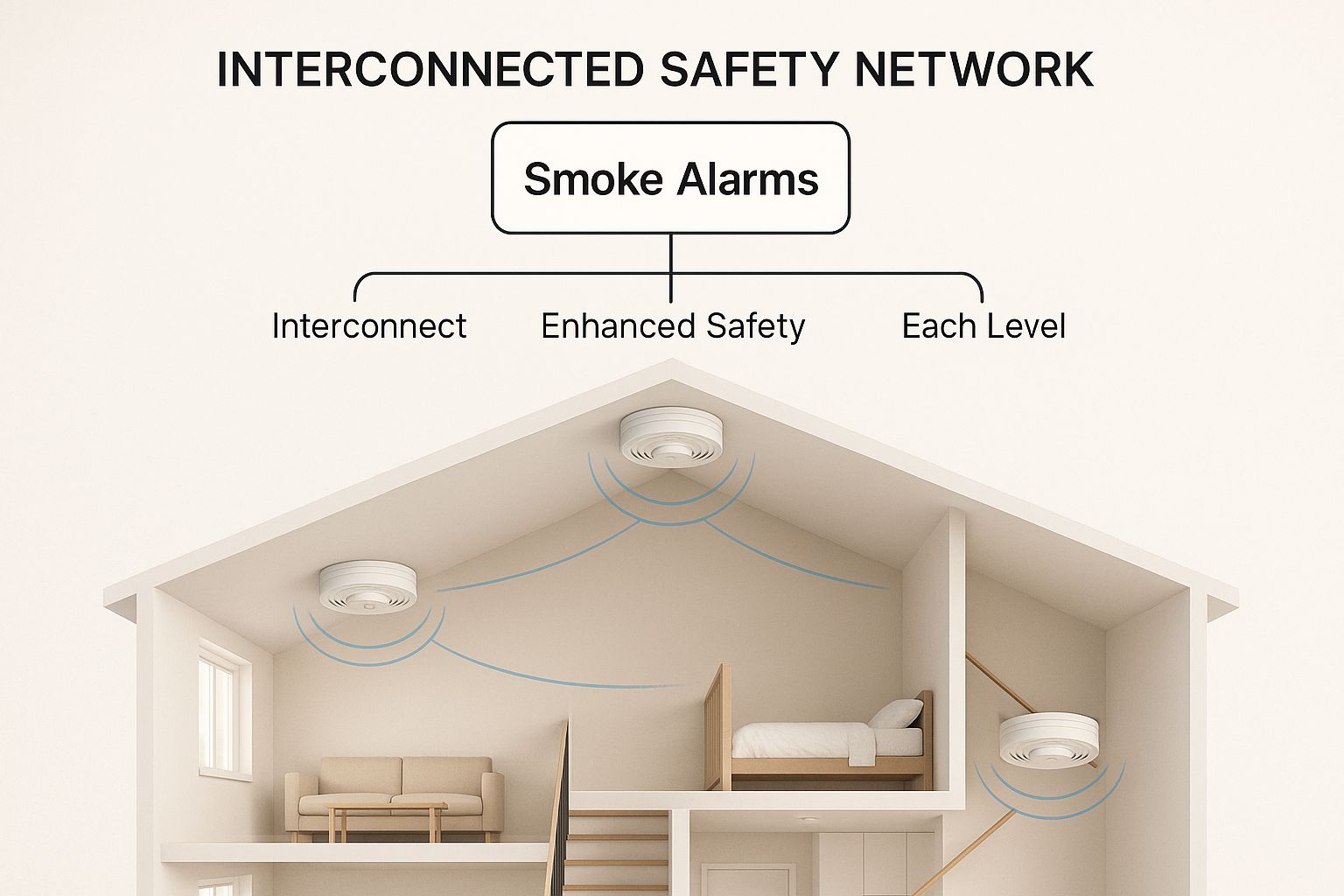
As you can see, the wireless signals bridge the distance, ensuring a fire in one corner triggers an immediate, house-wide response. It’s a complete safety blanket.
The “magic” inside a wireless smoke alarm isn’t magic at all. It’s a simple, robust partnership between two key bits of tech: a sensor that spots the danger and a radio transmitter that broadcasts the warning.
A key feature of modern fire alarms is their ability to interconnect. When one detector senses a fire, all alarms in the system activate simultaneously. This ensures that everyone in the building, regardless of their location, is alerted to the danger.
Setting up this network is surprisingly straightforward. During installation, an electrician “pairs” or “codes” the alarms to each other, a bit like connecting your phone to a Bluetooth speaker. This simple step ensures your alarms only listen for signals from inside your own home’s network, preventing a false alarm from your neighbour’s system.
Once paired, they form a closed-loop communication system. A signal from one is a direct command for all to sound the alarm. This creates a powerful, responsive system that provides genuine peace of mind.
To get a better handle on how these systems can be designed for your property, you can learn more about wireless interconnected smoke alarms and their specific benefits. This cohesive network is really the foundation of modern fire safety, turning standalone detectors into a smart, collaborative life-saving system.
Moving from old, standalone alarms to a modern wireless system isn’t just a tech upgrade; it’s a fundamental shift in how your family is protected. A single, beeping alarm is certainly better than nothing, but an interconnected network offers a level of safety that’s simply in a different league, especially when every single second counts.
The biggest advantage is speed and synchronisation. Imagine a small fire starting in the garage while everyone is asleep. A lone alarm in there might beep away unheard, but with a wireless network, every single unit in your home—from the hallway to the bedrooms—screams a warning at the same time. This immediate, whole-home alert can slash evacuation times, turning a potential tragedy into a manageable emergency.
This unified alert is absolutely crucial. By giving you those precious extra seconds, a wireless system dramatically reduces the risk of serious injury and property damage. For anyone wanting to understand the aftermath, learning about understanding fire damage restoration highlights just how important early warnings are.
One of the biggest things that puts homeowners off an interconnected system is the thought of the installation process. The idea of tearing into walls to run new wiring is messy, disruptive, and expensive, often leading to plastering and repainting.
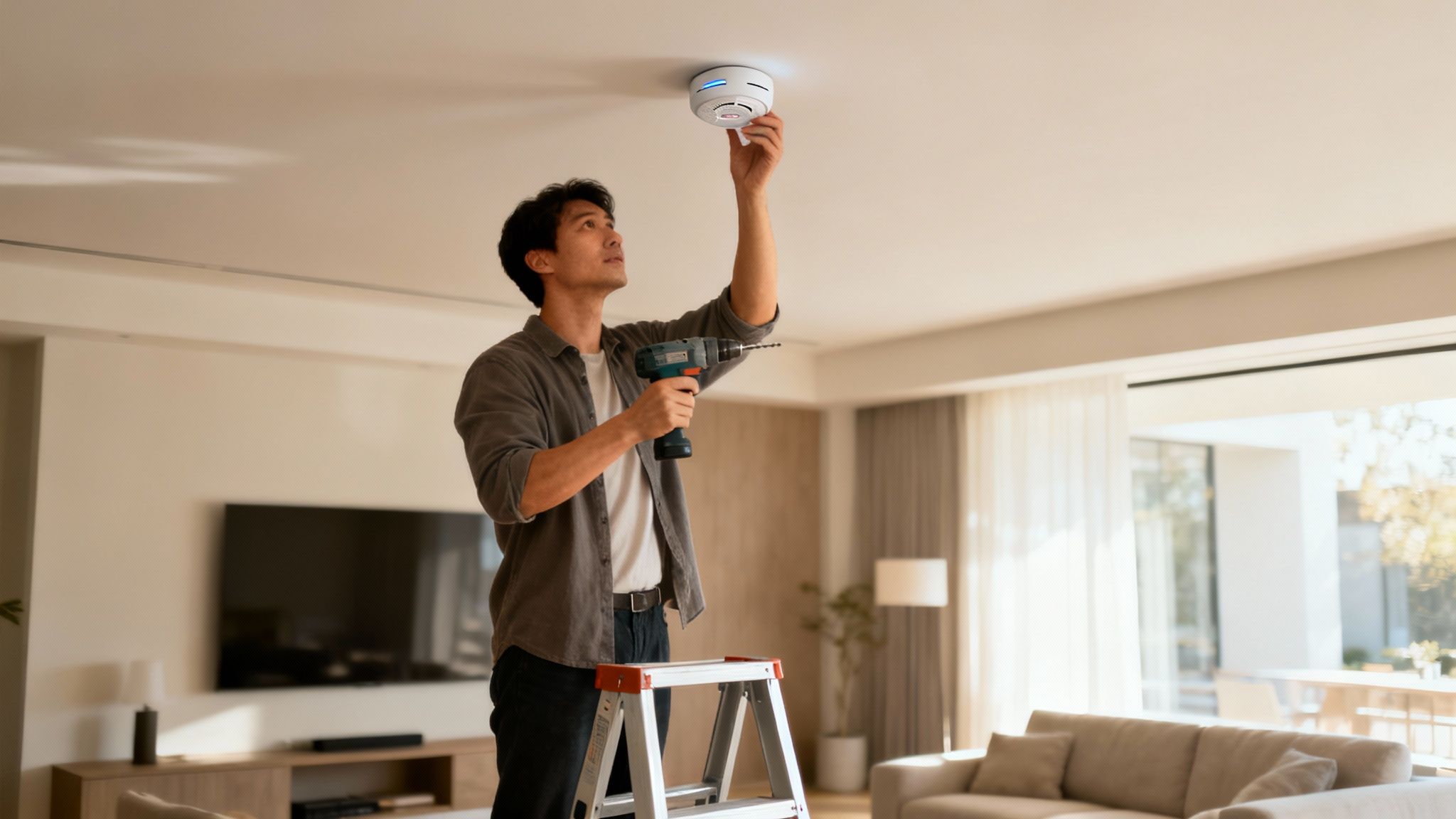
This is where wireless smoke alarms really shine. Because the units talk to each other using radio frequency signals, they don’t need any physical wires connecting them. Installation is clean and fast, and a licensed electrician can get it done with minimal fuss.
This also gives you incredible flexibility down the track.
Today’s wireless alarms do more than just talk to each other; many are packed with smart features that offer real peace of mind. A lot of models now connect to smartphone apps, sending you instant notifications if an alarm goes off, no matter where you are. This is a game-changer for checking on your home while you’re at work or away on holiday.
These modern systems are also getting much smarter about what they detect, which helps cut down on those annoying false alarms from burnt toast or shower steam that can make people complacent.
By integrating into your smart home, these alarms transform your fire safety from a passive, wait-and-see system into an active, responsive one. Upgrading to a wireless network isn’t just about ticking a compliance box; it’s about choosing a faster, smarter, and far more reliable way to protect what matters most.
Owning a home in Brisbane means you have to get your head around some of Australia’s toughest fire safety rules. Queensland’s smoke alarm legislation isn’t just a friendly suggestion—it’s the law, and it’s designed to save lives. Understanding what’s required of you is absolutely non-negotiable.
The old days of having a single, battery-powered alarm stuck in the hallway are long gone. The law now focuses on creating a complete safety net, giving you the earliest possible warning no matter where a fire might start in your home.
This massive shift in legislation is why so many homeowners are upgrading their systems. It’s not just a local trend, either. The Asia-Pacific wireless fire detection market was valued at around USD 5.49 billion in 2024 and is expected to hit USD 11.35 billion by 2032. Strict laws like Queensland’s are a huge reason for this growth, pushing people away from old, unreliable setups toward a properly interconnected wireless smoke alarm network.
At its heart, the legislation demands a system of interconnected, photoelectric smoke alarms. Let’s quickly break down what that actually means for your home.
The whole point of the Queensland legislation is simple: make sure everyone in the house is alerted to a fire as fast as possible. Interconnectivity is the key—it turns a bunch of separate alarms into one loud, unified warning system that nobody can miss.
While these rules are the priority for homeowners, it’s also worth knowing that other safety protocols exist for different situations, like essential fire watch requirements for commercial settings. For your home, though, let’s stick to the QFES rules.
To help you figure out where you stand, we’ve created a simple checklist to audit your home against the Queensland Fire and Emergency Services (QFES) regulations. A compliant home needs interconnected, photoelectric alarms in all the right places.
Queensland Smoke Alarm Legislation Checklist
| Requirement | Is Your Home Compliant? | Key Details |
|---|---|---|
| On Every Storey | Yes / No | Every level must have at least one alarm, including split-levels. |
| In Every Bedroom | Yes / No | An alarm must be installed inside every single room used for sleeping. |
| In Hallways | Yes / No | Hallways connecting bedrooms to the rest of the house must have an alarm. |
| Path to Exit | Yes / No | On a storey with no bedrooms, an alarm must be in the main path of travel to the exit. |
This checklist gives you a quick overview, but remember that every home is different. The goal is to ensure there are no dead zones where a fire could go undetected.
For a more detailed look, our guide to the current smoke alarm legislation in QLD dives even deeper.
The government has rolled out these laws in stages. As of 1 January 2022, any property being sold, leased, or having its lease renewed must be fully compliant.
If your home doesn’t fall into that category, you still have a deadline: all other homes must meet the new standard by 1 January 2027.
Ignoring these rules is a huge risk. Not only are you putting your family in danger, but you could also face on-the-spot fines from the council. Worse still, if a fire does occur, your home insurance provider could refuse your claim if they find your smoke alarms weren’t up to code. It’s just not worth the risk.
Picking the right wireless smoke alarm isn’t like grabbing a box of screws from the hardware store. It’s a decision that directly impacts the safety of your family and your home. For Brisbane homeowners, the choice is partly guided by strict legal requirements, but you still have plenty of options when it comes to features, batteries, and smart tech.
Navigating these choices is key to finding the perfect fit for your home, your lifestyle, and your budget. By understanding the critical differences, you can invest confidently in a system that will give you reliable protection for years to come. Let’s walk through the most important factors to consider, minus the confusing technical jargon.
Before you even think about bells and whistles, you have to get the sensor technology right. Under Queensland law, every smoke alarm you install must use photoelectric technology. This isn’t just a friendly recommendation; it’s a legal requirement.
So, why the big deal? Photoelectric sensors are specifically designed to sniff out the large smoke particles produced by slow, smouldering fires. These are the most common and dangerous types of fires in our homes, often starting quietly from faulty wiring or smouldering furniture. They can fill a house with toxic smoke long before any flames even appear.
Think of it like this: older ionisation alarms are like a guard who only shouts when they see flames. A photoelectric alarm is the guard who raises the alarm the moment they smell smoke, giving you and your family a much earlier warning to get out safely.
It’s that simple. When you’re shopping for alarms, your first step is to check the box. If it’s not a photoelectric wireless smoke alarm, it’s not an option for your Brisbane home.
One of the biggest decisions you’ll face is the power source. Your options generally fall into two camps, each with its own pros and cons.
For most homeowners, the peace of mind that comes with a 10-year sealed battery is well worth the slightly higher upfront cost.
Modern tech has now found its way into fire safety. Many wireless smoke alarm systems offer Wi-Fi connectivity, letting them send alerts straight to your smartphone through an app. This can be an incredible feature, especially if you travel often or want to keep an eye on your property while you’re at work.
Imagine getting a notification that a smoke alarm has been triggered while you’re on holiday. You could immediately check your security cameras or call a neighbour to investigate, potentially stopping a disaster before it takes hold. Smart alarms can also give you handy updates like low-battery warnings and system health checks, all on your phone.
Of course, these features come at a premium. If you’re on a tighter budget and don’t need remote monitoring, a standard non-smart interconnected system will still meet all legal requirements and provide excellent protection when you’re home.
Choosing the right brand and model really comes down to balancing reliability, ease of use, and the warranty. Always look for models certified to Australian Standard AS 3786:2014, as this guarantees they’ve passed rigorous performance and quality tests. A longer warranty is also a great indicator of the manufacturer’s confidence in their product.
To help you see the trade-offs at a glance, here’s a quick comparison of the typical features you’ll find across different models.
| Feature | Model A (e.g., Brand X) | Model B (e.g., Brand Y) | Model C (e.g., Brand Z) |
|---|---|---|---|
| Sensor Type | Photoelectric | Photoelectric | Photoelectric |
| Battery | Replaceable AA | 10-Year Sealed Lithium | 10-Year Sealed Lithium |
| Interconnection | RF Wireless | RF Wireless | RF Wireless |
| Smart Alerts | No | Yes (Basic App Notifications) | Yes (Advanced Diagnostics & Integrations) |
| Warranty | 5 Years | 7 Years | 10 Years |
By carefully weighing up these key areas—sensor, battery, and smart features—you can find a wireless smoke alarm system that not only keeps your home compliant but also provides the right level of protection and convenience for your family.
A wireless smoke alarm is only as good as its placement and upkeep. Get either of those wrong, and you’re left with a dangerous blind spot in your home’s safety net. For Brisbane homeowners, having a clear plan for both installation and ongoing maintenance isn’t just best practice—it’s the critical step that ensures your alarms will actually work when you need them most.
This guide will walk you through the essentials, from pinpointing the best spots to install your alarms to setting up a simple, repeatable maintenance routine. Think of it as the real-world manual for your home’s new safety network.
This shift towards better systems isn’t just happening in individual homes. Across Australia, stricter regulations and growing awareness are pushing the adoption of advanced smoke alarms. The Fire and Security Alarm Installation Services market was valued at around AUD 5.2 billion in 2024, with wireless tech leading the way thanks to its easy installation and smart features. You can dig deeper into these industry trends in this comprehensive report.
Proper placement is the absolute foundation of an effective alarm system. The goal here is simple: cover every critical area of your home while minimising the chances of those frustrating false alarms from cooking toast or taking a steamy shower. The best way to nail this is by following the rules set out by the Queensland Fire and Emergency Services (QFES).
Here’s a simple breakdown for optimal placement:
A common mistake we see is placing alarms too close to kitchens or bathrooms. To avoid false alarms triggered by steam or cooking fumes, make sure your wireless smoke alarm is installed at least three metres away from these areas. This simple step keeps your system from becoming a nuisance.
Once your alarms are up on the ceiling, a bit of regular maintenance is all it takes to keep them in perfect working order. A few simple checks can make all the difference, ensuring your system remains a reliable lifesaver. This doesn’t have to be a chore; a consistent routine is all you need.
For a deeper dive, check out our complete guide on how to check smoke alarms, which is packed with more detailed steps and professional tips.
Your Monthly Checklist
Your Annual Checklist
Making the jump to an interconnected smoke alarm system is a big step towards better home safety, so it’s completely normal to have a few questions. It’s a smart upgrade, and you want to be sure you’re getting it right. To give you total confidence, we’ve put together answers to the most common queries we get from Brisbane homeowners.
Think of this as your straightforward guide to the practical side of owning a modern, compliant alarm network.
This is the big one, and getting the number right is crucial for meeting Queensland’s strict laws. The legislation requires an interconnected photoelectric alarm on every single level of your home.
But it doesn’t stop there. The rules get very specific about placement to make sure there are no blind spots.
The only way to be 100% sure you’re covered and compliant is with a professional assessment of your home’s unique layout.
It’s possible, yes. This is what we in the industry call a “nuisance alarm.” While modern photoelectric alarms are much smarter and less prone to false triggers from cooking than old ionisation types, they can still be set off by a big cloud of steam from the bathroom, a lot of dust, or even small insects getting into the sensor.
The good news is that preventing this is pretty simple. Smart placement is your best defence. We always install alarms at least three metres away from kitchen doorways and bathrooms to avoid this. A quick clean once a year with your vacuum’s soft brush attachment will also keep them free of dust that might cause a false alarm.
Both systems do the same critical job: when one alarm senses smoke, they all go off at once. The main difference is how they talk to each other.
A good way to think about it is like a phone network. A hardwired system is like the old landline telephones, with physical cables connecting every handset in the house. A wireless system is like our modern mobile network, using invisible radio signals to connect everyone instantly.
Hardwired alarms are physically connected to your home’s 240V power and have interconnecting wires running through your walls and ceiling. Installing these in an existing home almost always means calling in an electrician to run new cables, which can be disruptive.
Wireless smoke alarms, on the other hand, are typically powered by long-life sealed batteries and use a radio frequency (RF) signal to link up. This makes them far easier, cleaner, and more affordable to install in existing Brisbane homes, without the mess and expense of new electrical work.
You don’t have to just cross your fingers and hope they’re all working together. Your system has a built-in test function to confirm the interconnection is solid. The process is dead simple and gives you complete peace of mind.
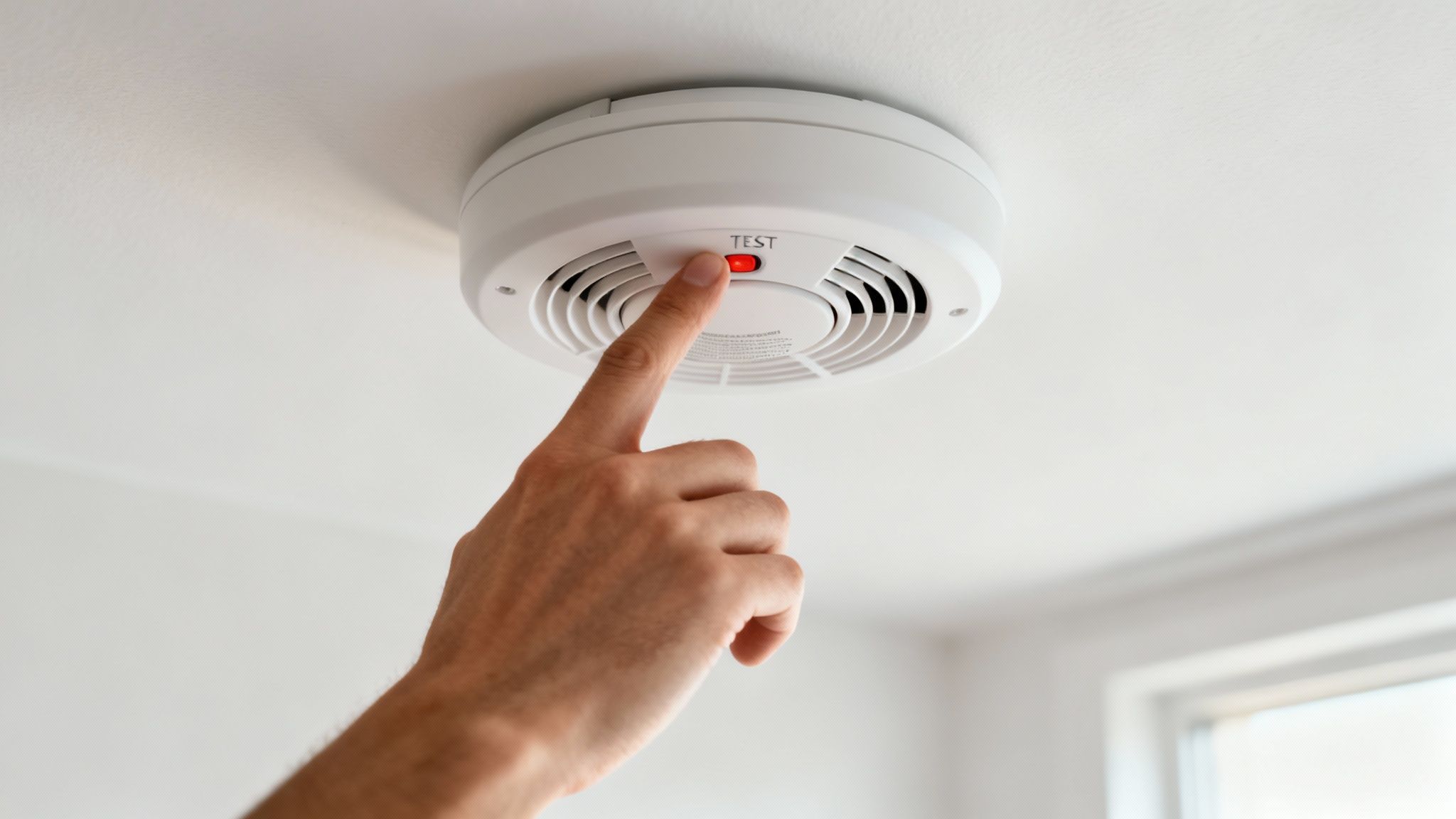
All you need to do is press and hold the ‘Test’ button on any one alarm. If they’re paired correctly, every other alarm in the network should sound off within a few seconds. This is your proof that the radio link is strong and every unit is listening.
You should run this system-wide test right after installation and get into the habit of doing it at least once a year. It’s the best way to ensure your safety network is always ready to protect your family.
For a professional assessment and installation of a compliant wireless smoke alarm system in your Brisbane home, trust the experts at DLG Electrical. Our licensed electricians ensure your system is installed correctly for maximum safety and peace of mind. Contact us today for a free quote.

Master Electrician with over 30 years of experience. Founded DLG Electrical in 2005 after international project work including electrical installations at Stamford Bridge Stadium, London(Home of Chelsea FC).

Local Electricians that can fix all Electric Hot water Systems.
Motion sensor lights are a versatile addition to any home, offering nu
