83 Jean St, Grange QLD 4051
Mon-Fri 07:30 AM - 04:00 PM - Sat - 8:00 - 12 - Sunday Closed
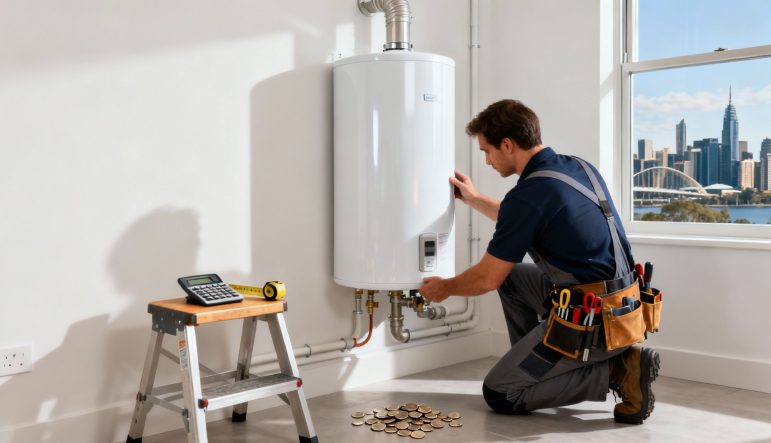
Trying to figure out the cost of a new hot water system in Brisbane can feel a bit like you’re chasing a moving target. The price you see on the box is just the beginning; the final figure on your invoice is a mix of the unit itself, the skilled labour to install it, and all the necessary bits and pieces to get it running safely and legally.
It’s less of a simple purchase and more of an investment in your home’s daily comfort and long-term energy bills. That’s why we’ve put this guide together—to cut through the confusion. We’ll break down the numbers, starting with a clear look at what you can expect to pay for different types of systems right here in Brisbane.
On average, a fully installed hot water system in Brisbane will set you back anywhere from $1,200 to over $5,000. The final cost really hinges on the type of system you choose, the brand, and how complex the installation is. A straightforward electric storage unit will be the cheapest upfront, but more advanced heat pump or solar systems, while costing more initially, can save you a bundle on energy bills down the track.
To give you a solid starting point for your budget, here’s a quick rundown of the typical all-in costs. This includes both the new unit and a standard installation by a licensed professional. Just remember, these are ballpark figures—every home is different, and your specific needs could shift the final price.
| System Type | Average Price Range (AUD) |
|---|---|
| Electric Storage System | $1,200 – $2,500 |
| Gas Storage System | $1,500 – $3,000 |
| Continuous Flow (Gas) | $1,600 – $3,500 |
| Solar Hot Water System | $4,500 – $7,000+ |
| Heat Pump System | $3,500 – $6,000 |
It’s important to see these numbers as a guide, not a fixed quote. If your job involves tricky access, new pipework, or electrical upgrades, the costs will naturally be higher. For a more detailed look at what goes into the final price, you can dive into our complete guide on the cost of replacing a hot water system.
The biggest single factor driving your hot water system installation cost is the technology you choose. It’s not just about the price tag on the unit itself; it’s about understanding how each system works and what that means for your upfront investment and your long-term energy bills.
Think of it like buying a car. A small, basic hatchback gets you on the road for less, but a high-tech hybrid costs more to drive out of the dealership while saving you a fortune on fuel down the track. Choosing a hot water system is a very similar trade-off, balancing immediate costs against future savings that will shape your household budget for years.
Conventional electric storage systems are often the go-to for budget-conscious homeowners. They work just like a giant kettle, heating water in an insulated tank and keeping it ready for you. Their simple design makes them relatively cheap to buy and pretty straightforward to install, which keeps that initial outlay nice and low.
But that upfront affordability comes with a long-term catch. These systems are the least energy-efficient of the bunch, constantly sipping electricity to keep the stored water hot. For larger families who chew through a lot of hot water, this can lead to some eye-watering power bills.
Gas hot water systems, whether they’re storage or continuous flow (tankless) models, are a definite step up in efficiency. A gas storage unit works much like its electric cousin but uses a gas burner, which is generally cheaper for heating than relying on the electricity grid.
Continuous flow gas systems take it even further by only heating water on demand. This means they aren’t wasting energy keeping a tank hot 24/7, making them incredibly efficient. The installation can be a bit more involved, especially if you need new gas lines run, which can nudge the initial hot water system installation cost upwards.
Historically, the price difference between system types has been a key factor for Australian households. Electric storage systems have often been the most affordable choice, with installation costs from $600 to $2,200. In comparison, gas systems have typically been priced between $1,200 and $3,500, reflecting their different technology and installation needs. You can explore more historical cost data on hot water systems to see how these trends have evolved.
At the premium end of the scale, you’ll find solar hot water and heat pump systems. These represent the biggest upfront investment but deliver the greatest long-term savings by a country mile. A solar system uses collectors on your roof to harness the sun’s free energy, slashing your water heating costs.
A heat pump is just as clever. Instead of creating heat, it pulls warmth from the ambient air and transfers it into the water tank. This process uses up to 75% less electricity than a standard electric storage heater.
This decision tree helps visualise how your initial budget can guide your choice between a traditional system and a high-efficiency one.
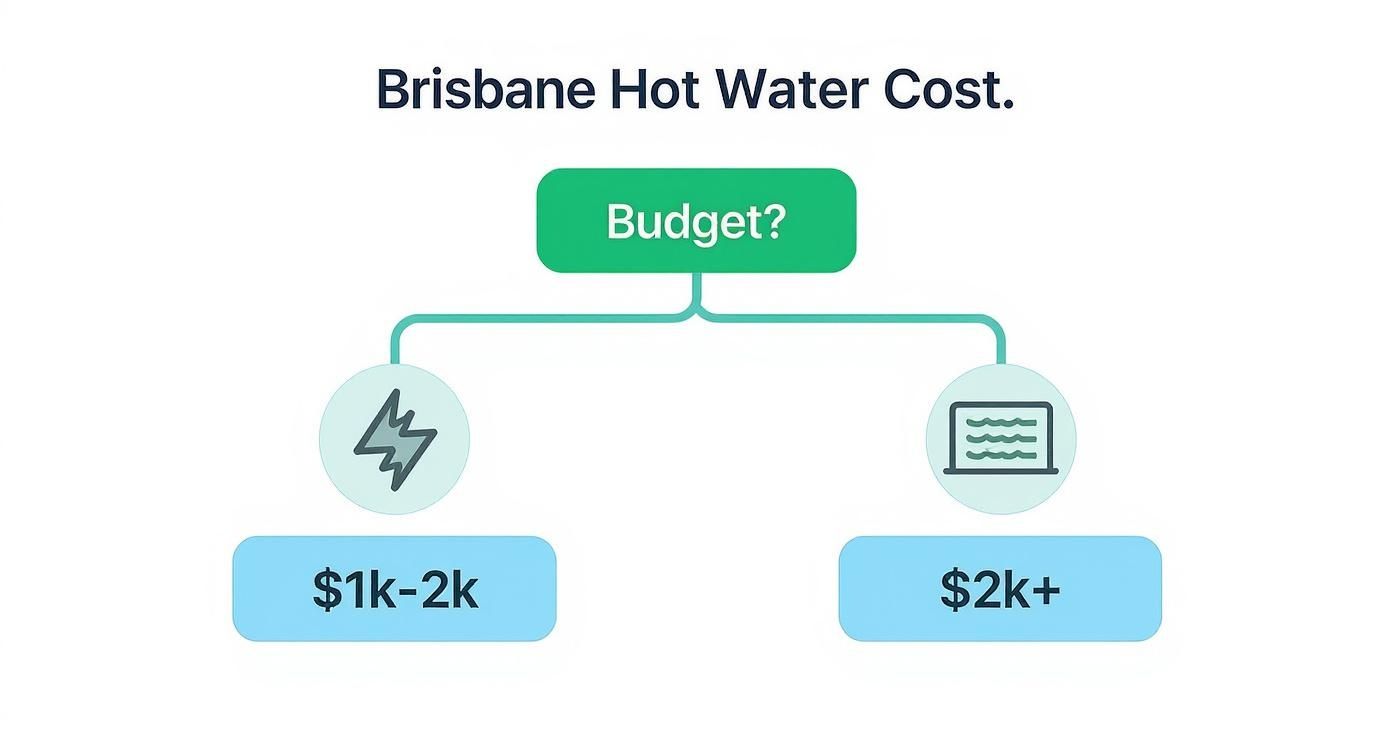
As the graphic shows, a smaller budget often points towards a standard electric heater. However, a larger initial investment unlocks advanced options like heat pumps that promise huge long-term savings. While the initial hot water system installation cost is higher, significant government rebates in Queensland can help soften the blow, making them a very savvy financial move for many Brisbane homeowners.
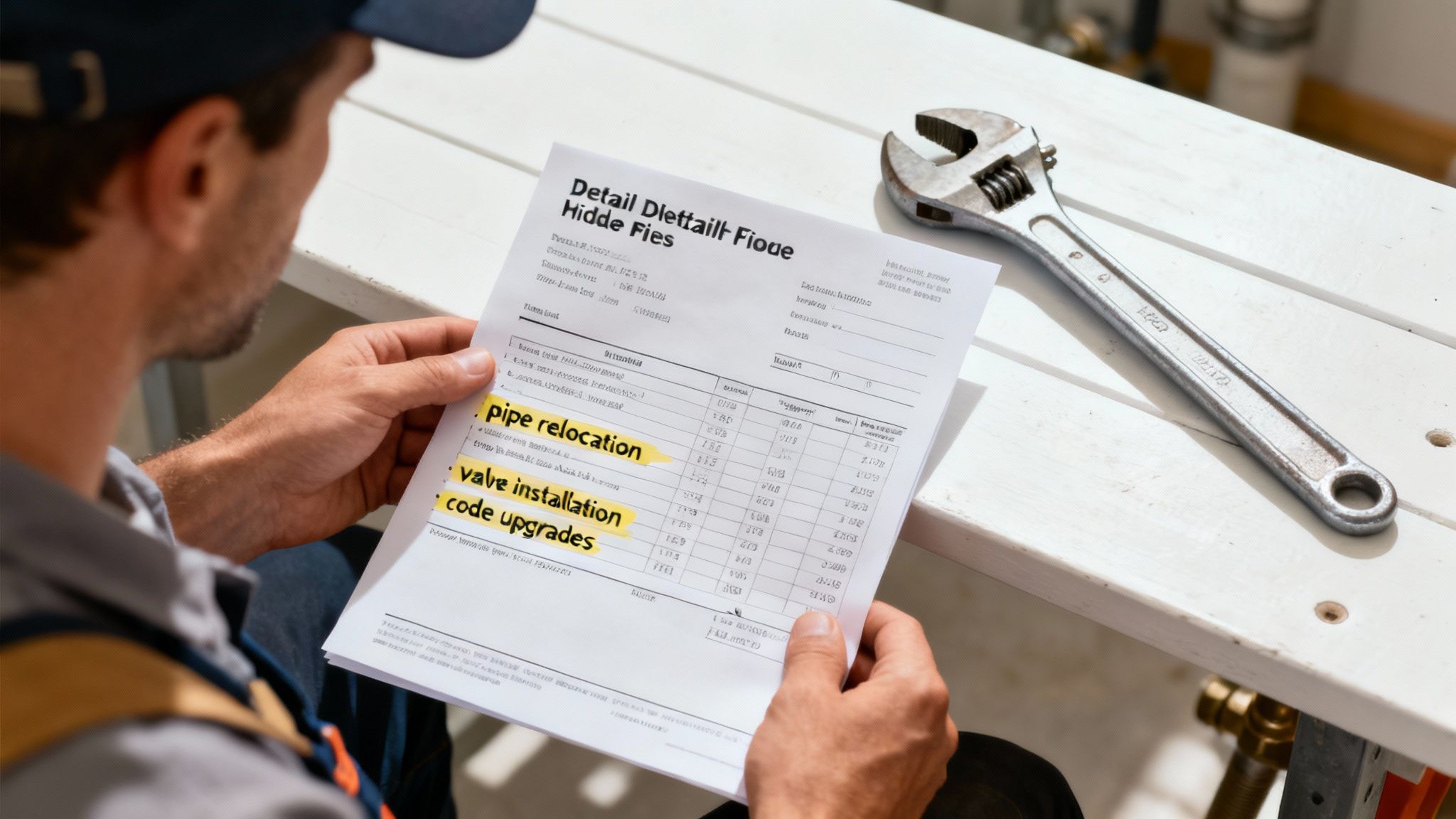
It’s a classic mistake to think the price tag on the hot water unit itself is the final figure. In reality, that sticker price is just the starting block. The total hot water system installation cost is a sum of many different parts, and a few less-obvious factors can really inflate your final invoice if you aren’t prepared.
Think of it like planning a road trip. The cost of the car is your main purchase, but you also have to factor in fuel, insurance, potential tolls, and maybe even a new set of tyres. In the same way, your installation quote covers much more than just the heater; it’s everything needed to get that system running safely and correctly in your specific home.
The first quote you get will obviously be shaped by the system’s brand and size. A large, premium-brand unit built for a five-person family is naturally going to cost more than a compact model for a small apartment. Going with a trusted brand like Rheem or Dux might mean a higher upfront cost, but that investment often pays off in better reliability, solid warranty support, and easier access to spare parts down the track.
Then there’s the plumber’s own business costs. Labour rates vary between companies depending on their experience, overheads, and just how complex your job is. This is exactly why getting multiple quotes is so important—it gives you a much clearer picture of the going market rate for the work you need done.
This is where the so-called “hidden” costs usually pop up. A simple, like-for-like swap in an easy-to-reach spot is one thing. But many installations, especially in older Brisbane homes, are anything but straightforward. These jobs demand extra labour, more materials, and additional time, all of which get added to the final bill.
Common extra costs can include:
It’s crucial to know that all new hot water installations in Queensland must include a tempering valve. This is a mandatory safety device that limits the water at your taps to a maximum of 50°C to prevent scalding, which is especially important for kids and the elderly. If your old system didn’t have one, this will be a required addition.
Understanding these potential curveballs empowers you to ask the right questions when you’re looking over a quote. A good, trustworthy installer will be upfront about these possibilities from the get-go, making sure your final hot water system installation cost is comprehensive and free of any nasty surprises.
When you get a quote for a new hot water system, it’s easy to focus on the price of the unit itself. But the total hot water system installation cost is much more than that. A big chunk of the final price covers the skilled labour and the non-negotiable compliance paperwork that keeps your installation safe, legal, and efficient.
It helps to think of this as the ‘behind-the-scenes’ work that protects your home and family. The labour charge isn’t just for connecting a few pipes. It’s for the entire professional process, from safely disconnecting and hauling away your heavy old unit to making sure the new one is installed perfectly according to strict Australian standards.
It also covers commissioning the system—that final, critical step where everything is tested to ensure it’s running correctly and safely before the job is officially signed off.
Beyond the hands-on installation, there are some critical admin and legal costs. These aren’t upsells; they’re legal requirements here in Queensland designed to protect you and keep your home insurance valid. Cutting corners here can lead to hefty fines and, worse, serious safety risks.
These essential compliance fees usually cover a few key things:
A huge piece of the compliance puzzle is the Certificate of Compliance. This document is your ultimate guarantee that all the electrical work tied to your installation meets Australia’s tough safety standards. To really understand why this piece of paper is so vital, check out our detailed guide on the Certificate of Compliance in Queensland.
And if you’re looking at renewable energy options, it’s just as important to understand the specific solar panel permit requirements that will apply to your job. These costs are non-negotiable, but they give you complete peace of mind, knowing every part of your new hot water system is installed safely and by the book.
Putting in a new hot water system doesn’t have to break the bank. With a bit of know-how and smart planning, you can seriously cut down the overall hot water system installation cost while still getting a top-quality, dependable unit for your Brisbane home. It really all comes down to making the right calls before, during, and after you buy.
One of the most powerful ways to save is by tapping into government incentives. The Queensland government often has generous rebates for homeowners who choose energy-efficient systems like heat pumps or solar hot water. These can literally slash thousands off the purchase price, making a premium, high-efficiency unit much more affordable than you might think.
Getting at least three detailed quotes from different licensed plumbers or electricians is a non-negotiable step. Not only does this give you a solid feel for the current market rates, but it also puts you in a much stronger position to negotiate. Just make sure every quote is itemised so you can compare the cost of the unit, labour, and any extra bits and pieces side-by-side.
It’s easy to get fixated on the initial price tag, but you need to think about the long-term running costs. While plenty of Aussie homes have traditional electric systems because they’re cheaper upfront, their higher running costs can sting you over the years. A gas or heat pump system that costs a bit more to install could easily save you hundreds on your power bills each year, giving you a much better return on your investment in the long run.
Smart Sizing Saves Money: Getting the right size unit is absolutely critical. A system that’s too big for your family’s needs will cost you more upfront and will constantly waste energy heating water you never use. On the flip side, a unit that’s too small will be overworked, struggling to keep up, which often leads to premature failure and those dreaded lukewarm showers.
Timing your installation can also unlock some decent savings. If your current system is getting on but hasn’t died yet, don’t wait for it to give up the ghost on a cold winter morning. Planning a replacement during the off-peak seasons might get you better deals and more scheduling flexibility from installers. Being proactive gives you the breathing room to do your research properly instead of making a rushed, panicked, and usually expensive, decision.
Of course, keeping your current unit in good shape can also push back that replacement date. You can learn more about this in our guide on essential hot water maintenance tips.
For anyone worried about the upfront expense or just wanting more financial flexibility, looking into options like bad credit personal loans can be a practical way to manage the installation cost without delay. This means you can get an efficient, money-saving system installed now and start enjoying those lower energy bills sooner rather than later.
To help you keep track of all the different ways to trim the costs, we’ve put together a quick checklist.
This table breaks down the key strategies to help you minimise what you spend on your new hot water system.
| Strategy | Potential Impact |
|---|---|
| Check for Rebates | Can significantly reduce the upfront cost of energy-efficient models like solar or heat pumps, often by thousands. |
| Get Multiple Quotes | Ensures you get a competitive price on both the unit and the labour. Aim for at least three. |
| Choose the Right Size | Avoids overspending on a unit that’s too large and wasting energy, or under-sizing and causing premature wear. |
| Consider Running Costs | A slightly more expensive but efficient unit can save you hundreds of dollars per year on your energy bills. |
| Plan Your Installation | Installing during an off-peak season can often lead to better deals and more availability from qualified installers. |
| Perform Regular Maintenance | Extends the life of your current unit, giving you more time to save and plan for its eventual replacement. |
By following these tips, you can make a savvy investment that not only provides reliable hot water for years to come but also keeps your budget in check.
When it comes to a new hot water system, it’s natural to have a few questions floating around. To help you get a clear picture and feel confident about your decision, we’ve answered some of the most common queries we get from Brisbane homeowners.
For a simple, like-for-like swap, a licensed plumber can usually have your new hot water system up and running in 2 to 4 hours. This covers draining and pulling out the old unit, getting the new one in place, connecting all the pipes and power, and firing it up to make sure everything works perfectly.
But, if the job’s a bit more involved, the timeline can stretch out. You might want to plan for a longer installation—sometimes a full day—if your project includes things like:
This is a classic dilemma, and it really comes down to a cost-benefit call. Think of it like an old car—at some point, you’re spending more on keeping it on the road than it’s worth.
A great rule of thumb we use is the 50% rule. If a repair quote comes in at more than half the cost of a new, comparable system, replacing it is almost always the smarter financial decision in the long run. The age of your unit is also a huge factor. Most storage tank systems last about 10 to 12 years. If your heater is getting on in years and is starting to cause regular trouble, sinking more money into repairs is often just putting off the inevitable.
A new system isn’t just about dodging repair bills. Today’s units are far more energy-efficient, meaning a replacement can start paying for itself straight away through lower electricity or gas bills.
While we admire a can-do attitude for many home projects, installing a hot water system is one area you absolutely must leave to the pros. It’s illegal in Queensland for anyone without the proper licenses to do any plumbing or electrical work, and for very good reason.
Trying to DIY a hot water installation is loaded with serious risks:
Hiring a licensed plumber and electrician ensures the job is done safely, meets all Australian Standards, and ticks every box for local regulations. The cash you might save on a DIY attempt just isn’t worth the massive risk to your home and family.
For a safe, compliant, and professional hot water system installation in Brisbane, trust the experts at DLG Electrical. Contact us today for a free, no-obligation quote!

Master Electrician with over 30 years of experience. Founded DLG Electrical in 2005 after international project work including electrical installations at Stamford Bridge Stadium, London(Home of Chelsea FC).

Local Electricians that can fix all Electric Hot water Systems.
Motion sensor lights are a versatile addition to any home, offering nu
