83 Jean St, Grange QLD 4051
Mon-Fri 07:30 AM - 04:00 PM - Sat - 8:00 - 12 - Sunday Closed

So, what’s the real cost of replacing a hot water system in Brisbane? It’s a question we get all the time. Generally, you’ll be looking at a range from $1,200 to over $4,500, but this figure really depends on the type of system you choose and how complex the installation is. The final price tag is always a mix of the unit itself, the labour to get it installed, and any extra parts needed to get the job done right.
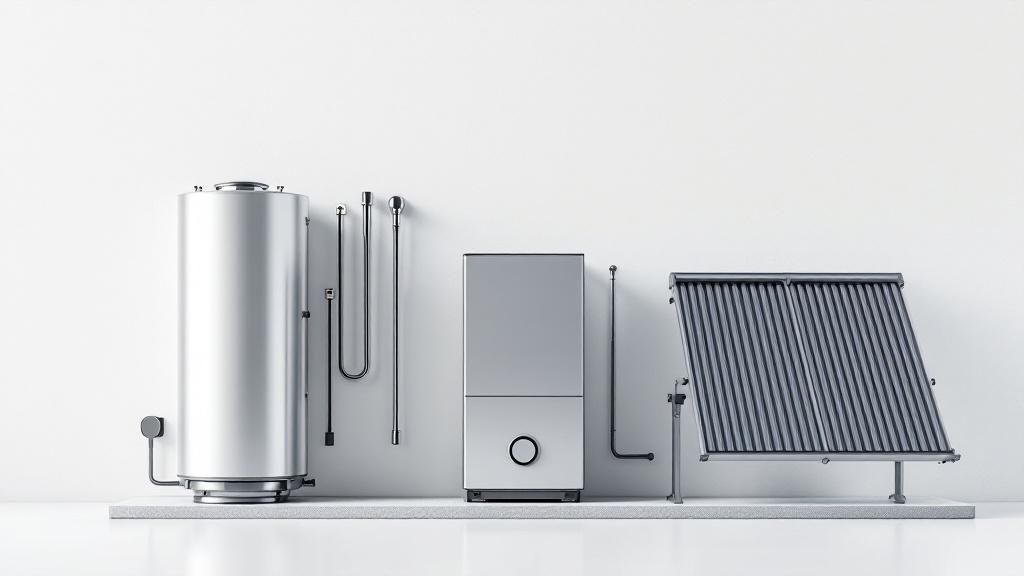
When your hot water heater finally gives up, figuring out the replacement cost is usually the first thing on your mind. It’s important to remember that the total expense isn’t just the sticker price of the new unit. It’s an all-in figure that covers professional installation and often, the removal and disposal of your old, leaky tank.
Here in Brisbane, homeowners typically spend around $2,600 for a complete replacement, which is pretty consistent with what you’d see across the country. This includes everything from the new system to the labour involved.
To help you budget, we’ve put together a quick guide on what you can expect to pay for different types of hot water systems in the Brisbane area.
This table gives you a solid starting point for budgeting, showing the typical all-inclusive costs for the most common system types.
| System Type | Average Total Cost Range (Unit + Installation) |
|---|---|
| Electric Storage | $1,200 – $2,500 |
| Gas Storage/Instant | $1,500 – $3,000 |
| Heat Pump | $3,500 – $5,000+ |
| Solar Hot Water | $4,500 – $7,000+ |
Of course, these numbers are a baseline. Your final quote will shift based on a few key factors we’ll get into shortly.
It’s also worth noting that good upkeep can really extend the life of your unit and push back that replacement day. Our guide on https://dlgelectrical.com.au/dlg-blog/hot-water-maintenance/ has some great tips on this. And if you want to get a bit more technical, this handy guide to calorifiers for hot water systems is great for understanding the components that make it all work.
Getting a quote for a new hot water system can feel a bit like trying to decipher a foreign language. You’re usually faced with a page of figures and industry terms that don’t mean much at first glance. But breaking it down is the key to understanding the true cost of replacing your hot water system.
Think of your quote as having three main ingredients: the unit itself, the labour to install it, and all the necessary extras.
By far, the biggest ticket item on the bill is the hot water unit. The price tag here can swing wildly depending on the brand, its reputation for reliability, and the tech running inside. A classic electric storage tank is your most budget-friendly starting point, whereas a continuous flow gas system or a super-efficient heat pump will naturally sit at a higher price.
This infographic gives you a quick visual breakdown of the typical starting costs for different system types.
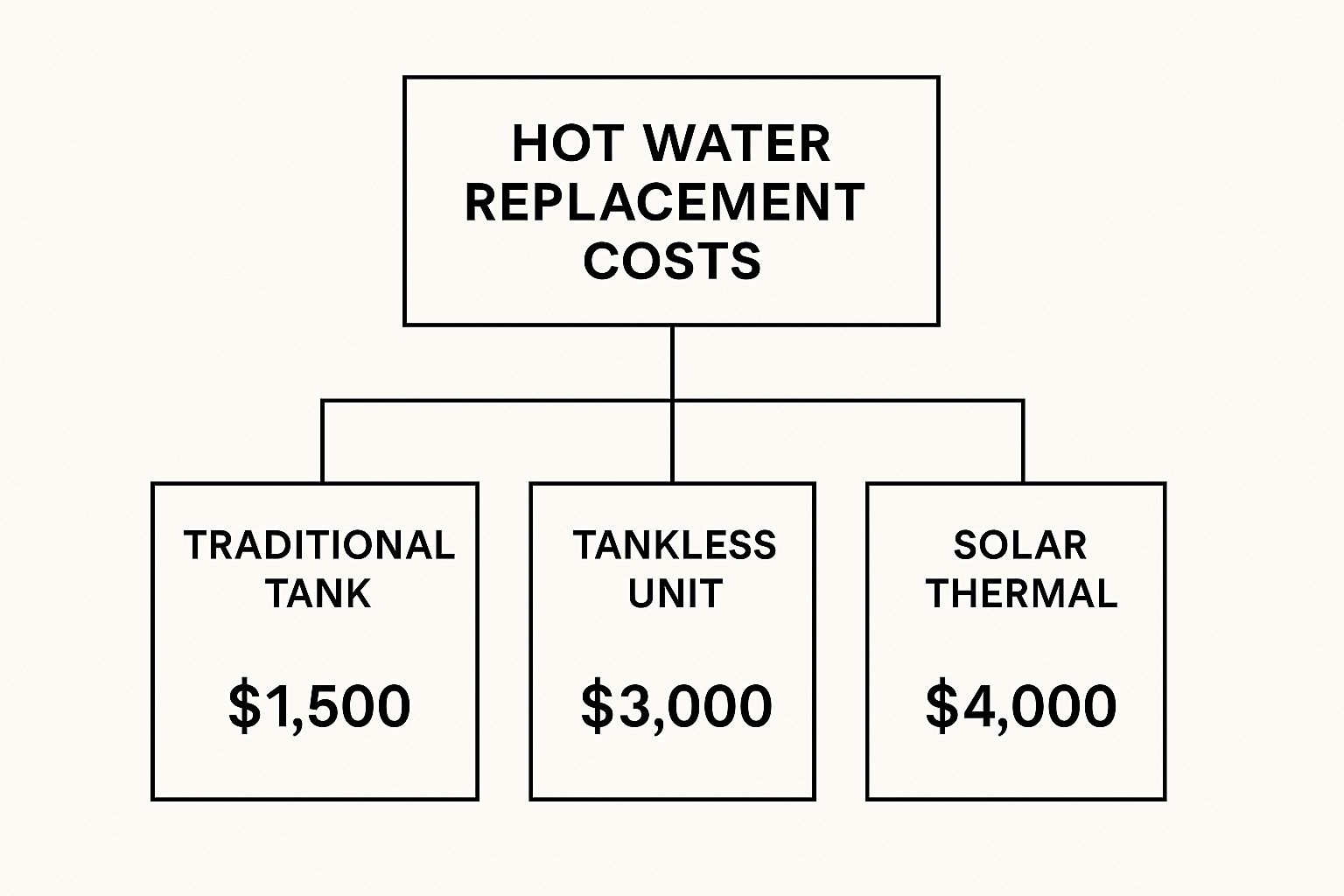
As you can see, investing in more advanced systems like tankless or solar demands a larger upfront payment compared to the old-school tank models.
Next up, you’ll see the labour cost. This covers the licensed plumber’s time and expertise to safely disconnect your old unit, haul it away, and get the new one plumbed in correctly. A standard, straightforward installation assumes the new system is a like-for-like swap going into the exact same spot.
However, the real-world cost of a hot water system replacement often goes beyond just the unit and basic install. The average all-inclusive cost can range anywhere from $800 to over $4,000, and that final number is heavily shaped by the system you choose and any challenges on-site.
For example, switching from an old gas unit to a new electric one isn’t just a simple swap. It involves extra work like capping off old gas lines and possibly upgrading your home’s wiring, which all adds to the labour bill.
Finally, a good, honest quote will clearly list all the smaller but essential extras. These are often the “hidden” costs that can catch you by surprise if they aren’t itemised properly.
A transparent quote should always include the cost for any required valves, pipes, council compliance paperwork, and the responsible disposal of your old unit. If these aren’t listed, be sure to ask about them.
These additional parts are non-negotiable for a safe and legally compliant installation. For instance, a tempering valve is required by law to prevent scalding by making sure the water coming out of your taps is below 50°C. If you have any doubts about your home’s wiring during this process, it’s always smart to have a chat with a professional Brisbane electrician.
Ever get two quotes for a hot water system replacement and wonder why they’re worlds apart? It’s a common head-scratcher. Understanding the variables that can inflate your final bill is key, as several factors can turn a straightforward job into a much bigger project.
Without a doubt, the biggest driver of cost is the type of system you choose. If you’re swapping a basic electric storage unit for a state-of-the-art solar-powered system, you’re looking at a serious upfront investment in new technology and components. Likewise, a high-efficiency heat pump will have a higher price tag than a standard gas model, though you’ll often recoup that cost in long-term energy savings.
Think of your hot water system like a car engine—you need the right size for the job. A small household of two can get by just fine with a smaller, more affordable unit. But a family of five with a couple of bathrooms will need a much larger capacity tank or a high-flow instantaneous model to keep everyone happy during the morning rush.
Choosing a larger unit directly impacts the purchase price. A 250-litre tank is always going to cost more than a 160-litre one from the same brand. It’s a simple equation: more capacity means a higher upfront cost.
Where your hot water system lives and how easy it is to get to plays a massive role in the final labour charges. A simple, like-for-like swap in an accessible garage is the dream scenario for keeping costs down.
But things can get complicated—and expensive—fast. Here are a few common curveballs:
On top of the replacement itself, you can get hit with unexpected problems. A slow leak from the old tank could have caused damage over time. This helpful guide on water damage cleanup costs can give you an idea of what those extra expenses might look like.
At the end of the day, every extra metre of pipe, every new wire, and every obstacle adds to the final invoice. It’s exactly why a detailed, on-site quote is the only way to get an accurate price.
When you’re budgeting for a new hot water system, your postcode matters more than you might think. Prices aren’t a flat rate across Australia; everything from local labour rates and competition to the climate itself can cause costs to swing from one city to another. For those of us in Brisbane, this is actually good news.
Compared to the southern capitals like Sydney and Melbourne, where the general cost of living and trade services are steeper, Brisbane often comes out ahead with more competitive pricing for plumbing work. This can mean the final bill for getting your new hot water system up and running is noticeably lower here in Queensland.
It’s clear that regional differences play a big part in what you’ll end up paying. Cities like Brisbane, Perth, and Adelaide tend to sit on the lower end of the scale, with standard installations often falling between $1,000 to $2,000. On the other hand, a city like Darwin sees a higher price bracket, from $1,500 to $3,000, which is often down to trickier supply logistics and a smaller pool of available technicians. You can get more insights into these regional hot water system costs on crewplumbing.com.au.
This cost gap isn’t just about the hourly rate for a plumber. It also reflects things like how much it costs to get materials delivered to your area and the typical installation complexity for different home styles across the country.
To put it into perspective, here’s a quick comparison of what you might expect to pay in major cities across Australia.
| City | Average Replacement Cost Range |
|---|---|
| Brisbane | $1,000 – $2,500 |
| Sydney | $1,200 – $3,000 |
| Melbourne | $1,200 – $3,000 |
| Perth | $1,000 – $2,500 |
| Adelaide | $1,000 – $2,500 |
| Darwin | $1,500 – $3,000 |
As you can see, Brisbane sits comfortably at the more affordable end of the spectrum, offering better value than you’d likely find down south.
Beyond just the initial price tag, Queensland’s sunny weather gives us a unique opportunity for serious long-term savings. The sheer amount of sunshine we get makes solar hot water systems an incredibly smart and popular choice for Brisbane homeowners.
Sure, the upfront installation cost for a solar setup is the highest of any system type. But once it’s in, the running costs are practically zero. This huge advantage means that over the unit’s lifespan, a solar system can deliver a massive return on your investment, making it a financially savvy move that’s perfectly suited to our sunny state. It’s a long-term game, but one that really pays off.
Bringing down the final cost of replacing your hot water system is easier than you think with a few smart moves. It’s not just about chasing the lowest ticket price; it’s about making clever choices that pay off both now and in the long run.
One of the simplest ways to save is by getting the right-sized unit for your family. Think of it like doing the weekly grocery shop—you wouldn’t buy enough food for a party of ten if you’re only feeding two. An oversized system costs more upfront and just wastes energy heating water you’ll never actually use.
It’s always tempting to go for the system with the lowest price tag, but believe me, that can be a costly mistake down the track. A cheap electric storage unit might feel like a win today, but its high energy use will hit you with bigger power bills for years to come.
On the flip side, a more expensive heat pump or solar hot water system can slash your running costs. Over its lifespan, the money you save on electricity often covers the initial price difference and then some, giving you a much better return on your investment. To get a handle on this, it helps to understand your household’s energy use—our guide on the average electricity bill in Brisbane is a great place to start.
Government rebates are your best friend here. They’re specifically designed to make high-efficiency systems more affordable. Before you commit to anything, always check for the latest Queensland and federal government offers on heat pumps and solar systems. They can knock thousands off your purchase price.
Finally, the single most effective thing you can do to get a fair price is to get at least three detailed quotes from different licensed plumbers. It’s a simple step, but it creates competition and gives you a crystal-clear picture of the going rate for the job.
By comparing a few quotes, you’ll immediately spot any that seem way too high or suspiciously low. It’s the best way to make sure you’re not being overcharged for labour or parts, letting you make a final decision with complete confidence.
Even with a clear breakdown of the costs, you’re probably still weighing up a few final questions. It’s completely normal. Getting straight answers to these common queries is the last piece of the puzzle before you can make a decision you feel good about.
This is the classic dilemma every homeowner faces, and the answer usually boils down to age and simple economics.
As a solid rule of thumb, if your hot water system is creeping over 10-12 years old and a repair quote is more than half the cost of a brand new unit, replacement is almost always the smarter financial move. Think of it this way: pouring money into an old, inefficient heater often just starts a frustrating cycle of one repair after another. A new unit doesn’t just reset the clock with a fresh warranty; it’s also far more energy-efficient, meaning you’ll start saving on your power bills from day one.
For a straightforward, like-for-like swap—say, taking out an old electric storage tank and putting a new one in the exact same spot—the job usually takes between 2 to 4 hours. In most cases, you’ll have hot water back on before you really miss it.
However, the timeline can stretch out if the job is more complex. Switching from an electric system to a gas one, or moving the unit to a completely different part of your property, can easily become a full-day project. That’s because the plumber needs to run new plumbing, gas lines, or even new electrical circuits, which all adds to the clock.
It’s important to know that in Queensland, replacing a hot water system isn’t a DIY job. It’s regulated work that must be done by a licensed plumber. They are legally required to submit a Form 4 to the QBCC, certifying that the installation is safe and compliant with all standards. This isn’t just red tape; it’s a critical safety step, and the cost for this compliance is a standard part of any professional quote.
When you’re ready for a reliable, upfront quote for your hot water system replacement in Brisbane, you can trust the experts at DLG Electrical. With over 20 years of experience, our licensed electricians and partner plumbers ensure your installation is done safely, efficiently, and to the highest standard. Contact us for a free quote.

Master Electrician with over 30 years of experience. Founded DLG Electrical in 2005 after international project work including electrical installations at Stamford Bridge Stadium, London(Home of Chelsea FC).

Local Electricians that can fix all Electric Hot water Systems.
Motion sensor lights are a versatile addition to any home, offering nu
