83 Jean St, Grange QLD 4051
Mon-Fri 07:30 AM - 04:00 PM - Sat - 8:00 - 12 - Sunday Closed
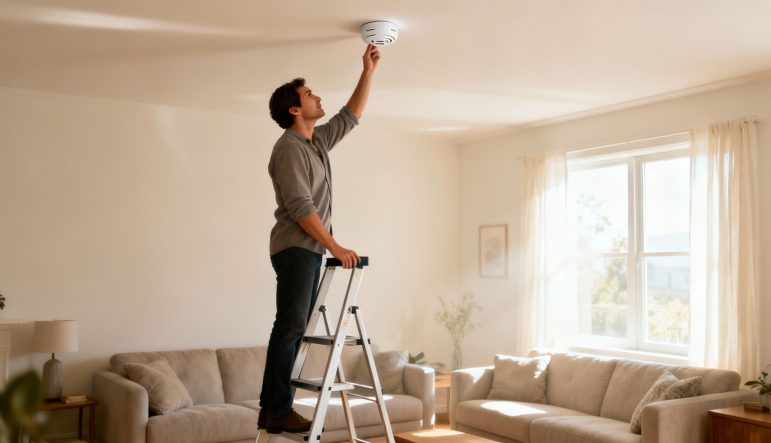
How to Check a Smoke Detector: The easiest way to check if your smoke detector is working is to simply press and hold the ‘test’ button until you hear that loud, ear-piercing alarm.
That’s it. Once you hear the siren, you know the battery, sensor, and sounder are all operational. When you let go of the button, it should stop immediately. This simple test confirms the device is ready to do its job.
That small device on your ceiling is more than just a piece of plastic; it’s a critical lifesaver. Turning this quick check into a non-negotiable monthly routine is one of the most important things you can do for your family’s safety.
Even when designing a home from the ground up with custom home design services, built-in safety features like smoke alarms are a top priority. The statistics behind this simple task are sobering and ground its importance in real-world consequences.
Data from Fire and Rescue NSW, for instance, reveals a shocking truth: 56% of fatal home fires between 2000 and 2014 happened in homes without a functional smoke alarm. This isn’t just about having an alarm installed; it’s about making sure it actually works. These figures highlight a preventable tragedy that a quick monthly check could help avoid.
Not all smoke alarms are created equal, and knowing the difference is key to getting the right protection for your home. The two main types you’ll come across are ionisation and photoelectric alarms.
There’s a good reason Queensland regulations strongly favour photoelectric models. They provide the earliest possible warning for the kinds of fires that are most likely to occur while you and your family are asleep.
So, checking your alarm is about more than just pressing a button—it’s about building a routine that guarantees your alarm is ready to function exactly as it was designed to. You can learn more about the specifics of these alarms in our guide to Queensland smoke alarm regulations.
Let’s make this simple. Once a month, grab a step ladder and take a minute to perform this crucial test. Knowing how to check a smoke detector properly goes beyond a quick button push; it’s about building genuine confidence in your home’s first line of defence against fire.
Start by pressing and holding the “Test/Hush” button on one of your alarms. You’re listening for a loud, consistent, and ear-piercing siren. A weak, chirping, or intermittent sound is a major red flag—it often points to failing batteries or, in some cases, a fault with the unit itself.
This visual guide breaks down the process. An unchecked alarm is a huge risk in a fire, but a quick monthly check ensures it’s ready to protect you and your family.
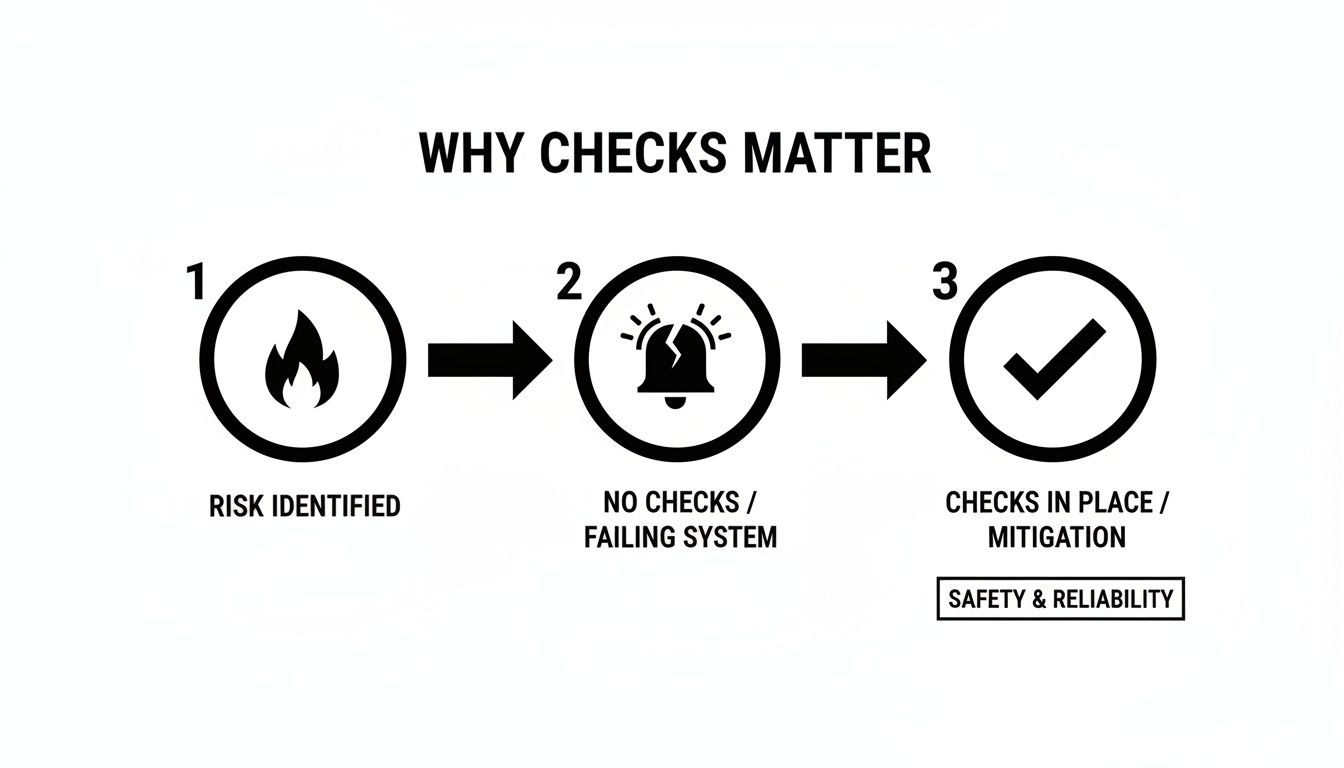
The reality is that a non-working detector offers absolutely no protection. Making this simple test a monthly habit could one day save your life.
The test isn’t over once you hear that first beep. The next, equally important step is to walk through your home while the alarm is still sounding. Can you hear it clearly from every single room, especially from behind closed bedroom doors? If the sound is muffled or faint, it might not be loud enough to wake you during an emergency.
Your experience here will differ based on what’s installed in your Brisbane home:
If you test one interconnected alarm and the others stay silent, your system is not working as it should. This is a serious safety failure that points to a wiring or communication fault between the units. It’s a clear sign you need to call a licensed Brisbane electrician straight away.
This complete check confirms that your alarms are not just powered up, but are also communicating as a unified system, ready to alert everyone in the house no matter where a fire might start.
Beyond that quick monthly button test, your smoke alarms need a bit more hands-on attention a couple of times a year to keep their sensors sharp. Over time, things like dust, cobwebs, and even tiny insects can build up inside the unit. They’re the silent enemies of your alarm, capable of blocking the internal sensor and stopping it from detecting real smoke.
This buildup is often the real reason behind those infuriating false alarms that have you reaching for a broom handle at 2 AM. But what’s far more dangerous is a clogged sensor that fails to go off during an actual fire, making it completely useless when you and your family need it most. A simple, regular clean is one of the most important maintenance jobs for any homeowner.
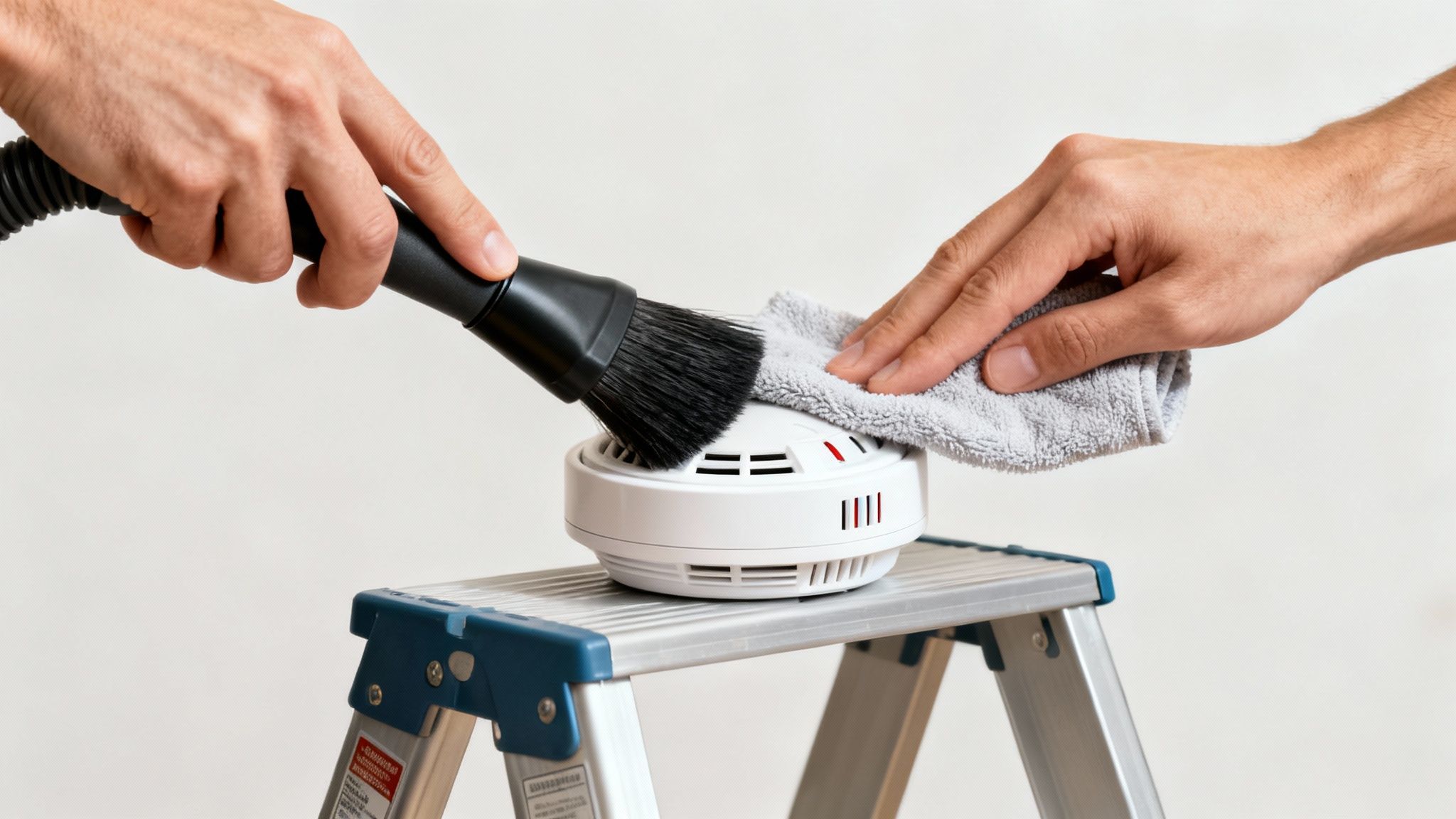
It’s a step that’s easily forgotten. Dust is the silent killer of smoke detectors, yet in Australia, only 57% of owners ever clean them, and just 15% follow the correct procedure. This widespread neglect is a major reason why so many alarms fail to operate in emergencies. For Brisbane landlords, this isn’t just good advice—it’s a legal requirement under Queensland’s strict safety laws. You can read more about the importance of a proper smoke alarm servicing schedule on the MFS website.
The good news is that cleaning your smoke alarm is a straightforward job that doesn’t need any special gear. It’s a simple but vital part of knowing how to check a smoke detector properly.
Crucial Safety Tip: Never, ever use household cleaners, chemical sprays, or solvents on your smoke detector. These harsh substances can permanently wreck the sensitive internal parts and ruin the alarm’s ability to work. A quick vacuum and a wipe are all it takes.
It’s a fact most people overlook, but just like the food in your pantry, smoke detectors have a firm use-by date. These critical safety devices aren’t designed to last forever, and relying on an old one is a gamble no one should ever take.
In Australia, the rule is simple and non-negotiable: every smoke alarm must be replaced every 10 years. No exceptions.
This strict timeline comes down to the sensitive technology inside. Over a decade, the internal components that detect smoke particles start to degrade. Dust, humidity, insects, and simple wear and tear mean an older alarm becomes far less reliable, even if it still chirps away when you press the test button. This silent failure is a huge safety risk.
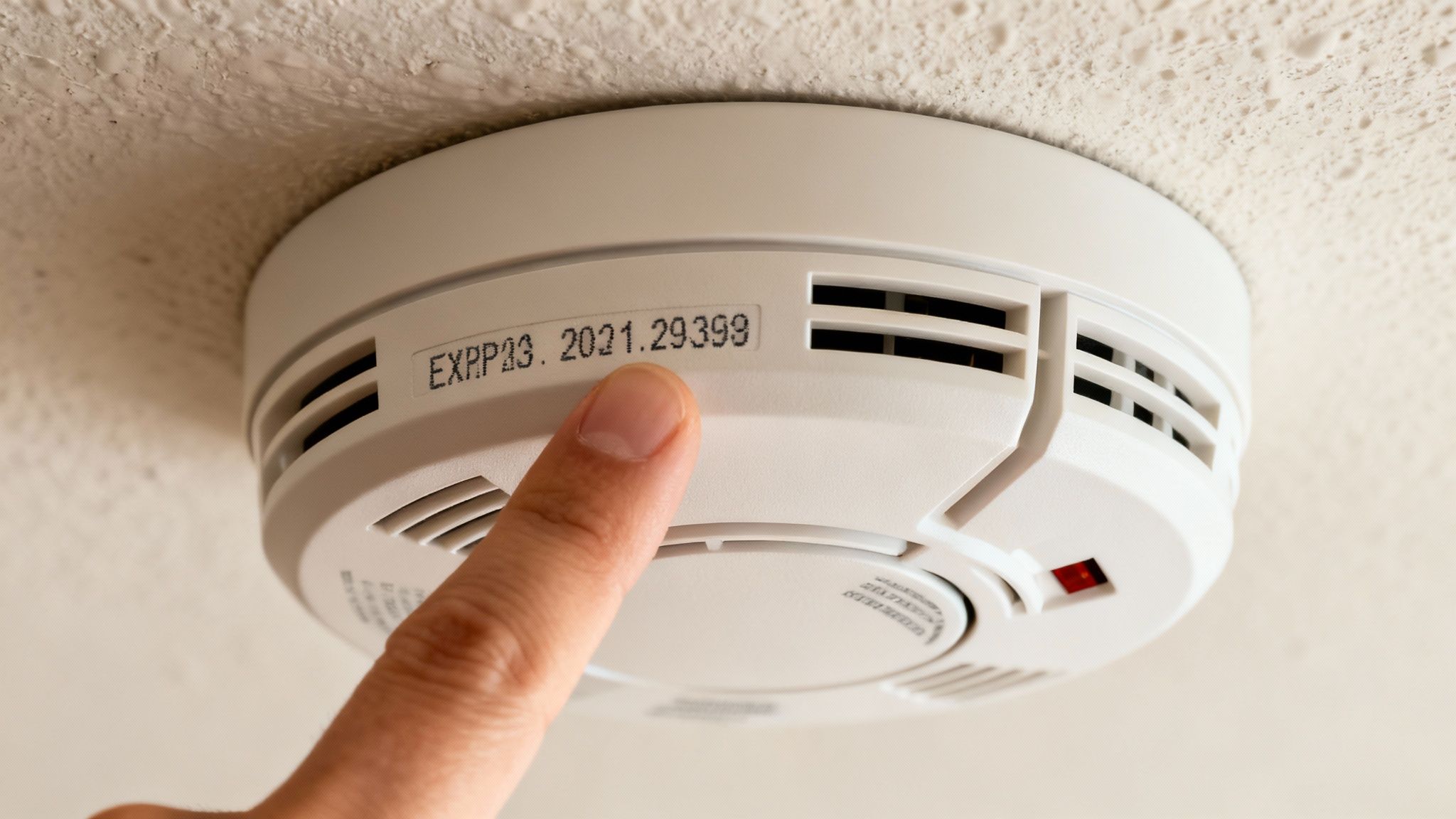
So, how do you know if your alarm is past its prime? To check properly, you’ll need to find its date of manufacture or expiry.
Grab a step ladder and gently twist the detector to unclip it from its mounting bracket on the ceiling. On the back of the unit, you’ll find a label with the manufacturing date, an expiry date, or a “Replace By” date clearly printed. If that alarm is more than 10 years old, it’s time for it to go—immediately.
Every smoke alarm has a ticking clock, with manufacture dates printed right on the unit. This isn’t optional; fire services nationwide insist on the 10-year rule, noting alarms over this age contribute to the 31% non-working rate found at fire scenes.
This is especially important for the newer types of alarms. While an old 9V battery model is simple to replace, the modern 10-year sealed lithium battery units—now required in many Brisbane properties—are designed to last exactly one decade before the entire unit is swapped out.
Keeping track of this date is a crucial part of your home safety routine. You can find more insights about the Australian smoke alarm installation and maintenance regulations on Home Safety Store.
While monthly checks and six-monthly cleans are fantastic habits to get into, some situations go beyond basic DIY maintenance. Knowing when to call in a licensed professional isn’t just about convenience; it’s about guaranteeing your family’s safety and making sure your home is legally compliant.
Certain jobs are strictly off-limits for anyone but a qualified electrician. In Queensland, attempting to handle hardwired systems yourself is not only incredibly dangerous but also illegal.
If you run into any of the following issues, it’s time to put down the duster and pick up the phone to call a licensed Brisbane electrician.
For landlords, renovators, or anyone selling a property in Brisbane, professional installation isn’t optional—it’s the law. Full compliance with Queensland’s stringent smoke alarm regulations is a legal requirement, and only a licensed expert can provide the certification to prove it. To get a better handle on the different system types, check out our guide on wireless interconnect smoke detectors.
Even with the best maintenance routine, smoke alarms can sometimes leave you scratching your head. Over our years working in Brisbane homes, we’ve heard just about every question there is. Here are a few of the most common ones we get, along with some straight-up answers from the experts.
That annoying, random “chirp” that always seems to start in the middle of the night? That’s your smoke alarm’s not-so-subtle way of telling you its battery is on the way out. For the old 9V models, it’s a quick fix. But if you have a modern 10-year sealed unit, that chirp means the whole alarm has reached its use-by date and needs to be replaced by a sparkie.
Then there are the false alarms. If your detector wails every time you cook bacon or have a steamy shower, it’s probably installed too close to the kitchen or bathroom. But if it goes off for no obvious reason, the culprit is often just a bit of dust buildup inside the sensor. A good clean, like we covered earlier, should be your first port of call.
Sometimes, an alarm will blast a full-blown siren when there’s no smoke or fire in sight. It’s frustrating and can make you lose trust in the system. This usually points to something more than just steam or dust.
Things like power surges, high humidity, or even an internal fault with the sensor can trigger it. For a more detailed guide on tracking down the cause, check out our article on what to do when your smoke alarms go off but there is no smoke.
It’s critical to get to the bottom of false alarms. When you start ignoring the siren, you’re putting your home and family at serious risk. Don’t let nuisance alarms compromise your safety—find and fix the root cause.
Here in Queensland, the law is crystal clear for both homeowners and landlords. If you own your home, it’s your job to make sure you have compliant, working smoke alarms installed.
For landlords, the rules are even stricter. You have a duty of care to your tenants, which means conducting annual checks and replacing any faulty or expired alarms immediately. It’s a non-negotiable part of property management.
Landlords and property managers looking for more details on their obligations can often find helpful information in general property management FAQs. At the end of the day, knowing how to check a smoke detector isn’t just a handy skill—it’s a vital responsibility.
At DLG Electrical, we make sure your Brisbane home is safe, secure, and fully compliant with Queensland’s smoke alarm regulations. For professional installation, testing, and advice you can trust, contact us today for a free quote.

Master Electrician with over 30 years of experience. Founded DLG Electrical in 2005 after international project work including electrical installations at Stamford Bridge Stadium, London(Home of Chelsea FC).

Local Electricians that can fix all Electric Hot water Systems.
Motion sensor lights are a versatile addition to any home, offering nu
