83 Jean St, Grange QLD 4051
Mon-Fri 07:30 AM - 04:00 PM - Sat - 8:00 - 12 - Sunday Closed
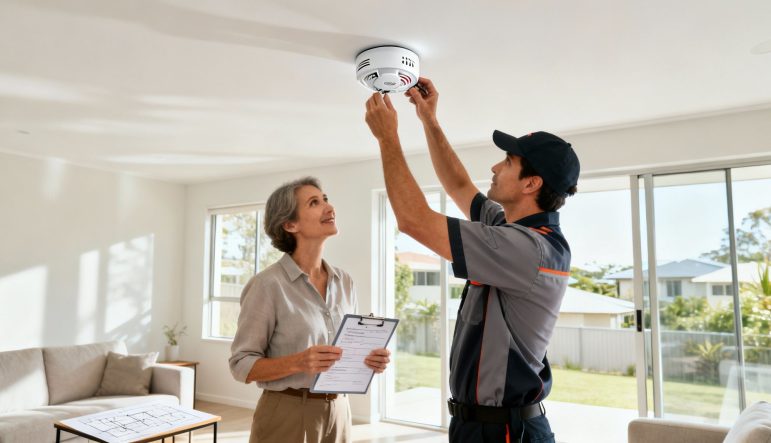
Right, let’s get straight to it. Queensland smoke alarm laws have had a major overhaul, and every single home needs to be compliant by 1 January 2027. The big change is the mandate for interconnected, photoelectric smoke alarms in very specific locations throughout your house.
What does “interconnected” actually mean? It’s simple: when one alarm detects smoke, they all go off at the same time. This creates a powerful, house-wide alert, representing a massive safety upgrade for every Queensland family.
At its heart, this legislation is a direct response to a tragic lesson learned from too many house fires: early warning is the single most critical factor in getting out alive. The old rules were a good start, but they left dangerous gaps in protection. These new laws are designed to close those gaps, creating a much smarter and more responsive safety net inside our homes.
This isn’t just a minor tweak to the rulebook; it’s a fundamental shift in how we approach fire safety at home. Think of your old, standalone smoke alarms as individual sentries, each one guarding its own small patch of territory. If a fire started in a bedroom at the far end of the house, you might not hear that single alarm until smoke had already spread dangerously far.
The new interconnected system is more like a modern security network. When one sensor detects a threat, it instantly broadcasts a warning to every other unit. This immediate, impossible-to-ignore alert can give your family precious extra seconds to escape—and those seconds can be the difference between safety and tragedy.
The legislation boils down to two main upgrades that work hand-in-hand to give you far better protection. Getting your head around these is the first step to making sure your home is both safe and compliant with the qld new smoke alarm laws.
The Switch to Photoelectric Alarms: All new alarms must now be photoelectric and meet Australian Standard AS 3786-2014. Unlike older ionisation models, photoelectric alarms are designed to ‘see’ smoke particles. They’re brilliant at detecting the thick, smouldering smoke that comes from common house fires, often sounding the alarm long before major flames even erupt.
Mandatory Interconnection: This is the real game-changer. Every alarm in your home must be linked together. This can be done by hardwiring them (a job for an electrician) or by using wireless radio frequency technology. The outcome is the same: if the alarm in the kitchen goes off, the alarms in the bedrooms and hallways will scream right along with it.
It’s easy to look at these new rules as just another bit of red tape. But the real intention behind this legislation goes much deeper. It’s about proactively investing in a system that dramatically improves your family’s chances of getting out safely if the worst should happen.
The whole point of these new laws is to make sure that no matter where a fire starts in your home, everyone inside is alerted as quickly as humanly possible. This web of interconnected alarms provides an earlier, louder, and far more effective warning.
Ultimately, these changes aren’t about compliance for its own sake. They’re about embracing proven technology to build safer homes across Queensland. When you understand the ‘why’ behind the laws, you realise this upgrade is one of the most important investments you can make for your family’s wellbeing. The next sections will dig into the specific deadlines and requirements you’ll need to meet.
Getting your head around the timeline for the new QLD smoke alarm laws is the key to avoiding a last-minute scramble. The Queensland government has been smart about it, rolling out this life-saving legislation in stages to give different property types a chance to get compliant.
This phased approach has taught us a lot, especially for homeowners now facing the final deadline. The rollout kicked off back in 2017, but it was the first major deadline for rentals and homes for sale that really showed us what happens when people leave things too late.
The 1st of January 2022 was a massive test for the industry. From that day, every rental property and any home being sold or having its lease renewed had to be fully compliant with the new interconnected photoelectric alarm standards. We’re talking about an estimated 600,000 properties across the state.
To put it mildly, the lead-up was chaotic. A huge number of landlords and sellers left their upgrades to the eleventh hour, which led to a heap of predictable problems:
This whole experience is a crystal-clear warning for anyone facing the final phase of the legislation.
The final, all-encompassing deadline is getting closer every day.
By 1 January 2027, every single owner-occupied home in Queensland must be fully compliant. This means your home needs interconnected photoelectric alarms installed in every bedroom, in hallways that connect bedrooms, and on each level of the house.
This isn’t a recommendation; it’s the law. It applies to the vast majority of Queensland homes, no matter how old your house is or how long you’ve lived there. If you own and live in it, it must be upgraded by this date.
To give you a clearer picture, here’s a quick summary of the key dates.
This table breaks down the staged rollout, showing which properties needed to be compliant and by when.
| Compliance Deadline | Affected Properties |
|---|---|
| 1 January 2017 | New builds and properties undergoing substantial renovations. |
| 1 January 2022 | All domestic dwellings being sold, leased, or having a lease renewed. |
| 1 January 2027 | All other domestic dwellings (including all owner-occupied homes). |
As you can see, the 2027 date is the final piece of the puzzle, bringing every home in the state up to the same high standard of safety.
This timeline gives you a great visual of how the laws have progressed, moving us all from outdated standards to the much safer, interconnected systems required today.
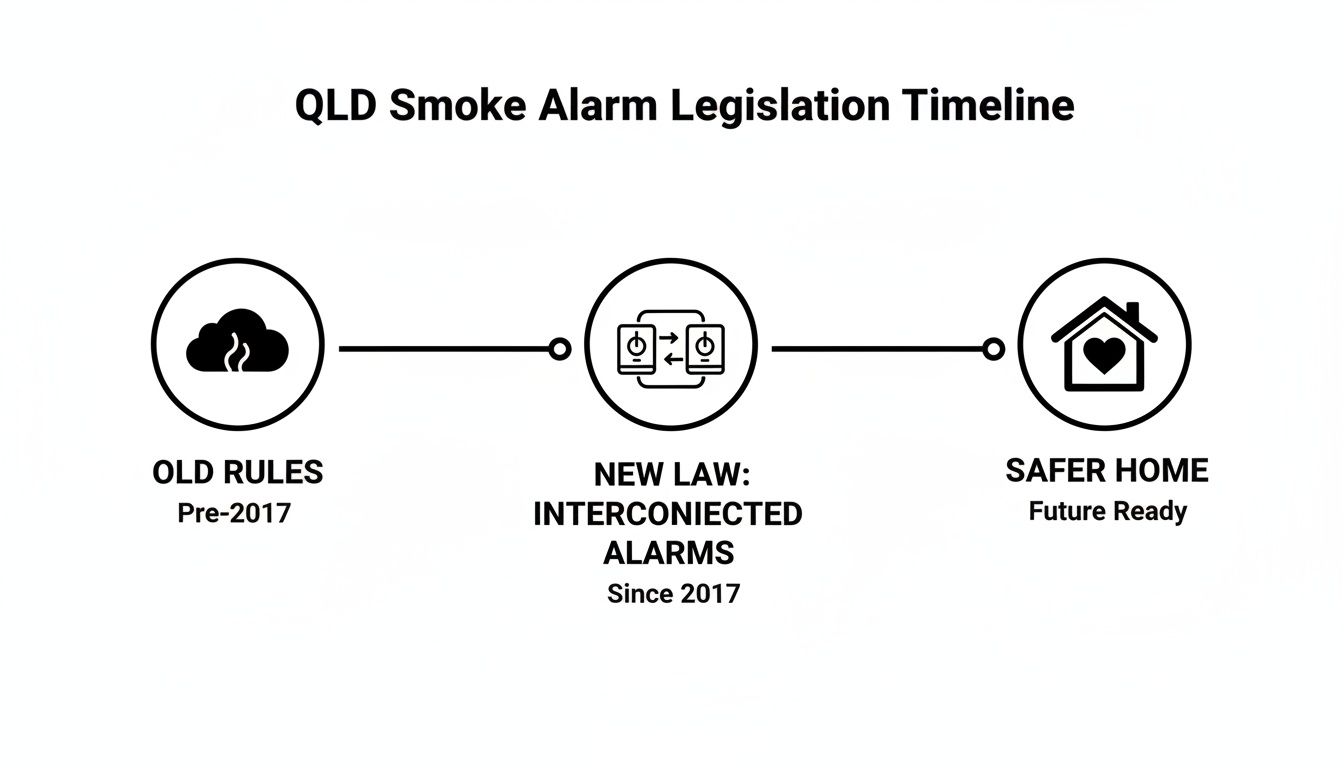
Given the issues seen in 2022, where many homes were incorrectly upgraded by providers unfamiliar with the legislation, experts strongly recommend homeowners get this sorted well before the final rush. You can find more details about the staged rollout on queenslandsmokealarms.com.au.
Putting this off until the last minute is a massive gamble—with your safety, your wallet, and your peace of mind. The chaos we saw in 2022 will likely be magnified this time around, simply because there are far more owner-occupied homes than rental properties.
Procrastinating could leave you facing some serious headaches. You’ll likely see inflated installation costs as electricians get booked out months in advance. Worse, you might struggle to find a reputable, licensed professional at all, which seriously increases the risk of a faulty or non-compliant installation.
And don’t forget your home insurance. Failing to meet the deadline could give an insurer grounds to deny a claim if a fire were to happen.
Acting now is the smartest move you can make. It lets you book a trusted electrician at a time that works for you, avoid the peak pricing, and most importantly, give your family the life-saving protection of an interconnected smoke alarm system today—not in a few years’ time.
To get your head around the QLD new smoke alarm laws, you first need to understand the technology behind them. The legislation is very specific, moving us away from older, less reliable alarms towards a much higher safety standard. It’s no longer just about having an alarm that beeps; it’s about having the right kind of alarm that responds best to the fires most likely to happen in our homes.
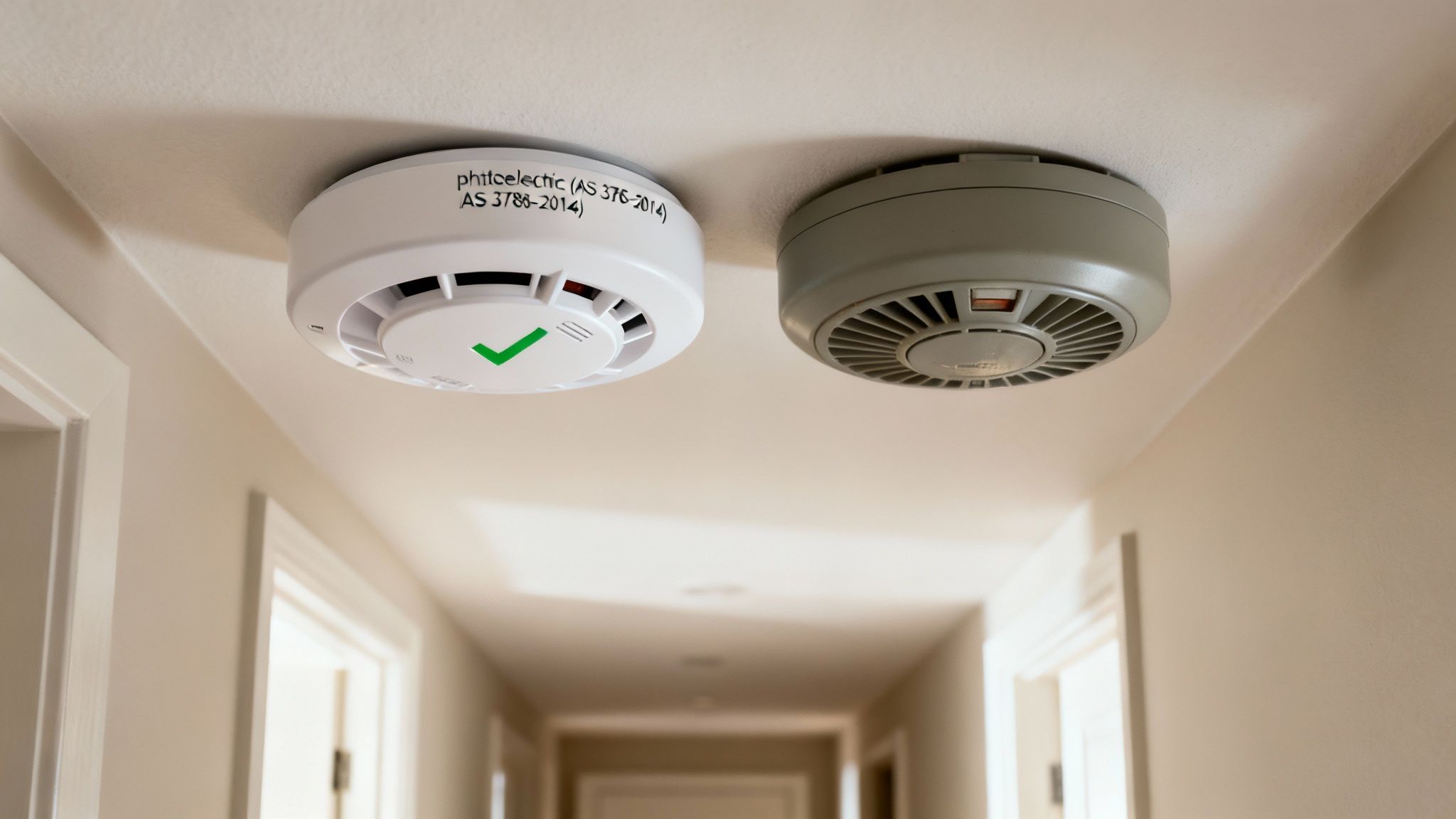
The new rules are crystal clear: every smoke alarm you install must be a photoelectric type and meet the Australian Standard AS 3786-2014. This isn’t just a recommendation—it’s the law.
Think of a photoelectric alarm like a tiny security guard using a beam of light. Inside its chamber, a straight line of light shines from one side to the other. When thick, visible smoke from a smouldering fire enters the chamber, the smoke particles scatter that beam of light, hitting a sensor and triggering the alarm.
This is a massive leap forward from the old ionisation alarms many of us still have. Ionisation alarms are good at detecting fast-flaming fires that produce tiny, almost invisible particles, but they’re notoriously slow to react to the dense smoke from smouldering furniture or bedding—which is how most house fires actually start.
The switch to photoelectric alarms is a deliberate move based on real-world safety data. They give you a much earlier warning for the most common types of house fires, buying your family precious extra time to get out safely.
This early warning is what the new legislation is all about. An alert before flames even appear is what saves lives.
The second non-negotiable requirement is interconnection. Put simply, this means all the smoke alarms in your home have to be linked together. If one alarm detects smoke, it sends a signal to every other alarm, and they all go off at the same time.
Imagine a fire starting quietly downstairs while you’re asleep. An old, standalone alarm might beep for several minutes before anyone hears it. With an interconnected system, the moment that downstairs alarm goes off, the alarm right outside your bedroom door screams too. It’s an immediate, impossible-to-ignore warning. For more context on alarm systems, it’s helpful to understand the different fire alarm system categories, though Queensland’s rules are very specific.
This creates a safety net across your entire property, making sure everyone is alerted instantly, no matter where the fire starts. You can achieve this in two ways:
Both methods are fully compliant, as long as they meet the Australian Standard.
Finally, the laws specify how your alarms must be powered to ensure they’re always ready. There are two compliant options:
What’s no longer allowed? Alarms that run on standard, removable 9-volt batteries. The government wants to eliminate the risk of an alarm failing because someone forgot to change the battery or “borrowed” it for the TV remote. A professional electrician can help you decide which power source is the best fit for your property.
Knowing you need interconnected photoelectric alarms is the first step, but where you put them is just as critical for complying with the QLD new smoke alarm laws. Strategic placement is everything—it ensures alarms detect smoke at the earliest possible moment, giving your family precious extra seconds to escape. This isn’t about guesswork; the legislation outlines precise locations for a very good reason.
Think of it like setting up a security camera system. You wouldn’t point a camera at a blank wall. You’d place it to cover key entry points and high-traffic areas. Smoke alarm placement follows the same logic, targeting the spots where smoke is most likely to travel and where an alert will make the biggest difference.
The law requires a smoke alarm to be installed on each level of your home to create a complete safety net. For a standard single-storey house, this might seem straightforward, but the rules are very specific about which rooms need coverage.
The essential locations are:
The goal is simple: create a clear path of detection from any potential fire source to the people sleeping. Placing alarms in both the bedrooms and the escape routes (hallways) ensures that an alert will sound no matter where a fire starts.
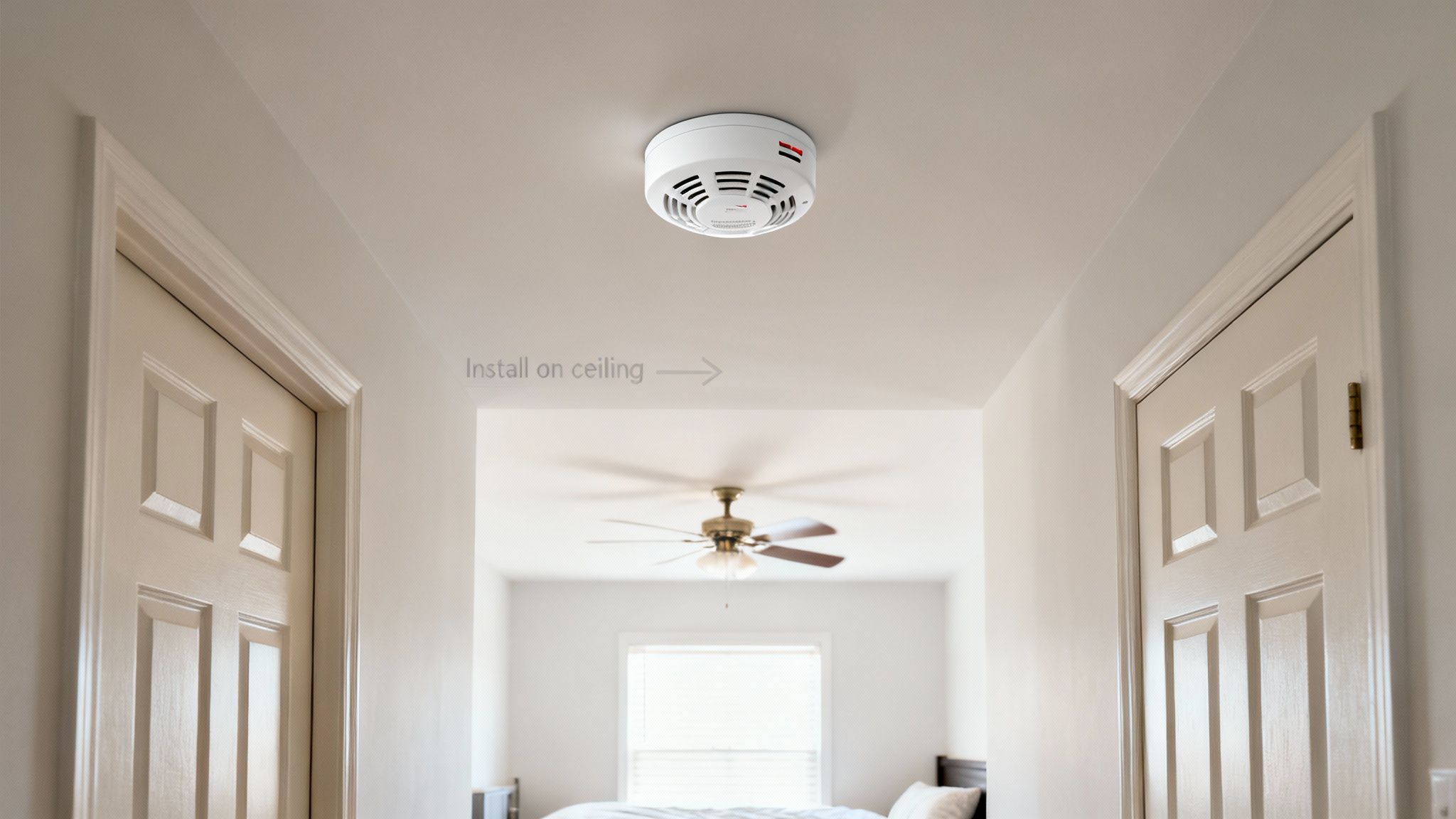
Just sticking an alarm anywhere on the ceiling isn’t good enough. Smoke behaves in specific ways, and placing an alarm incorrectly can seriously delay detection. A key concept here is ‘dead air space’—these are small pockets of air near walls and corners where circulation is poor. Smoke can bypass these spots, leaving your alarm blind.
To avoid these dead air spaces, you need to follow these placement rules:
While you might be able to install alarms powered by a 10-year lithium battery yourself, getting the placement and interconnection right can be tricky. You can explore the pros and cons of different systems in our guide on wireless interconnected smoke alarms.
Hiring a licensed electrician from DLG Electrical guarantees every alarm is positioned according to these strict legislative standards, completely eliminating any risk of non-compliance.
This expertise is especially vital for hardwired systems, which legally must be installed by a professional. An expert ensures all wiring is safe, the interconnection is flawless, and every single alarm is located for maximum effectiveness. It’s the only way to get complete peace of mind.
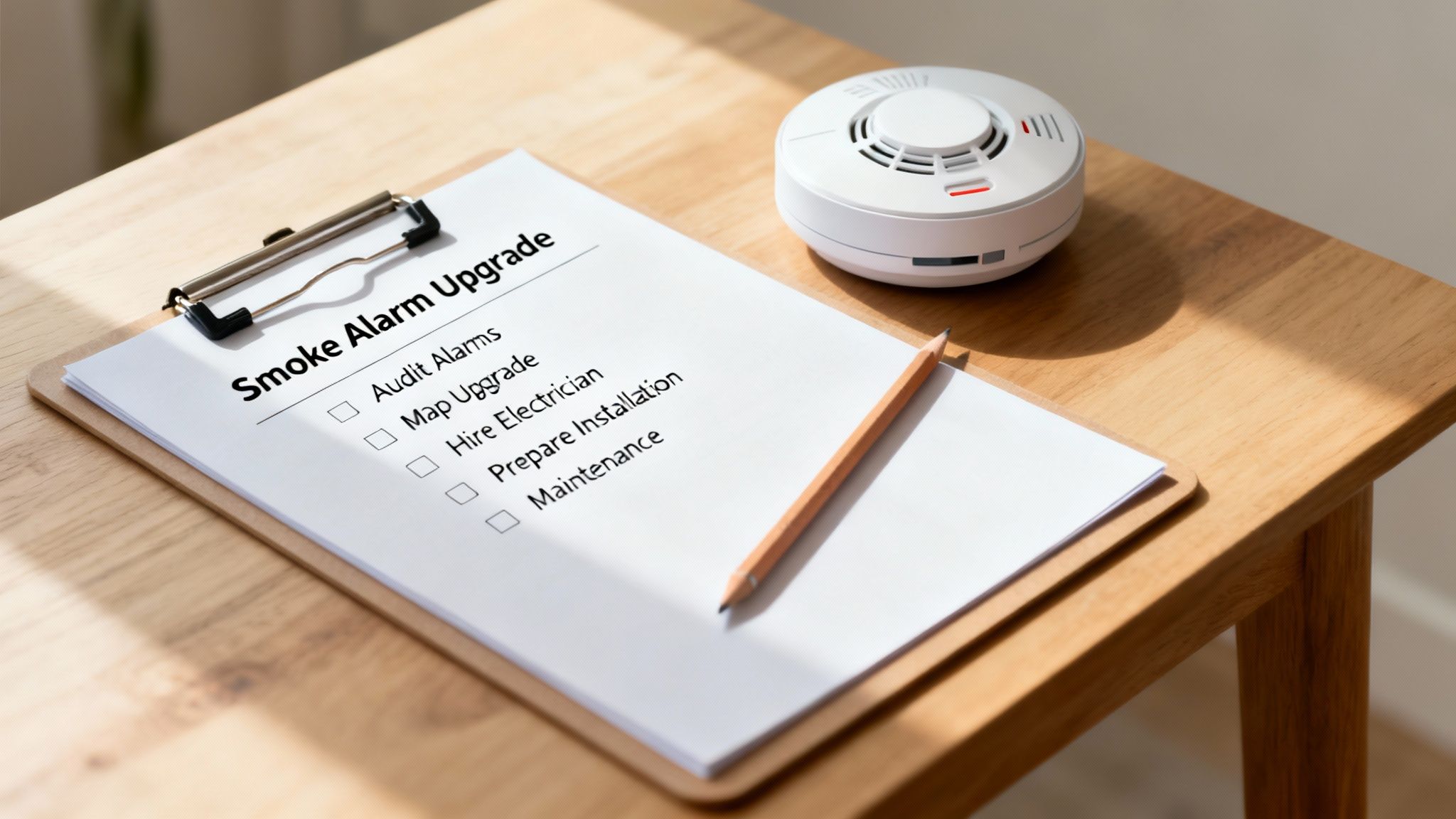
Navigating the QLD new smoke alarm laws can feel like a massive job, but you can make it simple by breaking it down into manageable steps. This checklist is designed to walk you through the process, taking the guesswork out of compliance and giving you a clear path forward.
Let’s get your home safe, sound, and fully compliant.
First things first, you need to know what you’re working with. Before you can think about upgrading, take a walk through your house and have a good look at every smoke alarm you have. This quick check-up is the foundation for your whole plan.
For each alarm, ask yourself:
This simple inventory gives you a clear snapshot of what needs replacing and where you have gaps in coverage.
With your audit done, grab a floor plan of your home – even a rough sketch on a piece of paper works perfectly. Using the new legislation as your guide, you can now map out exactly where your new, interconnected photoelectric alarms need to be installed.
Mark a spot for a new alarm:
Creating this visual map turns a confusing legal requirement into a concrete project. You’ll know precisely how many alarms you need and where they have to go, which makes getting an accurate quote from a professional sparky much easier.
By planning your layout beforehand, you streamline the entire process. You’ll know exactly what your home needs to meet the new standards, ensuring there are no surprises on installation day.
While you might be tempted to DIY some of the battery-powered alarms, getting your home fully compliant with the QLD new smoke alarm laws is a job best left to the pros. Bringing in a licensed electrician isn’t just a suggestion; it’s a critical step for ensuring your family’s safety.
A qualified professional from a team like DLG Electrical will make sure every part of the installation is done right. They’ll position the alarms correctly to avoid dead air spaces, check that the interconnection works flawlessly, and safely hook any hardwired units into your home’s electrical system. This guarantees your system isn’t just compliant on paper—it’s ready to save lives.
Once your new system is installed, a simple maintenance routine is all it takes to keep it in perfect working order. This isn’t complicated, but it’s absolutely vital for making sure your alarms are always ready to protect you.
Just follow this easy schedule:
If you’re a landlord, you have a few extra responsibilities. You must test and clean every alarm within 30 days before a new tenancy begins. You’re also required to replace any alarm that’s faulty or has passed its 10-year expiry date, ensuring your tenants are always protected by a compliant system.
Knowing the new laws is one thing, but getting your home compliant is a whole other challenge. At DLG Electrical, we take the headache and guesswork out of upgrading to the QLD new smoke alarm laws. Our entire process is built to be seamless and stress-free, giving you confidence that your home isn’t just compliant, but genuinely safer.
We saw the chaos unfold firsthand during the 2022 deadline for rental properties. Homeowners were left scrambling for any available electrician, often facing sky-high prices and questionable installations from fly-by-night operators. Our goal is to help you avoid that mess completely by getting the job done right, well ahead of the 2027 deadline.
Our approach is straightforward and completely transparent from day one. We handle every single detail so you get total peace of mind, knowing your family’s safety is in the hands of seasoned professionals. We believe a safe home starts with a job done properly the first time around.
Here’s how we look after your smoke alarm upgrade:
Thorough On-Site Assessment: It all starts with one of our licensed electricians visiting your home. We don’t just guess; we conduct a detailed assessment, mapping out your property’s specific layout to pinpoint the exact, compliant locations for every new alarm—in bedrooms, hallways, and on each level.
Clear, Upfront Quoting: After the assessment, you’ll receive a detailed, no-obligation quote. There are no hidden fees or nasty surprises here. You’ll see a clear breakdown of the costs for high-quality, Australian Standard certified alarms and our professional installation. You can also learn more about what goes into the smoke detector installation cost in our detailed guide.
Flawless, Professional Installation: Our experienced team gets the installation done efficiently and with minimal disruption to your day. We only use top-tier photoelectric alarms, making sure they are correctly positioned, securely installed, and perfectly interconnected to create a complete safety net across your entire home.
Choosing DLG Electrical means you’re not just buying smoke alarms; you’re investing in the expertise and assurance that comes from over 19 years of dedicated service to the Brisbane community. We guarantee every installation meets all legislative requirements.
With our deep local experience, we know the ins and outs of Queensland homes. We treat every property like it’s our own, ensuring the work is clean, reliable, and built to last.
Don’t leave your family’s safety to chance or wait until the last-minute rush creates another wave of panic and inflated prices. Take control of your compliance journey today by partnering with a trusted local expert. Contact DLG Electrical for a free quote and let us make your smoke alarm upgrade simple, safe, and secure.
When new rules like these come into play, it’s natural to have a few questions. Navigating the specifics of the QLD smoke alarm legislation can feel a bit overwhelming, so we’ve put together answers to the common queries we hear from homeowners every day.
This is easily the most frequent question we get, and it’s a fair one. You test your old alarm, it beeps loudly, and you figure it’s doing its job. But under the new laws, a simple beep isn’t enough to cut it anymore.
The legislation isn’t just about having a smoke alarm; it’s about having the right type of alarm, in the right places, and all working together as a single system. Your old alarms, even if they seem fine, must be replaced if they don’t meet these three non-negotiable standards:
So, even if your current alarm passes a battery test, it has to be upgraded if it fails on any of these points.
Think of it less like changing a lightbulb and more like upgrading your home’s entire security network. It’s a complete system overhaul designed to give you the earliest possible warning.
Technically, yes, you are legally allowed to install the sealed 10-year lithium battery alarms yourself. However, this is one of those DIY jobs where calling in a professional is a very smart move. The regulations around placement are incredibly specific, designed to avoid “dead air” spaces where smoke can pool without reaching the alarm.
Get the placement wrong, and not only could your system be non-compliant, but it might not even work effectively when you need it most. Plus, ensuring all the wireless units are properly ‘talking’ to each other is crucial for the interconnection to work flawlessly. A licensed electrician will make sure every alarm is perfectly positioned, interconnected, and compliant. And remember, if you opt for hardwired alarms, they must be installed by an electrician—that’s the law.
Failing to meet the deadline comes with risks that go well beyond a simple fine. While local councils can indeed issue fines for non-compliance, the other potential consequences are far more serious.
If a fire breaks out in a non-compliant property, your insurance company could have grounds to reduce or even completely deny your claim. That could leave you facing a devastating financial loss on top of an already tragic event. But the most important risk, of course, is to the safety of your family. These laws were introduced for a reason: interconnected photoelectric alarms give you a proven, faster warning, buying you precious extra seconds to get out safely.
The final cost for a complete smoke alarm upgrade really depends on your property. Key factors include the size of your home, the number of storeys, and how many bedrooms need an alarm. Your choice between hardwired alarms (which are more labour-intensive) and the 10-year battery-powered wireless alarms will also affect the price.
Because every home’s layout is different, the only way to get a truly accurate price is to have a licensed electrician come and take a look. They can map out exactly how many alarms you need, recommend the best type for your home, and give you a firm quote.
Don’t leave your family’s safety to chance or wait until the last minute to get compliant. For a professional inspection and a clear, no-obligation quote, you can trust the local team at DLG Electrical. Contact us today and we’ll make your smoke alarm upgrade simple and stress-free.

Master Electrician with over 30 years of experience. Founded DLG Electrical in 2005 after international project work including electrical installations at Stamford Bridge Stadium, London(Home of Chelsea FC).

Local Electricians that can fix all Electric Hot water Systems.
Motion sensor lights are a versatile addition to any home, offering nu
