83 Jean St, Grange QLD 4051
Mon-Fri 07:30 AM - 04:00 PM - Sat - 8:00 - 12 - Sunday Closed
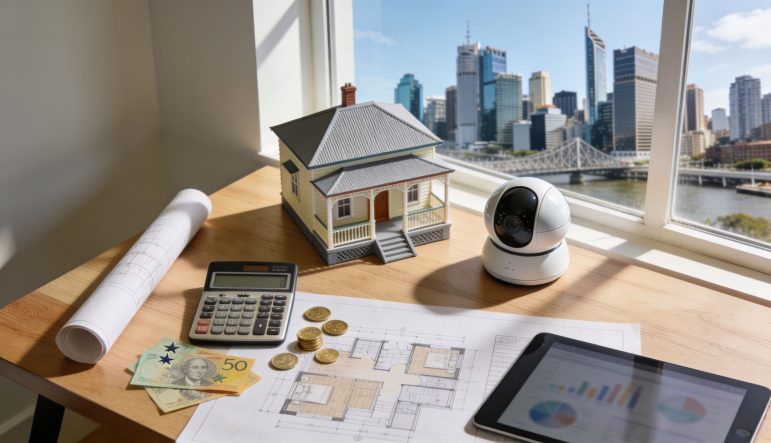
Buying a home in Brisbane often comes with a familiar moment. You've moved in, checked the locks, walked the perimeter at night, and started wondering what proper security will cost. Then you search online and get pages of US pricing that don't match local labour, local construction, or Queensland compliance rules.
That's where most homeowners get stuck. The internet will happily show you cheap kit prices, but it won't tell you what works in a Grange Queenslander, what struggles in a fibro home in Windsor, or what extra cost appears once smoke alarm compliance enters the picture.
We've worked on Brisbane homes for over 19 years, and the biggest mistake we see is budgeting for devices instead of budgeting for the whole system. A reliable quote needs to account for equipment, installation, your property layout, and any compliance work that should be handled at the same time. If you're trying to understand home security system cost for 2026, that local context matters more than any generic overseas guide.
You buy a place in Grange, walk the yard after dark, and start pricing security online. The first number you find is usually the kit price. That number rarely matches what it takes to secure a Brisbane home properly.
A better starting question is, “What will this house need, and what will it cost to install it properly in Brisbane?” A low-set post-war home on a simple block is usually cheaper to protect than a raised Queenslander with under-house access, verandahs, timber walls, and several entry points. A renovated family home in Windsor can also cost more than expected if the layout needs extra cameras, longer cable runs, or a mix of alarm and CCTV coverage.
In our experience, a straightforward Brisbane security job can start in the low thousands for basic alarm or camera coverage. A more complete system for a larger home, or one with difficult access, often climbs well beyond that. The final figure usually comes down to the house itself, not the brochure price of the devices.
Online pricing often reflects overseas labour rates, overseas product bundles, and house designs that do not line up with Brisbane homes. It also skips over local issues such as tin roofs, tight roof spaces, older switchboards, patchy Wi-Fi at the far end of the block, and the extra time needed to run cable neatly through an older Queenslander.
That is why two homes with a similar floor area can receive very different quotes. In Grange, for example, the house style alone can change the install time. A raised character home may allow easier under-floor access for some runs, then slow the job down in ceiling spaces or wall cavities. A brick veneer home in an outer northern suburb might be simpler in one area and harder in another. Brisbane's heat and storms matter too. Outdoor cameras, mounts, and cable protection need to suit sun, rain, and corrosion, not just look good on day one.
Set the budget around scope, not just hardware.
As a practical guide, homeowners in suburbs like Grange and Windsor should expect the quote to reflect access difficulty, house age, and whether the job includes smoke alarm compliance at the same visit. Those are Brisbane costs. They do not show up in generic kit pricing, but they affect the invoice every time.
A security quote in Brisbane usually covers three separate cost buckets. The hardware. The labour to install and configure it properly. The ongoing costs that continue after handover.
Equipment is the visible part of the spend. Cameras, alarm panels, PIRs, reed switches, keypads, sirens, locks, floodlights, batteries, networking gear, and recording devices all sit here.
It is also the easiest part to misread. A low online kit price rarely includes the parts that make the system reliable in a Brisbane home, such as suitable outdoor housings, proper power supply, storage, surge protection, and mounting hardware that will hold up in heat, rain, and storm season. We see this a lot in suburbs with older housing stock like Grange, where the product list on paper looks fine but the actual-world setup needs more than the base kit. Homeowners comparing quotes can get a clearer sense of scope by looking at a detailed security camera installation cost breakdown for Brisbane homes.
Installation is where the quote starts reflecting the property, not just the products. This covers cable runs, fixing devices in the right locations, programming, app setup, testing, labeling, and showing the homeowner how to use the system properly.
In Brisbane, labour can shift quickly based on access and house type. A post-war or Queenslander-style home can be straightforward under the floor, then awkward in ceiling spaces or wall cavities. Tiled roofs slow some jobs down. Brick, rendered surfaces, detached garages, gate intercoms, and long driveway runs all add time. Outdoor devices also need careful placement so they still perform after months of western sun, summer humidity, and storm exposure.
There is also a compliance side that generic overseas articles miss. If new circuits, power supplies, hardwired devices, or related electrical work are part of the install, the job needs to be done to local requirements. In Queensland, that means using a licensed contractor and handling the electrical component properly under QBCC and electrical safety obligations.
The third cost bucket is what you keep paying for. That might be app access, cloud recording, back-to-base monitoring, SIM backup, battery replacement, servicing, or software subscriptions tied to the brand you choose.
Two systems with similar install prices can end up costing very different amounts over the next few years. One may rely on local recording with no monthly fee. Another may be cheap to buy but locked into recurring charges for storage and remote features. For broad product research, some homeowners also read overseas comparisons such as this UK home CCTV buyer's guide, but Brisbane quotes still need to be checked against local labour, weather exposure, and Australian compliance work.
The practical way to read any quote is to split it into these three parts and check what is included. That is how you avoid underpricing the job at the start, then getting surprised later by add-ons, subscription fees, or missing compliance work such as smoke alarm upgrades.
If you want one Brisbane number to anchor your expectations, start here. A professionally installed wired system with 4 to 6 PoE CCTV cameras in Brisbane typically ranges from AU$1,600 to AU$2,900, and the central control panel alone can cost AU$700 to AU$1,900 installed, according to Hipages' Brisbane security cost guide.
That range tells you two things. First, proper wired systems aren't bargain-bin purchases. Second, there's a big difference between “buying cameras” and paying for a complete, installed setup that works reliably.
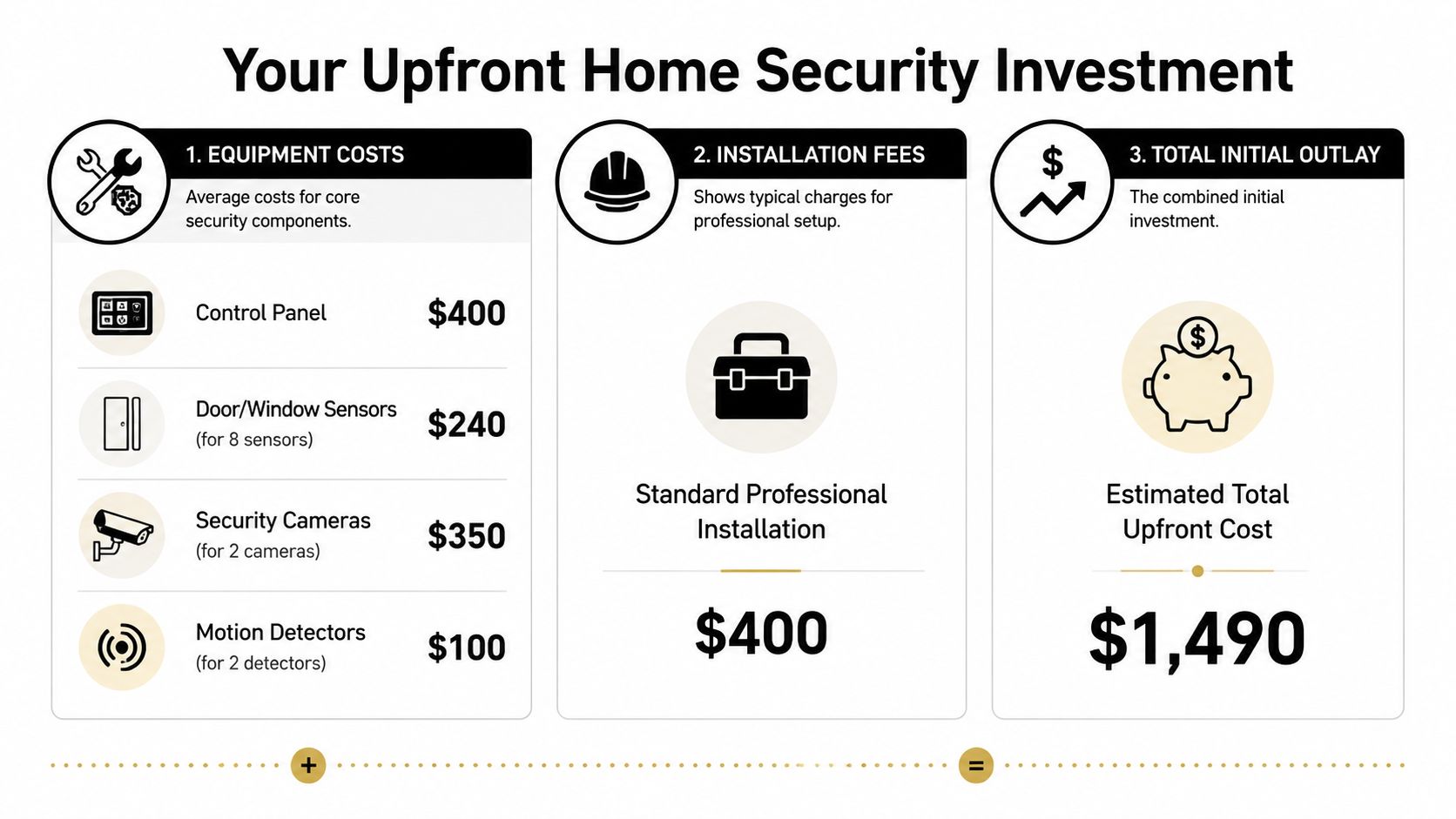
| Component | Typical Cost Range (AU$) | Notes |
|---|---|---|
| Wired system with 4 to 6 PoE CCTV cameras | 1,600 to 2,900 | Professional installation in Brisbane |
| Central control panel installed | 700 to 1,900 | Usually the core of the system |
| Motion detectors | 30 to 50 each | Typically used for internal zones |
| Door and window sensors | 15 to 60 each | Cost varies by opening and setup |
| Floodlights | 15 to 100 | Often paired with camera coverage |
A lot depends on whether the home suits straightforward cable runs. Newer homes with decent roof access are usually more predictable. Older homes often aren't.
In Brisbane, hardwired systems still make sense where reliability matters most. PoE cameras give stable power and data through the same cable, and that matters in suburbs with dense Wi-Fi traffic where wireless congestion can become a real issue. If the goal is dependable footage at the front boundary, driveway, and rear access points, wired usually wins on consistency.
There's also the question of the panel. Homeowners often underestimate this item because they're looking at cameras first. In practice, the panel is the control point for the whole system, and it's one of the bigger installed costs in many quotes.
For many Brisbane homes, a sensible baseline includes:
That isn't the cheapest setup. It is the setup that usually gives homeowners useful coverage instead of blind spots.
Cheap hardware can still lead to an expensive outcome if the recording quality, cable path, or coverage plan is wrong. The quote has to match the house, not just the shopping list.
If you're weighing camera options in more detail, our guide on security camera installation costs in Brisbane breaks down what affects pricing on real properties. For readers also comparing broader camera features and buying criteria, this UK home CCTV buyer's guide is useful for thinking through storage, coverage, and camera type, even though local installation conditions here are different.
Wireless can look cheaper at first because there's less cabling work. Sometimes it is. But not always.
A better way to compare the two is this:
| Option | Usually stronger at | Watch for |
|---|---|---|
| Wired PoE CCTV | Reliability, stable power, consistent footage | More labour to install |
| Wireless alarm gear | Faster fit-off, less invasive install | Higher hardware spend, signal planning required |
If the house is already finished and cable access is difficult, wireless can be a sensible path. If you're renovating, extending, or doing other electrical work at the same time, hardwiring becomes far more attractive because the labour can be planned properly from the start.
Two homes can want the same result and still end up with very different pricing. That's normal. Security quotes are shaped by the building before they're shaped by the brand.
A single-level brick veneer home is usually simpler to secure than a raised Queenslander with mixed access points, verandahs, and external stairs. In older Brisbane suburbs, layout drives complexity more than floor area alone.
Grange and Windsor are good examples. You can have one home with easy roof access and straight cable routes, then the next one has awkward wall cavities, decorative ceilings, or additions built at different times. The security plan has to follow the house, not the suburb average.
For Brisbane households, wireless alarm systems can reduce installation complexity, but the equipment is often a higher investment. Systems also need reliable mesh networking to handle signal issues in fibro homes common in Grange and Windsor, and IP67-rated enclosures matter outdoors because humidity can shorten hardware life, as discussed in Maynard Electrical's Brisbane alarm system guide.
That's the trade-off in one line. Wired tends to spend more on labour. Wireless tends to spend more on hardware and planning.
A quote rises when the coverage brief expands. Common add-ons include:
None of these are unnecessary. They just need to be prioritised in the right order.
A short explainer on system design helps when you're comparing options:
Brisbane's climate is hard on anything mounted outside. Heat, moisture, and storm exposure affect mounting locations, enclosure choice, and cable protection. A cheap outdoor camera that looks fine on paper may not be the right choice once it's facing a wet western wall or an exposed eave.
Outdoor security gear in Brisbane should be chosen for where it's mounted, not just for the picture in the catalogue.
When you look at a quote, ask whether it reflects the house materials, the external environment, and the actual access points used every day. That's where sensible pricing comes from.
DIY kits appeal for one obvious reason. The upfront spend looks lower. For some households, especially renters or owners wanting a temporary setup, that can be enough.
But a DIY system and a professionally installed system solve different problems. One gets equipment on the wall quickly. The other is built around reliability, clean coverage, and fewer weak points over time.
DIY makes the most sense when the property needs simple internal alerts or a light-touch camera setup with easy access to power and Wi-Fi. If you're comfortable with app setup and you're not asking the system to do much, it can be a workable starting point.
That said, Brisbane homes often expose the limits of DIY faster than owners expect. Raised houses, thick walls, awkward eaves, detached garages, and weather exposure all test entry-level gear.
Professional installation matters when the house has more than a basic layout, when camera placement needs to be exact, or when you want a system that performs consistently during storms, outages, and seasonal humidity.
The hidden costs of DIY usually show up in four places:
For many homeowners, the turning point comes after trying to patch together separate devices that don't really behave like a system.
Brisbane homes aren't generic boxes. Queenslanders can be awkward to wire neatly. Fibro homes can challenge wireless coverage. Outdoor devices need to survive heat and moisture. If the installation doesn't account for those realities, the lower upfront cost can disappear quickly in callbacks, replacements, or frustration.
There's also the insurance and workmanship side. A proper installation gives you one accountable party, one finished scope, and a system that's been configured for the building rather than guessed from a product manual. If you're weighing that decision, our article on professional home security system installation in Brisbane goes deeper into what a proper install should include.
A security system only feels cheap until the first time it misses something important or annoys you enough that you stop using it.
This is the part many homeowners don't budget for until late in the job. In Queensland, smoke alarm compliance isn't separate from broader electrical planning. If you're upgrading security, renovating, preparing a rental, or trying to future-proof the house, it makes sense to look at both together.
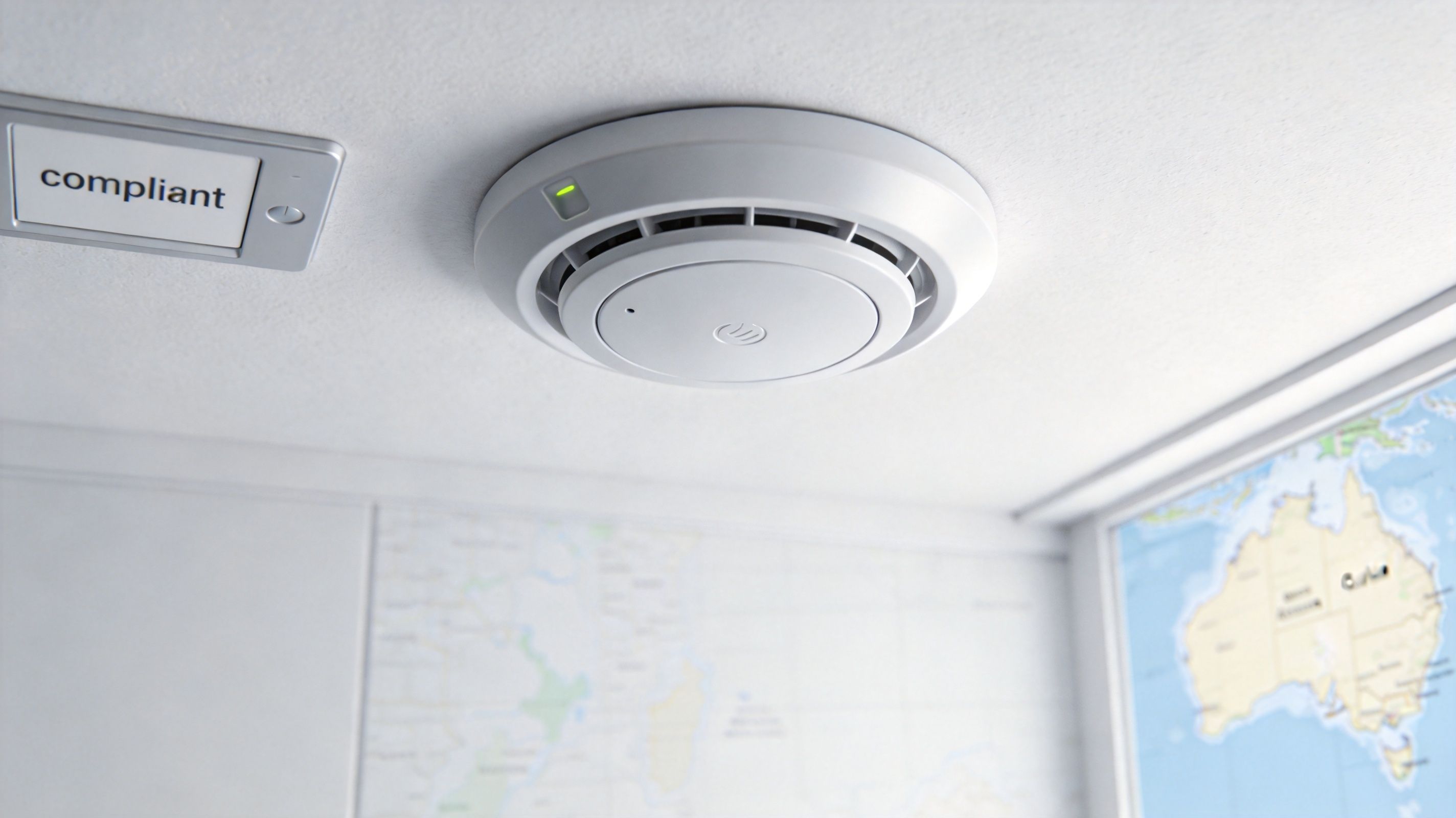
In Queensland, bundling a monitored security system with compliant photoelectric smoke alarms can add $500 to $1,200 upfront because licensed electrical work is required. At the same time, fines for non-compliance can reach $1,469, and integrated installation can save 15 to 20 per cent compared with doing the work separately, according to NerdWallet's write-up referencing Queensland compliance costs.
That's why smoke alarms shouldn't be treated as an afterthought. If the electrician is already on site planning cable runs, access, and system locations, combining the work is usually the smarter path.
Bundling security and smoke alarm work does three useful things:
For landlords and property managers, that matters even more. Compliance deadlines and tenancy turnover don't leave much room for piecemeal jobs.
A compliant smoke alarm system is first a safety issue. Cost savings are a bonus, not the main reason to do it. But from a practical homeowner point of view, there's no sense paying twice for access, labour, and disruption if both upgrades are due.
If you want a broader look at how modern fire systems compare, this article on comparing advanced fire safety technology is a useful companion read. For Queensland-specific legal obligations at home, our guide to smoke alarm compliance in QLD is the more relevant place to start.
The cheapest security quote can become the most expensive one if it ignores smoke alarm obligations that were already due.
The practical way to budget for home security system cost in Brisbane is to stop chasing a single headline number. Look at the full job. Equipment. Installation. Monitoring if you want it. Then consider whether smoke alarm compliance should be included at the same time.
That approach usually prevents the two big budgeting mistakes. One is relying on overseas pricing that doesn't fit Brisbane conditions. The other is treating compliance as a separate problem for later. US-centric data puts professional installation at $99 to $330 USD, but that doesn't reflect Australian labour or compliance costs, which is why this Homesecuritylife overview highlights the need for a local quote.
There's also a longer-term value angle worth keeping in mind. All-inclusive systems may qualify for 10 to 20 per cent insurance premium reductions, based on the monitored-system guidance noted in the Brisbane alarm information cited earlier. That won't make a poor system worthwhile, but it can help offset a well-planned one.
Good security isn't the cheapest option on paper. It's the option that still works when you need it.
If you want a clear, local quote for your home in Brisbane, DLG Electrical can help. We install practical security systems, handle smoke alarm compliance, and give straightforward advice based on the house you own, not a generic online price list. Contact our team for a free, no-obligation quote specific to your layout, suburb, and budget.

Master Electrician with over 30 years of experience. Founded DLG Electrical in 2005 after international project work including electrical installations at Stamford Bridge Stadium, London(Home of Chelsea FC).

Local Electricians that can fix all Electric Hot water Systems.
Motion sensor lights are a versatile addition to any home, offering nu
