83 Jean St, Grange QLD 4051
Mon-Fri 07:30 AM - 04:00 PM - Sat - 8:00 - 12 - Sunday Closed
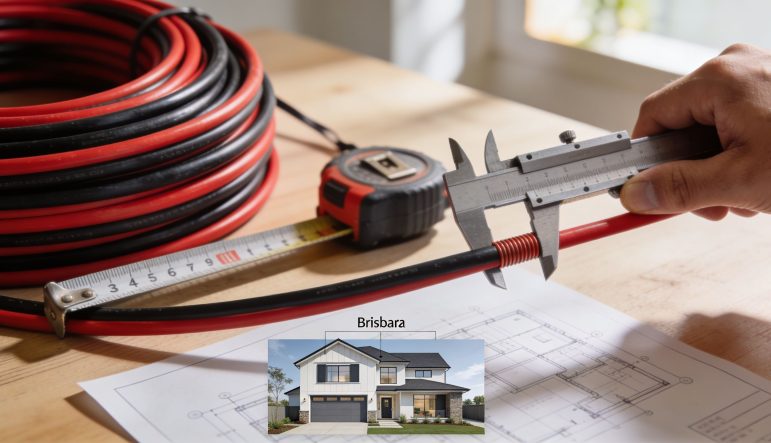
You're usually not thinking about cable size when you plan a renovation. You're thinking about the new induction cooktop, the air con upgrade, the garage fit-out, or whether now's the time to add an EV charger.
But the cable behind the wall decides whether that upgrade runs safely, performs properly, and complies with Australian standards.
In Brisbane homes, electrical cable sizing isn't a paper exercise. Heat, long cable runs, older switchboards, crowded roof spaces, and ageing wiring all change what is safe in practice. A cable that looks fine on a basic chart can be wrong once you account for installation conditions.
A Brisbane kitchen upgrade is a common example. The new induction cooktop goes in, the oven is larger than the old one, and the existing circuit looks serviceable at first glance. Then you factor in roof-space heat, cable length, insulation, and the age of the wiring in an older place at Grange or Windsor, and the original cable size can stop being suitable very quickly.
Cable sizing affects safety, performance, and compliance all at once. If the conductor is too small for the actual installation conditions, it can run hot, lose too much voltage over distance, or fail to perform properly under fault conditions. In practice, that means premature insulation damage, unreliable operation, and defects that show up during testing or inspection.
Brisbane conditions make the margin for error smaller. Summer heatwaves push ambient temperatures up. Roof cavities get brutally hot. Older homes often have wiring additions from different eras, and those mixed installations need careful checking against current Australian requirements, including AS/NZS 3008 and, where relevant, NCC bushfire provisions for the site and building location.
What goes wrong on site is usually straightforward:
I see this most often during renovations and upgrades, not brand-new full rewires. A shed subcircuit, a replacement air conditioner, an EV charger, or a larger hot water service can expose weaknesses that were never obvious with the old load. In many Brisbane homes, the cable is only one part of the problem. The switchboard, protective devices, and earthing arrangement may also need attention, which is why some jobs end up requiring a proper switchboard upgrade in Brisbane rather than a quick circuit alteration.
One practical rule applies every time. If a circuit is being upgraded for more load, the existing cable still has to be checked from scratch. Past performance does not prove present compliance.
Australian cable selection comes back to three checks. AS/NZS 3008.1.1 sets the three critical criteria for minimum cable size as current-carrying capacity, voltage drop, and short-circuit performance, with design current and derating factors applied for installation method, ambient temperature, and bundling, as outlined in this AS/NZS 3008 cable sizing reference.
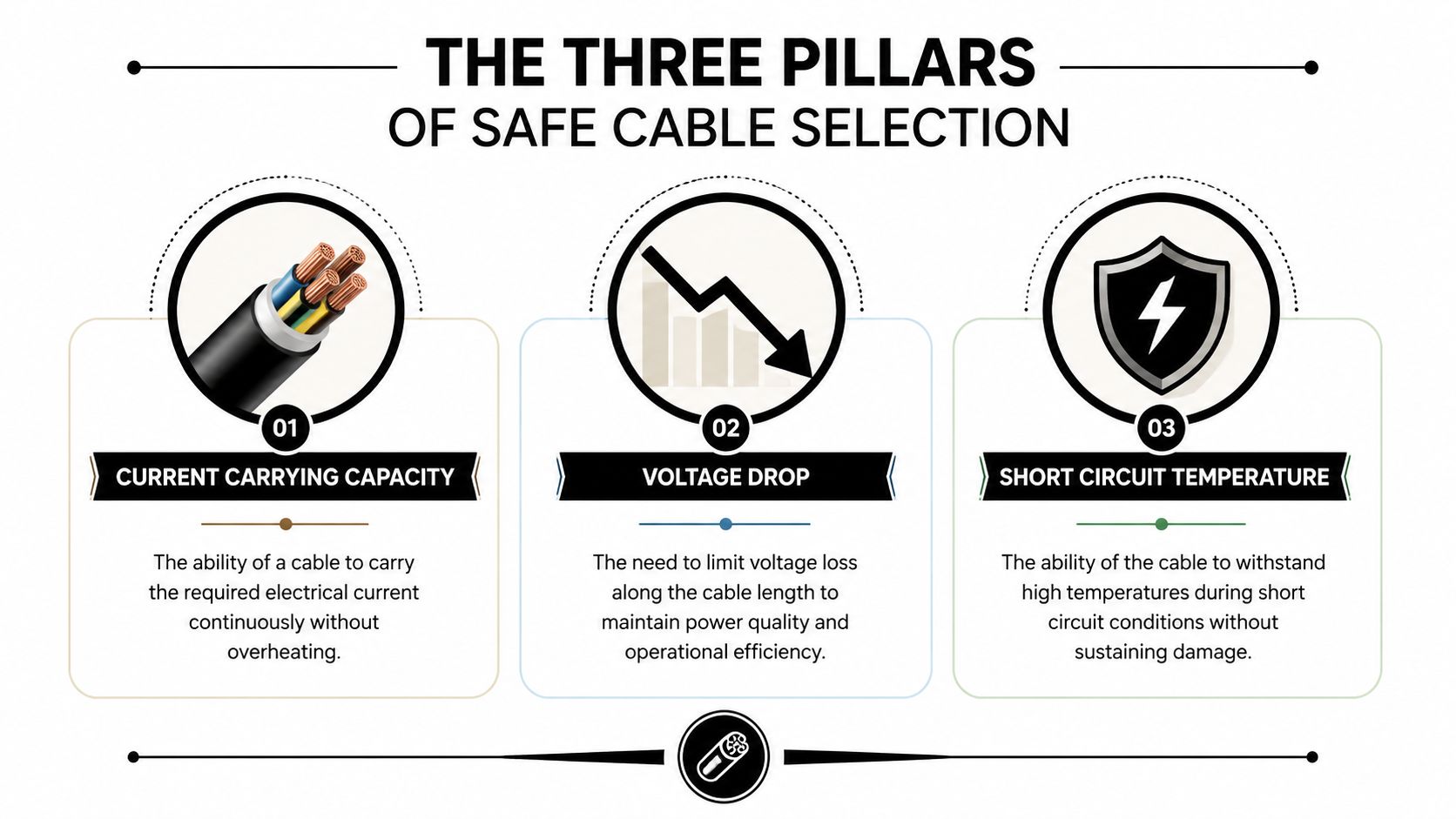
This is the cable's thermal limit. In plain terms, it's how much current the cable can carry without overheating under the way it's installed.
That last part matters. A cable in open air behaves differently from a cable buried in insulation, enclosed in conduit, or grouped beside several other loaded circuits. The conductor material, insulation type, and installation method all affect how easily heat can escape.
If the cable can't shed heat properly, its safe capacity drops. That's why the same conductor size can be acceptable in one location and wrong in another.
Voltage drop is what happens when cable resistance eats into the supply over distance. The longer the run, or the smaller the cable, the more noticeable it becomes.
A simple way to think about it is water pressure through a long hose. If the hose is too narrow for the distance and demand, pressure at the far end suffers. Electrical circuits behave similarly. Lights can dim, motors can struggle, and equipment can operate poorly when the delivered voltage falls too far by the time it reaches the load.
In homes, voltage drop often becomes a real issue on long runs to garages, rear extensions, granny flats, pool equipment, and outdoor power.
This gets less attention from homeowners, but it matters just as much. A cable must survive the energy imposed during a fault long enough for the protective device to operate.
That's not about normal running current. It's about what happens in an abnormal event. If the cable's short-circuit withstand is inadequate, the damage can be immediate and severe.
A cable isn't selected properly until it satisfies all three checks. Passing one or two isn't enough.
Here's where people get caught. A cable might carry the load current on paper, yet still fail on voltage drop over a long run. Or it might look fine for current and voltage drop, but be wrong once fault conditions and installation details are considered.
A good electrician doesn't chase the smallest legal cable. They choose a cable that remains safe and functional once the actual Brisbane site conditions are applied.
Before any proper electrical cable sizing can happen, the right site information has to be gathered. If the inputs are wrong, the answer is wrong.
That's why experienced electricians ask what can feel like fussy questions. We're not making the job more complicated than it needs to be. We're narrowing down what the cable must do.
The first step is identifying the load current. That usually starts with the appliance rating and the type of supply.
In a typical single-phase Brisbane home, that often means working from a 230V supply and calculating the expected current from the connected load. A cooktop, oven, EV charger, air conditioner, hot water unit, or submain all need to be assessed differently depending on how they'll be used.
Continuous loads need special care because they don't just peak briefly. They keep drawing current over time.
The cable run isn't the straight-line distance you paced out on the floor plan. It's the actual path from the switchboard to the point of supply.
That route may go up into the ceiling, across trusses, down a wall cavity, around framing, through conduit, and out to a detached garage or outdoor equipment area. Every extra metre matters when voltage drop becomes part of the calculation.
This is often the deciding factor. The same load can require a different cable size depending on where and how the cable is installed.
A licensed electrician will want to know things like:
For homeowners trying to understand the compliance side, the broader framework sits under the Australian electrical wiring standards, but the site-specific details still need to be checked on the day.
If you want a cleaner conversation with your electrician, have these ready:
| Detail | Why it matters |
|---|---|
| Appliance or equipment type | It identifies likely demand and circuit type |
| Location of the load | It affects cable route and run length |
| Existing switchboard position | It shapes voltage drop and installation complexity |
| Photos of the area | They often reveal access, conduit paths, and heat exposure |
The best calculations come from site inspection, not guesswork sent by text message.
The cable rating in a table is only the starting point. Real installations need derating, which means reducing a cable's effective capacity to reflect actual conditions.
Brisbane makes that especially important. Roof spaces run hot, cables get grouped together in renovations, and newer homes often have more circuits sharing the same routes than older designs ever anticipated.
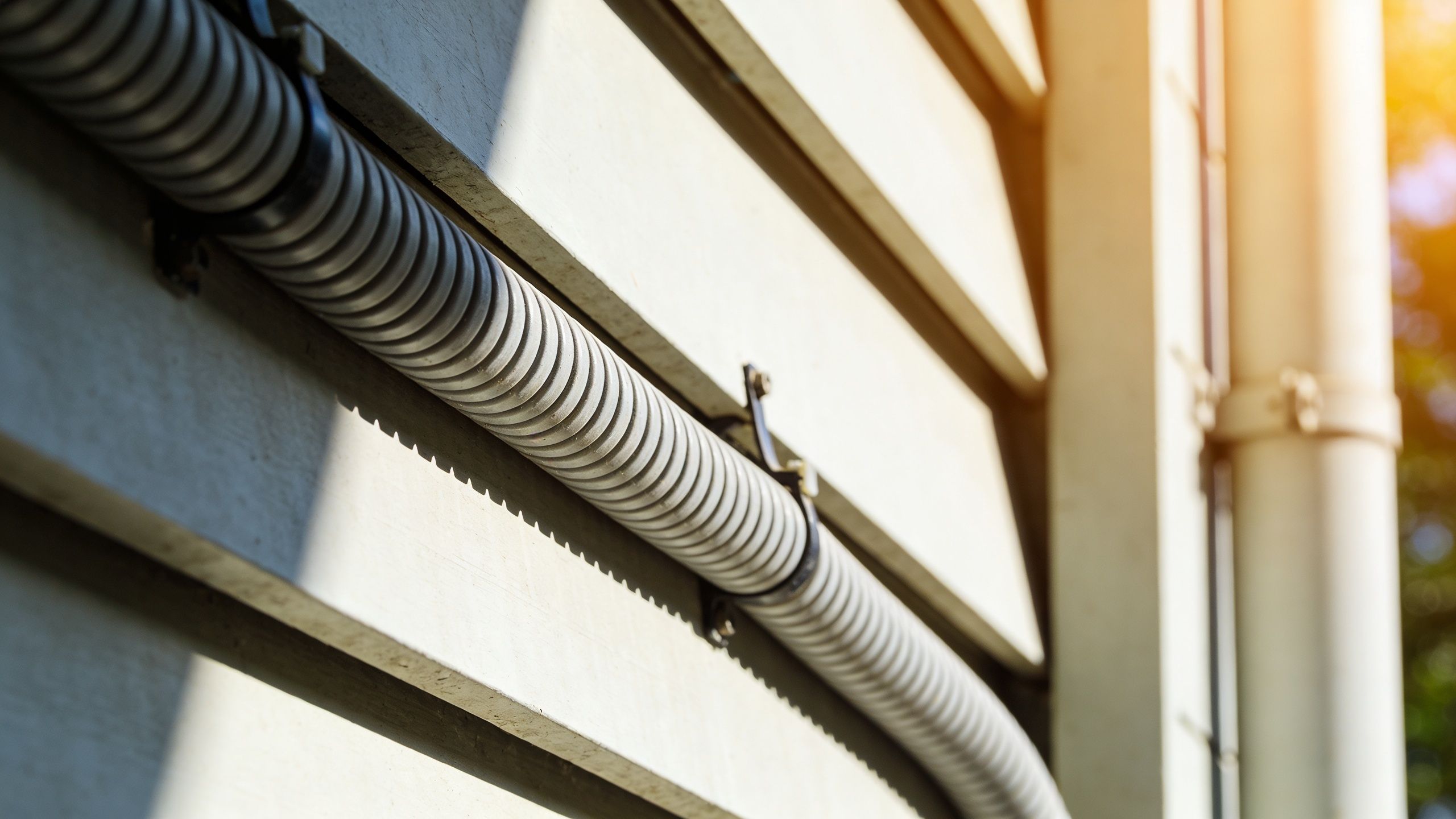
Generic overseas guides rarely deal with Brisbane conditions properly. Here, summer heat isn't background noise. It changes cable selection.
Recent BOM data recorded 42 consecutive days above 35°C in North Brisbane, which requires use of derating multipliers from AS/NZS 3008 Table 27. The same source notes that Queensland's 2025 electrical audit found 22% of residential failures in switchboard upgrades were due to unadjusted sizing for heat, and that EV charger installations were up 35% in Brisbane, making correct sizing for 32A loads under heat more important, as summarised in this Brisbane heat and cable sizing reference.
A cable installed through a roof space doesn't live in catalogue conditions. On a hot day, its safe current-carrying ability is reduced. If the sizing didn't account for that, the margin disappears right when demand is highest.
Modern homes rarely run one lonely circuit through a clear path. Renovations often bundle lighting, power, smoke alarm, security, air con control, and data-adjacent electrical runs into the same spaces.
When multiple loaded circuits are grouped, they heat each other. The cable can no longer be assessed as if it's cooling freely. That's why grouping factors can force a larger cable than a simple load calculation suggests.
This catches people out in kitchen renovations and garage upgrades. The planned load may be straightforward, but the route shares space with several existing circuits, so the installed capacity is lower than expected.
If a cable is sized without considering temperature and grouping, it may only be “correct” on a mild day with an empty roof space.
The sites where derating usually matters most are easy to recognise:
For external works around detached structures, site layout can affect route choice as much as electrical design. If the cable path runs near excavation or landscaping, homeowners often need to coordinate with other trades. In those cases, planning access around hardscape elements such as a retaining wall brisbane project can help avoid rework and keep conduit routes protected.
Here's a useful visual overview before looking at examples in the field.
What works is conservative, site-based selection. Measure the route, inspect the environment, identify grouped circuits, check the board, and choose the cable after applying the standards properly.
Relying on a forum chart, assuming an existing cable is sufficient, or selecting the bare minimum without considering how Brisbane homes behave in summer will not work.
A cable that looks acceptable on a plan can be the wrong choice once it is pulled through a Brisbane roof space in January. That shows up all the time in renovation work across older suburbs such as Windsor and Grange, where new loads are being added to homes that were never laid out for modern kitchens, air conditioning, or EV charging.
These examples are simplified on purpose. They show how the decision changes once the actual site conditions are checked against AS/NZS requirements.
Take a dedicated 20A kitchen circuit in a post-war or Queenslander-style renovation. The homeowner often expects 2.5mm² to be enough because that is the common answer they hear. On many jobs, it is not the load current alone that drives the final selection. It is the route.
In Windsor, I regularly see kitchen circuits leaving an older switchboard, running up into a tight insulated ceiling, then crossing with lighting and appliance subcircuits before dropping back down into the renovated space. That combination changes the calculation quickly. Heat, grouping, and run length all matter. Once those factors are applied under AS/NZS 3008, upsizing from 2.5mm² to 4mm² can be the sensible result.
The trade-off is straightforward. The larger cable costs more and can be harder to terminate neatly in older accessories or cramped board spaces. In return, it gives more thermal margin and often helps keep voltage drop within limits on a longer run.
Older kitchen renovations often involve one or more of these conditions:
That is why a quick rule of thumb can miss the mark. In real houses, the environment around the cable often decides the size.
In renovation work, the hard part is rarely reading the appliance rating. The hard part is choosing a cable that still runs safely after years in a hot ceiling.
EV charger circuits are a good Brisbane example because they combine sustained load with awkward installation conditions. A charger in a Grange garage might be close to the vehicle, but still a fair distance from the switchboard. The route may pass along a western wall, through conduit exposed to afternoon heat, or across a roof space that gets brutally hot during a heatwave.
That is why charger circuits should never be sized by charger output alone. The installation method, distance, temperature, voltage drop, and protection arrangement all have to be checked together. If the property also has solar, battery plans, or a switchboard upgrade on the horizon, I would usually assess the circuit with future capacity in mind rather than sizing it to the bare minimum for today.
For homes in bushfire-prone areas, cable choice can also be affected by the construction rules that apply to the site under the NCC and related bushfire requirements. That does not automatically mean a bigger cable in every case, but it does mean the cable and wiring method have to suit the building conditions, not just the charger spec sheet.
A proper EV charger assessment usually looks at these points:
| Check | Why it matters for EV charging |
|---|---|
| Sustained load | Charging can run for hours, so conductor temperature matters more than it does on short intermittent loads |
| Voltage drop | A long run from the main switchboard to a detached or rear garage can affect charger operation |
| Heat exposure | Western walls, external conduit, and roof spaces can push the cable into harsher conditions |
| Future upgrades | Solar, batteries, and switchboard changes can justify selecting a cable with more headroom |
If you are planning that kind of upgrade, this guide to home EV charger installation requirements in Brisbane covers the broader installation picture.
Continuous loads catch renovators out because the nameplate current is not always the design current used for cable selection.
Under AS/NZS 3000, a continuous load has to be treated more conservatively than a short-duration load. A circuit serving equipment that runs for long periods can move up a cable size before temperature, grouping, or voltage drop are added to the check. That is one reason a cable that looks fine on a basic current chart can still be the wrong choice on site.
This comes up in larger air conditioning circuits, submains to sheds, and EV charging. It is common in Brisbane homes where owners are adding more high-demand equipment to older switchboards.
The pattern is simple. Cable sizing changes with the house, the route, and the local conditions.
A Windsor renovation with a hot insulated roof space can need a different answer from a newer home with the same appliance load. A Grange garage charger can need a different answer again because sustained current, voltage drop, and heat all stack up. Worked examples help explain the process, but they are not a template to copy from one property to the next.
This is the point where homeowner understanding should stop and licensed electrical work should begin.
Cable sizing isn't just picking a conductor off a chart. It requires standards knowledge, fault calculations, installation assessment, and a check of how the whole circuit will be protected and certified. If that work is wrong, the risk sits inside your walls and ceiling for years.
The verified data is clear on this point. AS/NZS 3000 requires a 1.25x safety multiplication factor for continuous loads, meaning a 60A load must be sized for 75A, and professionals must cross-reference multiple tables for installation method, ampacity, and voltage drop in a three-step process that prevents errors such as failing to derate for roof space heat or incorrect grouping, according to this AS/NZS 3000 cable sizing summary.
That's before the electrician has even finished checking the switchboard, protection devices, cable route, terminations, and compliance documentation.
What goes wrong with DIY or guesswork sizing is usually one of these:
Electrical cable sizing also sits inside a legal framework. In Queensland, electrical installation work must be carried out by appropriately licensed people. Reading about the process helps you ask better questions and recognise quality work. It doesn't make the job safe to do yourself.
The right outcome isn't just a cable that works today. It's a circuit that remains safe, compliant, and reliable on the hottest day, under full load, years after installation.
If you're planning a renovation, EV charger, switchboard upgrade, or any new dedicated circuit, DLG Electrical can assess the load, installation conditions, and compliance requirements properly. Their Brisbane team has over 19 years of experience with residential electrical work, older North Brisbane homes, and practical cable sizing decisions that hold up in real conditions.

Master Electrician with over 30 years of experience. Founded DLG Electrical in 2005 after international project work including electrical installations at Stamford Bridge Stadium, London(Home of Chelsea FC).

Local Electricians that can fix all Electric Hot water Systems.
Motion sensor lights are a versatile addition to any home, offering nu
