83 Jean St, Grange QLD 4051
Mon-Fri 07:30 AM - 04:00 PM - Sat - 8:00 - 12 - Sunday Closed
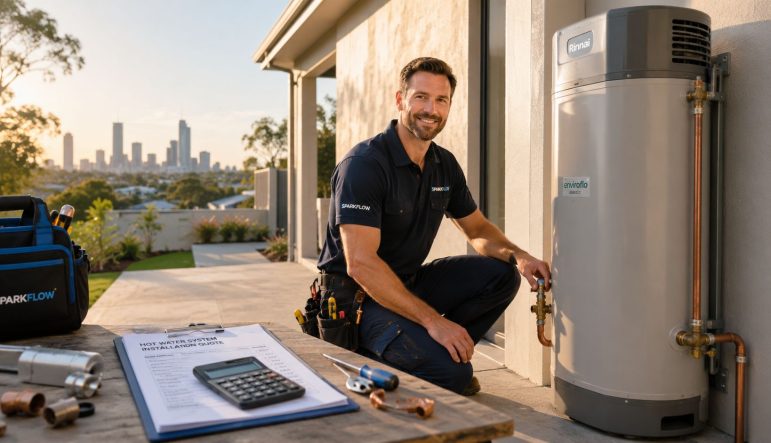
Replacing a standard electric hot water system in Brisbane usually costs $1,000 to $3,500, and a direct swap of a standard 250L unit commonly sits around $2,700. If your system has just failed, that range gives you a realistic starting point before you start ringing around for quotes.
Cold water first thing in the morning usually sends people straight to Google. One minute the system seems fine, the next you've got no hot water, a leaking tank, or a breaker that won't stay on. At that point, most homeowners want one thing. A straight answer on what the replacement is going to cost, not a vague “it depends”.
The trouble is, the sticker price on the tank is only part of the story. The actual electric hot water system replacement cost also depends on labour, fittings, disposal, electrical compliance, and whether it makes sense to stay with standard electric storage or use the replacement as a chance to lower running costs over time.
When an electric hot water system fails, the first question is usually repair or replace. The second is how fast someone can get there. The third, once the stress settles a bit, is what the bill is going to look like.
If your tank is leaking, tripping power, or not heating, the smartest first move is to identify whether you're dealing with a fault that can be isolated or a system that's reached the end of the road. If you're still in the troubleshooting stage, this practical hot water system troubleshooting guide is a good place to start before you commit to a replacement.
A failed system can also mimic smaller faults. A thermostat issue, element fault, or tariff timing problem can all look like “no hot water” from the bathroom end. For a broader homeowner-friendly reference on basic symptoms, this guide for cold water heaters is useful for sorting out what might be happening before the trades arrive.
The practical answer is simple. For a standard electric replacement in Brisbane, you're generally looking at an all-in figure somewhere between the low end of the market and a more involved install.
That broad range exists because not every “replacement” is the same job. Some are clean direct swaps. Others involve awkward access, new valves, extra pipework, switchboard issues, or replacing a budget unit with a more expensive brand.
Practical rule: The cheapest quote isn't always the cheapest job. It's often just the least detailed one.
Three things usually shape the outcome:
The true impact of that last point is often missed. Plenty of households focus only on replacement day, then spend years paying for an inefficient setup on the wrong tariff.
A replacement quote is only useful if it shows the full job. Brisbane homeowners often compare two totals that look close, then find one quote excludes valves, disposal, electrical rectification, or tariff-related work that the other has already allowed for.
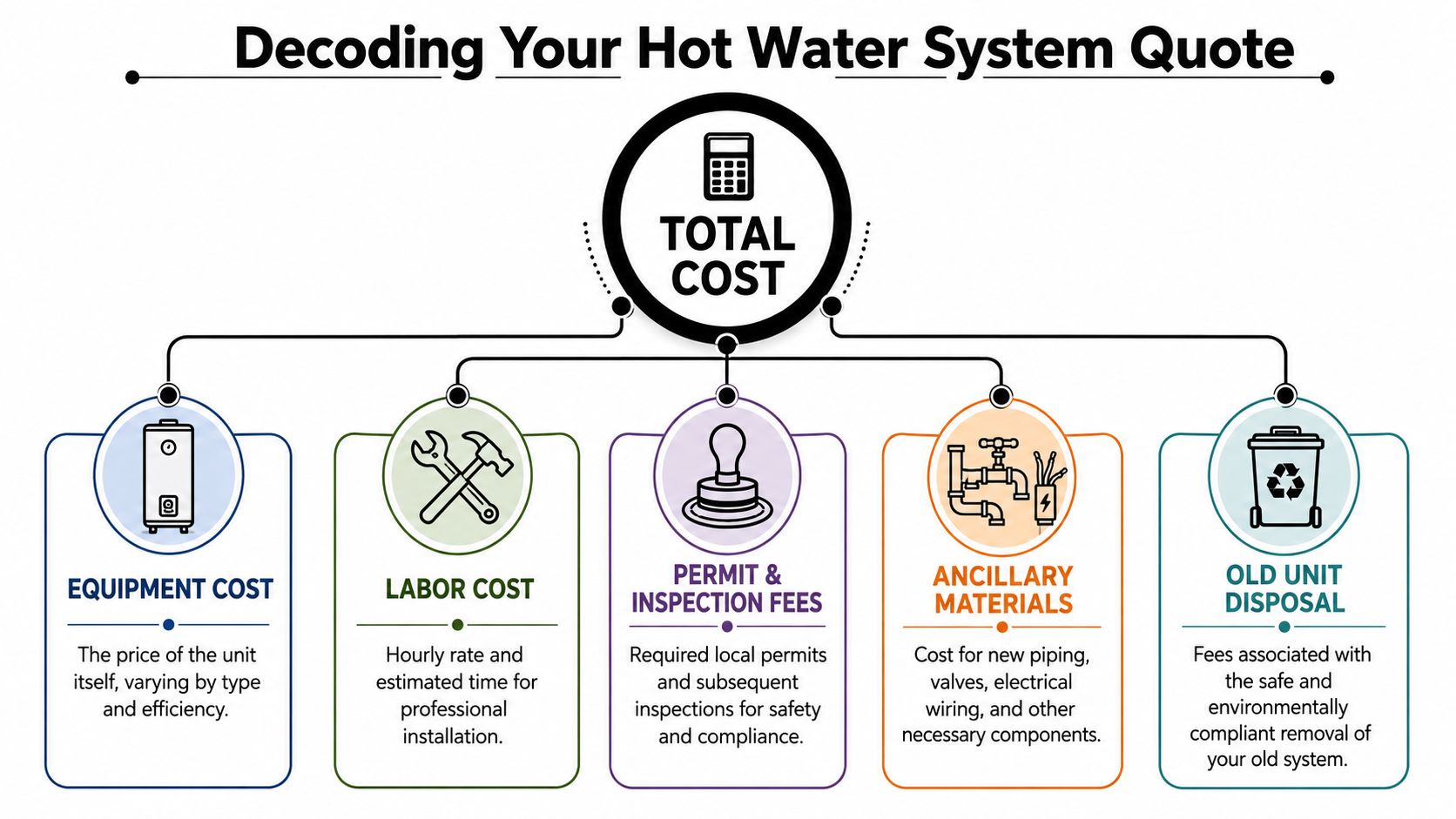
If you want a clearer picture of typical line items, this cost to install a hot water system guide helps explain how supply, labour, compliance, and extras usually break down.
The hot water unit is the obvious cost, but it is not a standard product with a standard price. The final supply cost changes with tank size, element type, brand, warranty, cylinder material, and whether the model suits your existing tariff setup.
That last part matters more than many homeowners expect.
A tank that works on one property may be a poor fit on another if the home is set up for off-peak supply, controlled load, or a different usage pattern. A cheap tank can become an expensive choice if it does not match how the household uses hot water, or if it pushes you onto a dearer running-cost path over the next decade.
Labour is not just installation time. It covers safe isolation, disconnection of the failed system, testing of the existing circuit, final connections, commissioning, and confirming the replacement meets current requirements.
In older Brisbane homes, this is often where the main difference between quotes shows up. One installer may allow for a straightforward swap. Another may have already noticed ageing isolators, damaged cable, inadequate protection, or switchboard issues that need attention before the new system can be connected safely.
Cheap quotes often rely on assumptions. Good quotes state them.
A reliable quote should show what is included, what is excluded, and what could trigger a variation.
Plumbing and connection materials can shift the price fast, especially when the new unit does not line up neatly with the old one. Common additions include isolation valves, pressure-limiting valves, tempering valves, tray and drain work, pipe alterations, flex connectors, new cable, and conduit.
None of those items are glamorous. They are often the difference between a clean, compliant install and a quote that looked cheap until work started.
Access also matters. A garage install with open access is a different job from a unit tucked into a tight side path, raised platform, or awkward external corner. Removal time, lifting effort, and setup all affect labour.
Old tank removal should be written into the quote, not assumed. A full electric hot water replacement includes draining the cylinder, making it safe, removing it from site, and disposing of it properly.
If disposal is missing from the paperwork, ask before approving the job. I have seen homeowners focus on the new tank price and miss the fact that the old one is still their problem unless the quote says otherwise.
A solid replacement quote should clearly list:
That detail matters because the sticker price is only one part of the decision. The better quote is usually the one that gives you a clearer total cost picture upfront, with fewer surprises on install day and fewer expensive mistakes locked in for years of running costs.
Brisbane homeowners usually ask one question first. What should this cost if the old tank has failed and hot water needs to be back on fast?
For a standard electric storage replacement, the practical budget range in 2026 is broad enough that a single headline figure can mislead. A simple like-for-like swap can sit near the lower end. A more involved replacement can climb quickly once capacity changes, tariff setup, or site conditions push the job beyond a basic exchange.
For many homes, a common starting point is a standard storage unit replaced in the same position, with no major changes to the electrical supply or pipe layout. That is the kind of job many owners expect when they search for electric hot water system replacement cost. It is also the point where the quote can look reasonable on paper but still be poor value over the next 10 years if the system size, tariff, or running cost has been chosen badly.
Lower quotes usually apply to jobs with very little rework. The existing setup already suits the new unit, access is straightforward, and the replacement does not trigger bigger electrical changes.
Typical examples include:
That kind of job is real, but it is not the only benchmark worth using.
A lot of replacement work falls into the middle because the tank itself is only part of the decision. A family replacing an older 250L unit may also need to decide whether the same size still makes sense, whether the property is on the right tariff, and whether paying a bit more now will cut running costs later.
Controlled load matters here. If you are not clear on how off-peak supply works, this guide on what is controlled load is a useful reference before approving a replacement. I have seen households install a new electric system without checking the tariff arrangement, then spend years paying more to heat water than they needed to.
That is why the sticker price is only part of the cost range. The smarter question is whether the replacement keeps your running costs sensible, fits your household demand, and avoids paying twice for the wrong setup.
Higher replacement costs usually come from scope, not overcharging. Once the job stops being a direct swap, the price can change for legitimate reasons.
| Situation | Why the price rises |
|---|---|
| Larger capacity or different system type | The unit cost increases and connections may need alteration |
| Tariff or supply changes | Electrical work may be needed to suit the new setup |
| Tight or difficult access | Labour time goes up for removal and installation |
| Existing installation problems | Older wiring, valves, or compliance issues may need correction |
| Switching to a system with lower long-term energy use | Upfront cost can rise even if lifetime cost improves |
That last point gets missed often. A standard electric tank can be the cheapest way to get hot water back today. It is not always the cheapest system to own. If your household is also weighing solar or battery plans, it helps to compare the replacement against your wider energy setup, not as a stand-alone purchase. This solar panel and battery guide for Brisbane homes can help frame that decision.
The practical way to read a cost range is simple. Use the low end only if your job is a clean direct replacement. Use the middle if the home needs a normal level of decision-making around size, tariff, and hardware choice. Expect the upper end if the replacement also fixes older problems or sets the property up for lower long-term power costs.
You replace a failed hot water system, pay the invoice, and assume the expensive part is over. For many Brisbane households, that is only half the cost story.
The purchase price matters, but the tariff the system runs on, the hours it heats, and whether the home can claim an efficiency incentive often make the bigger difference over time. A cheaper install can still be the more expensive decision if it locks the household into higher running costs for the next decade.
Standard electric storage units still suit plenty of homes. They are usually the quickest and least expensive way to restore hot water, especially for a straight swap. But shelf price is only one part of the decision. Homes with the right usage pattern, location, and budget can justify a higher-efficiency system if the rebate position is strong enough and the power savings are real for that household.
Rebates can narrow the gap between a basic electric storage replacement and a heat pump system. They should be treated as a bonus, not the reason to force the wrong system into the wrong property.
A practical quote should show three numbers clearly. The installed price before incentives, the estimated rebate or STC adjustment if applicable, and the final out-of-pocket cost. If those figures are vague, it is hard to compare options properly.
This gets missed in a lot of quotes. A homeowner compares two tanks, picks the cheaper one, and never checks whether the new system is going onto general supply or a controlled load tariff.
That matters because electric hot water can be much cheaper to run when the tariff setup suits the system and the household's usage. If you want background before deciding, this guide on what is controlled load explains how those tariffs work and why they can reduce hot water costs.
The practical question is simple. Are you buying the cheapest tank, or are you buying the lowest-cost hot water outcome over the life of the system?
| Metric | Standard Electric Storage | Heat Pump System |
|---|---|---|
| Upfront position | Usually the lowest replacement price | Higher installed cost in most cases |
| Best fit | Tight budget, urgent same-day replacement, simple direct swap | Households planning for lower running costs and eligible incentives |
| Tariff impact | Can still be economical if matched to the right controlled load setup | Efficiency helps, but tariff and usage pattern still matter |
| Rebate position | Usually limited | Often stronger than standard electric if the model and job qualify |
| Long-term cost risk | Higher power bills if left on an unsuitable tariff | Higher upfront spend if rebates are overstated or the home is a poor fit |
| Smart buying test | Compare install price plus expected annual running cost | Compare net installed price after incentives plus realistic savings |
A lot of Brisbane homes do not need a more complex upgrade. If the old unit failed unexpectedly, the budget is tight, and the existing setup allows a clean replacement onto a suitable tariff, a standard electric storage system can still be the sensible choice.
The mistake is focusing only on the invoice total.
Homeowners who are also planning broader energy upgrades should look at hot water as part of the house power bill, not as a stand-alone appliance purchase. This guide to solar panels and battery options for Brisbane homes helps put that decision in context.
A lot of people try to squeeze one more repair out of an old hot water system. Sometimes that's sensible. Often it isn't.
Verified guidance puts the average lifespan of an electric hot water system at 10 to 13 years, and for a system in that age bracket, repair is only financially viable if it costs under AUD 900, which is roughly half the typical AUD 1,800 replacement price cited in that same guidance (repair versus replace guide).
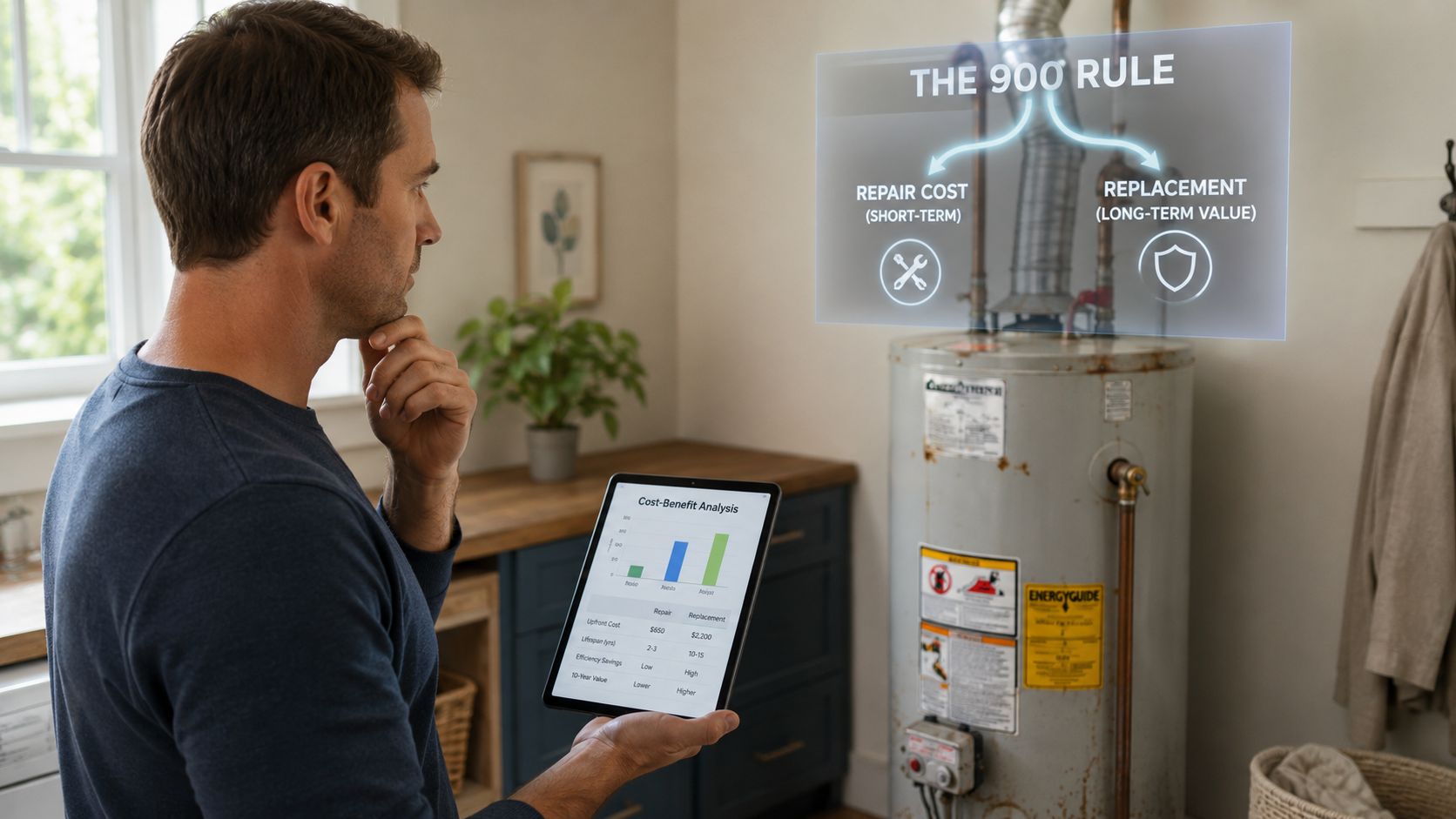
If your system is within that 10 to 13 year window and the repair quote is heading toward $900, you're usually better off putting that money into replacement instead of patching an aging unit.
That's not because every old system fails immediately after a repair. It's because once a tank and its components are at that age, you're paying to keep old equipment alive without changing the fact that it's old equipment.
Repair can still be reasonable when the fault is isolated and the system isn't near end of life. In practical terms, a younger unit with a single failed component is a different decision from an older tank with multiple warning signs.
Look harder at replacement if you've got any mix of these:
Spending serious money on an old tank only makes sense if the repair buys you meaningful reliability. On an aging system, that's often not what happens.
The trap is emotional, not technical. People see a repair quote smaller than a replacement quote and assume repair must be the value option. But if that repair doesn't stop the next failure, you've added more cost before replacing anyway.
The $900 rule is useful because it strips that decision back to a number. On an older system, once repair cost crosses that line, replacement usually becomes the cleaner financial call.
A strong quote protects you before the first tool comes out. It also makes comparing electricians much easier, because you're no longer guessing what one price includes and another leaves out.

Before you call, gather the basics. The more accurate the information you provide, the less likely you are to get a vague number that changes later.
A solid quote should answer practical questions without dodging them:
A lot of homeowners benefit from seeing how other plumbing contractors present service detail and clarity. Even though it's outside Brisbane, this page on Boerne plumbing services is a decent example of how service categories can be laid out clearly for customers comparing providers.
Here's a useful visual summary before you book anyone in:
Watch for quotes that are too casual. If someone prices a replacement without asking about size, location, or existing setup, they may just be giving you a placeholder number.
A good quote should be specific enough that you can tell what you're buying. If you can't see the unit model, inclusions, and exclusions on the page, ask for that detail in writing.
You find the shower cold on Monday morning, call around at lunch, and by the afternoon you have three very different answers. One quote is cheap but vague. One pushes a heat pump without asking about your tariff. One asks the right questions about switchboard capacity, access, and whether the old tank is leaking. That difference matters.
How long does a replacement take?
A like-for-like replacement is often done in a day if access is straightforward and the existing wiring and plumbing are in good order. Jobs take longer when the old unit is hard to remove, the circuit needs upgrading, or the new system changes the layout, tariff setup, or mounting position.
What usually causes the price to change after the quote?
Hidden faults around the old installation are the big one. I regularly see isolation switches that need replacing, undersized cabling, failed tempering valves, corroded pipework, and switchboard issues that were not visible until the old unit came out. A good contractor will explain what is included, what is assumed, and what would be treated as a variation.
Do I sort out rebates before I book the job?
If you are choosing an eligible high-efficiency system, ask about rebate timing before installation starts. The process usually depends on the product, the installer, and whether paperwork must be submitted before or after the job. The practical step is simple. Confirm eligibility early and get the required documents in writing so you are not chasing them after the unit is installed.
Is a heat pump always the best financial choice?
Only when the household and site suit it. A heat pump can be a strong option for lowering running costs, but the upfront spend is higher, and performance depends on usage pattern, location, noise sensitivity, and tariff setup. For some Brisbane homes, a standard storage system on the right tariff still makes more sense.
How do I know whether repair is still worth it?
Look at age, fault history, and what the next repair is likely to be. If the tank is older, parts are starting to fail one after another, or there are signs of corrosion, repair money can turn into short-term spending with no long-term gain. That is where a clear breakeven discussion helps.
The smartest decision usually is not the lowest installed price. It is the option that gives you a clear scope, suits your household's hot water use, and does not trap you with higher running costs or another callout six months later.
For Brisbane homeowners, total cost matters more than the sticker on the quote. Purchase price, installation conditions, tariff fit, future repairs, and daily operating cost all sit in the same decision.
If you want a clear, no-obligation quote from a local team that understands Brisbane homes, DLG Electrical can help. They can assess your current system, explain whether repair or replacement makes more sense, and provide a practical recommendation based on installation cost, compliance requirements, and long-term running cost, not just the cheapest number on the page.

Master Electrician with over 30 years of experience. Founded DLG Electrical in 2005 after international project work including electrical installations at Stamford Bridge Stadium, London(Home of Chelsea FC).

Local Electricians that can fix all Electric Hot water Systems.
Motion sensor lights are a versatile addition to any home, offering nu
