83 Jean St, Grange QLD 4051
Mon-Fri 07:30 AM - 04:00 PM - Sat - 8:00 - 12 - Sunday Closed
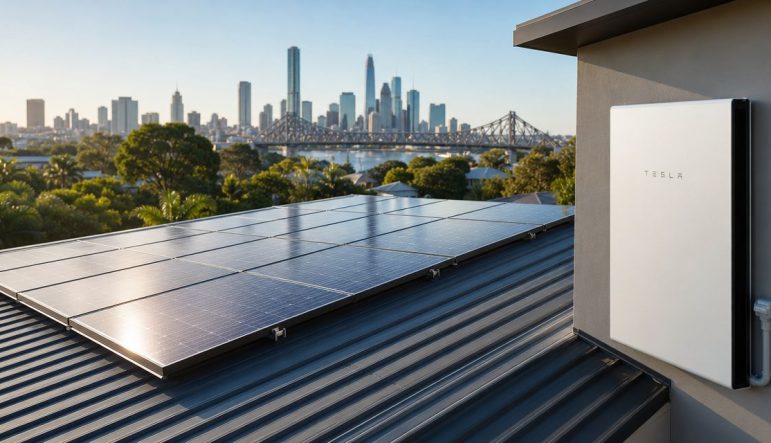
Your power bill lands, summer is building, and storm season is never far from mind. If you already have rooftop solar, you've probably looked at the afternoon and evening part of your usage and thought the same thing most Brisbane homeowners do: why am I still buying expensive power after the sun goes down?
That's where a solar panel and battery system starts to make sense. Not as a trendy add-on, but as a practical way to use more of the energy your roof already makes, keep critical circuits running when the grid drops out, and make your home less exposed to tariff changes.
In Brisbane, local conditions matter. Heat affects panel output. Evening air-conditioning demand is real. Storm outages change how people think about backup power. And the right answer isn't just “buy the biggest system you can afford”. It's choosing a setup that suits your roof, switchboard, tariff, and day-to-day usage.
Solar isn't new anymore. It's part of normal household infrastructure in Australia. By the end of 2024, Australia had over 3.7 million rooftop solar systems installed, and roughly one in three homes had solar, according to Australia rooftop solar adoption data. That matters because batteries tend to follow solar maturity. Once a household is already generating power on the roof, the next question becomes how to keep more of it.
For Brisbane homeowners, that question is sharper than it used to be. Daytime exports often don't feel as valuable as they once did, while evening usage still bites. Air-conditioning, cooking, lighting, hot water and home office loads don't stop just because the sun has set. A battery helps shift that solar into the hours when your home needs it.
Three local conditions push this decision into practical territory.
Practical rule: If your household uses a lot of electricity after dark, battery storage is worth serious attention even before you compare brands.
This is also where electrician-led advice matters. A battery isn't just a box on the wall. It affects inverter choice, switchboard layout, backup circuit planning, isolation, compliance, and how the whole system behaves over time. In Brisbane homes, that practical side is often the difference between a system that looks good on paper and one that works properly through summer, storms and tariff changes.
The easiest way to understand a solar panel and battery system is to compare it to a rainwater setup.
Your solar panels are the roof catching rain. Your battery is the tank storing what you don't use straight away. Your inverter is the part that makes that stored energy usable in the house. If there's more solar than the house and battery can use, the extra goes back to the grid, a bit like tank overflow.
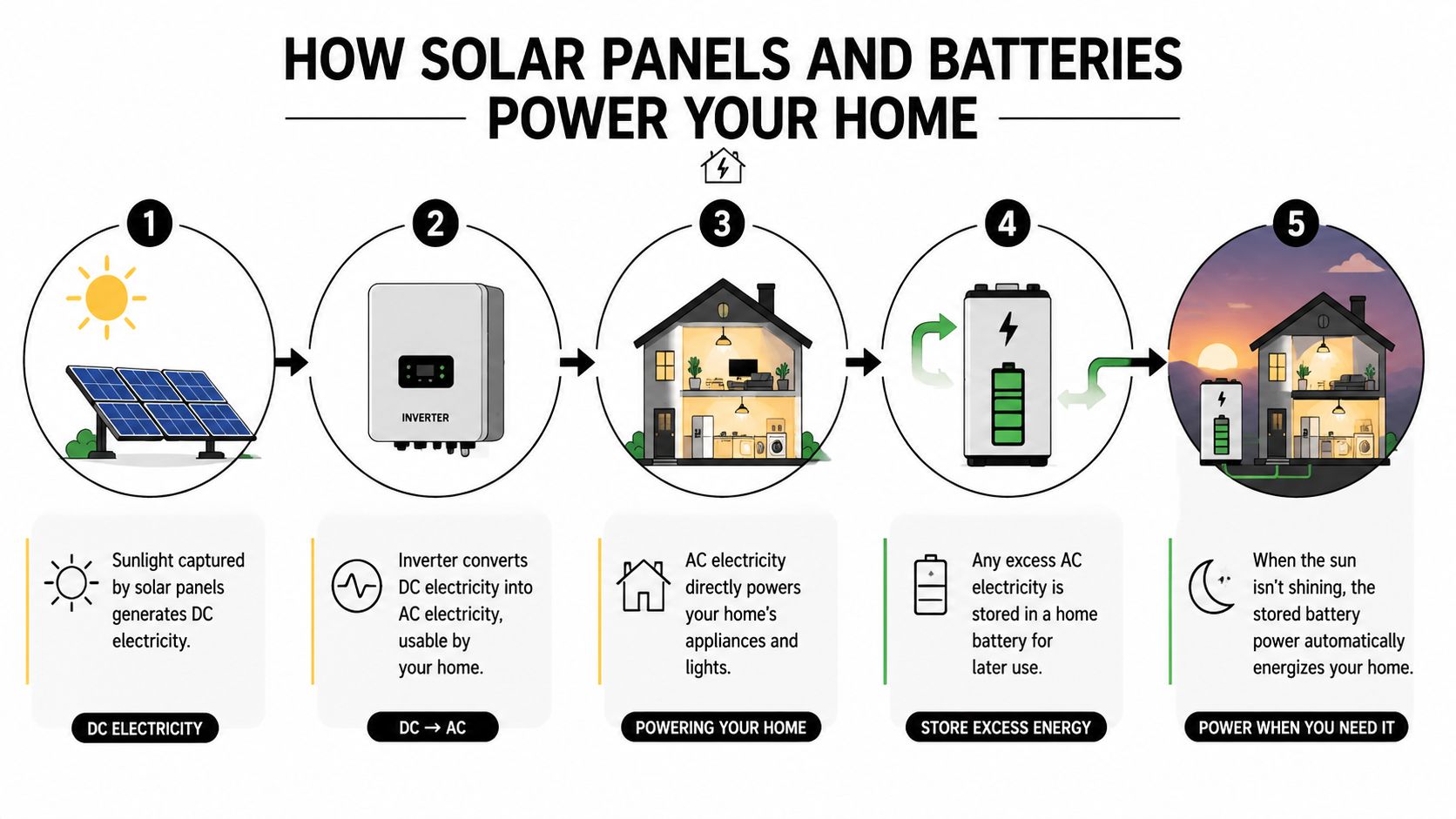
When the sun is out, the panels generate electricity. The inverter converts that into power your home can use for lights, appliances and other circuits. If your home is using less than the panels are producing, the spare energy can charge the battery.
That part is important. Without a battery, a lot of that excess leaves the property. With a battery, more of it stays on site for later use.
A simple breakdown looks like this:
If you want a more basic walkthrough of the energy flow, this guide on how a solar power system works gives a useful homeowner-level explanation.
Once solar production falls, the battery can supply the house instead of you immediately drawing from the grid. In practical terms, that means your daytime solar keeps working for you at night.
That's the key idea behind self-consumption. You're using more of your own generation instead of exporting it and buying power back later. In Brisbane, where evening cooling loads are common, that can make a noticeable difference to how useful your solar feels.
A good battery setup doesn't create electricity. It shifts the electricity your roof already made into the hours when your family actually needs it.
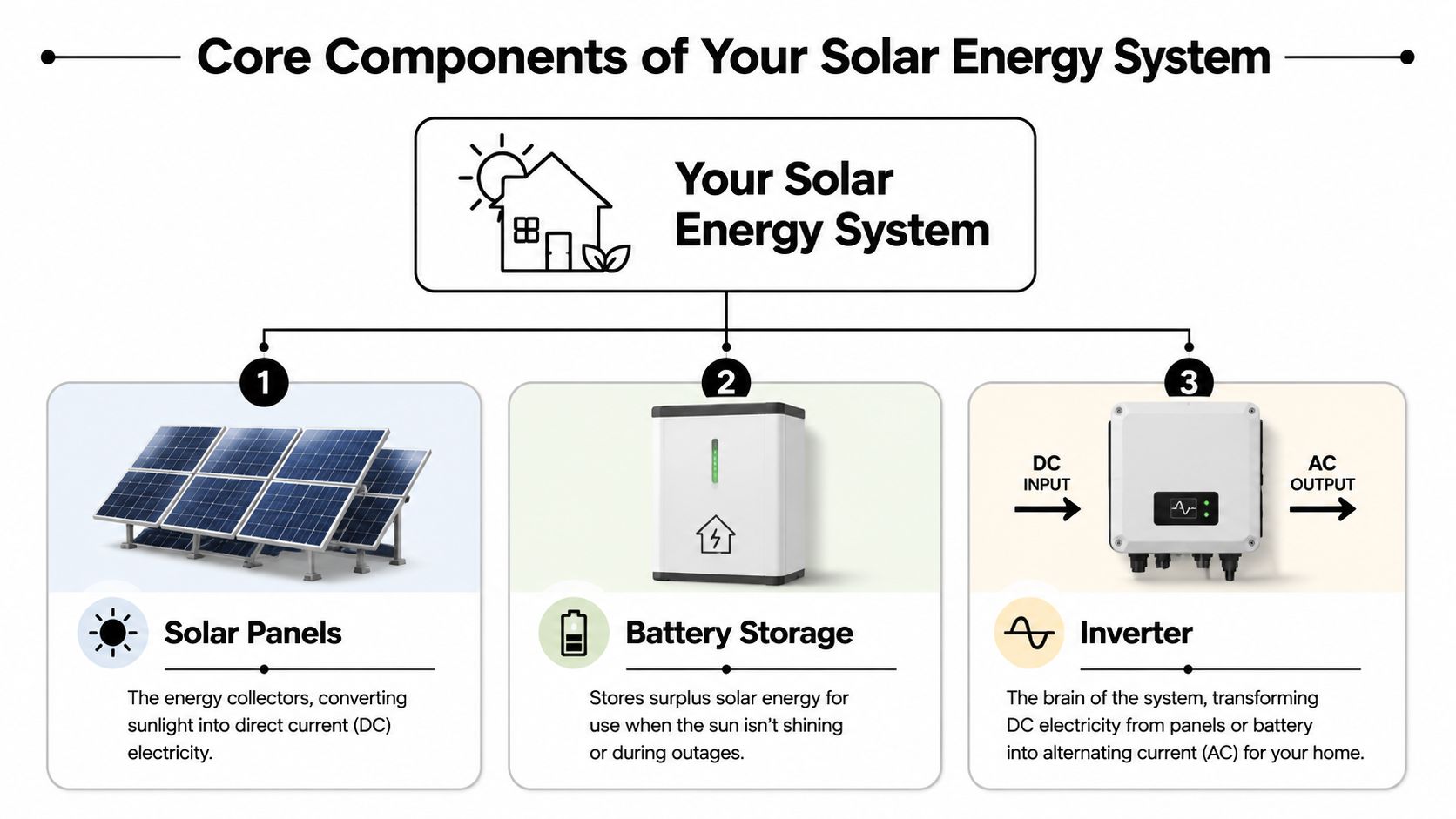
Homeowners often focus on panels and battery size, but the inverter does a lot of the work. It manages conversion, coordinates solar production, and in many systems controls how the battery charges and discharges.
If the inverter and battery aren't chosen properly, the system may still run, but not efficiently. That's why battery retrofits need more than a simple product comparison. They need proper design around the house you've got now, not the house someone imagined in a brochure.
A battery has three benefits that matter in Queensland homes. Not generic brochure benefits. Real ones that affect day-to-day living.
Australian households had installed over 300,000 behind-the-meter batteries by 2024, and a typical home battery is commonly in the 10 kWh to 15 kWh range, according to Australian home battery uptake and sizing data. That growth tells you batteries have moved well beyond early adopters.
Brisbane households often generate well in the middle of the day, then hit heavier demand later. That mismatch is exactly what a battery solves. Instead of sending excess solar away and buying back power in the evening, you store it.
For many homes, the useful part isn't abstract energy independence. It's very ordinary loads:
Not every battery setup provides blackout protection by default, and that catches some homeowners out. If backup is important, the system needs to be designed for it. That usually means planning which loads matter most and separating them clearly.
In Brisbane storm season, homeowners usually care about keeping essentials available, such as:
| Priority load | Why people back it up |
|---|---|
| Fridge and freezer | Food protection during outages |
| Lights | Safe movement through the home |
| Internet and charging | Communication and basic work access |
| Selected cooling | Comfort during hot, humid conditions |
If you're weighing up the value side, this article on whether solar batteries are worth it is a useful next read.
A battery also gives you more flexibility if your home is moving toward all-electric living. If you plan to add an EV charger, replace gas appliances, or install more efficient electric systems, battery storage helps the house absorb more of its own solar instead of leaning harder on grid imports at peak times.
The best battery systems aren't only about savings. They make the home easier to run when the weather turns bad and easier to upgrade when your lifestyle changes.
What doesn't work is buying a battery for bragging rights or oversizing it without understanding your load pattern. In Queensland, the right battery is the one that suits your evening demand, backup priorities and tariff structure.
A solar panel and battery system is only as good as its weakest component. Homeowners usually compare panel wattage first, but in Brisbane that's rarely the full story. Heat, inverter matching and usable battery performance matter just as much.
On a cool test bench, panel specs can look impressive. On a dark roof in a Brisbane summer, things change. In hot conditions, panel output falls as cell temperature rises. A typical panel can lose roughly 8% to 10% of rated power on a hot day because output commonly drops by around -0.40%/°C to -0.50%/°C, while a better coefficient like -0.34%/°C retains more performance, according to solar panel temperature coefficient guidance.
That's why I'd take a well-matched panel with solid hot-weather behaviour over a flashy wattage number that looks better on paper but gives away too much in real rooftop conditions.
A homeowner should ask about:
Battery sales material often pushes headline capacity, but the practical questions are simpler. How much usable energy does it store? How much power can it deliver at once? Can it run backup loads the way you expect?
For homeowners, the useful terms are:
A battery can be large in storage terms and still disappoint if its output doesn't suit the appliances you want to run.
The inverter doesn't get much attention in casual comparisons, but it should. It coordinates how the solar production is used, how the battery charges, and how power is supplied to the home. If you're planning a new system or a future battery upgrade, “battery-ready” must mean something technical, not just marketing language.
Don't judge a system by panel wattage alone. In Brisbane, hot-roof performance and inverter compatibility usually tell you more about how the system will behave in January.
There are different inverter approaches, including standard string inverters and hybrid inverters. The right one depends on whether you're installing battery storage now, retrofitting later, or replacing older solar equipment that may not suit modern battery integration cleanly.
Most sizing mistakes happen before a single panel goes on the roof. Homeowners either undersize because they're trying to keep the upfront cost down, or they oversize because they assume bigger automatically means better. Neither approach works well without looking at how the house uses power.
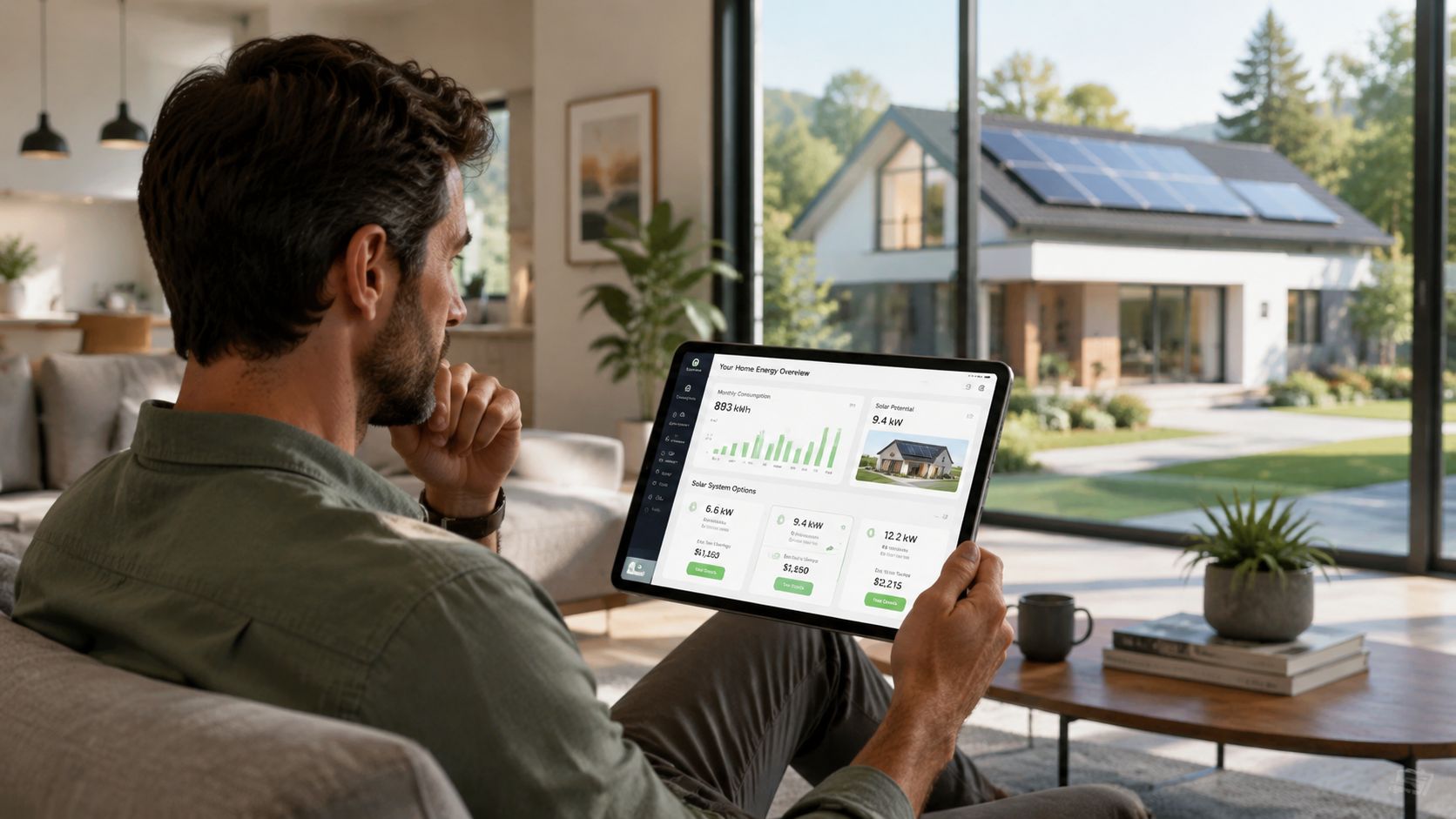
Your electricity bill is the first place to look. Not just total consumption, but when you use power. A household that's empty through the day behaves differently from one with someone home full-time. The same goes for homes with pool pumps, daytime cooling, or regular EV charging.
A quick self-audit should cover:
When the house uses power most
If your demand is heavy in the evening, battery storage has more value than it does in a home that uses most energy while the sun is still up.
Which loads are essential
If backup matters, list the appliances and circuits you'd want available in an outage.
What's changing soon
An EV, induction cooking, or replacing an ageing hot water system can shift the size you need.
Someone comparing home systems with mobile setups can also learn a lot from guides on selecting an RV off-grid solar system. The hardware is different, but the thought process is similar. Start with loads, runtime and charging sources, then size the storage around real use rather than guesswork.
Professional system design is critical for installers, who must match the panel string voltage to the inverter's operating window. If the voltage match is poor, or if limits are exceeded, the system loses energy harvest and may not charge the battery properly, even on a bright day, as explained in PV panel voltage and inverter matching guidance.
That sounds technical, but the practical meaning is simple. A badly matched system is like fitting the wrong size pipe to a tank. The water source exists, but it never moves as well as it should.
For homeowners trying to estimate battery size, this guide on what size solar battery you need is worth reading before you sign anything.
A proper quote discussion should cover more than panel count and battery brand. It should include the roof, switchboard, inverter compatibility, backup layout and future electrical plans.
Later in the decision process, some Brisbane homeowners speak with a local electrician such as DLG Electrical to review those practical constraints before locking in equipment. That's useful when the house has an older switchboard, limited roof orientations, or an existing solar system that may need inverter changes.
After you've looked at your own usage, this walkthrough helps frame the design questions an installer should answer clearly.
Cost is where most battery conversations either become honest or fall apart. In reality, battery value in Brisbane depends less on a universal payback figure and more on your tariff, your evening usage, and how much of your own solar you can keep inside the home.
A key barrier for homeowners is uncertainty about battery payback. In Queensland, low feed-in tariffs for exported solar make self-consumption more valuable, which can strengthen the case for storing your own solar for evening use, according to Queensland battery payback considerations.
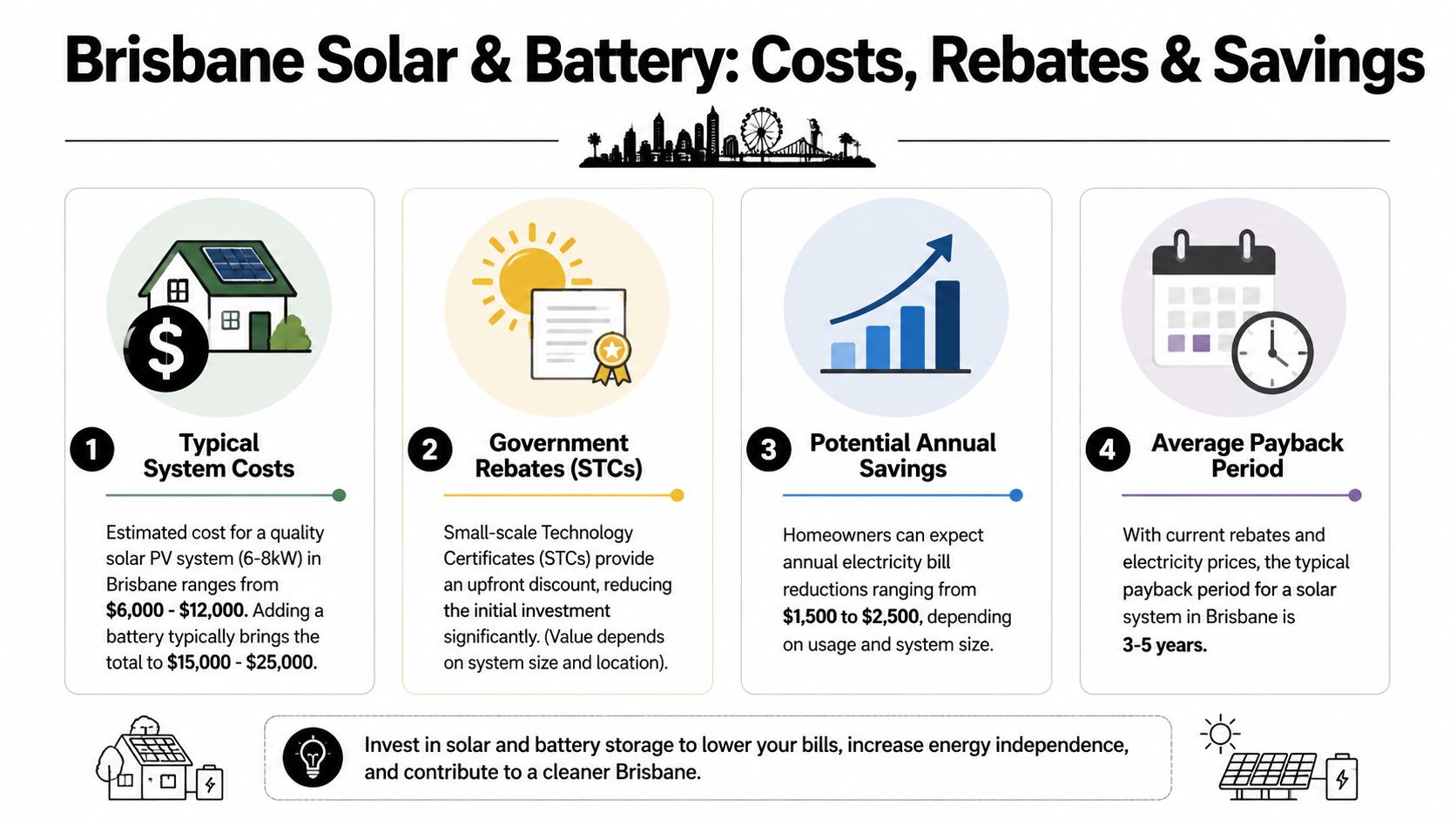
A lot of online content still treats battery savings as if every Brisbane home behaves the same way. It doesn't. A household with strong daytime occupancy may already use much of its solar directly. A family that leaves home in the morning and returns to heavy evening cooling may get more value from storage. Add backup priorities, and the decision changes again.
That's why broad interstate comparisons can be interesting but not decisive. For example, an ultimate Fort Worth solar guide can be useful to compare how another hot-climate market talks about solar economics, but Brisbane homeowners still need answers based on Queensland tariffs, local network conditions and their own usage profile.
There are a few levers that matter more than the sales pitch:
In Australia, solar has long been supported by Small-scale Technology Certificates, which helped rooftop systems become mainstream. That policy support formed part of the growth path that took the country to widespread solar adoption, as noted earlier in the national uptake figures.
For Brisbane homeowners looking at batteries, the practical advice is to confirm any current state-based program directly at the time of quoting. Rebate settings can change, eligibility can be specific, and battery support isn't something to assume from older advertising.
If a quote relies heavily on a rebate to make the numbers work, ask what the system looks like without that incentive. Good value should still make practical sense.
Instead of chasing a generic number, look at three comparisons:
| Option | Best for | Common limitation |
|---|---|---|
| Panel-only system | Homes using plenty of power during the day | Less benefit after sunset |
| Panel plus battery | Homes with strong evening demand or backup priorities | Higher upfront cost and more design complexity |
| Panel plus load shifting | Homes able to move appliances into solar hours | Behaviour change is required |
That last option matters more than many people realise. Sometimes a homeowner gets part of the battery benefit by moving discretionary loads into daylight hours. Sometimes that's enough. Sometimes it isn't, especially where backup and evening cooling are central.
The useful question isn't “does a battery always pay back?” It's “does this battery, on this tariff, in this Brisbane home, solve enough of the right problems to justify the cost?”
A solar panel and battery system is not a DIY project. It has to be installed safely, integrated with the existing electrical system properly, and configured so backup behaviour, isolation and compliance all work as intended. If that part is sloppy, everything downstream suffers.
The first checkpoint is simple. Use a licensed electrician and make sure the installation pathway meets current Australian requirements for solar and battery work. Safety isn't only about avoiding faults today. It's also about protecting the home, maintaining insurability, and avoiding expensive rework later.
A proper job generally includes site assessment, switchboard review, equipment placement, cable routing, protection devices, commissioning and handover. If the house is older, switchboard upgrades or layout changes may be needed before a battery can be added cleanly.
Roof type also affects planning. If you're comparing mounting approaches, especially for metal roofing, resources on solar panel roof options for standing seam and similar profiles can help you understand why mounting detail matters before any installer starts work.
Maintenance is usually straightforward, but it shouldn't be ignored.
The best systems are the ones that stay safe, predictable and easy to live with. That comes from solid installation first, then sensible maintenance rather than constant tinkering.
If you want a solar panel and battery setup designed for your Brisbane home, speak with DLG Electrical. They can assess your existing solar, switchboard, usage pattern and backup needs, then provide a free, no-obligation quote based on what fits your property rather than a one-size-fits-all package.

Master Electrician with over 30 years of experience. Founded DLG Electrical in 2005 after international project work including electrical installations at Stamford Bridge Stadium, London(Home of Chelsea FC).

Local Electricians that can fix all Electric Hot water Systems.
Motion sensor lights are a versatile addition to any home, offering nu
