83 Jean St, Grange QLD 4051
Mon-Fri 07:30 AM - 04:00 PM - Sat - 8:00 - 12 - Sunday Closed
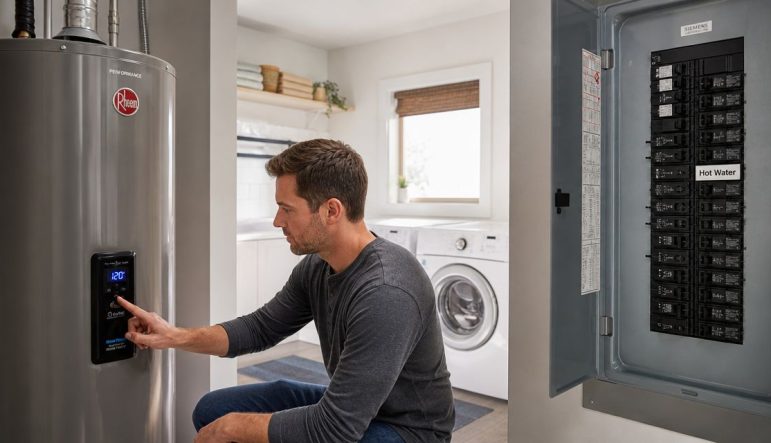
A cold shower at 6 am usually sends people straight to one conclusion. The hot water unit has died.
Sometimes that's true. Often it isn't. In Brisbane homes, especially those with electric storage systems, the underlying fault can sit somewhere earlier in the chain: the dedicated circuit, the thermostat, a safety cut-out, sediment inside the tank, or a leak that has changed how the system operates. Good hot water system troubleshooting starts by separating electrical faults from plumbing faults before anyone starts replacing parts.
That matters for comfort, but it also matters for running costs. Water heating is typically the second-largest energy use in the average Australian home, accounting for about 15%–25% of household energy use according to this Australian hot water troubleshooting overview. When a unit is limping along with a hidden fault, it's not just annoying. It can waste power every day.
If you've got no hot water this morning, don't start by assuming the whole system needs replacing. Start by asking a simpler question.
Is this an electrical problem, or is it a plumbing problem?
That sounds basic, but it's the step most generic advice skips. Homeowners jump from “cold water at the tap” to “failed heater” far too quickly. A proper diagnosis starts wider. Is the cylinder cold because it never received power overnight? Is the thermostat cutting out? Is the tank full of sediment? Is a valve or leak affecting delivery?
Brisbane homes often rely on electric storage hot water, and those systems are straightforward in one sense. They heat water using electrical components, store it, and deliver it through standard plumbing. But troubleshooting gets messy when people mix the two sides together and check everything at once.
Practical rule: If the system isn't heating at all, think electrical first. If the system heats but performs badly, think plumbing condition and delivery next.
For readers comparing different system types, this guide for Los Angeles homeowners is useful because it highlights how diagnosis changes when the system is gas rather than electric. Brisbane homes with electric storage units need a different first-pass checklist.
If you want a local overview of repair pathways, DLG has also published a Brisbane-focused hot water repairs guide that helps connect fault symptoms to likely repair decisions.
Before you touch the unit, do five quick checks. No tools. No covers removed. No guessing.
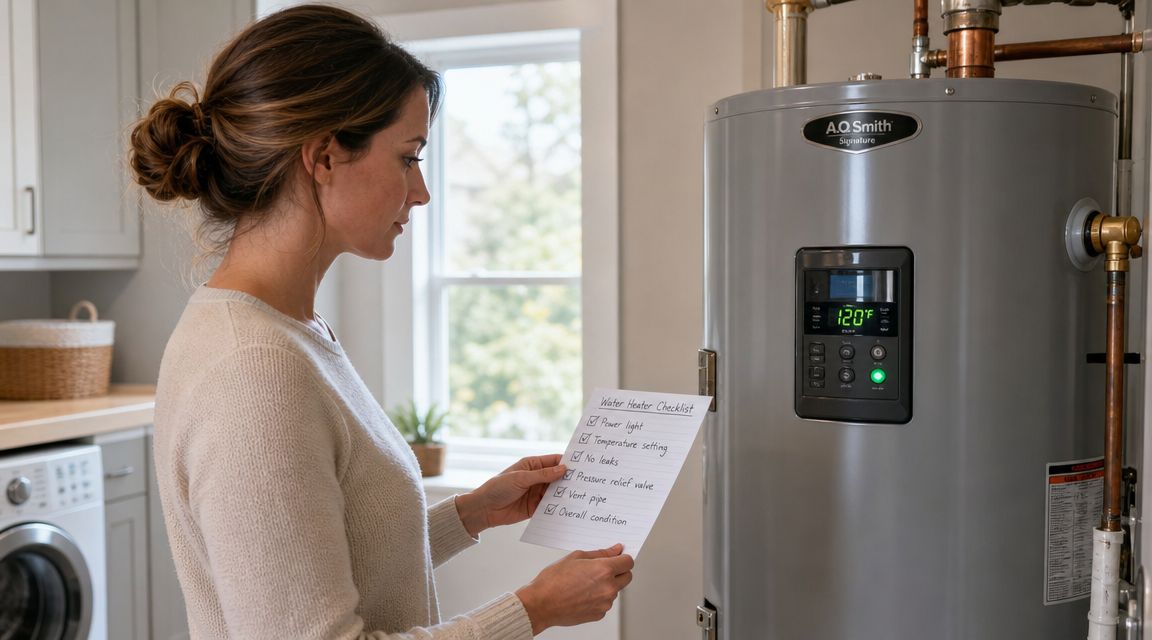
Many homeowners assume a no-hot-water fault means the appliance itself has failed, but it can often be an electrical supply issue. This professional troubleshooting reference makes the point clearly: checking whether the dedicated circuit at the switchboard has tripped is one of the most important first steps.
Run hot water at more than one fixture.
Find the hot water circuit at your switchboard. It may be labelled “hot water”, “HWS”, or similar.
If you're not sure what a tripped safety device looks like, this local article on a tripped safety switch helps homeowners identify the difference between a broader electrical issue and a single appliance fault.
If the breaker has tripped, don't keep resetting it to “see if it holds”. That usually turns a simple fault into a more dangerous one.
The more precisely you describe the symptom, the easier the diagnosis becomes.
For example, “no hot water anywhere since this morning” means something very different from “water is warm but not staying hot” or “only one bathroom has a problem”. This why is hot water not working article is another useful example of how symptom wording changes the likely cause.
This is the line homeowners need to respect. Electric hot water systems use a 240V supply, and the safe workflow is not optional. According to this electrical troubleshooting guide, the correct process is to isolate the circuit at the switchboard and confirm zero voltage before touching electrical components.
That's why some checks are reasonable for a homeowner, and some are not.
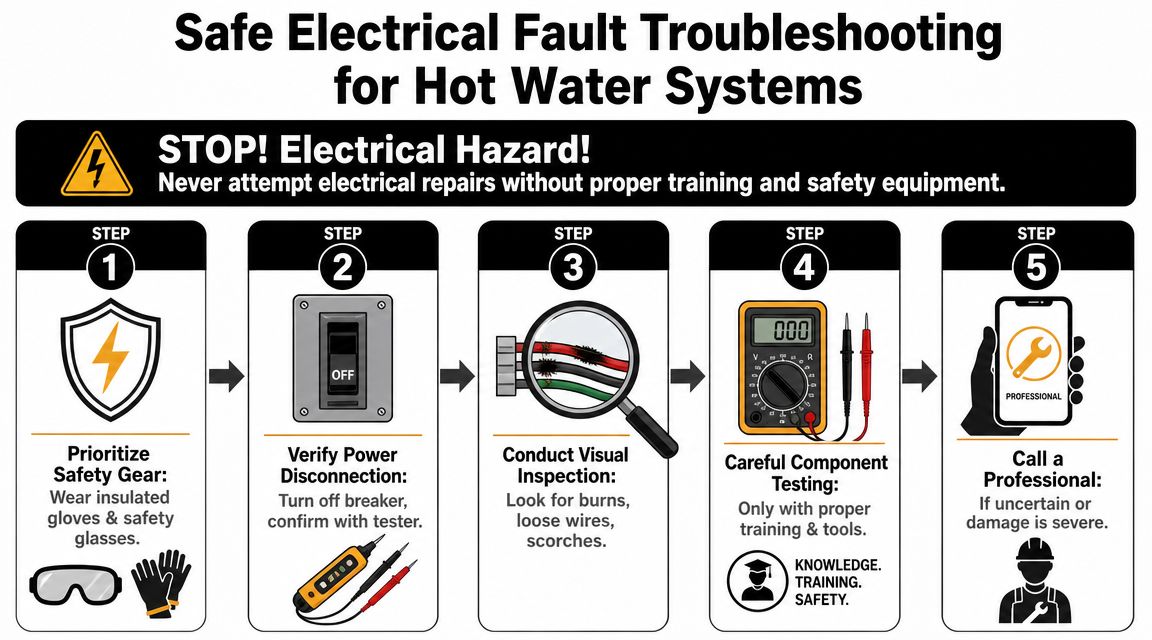
If your system design allows access to user-level controls without exposing wiring, there are only a couple of things worth checking.
The reset button
Some electric systems have a high-temperature cut-out reset. If it has tripped once, pressing it may restore operation. If it trips again, that's not a reset problem anymore. It points to a thermostat, element, wiring, or overheating issue.
The thermostat setting
Sometimes the dial has been knocked down during cleaning, storage, or other work around the unit. A low setting can look like a major failure when it's actually a control issue.
Visible signs from outside the covers
You're looking for heat damage, discolouration, buzzing, or anything that suggests the fault is active and unsafe.
Don't remove electrical access panels unless you're trained and equipped to test safely. The dangerous part of hot water system troubleshooting starts the moment exposed electrical components are involved.
A short visual guide can help reinforce that workflow:
Once the diagnosis reaches continuity testing, element testing, thermostat testing, or wiring inspection, it's no longer a DIY job.
A healthy heating element in an electric storage unit will usually show cold resistance in the low tens of ohms depending on wattage, and electricians commonly verify element condition with an ohms or continuity test after isolation. Near-zero or infinite readings can indicate a short or open circuit. That's useful to know because it explains why a unit can have power available yet still fail to heat.
The mistake people make is trying to jump straight to that test without proper isolation and voltage verification. The other common mistake is pressing reset and treating the symptom as the fix.
If the system needs live electrical diagnosis, access-panel removal, multimeter testing, or component replacement, that's electrician territory. For that type of work, a licensed service such as DLG Electrical handles isolation, fault finding, and safe repair on electric hot water circuits and components.
Not every hot water problem starts with wiring. Sometimes the electrical side is fine and the trouble is physical: a leak, internal scale, a tempering issue, or tank condition.
Start with your eyes and ears.
Walk around the unit with a torch and check the area properly.
If the leak has spread beyond the unit and affected flooring, walls, or cabinetry, water damage becomes its own problem. In that situation, these AMPM Restoration Florida Suncoast experts show why quick containment matters even after the source is isolated.
A dripping temperature pressure relief valve doesn't always mean catastrophe, but constant discharge isn't normal to ignore either. It can indicate excess pressure, overheating, valve wear, or another fault that needs proper diagnosis.
Discoloured or milky-looking hot water can also tell a story. So can odd noises. Sediment is a major example. This maintenance reference on draining and flushing hot water tanks notes that sediment accumulation at the bottom of a tank can insulate the water from the heating element, reducing efficiency and mimicking the symptoms of a failed element.
That matters because people often replace electrical parts when the underlying issue is poor heat transfer through a scaled-up tank.
A tank can sound like an electrical problem and perform like an electrical problem while the root cause is sediment sitting over the element.
If you want a more detailed local look at service-related maintenance tasks, this article on servicing a hot water tank is a useful companion to fault diagnosis.
The cheapest hot water repair is the one you never need.
Most systems don't fail without warning. They give smaller signals first: a little less recovery, a faint rumble, minor valve weeping, dirty water after sitting unused, or a breaker that starts acting up once in a while. Homeowners who act on those early signs usually avoid the worst outcomes.
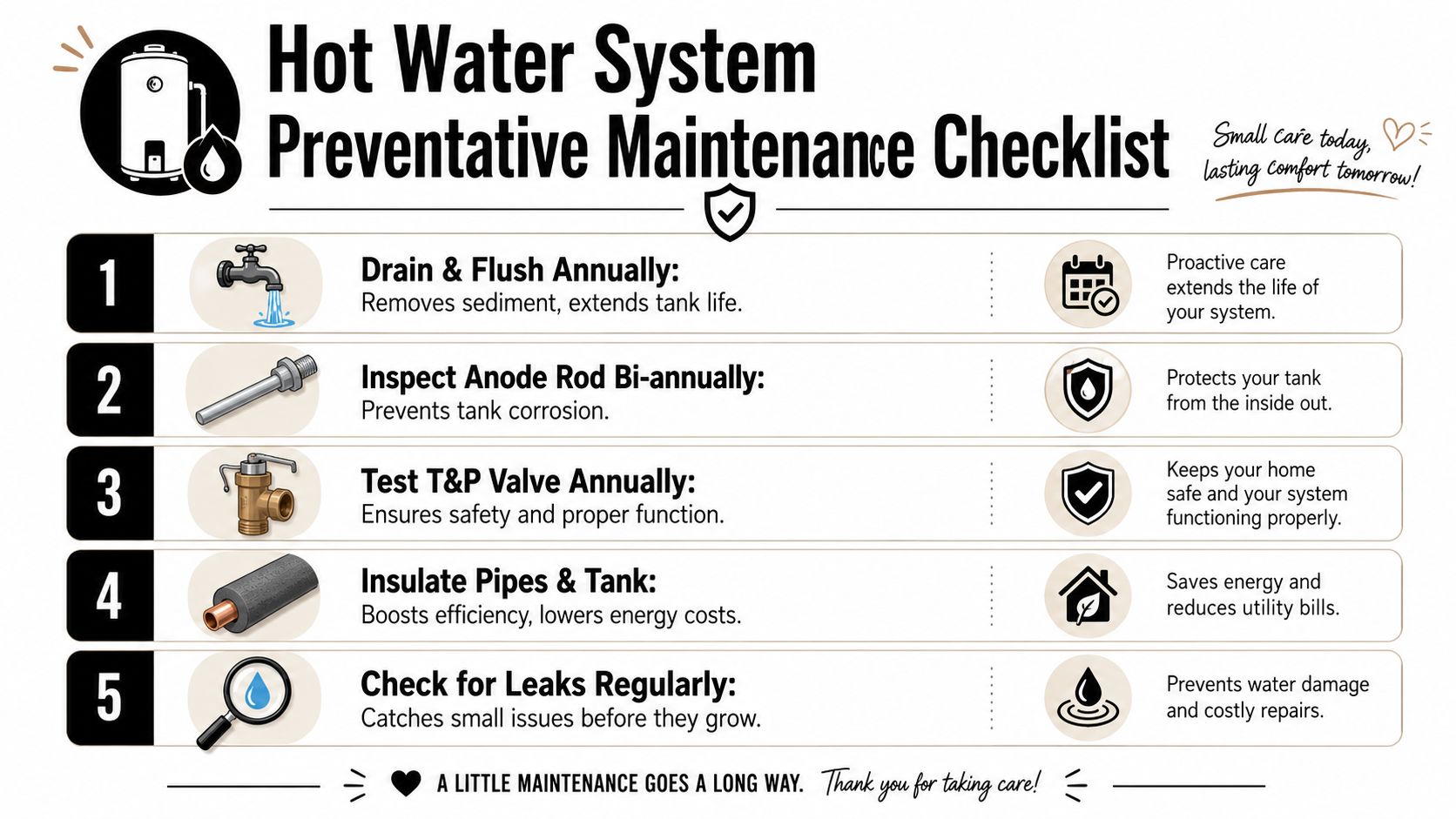
Some maintenance jobs are worth doing because they prevent very specific failures.
The common mistake isn't lack of effort. It's doing the job in the wrong order.
People drain a tank, do a quick check, then switch it back on before confirming it has filled properly. Or they treat sediment as harmless because the water still gets warm eventually. In practice, scale build-up can imperceptibly make the system slower, noisier, and more expensive to run.
Regular maintenance doesn't just preserve hot water. It preserves accurate diagnosis, because a clean and stable system is much easier to fault-find than one with several minor problems stacked together.
If your system is older, heavily used, or part of a rental property, a periodic professional inspection is often more useful than waiting for a complete loss of service.
There's a clear point where hot water system troubleshooting stops being helpful and starts becoming risky.
The simplest rule is this. If you need to open an electrical compartment, test live components, or keep resetting a protective device, stop. A licensed electrician should take over.
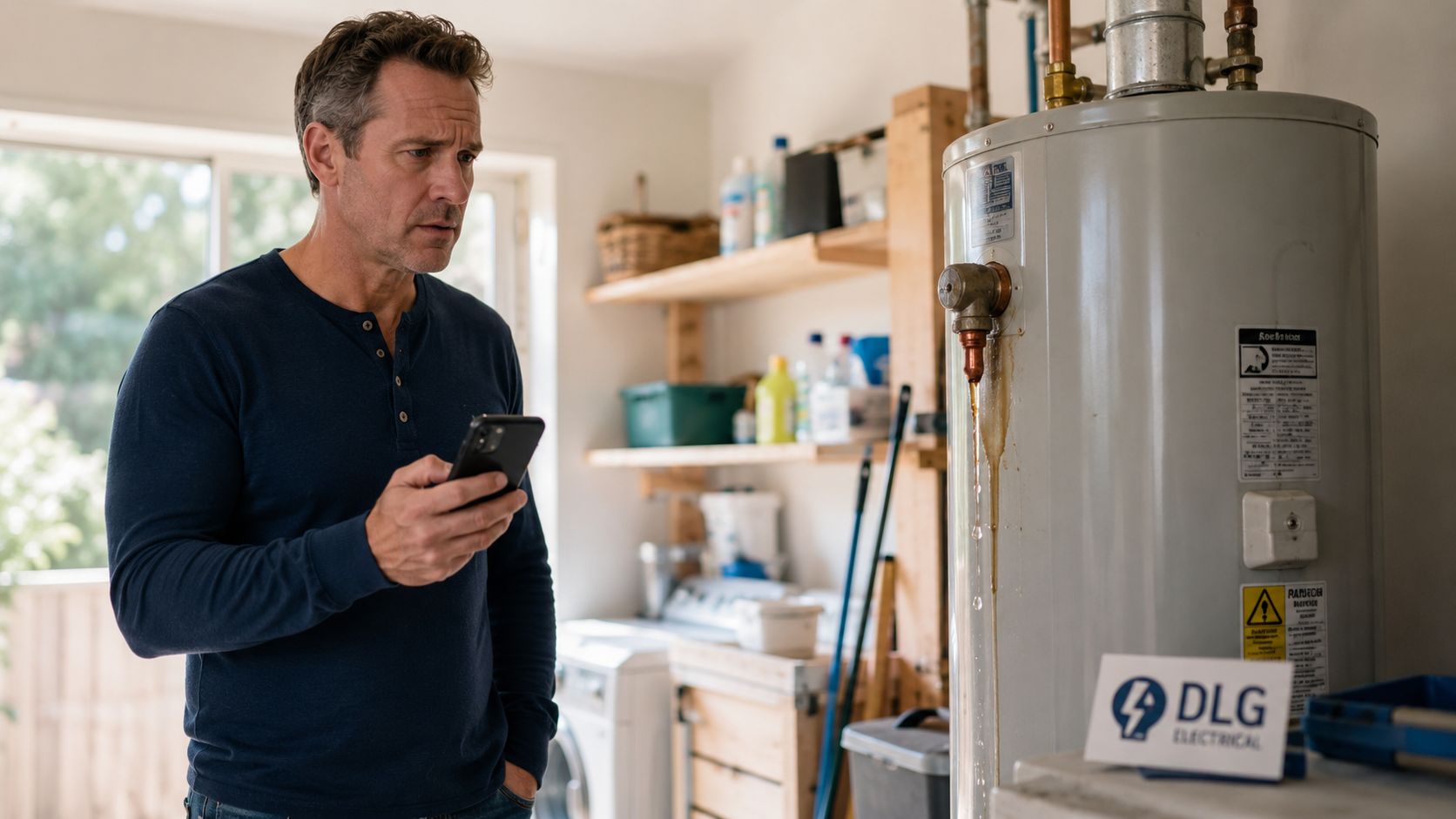
That last point matters for landlords and property managers. In a rental, “still sort of works” isn't a safe standard if the system overheats, cycles irregularly, or delivers inconsistent hot water.
| Task | DIY Safe? | Call DLG Electrical? |
|---|---|---|
| Check whether multiple taps have the same symptom | Yes | No |
| Inspect the switchboard for a tripped hot water circuit | Yes | No |
| Reset a breaker once | Yes | No, unless it trips again |
| Press an accessible reset button once | Yes | No, unless the fault returns |
| Remove electrical covers | No | Yes |
| Test thermostat or element with a multimeter | No | Yes |
| Diagnose repeated cut-out trips or overheating | No | Yes |
| Investigate buzzing, burning smells, or scorch marks | No | Yes |
Homeowners can gather clues. That's useful and it saves time.
But diagnosis becomes professional work when the fault sits inside the electrical circuit or touches safety controls. That's especially true in Brisbane rentals, where habitability, scald protection, and electrical safety all overlap.
Rusty or unpleasant hot water can point to internal tank corrosion or a sacrificial anode nearing the end of its useful life. If it's only on the hot side and not the cold taps, the hot water system is a likely suspect.
That depends on the fault pattern, tank condition, and how many issues are stacking up at once. A single isolated repair can make sense. A leaking tank body, repeated electrical faults, and poor performance together usually push the decision toward replacement rather than another temporary fix.
If you have a newer heat-pump or hybrid system, the failure pattern can be different from older electric storage tanks. This heat-pump troubleshooting overview notes that homeowners may see long recovery times or lukewarm water due to control settings, sensor faults, or airflow issues. In those systems, the problem may not be the tank at all.
No. A reset can restore service briefly, but if the unit trips again there is an underlying fault. Treat the reset as a symptom check, not a repair.
If your Brisbane home has no hot water, repeated breaker trips, unstable temperature, or signs the fault could be electrical rather than plumbing, contact DLG Electrical for a licensed diagnosis. A clear fault-finding process is the fastest way to avoid guesswork, unnecessary part changes, and unsafe DIY repairs.

Master Electrician with over 30 years of experience. Founded DLG Electrical in 2005 after international project work including electrical installations at Stamford Bridge Stadium, London(Home of Chelsea FC).

Local Electricians that can fix all Electric Hot water Systems.
Motion sensor lights are a versatile addition to any home, offering nu
