83 Jean St, Grange QLD 4051
Mon-Fri 07:30 AM - 04:00 PM - Sat - 8:00 - 12 - Sunday Closed
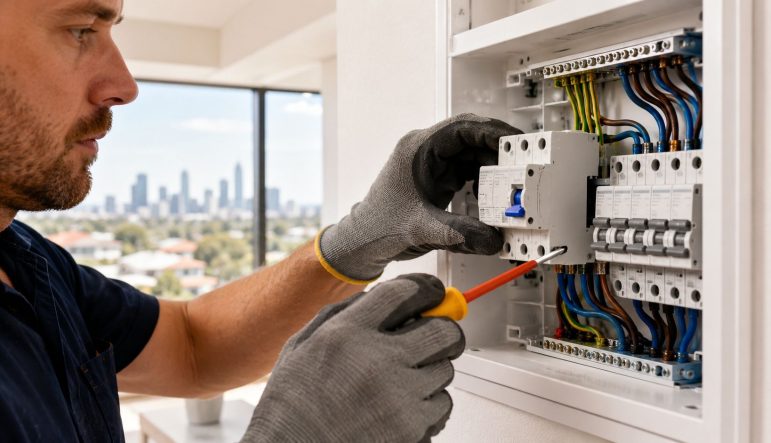
You've probably landed here because something about your home's switchboard doesn't feel straightforward.
Maybe you've just bought an older Brisbane house and opened the meter box to find a mix of old breakers, handwritten labels, and no clear sign of what's protected. Maybe you're getting a rental property ready for new tenants and trying to work out what Queensland law requires. Or maybe an electrician has mentioned a safety switch installation and you want to understand what you're paying for before anyone starts work.
That's a sensible place to start. Electrical jargon turns simple safety decisions into confusion far too often.
A safety switch is one of the most important protections in any home because it's designed to cut power when electricity is leaking somewhere it shouldn't. That matters in older homes, renovated homes, and new homes alike. It also matters if you're a landlord, because compliance in Queensland isn't just about having something on the board that looks modern. It's about making sure the right circuits are protected, the installation meets the rules, and the switches are tested properly.
For a lot of Brisbane homeowners, electrical safety only gets attention when something triggers concern. A power point looks old. The lights trip unexpectedly. A building inspector flags the switchboard. A property manager asks whether the rental is compliant. Until then, the switchboard is usually out of sight and out of mind.
That's understandable. Homeowners typically don't spend their weekends reading labels inside a meter box. They just want to know whether their home is safe, whether they're meeting their legal obligations, and what practical next step makes sense.
A proper safety switch installation is usually the first thing I'd tell a homeowner to check when the property is older, recently purchased, or being prepared for lease. It's the device that's there to protect people, not just wiring or appliances. That distinction matters.
Queensland's rules also make the conversation more specific than generic online advice suggests. The age of the home matters. Rental status matters. The number of safety switches matters. Even the testing interval matters.
If you want the short version, it's this. Don't assume that because there's one switch on the board, the home is fully protected. Don't assume old advice about testing still applies. And don't leave the job to guesswork. A licensed electrician should assess the board, identify what each circuit needs, install the right protection, and confirm the work properly.
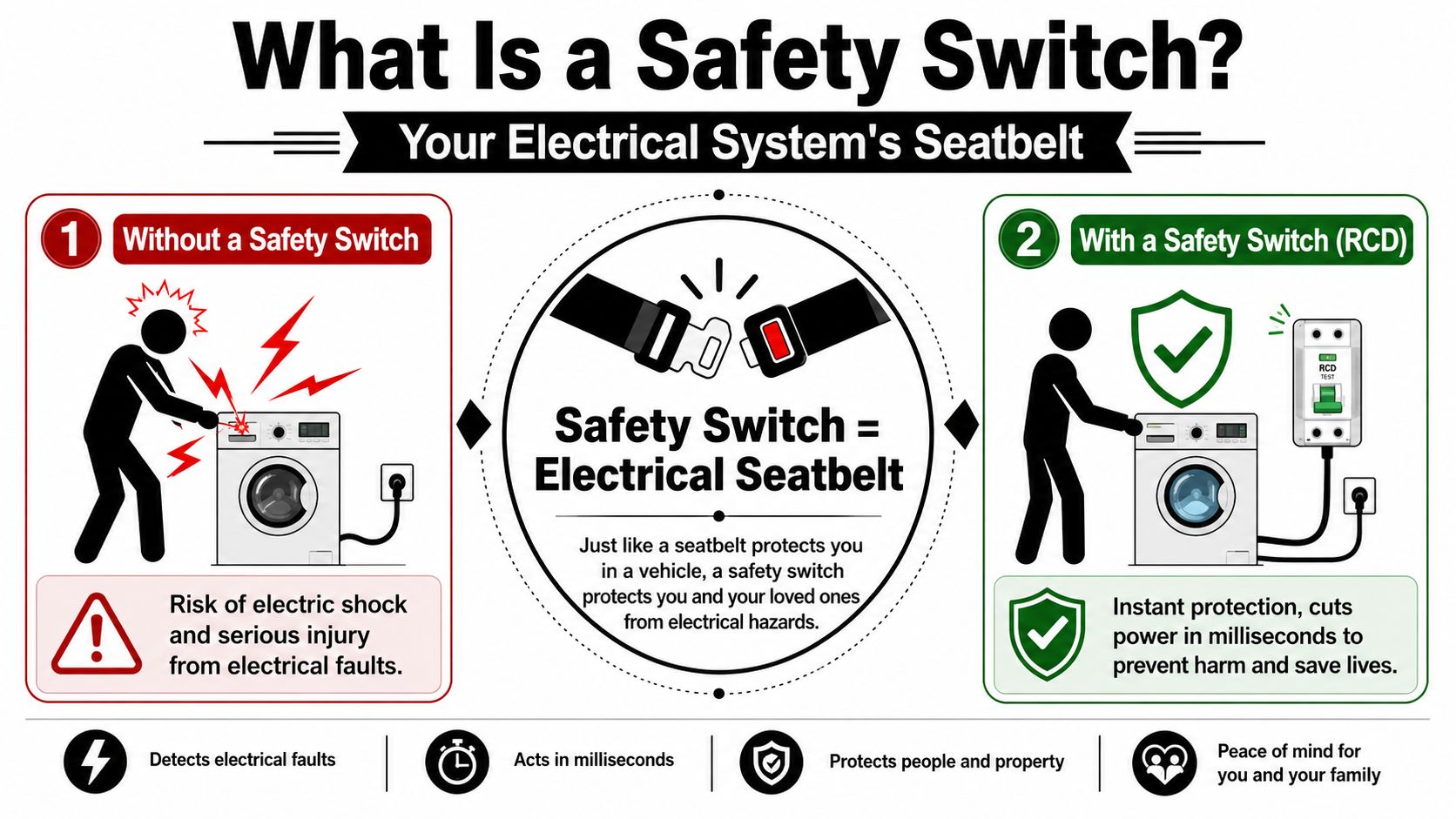
A safety switch is best understood as the seatbelt for your electrical system.
If electricity starts leaking from a circuit, through damaged wiring, a faulty appliance, or a person, the safety switch detects that imbalance and shuts the power off fast. That's why electricians also call it an RCD, or residual current device. Its job is personal protection.
Many homeowners get caught out here.
A circuit breaker protects the circuit from overloads and short circuits. That helps prevent damage to wiring and equipment. It does not do the same job as a safety switch when someone gets a shock.
A safety switch monitors the flow of current. If the current going out doesn't match the current coming back, it trips.
In plain terms:
If someone tells you, “You've already got breakers, so you're covered,” that's not the same thing as having proper RCD protection.
Practical rule: If your main concern is protecting people, ask specifically which circuits have safety switch protection and which don't.
The risk isn't theoretical. In Australia, approximately 15 people are killed and 300 are hospitalised annually due to home electrical shocks, with nearly 90% of these incidents potentially preventable if working safety switches were installed, according to this Australian safety switch installation guide.
That's why safety switches are treated as essential, not optional.
The danger points inside homes are ordinary things. A damaged kettle lead. A worn-out extension cord. Moisture getting where it shouldn't. A fault in an outdoor power point. An appliance that looks fine from the outside but isn't safe internally. Without the right protection, the first sign of trouble can be the shock itself.
What works is straightforward. A licensed electrician checks the switchboard, confirms which final sub-circuits are protected, and installs the correct devices for the board and wiring arrangement.
What doesn't work is relying on assumptions:
If you only remember one point from this section, make it this. A safety switch is there to save lives. It isn't just another breaker in the board.
A Brisbane homeowner buys an older house, sees one safety switch in the board, and assumes the place is covered. Then an electrician tests the circuits and finds the lights are on one device, a few power points are on another breaker with no RCD protection, and the shed circuit has been altered at some point. That situation is common in Queensland, especially in older homes that have been renovated in stages.
Queensland's rules have tightened over time, and the age of the house only tells part of the story. The Queensland Government's guidance on safety switches for homes explains that safety switch requirements were introduced for new homes in the early 1990s and later expanded to cover both power point and lighting circuits in new homes. In practice, that means a house can be old enough to have gaps, or new enough to look compliant, yet still need attention because of later alterations, switchboard limitations, or partial upgrades.
The biggest mistake is assuming one safety switch protects the whole property. Often it does not.
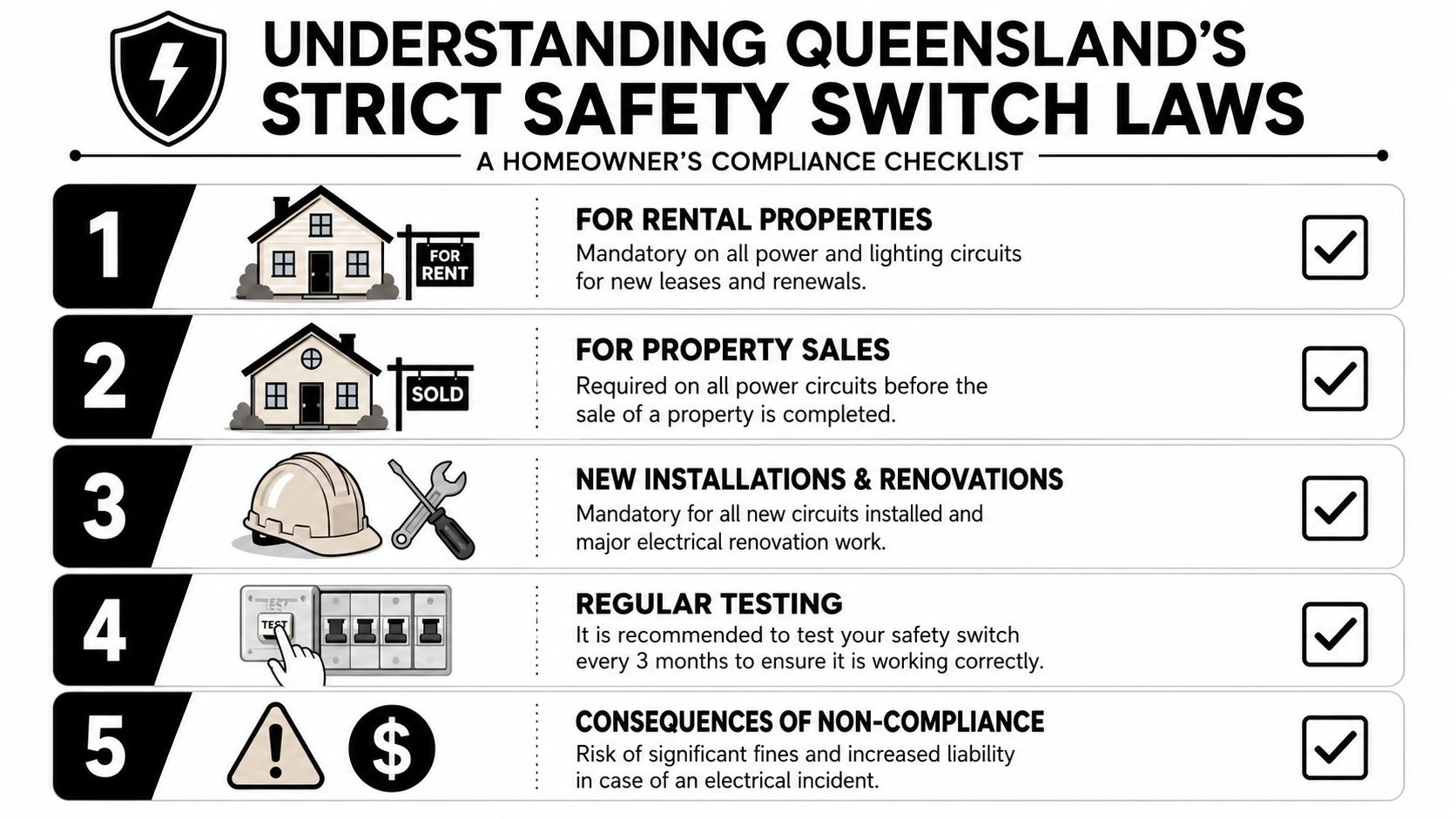
Queensland also puts clear responsibilities on owners and landlords. If you buy a home and required safety switches are missing, you have a limited period to get them installed. If you rent out a property, the obligations are tighter again, and testing is not a once-and-forget job. The rental rules were updated so prescribed safety switches in rental properties must be tested at least every 3 months, and the test results need to be recorded. That catches some landlords out because they remember the installation rule but miss the ongoing testing requirement.
A practical way to look at it is this:
Renovation work can change the compliance picture as well. New circuits, switchboard alterations, and major electrical upgrades need to meet the standards that apply to that work at the time it is done. That is one reason I tell homeowners not to rely on the age of the house as their only guide.
Electrical work sits inside a bigger compliance framework. If your renovation also involves structural or approval issues, Templeton Built's article on ensuring compliant Adelaide renovation projects is a useful general reference for understanding how separate compliance duties can overlap.
For the electrical side, ask for the right paperwork after regulated work. Homeowners should receive the required certificate where the work calls for it. If you want to know what that document covers and why it matters, read this guide to an electrical certificate of compliance.
Missing paperwork usually points to the same problem as missing protection. Nobody checked the job properly.
Many Brisbane homes have mixed-age wiring and staged upgrades. A neat-looking switchboard does not confirm full protection. One safety switch is not enough if other final sub-circuits are left outside that protection.
The safe approach is simple. Get the board assessed circuit by circuit, confirm what is protected, identify what is missing, and fix the gaps before a sale, tenancy, or renovation turns them into a compliance problem.
Most homeowners are less worried about the concept of a safety switch than the process around it. They want to know what happens on the day, whether the power will go off, how disruptive it is, and whether the electrician is likely to uncover a bigger switchboard problem halfway through.
A proper safety switch installation follows a clear sequence. That's what keeps the job safe and keeps surprises to a minimum.
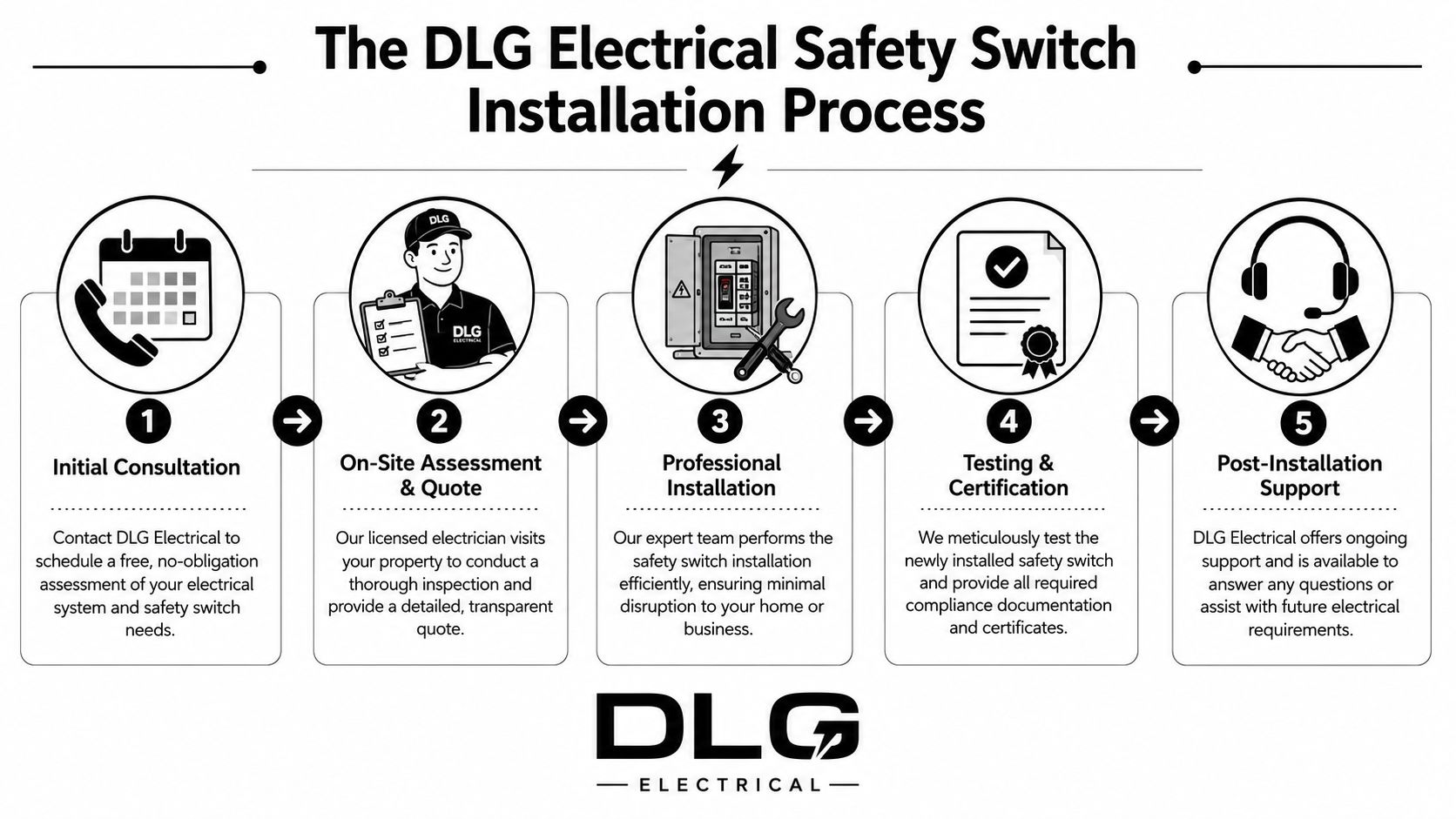
The first part is discussion, not installation.
An electrician needs to know the property type, approximate age of the switchboard, whether the property is owner-occupied or rented, and whether there have been any past upgrades or renovations. If you've got photos of the board, that helps, but it won't replace an on-site assessment.
At this point, a good electrician won't promise a one-size-fits-all fix. They'll explain that the number of devices needed depends on the board layout, the circuits, and the condition of the existing installation.
This is the most important stage.
The electrician identifies the final sub-circuits, checks the switchboard arrangement, looks for signs of older or altered wiring, and works out whether the board can accept the required protection cleanly or whether a broader upgrade is the safer option.
This is also where one of the most misunderstood points comes up. Most content assumes a single safety switch covers all circuits, but Electrical Safety QLD explicitly states “one safety switch may not be enough” for full protection, especially when legacy wiring lacks earth continuity, often requiring at least two RCDs for complete coverage, as noted by Electrical Safety Queensland's safety switch guidance.
That matters in older Brisbane homes. One switch might exist on the board and still leave gaps in protection.
If a board has had piecemeal work over the years, the safest answer usually comes from mapping what each circuit actually does, not from counting devices on the front cover.
Once the scope is confirmed, the electrician isolates supply and carries out the installation.
Depending on the board, that may involve:
There will usually be a temporary power outage while the work is being done. Homeowners should plan for that, especially if they work from home, rely on internet-connected devices, or have sensitive appliances running.
The neatest jobs are the ones where the electrician has enough room in the board, clear circuit identification, and no hidden defects. The slower jobs are usually older boards with unclear circuit allocation, crowded enclosures, or signs that earlier work wasn't done consistently.
Once the devices are fitted, they need to be tested properly. The electrician confirms that the safety switches operate as intended and that the protected circuits are identified correctly.
You should also receive clear advice on how to test the switches going forward and what to do if one trips repeatedly. Repeated tripping is not something to bypass or ignore. It means a fault, wiring issue, or appliance problem needs investigation.
A good handover leaves you with three things:
That's the difference between a genuine safety upgrade and a rushed swap-over that only looks right from the outside.
Cost is one of the first questions homeowners ask, and rightly so. The difficulty is that safety switch installation isn't priced properly from a photo alone unless the board is very simple and very clear.
The final cost depends less on the switch itself and more on what the switchboard can support, how many circuits need protection, and whether the existing layout is suitable for compliant work. In many Brisbane homes, the labour is straightforward. The uncertainty usually sits in the board condition.
A standard installation in a modern, accessible switchboard is very different from work on an older board with mixed devices, limited space, or unclear circuit identification. If multiple circuits need individual protection, the scope changes again.
That's why homeowners should expect a quote based on inspection, not guesswork. If the electrician starts talking about a possible switchboard upgrade, it's worth understanding the broader cost drivers too. This guide to electrical switchboard upgrade cost gives useful background on why some boards need more than a simple add-on.
| Factor | Impact on Cost |
|---|---|
| Existing switchboard condition | Older, crowded, or deteriorated boards often require more labour or broader remedial work before compliant protection can be installed |
| Number of circuits needing protection | More protected circuits usually means more devices, more board space, and more installation time |
| Board space and layout | Tight or poorly organised boards can turn a simple job into a more involved one |
| Type of protection used | Separate RCDs and individual RCBO arrangements can affect materials and installation approach |
| Previous alterations | Mixed-era wiring or undocumented circuit changes often require extra testing and tracing |
| Accessibility | Easy access helps. Awkward meter box locations or restricted work areas slow the job down |
The common mistake is asking for the cheapest single-device option without checking whether it protects the right circuits or creates nuisance tripping across too much of the home.
Another problem is delaying needed switchboard work because the board still “sort of works”. Functional isn't the same as safe, and it isn't the same as compliant.
The better approach is simple. Ask for a clear quote, ask what circuits will be protected, and ask whether the board itself is suitable for the proposed installation. That gives you a real basis for comparison, not just a lower headline figure.
You buy an older Brisbane home, open the switchboard, and see one safety switch. That looks reassuring until you find out one device may only cover part of the house. I see this often. The board is tidy, the lights work, but key circuits still do not have the protection people assume they do.
That gap matters more in Queensland because compliance has changed over time, and many homes sit somewhere in the middle. Parts of the wiring may have been upgraded, while older sections were left alone. A quick look at the board rarely tells the full story.
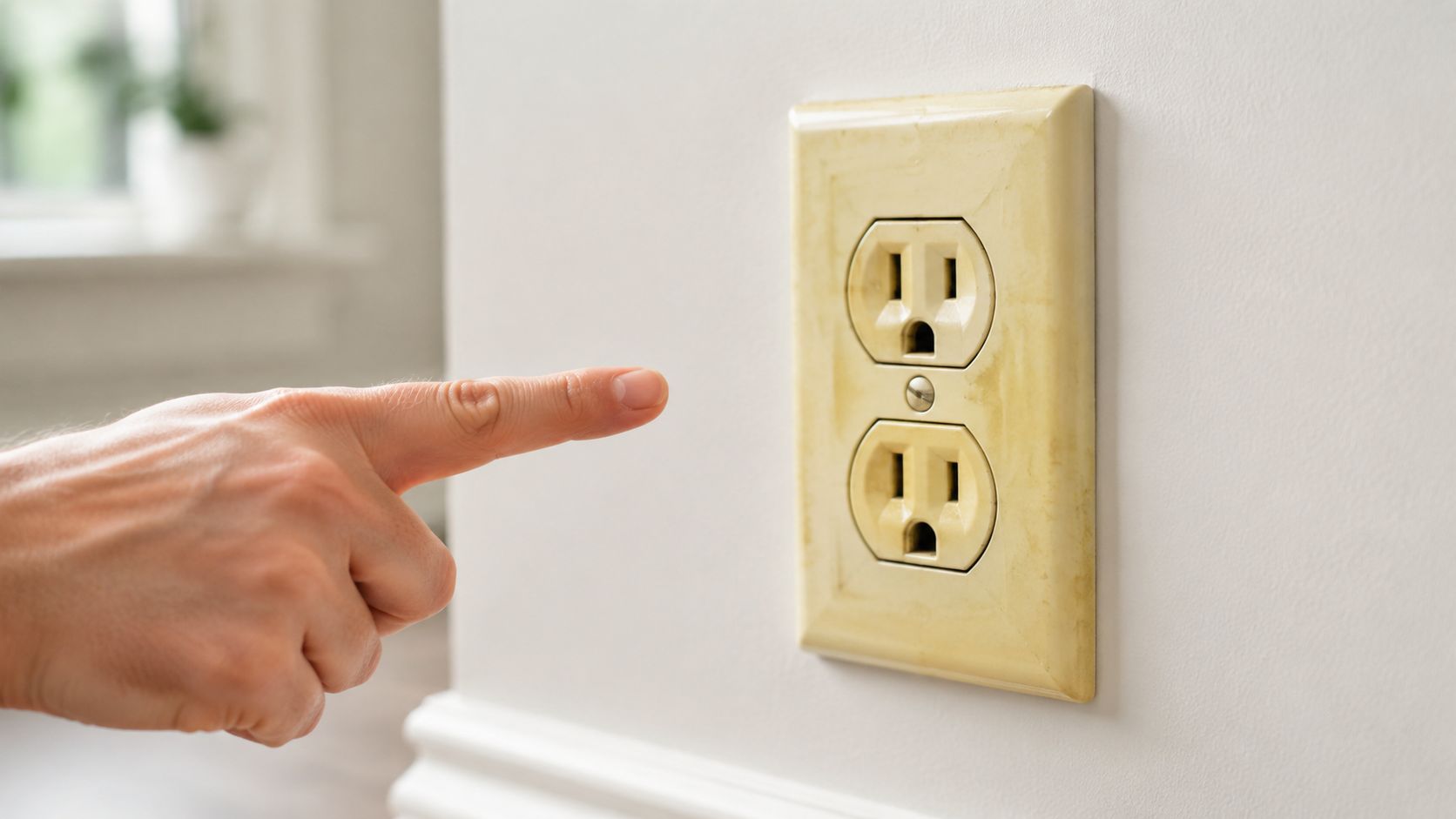
Book an assessment if any of these apply:
Clean and well-kept homes can still have outdated switchboard protection. Appearance is not the test.
A homeowner can do the basic push-button test safely.
If it does not trip, or it will not reset, stop there and call a licensed electrician. A safety switch that fails its test should be treated as unreliable until it is checked properly.
Testing the button is only a basic function check. It does not confirm that every required circuit is protected, that labels are accurate, or that the switchboard arrangement is suitable for the home.
Queensland landlords need to pay attention here because outdated advice is still common. For rental properties, safety switches must be tested at least every 3 months in line with Queensland rental requirements, as set out by the Residential Tenancies Authority Queensland safety switch guidance.
That catches many owners out. They have a safety switch installed, but no regular test routine, no record, and no clear idea which circuits are covered.
For Brisbane landlords, the practical approach is simple. Confirm the property has the right protection in place, test it on schedule, and get the board checked if there is any doubt about coverage or age. If you want a broader review of the property's condition, book an electrical safety inspection and get a clear answer before a small issue turns into a compliance problem.
A safety switch job can look simple from the hallway. The cover goes back on, the power comes up, and everything appears fine. What matters is what was checked behind that cover, which circuits are protected, and whether the board now meets the standard your home or rental property is expected to meet.
Brisbane homes rarely fit a single template. A post-war place in Grange, a renovated Queenslander in Windsor, and a newer home in the outer suburbs can all need different switchboard solutions. Some boards have space constraints. Some have mixed-age wiring. Some already have one safety switch, but not enough protection across the final sub-circuits. That last one catches people out regularly in Queensland.
DLG Electrical has been operating in Brisbane for over 19 years, and that local experience shows up in the decisions that matter on site. Older homes often need more than a quick device swap. They need someone to identify what is already protected, what is not, whether a staged upgrade is sensible, and whether the switchboard itself is still suitable for additional devices.
That practical judgment is what homeowners are paying for.
DLG Electrical is family-owned, fully licensed, and insured. For a homeowner, that means clear advice, tested work, and no vague promises about a board being "covered" if it is only partially upgraded. If a single safety switch is not enough for the circuits in the home, that should be said plainly.
The same applies to landlords. Brisbane rental properties now need closer attention to testing and record-keeping, and a proper installation needs to stand up to that reality. Good work is not just tidy. It is compliant, correctly labelled, tested, and explained in a way the owner can use later.
Trust is built on that level of detail. Safety first. Clear scope. No guesswork.
Often, yes.
Many older homes have had partial upgrades over time. One device on the switchboard doesn't automatically mean all final sub-circuits are protected properly. If the home has legacy wiring, later additions, or a crowded board, a licensed electrician should assess circuit coverage rather than assume one switch is enough.
Ask whether the switchboard has safety switch protection on the required circuits, whether any circuits remain unprotected, and whether there's paperwork for recent electrical work. Older inner-north homes often have renovation history that isn't obvious from the board cover alone.
If the answer is vague, organise an electrical assessment early.
That depends on the board and the circuits, but treating a partial fix as a complete safety upgrade is where people get misled. A staged approach can make sense in some situations. It only works if the electrician is clear about what is and isn't protected after stage one.
Look for a test button. Most safety switches have a clearly marked “T” or “test” button. Even then, the bigger question is which circuits that device protects. A button confirms the device type. It doesn't confirm whole-of-home coverage.
Don't rely on memory or old advice. Keep a clear testing schedule, make sure the switchboard has been assessed for the right circuit protection, and keep records of electrical work and testing. If there's any doubt, get a licensed electrician to review the property before the next tenancy milestone.
Reset it once if it's safe to do so, but don't treat repeated tripping as normal. A safety switch that keeps operating may be doing its job because there's a fault on an appliance, outlet, or circuit. The answer is fault-finding, not bypassing protection.
If you want clear advice on safety switch installation, switchboard compliance, or a full assessment of your Brisbane property, contact DLG Electrical. You'll get practical guidance, licensed workmanship, and a free, no-obligation quote so you know exactly what your home needs before any work begins.

Master Electrician with over 30 years of experience. Founded DLG Electrical in 2005 after international project work including electrical installations at Stamford Bridge Stadium, London(Home of Chelsea FC).

Local Electricians that can fix all Electric Hot water Systems.
Motion sensor lights are a versatile addition to any home, offering nu
