83 Jean St, Grange QLD 4051
Mon-Fri 07:30 AM - 04:00 PM - Sat - 8:00 - 12 - Sunday Closed
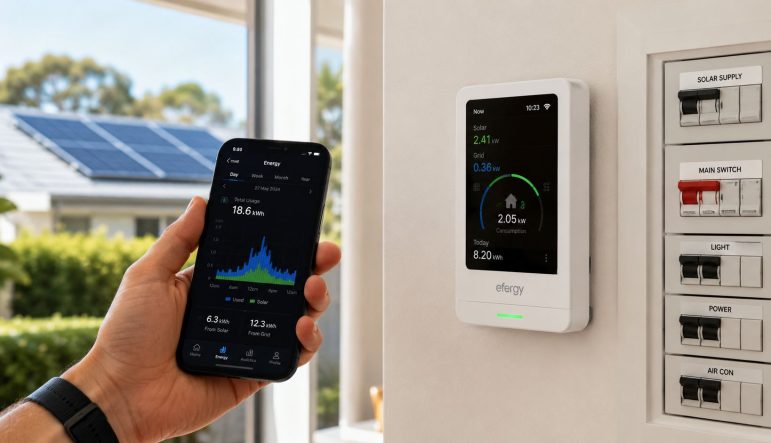
You open the power bill, scan the total, and immediately start guessing. Was it the air con through that last humid stretch? The pool pump? The second fridge in the garage that nobody really thinks about? For a lot of Brisbane homeowners, that's the frustrating part. The bill tells you what you spent, but it doesn't tell you what caused it.
That's where energy monitoring systems start earning their keep. Instead of relying on hunches, you get a clearer picture of what your home is doing across the day. In suburbs like Grange and Windsor, where plenty of homes have a mix of older wiring layouts, renovated kitchens, ducted cooling, pools, and rooftop solar, that visibility matters. The biggest waste usually isn't dramatic. It's the steady background load you never properly measured.
After years working on Brisbane homes, I've found that the emphasis isn't on more theory; it's on a practical way to see what's using power, what's worth fixing, and what can be left alone. That could mean a simple plug-in monitor for one appliance, or a switchboard-based system that tracks the whole property. The right setup depends on the house, the switchboard, and what you're trying to learn.
A common Brisbane scenario goes like this. A homeowner in an older Northside property gets a high quarterly bill, assumes the retailer is the problem, then changes plans and still doesn't see the difference they expected. The underlying issue often sits inside the house. A tired appliance, a badly timed pool pump, or loads running during the wrong part of the day can push bills up.
That's why broad advice only goes so far. A general guide to cutting energy waste can help you spot the usual suspects, but monitoring adds the missing piece. It shows which habits matter in your actual home, not someone else's checklist.
For Brisbane homeowners, that clarity is useful because local conditions shape usage. Summer cooling loads, solar exports, electric hot water systems, and outdoor equipment all change the pattern. In Grange, I'd expect one set of issues in a renovated Queenslander. In Windsor, I might see something different in a townhouse with ducted air and newer appliances. The bill total can look similar. The cause often isn't.
Most households already know the obvious high-use items. They know air conditioning costs money. They know old fridges aren't ideal. What they don't know is when those loads run, whether they overlap, and whether there's a constant draw overnight that shouldn't be there.
Practical rule: If you can't see when your home uses power, you're managing electricity by guesswork.
That's the value of monitoring. It changes the conversation from “Why is my bill so high?” to “This circuit spikes every afternoon” or “That appliance never really switches off”. If you've been chasing the same question, this breakdown of why your power bill is so high is a useful starting point before you choose hardware.
A worthwhile system should help you answer practical questions:
That's the point of taking control. Not more data for its own sake. Better decisions, based on what your house is doing.
An energy monitoring system measures power at your switchboard, sends those readings to software, and shows where and when your home is using electricity. For Brisbane homeowners, that matters most when usage shifts through the day. Solar export in the middle of the day, ducted cooling in the late afternoon, and pool or hot water loads running in the background can all change what the bill looks like.
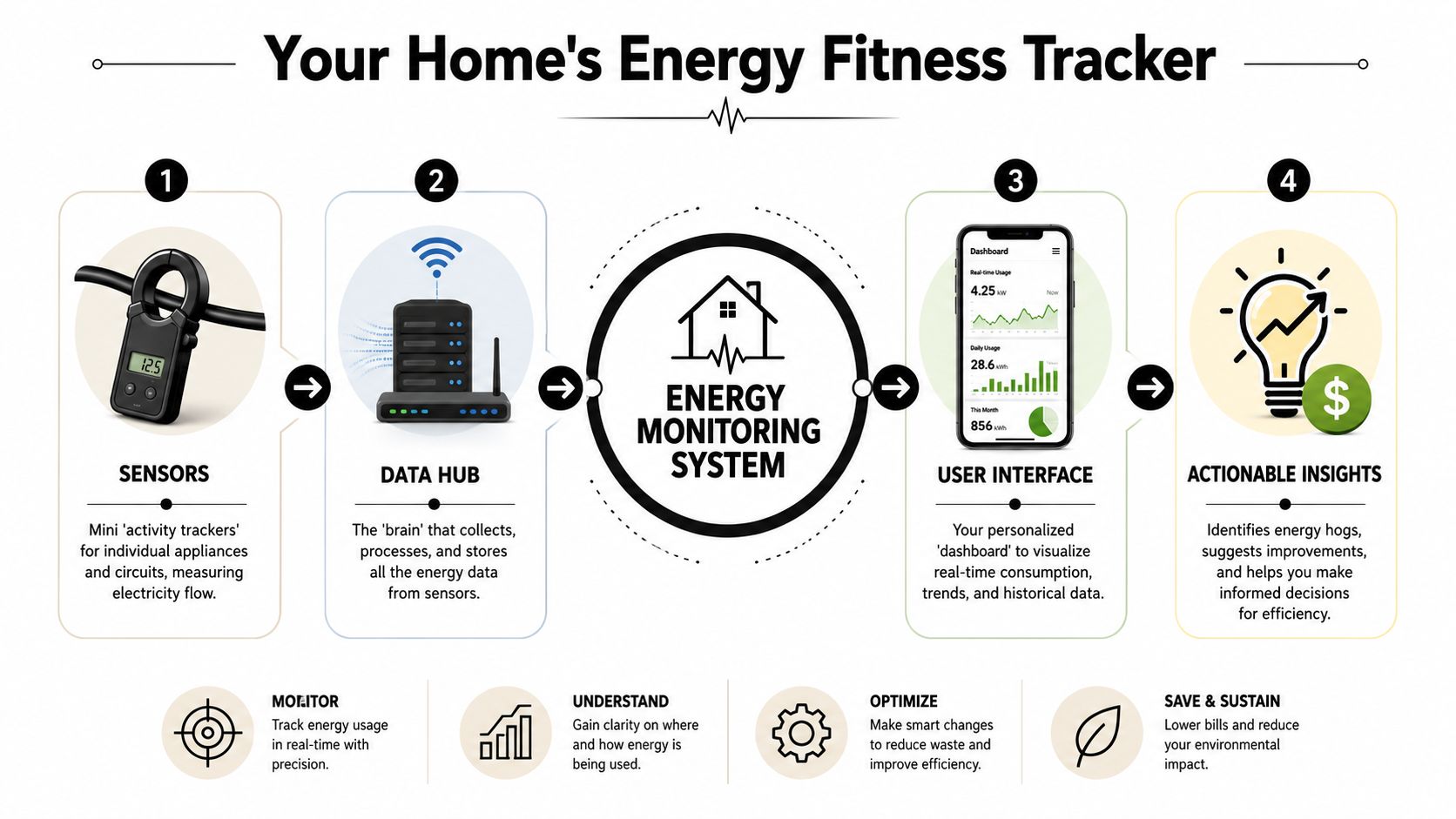
Most systems rely on three parts working together.
Sensors or clamps do the measuring. They sit around the incoming mains or selected circuits and record current flow. A basic setup tracks total household usage. A more detailed setup can watch individual circuits such as air conditioning, oven, hot water, pool equipment, or EV charging. In homes around Grange and Windsor, circuit-level detail is often worthwhile because older homes and renovated homes can have very different load patterns on the same street.
A gateway or data hub collects the readings and passes them on. Some systems use a dedicated hub near the switchboard. Others use built-in communications in the meter or monitoring hardware. The main point is reliability. If the device drops out, lags, or loses historical data, it becomes hard to compare one day with the next or spot a fault early.
The app or dashboard is the part you use. Good software makes it easy to see spikes, compare time periods, and check whether a change made a difference. Poor software turns a useful monitoring system into something people stop opening after a week.
The readings only matter if they answer a practical household question.
A useful system should show:
Good monitoring should answer a household question in under a minute. If the app makes simple things hard, the hardware will not fix that.
For many Queensland homes, the most useful pattern is timing. You want to know whether daytime solar is covering usage, whether the air con starts pulling hard before sunset, and whether something is running overnight that should not be. If you want more background on the meter side of the setup, this guide to smart meter installation in Queensland homes explains where the meter fits.
A plug-in monitor has its place. It is handy for checking one suspect appliance, such as an old fridge in the garage or a bar freezer that never cycles off properly.
It will not tell you what is happening across the whole property.
That is where switchboard-based monitoring earns its keep. It can show whether the hot water system, oven, and ducted cooling are all overlapping in the same high-cost period, or whether one circuit is carrying a steady load that points to a fault, a timer issue, or equipment left running. In Brisbane homes with solar, that extra visibility is often the difference between a system that looks good on paper and one that saves real money in day-to-day use.
Installation quality matters as well. Monitoring gear needs to be selected and fitted to suit the switchboard, the metering arrangement, and the home's load profile, with work carried out to Australian requirements including AS/NZS 3000. The hardware is only half the job. Correct setup is what makes the data worth trusting.
Not every home needs the same level of detail. Some people only want to know why the bill climbed. Others want to match daytime usage to solar generation, watch an EV charger, or track a renovation with a granny flat or detached workspace. The right system starts with the right level of visibility.
One point is worth locking in early. The most precise method for monitoring electricity usage in Australia is currently a smart meter, and these meters can connect with in-home displays, websites, or apps such as Wattwatchers, according to this overview of ways to track your energy usage in Australia. That doesn't mean a smart meter alone answers every question, but it often forms the backbone of a more useful monitoring setup.
These are ideal when you want a broad view without getting too deep into each circuit. They usually measure total household consumption at the main supply.
They work well for homeowners who want to identify big patterns, such as heavy evening loads or constant overnight draw. The trade-off is obvious. You can see the house is using power, but not always which circuit is responsible.
These sit a step up in detail. Instead of only reading the main supply, they track selected circuits individually. That makes them far more useful for homes with solar, battery storage, pool equipment, ducted air, or an EV charger.
For Brisbane homes, this is often the sweet spot. You don't need monitoring on every single point in the property. You need it on the loads that drive the bill.
If you've got one or two major electrical loads, circuit-level data usually tells a better story than whole-home data alone.
These are simple, affordable, and easy to use. Plug the appliance into the monitor, then plug the monitor into the socket. They're handy for checking fridges, entertainment units, standalone freezers, or office equipment.
Their limits show up quickly. They won't help with hardwired loads like ovens, air con systems, hot water systems, or pool pumps.
This is the more serious end of monitoring. It suits commercial sites, larger homes with separate tenancies, and developments where fair allocation or operational detail matters.
Submetering is more involved, but it's the right call when one main meter doesn't tell the full story. For developers and landlords, that extra structure can make billing, maintenance, and fault-finding much cleaner.
| System Type | Best For | Installation | Typical Cost |
|---|---|---|---|
| Whole-home monitor | Homeowners wanting a broad usage overview | Usually professional installation at switchboard | Varies by brand and switchboard setup |
| Circuit-level monitor | Homes with solar, pool pumps, air con, EV charging, or specific high-use circuits | Professional installation recommended | Higher than whole-home due to added hardware and setup |
| Smart plug | Testing individual plug-in appliances | DIY for compatible products | Lower entry cost |
| Professional submetering | Commercial sites, multi-tenancy properties, larger developments | Professional design and installation required | Project-specific |
If you're in a typical Brisbane family home and want useful answers without overcomplicating the system, circuit-level monitoring usually gives the best balance. If you're still in the early stage and only suspect one appliance, start with a smart plug. If the property has multiple occupancy areas or business use, move straight to submetering.
The mistake is buying the most detailed system available before deciding what problem you're solving.
The strongest reason to install energy monitoring isn't novelty. It's that it helps households make better decisions with evidence instead of habit. And in Australia, that can translate into real savings. Studies in Australia show that households using real-time energy monitoring can reduce their electricity bills by 8% to 15% by identifying waste and building better usage habits, as noted in this review of real-time power monitoring and bill reduction.
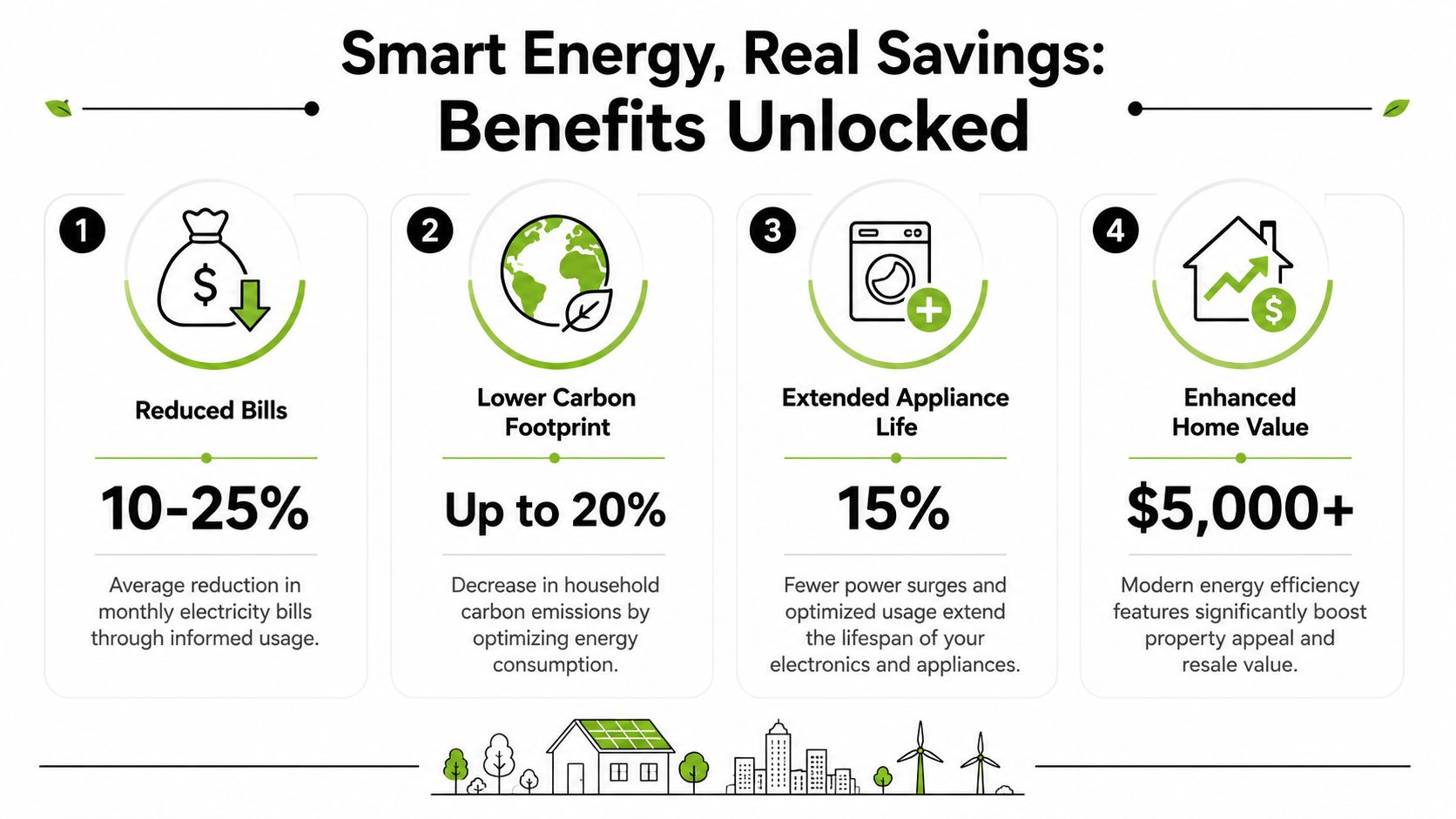
That range matters because it's based on behaviour and visibility, not magic hardware. People see what's happening, then shift usage, switch off unnecessary loads, and stop wasting power during the wrong parts of the day. In Brisbane, that often means changing when pool equipment runs, tightening up cooling habits, or using solar production more effectively.
A lot of local homes already have rooftop solar or are planning it. Monitoring helps because solar only pays off properly when you understand your daytime demand. If the system is producing while most of the load hits later in the evening, there's a mismatch. Monitoring helps you identify what can move into solar-friendly hours.
That might include dishwashers, washing machines, hot water boosting, or pool filtration. If a battery is in the mix, monitoring also helps you see whether stored power is covering the loads you expected.
Bills get the attention first, but safety is another genuine benefit. Unusual patterns can point to equipment that isn't behaving normally. A circuit drawing more than it used to. A load that never switches off properly. A fridge or freezer cycling too often. Monitoring doesn't replace electrical testing, but it does give an early warning that something has changed.
That's especially useful in homes with older appliances, older switchboards, or added loads from renovations over time. A data pattern can prompt a proper inspection before the issue becomes more expensive or less safe.
For larger homes, mixed-use properties, and commercial premises, monitoring also supports management and reporting. Whole-building monitoring devices used on Australian switchboards can reduce energy costs by 10% to 15% through targeted subcircuit optimisation and automated demand response, with reported ROI within 12 to 18 months in suitable properties, according to this article on whole-building power monitoring devices in Australia.
That won't apply to every house. But it does show what becomes possible when monitoring moves beyond curiosity and into active control.
In day-to-day terms, the biggest win is usually confidence. You stop guessing. You know whether a change helped.
If you're trying to make your household more efficient overall, not just cheaper to run, it also makes sense to pair monitoring with broader habits that reduce waste. This roundup of ways to lower your environmental impact is a good companion piece because it looks at the bigger picture beyond the switchboard.
The first installation decision is simple. If the monitor plugs into a socket and only tracks one appliance, it's usually a product setup job. If it goes inside the switchboard, around mains, or onto fixed circuits, it's electrician work. That isn't a grey area.
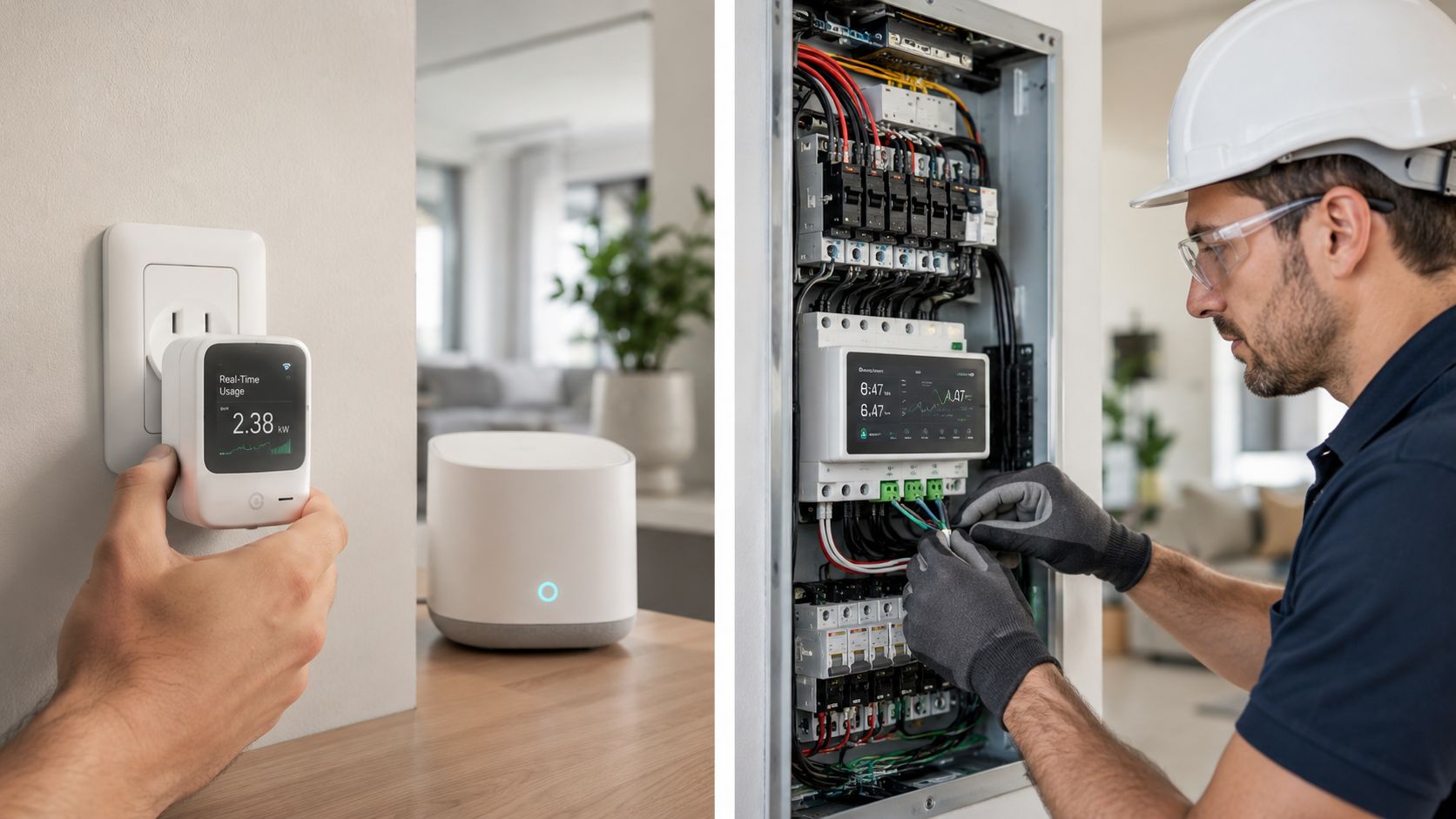
A proper install isn't just about turning the system on. It's about getting accurate readings, choosing the right circuits, confirming the switchboard has room, and making sure the gear suits Australian conditions. Cheap imported hardware often looks fine online and then causes problems once it's exposed to a real Queensland environment.
One issue that gets overlooked is certification. Choice Community discussions highlight the importance of verifying Australian Safety Certification (AS/NZS 3000) and third-party validation for mains monitors, especially for products sold online, because buyers are actively looking for Australian-certified options rather than guessing on safety claims, as noted in these Australian mains monitoring recommendations.
That matters even more when the monitor is hardwired or mounted in a switchboard. You don't want vague specs. You want equipment that's suitable for the job and compliant with local expectations.
A good pre-purchase checklist looks like this:
A monitoring system is only as good as the installation behind it. Poor placement, poor labelling, or the wrong hardware creates bad data.
Many generic guides overlook a critical aspect. High-current loads need hardware that can cope with them reliably. Homes with large EV chargers, bigger solar setups, or industrial-style pool equipment can expose the limits of lower-grade monitors. The key issue isn't only whether a product can read the load on paper. It's whether it does so safely and consistently in service.
If the home is moving toward heavier electrification, the switchboard itself may also need review. That's part of the same planning conversation as capacity, protection, and future circuits. For context on the broader concept of service capacity, this article on a 200 amp service upgrade is useful background reading, even though Australian service arrangements differ from overseas examples.
Once installed properly, energy monitoring systems can become more than a dashboard. They can support a connected home. The best integrations are practical.
A few examples:
Later integration choices matter as much as the initial hardware choice. If you're already planning broader connected-home upgrades, this guide to smart home automation installation gives a good sense of how monitoring fits into a wider system.
A quick walkthrough helps if you want to see how these systems are commonly presented and installed in practice.
The practical value shows up fast once monitoring is installed in a real Brisbane property. In suburbs like Grange and Windsor, I usually see the same pattern. The bill feels high, the house has solar or efficient lighting already, and the owner still cannot see where the money is going.
A family in Grange had already done the sensible things. LED lighting was in, air conditioning use was more controlled, and they were keeping an eye on general usage. Their bills still felt out of proportion to the way they were living.
Whole-home monitoring exposed a steady background load that stayed higher than expected through the day. That gave us a place to start. A closer check pointed to an old garage fridge that was cycling too often and a pool pump schedule that was running at the wrong times for the household.
Neither problem looked serious on its own.
Together, they were enough to wipe out a good share of the savings from earlier upgrades. That is common in Brisbane homes with pools, extra refrigeration, and solar. Small loads that run for long hours are often the ones that steadily push bills up.
The other benefit was confirmation. After the fridge was removed and the pump schedule changed, the owners could see the drop in usage rather than guessing that the fix had worked.
In Windsor, a small cafe had a different problem. The owners were not chasing one fault. They wanted to know which equipment was driving costs across the week, and broad site data was too vague to help.
Circuit-level monitoring suited the job because it separated refrigeration, coffee equipment, and prep loads into something useful. Once those circuits were visible, the owners could compare startup patterns, daily run times, and overnight consumption. One freezer stood out quickly because its usage pattern did not match the rest of the equipment.
That sort of issue can sit inside a total bill for months. In a small business, you do not always notice one inefficient appliance if everything is rolled into a single meter reading.
There was also a compliance angle to keep in mind. In Queensland commercial fit-outs and upgrades, record-keeping and metering expectations can matter, especially when a business is tracking performance over time or planning electrical changes under AS/NZS 3000. Not every small cafe needs formal reporting, but clear monitoring still makes maintenance decisions, replacement planning, and cost control much easier.
Both properties started with a specific question, not a shopping list of features.
That is usually what leads to a good result:
The system only needs to be as detailed as the problem you are trying to solve. For a house in Grange with solar, that might mean checking base load and daytime self-use. For a Windsor business, it might mean watching a few key circuits and spotting equipment that is costing more than it should.
A lot of homeowners are interested in monitoring but hesitate because they're not sure whether it suits their property, budget, or living arrangement. Most of those concerns are manageable once you strip away the jargon.
Sometimes, yes. Plug-in monitors and smart plugs are usually the easiest option for renters because they don't involve switchboard alterations. Hardwired systems are different and generally need owner approval as well as professional installation.
That depends on the brand, the app, and where the data is stored. As a rule, choose established products with clear privacy information and avoid devices with vague documentation or poor local support. If a manufacturer is unclear about setup, updates, or ownership of data, that's a warning sign.
Usually not much, but they do need occasional checking. Apps get updates, Wi-Fi conditions change, and a system is only useful if it's still reporting accurately. Hardwired systems should also be reviewed if major electrical work is done later, such as switchboard changes, solar upgrades, or new high-load circuits.
Yes, if the home has unclear usage patterns or one or two suspected heavy loads. Solar makes monitoring more valuable, but it's not a requirement. Plenty of households use monitoring to get control over when and where power is being used.
The biggest shift happens when you stop treating the power bill as a mystery. Energy monitoring systems won't lower consumption by themselves, but they make better decisions much easier. You can identify waste, change schedules, check whether upgrades helped, and catch unusual behaviour earlier.
For homeowners in North Brisbane, Grange, Windsor, and nearby suburbs, that usually starts with a simple question. Do you want a broad view of the whole house, or do you need detail on a few key circuits? Once that's clear, choosing the right system becomes much simpler.
If you want help choosing or installing the right monitoring setup for your home or property, DLG Electrical can provide practical advice based on your switchboard, major loads, and future plans. Whether you're trying to understand a high bill, integrate monitoring with solar and smart home tech, or make sure everything is installed safely and correctly, their Brisbane team can help you get clear answers and a system that suits the job.

Master Electrician with over 30 years of experience. Founded DLG Electrical in 2005 after international project work including electrical installations at Stamford Bridge Stadium, London(Home of Chelsea FC).

Local Electricians that can fix all Electric Hot water Systems.
Motion sensor lights are a versatile addition to any home, offering nu
