83 Jean St, Grange QLD 4051
Mon-Fri 07:30 AM - 04:00 PM - Sat - 8:00 - 12 - Sunday Closed
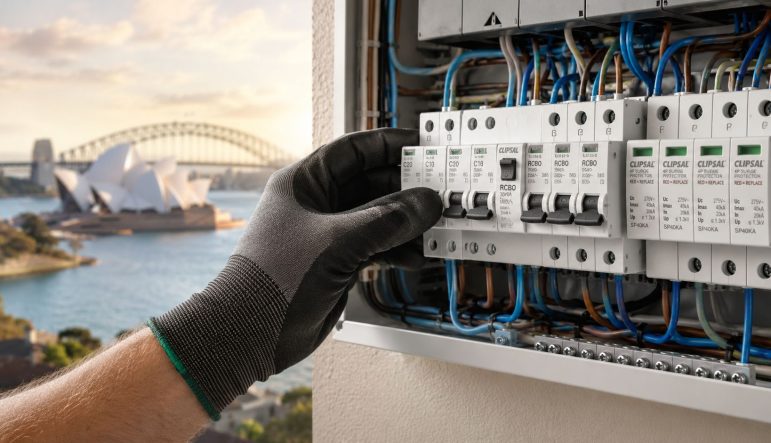
If your lights flicker when the kettle, microwave and toaster are all running, or a breaker trips every time you use a high-load appliance, your switchboard is telling you something. In a lot of Sydney homes, especially older terraces, semis and brick veneer houses, the switchboard was built for a very different electrical life.
Today's homes carry more load, more sensitive electronics and more safety obligations. A proper upgrade isn't just about replacing an old fuse box with a newer-looking cabinet. It's about bringing the control point of your electrical system up to current standards, reducing shock and fire risk, and making sure the home can safely support the way you live.
A switchboard sits between the incoming supply and every circuit in the house. When it's outdated, everything downstream is affected. That includes your lighting, power circuits, oven, air conditioning, hot water, EV charging, solar connection points and the safety devices that are supposed to protect your family.
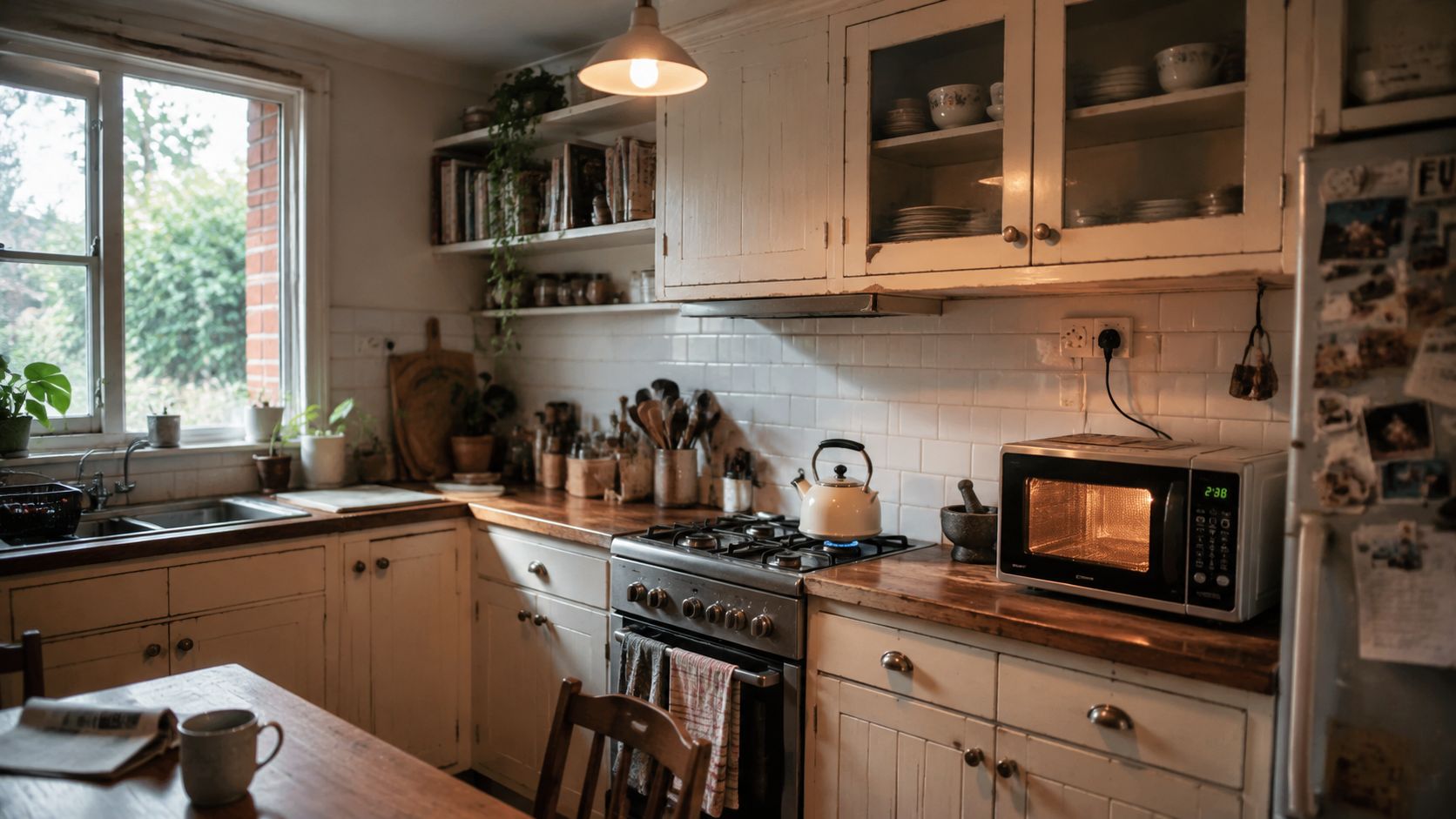
In practical terms, switchboard upgrades in Sydney usually come up for one of four reasons. The board is old. The protection is outdated. The house is being renovated. Or a new appliance such as an EV charger, induction cooktop or solar equipment exposes the fact that the existing board doesn't have enough capacity or the right protection.
Individuals typically don't open the board and diagnose it themselves. They notice symptoms:
A sound upgrade gives you safer fault protection, clearer circuit separation, better labelling, cleaner isolation and room for future work. It also forces a proper inspection of the board condition, cable terminations and any obvious compliance issues around the point where all power is distributed.
Practical rule: If a switchboard is already struggling with existing loads, adding more equipment without upgrading it usually makes the problem worse, not better.
For Sydney homeowners, two issues deserve special attention because they're often missed in basic price guides. One is asbestos backing panels in older homes. The other is surge protection, which many quotes still treat as optional even when the house contains expensive electronics. Those two items can change both the scope and the value of the job.
A dangerous switchboard doesn't always announce itself with smoke. Often the warning signs are smaller and easier to dismiss. That's how people end up living with known faults for years.
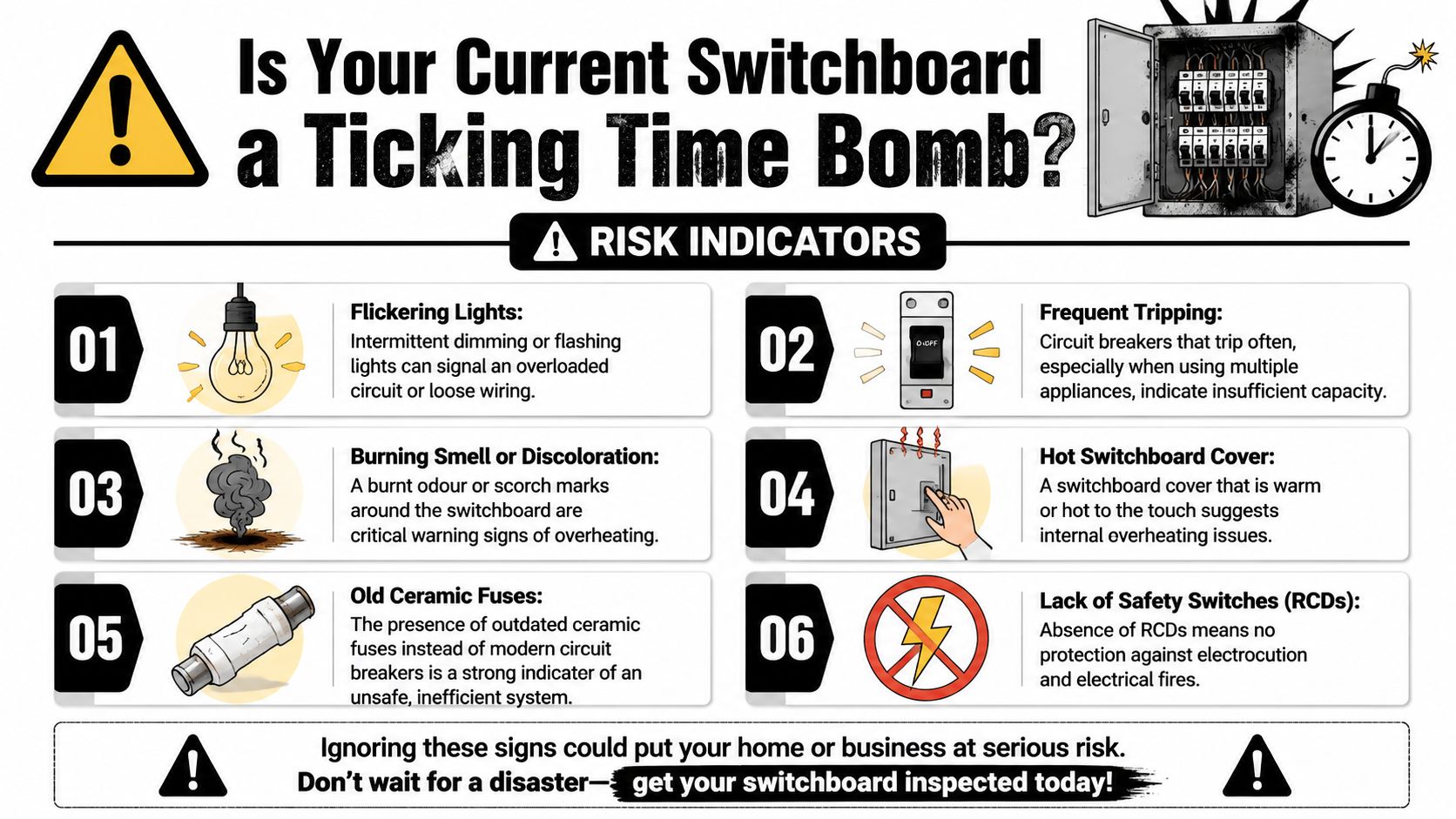
If you see any of the following, don't treat them as quirks:
Older boards also tend to have less space, poorer layout and more wear around terminations. Even when they appear to “still work”, that doesn't mean they're suitable for current demand.
A visual inspection can tell you a lot, but it won't tell you everything. Proper testing matters. If you're concerned about the overall condition of the installation, a licensed electrician should inspect the board and the connected circuits as part of an electrical safety inspection.
Later in this section, this walk-through gives a simple visual overview of what homeowners should look out for:
The biggest blind spot in many switchboard upgrades Sydney searches is asbestos. In NSW homes built before 1990, asbestos panels were common, and removal can add $1,000 to $3,000+ to upgrade quotes according to this NSW switchboard quote discussion on Reddit. That same discussion describes a $2,400 quote that rose sharply once asbestos removal became part of the job.
That matters because homeowners often compare quotes without realising one contractor has allowed for asbestos handling and another hasn't. If the existing meter panel or backing board contains asbestos, it changes the sequence of work and requires licensed removal.
A few things routinely cause trouble:
A switchboard upgrade starts with diagnosis, not shopping for a box on the wall.
A safe modern switchboard does three jobs at once. It isolates faults quickly, limits how much of the house loses power when a problem occurs, and gives the electrician room to test, label and expand the installation properly later.
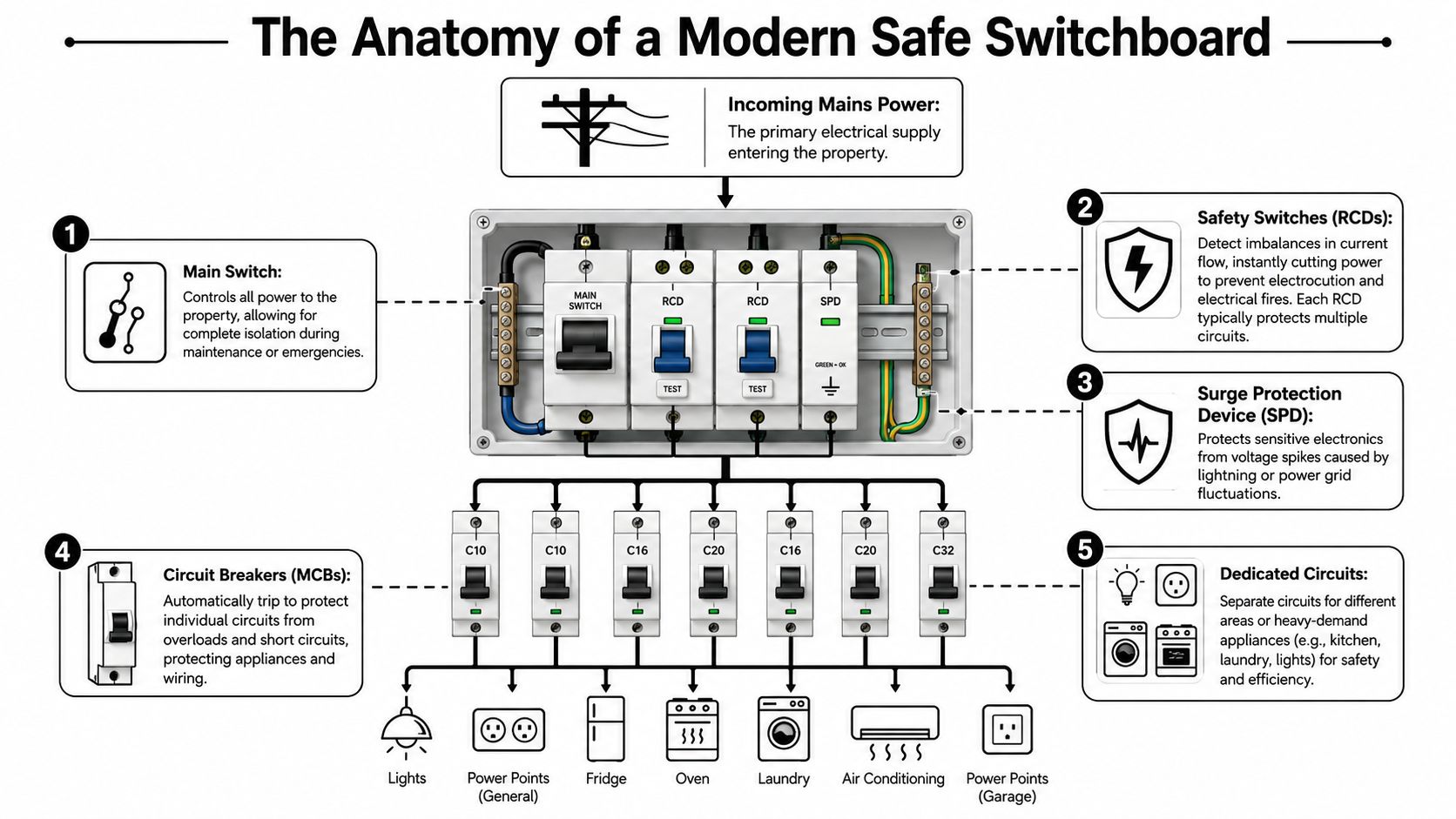
At a minimum, a modern residential board should include a main switch, individual protective devices for final subcircuits, neutral and earth bars arranged correctly, and clear circuit labelling that matches what is installed. The brands matter less than the layout, device selection and workmanship. A tidy board with proper spacing, consistent labelling and room for future circuits is usually a better sign than a quote built around brand names alone.
The protective device Sydney homeowners hear about most is the RCBO. It combines residual current protection and overcurrent protection on a single circuit. In practical terms, that means one fault on a power circuit is less likely to shut down lighting, refrigeration or other parts of the house at the same time.
That circuit-by-circuit approach makes fault finding easier as well. If a dishwasher develops a fault, the affected RCBO trips and the rest of the installation usually stays on. Older shared RCD arrangements can make that process slower and more disruptive.
For a plain-English breakdown of how these devices work, read this guide on RCD and circuit breaker protection.
Surge protection is often left out of basic upgrade quotes, even though modern homes carry far more sensitive electronics than older switchboards were ever designed around. Televisions, NBN equipment, home office gear, smart appliances, solar monitoring hardware, alarm systems and EV chargers all benefit from a proper surge strategy.
I treat surge protection as a design decision, not a bolt-on accessory. The best time to fit a surge protective device is during the switchboard upgrade, when the board is already being rebuilt and the installation can be arranged correctly around it.
A surge device will not solve every power quality issue, and it will not replace good earthing or correct circuit protection. It does add a layer of protection that many homeowners only ask about after they have already lost expensive equipment.
A well-planned switchboard upgrade should include:
The trade-off is straightforward. A larger enclosure with spare capacity usually costs more upfront, but it often avoids a cramped board and extra rework later. In Sydney homes that are adding electric hot water, solar, batteries or EV charging over the next few years, that extra space is usually money well spent.
Poor switchboard design usually shows up in the same ways. Devices are packed too tightly, circuits are labelled vaguely, there is no room for additions, and the board technically fits the wall but leaves little scope for safe maintenance. A proper upgrade should solve those problems, not carry them into a newer enclosure.
A switchboard upgrade in Sydney is not just a hardware swap. It is regulated electrical work that has to be installed, tested and documented properly, especially in older homes where asbestos backing boards and aging service equipment can change the scope fast.
The baseline standard is AS/NZS 3000:2018. In practical terms, that affects how the board is built, which protective devices can be installed, how circuits are segregated and labelled, and what testing has to be completed before the power is left on.
Older devices that were once common do not automatically carry over into a compliant upgrade. As explained in this summary of Sydney switchboard upgrade standards and regulations, current upgrade work must comply with AS/NZS 3000:2018, and older Type AC RCDs are no longer accepted for this kind of work. For homeowners, the takeaway is simple. A proper upgrade is usually a full protection and compliance update, not a partial tidy-up.
Modern homes run sensitive electronics, inverter appliances, induction cooking, EV chargers, solar equipment and chargers for everything from laptops to batteries. Protection has to suit those loads. That is one reason good electricians now discuss surge protection as part of the compliance conversation, even where a surge device is not mandatory in every older domestic scenario. If the house contains expensive electronics, home office equipment or smart devices, integrated surge protection is often a sensible inclusion during the upgrade rather than an afterthought after a loss.
Asbestos is the other issue Sydney homeowners regularly underestimate. If the existing board is mounted on asbestos-cement sheeting, the electrical work and the asbestos handling have to be planned together. You cannot treat that as a normal board replacement. The removal method, who performs it, site controls, and disposal all matter. It affects cost, timing and who can legally do each part of the job.
Once the work is complete, the electrician must issue a Certificate of Compliance Electrical Work (CCEW). That certificate confirms the work was carried out by a licensed contractor and tested as required.
Homeowners should also expect clear circuit schedules, device identification and test results that match the new board. If you are comparing quotes, it helps to review what is included in the switchboard upgrade cost guide for Sydney homeowners, because compliance paperwork, asbestos coordination and service-side requirements are often the items that separate a basic quote from a realistic one.
Council approval is usually not part of a standard like-for-like switchboard upgrade in an existing home. The exceptions are usually tied to the building, not the switchboard itself, such as visible changes to a heritage-listed facade or a major relocation of metering equipment.
If the work affects the service side, metering arrangement, consumer mains, or network seals, the process changes. The electrician may need to work with the local distributor, commonly Ausgrid or Endeavour Energy, and in some cases an accredited service provider is required for part of the job. That is why one quote can look straightforward and another includes extra steps before anyone even touches the board.
Ask one direct question before approving the work. Who is handling the compliance, the asbestos issue if present, the network coordination if required, and the final certificate. If the answer is vague, keep looking.
A Sydney homeowner gets quoted $1,800 by one electrician and $4,600 by another for what sounds like the same switchboard upgrade. In practice, those two jobs are often not the same at all. The difference usually comes down to hidden scope, especially asbestos panel handling and whether the new board includes surge protection for the electronics modern homes now rely on.
According to Western Sydney Trades' 2026 switchboard upgrade cost guide, a standard single-phase residential switchboard upgrade in Sydney costs between $1,500 and $3,500, while three-phase systems range from $3,500 to $6,500. The same source notes that asbestos removal can add $500 to $1,500 where asbestos-cement sheet backing is present.
A separate Sydney pricing guide published for 2026 places standard residential upgrades at $1,500 to $2,500, mid-range capacity upgrades at $2,500 to $4,000, and premium complex upgrades at $4,000 to $7,000+, with additional meter box work adding $800 to $1,500 in some cases, as set out in this NSW switchboard upgrade guide for 2026.
| Upgrade Type | Typical Cost Range (incl. GST) | Key Considerations |
|---|---|---|
| Standard single-phase residential upgrade | $1,500 to $3,500 | Straightforward swap, existing dwelling, no major service complications |
| Three-phase residential upgrade | $3,500 to $6,500 | Higher complexity, larger load requirements, more coordination |
| Mid-range capacity upgrade | $2,500 to $4,000 | Can include higher-capacity setup and added protection features |
| Premium complex upgrade | $4,000 to $7,000+ | Older homes, complex wiring, larger boards, harder access or added scope |
| Additional meter box work | $800 to $1,500 | Disconnection, reconnection or meter box replacement where required |
| Asbestos backing removal add-on | $500 to $1,500 | Separate licensed removal process required if panel material is asbestos |
For a local breakdown of inclusions and exclusions, this guide to switchboard upgrade cost in Sydney is useful when comparing proposals line by line.
The board itself is only part of the job. The final price changes with the condition of the existing installation, the protection required, and whether the electrician is pricing the full compliant scope or only the visible parts.
Older Sydney homes are the biggest swing factor. If the existing board is mounted on asbestos sheeting, the electrician cannot just unscrew it and keep going. The asbestos has to be identified, handled properly, and removed by the right party where required. That adds cost, but it also avoids contamination, stop-work issues, and unsafe shortcuts.
Surge protection is the other item that gets missed. A modern switchboard may protect people from electric shock and overloads, but that is different from protecting televisions, routers, air-conditioning controls, EV chargers, security systems, and home office equipment from transient overvoltage. In many homes, adding an SPD is a sensible part of the upgrade rather than an optional afterthought.
Some cost drivers are straightforward. More circuits mean more RCBOs, more terminations, more testing, and more time spent identifying and relabelling each circuit correctly.
Others are less obvious:
The age of the house matters, but the condition of the electrical work matters more. I have seen relatively new homes with poorly arranged circuits that took longer to sort out than older houses with tidy original layouts.
Cheap quotes usually leave out scope that will still have to be dealt with on the day.
Ask whether the price includes:
If a quote is light on detail, the risk sits with the homeowner. A proper price should tell you exactly what is being replaced, what protection is being added, what happens if asbestos is found, and what items would trigger a variation. That is how you compare quotes properly in Sydney.
You approve the quote, the day is booked, and the main question becomes simple. How much disruption should you expect, and what happens once work starts?
A well-run switchboard upgrade is methodical. The power will be off for part of the day, but the job should follow a clear sequence with no guesswork about asbestos handling, circuit protection, or final testing.
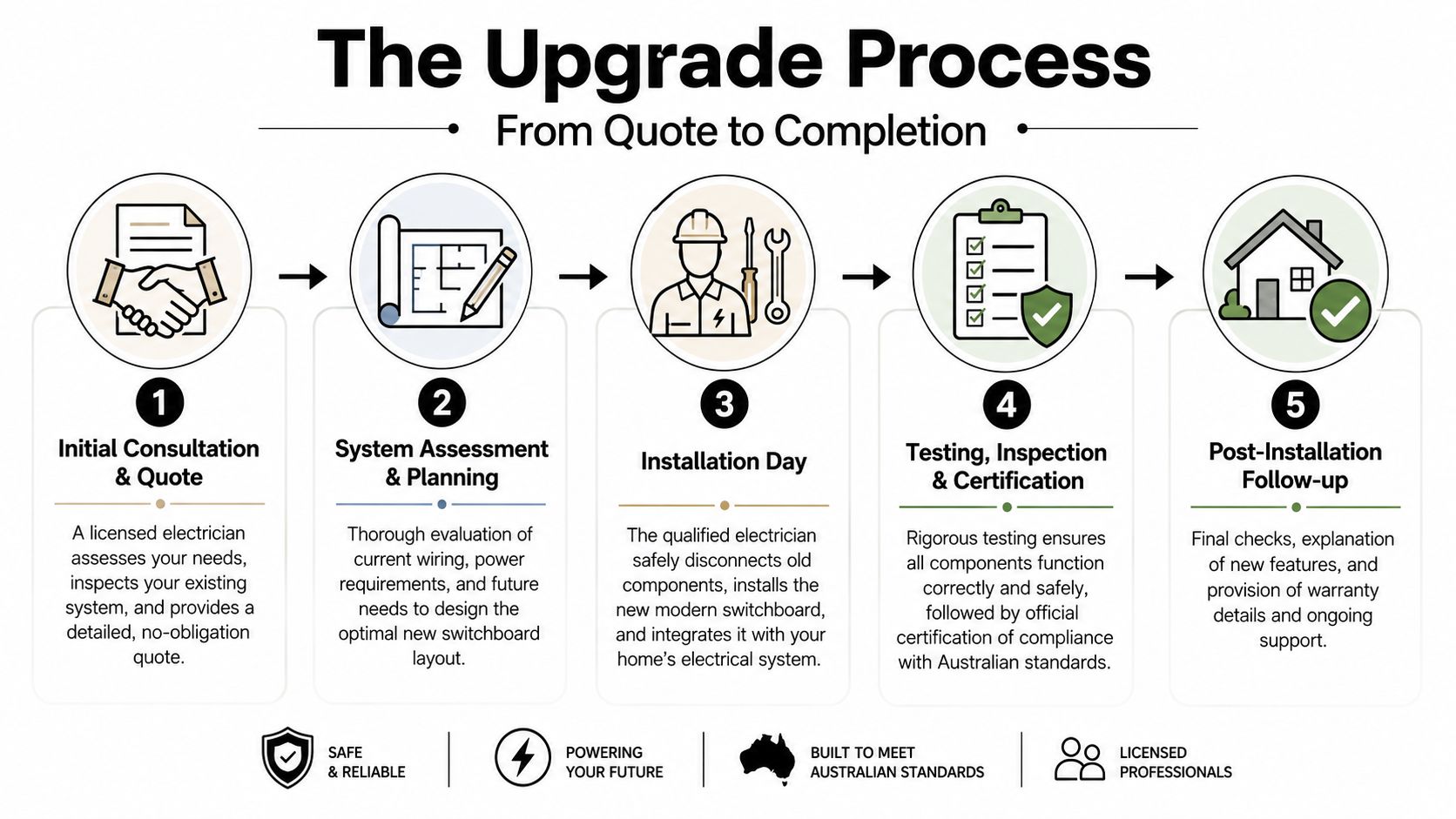
Inspection and quoting
The first site visit sets the job up properly. The electrician checks the existing board, the number and condition of circuits, available space, earthing arrangement, and whether the enclosure or mounting panel raises an asbestos concern. They also confirm whether the work stays on the customer side or involves service equipment that may need Level 2 coordination.
Scope confirmation and scheduling
Once the board has been inspected, the scope should be locked in clearly. That includes the new enclosure, the protective devices being installed, whether surge protection is included, and what happens if asbestos panel backing is present. If network or service-side work is involved, booking can take longer because extra coordination is required.
Pre-job planning
Before installation day, the outage window should be explained in plain terms. Homeowners should know when the power goes off, what needs to be shut down, and whether access is needed to appliances, subboards, garages, or external meter positions. If asbestos removal is part of the job, that should already be arranged. It should never become a surprise once the cover comes off.
For a straightforward residential upgrade, the electrician isolates the supply, confirms the installation is safe to work on, and removes the old board or outdated devices. If the existing backing or panel material is suspected to contain asbestos, work stops at the point required by law and the approved process for handling that material must be followed. That is one of the biggest differences between a smooth upgrade and a costly, delayed one in older Sydney homes.
After that, the new enclosure and protection devices are installed, circuits are re-terminated, and each circuit is identified properly. In a modern residential board, that usually means individual circuit protection using RCBOs and a layout that leaves safe working space for testing, maintenance, and future additions such as air conditioning, solar, or EV charging.
Surge protection should be considered at this stage, not added as an afterthought. A lot of homeowners spend money upgrading the board, then leave sensitive electronics, Wi-Fi equipment, appliances, and inverter-driven systems exposed because surge protection was not discussed during quoting. In many Sydney homes, that is a poor trade-off for a relatively small extra cost.
The usual installation sequence looks like this:
Good switchboard work is organised work. Clean terminations, readable labelling, and proper test results matter more than a neat cover photo.
At the end of the job, the electrician should walk you through the finished board. You should be shown which breaker controls each circuit, where the main switch is, how to reset an RCBO, and what spare capacity is available if you plan to add new loads later.
The paperwork matters too. You should receive the required compliance documentation within the legal timeframe, along with a circuit schedule that is understandable. Labels like “power” or “lights” are not enough in a house with multiple living areas, outdoor circuits, hot water, air conditioning, and kitchen appliances.
A proper handover leaves the homeowner with a safer board, a clear schedule, and no uncertainty about what was installed.
No. Homeowners shouldn't carry out switchboard work themselves. This is licensed electrical work, and the board is the main protection and distribution point for the house. DIY work here is unsafe and can create insurance, compliance and serious injury risks.
An RCD provides residual current protection. An RCBO combines residual current protection with over-current protection for an individual circuit. For homeowners, the practical difference is that an RCBO-based layout usually gives better circuit separation and fault isolation.
Often, yes. Not in every case, but very often. New high-demand or inverter-based equipment exposes weaknesses in older boards quickly. If there's no room, no compliant protection or the board uses outdated devices, the installation may require a switchboard upgrade before the new equipment can be connected safely.
If your home has modern electronics, it deserves serious consideration. Many people spend heavily on entertainment systems, office equipment, appliances and EV charging, then leave surge protection out because it wasn't on the base quote. That's a poor trade-off in many homes.
Usually not for a straightforward job, but you should expect a planned outage for the switch-over period. The exact duration depends on whether it's a simple board replacement or whether network or mains coordination is involved.
Not always, but homes built before 1990 deserve caution. The panel or backing board may contain asbestos-containing material, and that needs professional assessment. Don't drill, cut, disturb or assume.
For an existing dwelling, a standard switchboard upgrade generally doesn't require council approval. If the board location is being visibly changed on a heritage-listed property, approval may be needed for that visible relocation.
Ask these questions:
A good quote is clear about inclusions, exclusions and the condition assumptions it relies on.
If you need practical advice on a switchboard upgrade, safety inspection or a clear quote from licensed professionals, DLG Electrical offers residential electrical services backed by long industry experience, strong customer focus and a straightforward approach to getting the job done safely.

Master Electrician with over 30 years of experience. Founded DLG Electrical in 2005 after international project work including electrical installations at Stamford Bridge Stadium, London(Home of Chelsea FC).

Local Electricians that can fix all Electric Hot water Systems.
Motion sensor lights are a versatile addition to any home, offering nu
