83 Jean St, Grange QLD 4051
Mon-Fri 07:30 AM - 04:00 PM - Sat - 8:00 - 12 - Sunday Closed
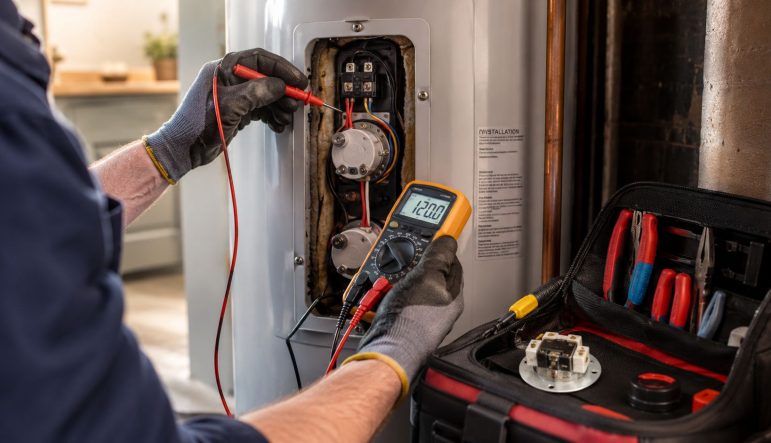
You wake up, turn the shower on, and get cold water. Or the water comes through hot for a minute, then turns lukewarm. Sometimes it goes the other way and feels far too hot. In plenty of Brisbane homes, that points to a fault in the thermostat inside the electric hot water system.
The thermostat is a small part, but it controls a high-risk job. It tells the heating element when to switch on and when to stop. When it fails, the symptoms can look simple. The repair is not. In Queensland, electric hot water thermostat replacement is licensed electrical work. That means the fix isn't a legal DIY task, no matter how many online guides make it sound routine.
A failing thermostat often shows up at the worst time. Morning showers go cold. The kitchen tap never quite gets hot enough. Or the water temperature swings from usable to uncomfortable with no pattern. Before you assume the whole unit is finished, it's worth knowing that the thermostat is one of the common fault points in an electric storage system.
The thermostat acts like the system's temperature switch. It monitors the tank and tells the element when to heat. If it stops reading accurately, the unit can underheat, overheat, or cycle badly. None of those outcomes is harmless. Poor temperature control means poor performance, wasted power, and in some cases a real safety issue.
Those symptoms don't prove the thermostat is the only issue, but they're enough to take the problem seriously.
A thermostat fault can look minor from the bathroom. At the unit, it sits next to live electrical components and heat-sensitive parts that must be handled correctly.
In Brisbane, I'd also tell homeowners not to guess based on one bad shower. Hot water faults can overlap. A thermostat problem can mimic an element issue, and a supply issue can mimic both. The right move is to narrow the symptoms safely, then book a licensed electrician to test and replace the faulty component if needed.
If your electric hot water system is playing up, focus on two things:
A good diagnosis starts with what you've noticed at the taps. A safe repair starts with accepting that this isn't a handyman job.
You can do a few basic checks before calling an electrician. Keep them non-invasive. That means no opening panels, no touching wiring, and no pulling insulation back from the tank. Your role is to observe symptoms, not test live components.
First, check whether the hot water circuit at the switchboard appears to be on. If a breaker has tripped, don't keep resetting it repeatedly. That can point to a deeper fault.
Next, think about the pattern:
If you want a broader checklist of safe homeowner checks, this guide on hot water system troubleshooting is a useful starting point.
Many homeowners often struggle at this point. The two failures can feel similar from inside the house, but there are patterns that help.
| Symptom | More likely issue | Why |
|---|---|---|
| Water temperature comes and goes | Thermostat | The control may be switching inconsistently |
| Water gets too hot | Thermostat | Temperature regulation may have failed |
| Breaker or safety device won't stay on | Element or wiring fault | The heating side may be drawing current incorrectly |
| Water never heats at all | Thermostat, element, or supply | Needs proper electrical testing |
A thermostat problem often shows up as poor control. An element problem often shows up as poor heating or electrical protection tripping. That said, only testing at the unit confirms it properly.
If the hot water service starts behaving differently rather than simply stopping, I take the thermostat seriously. Components that fail gradually can still create an unsafe condition.
A clear description saves time. When you book the job, note:
That last point matters. Older storage systems often develop multiple faults close together. The thermostat may be the immediate issue, but the overall condition of the unit can change the repair decision.
Don't copy American or generic DIY videos that tell you to open the access cover and “just swap the stat.” Australian electric storage systems sit on 240V circuits, and the work is licensed here. Even identifying the exact failed part safely usually requires proper isolation and testing equipment.
Your best contribution is observation. Leave disassembly, testing, and replacement to a licensed electrician.
You get home to a cold shower, pull up a video, and remove the cover on the hot water system. At that point, the job has already crossed into licensed electrical work in Queensland.
For an electric storage hot water service, replacing a thermostat is not a handyman task or a legal DIY repair. It involves fixed wiring and work inside a 240V appliance circuit. In Queensland, that work must be carried out by a licensed electrician. If an unlicensed person does it and something goes wrong, the fallout can include electric shock, fire, failed insurance claims, and trouble proving the repair was compliant.
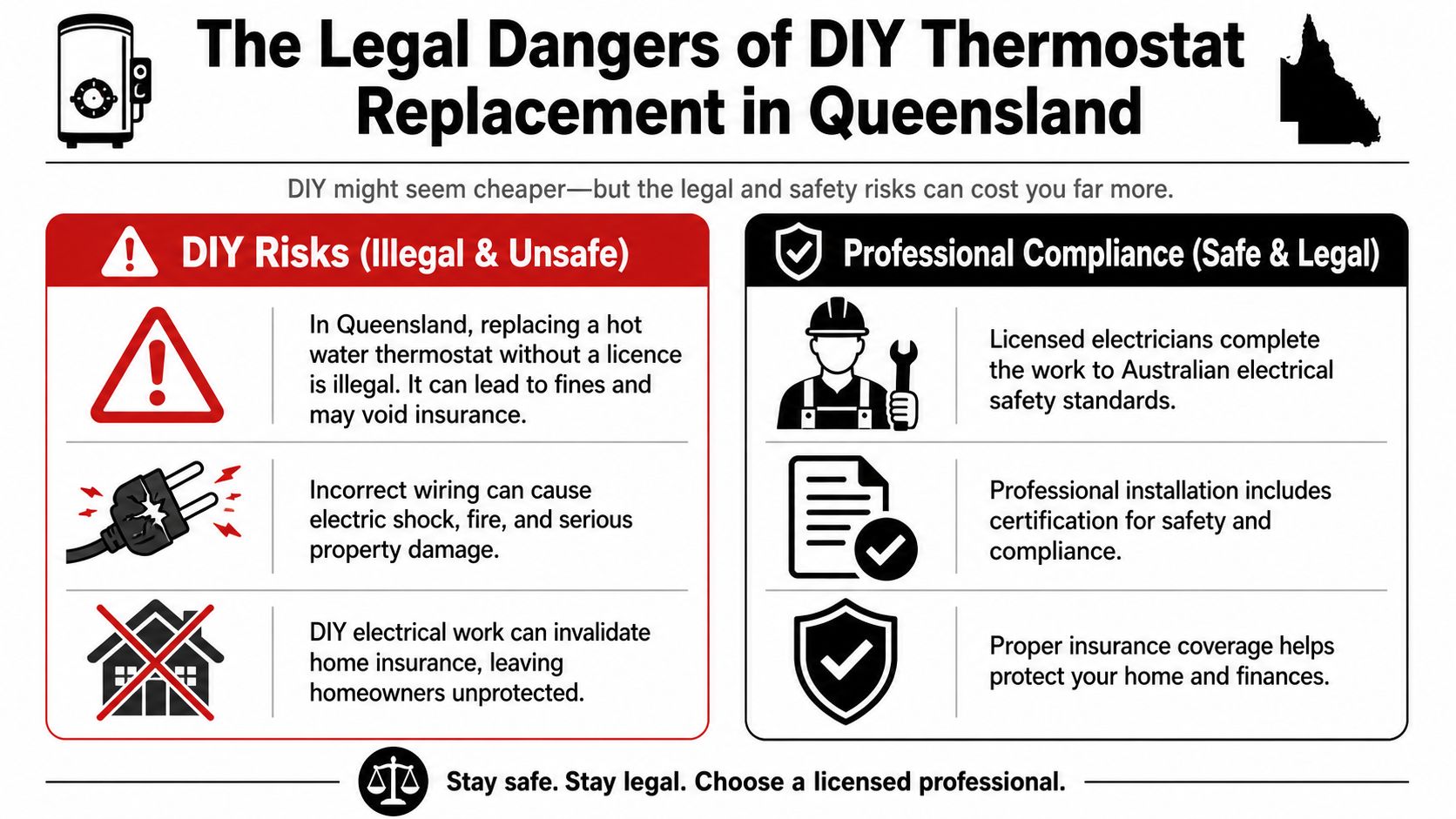
Queensland's electrical safety framework is clear on unlicensed electrical work. The Electrical Safety Office Queensland explains who can perform electrical work, and thermostat replacement does not fall into a homeowner exception. A breaker switched off at the board does not make the work legal, and it does not make it safe.
The physical risk is straightforward. The thermostat sits behind covers and insulation on a live appliance. Safe replacement means correct isolation, testing to prove the circuit is de-energised, and reinstalling the new control so it senses tank temperature properly. Get any part of that wrong and the system can remain live, overheat, short, or fail again soon after.
I see one mistake regularly. Someone assumes the danger ends once the power is turned off at the switchboard. It does not. Faults, incorrect labelling, shared circuits, damaged components, or a failed isolator can leave exposed parts energised. Electricians test before touching conductors because assumptions hurt people.
There is also a workmanship problem that online DIY advice skips over. A hot water thermostat has to be the correct type, rated properly, wired correctly, and seated firmly against the tank surface or pocket as designed by the manufacturer. If the sensing face is not fitted properly, the unit may heat poorly or run hotter than intended. If retaining hardware is bent, missing, or damaged during removal, the repair can turn into a larger and more expensive job.
The insurance side matters just as much. After a fire, electric shock incident, or property damage event, insurers and investigators look closely at who carried out the work. If the repair was unlicensed, the homeowner is left defending an illegal job on a high-risk appliance. If you want to know what proper documentation looks like after electrical repairs, read about an electrical certificate of compliance for lawful completed work.
Generic videos are written for clicks, not Queensland law or Australian wiring rules.
They usually miss four points:
Use observation, not tools. Report the symptoms, the age of the system, whether anything tripped, and whether the water is cold, lukewarm, or overheating. Then book a licensed electrician to test the circuit and confirm whether the thermostat is the failed part.
That is the lawful option in Queensland, and it is the safer one.
A Brisbane homeowner wakes up to a cold shower, lifts the cover on the water heater, and assumes the thermostat is a quick swap. It is not. A licensed electrician treats this as fault-finding and live electrical repair work on a metal water vessel, with a controlled process from first test to final commissioning.
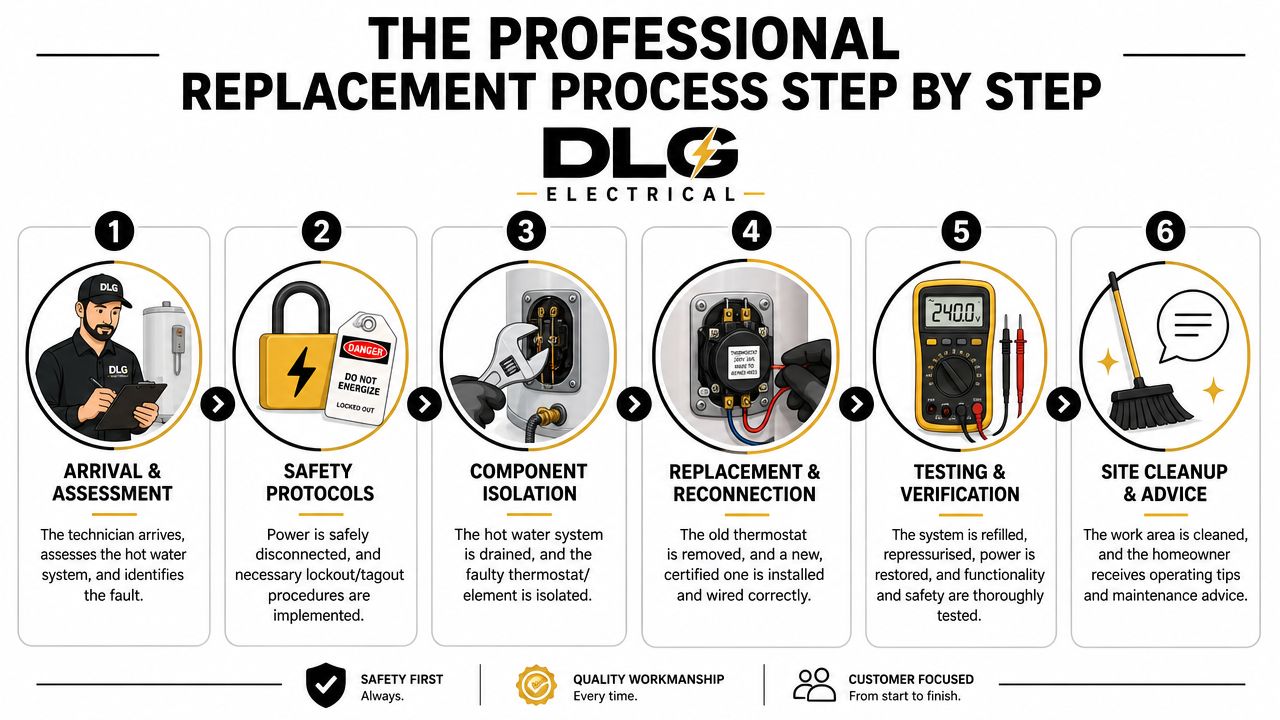
The job starts at the switchboard and the heater, not with a new part in hand. The electrician confirms the complaint, identifies the system type, checks the circuit protection, and tests whether the fault sits in the thermostat, the element, the supply, or damage caused by overheating.
That first stage saves wasted labour. A thermostat can look like the obvious culprit when, in fact, the problem is an open element, a failed safety cut-out, heat-damaged terminals, or a supply issue upstream.
Once the fault path is clear, the circuit is isolated and proven de-energised with the right test instruments before any covers come off. Insulation is removed carefully so it can be refitted properly, and the internal condition around the thermostat pocket and terminals is checked for heat damage, corrosion, loose connections, or brittle components.
Water isolation depends on the heater design and the way the thermostat is mounted. Some units allow thermostat replacement without draining or shutting water off. Others need a different approach to avoid discharge or access problems. The installer follows the manufacturer method already identified during diagnosis, rather than guessing on site.
Here's a visual overview of the service process in action.
Removal needs a steady hand. On older tanks, clips and retaining brackets are often fragile, and damage here can turn a simple repair into a larger one. The replacement thermostat must sit correctly against the tank surface so it reads temperature accurately and cycles the element at the right point.
The wiring has to match the heater's configuration exactly. A poor termination, the wrong conductor in the wrong terminal, or a bypassed safety control can leave the unit heating incorrectly or create a real shock and fire risk. This is also where an experienced electrician decides whether the thermostat repair is still the right path or whether the heater condition points to a larger issue. If the system is ageing out, it may make more sense to compare the repair against the cost of replacing an electric hot water system rather than continue spending on a deteriorating unit.
After installation, the thermostat is set to suit the system and the household's needs while keeping the heater operating as intended. Then the circuit is re-energised and the repair is commissioned properly.
That testing usually includes:
A thermostat replacement is only finished after those checks pass. Hot water may take a while to return depending on tank size, starting water temperature, and whether the system was completely cold when power was restored.
A Brisbane homeowner usually asks the same two questions after the hot water fails. What will a licensed repair cost, and how long will the job take?
For an electric hot water thermostat replacement, the final price usually reflects the full electrical service, not just the part. That includes fault finding, travel, isolation, removal of damaged components, installation of the correct thermostat, electrical testing, and confirmation the unit is cycling properly before it is left in service. In Queensland, that licensed process is the only lawful option. A cheaper unlicensed job can create far bigger costs later if there is a shock incident, a fire, or an insurance claim.
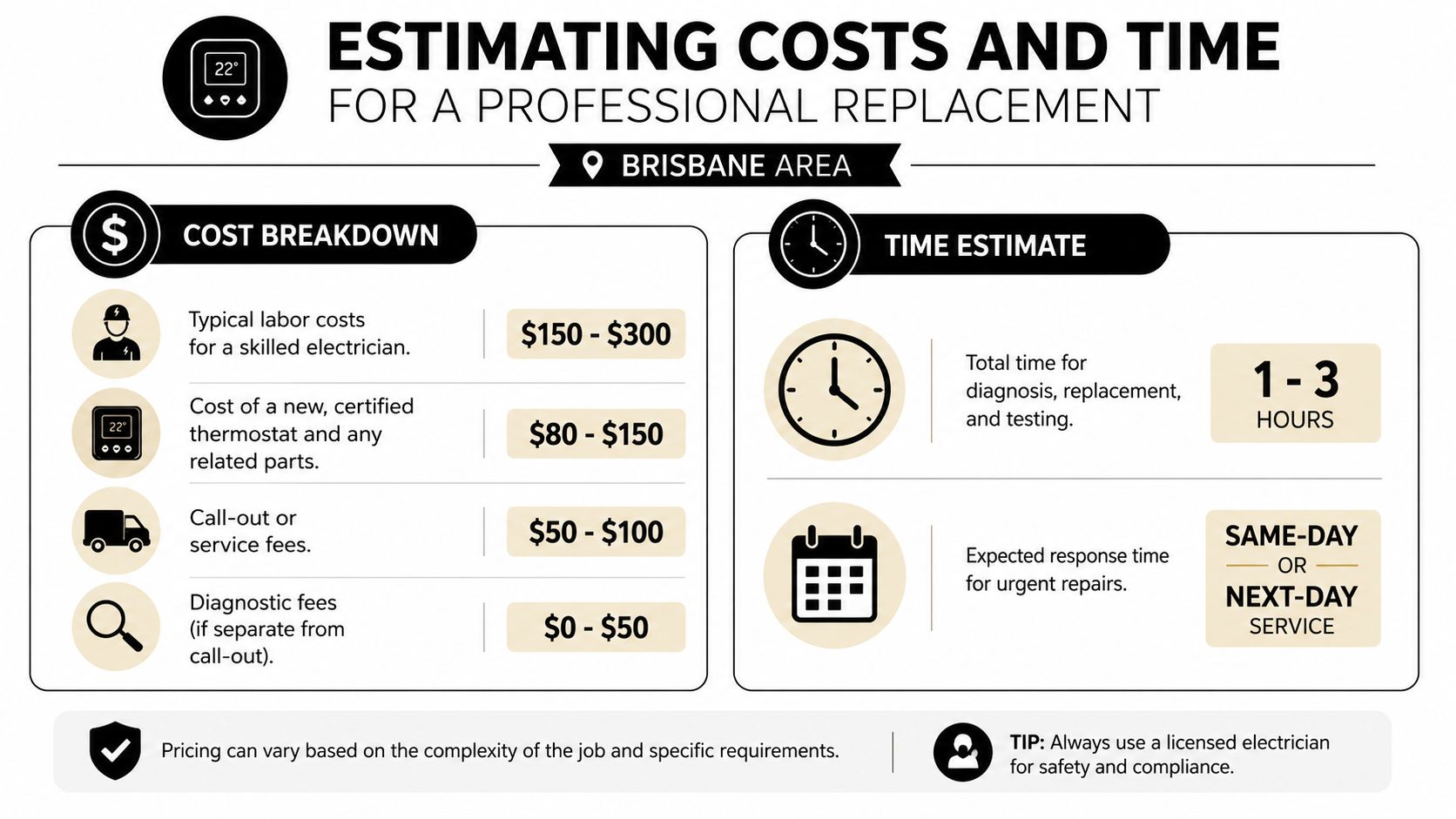
On a straightforward callout, the work on site is often completed within a single visit. The bigger variable is what the electrician finds once the cover comes off. A failed thermostat is often only part of the story on older systems.
A newer unit with clear access is usually quicker and more predictable to repair. An older tank with heat-damaged wiring, brittle insulation, corrosion around the element plate, or signs of repeated overheating takes longer and may not be worth further spend.
The quote can move up or down based on:
That last point matters. I have seen jobs booked as a thermostat replacement turn into a discussion about a tank that is at the end of its useful life. In those cases, a repair quote on its own is not enough. You need to compare it against the broader electric hot water system replacement cost and make the call based on condition, not hope.
A low quote can be misleading if it skips proper testing or ignores the condition of the rest of the heater. The safe approach is to treat the thermostat fault as one part of the system, then decide whether the unit still justifies repair.
That matters for owners, landlords, and property managers. Hot water failures sit inside the bigger job of effective property maintenance for landlords, but electrical repair work in Queensland still has to be carried out by a licensed electrician. There is no legal DIY shortcut here.
If the tank is otherwise sound, a professional thermostat replacement is often the sensible fix. If faults are stacking up, spending less today can lead to another callout in the near future.
When an electric storage system loses temperature control, you need a licensed electrician who treats it as an electrical repair first and a convenience issue second. That's the difference between a lawful, tested fix and a gamble.
DIY advice often misses details that matter in Australian homes. One example is the assumption that thermostat work never involves water-side considerations. Jet Plumbing highlights how general advice can overlook the need to confirm the water supply arrangement through the installation manual, especially on older models where the thermostat may sit near or be integrated with the element, and also points out how many homeowners aren't warned that mishandling the bracket can turn a small repair into a tank replacement: Jet Plumbing's thermostat replacement discussion.

For landlords and property managers, this sits inside a bigger maintenance issue. Keeping services compliant and catching faults early is part of effective property maintenance for landlords, especially when hot water failures can affect tenant safety and habitability.
If you're comparing service options in Brisbane, DLG Electrical handles electric hot water thermostat replacement as part of its licensed repair work for residential systems. The important point isn't branding. It's that the person attending is properly licensed, insured, and equipped to test, isolate, replace, and verify the repair correctly.
Don't judge this job by the size of the part. Judge it by the risk if it's done wrong.
If your hot water has gone cold, is overheating, or won't hold a stable temperature, book a licensed electrician to inspect it properly. DLG Electrical provides electric hot water repairs in Brisbane, including thermostat fault diagnosis and replacement, with compliant testing and practical advice on whether repair or full system replacement makes more sense.

Master Electrician with over 30 years of experience. Founded DLG Electrical in 2005 after international project work including electrical installations at Stamford Bridge Stadium, London(Home of Chelsea FC).

Local Electricians that can fix all Electric Hot water Systems.
Motion sensor lights are a versatile addition to any home, offering nu
